Art history Roman Republic
 Studied by 0 people
 Call Kai
 Learn
Learn Practice Test
 Spaced Repetition
 Match
Match Flashcards
 Knowt Play
1/6

There's no tags or description
Looks like no tags are added yet.
Name | Mastery | Learn | Test | Matching | Spaced |
|---|
No study sessions yet.
7 Terms
Roman Republic overview—founding and social structure
509 BCE: founding of Rome
Romans trace their origins to Romulus & Remus
Rhea Silvia raped by Mars → left twins abandoned→ raised by a she-wolf.
Patricians: elite landowners, senators
Plebeians: common people
Slavery is central to the social and economic structure
Latin language and cultural expression
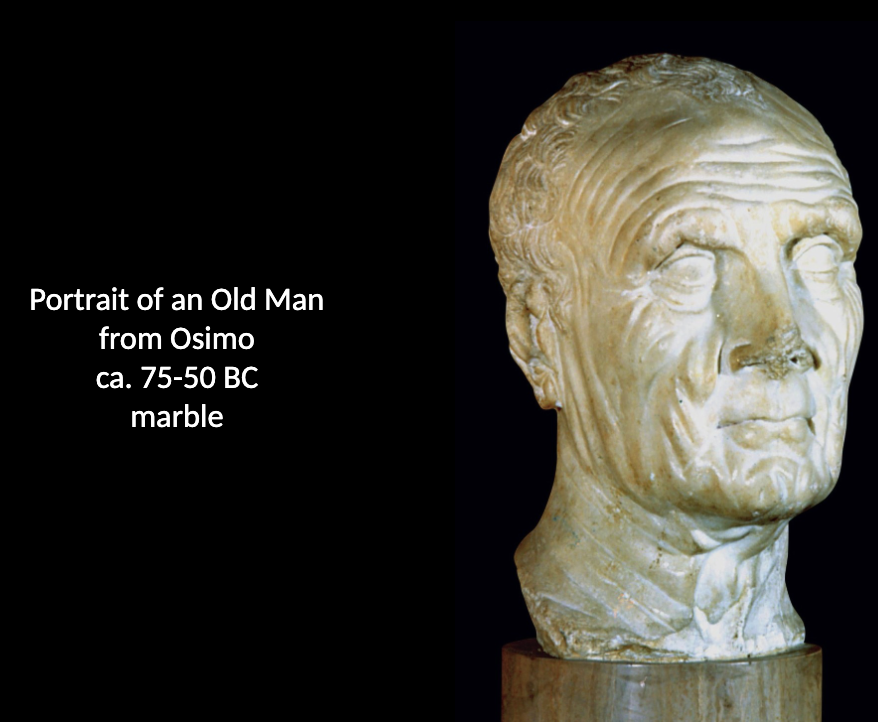
Portrait of an Old Man From Osimo. What is verism? What latin work is the term derived from? How does verism differ from realism? How is Roman portraiture different from Greek portraiture?
Verism is a Latin word that means truth
Hyper-realistic: wrinkles, baldness, age, and sagging skin
Differs from Greek idealism, where youth and smooth, ideal bodies are shown
Purpose: political propaganda → communicates wisdom, experience, and gravitas
Age= authority
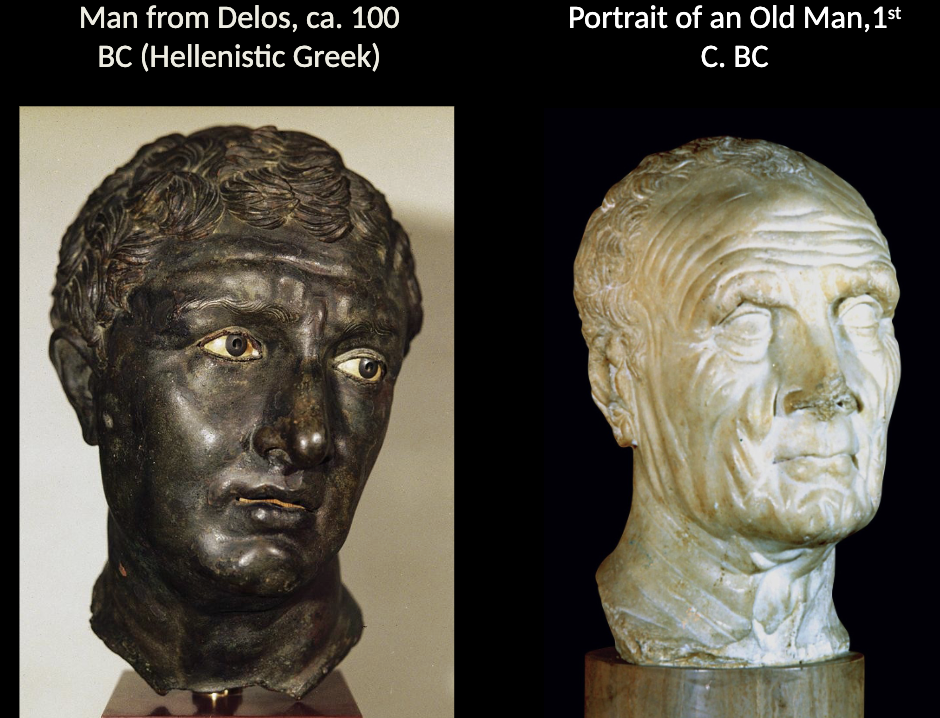
How does Roman veristic portraiture reflect the society and culture that produced it?
Verism mirrors republican values such as discipline, seriousness, and loyalty.
age= political capital → wrinkled signal decades of service
Emphasis on ancestral lineage: portraits reinforce family status
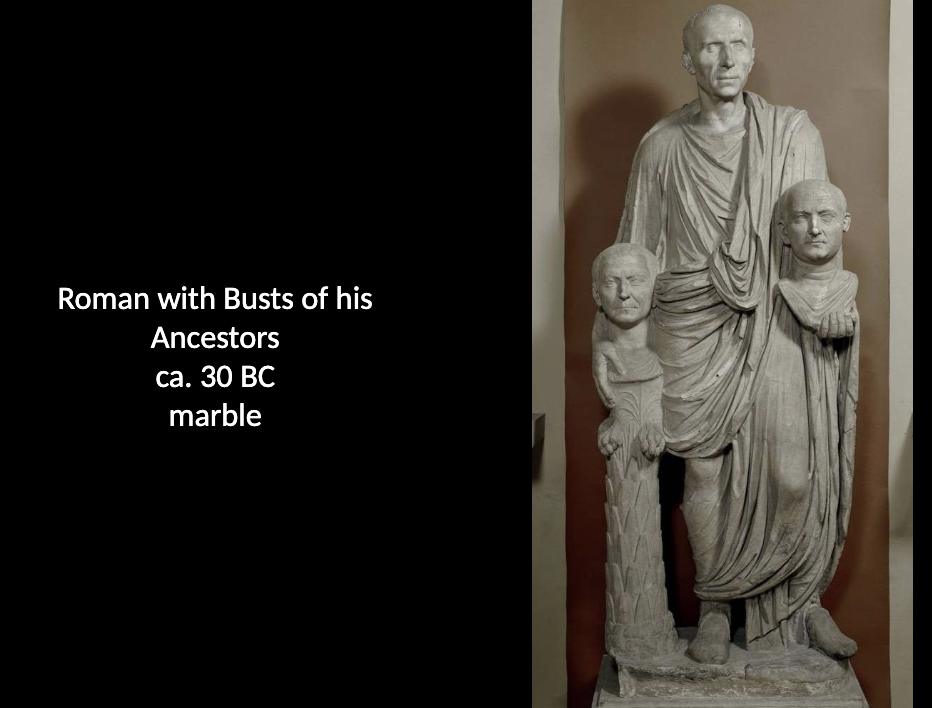
Roman with Busts of his Ancestors:
According to Sheldon Nodelman, what messages were communicated in Republican portraiture? How did the typical Roman Republican senator choose to represent himself in portraiture?
Holds ancestor portraits → genealogy = political capital
Demonstrates continuity of elite lineage
Nodelman states…
The portrait communicates dignity, authority, and seriousness.
Senators commissioned portraits emphasizing age to show legitimacy & service.
portraits = political tools
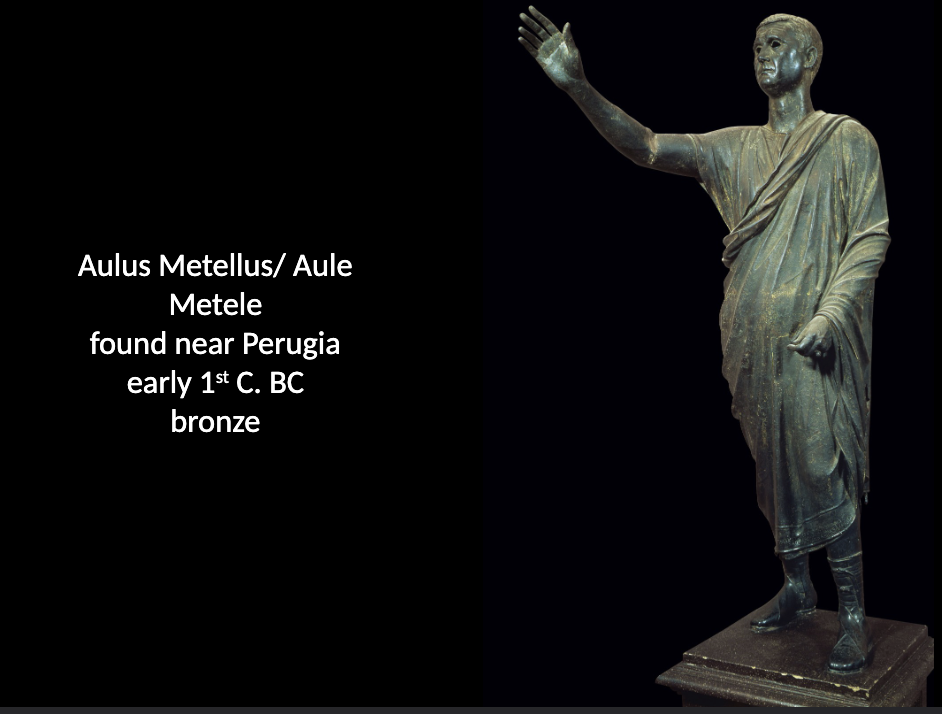
Anulus Metellus (Aule Metele). How is Aule Metele portrayed in his portrait statue? How does this statue reflect the absorption of Etruscan people and culture into rome?
Bronze statue with Etruscan inscription
Gesture: orator pose
Displayed assimilation of Etruscans into roman political culture
Wearing a toga represents citizenship and elite male identiy
Reflect expansion of roman idenity
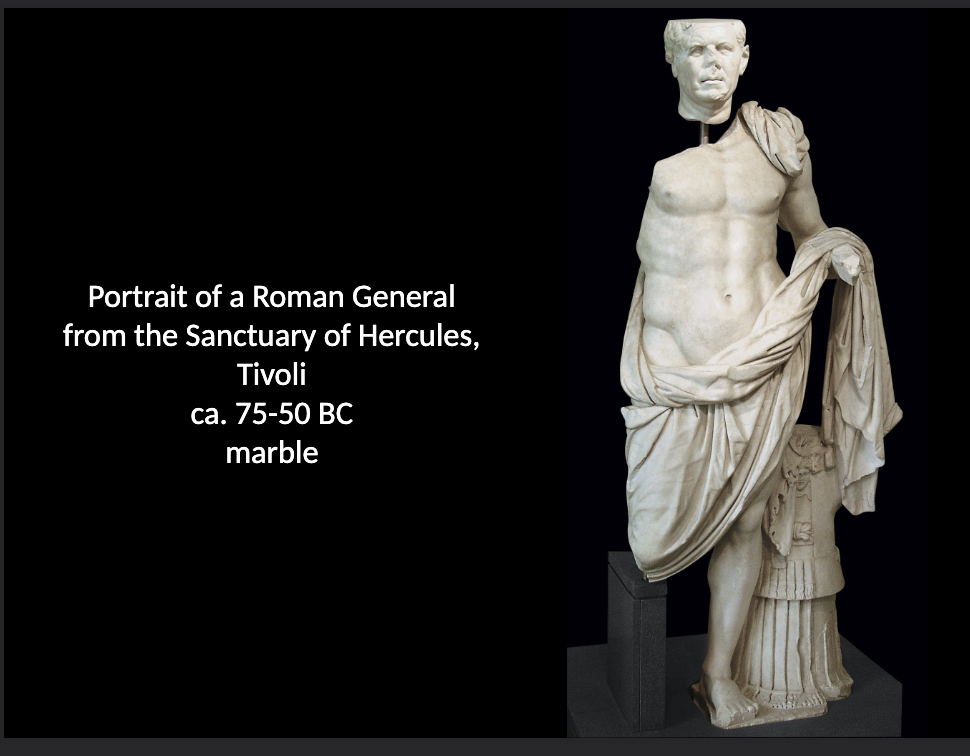
Portrait of a Roman general, from the Sanctuary of Hercules.
Found at the Sanctuary of Hercules in Tivoli
Hybrid style combining a veristic republican head with an idealized, muscular Greek-style body
Shows political messaging: experienced general (aged face) and power/heroic (Hellenistic body)
Emphasized Roman masculinity and authority through military imagery
Armor supports the body, but it is partially removed → heroic nudity influence
Reflects shifting artistic values during the late Republic as generals gained increasing personal power.
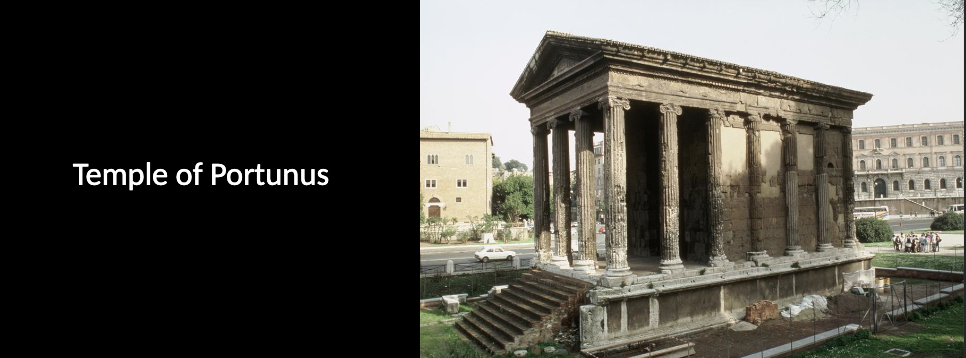
Temple of Portunus. As exemplified by the temple of Portunus in Rome, what are the features of a typical Roman temple?
Combines the Etruscan plan (front steps and deep porch) with Greek columns that are ionic.
Columns touching around the side
represents a blending of cultures → early Roman architectural identity.
 Note
Note  Flashcards (44)