People’s communes
 Call Kai
 Learn
Learn Practice Test
 Spaced Repetition
 Match
Match Flashcards
 Knowt Play
1/24

Earn XP
Description and Tags
Page 197
Name | Mastery | Learn | Test | Matching | Spaced | Call with Kai |
|---|
No analytics yet
Send a link to your students to track their progress
25 Terms
What is a commune?
A much larger version of a collective farm. They would have approximately 5,500 households within each one, compared to the APCs which had between 30 and 50 households within each one.
When and where was the Great Leap forward (officially known as the Three Red Banners) announced?
At the 8th CCP Congress of May 1958.
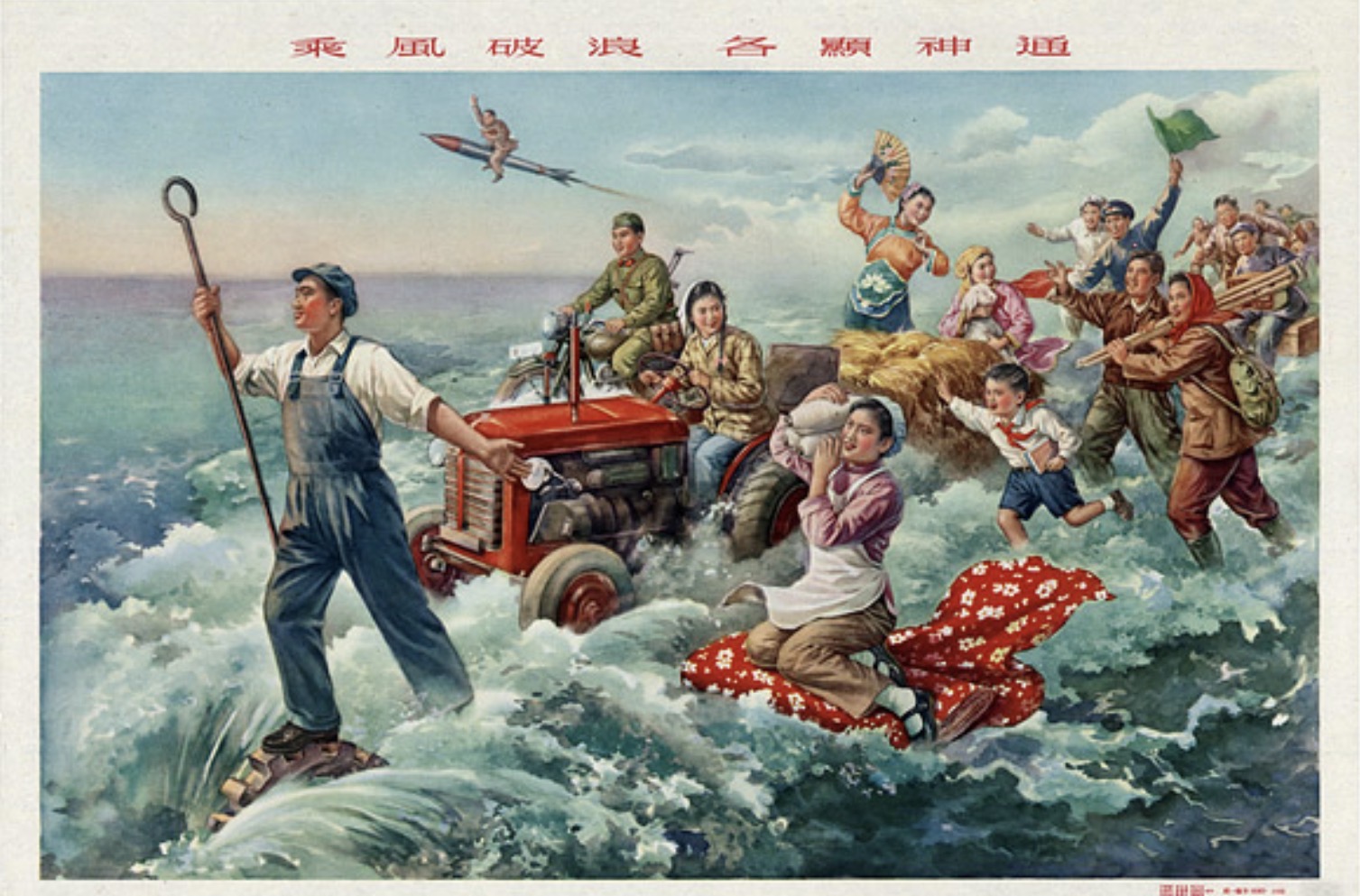
What was the Great Leap Forward supposed to involve?
Developing industry and agriculture at the same time in what Mao referred to as ‘walking on two legs’.
What reasons are given for launching the communes?
(also reasons for launching the GLF)
Mao was very happy with the speed of collectivisation and wanted to continue to find ways to maximise food production
Bigger collectives ought to enable the pooling of even larger resources of equipment and labour which would mean higher food yields and more peasants being freed up to work on construction schemes
After Mao’s tour of the countryside in the spring of 1957 Mao he came back convinced he had the backing of the peasantry and local party activists to push for a more ambitious collective scheme
Mao wanted to prevent the revolution losing impetus as he feared the revolution would be in danger of becoming becalmed by the bureaucrats.
What else was the labour force being mobilised to do in these new communes?
Water conservancy and other civil engineering schemes
The production of what was made a priority?
Steel and grain. Mao wanted China’s economy to overtake Britain’s. The farmers would produce grain in order to feed the workers who would make the steel.
Why was Mao keen on de-centralising economic planning?
So that enthusiastic local officials could push changes forward without being restrained by government technical experts.
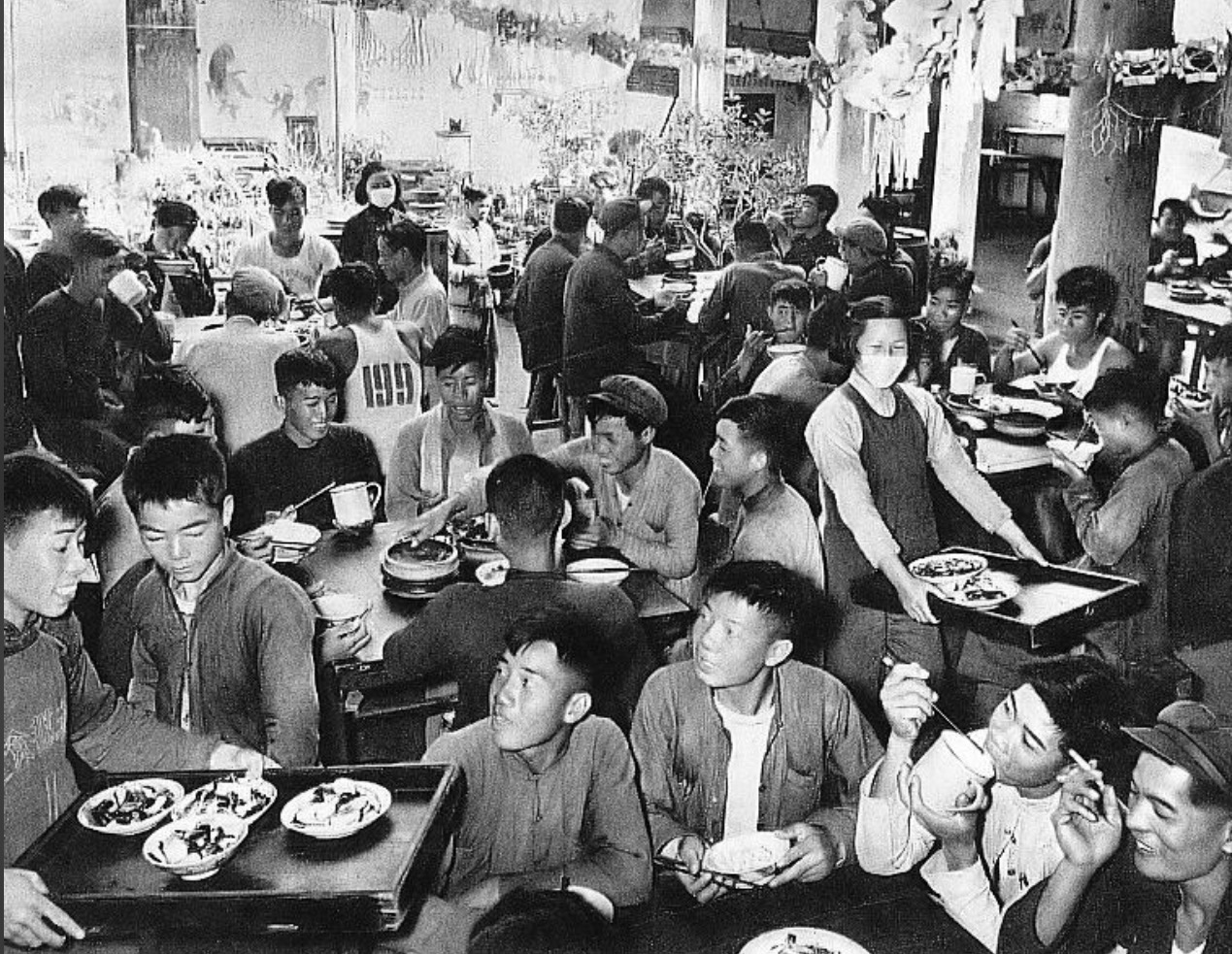
What was the first People’s Commune called? When and where was it established? What had it achieved?
It was called Sputnik and was established in the Henan province in April 1958. It had merged 27 collectives and brought over 9,000 households under its control.
What inspired Mao to use the term People’s Communes?
He wanted to recreate the spirit of the Paris Commune of 1871 which was left wing worker’s government that ran the city for several months after the Franco-Prussian War.
What happened over the next two years from 1958?
750,000 collectives were merged into some 26,000 communes which in total contained about 120 million households.
What was communal living? Describe it. What stayed the same?
Peasants eating together in communal canteens and sleeping in communal dormitories. Villagers stayed in the same houses as before and worked with the same people as before
How were peasants working lives dictated?
They were directed by new management teams who divided them into production brigades.
What were the communes expected to do independently?
The commune would organise whatever industrial enterprises were easy to do locally e.g. flour mills, brick works. Also they were expected to allocate labourers on new construction projects.
What was the goal of the communes? What were they supposed to become?
They were supposed to become the unit of local government and provide local services in order to free people of domestic responsibilities so they could work in civil engineering projects.
What were the ‘ten gurantees’?
Communes claimed to offer people meals, clothes, housing, schooling, medical attention, burial, haircuts, theatrical entertainment, money for heating in winter and money for weddings. This was Mao’s attempt to put into practice some ideals of ‘utopian socialism’ and move away from a monetary economy.
What did peasants have to surrender when they entered the commune?
All their private property without any compensation. In this way private farming was abolished.
Why were peasants now unmotivated to work under the communes system?
Under the collective system peasants were rewarded with work points which acted as an incentive to work harder. However this was now pointless because now the state was supposedly providing for everybody’s needs.
How much sleep were workers supposed to have theoretically?
6 hours every 2 days as team leaders were competing to out produce neighbouring communes so they wanted them to work longer hours.
What else were peasants unhappy about with the communes other than the loss of personal possessions?
The loss of personal freedom as everyone between the ages of 15 and 50 had to be militia members and periodically train with weapons.
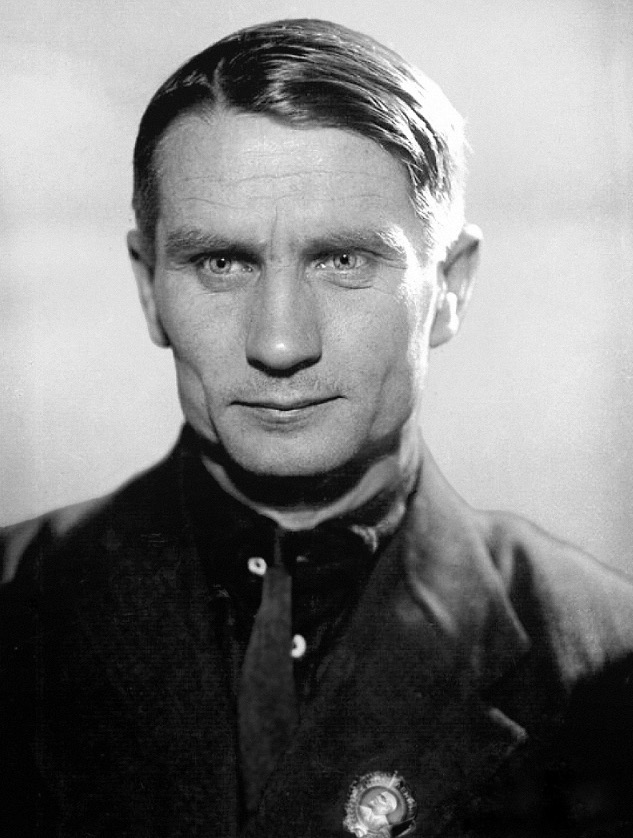
Who was Trofim Lysenko?
A Ukrainian agricultural scientist, whose theories Stalin had relied upon after the Russian Famine.
When was Lysenkoism made an official policy?
In 1958 with an 8 point programme that farmers had to follow.
Which of Lysenko’s ideas were broadly common sense?
Development of new farm tools
use of new breeds and seeds
improved field management
increased irrigation
Which of Lysenko’s ideas were potentially dangerous?
Close planting
increased fertilisation
deep ploughing
What was Lysenko’s most catastrophic idea?
Pest control which focused on killing birds to prevent them eating seed which would upset the ecological balance.
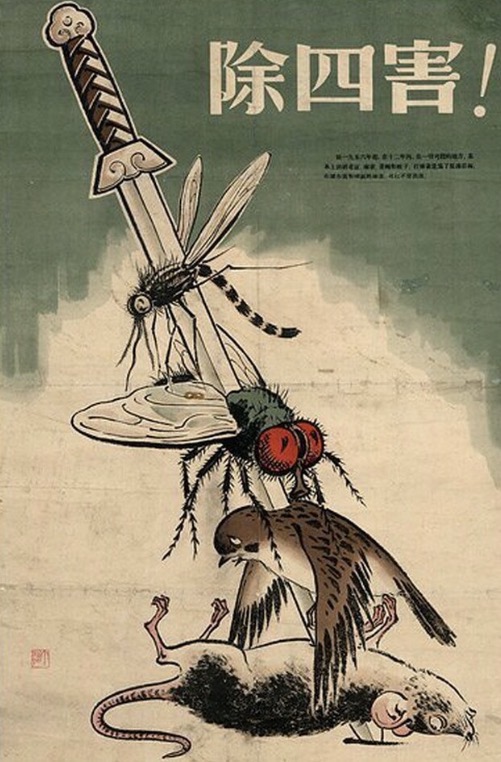
What was the Four Pests Campaign?
Launched in 1958 in the early days of the GLF the four pests were rats, flies, mosquitoes and sparrows. The war on sparrows (the Kill Sparrows Campaign) was particularly catastrophic and would have severe negative consequences on the environment.