Week 2 Anatomy and Physiology of Swallowing: Key Structures and Neural Control
 Call Kai
 Learn
Learn Practice Test
 Spaced Repetition
 Match
Match Flashcards
 Knowt Play
1/65

There's no tags or description
Looks like no tags are added yet.
Name | Mastery | Learn | Test | Matching | Spaced | Call with Kai |
|---|
No analytics yet
Send a link to your students to track their progress
66 Terms
What is the primary function of the oral cavity in swallowing?
Responsible for bolus containment and preparation.
What role does the oropharynx play in swallowing?
It is involved in propulsion and velopharyngeal function.
What is the function of the hypopharynx?
It provides muscular propulsion in the pharynx.
What is the role of the esophagus in the swallowing mechanism?
It facilitates the esophageal opening and peristaltic wave.
Which muscle provides the driving force to propel the bolus?
The tongue.
What are the functions of the tongue during swallowing?
Gathers foods and liquids, prepares bolus for transit, mixes foods with saliva.
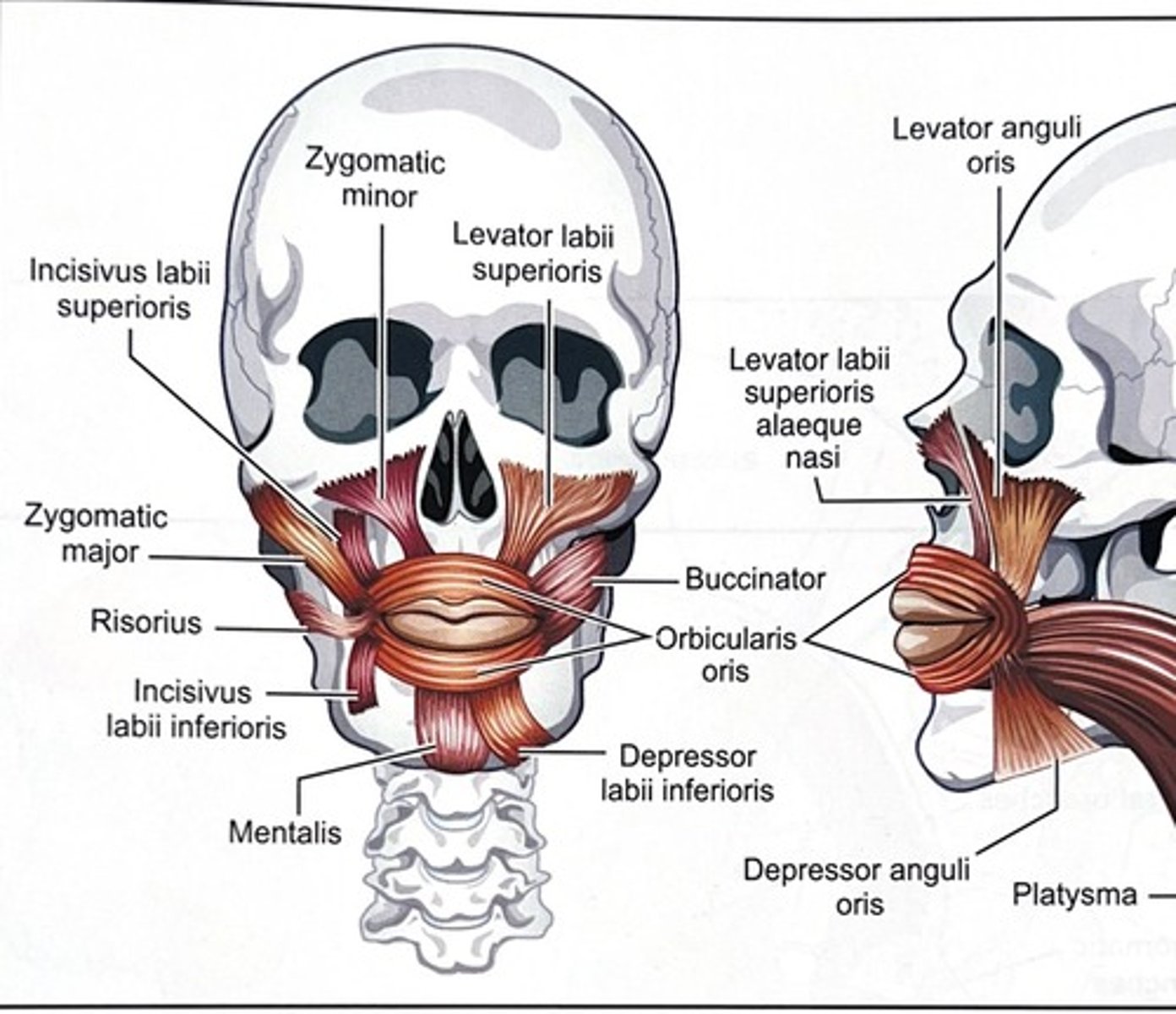
What muscles seal the lips during swallowing?
Buccinators and orbicularis oris.
What is the function of the buccinator muscle?
It presses cheeks against teeth and keeps food between teeth during mastication.
Which nerve innervates the levator labii superioris muscle?
VII Facial nerve.
What action does the depressor labii inferioris perform?
Lowers the lower lip.
What is the role of the depressor anguli oris muscle?
Aids in opening the mouth.
What does the mentalis muscle do?
Acts to lift the lower lip and pulls the chin upward.
What is the function of the platysma muscle?
Depresses the mandible and helps to retract the lower lip.
What do the mandible and maxilla form?
They form the lower portion of the anterior face and provide the framework of the mouth.
What is the fixed portion of the jaw called?
The maxilla.
What is the moving portion of the jaw called?
The mandible.
What are the suprahyoid muscles responsible for?
Elevating the hyoid bone.
What is the primary function of the infrahyoid muscles?
To anchor or lower the hyoid bone and elevate the thyroid cartilage.
Which nerve innervates the masseter muscle?
Trigeminal CN V
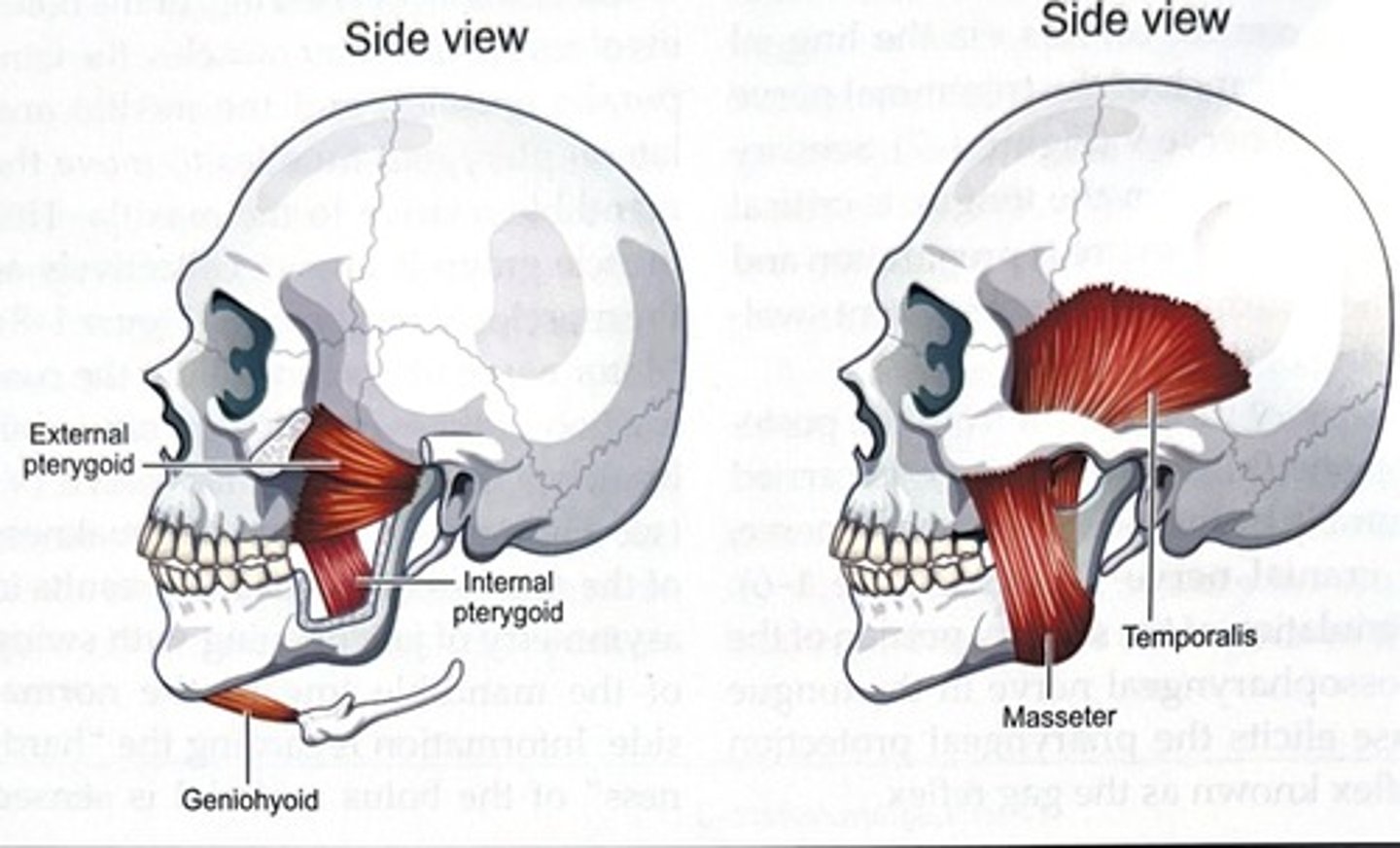
What action does the temporalis muscle perform?
Retracts the mandible and aids in closing the mouth.
What is the action of the lateral pterygoid muscle?
Lateral motion of the mandible, depresses the mandible, and opens the mouth.
Which muscle elevates the hyoid bone and aids in depressing the mandible?
Mylohyoid
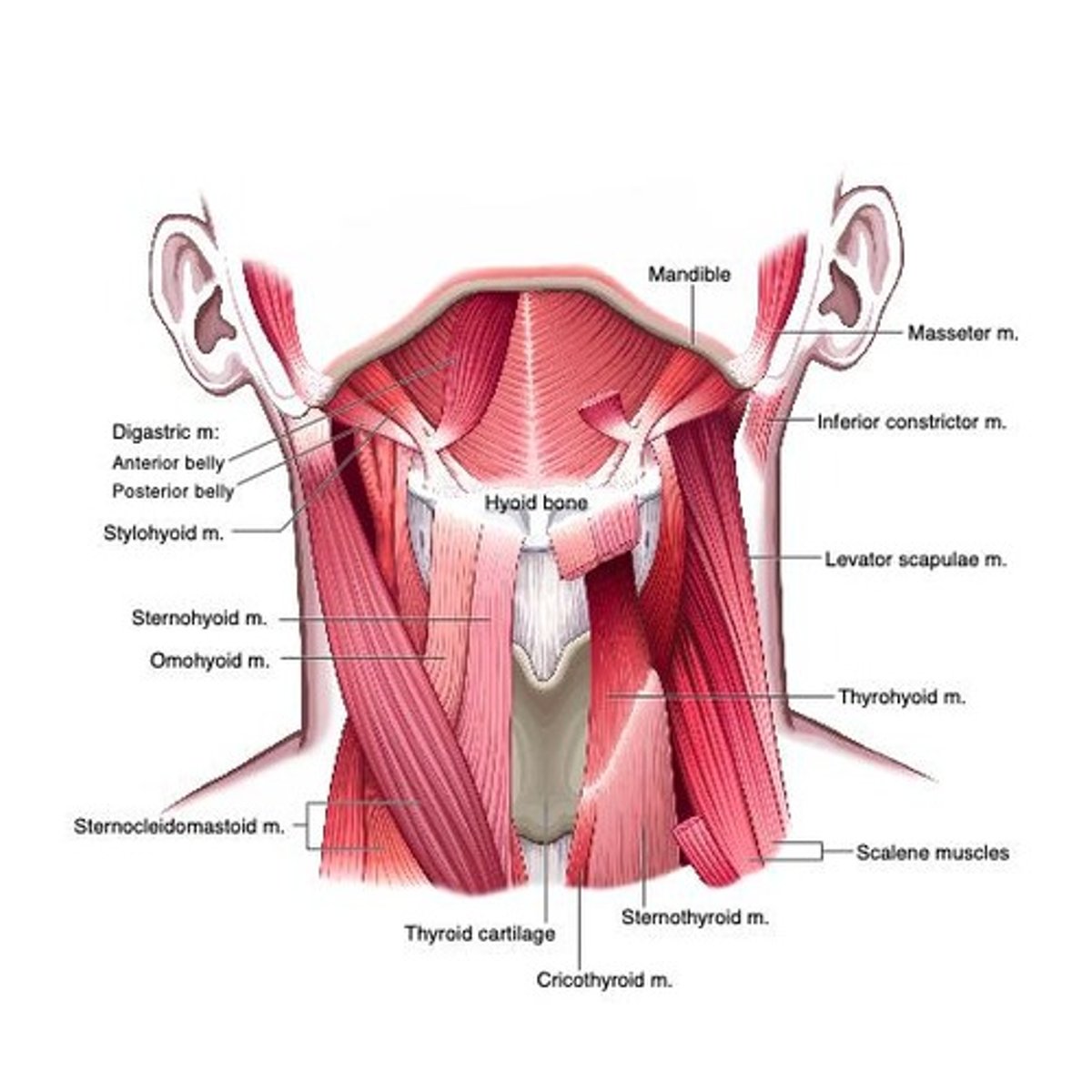
What is the innervation of the digastric muscle?
Trigeminal CN V and Facial CN VII
What is the action of the omohyoid muscle?
Lowers the hyoid bone.
Which nerve innervates the sternohyoid muscle?
Branches of Spinal Nerves C 1-3
What is the function of the genioglossus muscle?
Depresses the tongue and moves it anteriorly.
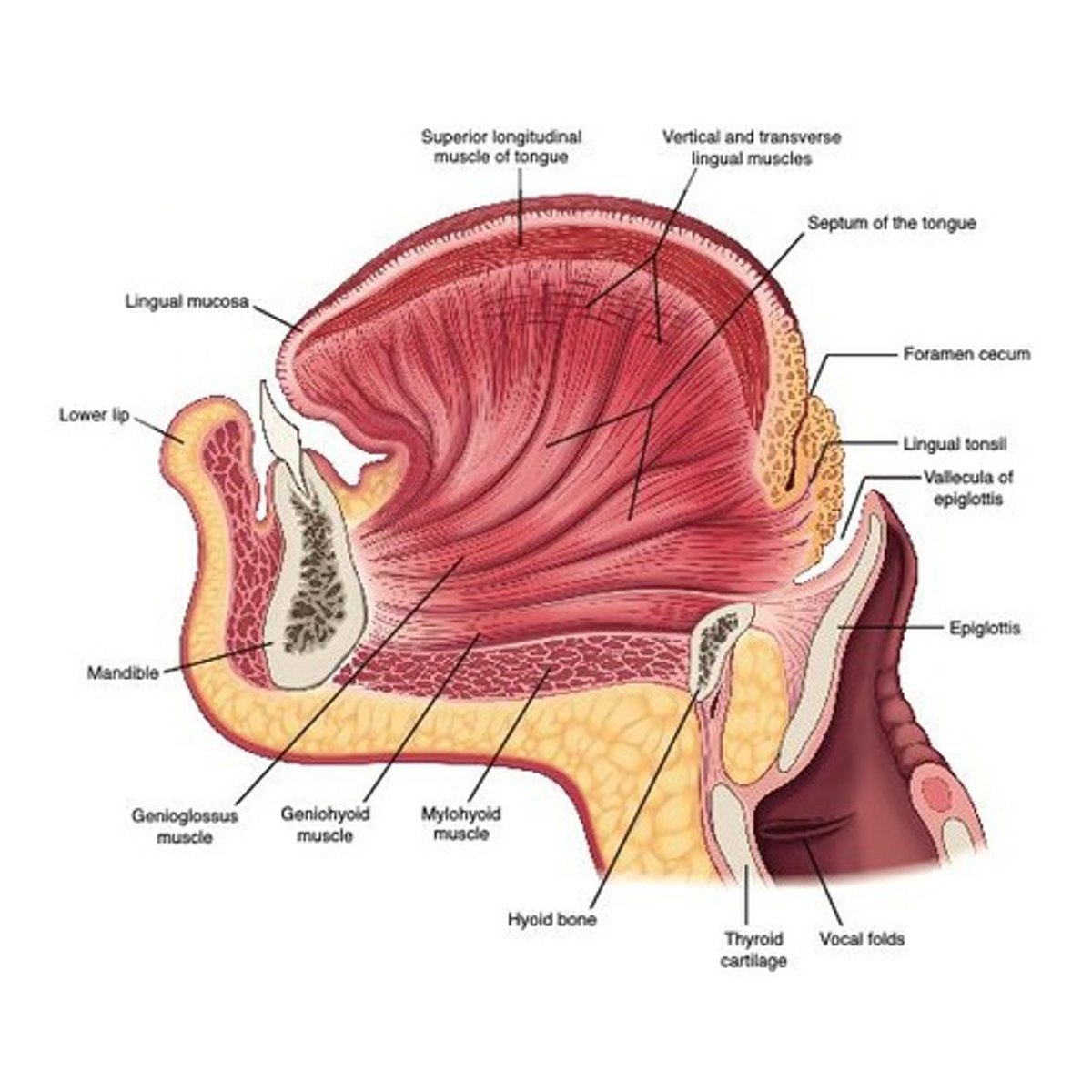
Which muscle elevates the posterior tongue and lowers the soft palate?
Palatoglossus
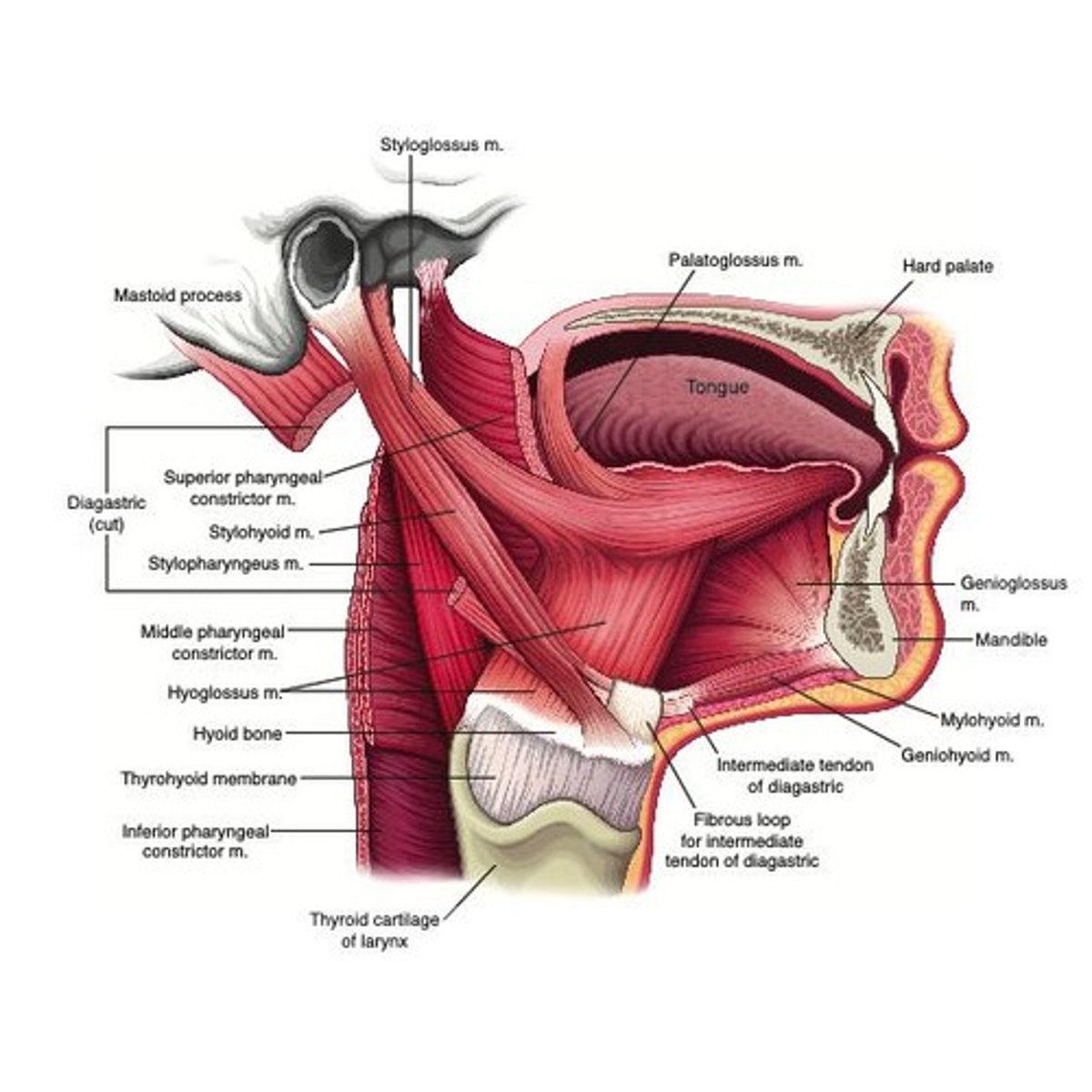
What action does the superior constrictor muscle perform?
Constricts the upper pharynx.
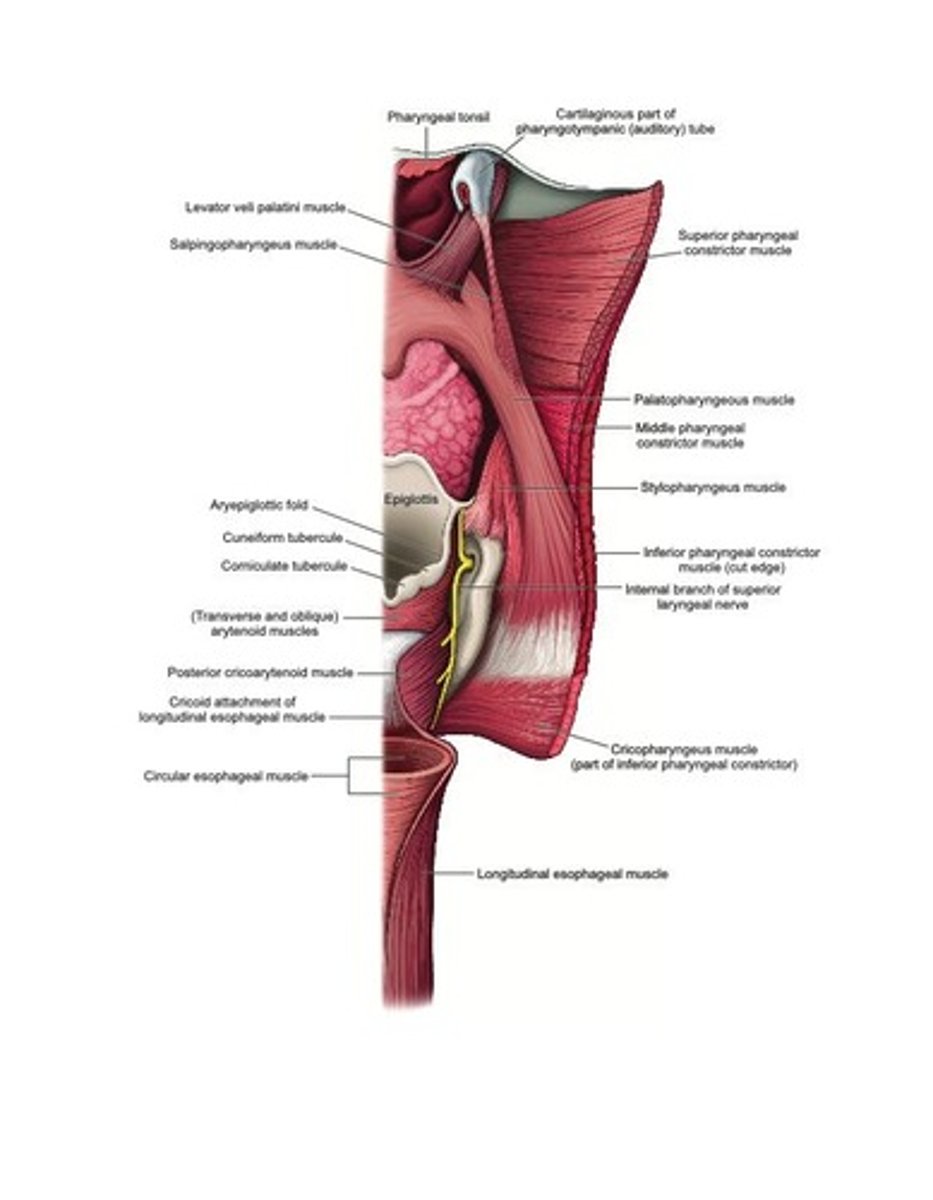
What is the role of the larynx during swallowing?
Elevates, moves anteriorly, and closes the vocal folds.
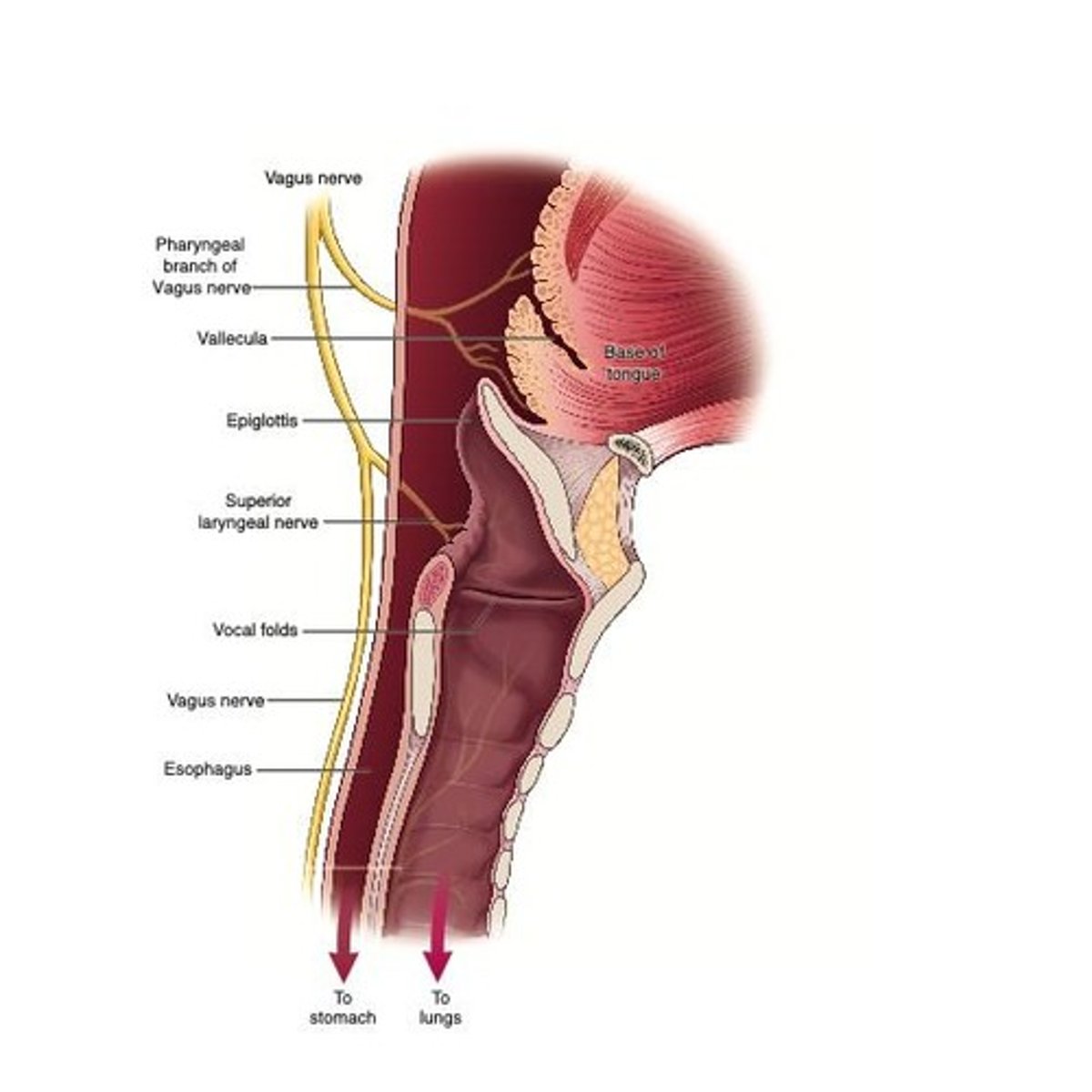
What happens during the closure of the laryngeal sphincter?
True vocal folds close, false vocal folds close, and the epiglottis closes over the laryngeal vestibule.
What is the function of the upper esophageal sphincter (UES)?
Prevents air from entering the gastrointestinal tract and relaxes during pharyngeal peristaltic action.
What is the central neural control of swallowing?
Cortical centers in both hemispheres and a 'swallowing center' in the brainstem.
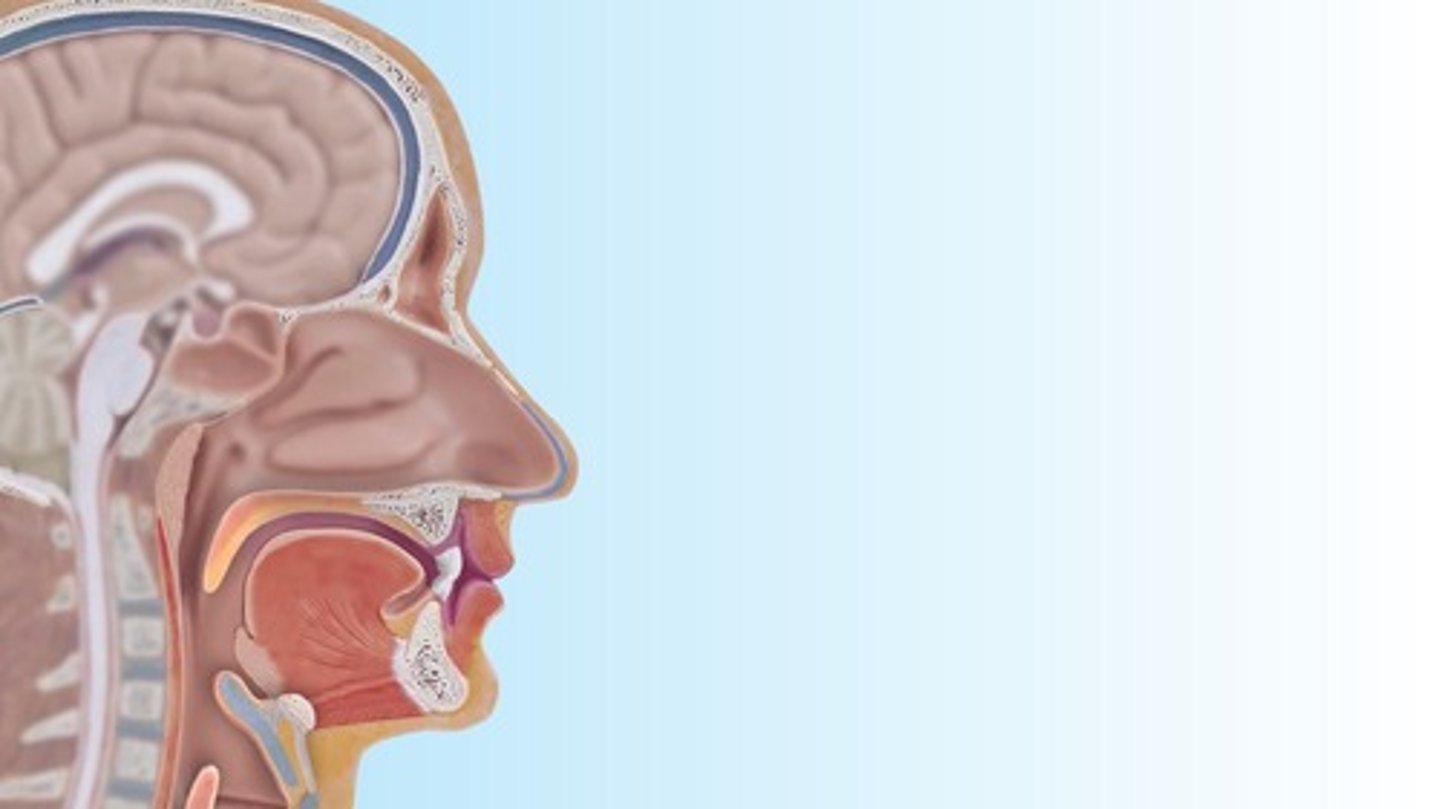
Which cranial nerve is primarily responsible for triggering the swallowing reflex?
Glossopharyngeal Nerve (CN IX)
What is the action of the vertical intrinsic muscle of the tongue?
Flattens and widens the tongue.
What is the innervation of the hyoglossus muscle?
Hypoglossal CN XII
What is the action of the inferior constrictor muscle?
Part of the esophageal sphincter (UES) and constricts.
What happens if there is a lack of closure in the laryngeal sphincter?
It can lead to penetration, aspiration, and decreased ability to generate adequate pressures to propel the bolus.
What is the role of the transverse intrinsic muscle of the tongue?
Elongates and narrows the tongue.
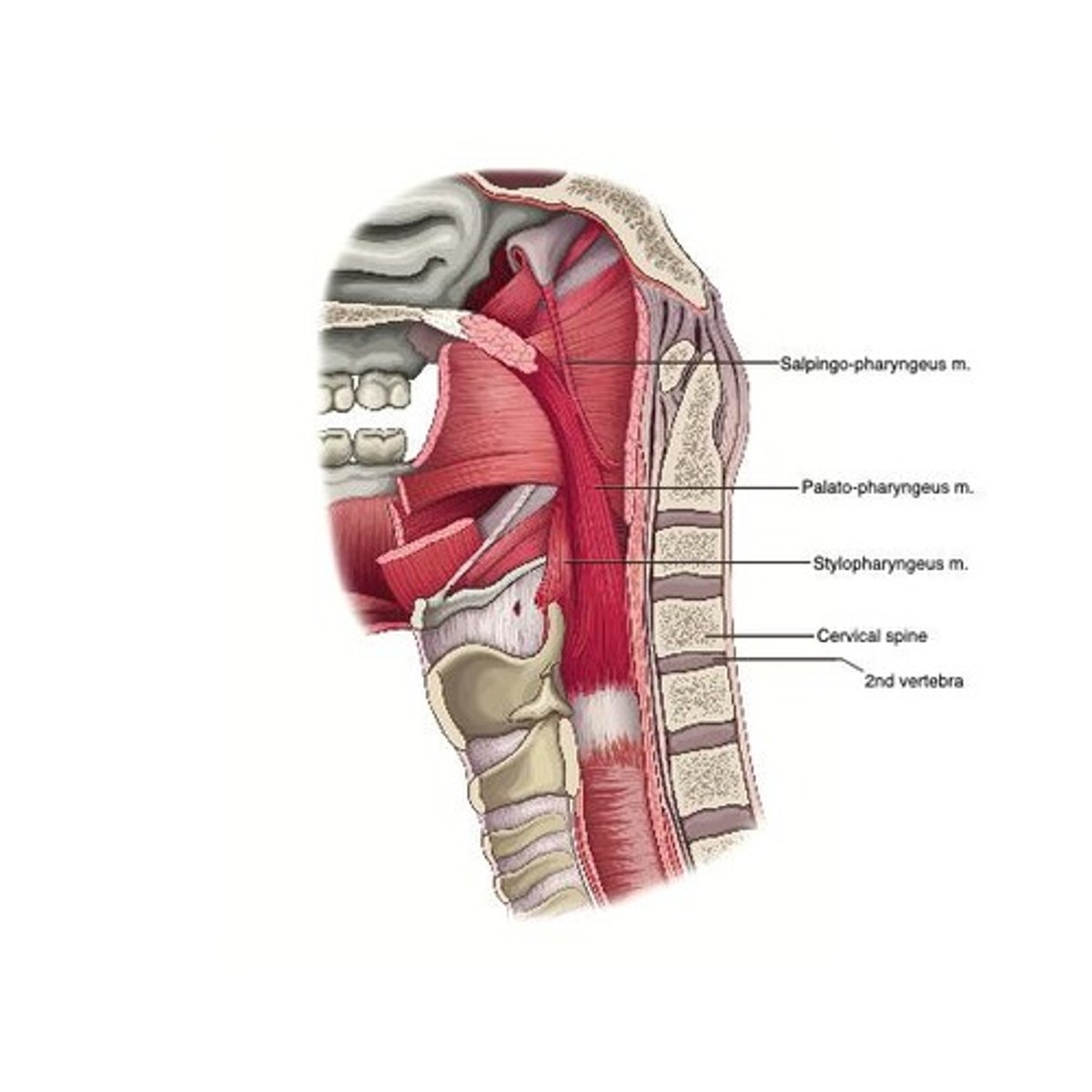
What is the action of the palatopharyngeus muscle?
Elevates the pharynx and larynx.
What is the function of the styloglossus muscle?
Elevates and retracts the tongue.
What is the innervation of the salpingopharyngeus muscle?
Pharyngeal Plexus CN X
What is the role of the lower esophageal sphincter?
Relaxes to permit bolus entry into the stomach and prevents gastroesophageal reflux.
What is the action of the longitudinal intrinsic muscle of the tongue?
Elevates the tip of the tongue and depresses the apex and sides.
What is the function of the Vagus Nerve (CN X) in swallowing?
It provides sensory feedback from the valleculae, epiglottis, and lower pharyngeal walls, and controls pharyngeal constriction and airway protection.
Which cranial nerve is responsible for sensing soft palate and anterior oral cavity stimulation?
Trigeminal Nerve (CN V)
What role do efferent nerves play in swallowing?
They deploy motor signals to contract and relax the muscles involved in swallowing.
Which muscles are controlled by the Trigeminal Nerve (CN V) during the oral phase?
Muscles of mastication (masseter, temporalis, pterygoids) and the mylohyoid and anterior digastric muscles.
What is the role of the Facial Nerve (CN VII) in swallowing?
It controls lip closure (orbicularis oris) and cheek tension (buccinator) to keep the bolus inside the mouth.
How does the Hypoglossal Nerve (CN XII) contribute to swallowing?
It commands the intrinsic and extrinsic muscles of the tongue to propel the food bolus backward.
What does the Glossopharyngeal Nerve (CN IX) innervate during swallowing?
It innervates the stylopharyngeus muscle, which elevates and shortens the pharynx.
What is the primary function of the Vagus Nerve (CN X) in the pharyngeal phase?
It controls the pharyngeal constrictors and intrinsic laryngeal muscles to protect the airway.
What is the role of the Upper Esophageal Sphincter (UES) in swallowing?
It is relaxed by the Vagus Nerve (CN X) to allow food to enter the esophagus.
What happens during the Oral Preparatory Phase?
Food texture is sensed, and muscles manipulate food to form a bolus.
What is the main action of the Hypoglossal Nerve (CN XII) during the Oral Transit Phase?
It drives the tongue to anchor against the roof of the mouth and roll the bolus backward.
What triggers the involuntary pharyngeal reflex?
The Glossopharyngeal Nerve (CN IX) senses the bolus hitting the posterior mouth and faucial pillars.
What occurs during the Pharyngeal Phase of swallowing?
Rapid motor actions protect the airway and open the throat to receive the bolus.
How does the Vagus Nerve (CN X) assist in the Esophageal Phase?
It coordinates peristalsis and triggers relaxation of the upper and lower esophageal sphincters.
What is apnea in the context of swallowing?
It is the coordinated stoppage of breathing that occurs during swallowing.
What did Perlman and colleagues demonstrate about swallowing and respiration?
They showed that respiratory events of swallowing occur simultaneously in various parts of the swallowing pathway.
What factors can affect the duration of an apnea event during swallowing?
The state of the patient, the bolus, and the age of the patient.
Which cranial nerve is primarily responsible for the sensory feedback during the swallowing process?
The Vagus Nerve (CN X)
What is the role of the buccinator muscle in swallowing?
It helps maintain cheek tension to keep the bolus inside the mouth.
What is the significance of the cricopharyngeus muscle in swallowing?
It is relaxed by the Vagus Nerve (CN X) to allow food to pass into the esophagus.
What is the primary motor driver of the Pharyngeal Phase?
The Vagus Nerve (CN X)
Which cranial nerve carries taste from the front two-thirds of the tongue?
Facial Nerve (CN VII)
What is the role of the tensor veli palatini during swallowing?
It assists in sealing the nasal cavity.