MICR20 SJSU HAWKINS CHP 19
 Call Kai
 Learn
Learn Practice Test
 Spaced Repetition
 Match
Match Flashcards
 Knowt Play
1/55

There's no tags or description
Looks like no tags are added yet.
Name | Mastery | Learn | Test | Matching | Spaced | Call with Kai |
|---|
No analytics yet
Send a link to your students to track their progress
56 Terms
three groups of gram+ bacilli
- endospore formers
- non-endospore formers
- irregular shaped & staining properties
endospore
- dense survival unit that develops in a vegetative cell in response to nutrient deprivation
- resistant to heat, drying, radiation, & chemicals
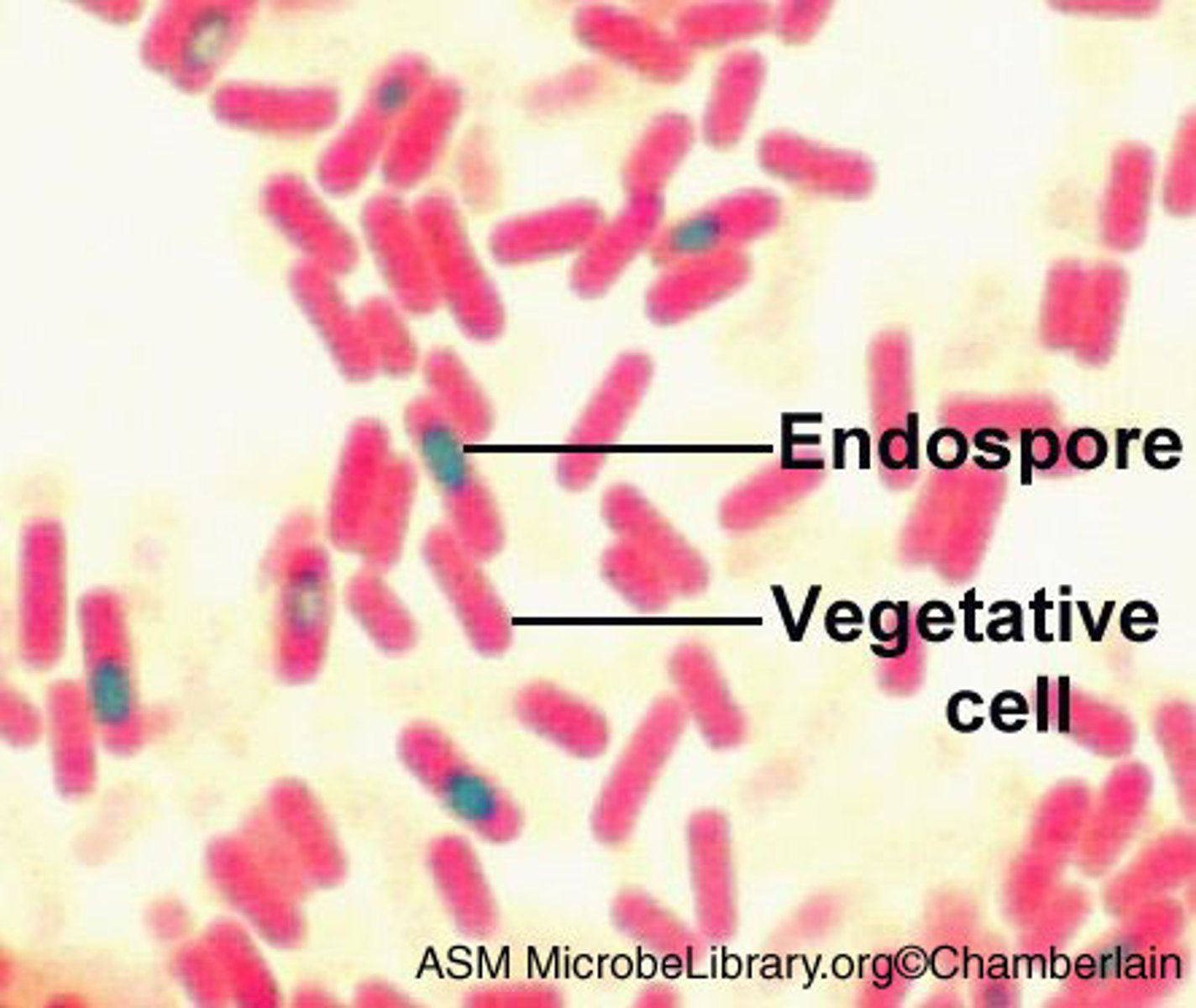
general characteristics of genus Bacillus
- gram positive
- endospore-forming
- motile rods
- mostly saprobic
- aerobic & catalase positive
- source of antibiotics
- primary habitat is soil
- versatile in degrading complex macromolecules
saprobic
feed on dead organic matter
Bacillus anthracis
- large, block-shaped angular rods
- nonmotile
- central spores develop under all conditions in living body
- virulence factor = polypeptide capsule & exotoxins (edema, cell death)
- cases in livestock from Africa, Asia, & Middle East
- 3 types: cutaneous, pulmonary, gastrointestinal
cutaneous
- spores enter through skin
- black sore; eschar (dead tissue on skin)
- least dangerous
pulmonary
inhalation of spores from animal products or soil
gastrointestinal
- ingested spores
- rare
- lethal
general characteristics of Clostridium
- gram positive
- spore-forming rods
- anaerobic
- catalase negative
- 120 species
- synthesize organic acids, alcohols, & exotoxins
- cause wound infections, tissue infections, & food intoxications
Clostridium perfringens
- most frequent clostridia involved in soft tissue & wound infections
- virulence factors: alpha toxin, collagenase, hyaluronidase, DNase
gas gangrene/myonecrosis
- 2 forms: anaerobic cellulitis & true myonecrosis
- caused by Clostridium spp. (most commonly Clostridium perfringens)
anaerobic cellulitis
bacteria spread within damaged necrotic muscle tissue, producing toxins & gas, but infection remains localized
true myonecrosis
- More destructive, extensive gas gangrene/myonecrosis
- spore germination, vegetative growth & release of virulence factors
- fermentation of muscle carbohydrates results in the formation of gas & further tissue destruction
treatment & prevention of gas gangrene
- immediate cleansing of dirty wounds, deep wounds, compound fractures, & infected incisions
- debridement of disease tissue
- large doses of cephalosporin or penicillin
- hyperbaric oxygen therapy
- no vaccines
debridement
removal of dead or damaged tissue from a wound to promote healing
tetanus/lockjaw
- neuromuscular disease
- produced by Clostridium tetani
- spores enter body through accidental puncture wounds, burns, umbilicus, frostbite, & crushed body parts
- anaerobic environment required for vegetative cells to grow & release toxin
- "lock jaw" due to early effect of disease on jaw muscle
tetanospasmin
- neurotoxin causes paralysis by binding to motor nerve endings
- blocks release of neurotransmitter for muscular contraction inhibition; muscles contract uncontrollably
- death most often due to paralysis of respiratory muscles
Clostridium difficile Infection
- caused by Clostridium difficile
- produces enterotoxins
- major cause of diarrhea in hospital
- 2nd most common intestinal disease after salmonellosis
enterotoxins
toxin produced that target intestinal tract
Clostridial food poisoning
- Clostridium botulinum
- Clostridium perfringens
Clostridium botulinum
- spore-forming anaerobe
- inhabits soil & water
- spores present on food when gathered & processed
- Botulinum toxin
Clostridium perfringens FP
- mild intestinal illness
- 2nd most common form of FP
Botulism
- intoxication associated with inadequate food preservation
- Botulinum toxin carried to neuromuscular junctions
- block release of acetylcholine
- double or blurred vision, difficulty swallowing, neuromuscular symptoms
acetylcholine
- neurotransmitter that plays a crucial role in physiological processes
- muscle movement, heart rate regulation & cognitive functions
infant botulism
- caused by ingested spores that germinate & release toxin
- most common type of botulism in US
- immature state of neonatal intestine & resident microbiota allow spores to gain a foothold, germinate & produce neurotoxin
- results in baby flaccid paralysis (floppy baby syndrome)
wound botulism
- spores enter wound & cause FP symptoms
- increased cases of this reported in injecting drug users
treatment & prevention of botulism
- determine presence of toxin in food, intestinal contents or feces
- administer antitoxin; cardiac & respiratory support
- infectious botulism treated w/ penicillin
- proper method of preserving & handling canned foods; preservatives
Clostridial Gastroenteritis
- caused by Clostrium perfringens
- spores contaminate food that has not been cooked well enough to destroy spores
- spores germinate & multiply
- when consumed, toxin produced in intestine; acts on epithelial cells, acute abdominal pain, diarrhea, & nausea
general characteristics of Mycobacteria: acid-fast Bacilli
- gram positive irregular bacilli
- acid-fast staining
- obligate aerobes
- catalase positive
- doesn't form capsules, flagella, or spores
- grow slowly
Mycobacterium tuberculosis
- tubercle bacillus (long, thin rod that grows in curvy masses
- no exotoxins or enzymes that contribute to infectiousness
- virulence factors = contain complex waves & cord factor that prevent destruction by lysosomes or macrophages
tuberculosis
- inadequate nutrition
- debilitation of immune system
- poor access to medical care
- lung damage
- genetics
- transmitted by airborne respiratory droplets
tuberculosis divisions
- primary tuberculosis
- secondary TB
- disseminated/extrapulmonary TB
primary TB
- infectious dose: 10 cells
- after 3-4 weeks, forms tubercules
- if center of tubercle breaks down into necrotic caseous lesions, they heal by calcification
detecting TB
- tuberculin sensitivity in-vivo (Mantoux test)
- in vitro TB test (QuantiFERON-TB Gold test, T-SPOT TB test)
- chest x-rays (non-diagnostic, used to rule out pulmonary TB)
- acid-fast staining (Ziehl-Neelsen stain; Fluorescence stain)
- cultural isolation & biochemical testing (most accurate diagnosis)
in-vivo
within living organism
management & prevention of TB
- 6 to 24 months of at least 2 drugs from 11 listed
- stains of M. tuberculosis resistant to at least 1 of 11 listed
Mycobacterium leprae
- Hansen's bacillus/Hansen's Disease
- obligate parasite
- slowest growing of all species
- multiplies within host cells in large packets called globi
- causes leprosy
- macrophage phagocytize bacilli, but weakened macrophage or slow T cell may not kill it
leprosy
chronic disease that begins in skin & mucous membranes & progresses into nerves
epidemiology & transmission of leprosy
- endemic regions throughout world
- transmission not fully verified
- not highly virulent
endemic
regularly occurring within a area or community
Tuberculoid/paucibacillary leprosy
- few bacilli in lesions
- shallow skin lesions in many areas
- dermal nerve damage; loss of pain sensation in lesions
- no skin modules
- occasional mutilation of extremeties
- reactive to lepromin
- lymph nodes not infiltrated by bacilli
- well developed cell-mediated response
- more easily treated
Lepromatous/multibacillary leprosy
- many bacilli in lesions
- numerous deeper lesions concentrated in cooler areas of body; causes severe disfigurement
- sensory loss more generalized; occurs late in disease
- gross skin modules
- mutilation of extremities common
- not reactive to lepromin
- lymph nodes massively infiltrated by bacilli
- poorly developed T-cell response
lepromin
extract of the leprosy bacillus injected intradermally to detect delayed allergy to leprosy
diagnosing leprosy
- combination of symptomology, microscopic examination of lesions, & patient history
- numbness in hands & feet, loss of heat & cold sens., muscle weakness, thickened earlobes, chronic stuffy nose
- detection of acid-fast bacilli in skin lesions, nasal discharges, & tissue samples
treatment of leprosy
- long-term combined therapy
- prevention requires constant surveillance of high-risk pop.
- no vaccine for leprosy
Disseminated Micobacterial Infection in AIDS
- caused by Mycobacterium avium complex bacilli
- 3rd most common cause of death in AIDS patients
nontuberculous lung disease
- Mycobacterium kansasii causes pulmonary infections in adult white males w/ emphysema or bronchitis
Mycobacterium marinum
- water inhabitant
- lesions develop after scraping on swimming pool concrete
- disease: fish tank granuloma
Mycobacterium scrofulaceium
- infects cervical lymph nodes in children living in Great Lakes region, Canada & Japan
Mycobacterium paratuberculosis
- raw cow's milk
- recovered from 65% of individuals diagnosed w/ Crohn's disease
bacteria that produce endospores
Bacillus & Clostridium
detecting endospores
- staining techniques & phase contrast microscopy
- culture methods
- biochemical tests
- molecular techniques
difference b/w Bacillus & Clostridium
- bacillus is aerobic & clostridium is anaerobic
- both rod-shaped & form endospores
- bacillus forms large, colonies; clostridium form smaller, irregular colonies
- bacillus spores typically located centrally; clostridium spores are often terminal, causing bulges
Mantoux test (tuberculin skin test)
- to determine if a person has been exposed to Mycobacterium tuberculosis
- 0.1 mL of purified protein derivative tuberculin injected under skin in forearm
- injection site examined 48 to 72 hrs later
- positive if there is induration at injection site
induration
raised, hardened area of skin
non-tuberculosis mycobacteria
- M. marinum
- M. scrofulaceium
- M. paratuberculosis
- M. avium complex
- M. kansasii