east asian art midterm
 Studied by 0 people
 Call Kai
 Learn
Learn Practice Test
 Spaced Repetition
 Match
Match Flashcards
 Knowt Play
1/62

There's no tags or description
Looks like no tags are added yet.
Name | Mastery | Learn | Test | Matching | Spaced |
|---|
No study sessions yet.
63 Terms
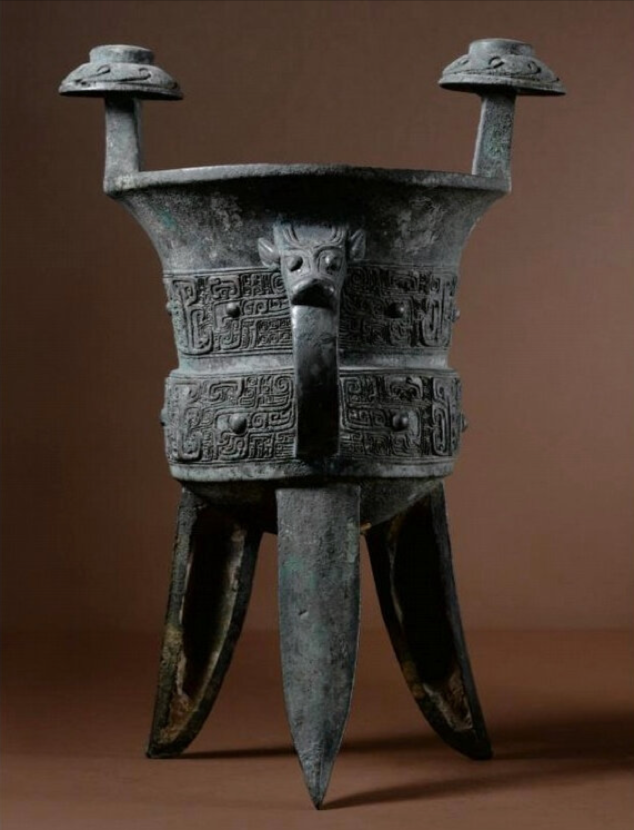
Ancestor worship:
Function: heating wine
Toatie: “monster mask”
abstract frontal super natural creature
dense anad spiral motifs
a cloud or thunder patterns, in addition to being auspicious, they represent qi or energy
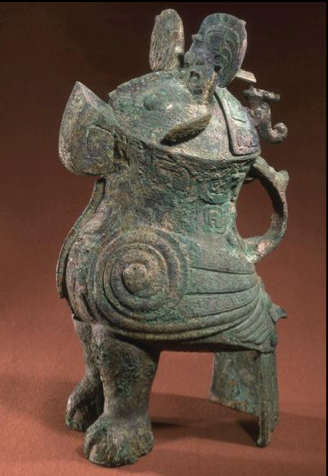
Owl shaped wine vessel (zun), Shang Dynasty, China
1200 BCE
excavated in 1976 from Lady Hao’s tomb, a consort of King Wu Ding
Resembles an owl in the feet and spout and ears and tail
and other animals are incorporated, coiled snakes, the knobs on the lid take the shape of a bird and dragon.
spiraling cloud motifs in low relief
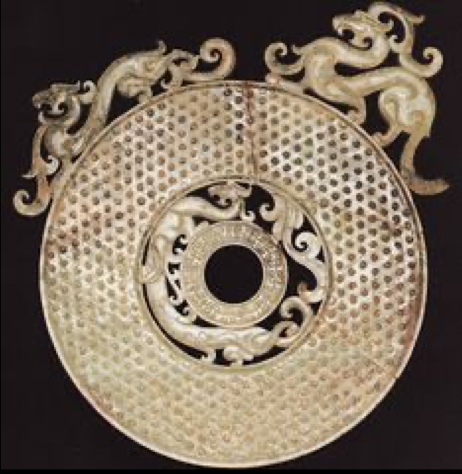
Disc (bi)
Warring state period 400-200 BCE Jade
Jicun, Henan provence
The roundness of the disc evokes heaven.
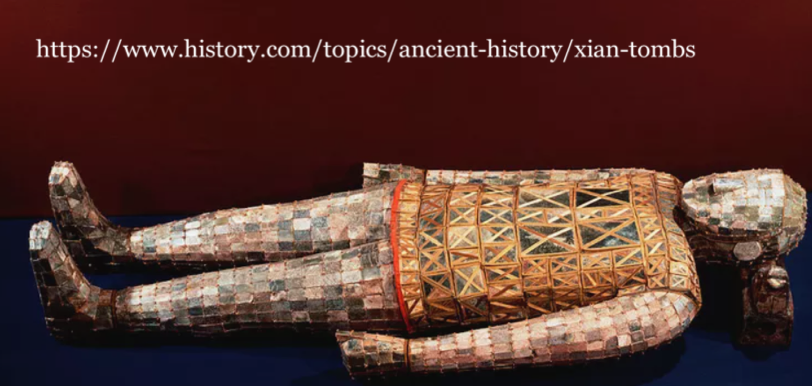
Funeral suit, Western Han Dynasty. Jade + Gold
Prince Liu and his consort were buried in elaborate jade funeral suits
Achieving spiritual immortality by transforming the body and spirit to be in harmony with the Tao- Daoist belief in alchemy.
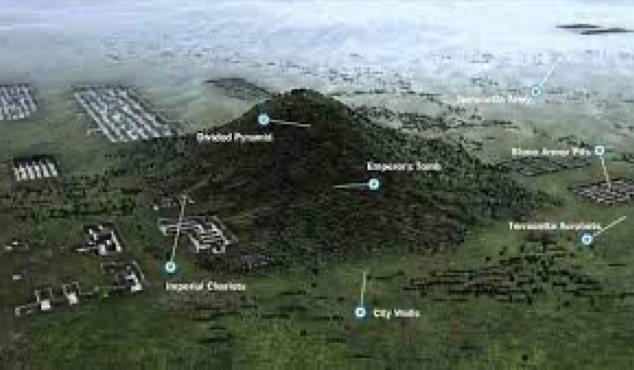
Tomb complex of Qin Shihuangdi, Qui Dynasty. 246 - 208 BCE.
QIn Shihaungdi = China’s first emperor of Qin - unified the realm in 221 BC. Great Wall defines Chinese territory (he standardized language currency, and measures. Imposed a central bureaucracy, however he was cruel and drafted forced laborers,
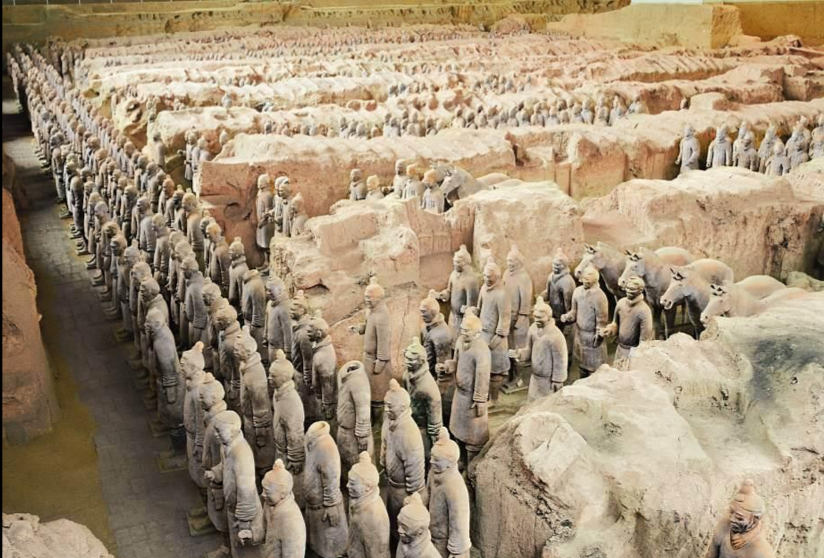
Warrior pit 1. Terracotta. Tomb complex of Qin Shihuangdi. China, Qin Dynasty - several thousand lifelike and life-size soldiers of various types. about 6000 warriors.
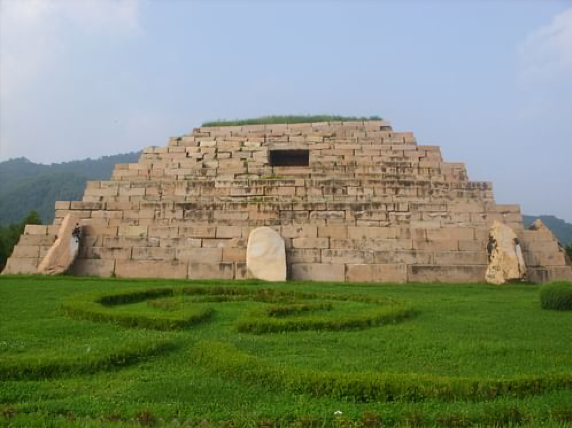
Tomb of Gwanggaeto the Great. (wang neung) Goguryeo, Korea. 391-412. Later tombs were built in the form of huge earthen mounds. The earth was mixed with lime and smell pebbles to make it firmer.
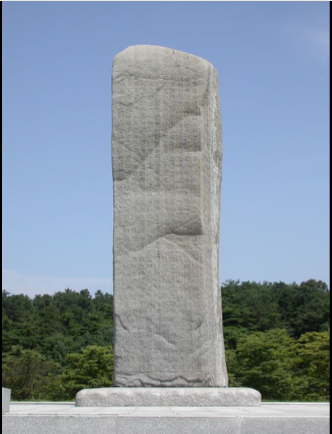
stele of King Gwanggaeto, Goguryeo, Korea. 414 CE Original.
Stele: an upright stone slab carved with inscriptions and images. Usually erected for commemorative purposes as a grave marker.

A rubbing of the Gwanggaeto Stele
Foundation myth of Gogureyo
A list of military exploits of King Gwanggaeto
personal record of the custondians of the monarchy’s grave
historical record of the three kingdoms
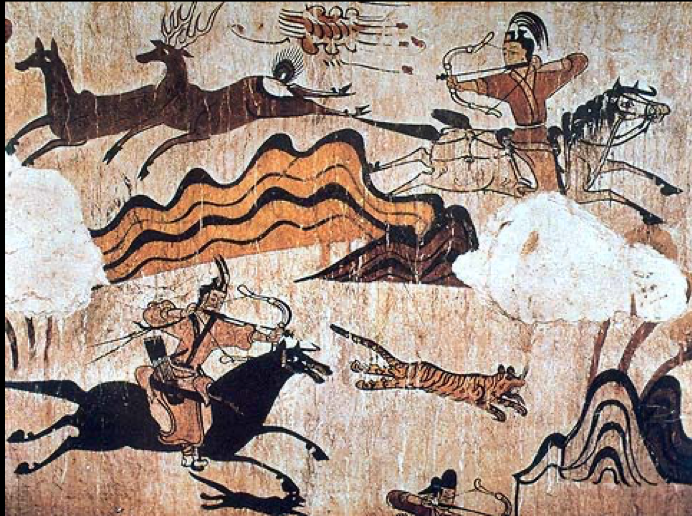
Hunting scene, Muyongchong tomb, Goguryeo, Korea.
Fifth Century, wall painting Tonggou, near Jian, Chinese influences, constellations on the ceilings, animals at the four directions, Ox, horse, fleeting deer, and a tiger leaping between mountains and trees.
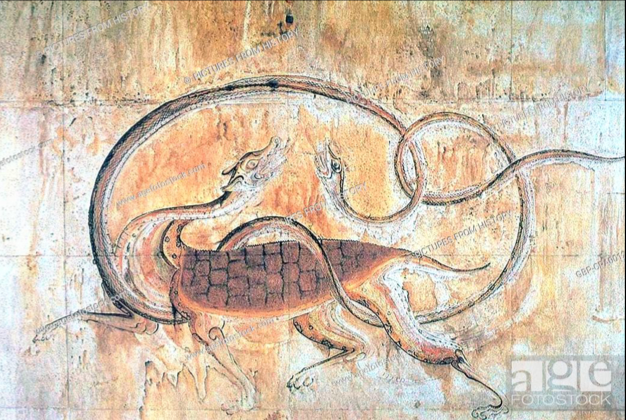
Tortoise and Snake- symbolizing the north and armor. From the great tomb of Kangso from Goguryeo, Korea. Early 7th century.
A black tortoise intertwined with a snake, symbolizing the male and female genders, a harmonious balance of yin and yang. The tortoise’s stability and the flexibility and the flexible curves of the snake are in exquisite harmony.
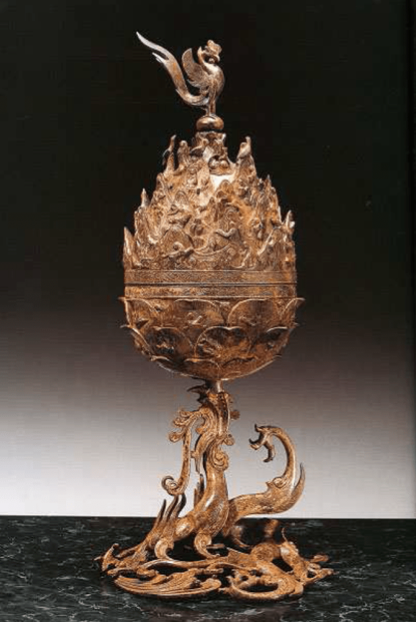
Incense burner, Baekje Kingdom. 6th century Gilt Bronze. Mix of Daoism and Buddhism.
A Dragon is the ancestor of all creatures, it is a mythical monster that resembles a giant reptile. It is different from western perception of the dragon, it is actually associated with fertility, and with water and the heavens. It has supernatural power, wisdom, strength, good luck, and hidden knowledge.
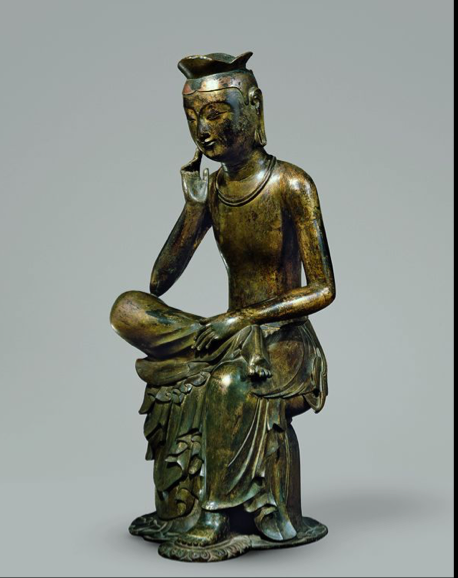
Bodhisattva seated in Meditation, three kingdom period- Silla Kingdom in Korea. Late 6th-early 7th century.
Maitreya
He is in the pensive pose- Banga Sayusang
Bodhisattva- one who seeks nirvana but comes back to earth to teach others about achieving Nirvana in order to save suffering beings.
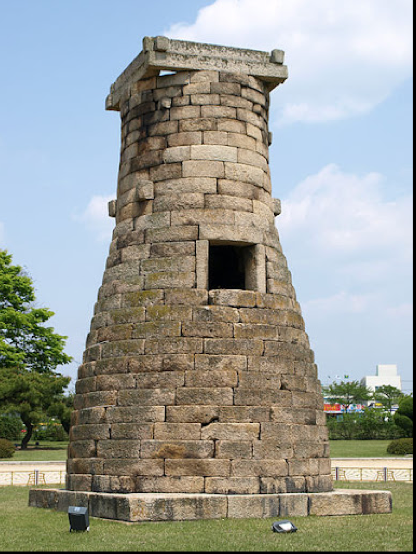
Cheomseongdae Astronomical Observatory. Three kingdoms period, Silla Kingdome, Korea 634.
This is the oldest existing observatory in East Asia. Koreans kept extensive records of astronomical events- as the belief was that they were intrinsically connected to the destiny of humankind
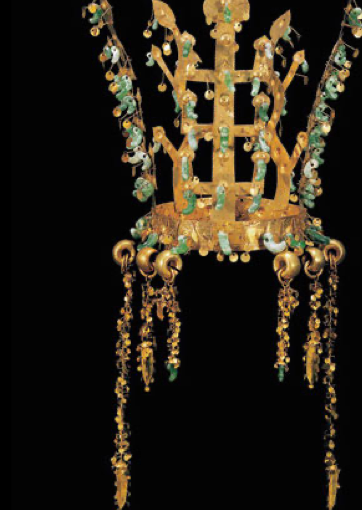
Crown, From Tomb 88, The Great Tomb at Hwangnam. Three Kingdom period, Silla Kingdom. 5th-6th century CE
Functions: ceremonial rites
Silla royalty
Sharman ruler
Symbolism for the crown: Three tree-shaped vertical element- sacred tree. Conceived as a world tree or an “axis mundi” that connects heaven and earth
Two antler shaped protrusions could be a reference to the reindeer that were once native to the eurasian peninsula. Also could symbolize fertility on earth.
The tiny gold disks and jade ornaments are called gogok, they symbolize ripe fruits, fertility, and abundance.
Shinto Shrines
Shinto shrines are structures to house kami and to create a link between kami and human beings.
The shrines are places of worship where visitors can offer prayers, offerings, and dances to the kami.
The design of the shrines can vary, but they can be identified by their entrance gate and a sanctuary that houses the kami.
All visitors are welcome to visit the shrines, participate in the worship, and leave prayers and offerings for the kami.
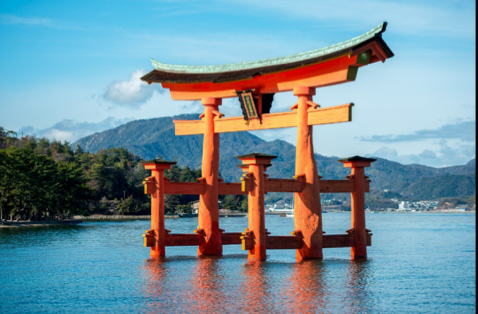
The torii gateway to the Itsukushima Shrine in Hiroshima Prefecture
Floating torii Japan, 593, one of the most famous examples of torii in the country
torii
gateway to a shinto shrine
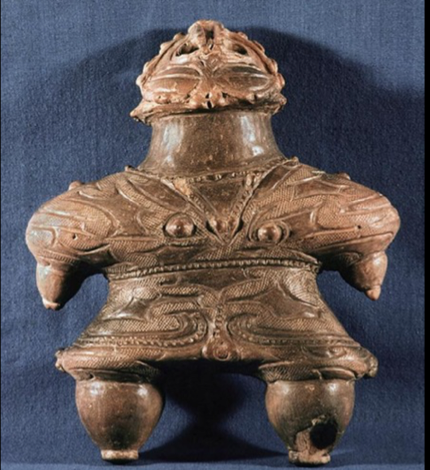
figurine, low fired clay.
Late Jomon period
1500-1000 BCE
Middle and late Jomon periods, Shaman activity and fertility cults. It included clay female figures as well.
Found in the northeast corridor of the main island.
Could be a woman, the hips are wide
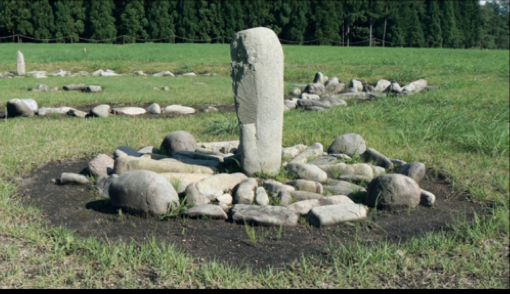
Nonakado Stone Circle, Oyu, Akita prefecture, Late Jomon period. 1500-1000 BCE
Human remains found in shell mounts and also in burial pits. Various manmade objects all around like bowls, cups, urns, and charms suggests that they played a role in ritual ceremonies.
Or sun worship.
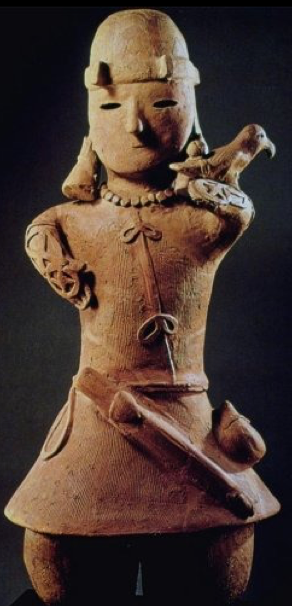
Haniwa Figure of Falconer
Kofun period, Japan, 6th century, terracotta
Hani=clay wa=circle
cylindrical shaped figurines that aer made of ritual use and buried with the dead as funerary objects. Topped with an array of images of animals.
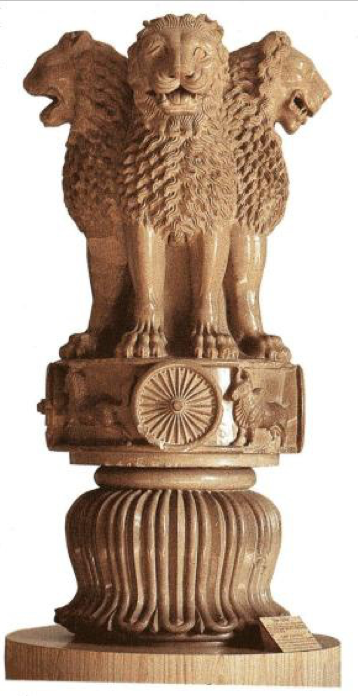
Lion Capital from an Ashoka Column
250 BCE
Samarth, Maurya Dynasty, India
Symbolic elements = the national emblem
Pillar= symbol of the tree of life / world tree
four lions positioned back to back- the buddha
power, courage, pride, confidence.
the chakra(wheel)- this alludes to the Buddha’s first sermon in which he was metaphorically “turning the wheel of the law.”
Circular abacus- a sculpture of a bull and horse.
horse (west), ox(east), elephant(south), and a lion(north).
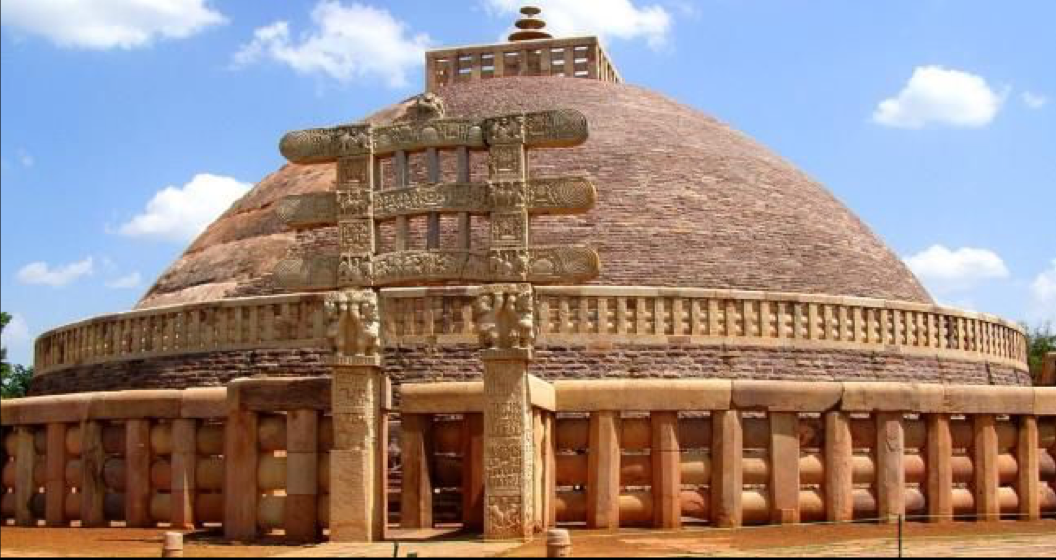
Stupa 1, Sanchi, Madhya Pradesh, India. 250 BCE
circumambulation, made for pilgrimage.
Axis Mundi
vertical axis believed to connect the earth to the celestial realm, through which cosmic order is imparted onto the earth.
stupa
Religious funerary monument(Buddhist) derived from burial mounds, consisted of a solid domed mound of earth and stone enclosing a reliquary
toranas
Monumental, carved stone gate in the railing surrounding the stupa, aligned with the cardinal points.
jataka tales
Stories of the previous lives of the Buddha. A ceremonial reenactment of the Great Departure.
Aniconic Period
the earliest phase until the 1st century CE, representing Buddha in human form was prohibited, he was only repped in forms such as an empty throne, a tree etc. The first anthropomorphic images of the Budda were a result of the Greco Buddhist interaction in Gandhara
Iconic period- the seocnd century CE
the spread of images of the Buddha
doctrine changes upon the rise of mahayana Buddhism.
the emphasis on personal salvation must have encouraged the spread of icons
During the reign of the Kushan king the 32 special features of the Buddha began to be featured on the Buddha
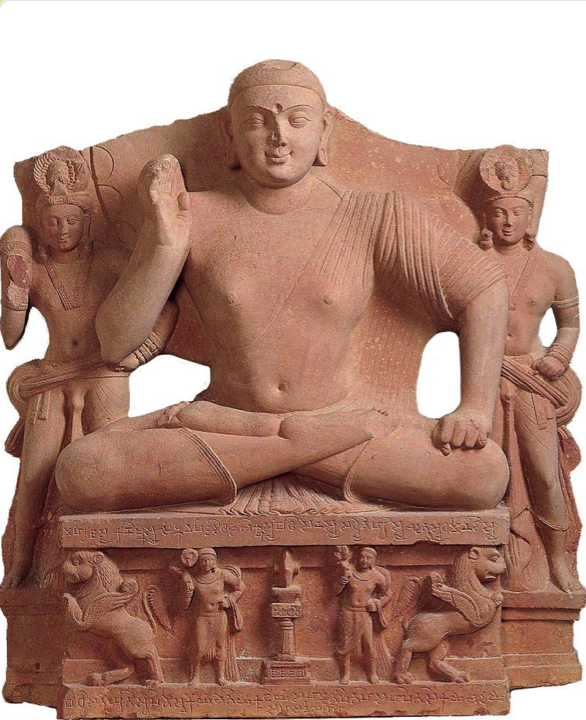
seated buddha with two attendants. 132 CE, Kushan period from Mathura India.
and early exampls of the Buddha shown in anthropomorphic form
abhaya mudra
a gesture of protection and reassurance
wheels
chakras, turning the wheel of the law
lotuses
announces the buddha’s divinity
ushinisha
cranial proturbance- shows wisdom
arna
auspicious mark on the forehead
nimbus
the halo like element behind his head that indicates his divinity
major differences between the gandhara and mathura schools of art
gandhara:
spiritual buddha
sad buddha
bearded buddha
less ornamentation, great detailing, also includes greek factors like wavy hair, a large forehead and long ears
mathura:
smiling buddha, less emphasis on spiritual aspects, shaven head and face, muscular physique, graceful posture
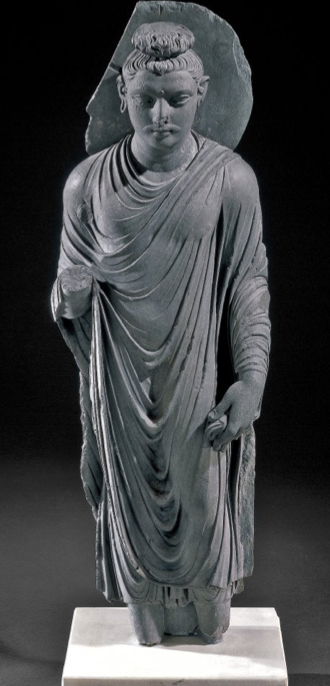
standing figure of buddha. Gandhara, Kushan, India.
Alexander the Great- hellenistic influences
contrappasto
32 special features
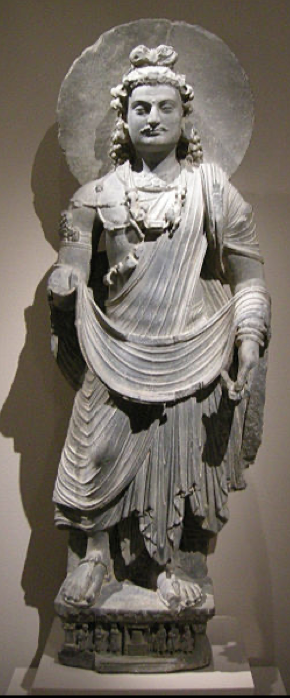
Bodhisattva Maitreya, 3rd century, Gandhara, India
Elaborate coiffeur, moustache, and personal jewelry
attributes: ushinisha(turban), urna, and elongated ears.
Modeled on the Greek God Apollo, western ideal and realism. Contrappasto, anatomy, and natural drapery.
Selective use of western illusionism: The kushan empire traded with greco roman civilizations. Much more naturalistic than mathura sculptures.
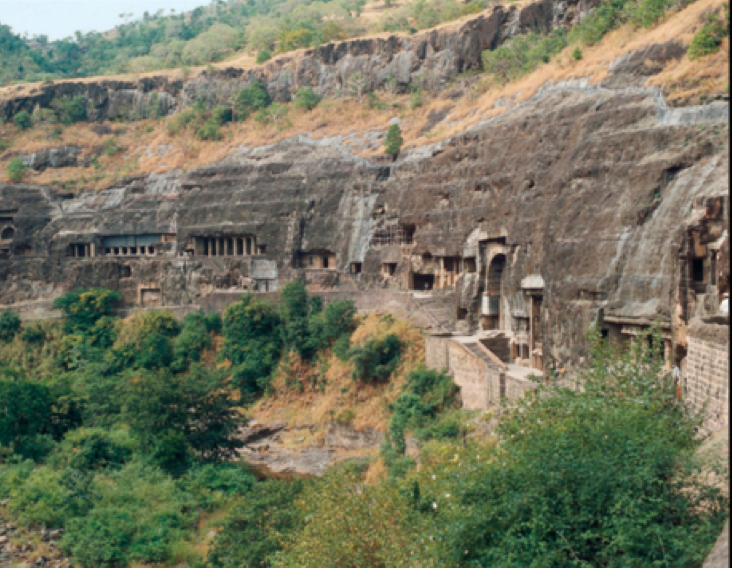
Ajanta, 2nd-1st century BCE and 5th-6th century CE, Gupta Period, India.
developed under King Harishena and his court, advisors etc.
chaitya (worship hall)
viharas: monastic residences
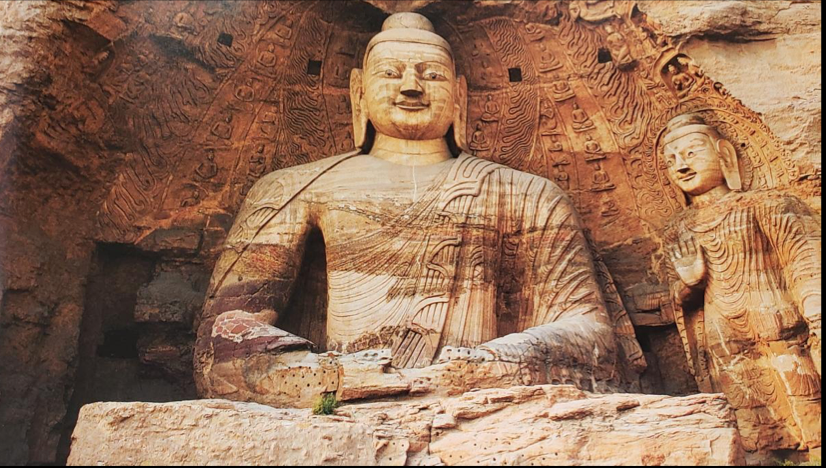
Colossal Shakyamuni and Smaller Buddha
Northern Wei dynasty, China 460-480.
Large Buddha sits crossed legged and makes a mudra of meditation. A halo and mandorla indicate divinity.
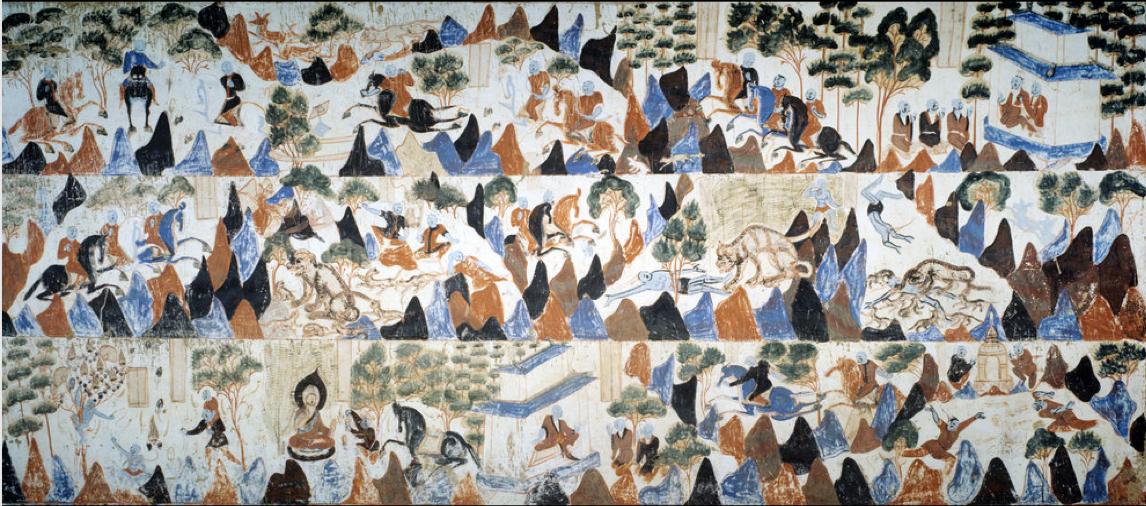
Mahasattva Jataka (previous life of the Buddha as Prince Mahasattva)
Northern Zhou dynasty 557-581
Jataka take of Buddha: Prince Mahasattva sacrifices himself for a hungry tigress and her cubs, this promotes the virtues of selflessness, compassion, and charity.
Liangzhou Buddhism characteristics: Meditation
the practice of guan (to view or contemplate)
Liangzhou Buddhism characteristics: Visualizaiton rituals
a systematic building up of visual images, each as complete and precise as possible, in a sequence from the simple toward the complex. “The powers of mental seeing”
Liangzhou Buddhism characteristics: The sea sutra:
the goal- to see the buddha in solid form.
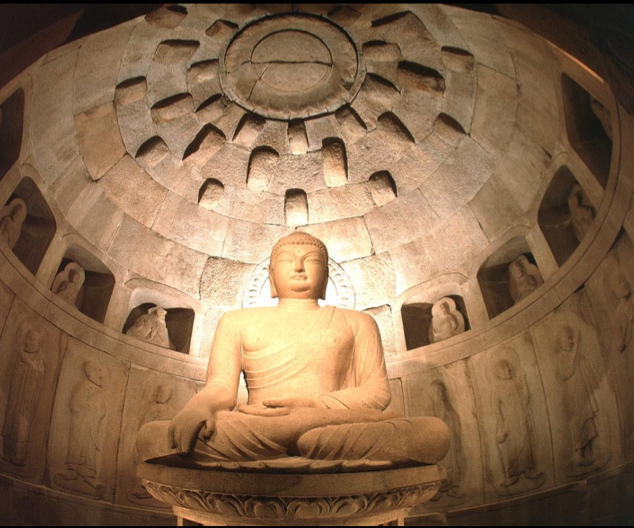
seated buddha at seokguram cave temple, United Silla Period 751.
The patron, Kim Daesun (701 - 744) A roya l patron and prime minister, to honor his royal ancestor.
seokguram
Seokguram significance:
only Buddha Grotto on the korean peninsula, it differs from the international style.
Carved in grante
tumulus construction over the chanmber was very korean styled.
solitaryl not part of the cave complexes built into the large bluff such as Bamiyan, Yungang
mathematical precision in the construction of seokguran, creating a balanced and harmonious space.
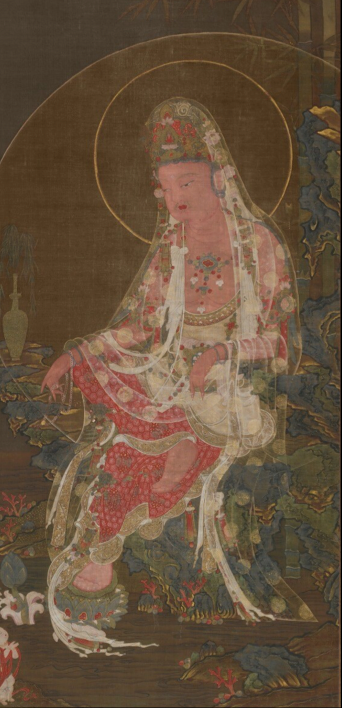
Seated Willow-Branch Gwanse’eum Bosal- the Boddhisattva of Compassion
Goryeo dynasty- late 14th century
He gazes down at a tiny seeker of wisdom. Willow has purifying and restorative properties. A welcome aid of meditation and worship.
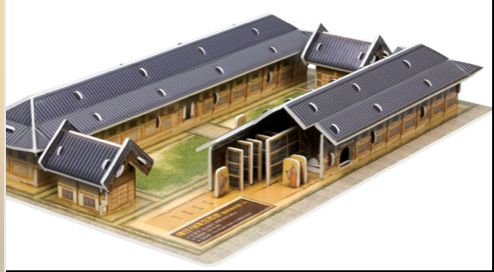
Original Woodblock from the Tripitaka Koreana. Goryeo Dynasty, 1251. Kaeinsa Monestary, Mount Kaya
Woodblocks for printing Buddhist scriptures.
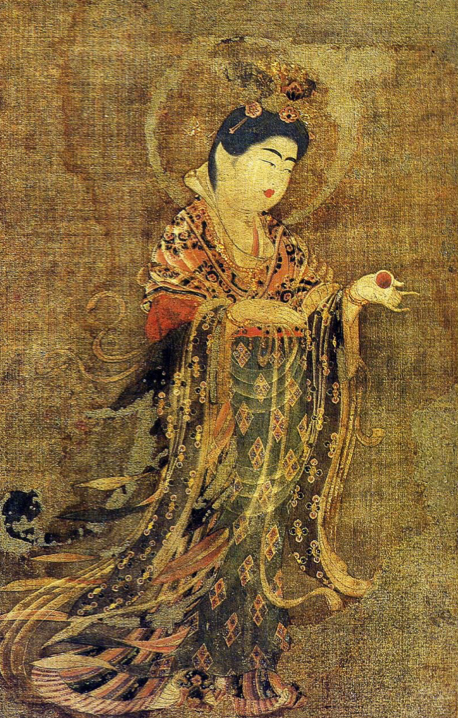
Kichijoten (Heavenly good luck and fortunes.
deity of harvest, fertility, beauty, and good fortune. Japanese buddhist name for the Hindu goddess Lakshmi. Nara period., 8th century.
The deity of wealth and good fortune
changing concept of feminine beauty, feminine ideal. from a slender willowy form to a round voluptuous body.

The Great Buddha Hall
Todai-ji, Nara.
Shibi
Crescent shaped roof ornaments covered in gold leaf- mythical sea creature/ protect from fire.
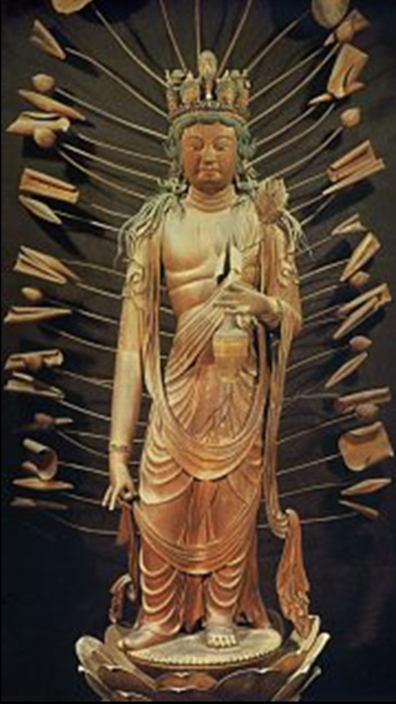
Juichimen Kannon
Late Nara/early Heian period, late 8th -early 9th century.
Manifestation of the Boddhisattva of compassion.
Crowned head depicts wisdom and compassion
Wooden statue of Juichimen Kannon, 11 heads carve don his crown symbolizes that 11 desires blocking the bath to awakening.
His elongated arm holds a lotus in a vase. this also signifies the deification of express Komyo and her charitable acitivies
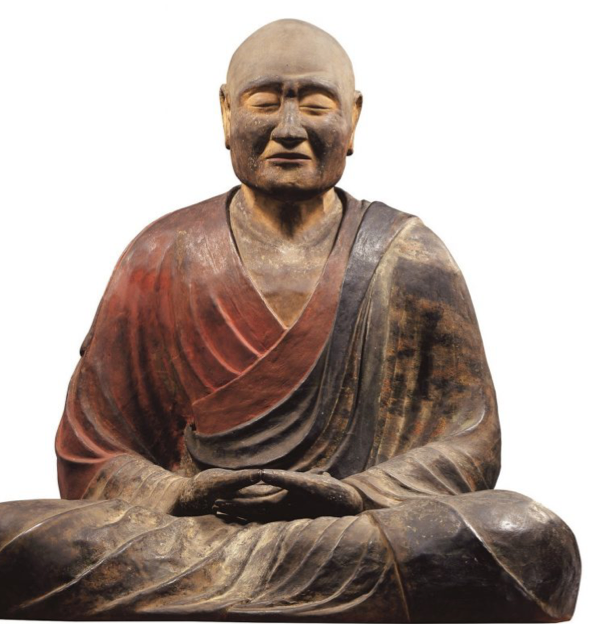
Priest Ganjin
Nara period, Japan, 8th century
Self discipline and sacrifice of monks.
Lifelike realism
hollow dry lacquer method. lacquer soaked hemp cloth over a clay core. After hardened, the clay core was removed to have a hollow durable lightweight statue.
lacquer
a medium made from the addition of pigments to the heated sap of lacquer tree, it was used to paint objects made of wood, cloth, or paper
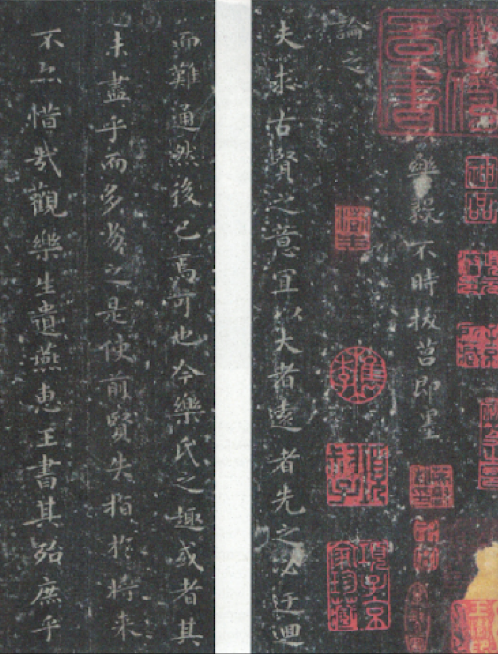
Preface to the gathering at the orchid pavilion, Wang Xizhi
Eastern Jin Dynasty - 353
Collection of poems composed by 42 literati at the orchid pavilion at lanting, Zhejiang province.
A poetry contest while drinking wine.
Used as basis for the calligraphic practice

Court Ladies
Tang Dynasty, 706. Burial chamber of Princess Yongtai, Qianling, Chaanxi province, Qianling Mausoleum
Context- tomb occupants and funerary ritual
style- slender, full faces, fashionably attired, concept of spatial depth
color is symbolic- Red symbolism:
In the color of blood and life itself
it is the luckiest color
abundancne
nian monster is frightened by anything red
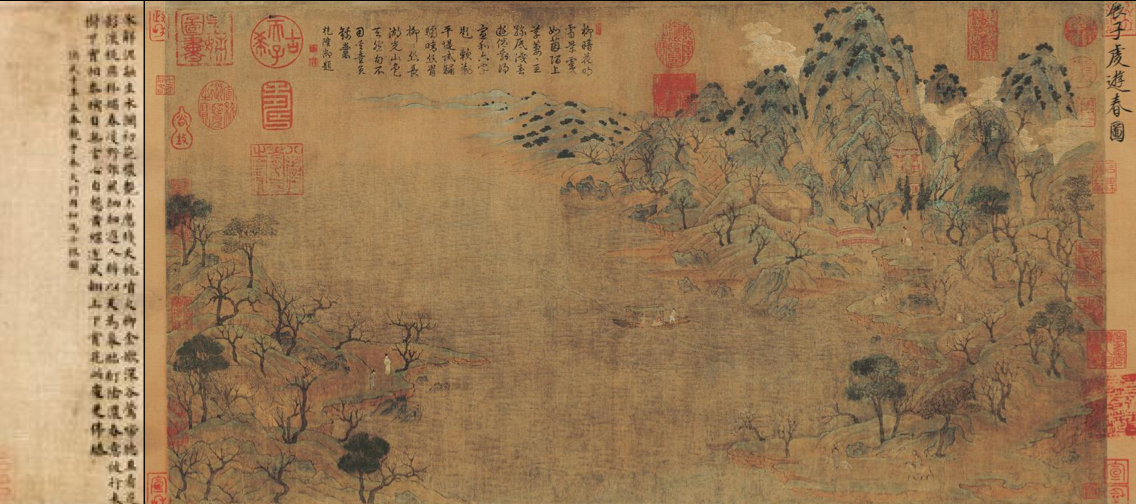
Spring Outing (Zhan Ziqian)
Landscape with human figures- shows that humans are one with nature and they are not to overcome it.
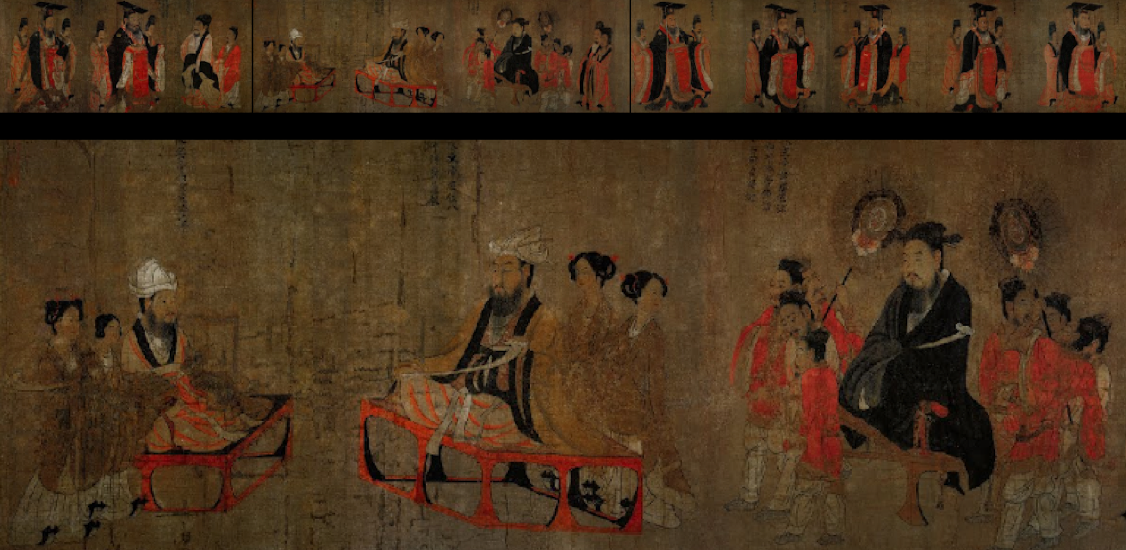
The thirteen emperors or Scroll of the emperors. Yan Liben. Tang dynasty
A sequence of emperors of different dynasties - largest figure = emperor (hieratic scale)
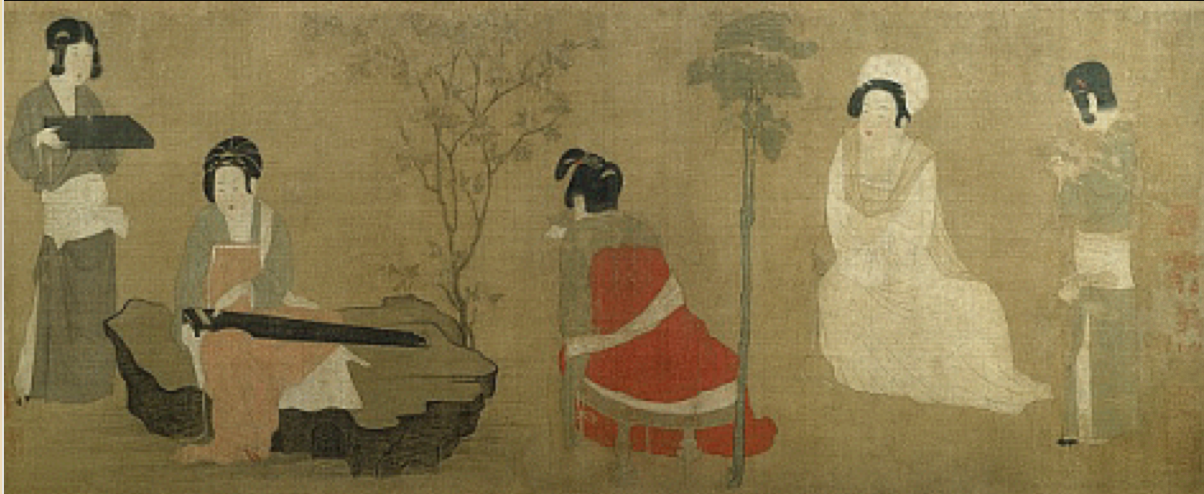
Attributed to Zhou Fang, Palace ladies tuning the Lute
Two maids and three concubines: ornaments in their topknots signifies elitism. tuning the lut is derived from love poetry.
emotional life and woman - patient longings of the imperial concubines/ pictorial space.
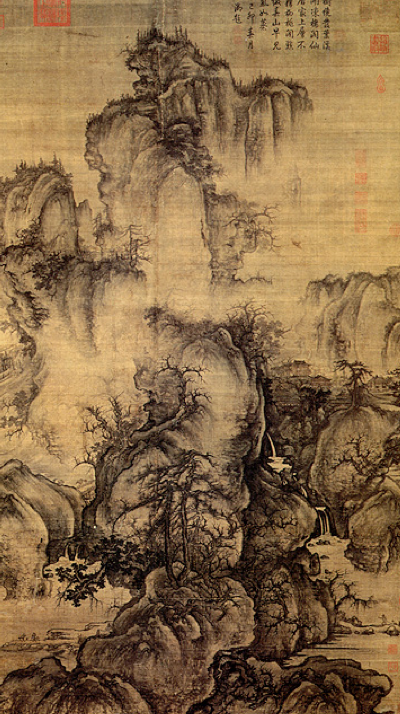
Early Spring, Guo Xi,
monumental landscape + emotion/imagination
tall mountain in the background, lower hills in the foreground
tiny figures.
Confucian hierarchy (absolute authority of the emperor.)

Cu’u Ting 1023-1050 Summer Mountains
Example of officially sponsored landscape - scale of the panorama
Unfolds one section at a time from right to left, the painter employs serial images, his focus moving in cinematic fashion in the development of his narrative of a holiday journey.
At the right is a panoramic level distance vista, an aerial view of multilayered horizontal elements extending far into the distance.