Oregon State BB 451 Midterm 2
 Call Kai
 Learn
Learn Practice Test
 Spaced Repetition
 Match
Match Flashcards
 Knowt Play
1/90

There's no tags or description
Looks like no tags are added yet.
Name | Mastery | Learn | Test | Matching | Spaced | Call with Kai |
|---|
No analytics yet
Send a link to your students to track their progress
91 Terms
Phosphatide
not a major membrane lipid but is an intermediate in the biosynthesis of other phosphoglycerides
essential fatty acids
fatty acids with a double bond past Delta9
Attachments to Phosphatides to form the major phosphoglycerides
choline, ethanolamine, inositol, serine
Cardiolipin
peripheral protein on inner mitochondrial membrane, attached to cytochrome c, aids in apoptosis
sphingolipids
two fatty acids, one polar tail
sphingomeylin
sphingolipid attached to phosphocholine (is the backbone) and uses the long hydrophobic amino alcohol sphingosine rather than glycerol as the platform
cerebroside (glycolipid)
sphingolipid attached to one simple sugar (contains monosaccharide)
ganglioside (glycolipid)
sphingolipid attached to complex carbohydrate (contain branched chains of multiple sugar subunits)
cholesterol
found in membranes, precursor to steroid hormones and bile acids
effects of cholesterol on the membrane
increases the range of fluidity (i.e. starts liquifying sooner and becomes fully liquid later) by disrupting the tight packing of fatty acid chains
Vitamin A
Retinol: storage
Retinal: vision
11-cis form -> all-trans form -> vision
Vitamin D
deficiency in childhood caused rickets, in adulthood causes osteomalacia (softening and weakening of the bones)
(phosphate absorption/metabolism, synthesis requires UV light)
Vitamin E
antioxidant used to break down reactive oxygen molecules
Vitamin K
blood clotting
Lipid Bilayer basics
polar outside, non polar inside, made of glycerophospholipids and sphingolipids
enzymes for transverse movement in bilayer
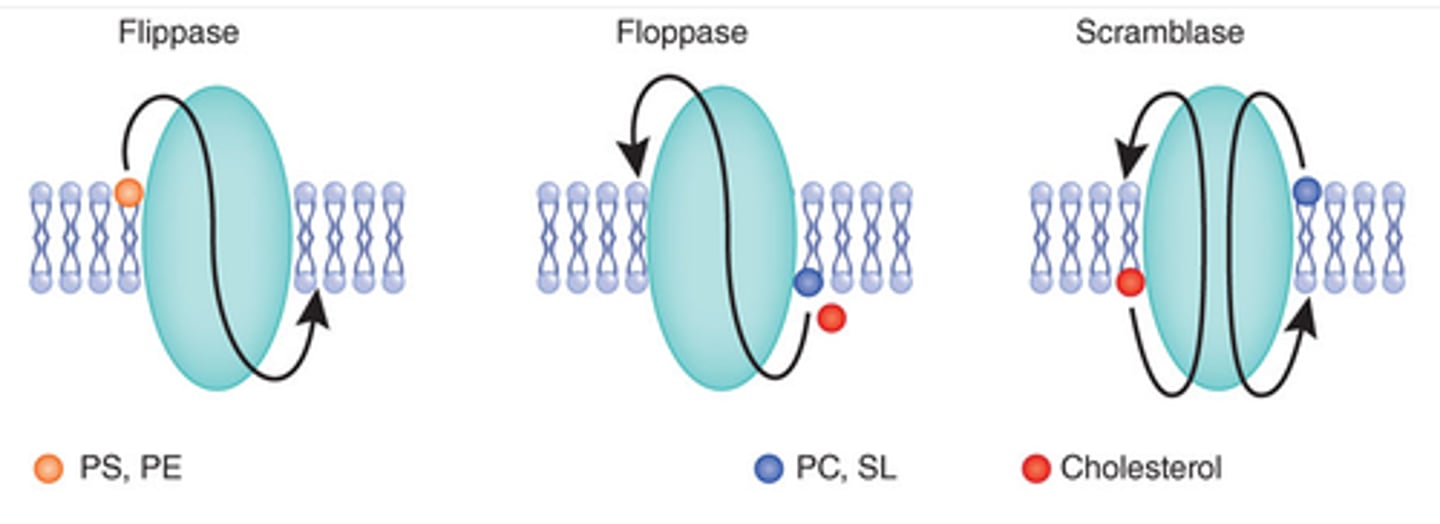
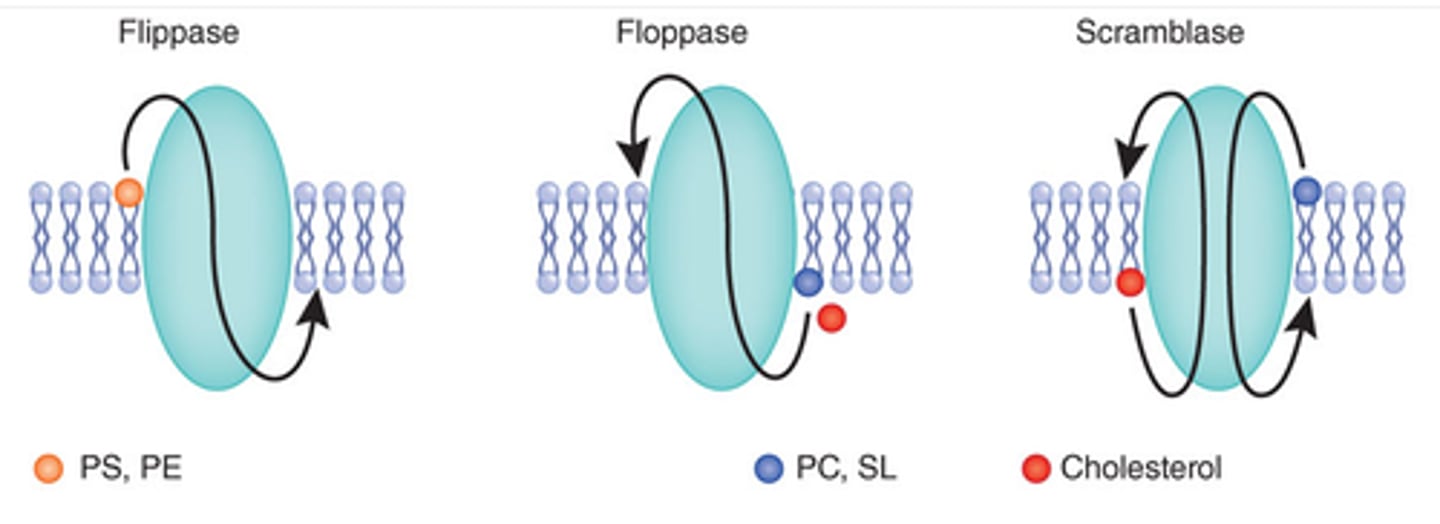
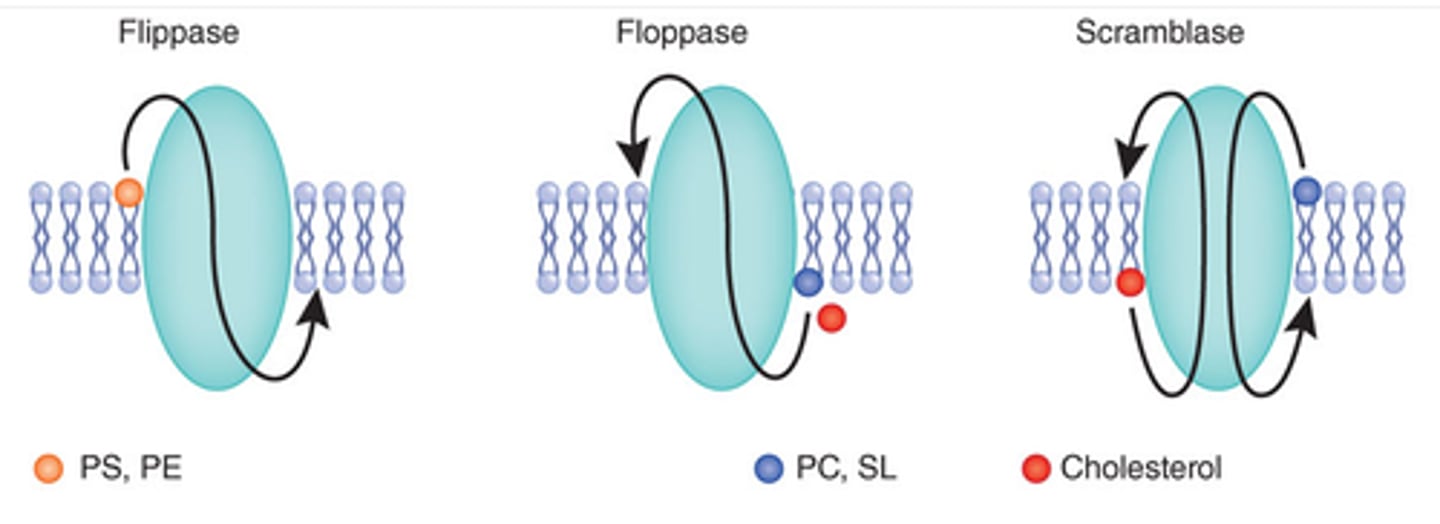
flippase, floppase, scramblase
flippase
movement outside to in (flip out)
floppase
movement inside to out
scramblase
movement out to in and in to out
Fluidity of membrane
based on saturating/length of fatty acids, cholesterol widens range of fluidity
four membrane permeable compounds
water, carbon dioxide, carbon monoxide, oxygen
four types of membrane proteins
integral, peripheral, anchored, associated
Membrane transport types
Uniport, Synport, Antiport
Uniport
moves one chemical one direction
Synport
moves one or more chemicals one direction
Antiport
moves one or more chemical opposite directions
Two ways to synthesize glycerophospholipids
1) activation of diacylglycerol (putting it onto an add-on)
2) activation of add-on (putting it onto a diacylglycerol)
Sphingolipid Synthesis
serine + palmitoyl-CoA -> intermediates -> dihydrosphingosine (one fatty acid tail)
Ceramide synthesis
dihydrosphingosine with another added fatty acid tail
Sphingolipid breakdown
complex process, can cause serious disease if inhibited
synthesis of cholesterol
IPP and DMAPP -> Geranyl-PP (10C)
Gernayl-PP + IPP -> Feransyl-PP (15C)
Feransyl-PP -> Squalene (30C)
Squalene -> Lanestrol
Lanestrol -> 19 steps -> Cholesterol
What are four roles of lipids?
1. simple lipids form fat globules for chemical energy storage
2.Phospholipids and glycolipids form membranes (lipid bilayers)
3.Help proteins anchor to membranes
4.Serve as a signaling molecule
what are the three types of TRANS unsaturated fatty acids?
elaidic, vaccenic, and linoelaidic acid
What type of bond connects the glycerol backbone to the fatty acids? (structure of fats/oils)
ester bonds
Phosphoglycerides
most abundant membrane lipids
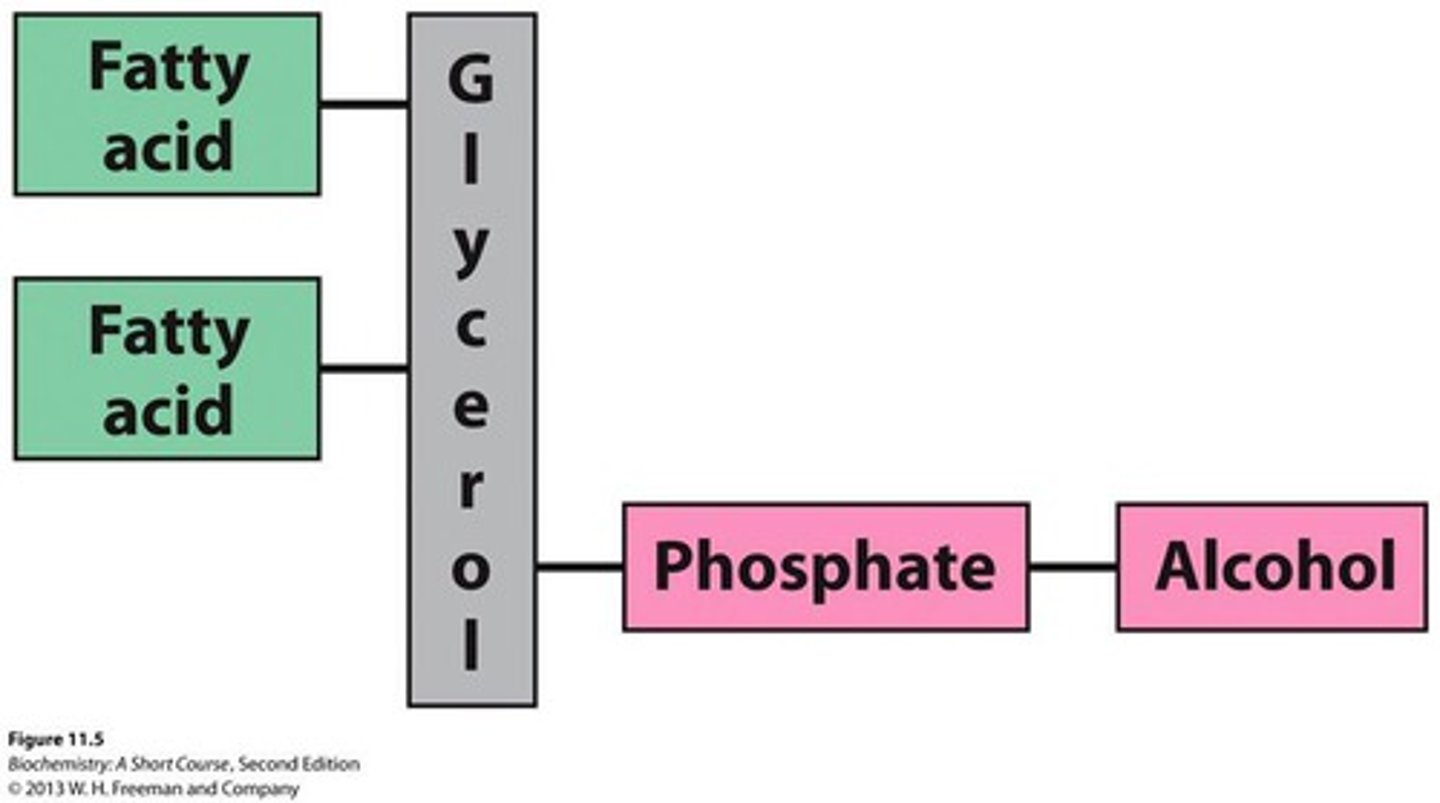
what is phosphoglycerides composed of?
a glycerol platform esterfied to two fatty acids and a phosphate (or phosphate and alcohol)
glycolipids
shingosine platform and N-linked fatty acid, hydroxyl group is ether-linked to one or more sugars
micelle fatty acid (amphipathic)
has a monolayer structure with a solid core (diameter is constrained)
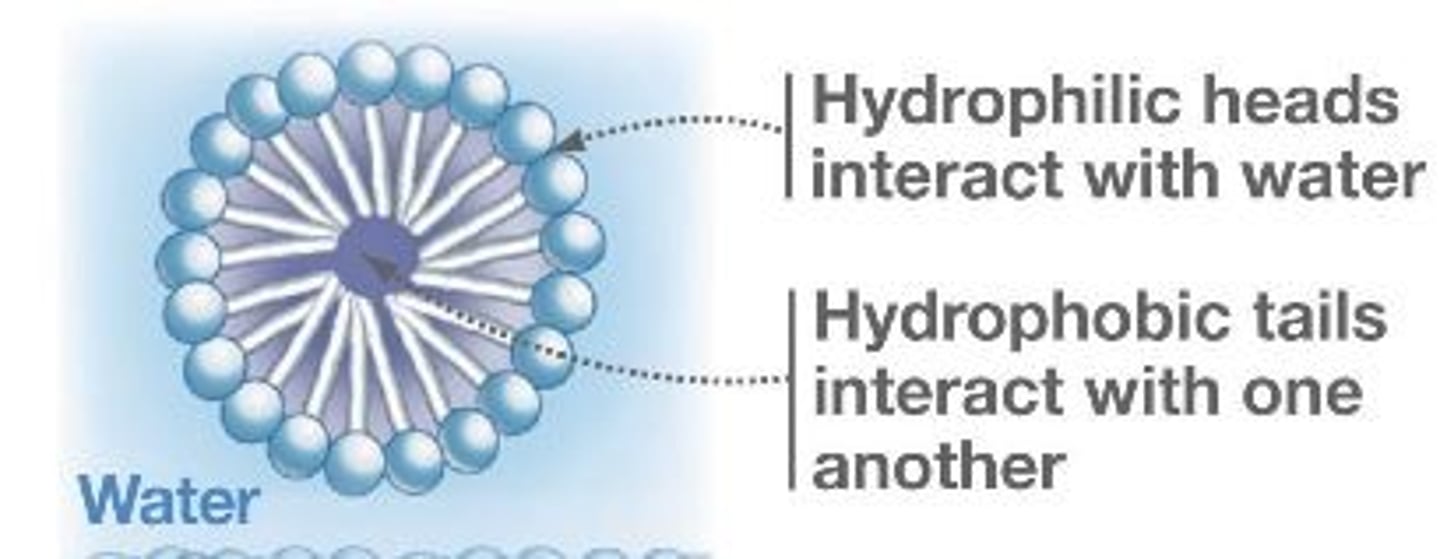
consequences of hydrophobic interactions
-lipid bilayers have an intrinsic tendency to be extensive
-lip bilayers tend to close on themselves
-lip bilayers are self self-sealing
lipid vesicles or liposomes
a spherical bilayer that is spontaneously formed from phospholipids and glycolipids
equation for determining number of molecules trapped in liposomes
volume (4/3 pi r^3) x molar (M) x Avogadro's number (6.02x10^23)
peripheral proteins
protein that can be extracted from membranes using mild conditions (such as salt extraction); (associate with membranes through integral proteins)
integral protein
proteins that can be extracted only by using detergents (usually span the lipid bilayer)
Bacteriorhodopsin
seven transmembrane domain proteins are common and include the G-protein-coupled receptor that mediate the "fight or flight" response to epinephrine
Alpha helical membrane-spanning regions
1. seven transmembrane domain proteins (bacteriorhodopsin)
2. single transmembrane domain proteins (glycophorin)
Beta barrel membrane-spanning structures
hydrophilic residues point inward (channel side) and hydrophobic residues outward (membrane side)
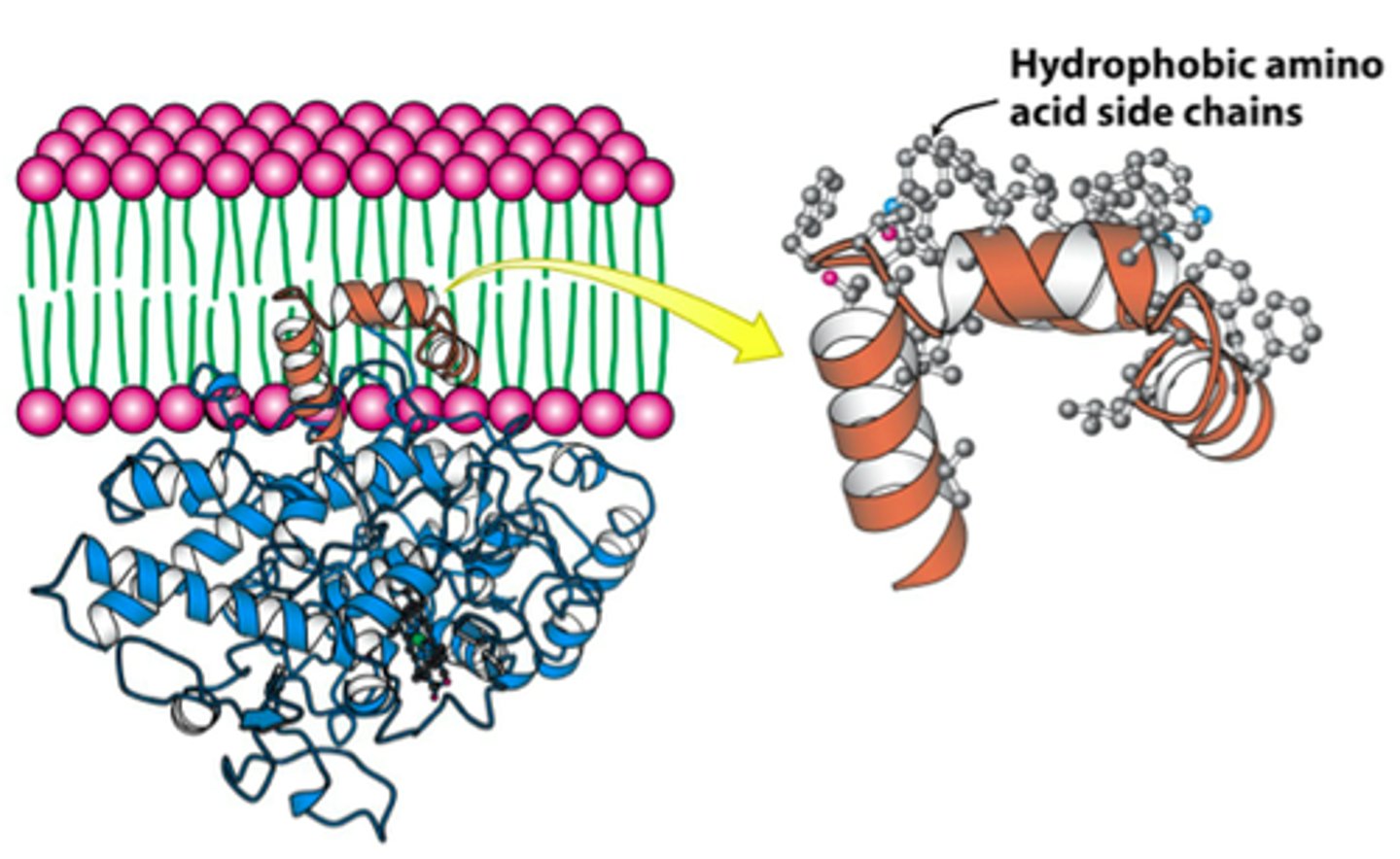
Prostaglandin H2 synthase
integral protein that does not fully span the lipid bilayer (made from arachidonate and is inhibited by aspirin)
Ras
a g-protein that is anchored to membranes by lipid attachments (hydrophobic anchors)
Unsaturations
cause kinks in hydrophobic tails (increases fluidity)
How many kcal/gram does complete oxidation of fatty acids and carbohydrates yield?
fatty acids: 9 kcal/gram
carbohydrates: 4 kcal/gram
chylomicrons
the class of lipoproteins that transport lipids from the intestinal cells to the rest of the body (goes to lymphatic system)
why are lipids always transported as lipoprotein complexes in the blood?
free lipids would otherwise form artery-clogging fat globules in the aqueous environment of blood
types of lipoproteins
-Very low density lipoprotein (VLDL)
-Low density lipoprotein (LDL-bad cholesterol)
-Intermediate Density lipoprotein (IDL)
-High density lipoprotein (HDL-good cholesterol)
HDL
carry lipids from the tissues from other tissues to the liver
VLDL
carry lipids from the liver to other tissues
IDL & LDL
taken up by the liver and other cells with LDL receptors
which hormones stimulate and inhibit fatty acid release from fat cells?
s- epinephrine and glucagon
i-insulin
What are the four steps of fatty acid beta oxidation?
1.oxidation by DAD
2. hydration
3. oxidation by NAD+
4.thiolysis by CoA
(removes 2 carbons each cycle and occurs on the beta carbon)
fatty acid oxidation
a chain of methylene groups is converted into activated acetyl groups
fatty acid synthesis
activated acyl groups and malignly groups are converted into a chain of methylene groups
What are the four steps of fatty acid synthesis?
1.joining reaction
2.reduction
3.loss of water
4.reduction
(add 2 carbons at each step)
fatty acid degradation
catabolized by acyl-CoA synthetase in the mitochondria
synthetases
enzymes that is the energy of ATP hydrolysis to make larger molecules form smaller molecules
Outputs for each fatty acid beta oxidation cycle is one molecule of:
FADH2
NADH + H+
acetyl-CoA
acyl-CoA (shortened by 2 carbon residues)
First reaction:
oxidation of acyl-CoA by acyl CoA dehydrogenase to generate trans-delta2-enoyl-CoA (FAD is the electron acceptor)
Second reaction:
hydration of enoyl CoA by enoyl CoA hydratase producing L-3-Hydroxyacyl-CoA
Third reaction:
oxidation of C3 carbon by hydroxyacyl-CoA-Dehydrogenase to produce 3-Ketoacyl-CoA (NAD+ is the electro acceptor)
Fourth Reaction:
cleavage of ketoacyl CoA by Beta-ketothiolase to produce Acyl-CoA and Acetyl-CoA
oxidation of unsaturated fatty acids
-required additional enzymes to move a double bond (cis-delta3-enoyl CoA)
-the first oxidation reaction is bypassed so FADH2 is not generated
-yield less energy per molecule
ATP yields of:
FADH2
NADH
GTP
FADH2=1.5
NADH=2.5
GTP=1
Products for each acetyl-CoA
3 NADH
1 FADH2
1 GTP
oxidation of fatty acids containing odd # of carbons
-the final round of degradation results in one molecule of acetyl-CoA and one molecule of propionyl CoA that is converted to saucily CoA before entering CAC
Peroxisomal fatty acid oxidation vs mitochondrial beta oxidation
1. activated acyl chains are shortened to 8 carbons
2.rather than entering the ETS, electrons from the first oxidation reaction are transferred to )2 and generate H2O2
how is peroxisomal oxidation induced and why is it important?
-by a high-fat diet
-required for normal brain development and function, and formation of myelin
what syndrome is due to the absence of functional peroxisomes, resulting in death?
Zellweger Syndrome
when there is excess acetyl CoA, what is it converted to and the advantage of that?
converted to ketone bodies that is soluble in aqueous solution
how is acetoacetate activated?
it is activated by transfer of CoA from succinyl CoA to Acetoacetate then is converted to two acetyl CoA by thiolase
elongation reactions of fatty acid synthase
1.condensation
2.reduction
3.dehydration
4.second reduction
phosphatidate synthesis
two activated fatty acids (acyl CoA) are esterfied to hydroxyl groups of glycerol phosphate to form phosphatidate
triacylglycerol synthesis
phosphatidate is hydrolyzed to DAG then the third fatty acid is added using acyl-CoA to form triacylglycerol
phosphoglyceride synthesis
involves a CDP-activated intermediate that is formed either by diaclyglycerol or the alcohol being activated
phospholipid synthesis from an activated diaclyglycerol
phosphotidate reacts with CTP to form an activated intermediate (CDP-Diacylglycerol) with a reactive phosphoanydride bond which then reacts with the alcohol to form a phospholipid
phospholipid synthesis from an activated alcohol
the alcohol reacts with ATP to form an intermediate with a phosphoester bond then reacts with CTP to form an activated intermediate with a reactive phosphoanydride bond then is cleaved when reacted with diaclyglycerol to form the phosphoglyceride
what are the five staged of cholesterol synthesis?
1. synthesis of 6-carbon molecule (mevalonate) from acetyl CoA
2.conversion of mevalonate to activated 5-carbon isoprene building blocks (isopentenyl pyrophosphate and dimethyllallyl pyrophosphate)
3.condensation of activated isoprene building blocks to sequentially form a 1- carbon (geranyl), 15 carbon (farnesyl), and 30 carbon (squalene) intermediates
4.cyclization of squalene to form a steroid (ianosterol)
5.conversion of ianosterol to cholesterol
synthesis of bile acids
addition of acidic groups gives the molecule soap-like properties that allows it to emulsify dietary lipids
synthesis of cholesterol esters
esterification of fatty acids to the cholesterol hydroxyl group eliminates the amphipathic nature of cholesterol and forms the solid core of lipoprotein particles such as LDL
inorganic forms of nitrogen
glutamate, glutamine, and carbamoyl phosphate
what are the two enzymes to reduce nitrate to ammonia
1.nitrate reductase (uses NADH and NADPH as reductant)
2.nitrite reductase (uses ferredoxin as reductant)
glutamate synthesis
-catalyzed by glutamate dehydrogenase
-does not involve ATP hydrolysis; NADPH oxidation drives the reaction
-enzyme holds substrates such that only L stereoisomer of glutamate is synthesized
glutamine synthesis
-catalyzed by glutamine synthetase
-involves generation of a phosphoryl intermediate with reactive anhydride bond
carbamoyl phosphate synthesis
-catalyzed by carbamoyl phosphate synthetase