Computer Science | Sections 0-2
 Call Kai
 Learn
Learn Practice Test
 Spaced Repetition
 Match
Match Flashcards
 Knowt Play
1/44

Earn XP
Description and Tags
Name | Mastery | Learn | Test | Matching | Spaced | Call with Kai |
|---|
No analytics yet
Send a link to your students to track their progress
45 Terms
Computer
An electronic device that processes data, follows instructions, and produces results.
Input Devices
Devices such as keyboard and mouse that allow users to input data into a computer.
Output Devices
Devices such as monitor and printer that output data from a computer.
Central Processing Unit (CPU)
The primary component of a computer that performs most of the processing inside a computer.
Memory/Storage
Components like RAM and hard drive used to store data in a computer.
Computer Architecture
Describes how components communicate and interact with each other.
Bits
The basic unit of data in computing, represented as electrical signals (0s and 1s).
Unicode
A standard for encoding text from different languages using unique codes for each character.
Binary (Base 2)
A positional number system that uses two digits: 0 and 1.
Decimal (Base 10)
A positional number system that uses ten digits: 0-9.
Hexadecimal (Base 16)
A positional number system that uses sixteen digits: 0-9 and A-F.
int
Data type representing (e.g., 12, -5).
float
Data type representing numbers with decimals (e.g., 3.14, -0.5).
char
Data type representing a single character (e.g., 'a', 'Z').
Associativity
The order in which operators of the same precedence are evaluated.
Precedence
Determines which operator is evaluated first.
import
Loads an entire module in Python.
from … import …
Loads specific functions or classes from a module.
Dot Operator (. )
Accesses functions or attributes in a module.
Built-in Functions
Functions like type(), dir(), and help() that provide information about types and methods.
Turtle Functions
Drawing commands used in Turtle Graphics (e.g., forward(), left(), right()).
Positional vs Keyword Parameters
Positional parameters are passed in order; keyword parameters specify names.
Default Values
The value assigned to a function parameter when no corresponding argument is provided during the function call.
range Objects
Used to specify the sequence of numbers to iterate over in loops.
Sequential
Code runs line by line in order.
Iterative
Repeats code using loops (definite or indefinite).
Exception Handling
Manage errors and unexpected events that occur during program execution.
Boolean Operators
Operators such as and, or, not that combine or modify conditions.
elif
Checks extra conditions if previous ones are not True.
Initialization
Set starting value for the loop variable.
Mapping
The correspondence between strings of 0’s and 1’s and characters.
Machine Language
A mapping of instructions to particular strings that the CPU can process.
Hierarchy of Languages:
1) Machine Languages
2) Assembly Languages
3) High Level Languages
4) Very High Level Languages
Variables
Names for memory location.
Opcodes
Names for operations.
Compiler
Translates all code, then runs.
Interpreter
Translates code line by line (like a conversation).
Method/Function Calls
Jumps to a function, run its code, then returns.
Selection (if/else)
Make decisions and run different blocks of code based on conditions.
random
A package that is built to allow for psuedo-random number generation.
random.random()
Generates a random float in [0, 1).
random.randint(a,b)
Generates a random int in [a, b].
Flow of Control
Determining what code executes and in what order.
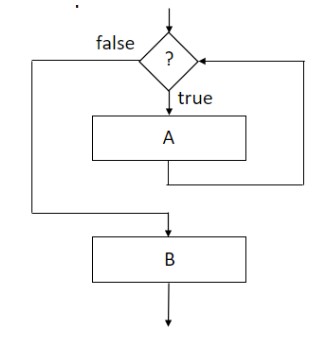
Iteration
Executes blocks of code zero or more times for loops.
While Loop
Initialization - pre-loop code to initialize variables used in a loop
Loop condition check - decide whether to keep iterating or not
Loop body - code which is being repeated