SJSU MICR20 CHAPTER 25
 Call Kai
 Learn
Learn Practice Test
 Spaced Repetition
 Match
Match Flashcards
 Knowt Play
1/63

There's no tags or description
Looks like no tags are added yet.
Name | Mastery | Learn | Test | Matching | Spaced | Call with Kai |
|---|
No analytics yet
Send a link to your students to track their progress
64 Terms
RNA viruses
- diverse group of microbes
- assigned to 1 of 12 families absed on envelope, capsid, & nature of RNA genome
influenza
- 3 distinct influenza virus types: A, B, C (type A causes most infections)
- virus attaches to, & multiplies in cells of respiratory tract
- segments of RNA genome enter nucleus
- finished viruses are assembled & bud off cell
influenza glycoproteins
- key to influenza are glycoprotein spikes
- Hemagglutinin (H)
- Neuraminidase (N)
- both glycoproteins frequently undergo genetic changes, decreasing effectiveness of host immune response
Hemagglutinin (H)
- 15 subtypes
- most important virulence factor
- binds to host cells
Neuraminidase (N)
- 9 subtypes
- hydrolyzes mucus & assists viral budding & release
influenza mutation
- constant mutation; gradually change their amino acid composition (antigenic drift)
- antigenic shift
- genome of virus consists of 10 genes encoded on 8 separate RNA strands
antigenic shift
one of the genes or RNA strands is substituted w/ a gene or strand from another influenza virus from a different animal host
antigenic drift
- constant mutation
- gradually change their amino acid composition
influenza strains
- influenza nomenclature chronicles virus type, animal of origin, location, & year of origin
- influenza A, B , & C
influenza A
- acute, highly contagious respiratory illness
- seasonal, pandemics; among top 10 cause of death in US
- most common in elderly & small children
- most virulent
- underwent antigenic shift from only infect bird to humans
influenza B
- only undergo antigenic drift, no antigenic shift
influenza C
- known to cause only minor respiratory disease; probably not involved in epidemics
influenza A symptoms
- rapid shedding of cells, stripping respiratory epithelium; severe inflammation
- fever, headache, myalgia, pharyngeal pain, shortness of breath, coughing
- weakened host defenses predispose patients to secondary bacterial infections, especially pneumonia
enveloped nonsegmented ssRNA viruses
- rhabdoviruses (rabies)
- coronaviruses (COVID-19)
- flaviviruses (Hep. C)
- filoviruses (ebola virus)
Rabies
- virus enters through bite, grows at trauma site for a week
- multiplies, then enters nerve endings & advances toward ganglia, spinal cord, & brain
- infection cycle completed when virus replicates in salivary glands
- skunk, raccoon, fox
clinical phases of rabies
- prodromal phase
- furious phase
- dumb phase
- progress to coma phase, resulting in death
prodromal phase (rabies)
- fever, nausea, vomiting, headache
- some pain, burning, tingling sensations at site of wound
furious phase (rabies)
agitation, disorientation, seizures, twitching, hydrophobia
dumb phase (rabies)
paralyzed, disoriented, stuporous
Coronaviruses
- relatively large RNA virus w/ distinctively spaced spike on their envelopes
- common in domesticated animals
- 5 types of human coronaviruses characterized
agents of coronavirus
- common cold
- some forms of viral pneumonia & myocarditis
- some human enteric infections
- severe acute respiratory syndrome (SARS)
Severe Acute Respiratory Syndrome (SARS)
- newly emerging disease (2020)
- transmitted through droplet or direct contact
- fever, body aches, & malaise
- may or may not experience respiratory symptoms w/ breathing problems
- severe cases result in respiratory distress & death
- diagnosis relies on exclusion of other likely agents
- treatment is supportive
Hepatitis C
- caused by flavivirus (HCV)
- acquired through blood contact (blood transfusions, needle sharing)
- infections w/ varying characteristics
- treatment w/ interferon & ribavirin to lessen liver damage; no cure
- no vaccine
Hepatitis C: characteristics
- 75 to 85% will remain infected indefinitely
- possible severe symptoms w/o permanent liver damage
- more common to have chronic liver disease, w/o overt symptoms
- cancer may result from chronic HCV infection
Hemorrhagic fevers
- yellow fever
- dengue fever
yellow fever
- eliminated in U.S.
- two patterns of transmission: urban cycle & sylvan cycle
- acute fever, headache, muscle pain
- may progress to oral hemorrhage, nosebleed, vomiting, jaundice, & liver & kidney damage
- significant mortality rate
urban cycle
- human & mosquitoes
- Aedes aegypti
Sylvan cycle
- forest monkeys & mosquitoes
- South American
Dengue fever
- flavivirus carried by Aedes mosquito
- not in U.S.
- usually mild infection
- Dengue hemorrhagic shock syndrome
Dengue hemorrhagic shock syndrome (breakbone fever)
- extreme muscle & joint pain
- can be fatal
Human immunodeficiency virus (HIV)
- acquired immunodeficiency syndrome
- retrovirus, in genus Lentivirus
- first emerged in early 1980s
- first documented case of AIDS: 1959
HIV symptoms
- severe pneumonia caused by Pneumonocystis jirovecci
- rare vascular cancer called Kaposi sarcoma
- sudden weight loss, swollen lymph nodes
- general loss of immune function
characteristics of human retroviruses
- encode reverse transcriptase (RT) enzyme
- viral genes permanently integrated into host DNA
- cause of acquired immunodeficiency syndrome (AIDS)
reverse transcriptase
enzyme which makes a double stranded DNA from the single stranded RNA genome
HIV infection causative agent
- HIV-1 & HIV-2
- T-cell lymphotropic viruses 1 & 2 (leukemia & lymphoma)
- HIV can only infect host cells that have required CD4 marker + co-receptor
epidemiology of HIV infection
- 1st nationally notifiable in 1984
- 6th most common cause of death among people 25-44 in U.S.
- men account for 75% of new infections
- IV drug abusers can be HIV carriers; significant factor in spread to heterosexual population
- 2009, # of infected individuals worldwide: 35M; 1.2M in U.S.
pathogenesis & virulence factor of HIV
- HIV enters through mucous membrane or skin
- travels to dendritic phagocytes beneath epithelium
- multiplies & shed
- virus taken up & amplified by macrophages in skin, lymph organs, bone marrow, & blood
- HIV attaches to CD4 & co-receptor; HIV fuses w/ cell membrane
- reverse transcriptase enzyme makes DNA copy of RNA
- viral DNA is integrated into host chromosome
- can produce lytic infection or remain latent
stage of HIV infection & AIDS
- pathology tied to 2 factors: level of viruses & level of T cells in blood
- primary effects & secondary effects of HIV
primary effects of HIV infection
- extreme leukopenia - lymphocytes in particular
- formation of giant T cells & other syncytia - virus spreads
- infected macrophages release virus in CNS, with toxic effect (inflammation)
secondary effects of HIV
- CD4 lymphocytes destruction
- opportunistic infections &U malignancies during full-blown AIDS
Hepatitis A virus & infection
- multiplies in small intestine & enters blood & then carried to liver
- most infections subclinical or vague, flu-like symptoms occur; jaundice is seldom present
Hepatitis A virus transmission
- cubical picornavirus relatively resistant to heat & acid
- not carried chronically
- principle reservoirs are asymptomatic, short-term carriers or people with clinical disease
- fecal-oral transmission
Hepatitis A virus treatment
- no specific treatment once symptoms begin
- inactivated & attenuated viral vaccines
- pooled immune serum globulin for those entering into endemic areas
Hantavirus
- transmitted: contact w/infected rodent urine, droppings, or saliva
- symptoms: Hantavirus pulmonary syndrome (HPS)
- prevention: avoid rodent exposure, proper sanitation
Hantavirus pulmonary syndrome (HPS)
Mumps
- paramyxovirus
- transmission: respiratory droplets
- symptoms: swelling of salivary glands, fever, headache, muscle aches
- prevention: MMR vaccine (measles, mumps, rubella)
Ebola
- filovirus
- transmission: direct contact w/bodily fluids of infected individuals
- symptoms: fever, severe headache, vomiting, diarrhea, hemorrhagic signs
- prevention: avoid contact w/infected persons, vaccination in outbreak areas
Measles
- paramyxovirus
- transmission: airborne respiratory droplets
- symptoms: high fever, cough, runny nose, characteristic rash
- prevention: MMR vaccine
prion
- misfolded forms of proteins, lack nucleic acids
- induce normal proteins in brain to misfold, causing chain reaction
- results in neurodegeneration
spongiform encephalitis
- group of progressive neurodegenerative disease
- caused by prions
- characterized by sponge-like changes in brain tissue
- Creutzfeldt-Jakob disease
Creutzfeldt-Jakob disease (CJD)
- most common human prion disease
- rapid cognitive decline & neurological symptoms
Koplik Spots
- small, bluish-white lesions that appear on inner linings of the cheeks
- pathognomonic sign of measles
- appear 1-2 days before measles rash
Exanthem
- widespread rash associated w/measles
- appear after initial symptoms
- rash begins 3-5 days after onset of fever & other symptoms
- starts as small, red spots that can merge to form larger patches
- typically begin at hairline, spread downward across body
MMR vaccine
- Measles, Mumps, Rubella vaccine
- combination vaccine that protects against three viral diseases
- typically give in 2 doses: 12-15 months, 4-6 year
MERS-COV
- Middle East Respiratory Syndrome-Coronavirus
- first identified 2012 in Saudi Arabia
- transmission: camels to humans, limited human-human transmission
- severe respiratory illness, fever, cough, & gastrointestinal symptoms
- 34% fatality rate
SARS-CoV-2
- Sever Acute Respiratory Syndrome-Coronavirus 2
- identified Dec. 2019 in Wuhan, China
- transmission: respiratory droplets, aerosols, contact w/contaminated surfaces
- fever, cough, fatigue, difficulty breathing, loss of taste/smell, pneumonia
West Nile Virus (WNV)
- mosquito-borne virus (Culex species)
- cause neurological disease in human
- many asymptomatic
- fever, headache, body aches, encephalitis or meningitis
Zika virus
- mosquito-borne virus (Aedes species)
- mild illness; fever, rash, joint pain, conjunctivitis
- linked to serious birth defects when pregnant women infected
gp41
- forms a fusion complex that helps virus penetrate host cell
- crucial role in fusion process, bringing viral & cellular membranes together
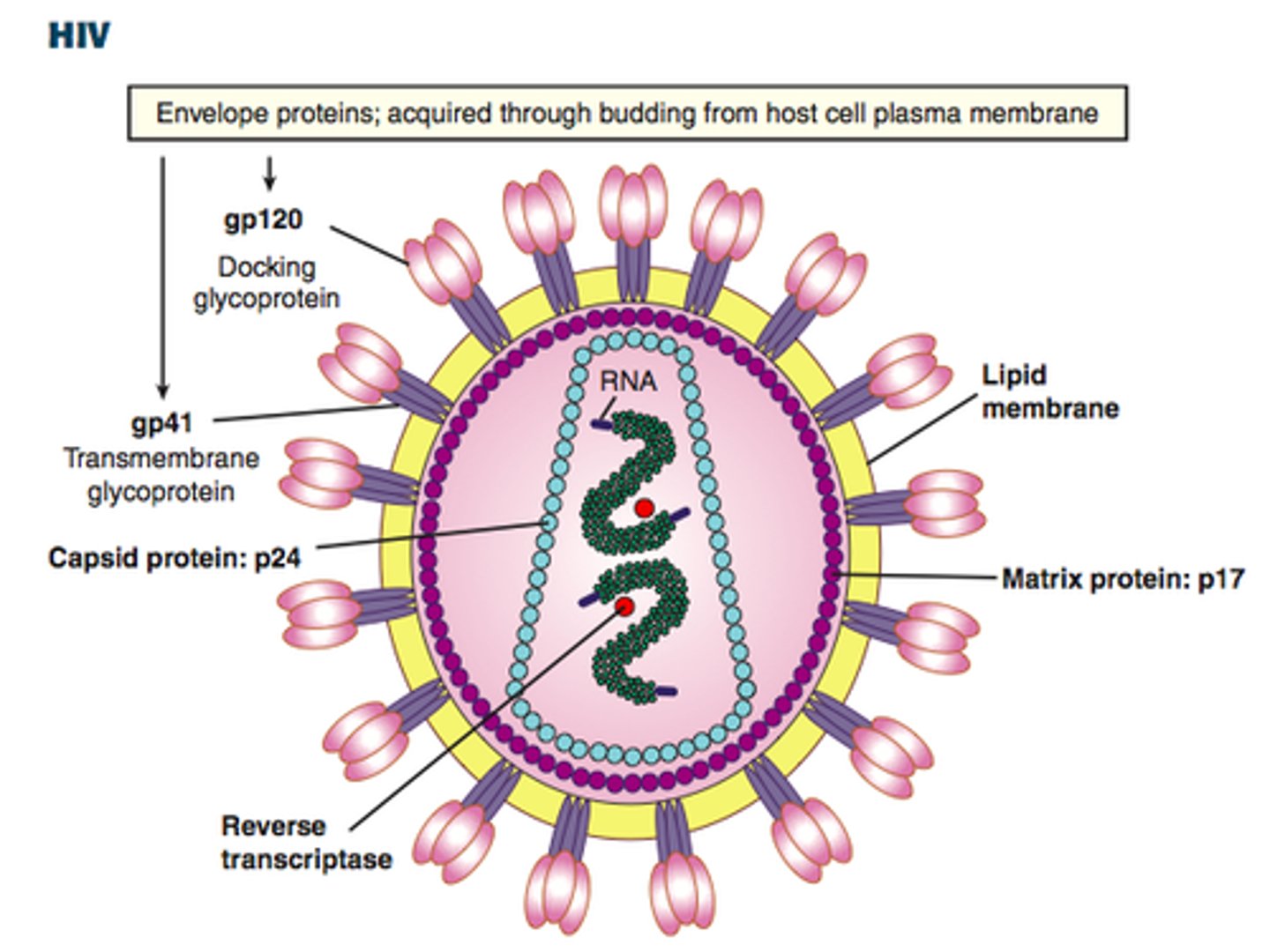
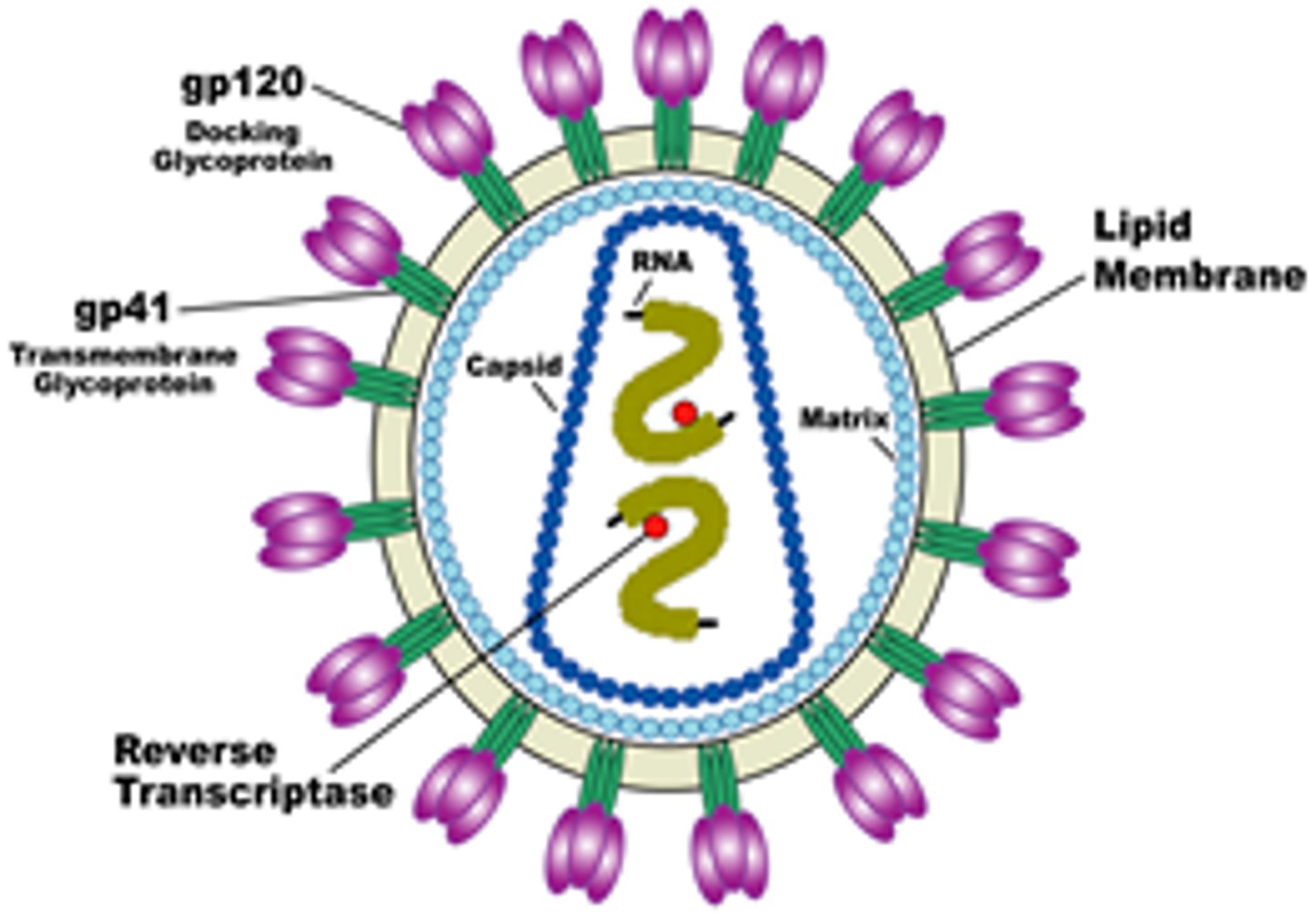
gp120
- acts as a key for virus to attach to & enter host cells
- variable regions contribute to virus's ability to evade immune system
protease inhibitors
- class of antiviral drugs that inhibit protease enzyme
- enzyme essential for maturation of HIV
- by blocking enzyme, prevent virus from maturing into infectious form; prevent cleavage of viral polyproteins into functional proteins necessary for viral replication
integrase inhibitors
- class of antiviral drug that block integrase enzyme
- enzyme responsible for inserting HIV DNA into host cell's genome
- stops virus from replicating
Cellular Prion Protein (normal PrPc)
- alpha-helical structure
- found in healthy cells, especially in brain
- role in cell signaling, neuroprotection & regulation of neurodevelopment
- generally stable & doesn't induce disease
Scrapie Prion Protein (abnormal PrPsc)
- misfolded & insoluble
- forms aggregates that are resistant to proteases
- converts normal proteins into abnormal, misfolded proteins
- associated w/prion diseases, leading to neurodegeneration & brain damage