GLPH 171 Exam Questions & Answers | 100% Verified solutions (2026) UPDATE |2026!! STUDY GUIDE EXAM
 Call Kai
 Learn
Learn Practice Test
 Spaced Repetition
 Match
Match Flashcards
1/119

There's no tags or description
Looks like no tags are added yet.
Name | Mastery | Learn | Test | Matching | Spaced | Call with Kai |
|---|
No analytics yet
Send a link to your students to track their progress
120 Terms
Health (WHO Definition 1946)
A state of complete physical, mental, and social well-being and not merely the absence of disease or infirmity
Health (Frankish et. al 1996)
The capacity of people to adapt to, respond to, or control life's challenges and changes
"Functional Definition"
Disease
The biological or physical malady affecting the body
Sickness
Social acknowledgement of impairment of affliction
Illness
Perception of dysfunction by an afflicting individual
The Relationships: Disease Without Ilness
Hypertension
- HBP can lead to heart attack but patient does not feel ill and does not seek care
The Relationships: Ilness without Disease
Hypochondriac (anxiety)
Feeling of being ill, but nothing wrong despite extensive medical testing
The Relationships: Ilness without Sickness
Headache
Feeling of being ill, requires doctor's note for absense
Health and Disease
- Not necessarily opposites
Disease (Yes)
Healthy well managed type 1 diabetic
Unhealthy late stage cancer
Healthy vibrant neighbour
Unhealthy overworked teacher
Disease (No)
Factors that cause disease
1. germs
2. genetics
3. lifestyle
4. multifactorial disease (epigenetics, environmental)
Factors that cause disease: germs
- prominent in the 19th century
1. Kach
- germs are in diseased individuals and are absent in the rest, they can be isolated/cultured, germs cause disease in healthy hosts, and germs can be re-isolated from newly diseased (ignores social context + genetic origins)
2. Lister
- sepsis (infection) caused by pollen-like dust containing surgical wounds, antiseptics (carboxylic acid) should prevent wound infections (surgical mortality 45%->15%)
3. Pasteur
- first pastuated germ theory of disease, principals on microbial fermentation + sterilization, described heat treatment of milk/wine "pasteurization"
Factors that cause disease: genetics
- interplay between genetics and environment
1. emphasizes hereditary vulnerability
2. focuses on individual, not society
Factors that cause disease: lifestyle
- behaviourally-driven
- smoking, alcohol, fatty foods
- emphasizes individual behaviour change
Factors that cause disease: multifactorial disease (epigenetics, environmental)
- epigenetics: specific gene ↑ risk of a disease (ex. BRCA and breast cancer
- not completely deterministic
- environmental trigger needed
- necessary, but not sufficient
Well-being and wellness
Well-being: broader concept, encompasses many areas of life
- ex. learning, financial security, social participation, work, family life, leisure, environ, security, housing
- state of feeling well (not ill or sick)
- not generally a synonym of being "healthy"
Population Health
- health can be understood at the population level; groups with shared characteristics
- health outcomes of a group of individuals, including the distribution of such outcomes within the group
- studies health outcomes, patterns of health determinants, and policies that link these two
Epidemiology
the study of the distribution and determinants of disease in populations
- Distribution: descriptive epidemiology focus, how specific outcomes are patterned in a population, essential for etiology (origins) of disease
- Determinants: analytical epidemiology focus, anything that influences the health of an individual and the distribution of health states in a population
Population Health: Fundamental Assumptions
- diseases distribute non-randomly in a population in relation to the factors that determine health
- factors can be identified by studying distributions of health outcomes in a population
Public Health Agency of Canada
- Population health is an approach to health that aims to improve the health of the entire population and to reduce health inequities among population groups
- approach recognizes that health is a capacity or resource rather than a state
Determinants of Health
- broad, yet interconnected
- WHO: "the range of personal, social, economic, and environmental factors which determine individual and population health status"
- Broad Categories
1. Individual (genetic makeup, sex, age)
2. Physical environment (water, sanitation, pollution)
3. Employment and working conditions
4. Access to Health Services
5. Healthy behaviours and coping skills
6. Healthy child development
7. Social environment (SES, education, culture)
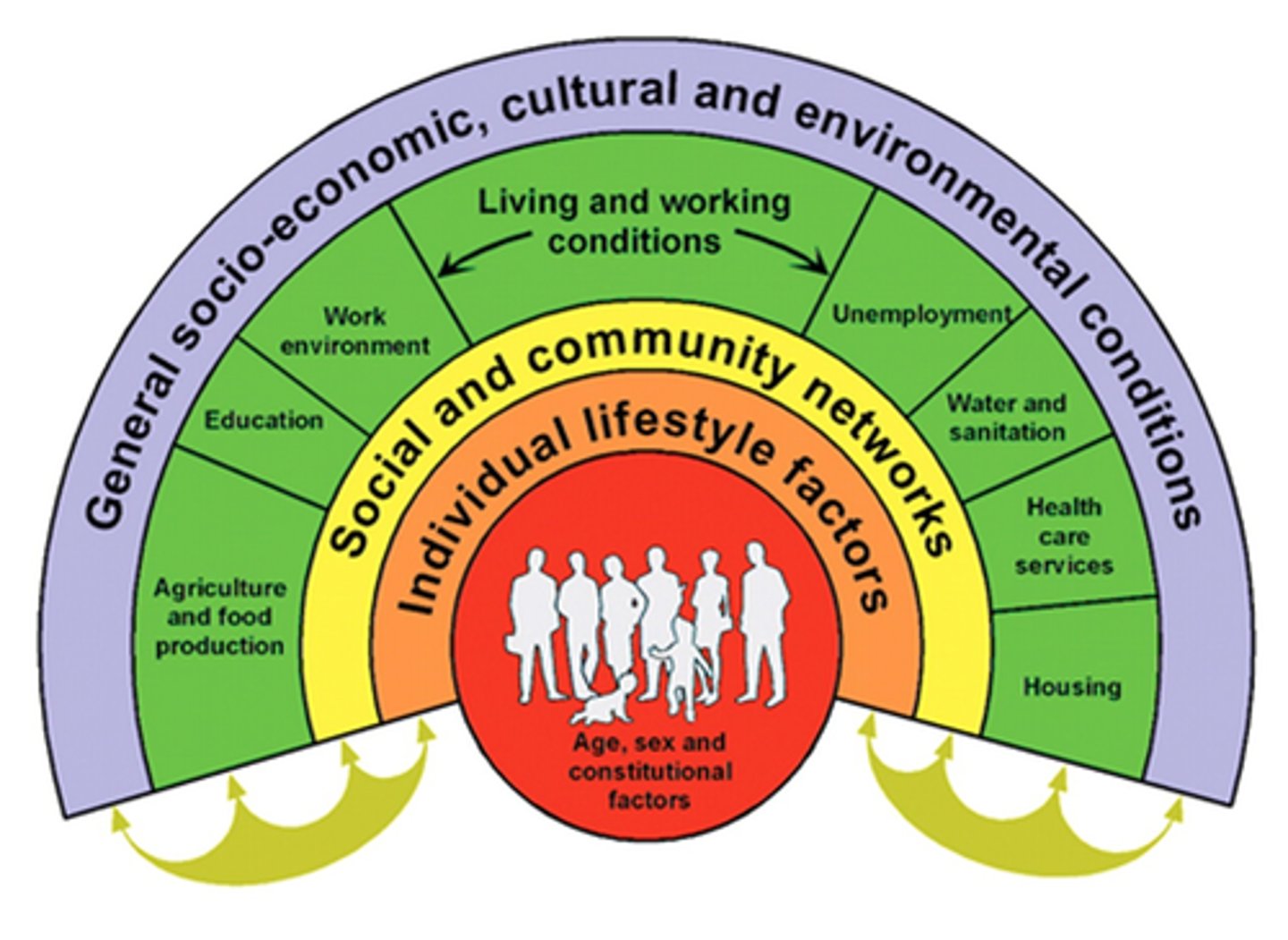
Modelling Determinants of Health
Dahlgren & Whitehead Model
1. Age, sex, and constituional factors
2. Individual lifestyle choices
- health behaviours, possibly family influenced
3. Social and community networks
- social supports, culture, and freedom of expression
4. Living and work conditions
- environments, water, food, sanitation
5. General socio-economic, cultural, environ conditions
- directly/indirectly influences health, climate change, general poverty level, etc.
Social determinants of health
Specific group of social and economic factors within broader determinants that influence health outcomes
- societal condtions, and alteration by informed action
- shaped by money distribution, power, resources, etc
Physical determinants of health
- factors in physical environment affecting health and outcomes
- air quality, pollution, soil contamination, occupational hazards, housing, motor vehicles
Social and physical determinants of health
- responsible for health inequities
1. psychological factors: knowledge, attitude, beliefs
2. biological factors: inherited disorders, sickle anemia
3. environmental factors: nuclear facility breakdown (chernobyl), violence, genocide
4. health policy effects: access (Canadian health act makes timely and appropriate healthcare)
5. individual behaviours: smoking, alcohol
Types of Causes (often occur simultaneously)
1. Root Causes: distant "upstream"
- climate, governance, wealth distribution
2. Underlying Causes: medium "midstream"
- transportation, education quality, land use
3. Proximal Causes: personal experiences "downstream"
- income, food, smoking, education level, social support
Risk factors
↑ the chance of adverse health outcomes
1. Intrinsic factors: biological (sex, age, genes)
2. Disease-related risk factors: (CV disease, diabetes)
3. Behavioural risk: lifestyle choices (smoking, alcohol)
4. Physical environment: lack of healthcare, pollution
5. Social environ: community networks, relationships
Risk Factors - Most Common
- under/over nutrition
- dietary risks
- high BMI
- unsafe sex
- tobacco, alcohol
- pollution exposure
- stress/trauma
- lack of water or sanitation
MOST PROMINANT GLOBALLY: high BP, smoking, air pollution, high blood sugar, obesity
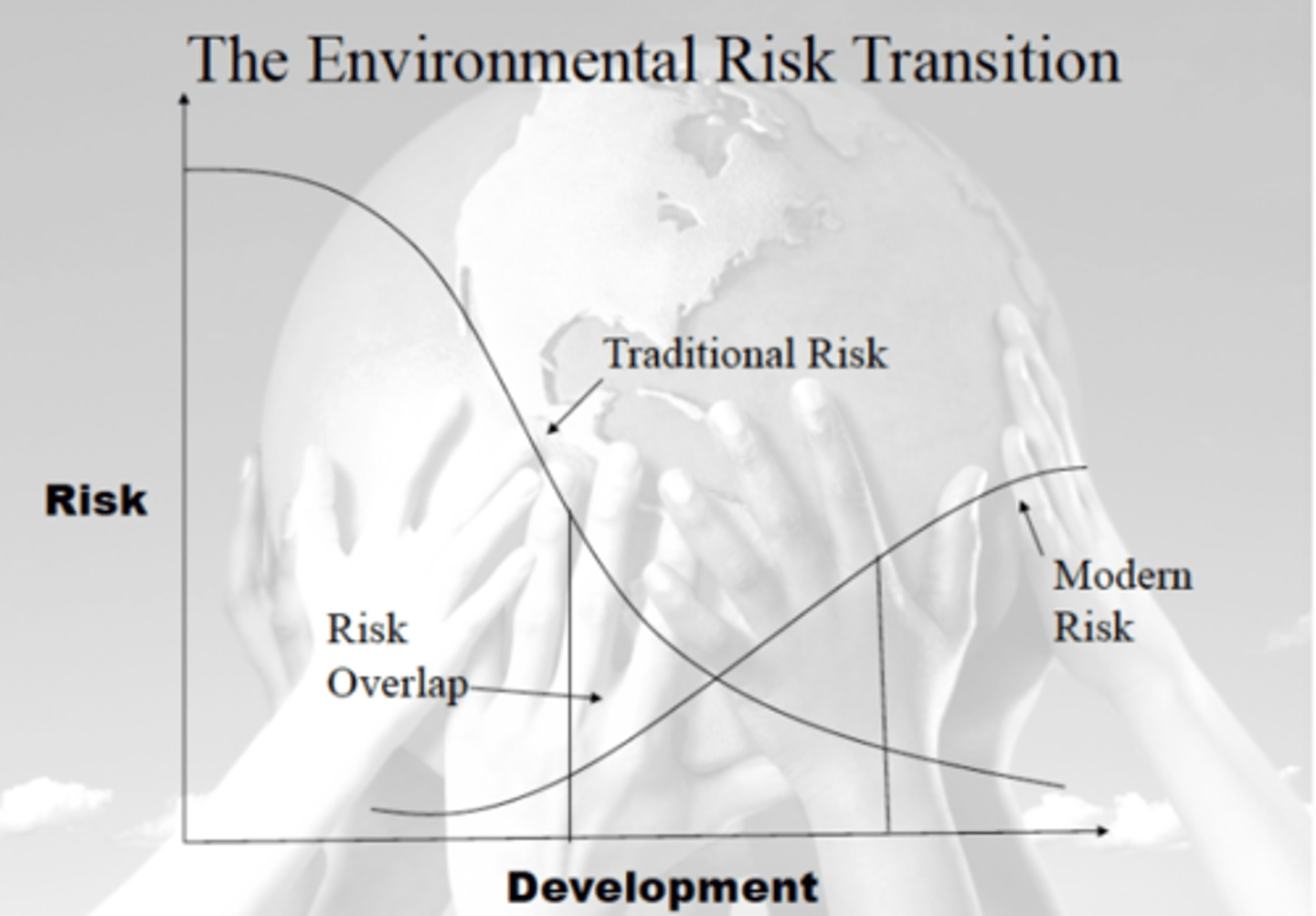
Risk Transition
As economies grow, risks transition from traditional (under-nutrition, hygiene, santitation, air pollution) to modern groupings (physical inacticity, overweight, tobacco, urban air quality, road risks)
Health Status Indicators Purposes
measurable characteristics of a population that researchers use as supporting evidence for describing the health of a population
- allows for common measurement across boundaries
- answers amount of disease out there and how much morbidity is attributed to specific causes
- mortality is easier to measure that morbidity
1. Determine causes of illness, disability, and death
2. Carry out disease surveillance
3. Compare health within/across countries
Commonly Used Health Indicators
Life Expectancy at Birth: relatively narrow, only about life length, not quality, comparable across geographies
Under-5 Mortality: compatibility, not specificity, brings values to similar scale, comparable across regions
Health Indicators
1. Life Expectancy at Birth*
- avg # years a newborn is expected to live if current mortality trends remained for the baby's lifetime
2. Neonatal Mortality Rate
- # deaths of infants <28 days per 1000 live births/yr
3. Infant Mortality Rate
- # deaths of infants <1yr age per 1000 live births/yr
4. Under-5 Mortality Rate*
- probability a newborn infant will die before reaching age 5, per 1000 live births
5. Maternal Mortality Rate
- # dying mothers (preg/birth) per 100 000 live births/yr
Health Indicators: Under 5 Mortality
- Indicative of child health concerns
- ex. diarrheal disease, malnutrition, etc.
- preventing child mortality is a ket global health goal
- "life or death" but does not consider disease prevalence (suffering, disability, morbidity)
- associated with low socioeconomic status
Vital Statistics
- measures population health (birth/death record)
- collected within population used across geographic areas to determine health
- Health data assumes recorded everywhere but no
Methodologies
1. Quantitative: surveys, vital statistics
2. Qualitative: words/images, interviews, open-end q's
Critical Appraisal of Knowledge
- process of carefully assessing the outcome of scientific research to judge its trustworthiness, value, and relevance in its context
Questions to Ask
- evident is credible? how up-to-date? how were things measured? cultural relevance? any potential biases?
health inequities/disparities
- unfair/unavoidable health status
- differences seen within and between countries
- US CDC "closely linked to social/economic disadvan"
1. Income (low power/income = worse health, services)
2. Variation in health indicators: some countries, substantial variation in sub-pop groups (also varies between countries)
Geographic Location
1. Growth rates: urban VS rural children
- rural children ↑ risk of stunted growth
2. Contraceptive use: urban VS rural couples
- rural couples ↓ contraceptive use
inequity vs inequality
Equality: resources shared equally
Equity: given fair share of resources
Time-appropriate or no mammographies: rural women 1.32x ↑
TB rate: Indigenous communities 25x ↑
Diabetes rate: reserve/northern regions (type 2) 3x ↑
inequity vs inequality quotes
WHO: "Health inequities are differences in health status or in the distribution of health resources between different population groups, arising from the social conditions in which people are born, age, live, and grow
Margaret Whitehead: "Differences in health that are not only unnecessary and avoidable, but also unfair/unjust
Critical Scholar Lens
Stephan Brooksfield "Someone who challenges aspects of existing structures that others accept w/out question"
Ask yourself:
How do we know this is true, whose knowledge is this
Definitions of Health:
what definition is being used? broad or narrow?
Health Data
what health indicators are being used
Environmental Determinants
Proximal (housing, air, soil) or distal (schools, climate)
1. Geography: country, region, urban/rural
2. Natural: biotic/abiotic factors, air, water, green space
3. Built Environ: housing, roadways, transportation
4. Food System: sources, distribution, insecurity, deserts
5. Macro-environmental: politics, economy, climate, war
United Nations Universal Declaration of Human Rights
Everyone has the right to a standard of living adequate for the health and well-being of himself and of his family, including food, clothing, housing, medical care
Environmental Health
Environment: space, objects, people, and nature surrounding the organism
WHO: "Environmental health comprises those aspects of human health, including quality of life, that are determined by phys, chem, bio, social, psych factors in the environment
Environmental Health: Burdens
1. No clean water + poor sanitation
2. Air pollution (indoor/outdoor)
3. Inadequate housing/shelter
4. Changing land/climate (food production, culture)
5. Pollution and environment toxin exposure
The Burden of Disease
- Environmental-associated diseases make up to 8.4% of total burden of disease in LMIC's
- Factors: unsafe water, sanitation, hygiene, air pollution
- Environmental factors are significant contributors to premature-deaths
- Consequences: burden on ↓ SES, negative effect on economic productivity, ↑ risk on younger children
Air Pollution
- ultra fine airborne pollutants result from smoke emitted through human activities
- easily enter children's lungs, cross blood/brain barrier, and cross placenta
Deaths from Indoor/Outdoor Pollution
- ↑ health effects and child mortality under 5
- Low and middle income countries (asia, africa)
- 88% of outdoor pollution, 99% of indoor pollution
Health Inequities + Aggravating/Intersecting Factors
Inequities
1. Urban: industrial sites, smoldering dumps, electric gen
2. Rural: unventilated homes, smoke producing stoves
3. Refugees/Migrant: wood smoke, inadequate housing
Aggrevating/Intersecting Factors
1. Lack of access to heathcare (ex. pnemonia, asthma, more likely to be fatal with low SES)
2. Climate Change: air pollution contributes to greenhouse gas production
Outdoor Pollution
- environmental pollutants + industrial waste
- worst in low income urban communities
- majority of research focus
- 2 billion children live in areas over standards (10mcg/m^3), 300 million of that,extreme (>60mcg/m^3)
- highest kevels in north africa, middle east, south asia
Air Pollutants
1. Particulate Matter
PM10: <10mic, blocks/inflames nasal/bronchiol passages
PM2.5: <2.5mic, penetrates lungs + enters bloodstream
2. Other Pollutants
O3, NOX, SO2, CO, NH4, Pb, PAHs, VOCs
Indoor Pollutants
- solid biomass for heating/cooking
- worse in lower income, rural areas
- majority by human-emitted activities; heating, cooking
- ex. biomasses (plant/animal derived)
- animal dung is not clean and is dangerous
- needs adequate ventilation
- solid fuel use is steadily increasing worldwide
- over 1 billion children effected
- ex. europe 5% use solid = 3 million children
- ex. africa ~95% use solid = 352 million children
Health Risks
- incomplete combustion (CO)
- RTIs
- long term health effects
Health Effects
1. birth isssues (miscarriages, early, ↓ birth weight)
2. child mortality (↑10% mortality under 5)
3. brain development issues (children)
Unsafe Water
- 1.1 billion people worldwide do not have clean water
Causes:
- pollution, contamination, toxin exposure, inadequate sanitation, waste disposal, poor hygiene
Consequences:
- diarrheal infections (gastroenteritus, cholera) and vector-borne diseases (dengue, schistosomiasis)
Water Related Infections
1. Water-Borne
- transmitted through water ingestion (ex. cholera)
2. Water-Washed
- poor hygiene and inadequate clean supply (ex. hep A)
3. Water-Based*
- transmitted through aquatic intermediate host
- ex. schistosomiasis* or guinea worm
4. Water-Related Insect Vector
- transmitted through insects that use water to reproduce (ex. mosquitoes (malaria), dengue)
Schistosomiasis "Snail Fever"
- water based infection
1. Maturation
- flukes inside human intestinal blood vessels
2. Reproduction/Excretion
- sexual reproduction within host; fertilized eggs excreted into water source via feces
3. Egg Development
- develops into cilated larvae (miracidium) infects snail hosts
4. Asexual Reproduction
- miracidium -> motile larvae (circadium)
5. Infection of Human Host
penetrates skin/blood vessels; schistsoma eggs -> allergic reactions -> ascites (abdominal fluid build-up)
Unsafe Water: Indigenous Communities
- many rural indigenous communities effected
- "Plan of Action" - Jim Prentice + Phil Fontaine (2006)
"The government will ensure that First Nation leaders have access to the tools and resources they need to deliver clean water to their residents. All parties with responsibilities in this area must take decisive action and achieve measurable results"
- "Community Struggle" - Kitigan Zibi Anishinaberg
- 130km N of Gatineau/Ottawa
- 2671 people, 1489 on reserve
- surface water and individual wells
- dangerous levels of uranium
- 1/32 communities with drinking water advisories (Can)
Built Environment
Infrastructure; housing, community structure, transportation structures, etc.
Aspects of Housing
- Internal Housing Conditions: hazards (space design)
- Area Characteristics: social benefits and location
- Housing Tenure: control and financial dimensions ($)
Living Spaces Impact Health
1. Pollutants: outdoor pollutants
2. Building Materials: chemicals causing conditions
3. Mold/Bacteria: humidity can cause mold, RTIs
4. Fireplaces: combustion gases cause RTIs
5. Cleaning products: irritations by VOC's
6. Irritants: animal hair (asthma, allergic reactions)
7. Fumes: CO (confusion, vomit, headache)
8. Solvents: paints/solvents release VOC's
9. Cigarettes: 4000 chem; prim/sec/ter smoke
10. Gases: radon seeping through (lung cancer)
Built Environment: Variation In Features
- Intentional development practises + residential segregation
- Dr. Timerlake and Dr. Ignatov
"Residential segregation refers generally to the spatial segregation of two or more social groups within a specified geographic area, such as municipality, a county, or a metropolitan area. Most commonly, scholarship on residential segregation explores the extent to which groups defined by racial, ethnic, or national origin live in different neighbourhoods"
Residential Segregation
- Associated with outcomes
- Some studies found it is associated with low birth. weight, preterm birth, cancer, IDU, smoking, homicide
Housing Facts
- Canada has no unified, national housing plan
- Federal housing investments continue to erade
- Homelessness remains deep/persistent
- Smart/successful solutions adapted
Homelessness Types
Unsheltered: at some point, was in a shelter, street, park, makeshift, abandoned building
(2.6% male, 2.3% female, >1 million Canadians)
Hidden: temporarily live with family/friends because nowhere else to go (15% or 5.8 million Canadians)
Core Housing Need (If At least 1 of Following Event)
1. Lack of Affordability***: 30%+ of income
2. Lack of Suitability: overcrowding conditions
3. Lack of Adequacy: lacks full bath + significant repair
- 12.7% of households overall in Canada
- 32.9% in Nunavut
- 35.4% for recent immigrants
- 28.6% for lone parents
- 25.6% adults >65 without physicians
- 20.4% Indigenous
- Lack of affordability is likely driving the statistics (76.1% unaffordable only, 4.3% unsuitable only, 4.5% inadequate only, 14.5% have two+ indicators)
- Determinants differ by age (ex. children ↑ risk)
Access To Food
- Food systems tied to physical + natural environments
- Agriculture, manufacturing industry, neighbourhoods
- Food deserts possible; tactic by businesses
- Contexual factors related to available resources (food availibility, spatial market patterns, construction quality, differential access across neighbourhoods)
- In Northern Canada
- groceries are $23,000/yr
- 40% make <$20,000/yr (Inuit)
- Rent $3000-$7000
- Amazon and stock-up visits to Southern Canada
How Do Neighbourhoods Effect Health?
1. Physical Features: air, water, grocery stores
2. Availability of Healthy Environ: safe play areas, work
3. Services Provided: education, transport, health
4. Socio-cultural Features: history, crime, values
5. Reputation of Area: self-esteem, morale, investment
Macro-environmental Factors
- Governance structures, war/conflict, natural disaster, climate change
- WHO...
- Disasters: "Any occurrence that causes damage, ecological disruption, loss of human life or deterioration of health and services on a scale sufficient to warrant an extraordinary response from outside the affected area
- Complex Humanitarian Emergencies: "extensive violence/loss of life, displacements of populations, widespread damage to societies/economies, and the need for large-scale, multi-faceted human assistance"
- difficult to manage because of population migration, corruption, supply chain disruption, collapse of state institutions, law breakdown, climate change
Climate Change
WHO: "Single biggest health threat to humanity"
- heating planet beyond natural variation
- effects: heating, extreme weather, ↑ sea levels, ↑ CO2
- impacts: food, air, h2o, vector-borne illnesses, drought
- worsened allergies, lyme disease, eco-anxiety, asthma
- economic impacts from natural disasters
Minimizing Environmental Health Threats
1. Outdoor Air Pollution: ↓ vehicles, no garbage burn
2. Indoor Air Pollution: efficient fuels, ↓ chemical use
3. Water Supply/Hygiene: proper water systems
4. Sanitation: lifestyle modification encouragement
5. Housing: appropriate construction
6. Climate Change: ↓ gas emissions, clean energy
Governance, War, & Health
Governance
- Direct relationship to type, availability, # services
- Determine taxation level, benefits, older age pensions
- Phys, men, emo health impacted by unequal freedom
- Democracy ↑ life expect ↓ infant/maternal mortality
War
- State of armed conflict
- Security is basic human need (Maslow)
- Trauma, PTSD, short/med/long-term ↑ the risk of heart disease, attach, BP, stroke, weight issues, stroke, memory and concentration impairments
Social Determinants
conditions people are born, grow, work, live, and age
pathways by which social and societal conditions affect health and policies
Social Determinants Examples
proximal: cultural factors, family, lifestyle
distal: neighbourhoods, schools, societal class
societal relationships, supports, norms, policies, features, political and economic systems
Lifestyle Factors
- changeable ways of life and habits
- SDOH influences choices people make
Don't smoke, balanced diet, remain active, manage stress, cover up in the sun, practise safer sex, safe driving, drink alcohol in moderation
SDOH Importance & Advice
- Accounts for 30-55% of health outcomes
- Very difficult to change
- Michael's Mormot's 2015 Book
- Don't be poor, dont have poor parents, own a car, dont have a stressful job, live in good housing, be able to afford holidays
Culture
shared beliefs, values, and practices customs, traditions in a community or society
-> linked to ideology and cosmology
-> linked to behaviour
-> dynamic, malleable, responsive
-> vertically and horizontally transferred
Related to health
- eating practises, gender roles, tobacco use, sexual relationships, hygiene practises, funeral practises
Ethnicity
A group of individuals who identify with or belong to a particular cultural group
Active Cognition
Culture does not require concious thought, indirect influence may occurring (marriage rituals, food habits) without realization
Positive & Negative Cultural Effects
+
Sardinian Inverse Transhumance: cattle grazing patterns adaptive to avoid peak mosquito concentrations
Vietnamese Stilt Houses: built above mosquito flight ceiling to protect against malaria
_
Food preferences (undercooked meat)
Settlement patterns (increase risk of infectious diseases)
Historical racism (affects safety, security, service access)
Social Connection
Conveyed through feelings of inclusion and support
"My Health My Community" (2014) Vancouver Study
1. Perception of health: 3x good/very good health
2. Health behaviours: healthier lifestyles, activity
3. Health Improvements: low belonging 28% ↓ to report good health
Socioeconomics
SES: one's position in hierarchical structure (context)
SE Position: factors that influence position in hierarchy
Socioeconomics can be measured by
1. Area-Level Indicators: subdivisions (ex. at least hs edu)
2. Individual Indicators: education level, occupation
3. Age
-> childhood: household income, parental jobs
-> young adulthood: education
-> professional life: income, home conditions, assets
-> retirement: household, asset transfers, wealth
Socioeconomics + Health
- Macarthur Research Network explains link
1. SES -> 2. connecting pathways -> 3. health outcomes
1. education, work, income, SES inequality
2. work situation, resilience, allowed access + self voice
- access to healthcare, behaviours, toxin exposure
3. cognitive functioning, disease onset, mortality
When SES matters most
- Happens simultaneously
1. Critical Period: early exposure influences future (ex. toxin exposure during brain development time)
2. Pathway: early event effects health (domestic abuse)
3. Cumulative: day to day influences
Neurobiological Pathways
- Affected by low SES
- Allostasis: the adaptation during stress
- Allostatic Load: wear/tear of body, increases overtime
SES: family and individual factors affect neuroplasticity of limbic system that mediates allostatic control systems
employment affects neuroplasticity of limbic system that mediates allostatic control systems
Physiological Effects: limbic regions affect neuroendocrine, autonomic, immune systems affect systems and behaviour, increasing allostatic load
Pair of ACE's
↑ likelihood of adverse health effects and death
Adverse Childhood Experiences:
violence, abuse, witness, suicide attempts
Adverse Community Experiences:
situations without support ad are unsafe
Solutions: childcare, workshops, mentorship, extracirric
Income
- Indicator of SES
- Higher income Canadians live 3 years longer
- Poorest 20% (2x ↑ chronic conditions risk) than richest 20% of Canadians
- Income influences where families live
- Argued postal code matters more than genetic code
- oppurtunities differ, healthcare quality, chronic stress
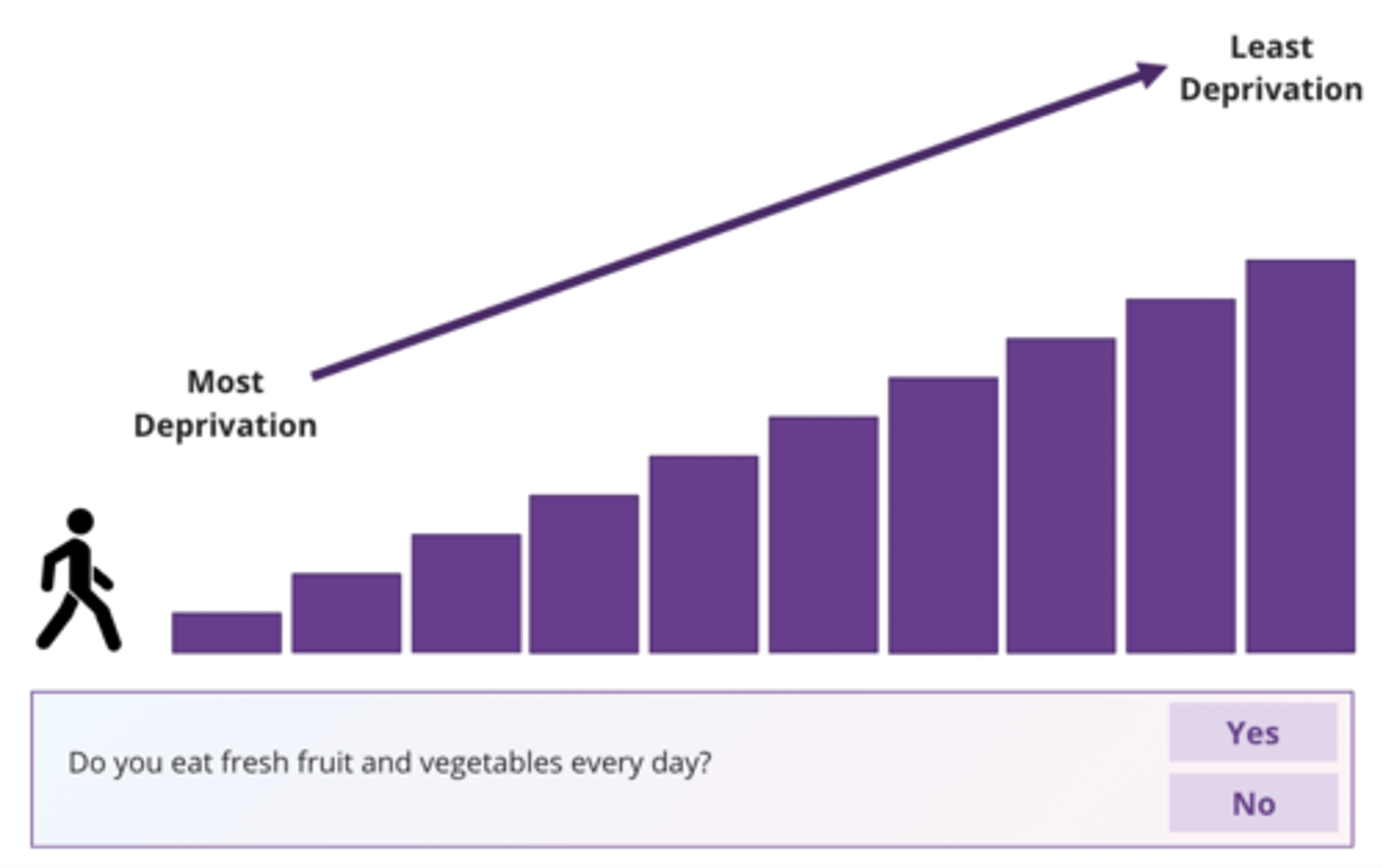
Material Deprivation Ontario Index
- Measures resources available (fruit/veg, dental care, clothing, replace appliances, gifts, hobbies)
Education
- Capture of knowledge; literacy, capac, potential assets
- ↑ education level = better health & intergen effects
- Parents or own individual education attinment
- Easily defined, remembered, = good indicator
- Associated with health literacy & behaviours (vaccines)
- use proven strategies, benefit everyone, encourage participation, clear communication, be health literate
Occupation
- Captures class, labour expenses, stress, social value
- Weak indicator = gender patterns, variation, student/unemployment not considered
The Whitehall Studies (England)
- Lower-grade occupation ↑ premature mortality risk 3x
- "Status Syndrome"
Occupation: General Trends
1. Life Expectancy: 18 years difference avg
2. Premature death: 15 million majority of non-communicable diseases are in low/middle income
3. Disease: relative gaps (cancer) ↑
4. Under 5 Mortality Rate: 8x ↑ Africa than Europe
Inequality mechanisms: underinvestment in social goods, harmful psychosocial effects
Health Inequality Causes
1. Levels of power and resources
2. Levels of exposure to health hazards
3. Impacts of health hazards
4. Impacts of being sick
5. Experiences in early childhood
Social Staircase
- Inequalities connected to person's position in society
1. Bottom
- low food quality, less education, insufficient housing, very little power, 2x ↑ risk of premature death/illness
2. Middle
- sufficient resources/power, medium lifespan/health
3. Top
- quality food, education, housing, power/control, live the longest and are the healthiest
Socioeconomic Gradient
- Poorer countries face more negative health outcomes
- Dose-response relationship
Terminology to use with inequities: priority, marginalized, vulnerable, targeted, disadvantaged, under-served, at-risk, disempowered, disenfranchised
Addressing SDOH
- WHO 2005 crtical action areas
1. Living Conditions: improve daily conditions
2. Policy & Resources: power, money, resource distrib
3. Problem Solving & Action: measure, understand, act
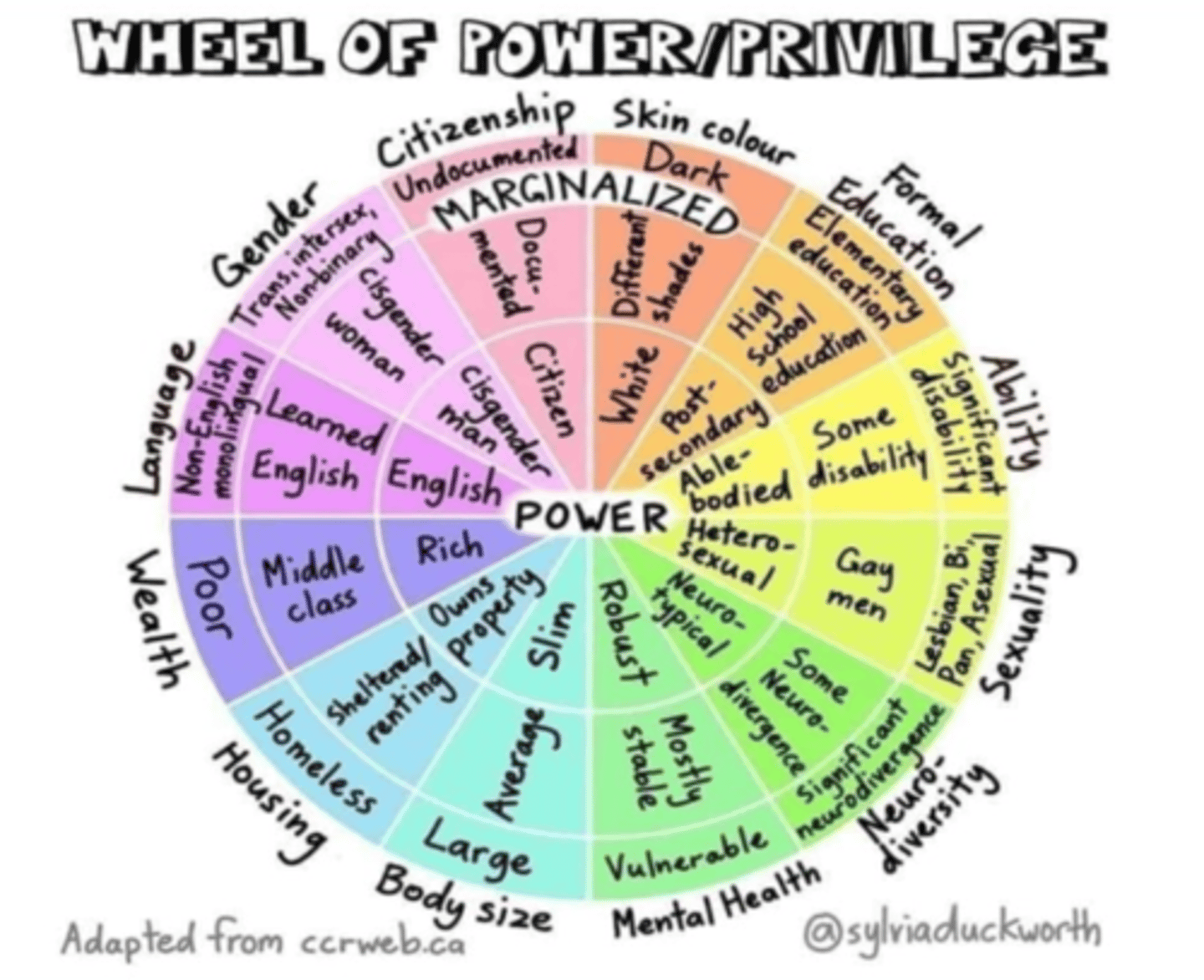
Wheel of Power & Privilege
- Sylvia Duckworth
- How power and privilege intersect
- Marginalized near outer parts of the wheel
Privilege & Identity
Aspects of Identity: physical looks, languages, foods
Identity & Health: direct associations
- ex. Marfan syndrome in tall, lean people
- less genetic/biological, more advan/disadvan in life
Privilege
special rights; advantages
Sexual orientation, SES, religion, gender identity, language, ethnicity, physical ability, employment
Health Behaviours
Smoker/nonsmoker, substance use practises, BMI, excercise, diet, sleep, stress management
Oppression
Opposite to privilege
- Mixture of institutional power and prejudice that manifests and creates disadvantages for certain groups
1. Individual Beliefs: feelings, beliefs, values
2. Interpersonal Interactions: actions, behave, languages
3. Institutional Biases: legal sys, education, hiring prac
4. Societal/Cultural Norms: collective ideas "right"
Race
- Social concept, conceptual categorization based on skin colour, hair, features, sometimes religion
- not biological; humans share 99.9% same DNA
- greater genetic variation within races than between
- race is an idea made by humans; no basis in biology
- changing conceptions about racial identity
effects of racism: unfairly disadvantages some communities, unfairly advantages in some, saps strength of the whole society by wasting human resources
Racism and the types
- False belief in superiority of one group of people over another based on race
- Camara Jones garden metaphor
1. Personally Mediated/Internalized Racism
- can be unintentional, doing/not doing
- differential assumptions about abilities/motives
- prejudice (assumptions) and discrimination (actions)
2. Internalized Racism
- acceptance by stigmatized races of negative messages about our intrinsic worth
- self devaluation, resignation, helplessness
3. Institutional/Systematic Racism
- differential access to goods, services, opportunities
- housing, education, employment, income, hospitals
- racial segregation + education (↓ funding in bipoc)
- justice system (drug use, incarceration, profiling)
- policy, work, religion, administration (injustices)
Racial Equity & Inequity
"Just and fair inclusion into a society in which all people can participate, prosper, and reach their full potentials"
- The Equity Manifesto
Inequity
- Results from any racism from mostly structural racism
- Adversely impacts BIPOC health, wealth, career