Arts of the Americas before 1300
 View linked note
 Call Kai
 Learn
Learn Practice Test
 Spaced Repetition
 Match
Match Flashcards
 Knowt Play
1/25

There's no tags or description
Looks like no tags are added yet.
Name | Mastery | Learn | Test | Matching | Spaced | Call with Kai |
|---|
No analytics yet
Send a link to your students to track their progress
26 Terms
What are some migration theories on America?
describe the rise of civilizations in the Americas.
Migration theories on test: how did ppl get to turtle island->from sybirya to Alaska then migrated to turtle island, walked over. Other way, traveling coast-line, boats, astrological navigating
question of original settlement uncertain here are some theories:
-1:arrive in north + south america form Asia during last ice age. Alaska and Canada covered in glaciers at the time but the pacific coast provided access from Asia to the south and east, paleolithic gatherers spread out.
-2-archeological find early connection with Europe along artic coast and north atlantic.
-3: Pacific islanders sailed coast of chile and spread from there.
any event 10 -12 thousand yrs ago hunter gathere cut off from ice melting then over-run by europeans 15th cent.
-agriculture and animal keeping. Mesoamerican developed sophisticated mathematics. Central and sout advance mettalurgy. metal work in ANDES AND OTHER AMERICAN MADE OTHER TOOLS LIKE A CUTTING EDGE. bASKETRY AND WEAVING WERE POPULAR, about 7400 BCE. Early arts served as communication beliefs and displaying stautues
Migration theories on test: how did ppl get to turtle island->from sybira to Alaska then migrated to turtle island, walked over. Other way, traveling coast-line, boats, astrological navigating
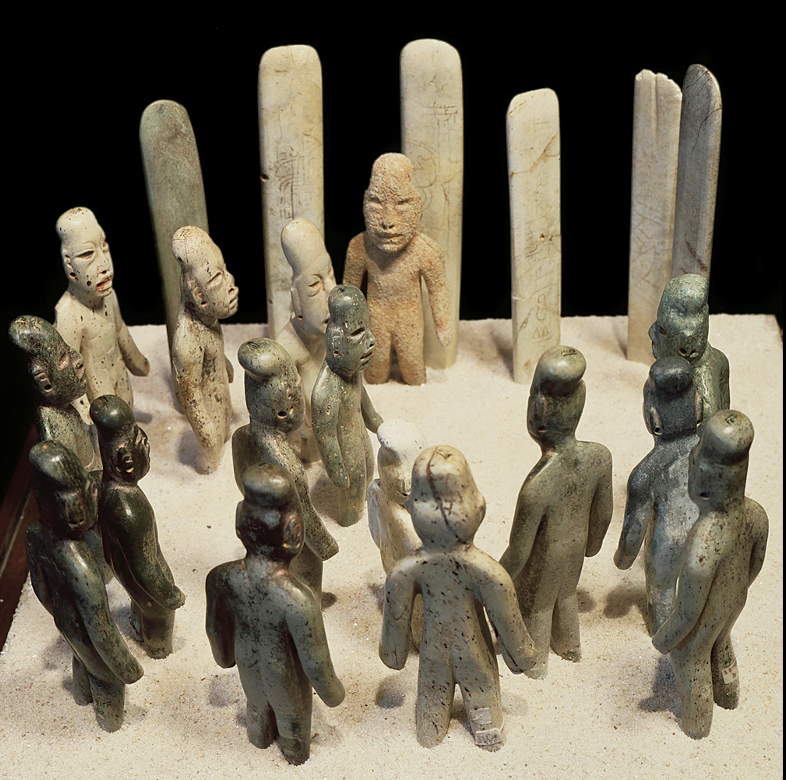
hints at ritual in progress. . 6 stela-like shaft of jade(celts). Standing poses are identical, and pose today is used in tai chi for strenghtening body and maintaining focus. Cranial deformation. Uniform.
carved from diff stone. might all be carved by diff scultptures before putting in burial. Complex gender identity/ Brought to La venta , a ritual center. Placed infront an offering
after 100 years after they were burried someone dug a hole on top but didn’t remove therefore knew precise location. earliest discovered not found.
Describe Mesoamerica and central America
north valley of Mexico to belize, honduras, Ni aragua on Central America.Civilization varies but similar culture like the cosmic ball game, monu mental building construction, complex calendar system. Elite and commoner class.
farming in 700 and 6000 BCE, by 3000 to 2000 BCE wides-spread villages. 3 PERIODS: FORMATIC/PRECLASSIC, CLASSIC, POSTCLASSIC.
describe Olmec culture and some artwork
Skillfull crafted object for marking time, maintaining health, visualized cherishes ideas.
along gulf coast was area to put precious items, over 6 cent pilgrimage deposited polished objects. base of Cerro Manatí.
during the same time nearby at San Lorenzo, first urban center in Mesoamerica 1300-900 BCE where creation of basalt sculptures.
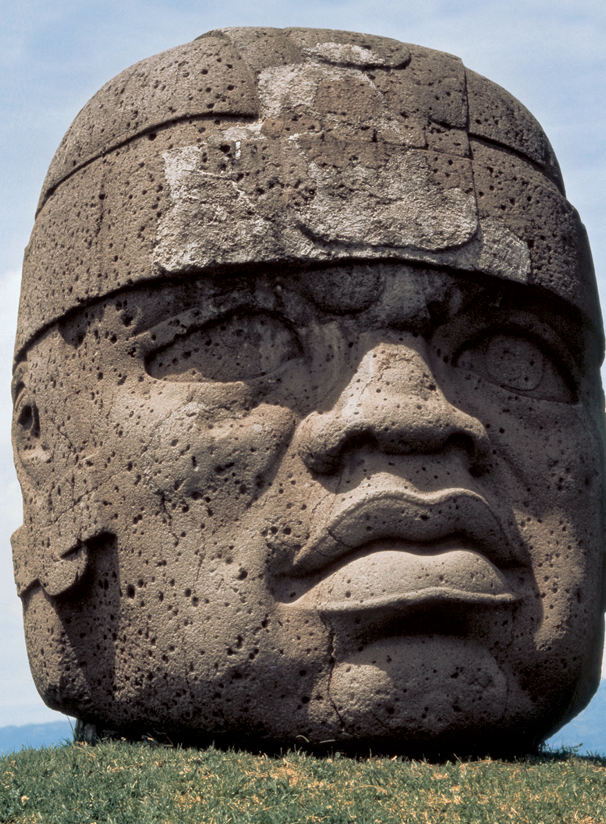
After moving basalts they Carved colossal head, 10 colossal head. broad features. Looked Like rubber balls at El Manatí, game had mythological cosmic and generative significance and heads of decapitated players used as balls. Could represent sculpture or are portarait fo rulers. No deposit simliar have been found.
COLOSSAL HEAD, SAN LORENZO
Mexico. Olmec culture, c. 1200-900 BCE
practices of offering revived at La venta. 2nd of 4 construction of ritual ppl brought serpentine from far away to create 2 major offerings. 20ft by 19. Formed mosaic design for sacred female earth surface, with celts.Large offering initiated other construction at La venta, like stone figurines and celts.
GREAT PYRAMID AND PLAZA, LA VENTA
Mexico. Olmec culture, c. 900-400 BCE.
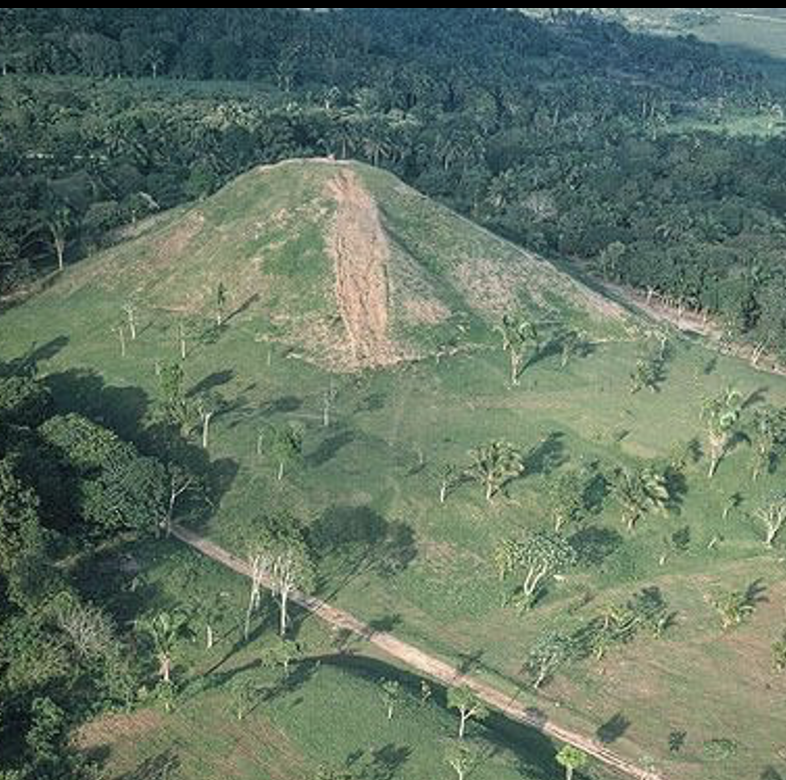
Olmec period-La venta olmec built earthen mounds and sculptures. Mounds and courtyard design to symmetrically flank central axis of site, pointed to sacred site south. Enormous sculpture carvings.
Mound at center of site, 100ft, largest in mesoamerica at the time. Earthen mound and sculptures array along central axis portraying olmec creation story. Story portrayed in stelai in for in stylized human embryos which maize sprouted, fetus like helmets.
Olmec tarded acros mesoamerica obtaining ajde and malachitem olmec art expressed about parallels between maize plants and human life, reciprocal relations with natural forces, jade is symbol for vital energy, cosmic ball game was adopted and transformed through mesoamerica. Olmec warned out, Maya and Teotihuaca forged new civilization on mesoamerica ideas.
Describe the cosmic ballgame
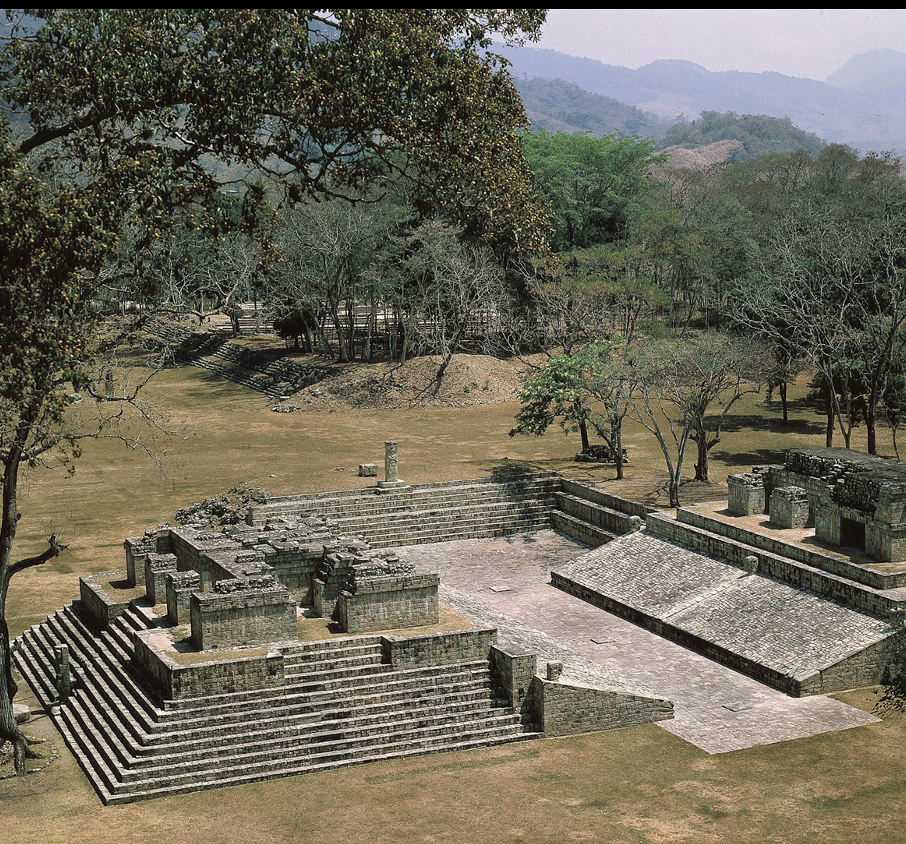
BALLCOURT
Copan, Honduras.
Maya culture, c. 711-736 CE.
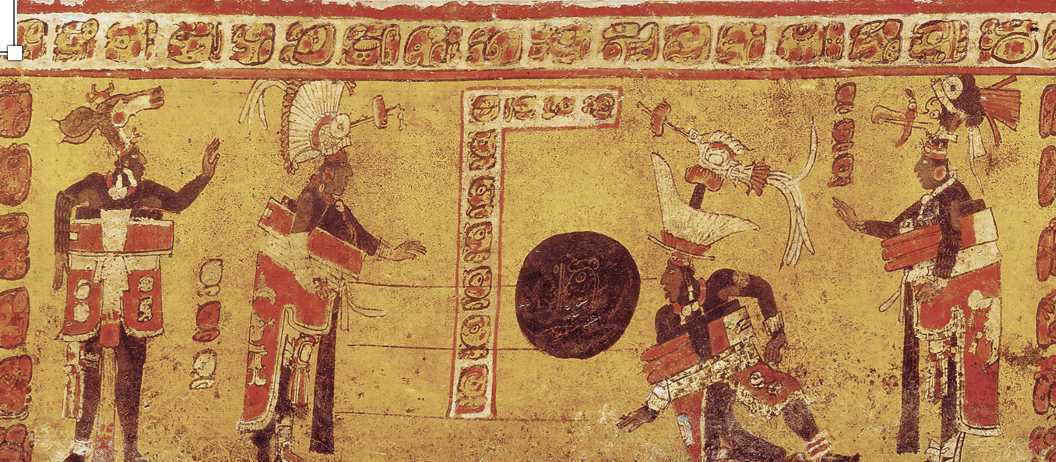
CYLINDRICAL VESSEL WITH BALLGAME SCENE
Maya culture, 600-800 CE.
Painted ceramic,
-civilization in Mesoamerican varied but link to cultural similarites and trade.
-one defining characteristic of Mesoamerican society.common subject in mesoamerican art
-on long rectangular court with large solid heavy rubber ball. Using body parts beside hand, padded players directed ball towards goal/marker.
-rules, size, shape of court and # players on team and nature of goal varied.
—stone rings i walls of court, 25ft high, were goals.
-this ball-court construct at heart of ceromonial center maya city of copan.
largest surviving ball court at Chichen Itza, bigger than football field.
common subject in mesoamerican art. Scene on cylindrical vessel shows 4 lord playing game and architectural place shown by horizontal line. Men wore headress and padded gear.
painted chose an arrested moevement; played kneels to hit ball or just hit it, other leaning towards him. rolled out scene around cylinder, turning vessel to see it. Inscription on rim naming vessel, use for drinking chocolate. without sugar /milk chocolate very diff than ours, frothy and bitter drank on courtly/ritual occasions.
game may have had religious and political significance; part of creation stories and sometimes associate with warfare. Captive warrior may have played games, when stakes were high may culminated human sacrifices.
Describe Teotihuacan and its art.
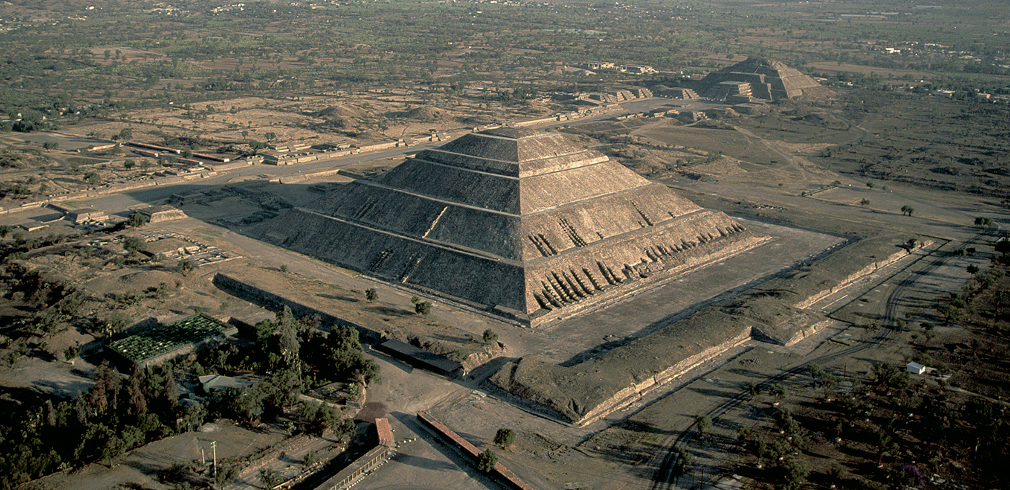
CEREMONIAL CENTER OF THE CITY OF TEOTIHUACAN
Mexico. Teotihuacan culture, c. 100-650 CE. View from the southeast.
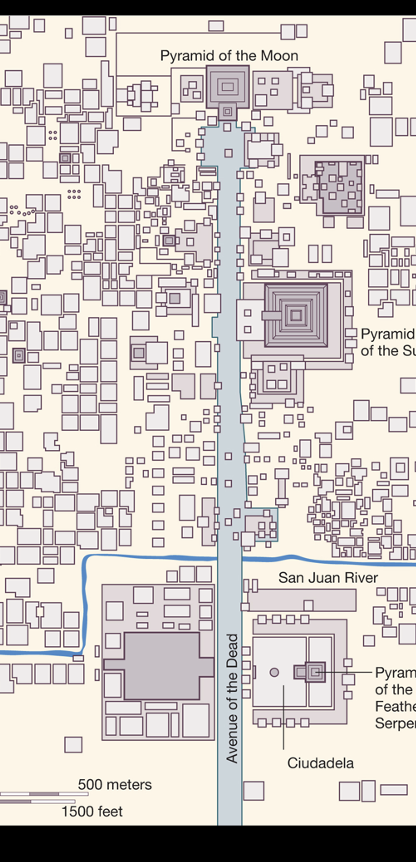
The Pyramid of the Sun is in the foreground, and the Pyramid of the Moon is visible in the distance. The Avenue of the Dead, the north-south axis of the city, which connects the two pyramids, continues for over a mile.
-rapid growth in 1st millennium, Mesoamerica first truly urban settlement and center of commerce and manufacturing. Peak 300-650, 9 square mile and 125 thous ppl, largest city in america and in the world at the time. Ppl lived in apartment compounds, city on grid, orientation for calendar significance and respond to surrounding landscape.
decline in 650, ramains pilgrimmage center. Aztec ppl revered the site believing the gods created the sun and the moon and Teotihuacan thought to mean place of divinity. Ethnicity unknown, no names.
orthogonal grid plan, avenue of the dead(city plazas at diff level) and creates central axis, like La venta. Streets parallel to axis, rienforced with TMU measurement (Teotihuacan measurement unit)
3 pyramid complex dominate city, pyramid of moon, echos mountain. Many pyramids enlarged and offering was given.
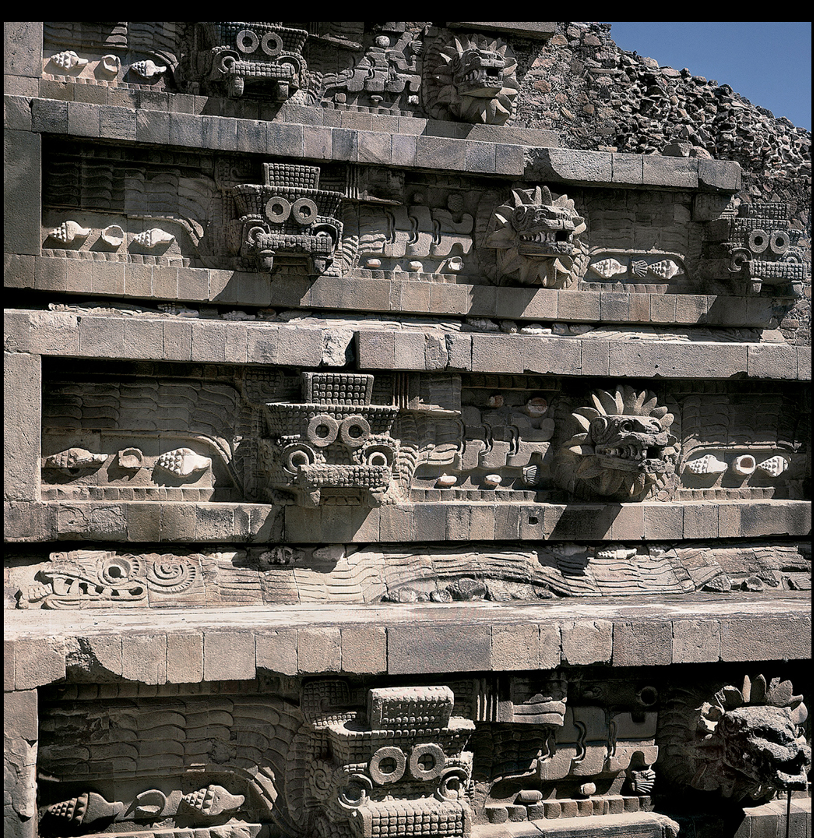
largest monuments was the pyramid of the sun, similar in size as the largest great pyramid of Giza. Stone stuccoed then painted.Built over tunnel, burials and offering caches,New tunnel found at ciudadela complex. tunnel below complex running through the pyramid of the feathered serpent, has offerings, used to be talud-tablero (slope and panel system) hallmark of their style. Talud supports tablero .
Excavations, reavealed relief of feathered serpent floating in water. Style was flat, angular, abstract contrary to olmec organic art. Characteristic represent storm god with warfare because of head dress. message reinforced with human sacrifices inside the pyramid.
residential surrounded center, Palaces near ceromonial center, others in crowded compounds. Palaces with paintings and open courtyard.
Advanced writing,Ceremonial figures, reading from scroll. toponyms.Maya borrowed its imagery for example the storm god headress.
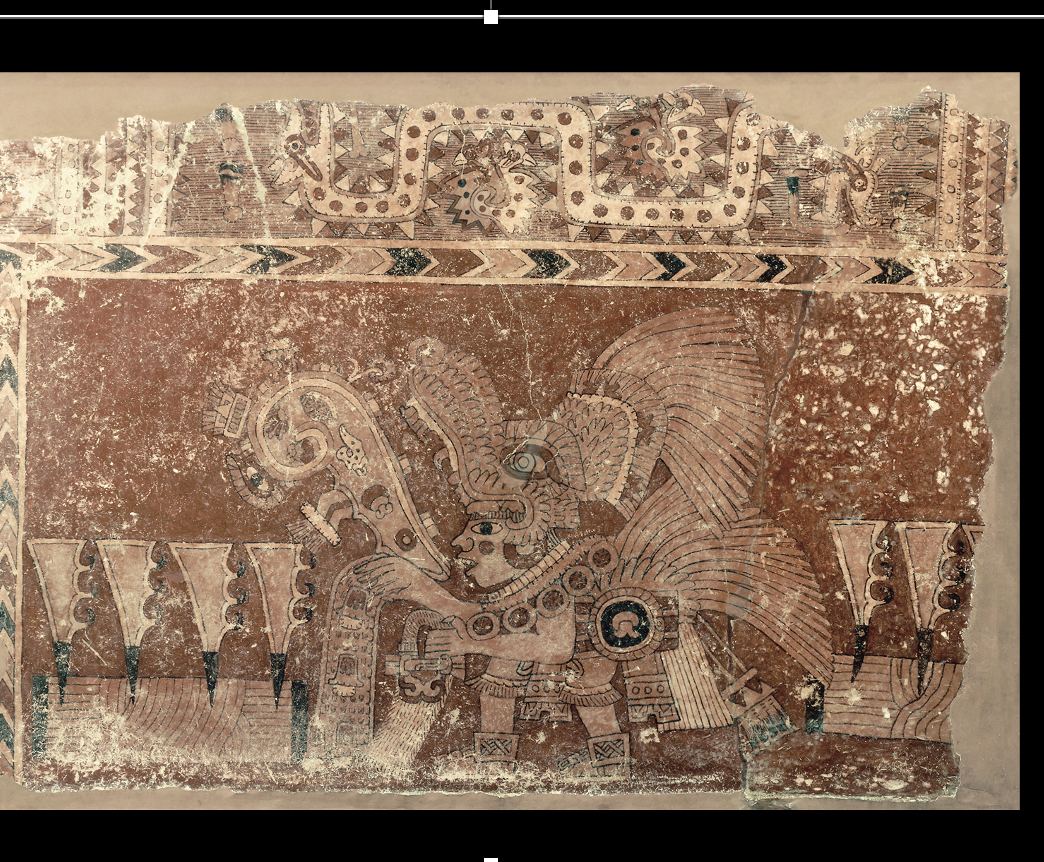
Painting with fresco technique, style was flat angular and abstract, worked with diff colour schemes like bright polychrome.ex the BLOODLETTING RITUAL
Fragment of a fresco from Teotihuacan, Mexico. Teotihuacan culture, c. 550-650 CE.
Pigment on lime plaster.
Describe the Maya period
work of art cities, basic building forms and near typographic features and aligned with astronomical phenomenonReliefs. Images and hieroglyphs documenting deeds of ruler and patrons. decorations added to spectacle of Maya court.
picture of the Maya resurfaced, picture shows competing city states with war with eachother. Ruler established their legitimacy in numerous ways, commerotaed event abd military expolits on stelae.
emerged during late preclassic period(400BCE-250 BCE) peak in 250-900CE during classic period and shiftef to Yucata during postclassic period, maya kept stong ties with other mesoamerican.
Maya writing
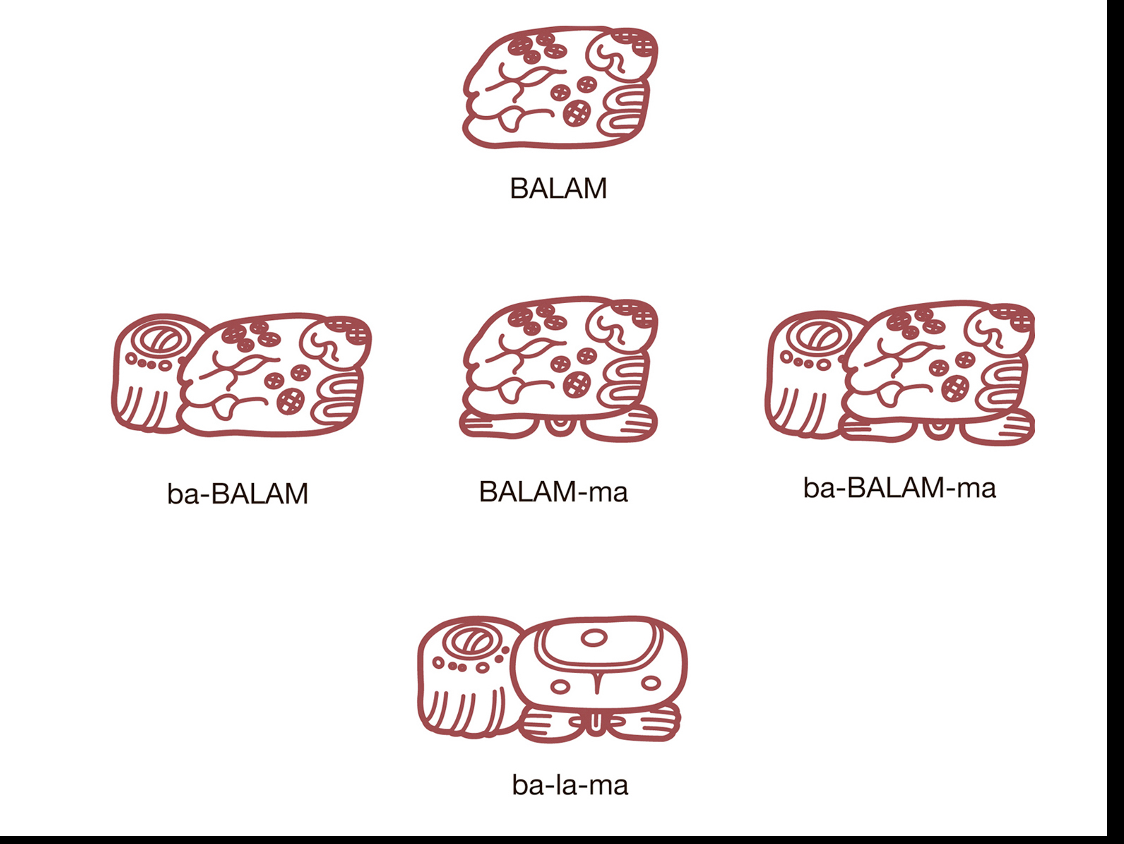
-logosyllabic-ideographs/logographs for entire words or set of symbols. Gives flexibilt and numerous ways to write a word. some logographs remai pictoral.
inscription on maya architecture and stelae almost entirely devoted to a ceremonial recording of historical events.and even tie in with astronomical evet in maya calendar.
4 codices survive , postclassical period.
BASE OF NORTH ACROPOLIS (LEFT) AND TEMPLE I, TIKAL
Guatemala. Maya culture. North Acropolis, 4th century BCE-5th century CE;
Temple I (Tomb of Jasaw Chan K'awiil),
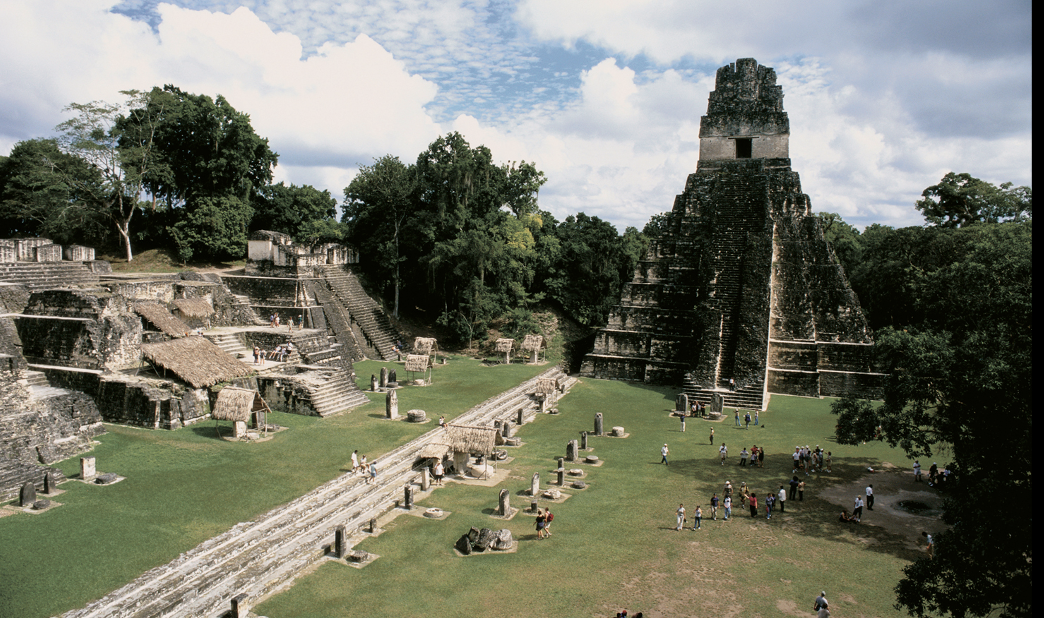
Tikal- example of architecture for public display and backdrop for ritual. one of largest maya cities unlike TEOTIHUACAN conform TO uneven terrain of rainforest. Structures on high ground.
late preclassical period , funerary pyramid. Upheaval in 378 and death of Tikal’s king from ppl.Teotihuacan influence on art and architecture and adopted by Maya.
8th cent captured Ich’aak k’ak, king of Calakmul by king saw Chan K’awill. constructing program for victory was in place, held stela at altar that embodies K’atun and ruler.
9 layer base like underwold and 9 levels.
roof comb(crest that rises over the roof of the temple), originally with painting sculptures. Ritual performances on top of temple would have been seen by ppl at plaza.
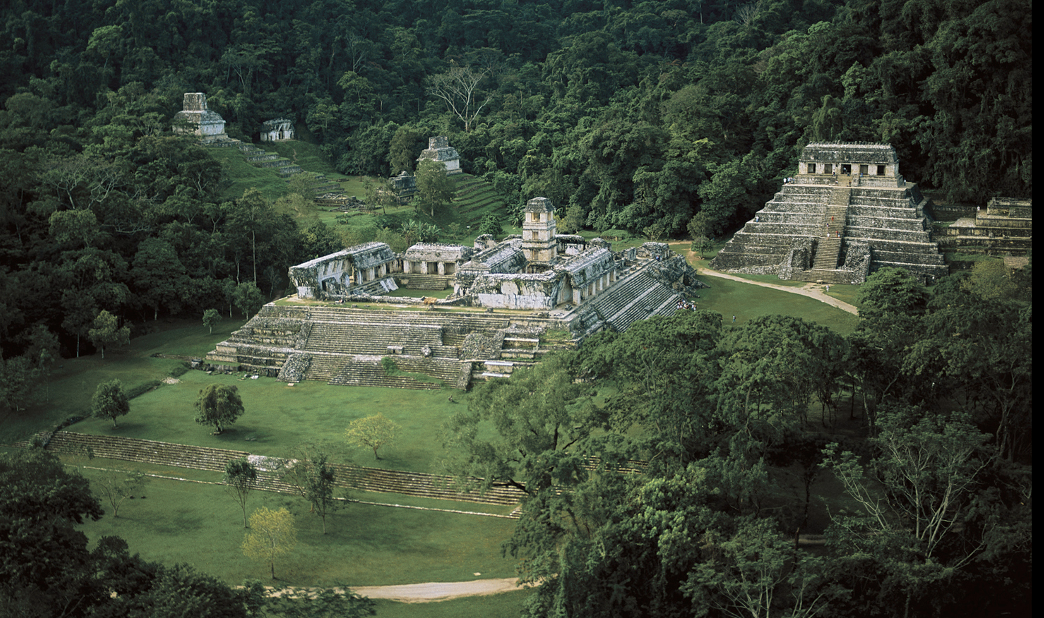
PALACE (FOREGROUND) AND TEMPLE OF THE INSCRIPTIONS, PALENQUE
Mexico. Maya culture. Palace, 5th-8th century CE;
LID OF THE SARCOPHAGUS OF PAKAL THE GREAT
From Pakal's tomb, Temple of the Inscriptions, Palenque, Mexico.
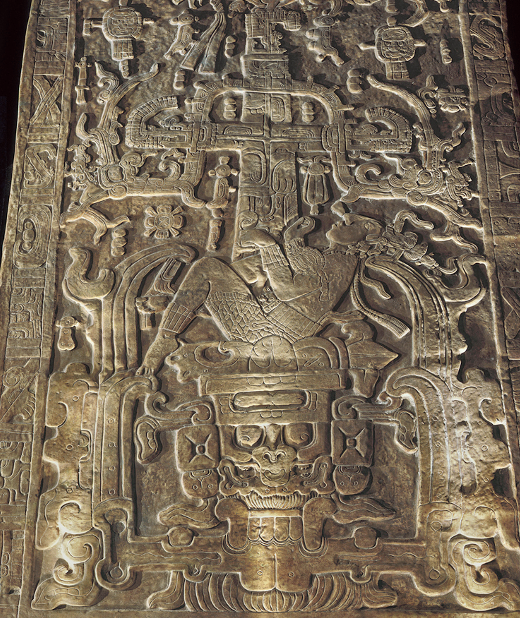
-small city-rose in classical period. Hieroglyphic inscription record beginning. not important until K’inich Janahb Paka ru;e 615-683. He and son commisioned most structures there. city center has palace, temples of inscriptions.
palace was royal residence. Core was throne of room of Pakal. Outside was welcoming but inside was tightly limited.
next to palace , temples of inscriptions. 9 levels, shrin on summit has portico with 5 entrances, Face stucco. get names from 3 large panels of text of outer chamber wall on top of temple. of pakal’s accomplishments to the mythical history of the city.
zigzag stairway to chamber with carved limestone almost filled the chamber ,covered sarcophagus with reliefs on lid.
Pakals pose to iconography. Symbol from tree comes from hereLogograph for divinity mark the tree, serpent on branches, bird on tree apeares in Maya art during event of creatvity and transformative power jade beeds around for pakal’s rebirth event in skybands. under lid found bones of Pakal and a jade mask.
Describe Yaxchilan and its art
A CLOSER LOOK: Shield Jaguar and Lady Xok
Lintel 24. Yaxchilan, Mexico.
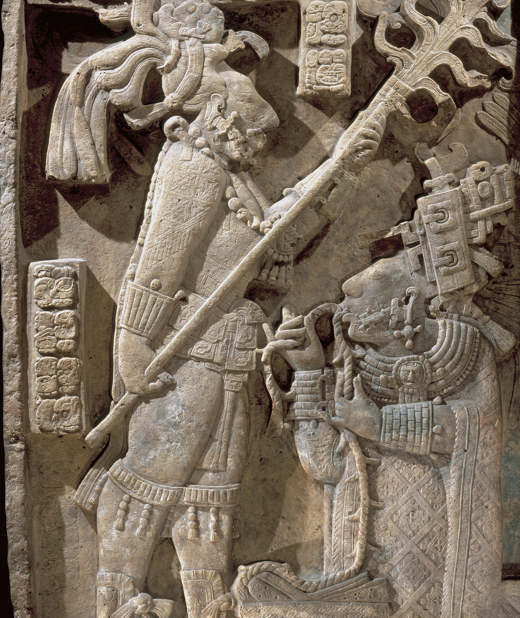
diff from maya , load of relief pictures, lintels, prominence of women in art,
Lady Xo knelling and cord through tongue, her husband Shield Jaguar holds torch and maye set fire to blooded strips. Explicit portrayal of bloodletting in maya art and rare depiction of female perforating tongue.
Multiple sculptors sculpted, artist did something radical with ¾ view of lady body.
-elaborate headgrea
-two inscriptions like internal frme, record date, and identify characters
-sharply outlines subjects
jaguar hold torch
tasseles headdress associated with bloodletting rituals
-cord through tongue was royal ritual, to maintain royal rule
Describe pst classical period of maya
PYRAMID ("EL CASTILLO") WITH CHACMOOL IN FOREGROUND
Chichen Itza, Yucatan, Mexico.
Maya culture, 9th-12th century CE. [Fig. 13-14]
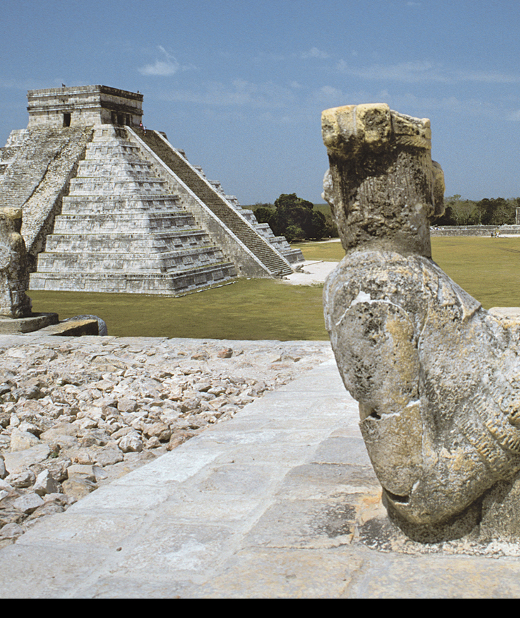
After warfare went to Yuctan Peninsula
one principle city Chichen Itza ”at the mouth of the Itza”, refer to cenote (sinkhole), peak 9th - 13th. cent. has structure of El Castilo, has chacmools (half-reclining figure, may represent fallen warrior), diff than maya.
Chichen decline and mayapan became principle the declin the tulum reamained.
Describe central Amercia
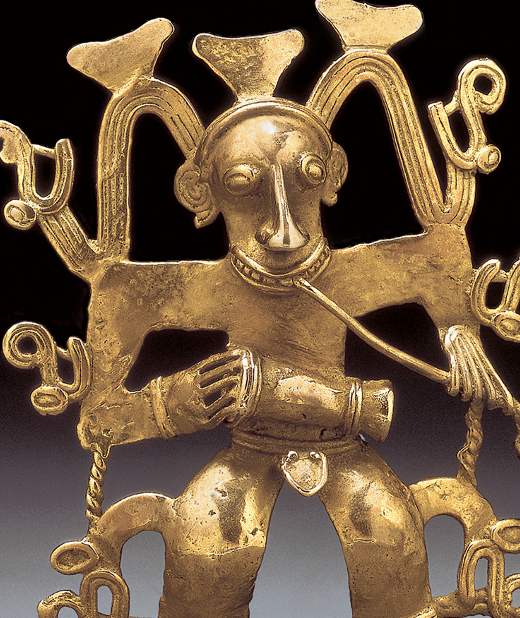
-lived in extended family groups led by chiefs, Ex of Diquis. mettalurgy and gold and copper gold allows spread in central America.lost wax casting, appeared in now columbia. Diquis culture views animals + insects as fierce ad dangerous.
-pendent represents ritual meditation of earthly and cosmic
SUPERNATURAL FIGURE WITH DRUM AND SNAKE
Costa Rica. Diquis culture
Describe south America and central Andes
Complex hierarchical societies with rich and varied artistic traditions characterized the region.peru and bolivia. Gradually built higher on mountains therefore no need for pyramids.
Andean peoples developed monumental architecture and textiles long before ceramics and agriculture, which contrasts with the developments of other societies.
Describe Paracas and Nazca cultures and its art.
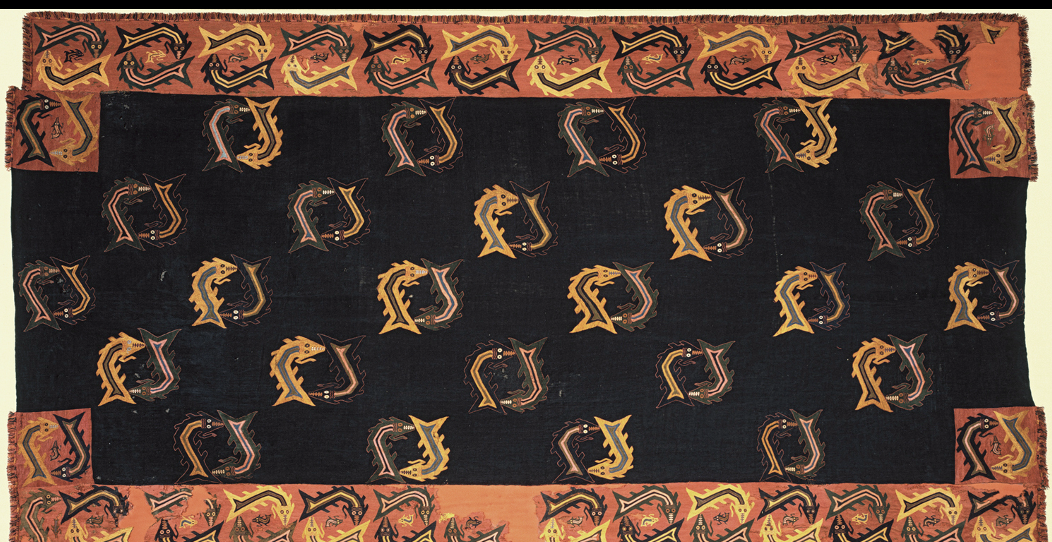
Pracas-Peruvian south 600 BCE-200 CE, overlapping Chavin period. Known for textiles, used around dead bodies. Weaving was important. Designs of warriors, dancers, etc..sometimes used 22 colours but 1 stich.
MANTLE WITH DOUBLE FISH PATTERN
Paracas Necropolis, Peru. Paracas culture, 1st century CE.Cotton and camelid fiber, plain weave with stem-stitch embroidery.
Nazca - dominated portions of south coast of Peru of 1st 7 cents Ce, overlapped Paracas culture to the North. Wove fine fabrics and multicolour pottery with similar images to Paracas.
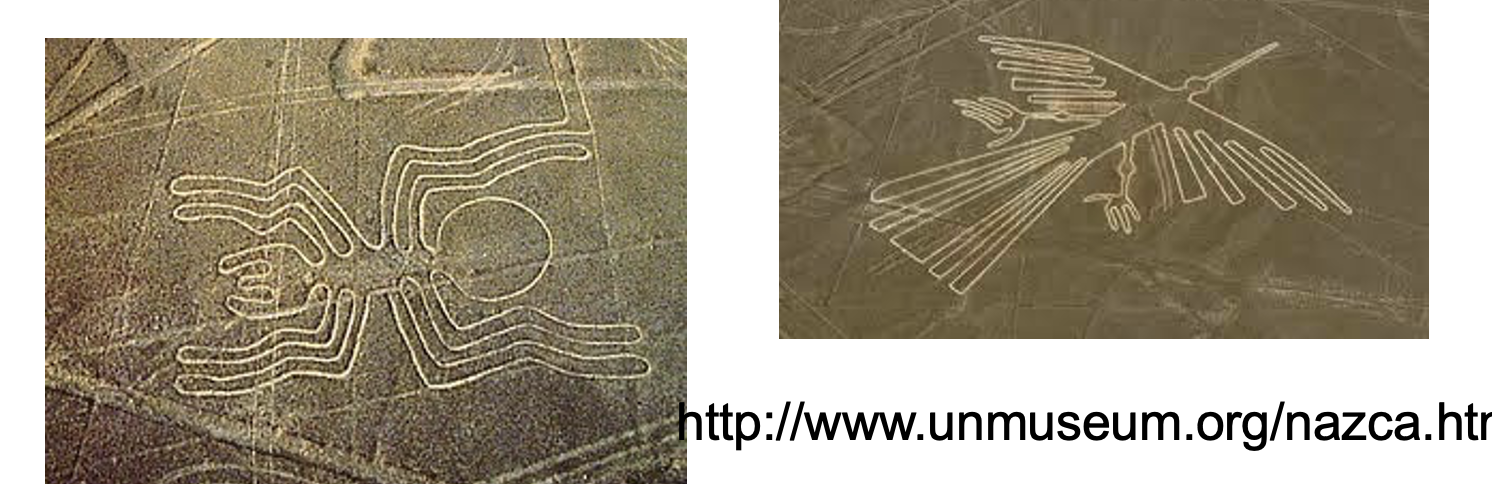
known for earth works/geoglyphs, dwarf 20th 10th cent sculptures. n great stretch of dessert they drew in the earth, by removing dark oxidized stones and exposed underlying stones, creating gigantic images; humming bird, whale, monkey, spider, duck, bird like on their pottery. Also made abstract patterns and groups of parallel lines. . Purpose of geoglyph unknown but line could be ceremonial pathways.Extensive planning.
Describe paracas and their textiles
Fine textiles were a source of wealth and prestige.
Designs included repeated embroidered figures of warriors, dancers, composite creatures, and animals.most important forms of art, used for everything
cotton and camelid fiber, deying technique also advanced
Describe the Moche culture and its art
This culture, which spanned the Piura Valley to Huarmey Valley in modern Peru, flourished between about 100 BCE to 700 CE.
The Pyramid of the Sun and moon, built entirely of adobe(sun bakes blocks, clay and straw) bricks, was one of the largest ancient structures in South America.
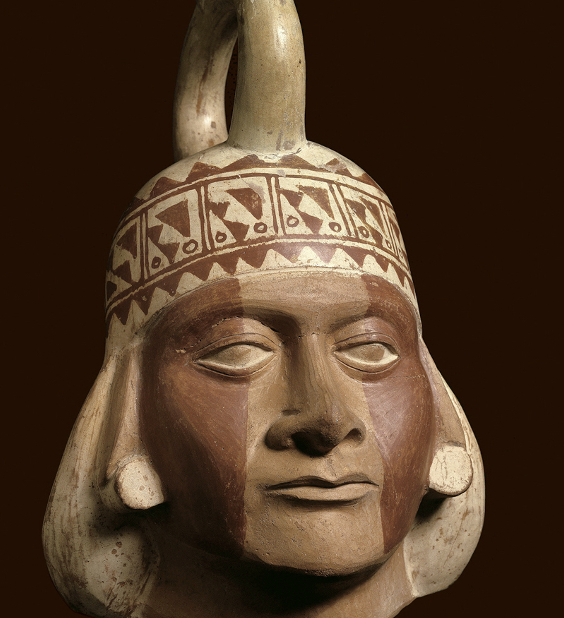
vessels for individual likeness and record muthologie narrative and ritual scenes in intricate fine line painting Moche metalsmith most sophisticated in andes created several metal alloys
MOCHE PORTRAIT VESSEL
Peru. Moche culture, c. 100-700 CE. Clay,
Moche period metal allows
EARSPOOL
From Sipán, Peru. Moche culture, c. 300 CE.
Gold, turquoise, quartz, and shell,
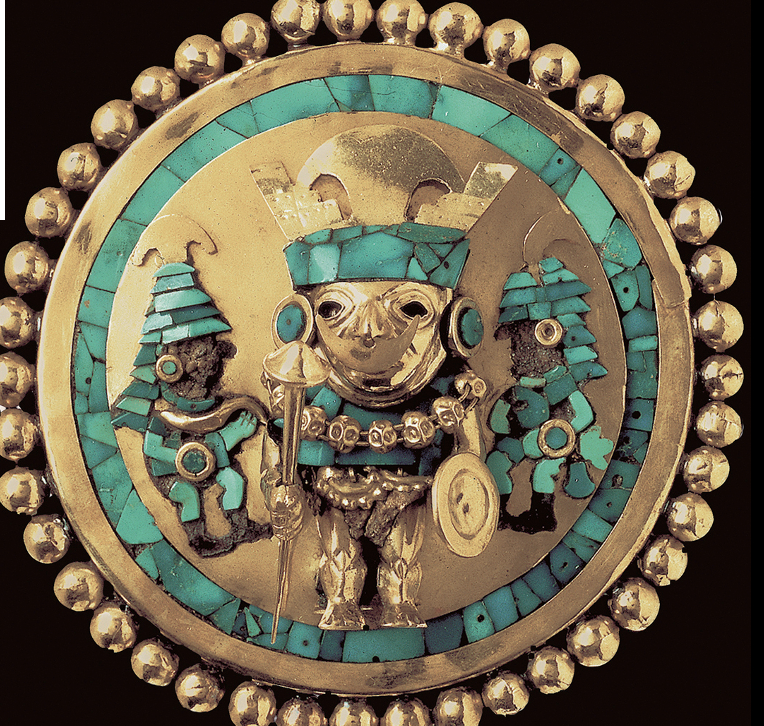
theme of Moche iconography is ceremony where prisoners captured in battle are sacrificed and well dress figures drink their blood. Main figure i warrior priest and the priestess. Sacrifice was an actual moche ritual
-Eearplugs, gold and turquoise. 3 moche warriors, middle 3d, sides on profile.3 figures also have earspools. Illustrate 2 most notable features of moche art: capacity for naturalism and close attention to detail.
Describe North America and The East and its art.
North America:
-Most of North remained sparsely populated in comparison to MesoAmerica and South America
.-Agriculture developed on a more limited scale.
The East:
Earth works
(woodland period)-In the fertile lands near the Ohio, Illinois, Mississippi, and Missouri rivers, cultures cultivated maize.impressive Earth works period
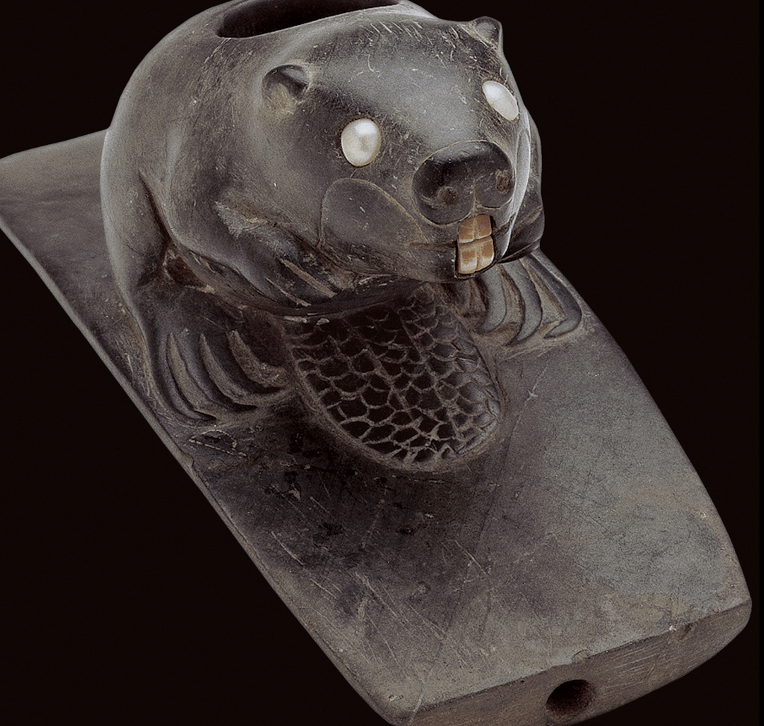
-People traded widely with other regions.The Hopewell culture made pipes of fine-grain pipestone, an example of which is the beaver pipe from Illinois.
BEAVER EFFIGY PLATFORM PIPE
From Bedford Mound, Pike County, Illinois. Hopewell culture, c. 100-400 CE.
Describe the Mississippian period and its art
-period of complex chiefdoms. Continued mound building from Adena and others. 1539-1543 Hernando de Soto encountered Mississippian society and ended bad. Europeans introduced diseases where native had no immunity, 80% perished.
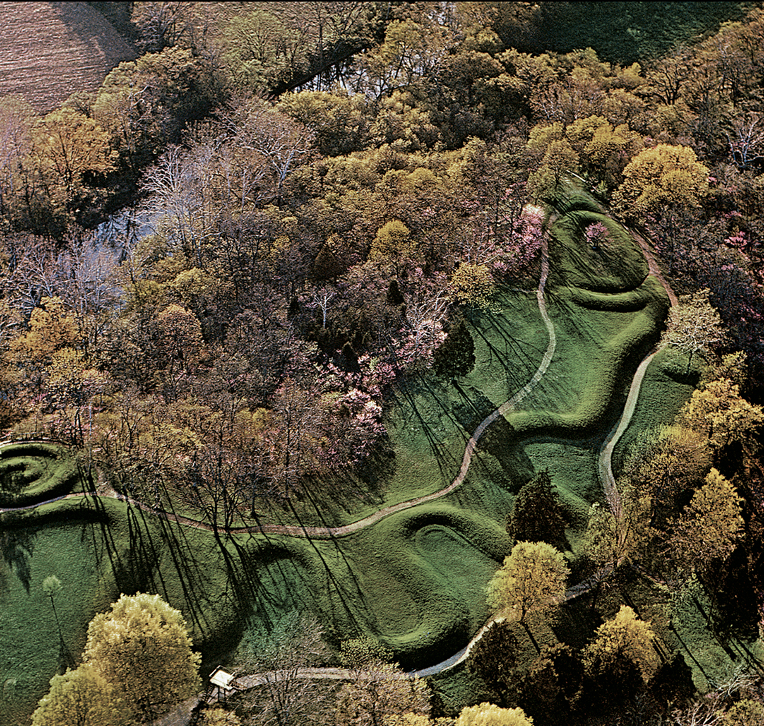
-Great serpent mound-carbon dating. Many interpretations of form especially Y shaped head and oval enclosure almost like serpent is opening jaw to eat egg. Maybe built in reaction to Halley’s comet 1066.
GREAT SERPENT MOUND
Adams County, Ohio. Mississippian culture, c. 1070 CE.
built urban center Cahokia—prominet feature is earthmound called monk’s Mound and aligned with sun at the equinox. smaller mound in rectangle plaza. City center protected . earthworks as tombs and base and astronomical observations. Woodhenges a big feature in Cahakia , helped determine solstice and equinox
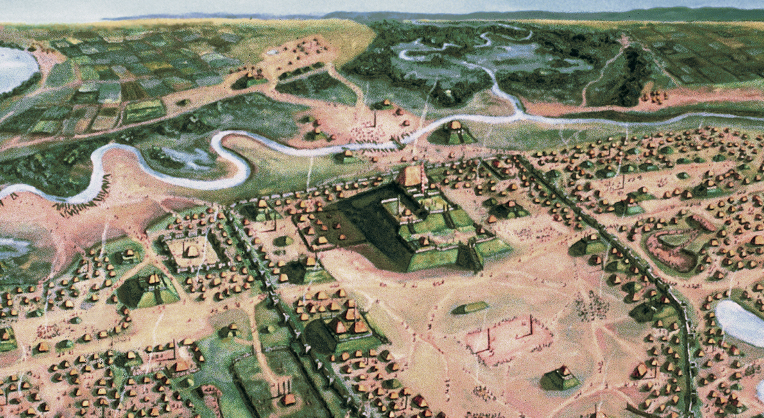
RECONSTRUCTION OF CENTRAL CAHOKIA,
AS IT WOULD HAVE APPEARED ABOUT 1150 CE
East St. Louis, Illinois. Mississippian culture, c. 1000-1300 CE.

florida glades culture
PELICAN FIGUREHEAD
Key Marco, Florida. Florida Glades culture, c. 1000 CE
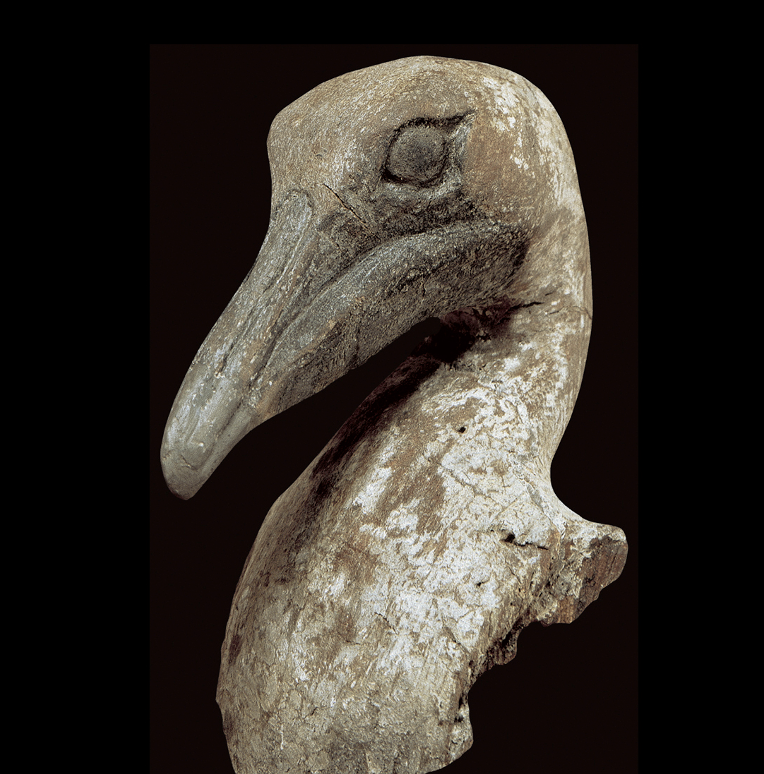
-carved post found in swamps. Mound called fort center
-reproducing observations around the artist
carved wood, attached to ceremonial furniture or post. bird or animal cult or clan symbols
Describe the southwest and its art
-farming culture slower to arise. 3 cutures; Hohokam(Arizona)-large scale irrigation systems
Mimbre/Mogollon(new mexico), -Mimbre- made deep bowls. Under dwellings. Shape like dome of sky.
Ancestral Puebloans(Anasazi), -adopted irrigation tech from Hohokam and made” great houses”. Aesthetic expression in pottery, Women potters. Coil-built earthenware. Seed jar-suspended from roof poles by thongs iby holes in rim.
MIMBRE :BOWL WITH SCORPIONS
Swarts Ruin, Southwest New Mexico. Mimbres culture, c. 1000-1150 CE. Earthenware with white slip and black paint,
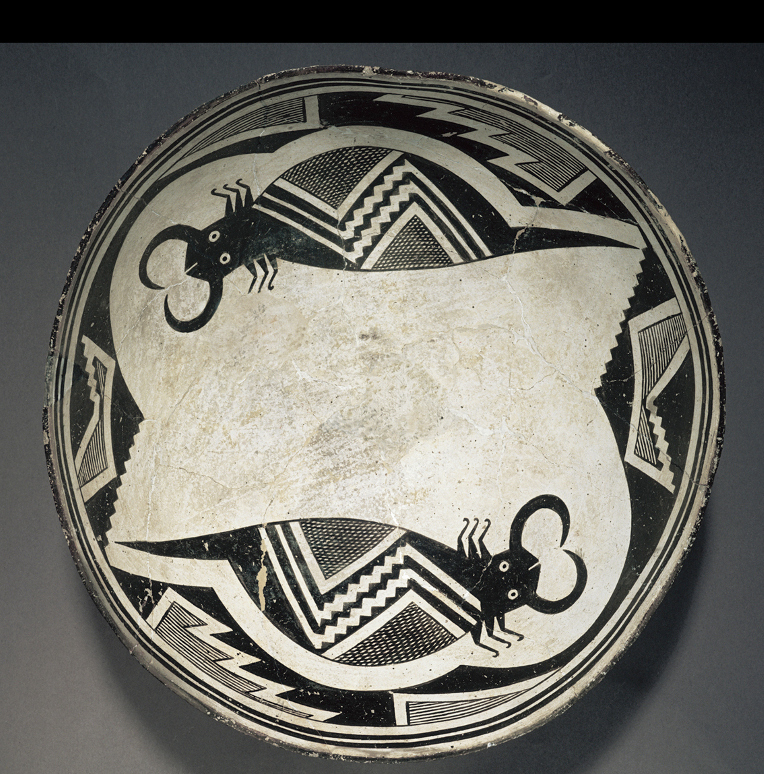
ANCESTRAL PUEBLOAN:
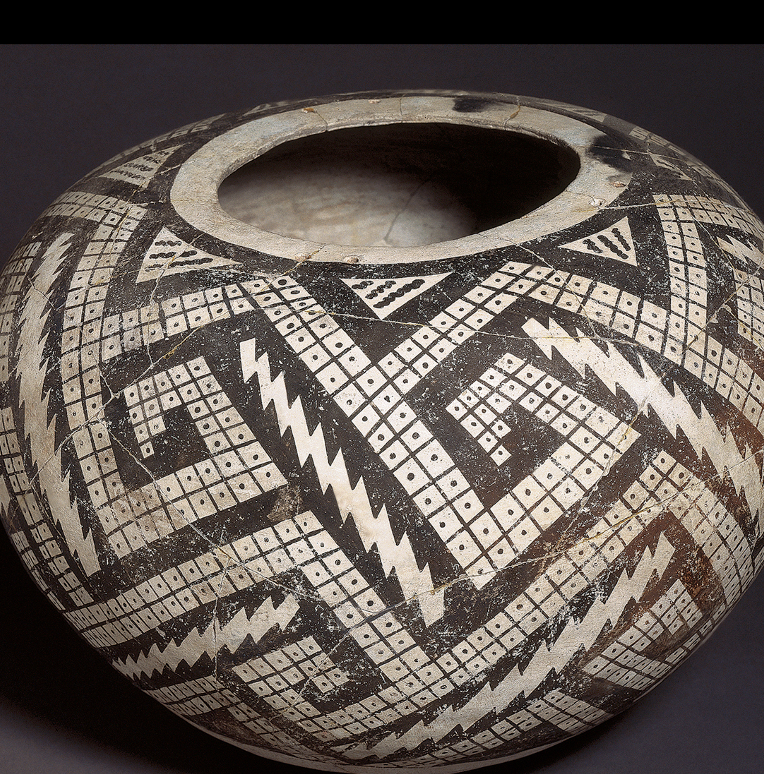
SEED JAR
Ancestral Puebloan culture, c. 1150 CE.
Ancestral Puebloan period
PUEBLO BONITO
Chaco Canyon, New Mexico.
830-1250 CE.
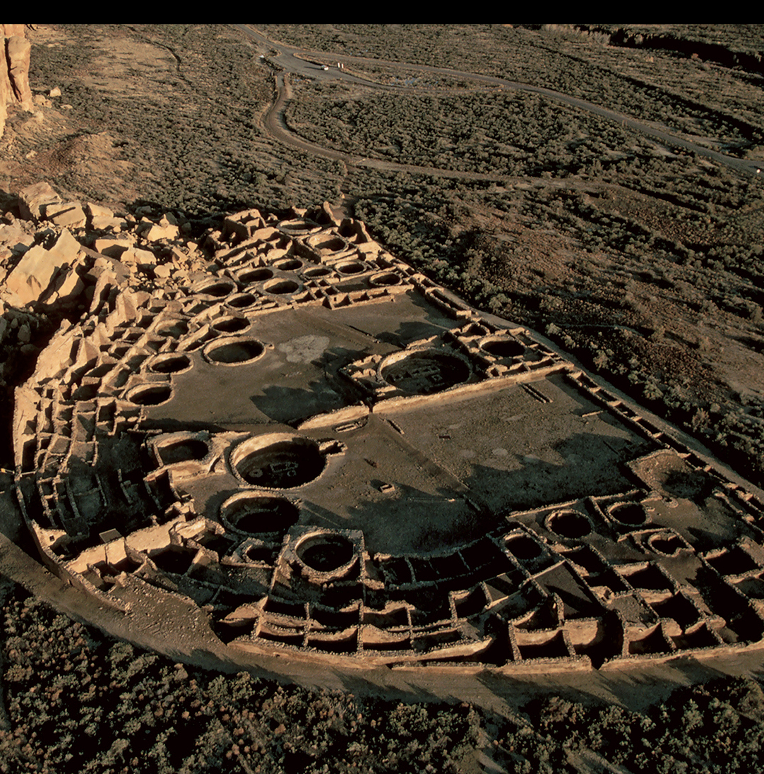
-9 great house /pueblos, important of civilization.
-” great house” - built in stages 9th-mid 12th cent. 800 room in 4/5 stories in D shape. Within cresent are of the D 32 kivas(semi submerged pit houses of earlier Southwestern cultures. Men performed ritual and taught youth. Interlocking pine logs formed shallow, domelike roof with hole i center where men entered with ladder. Based on Pueblo beliefs the indentation on kiva flor symbolized “ navel of the earth” where ancestors settles on earth in mythic “first times” . Top of kiVAS FOR FLOOR OF THE COMMUNAL PLAZZA
- important center of Ancestral Puebloan civilization
Puebla Bonita was hub of network, straight roads to 70 other communities and make no detours(when hit cliffs make stairs), more than practical thoroughfares , served as processional ways.
place at intersection and prominence of kivas in the great house it may be gathering site or pilgrimage site for specific times of year.
unsure why abandoned, but suffered drought later on same time of decline. Move to Rio Grande and mogollon river valleys and built new apartment life like the cliff palace in Mesa Verde.150 rooms and 23 kivas . Difficult to live high on canyon but secure.
Describe American Southwest rock art
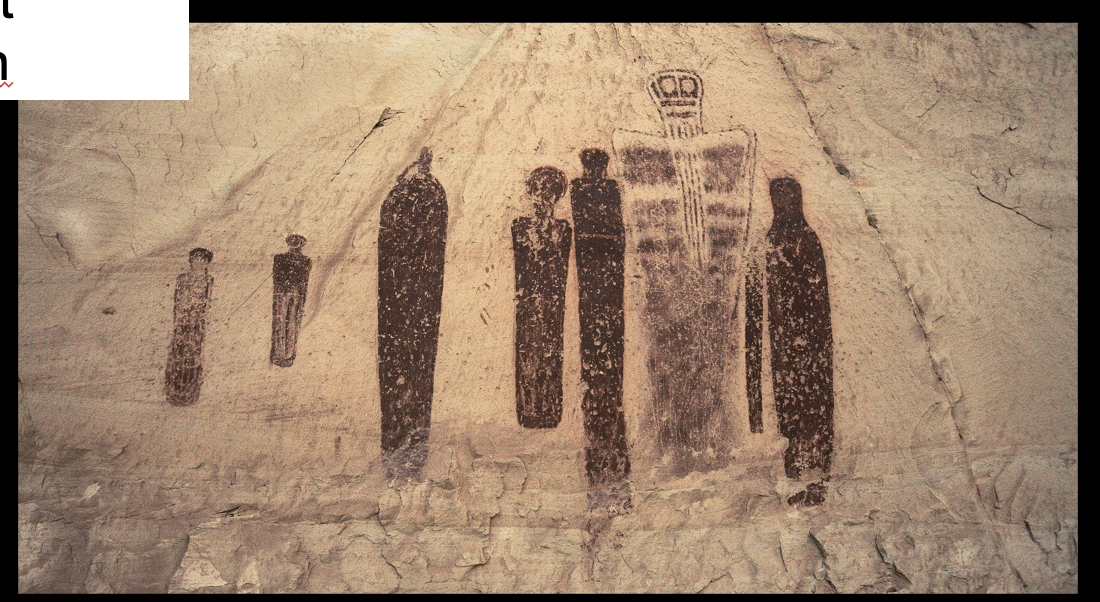
painted pictographs and engraved petroglyphs. Animals, human and geometrical figures. Rectangular bodies and knob like heads. Difficult to date.
Petroglyphs found in places where dark brown bacterial growth and staining known as “desert varnish” streak down canyon walls. Scrape through varnish to make image.
same question as always: is it a record of a successful hunt , a ritual activity, or mythic story. later on European affected enormously on art
ANTHROPOMORPHS, THE GREAT GALLERY, HORSESHOE (BARRIER) CANYON
Utah. c. 1900 BCE-300 CE