A&P Unit One Exam - Chapters 1-3
 Call Kai
 Learn
Learn Practice Test
 Spaced Repetition
 Match
Match Flashcards
 Knowt Play
1/99

There's no tags or description
Looks like no tags are added yet.
Name | Mastery | Learn | Test | Matching | Spaced | Call with Kai |
|---|
No analytics yet
Send a link to your students to track their progress
100 Terms
Characteristics of life (7)
cells, growth, metabolism, reproduction, excretion, responsiveness, movement
Structural Organization of the Body
chemical, cellular, tissue, organ, organ system, organism
Types of Anatomy (3)
1. surface - no dissection; study of surface markings using sight
2. gross - examining structures w/ unaided eyes
3. microscopic - aided by microscope
Integumentary Organs (3)
skin, hair, nails
Integumentary Functions
protection, vitamin D synthesis, pain and pleasure reception, sweat and oil glands
Skeletal Organs (2)
bones and joints
Skeletal Functions
protection, support, movement, mineral storage, and hematopoiesis (blood cell formation)
Nervous Organs (3)
brain, spinal cord, nerves
Nervous Functions
control system of body; perceives + responds to stimuli by activating glands and muscles
Muscular System (Organ + Function)
skeletal muscles allow movement, maintain posture, and produce heat
Endocrine Organs (8)
adrenal gland, pituitary gland, pineal gland, thyroid, thymus, pancreas, ovary, testis
Endocrine Functions
endocrine glands excrete hormones that facilitate processes like growth, reproduction, and metabolism
Cardiovascular Organs (2)
heart and blood vessels
Cardiovascular Functions
heart pumps blood, transports oxygen/ co2
Lymphatic/Immune System Organs (6)
spleen, thymus, lymphatic vessels, lymph nodes, red bone marrow, thoracic duct
Lymphatic Functions
pick up and returns leaking fluid from blood vessels, disposes debris, houses lymphocytes for immune response
Respiratory Organs (6)
nose, lungs, pharynx, larynx, trachea, bronchus
Respiratory Functions
supplies oxygen and removes carbon dioxide in blood; gaseous exchange occurs through walls of lung air sacs
Digestive Organs (9)
mouth, esophagus, stomach, liver, pancreas, anus, rectum, small intestine, large intestine
Digestive Functions
ingestion, digestion, absorption, defecation
Female Reproductive Organs (5)
uterus, vagina, mammary glands, ovaries, uterine tube
Female Reproductive Functions
production of eggs, site of fertilization and fetal development, fetal nourishment, birth, lactation, secretion of sex hormones
Male Reproductive Organs (5)
testis, penis, vans deferens, prostate gland, scrotum
Male Reproductive Functions
production and delivery of sperm, secretion of sex hormones
Anatomical Position
erect, feet forward, arms at side with palms facing forward, head facing forward
Frontal/Coronal Plane
front and back sections
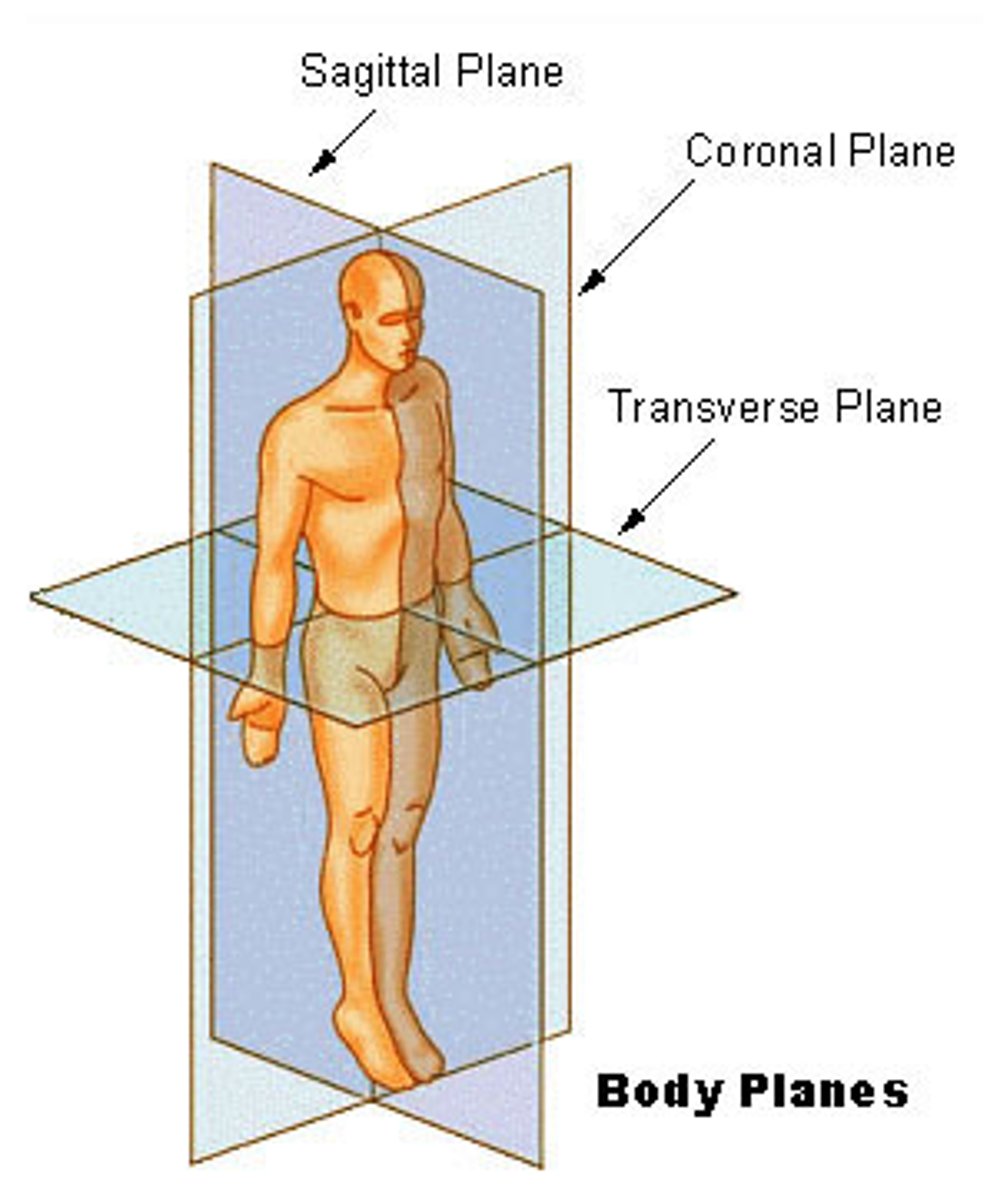
Sagittal/Midsagittal Plane
divides left and right sections
Transverse/Horizontal Plane
top and bottom sections
Superior/Cranial
toward the head
Inferior/Caudal
towards tail, away from the head
Anterior/Ventral
front of the body
Posterior/Dorsal
back of body
Medial
toward the midline
Lateral
away from the midline
Proximal
closer to point of origin/attachment
Distal
away from the point of origin/attachment
Superficial
near the surface
Deep
away from the surface
Where is the knee in reference to the pectoral?
The knee is inferior to the pectoral. (Note: If you cross sections, use superior/inferior. Use proximal/distal for individual appendages/limbs)
Dorsal/Posterior Cavity
cranial and spinal
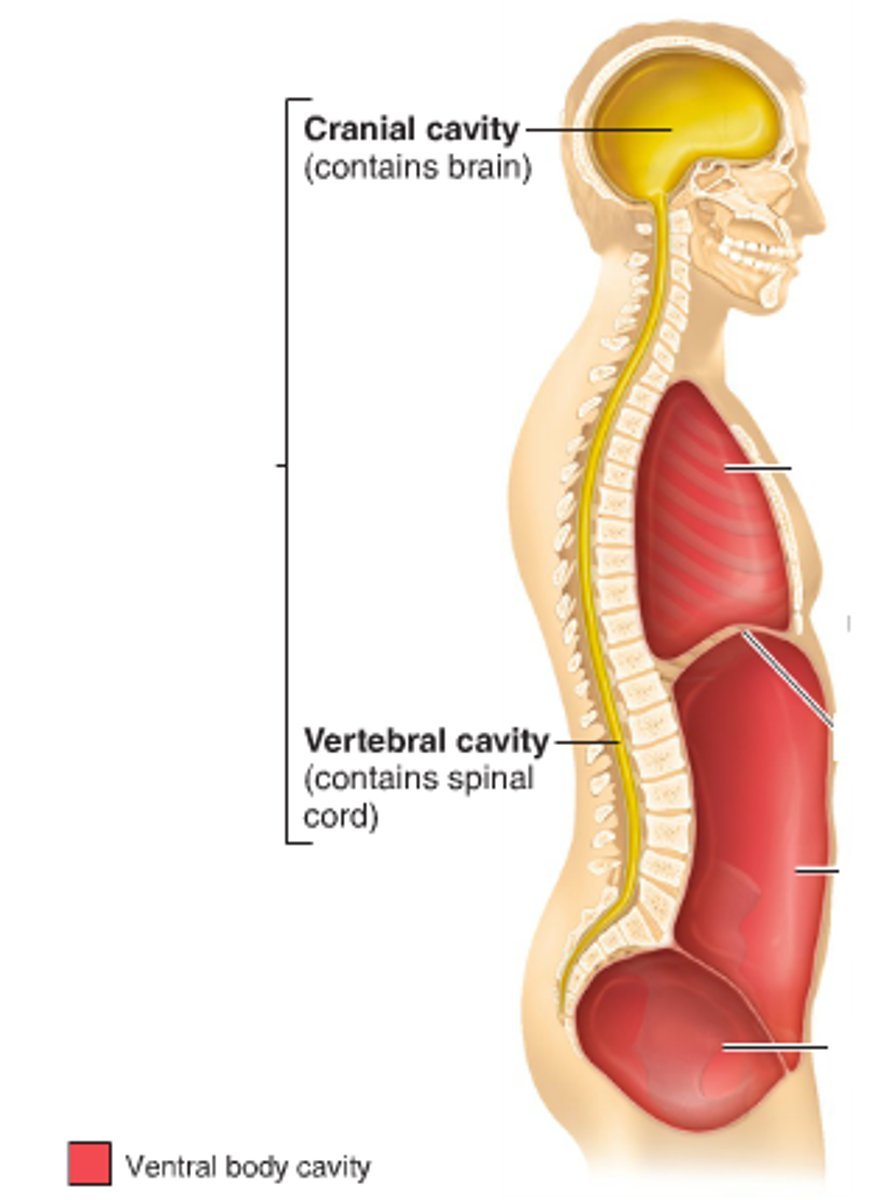
Ventral/Anterior Cavity
thoracic and abdominopelvic
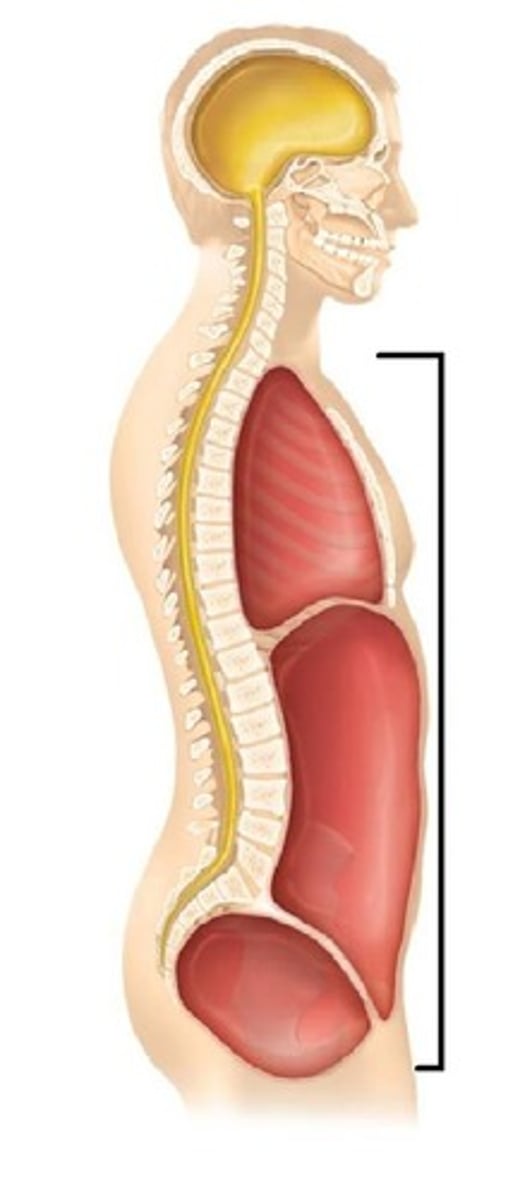
What separates the thoracic cavity from the abdominalpevic cavity?
the diaphragm
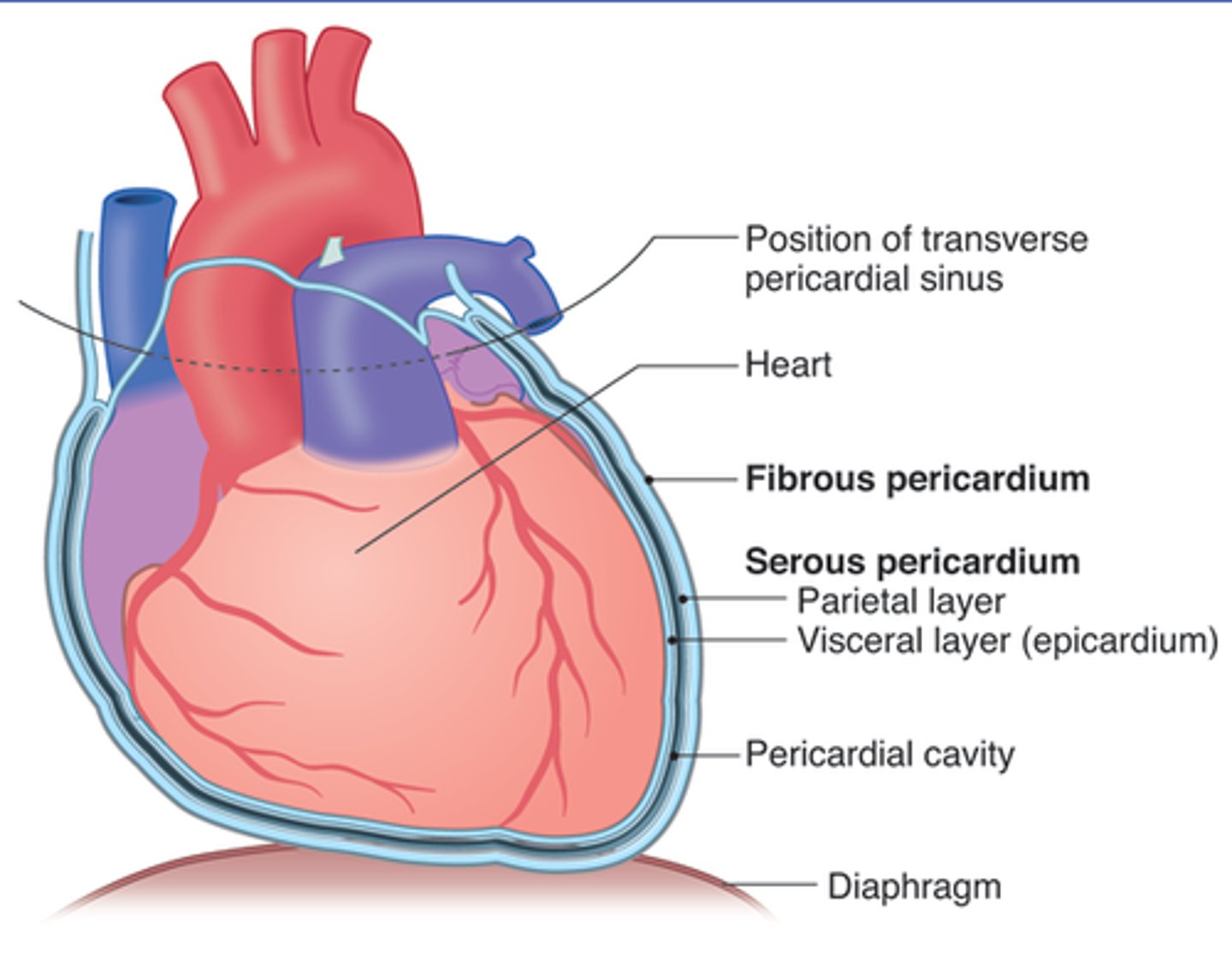
Parietal Layer
covers cavity
Visceral Layer
covers organ (outside)
What is between the parietal and visceral layers?
serous fluid (inside)
Pericardial Cavity
sits within the mediastinum
parietal pericardium - covers the pericardial cavity
visceral pericardium - covers the heart
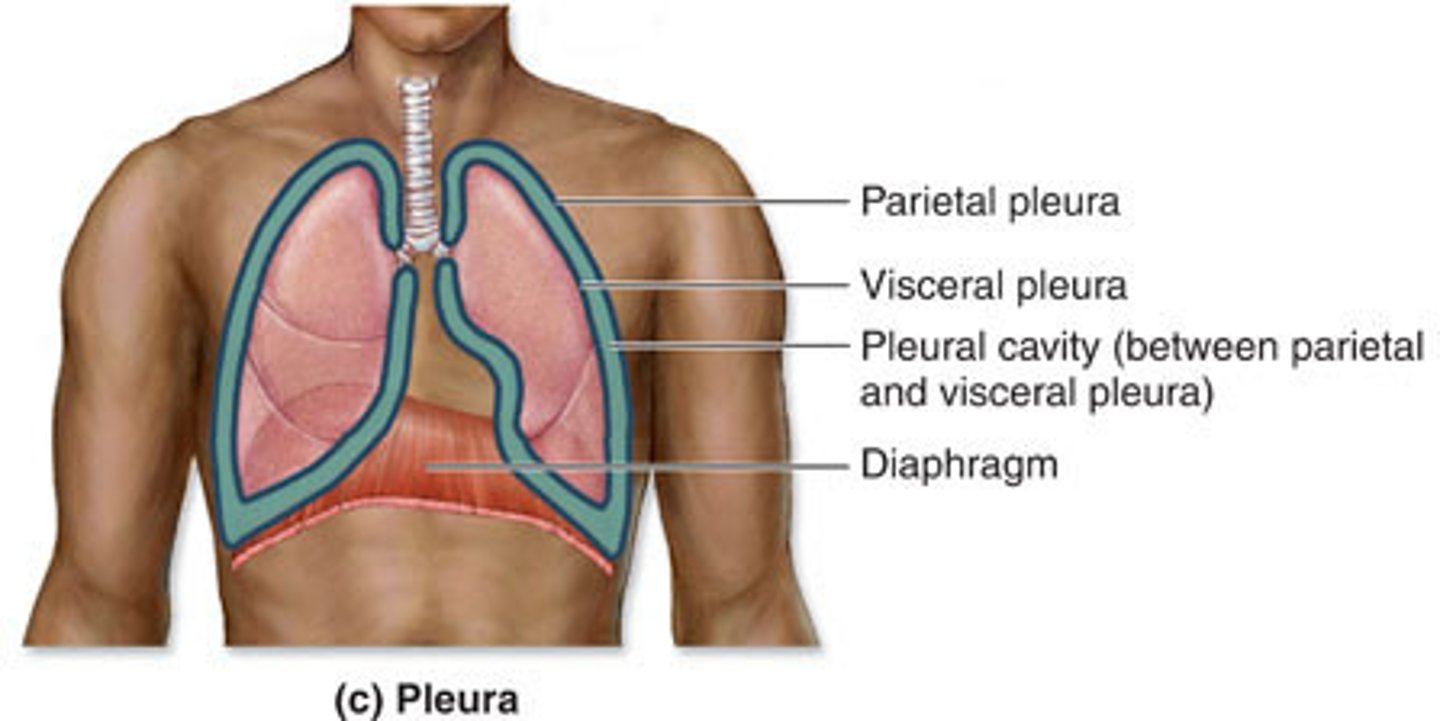
Pleural Cavity
contains lungs
parietal pleura - covers pleural cavity
visceral pleura - covers lungs
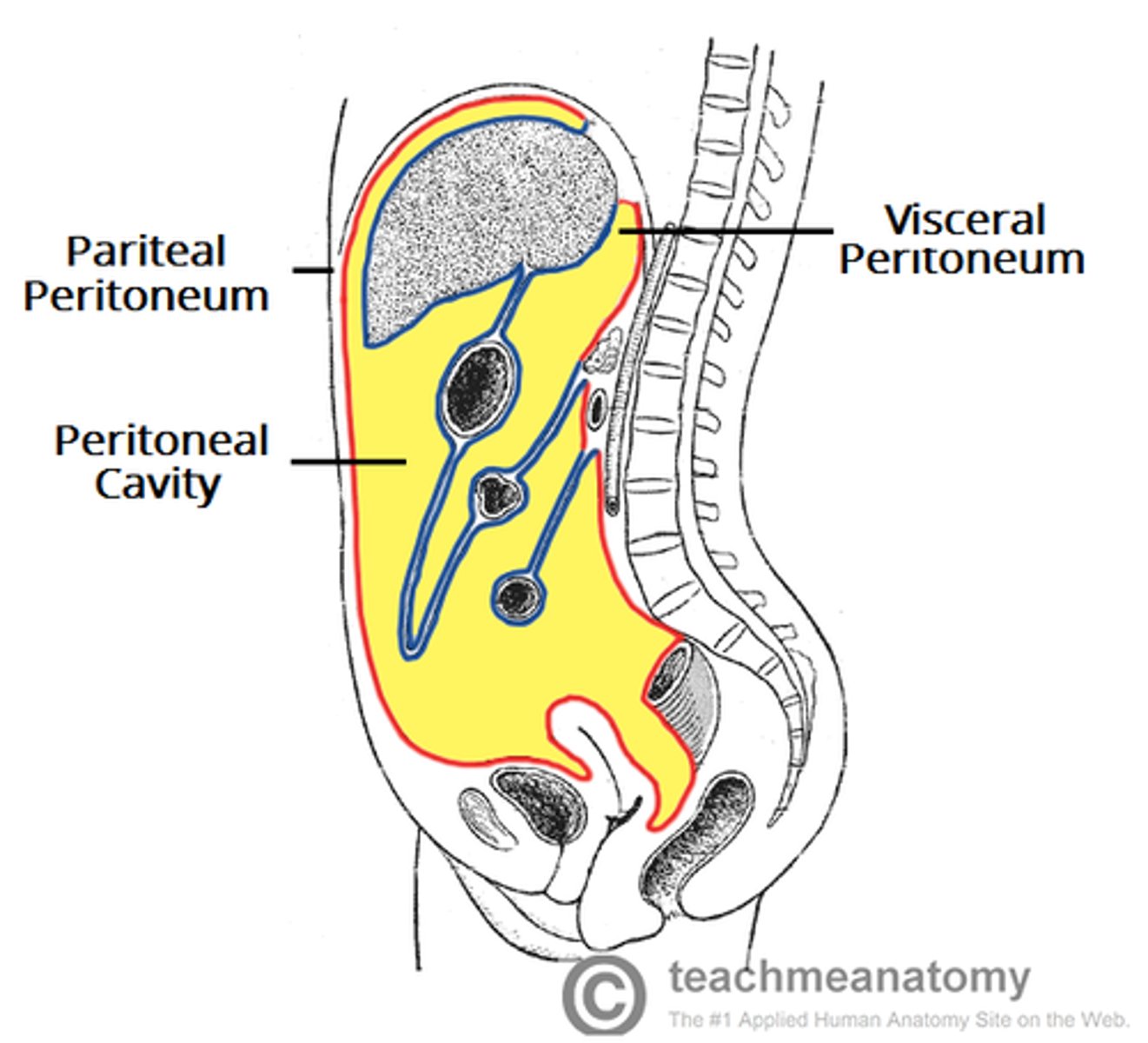
Peritoneal Cavity
abdominal cavity
parietal & visceral peritoneum
intraperitoneal - inside cavity ex) small intestine
retroperitoneal - behind/outside cavity ex) kidney, rectum, and sex organs
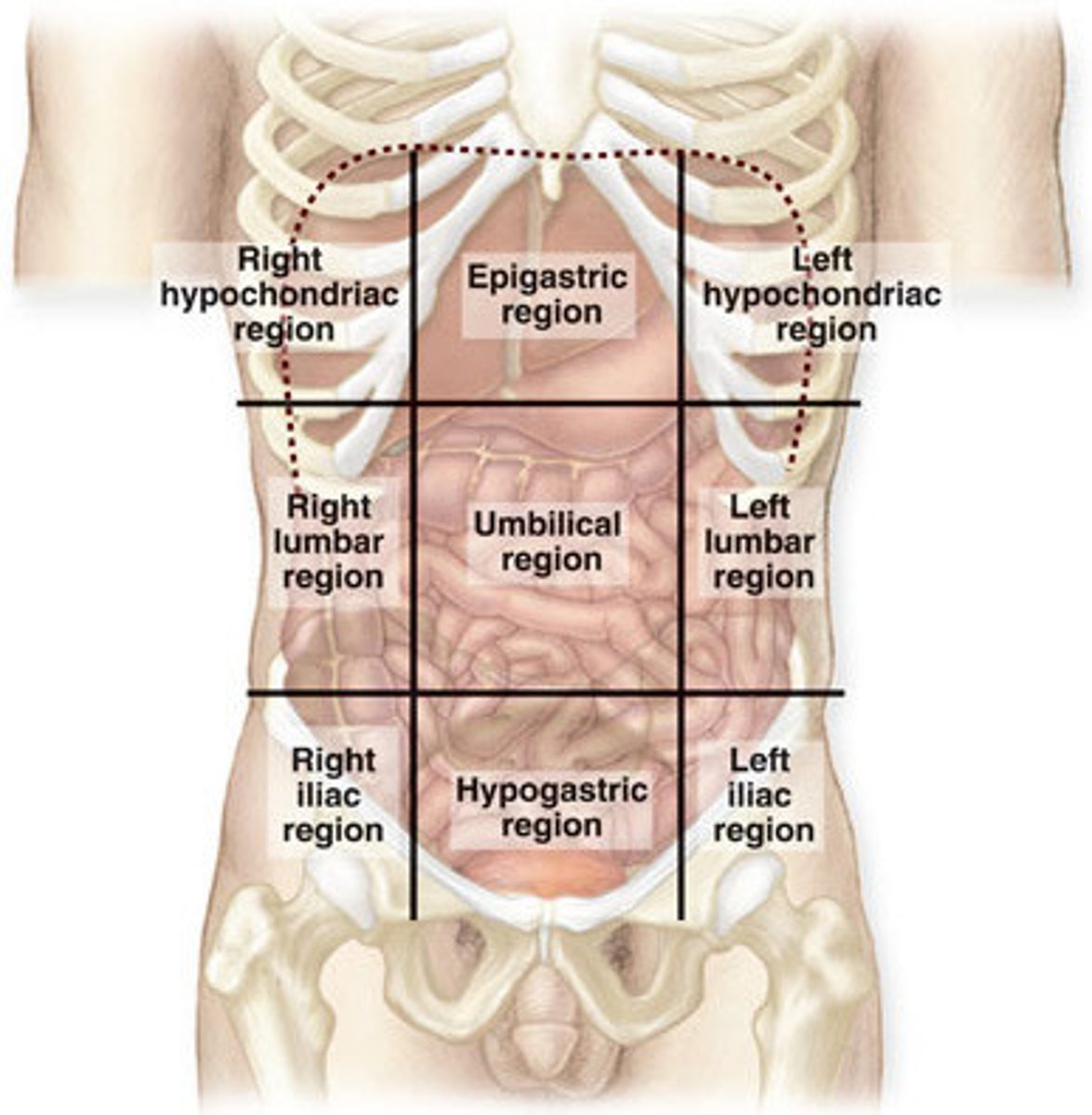
Abdominopelvic regions & quadrants
the regions -
TOP: right hypochondriac, epigastric, left hypochondriac
MIDDLE: right lumbar, umbilical, left lumbar
BOTTOM: right iliac, hypogastric, left iliac
quadrants -
TOP: right & left upper
BOTTOM: right & left lower
Homeostasis
process by which organisms maintain a relatively stable internal environment
Feedback Mechanism
1. receptor- perceives stimulus
2. control center- processes stimulus and directs effector
3. effector- takes action
Positive Feedback Loop
causes a system to change further in the same direction
think: positive feedback makes you want to do that thing more!
ex) cervical pressure -> nerve impulses from cervix transmitted to brain -> brain stimulates pituitary gland to secrete oxytocin -> oxytocin is transported via bloodstream to uterus -> oxytocin stimulates uterine contractions and pushes baby to create cervical pressure
Negative Feedback Loop
system responds to a change by returning to its original state, or by decreasing the rate at which the change is occurring
think: when you receive negative feedback, you stop what you're doing and/or return to normal
ex) increase in body temp -> sweating and returning to normal body temp
Structure and Function
Function follows form
Gradient
the change in value of a quantity, such as temperature, pressure, or concentration
*important to maintaining homeostasis
How do cells communicate with one another?
chemical signals, such as proteins or other molecules created by the sender
Ligand
a molecule that binds specifically to a receptor site of another molecule
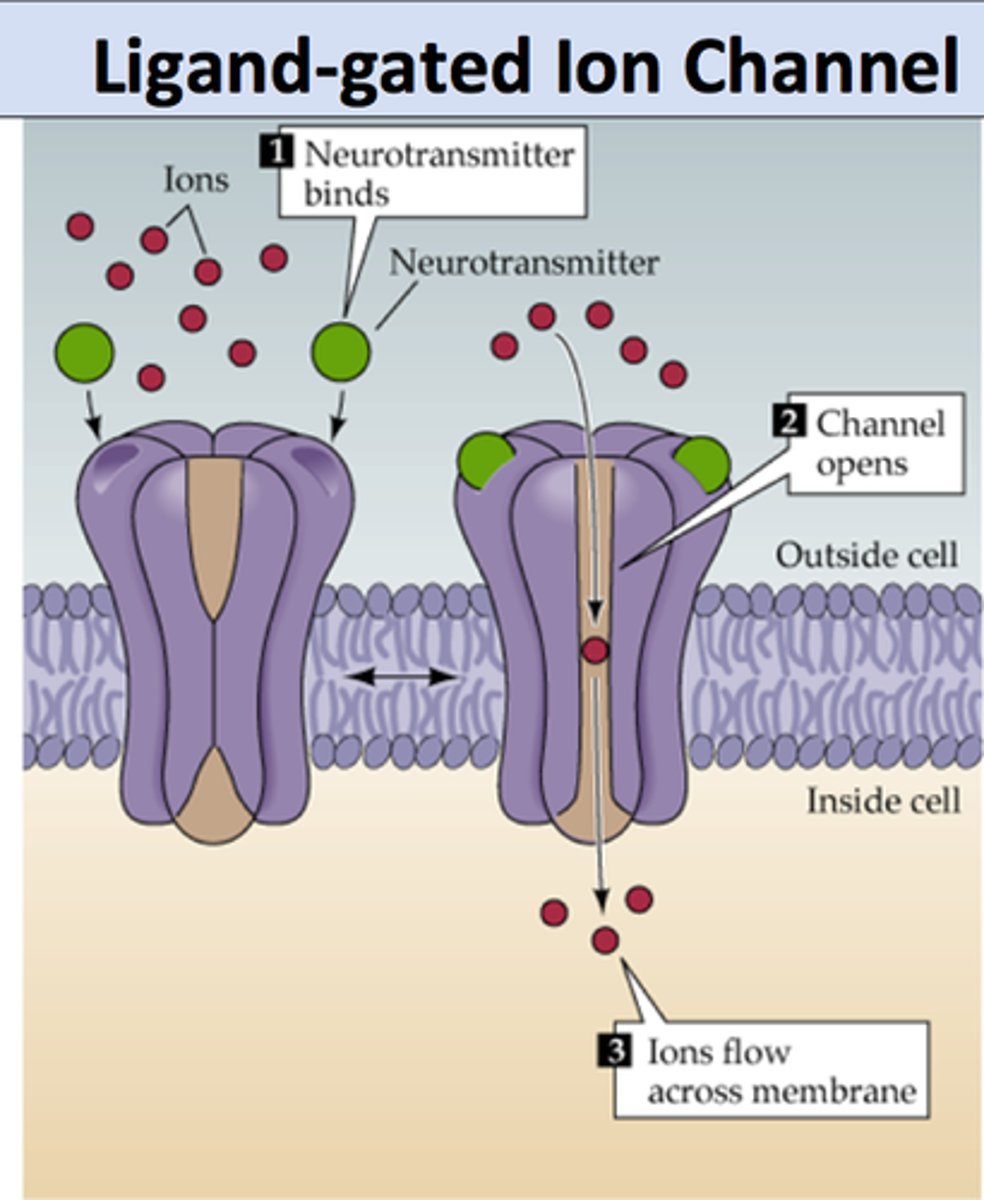
Why is cellular communication important?
signaling regulates how organisms grow, reproduce, react to stimuli, maintain metabolism and homeostasis
Duet Rule
First ring of electron shell accepts up to two electrons
Octet Rule
gaining or losing electrons so as to acquire stable electron structure, eight valence electrons
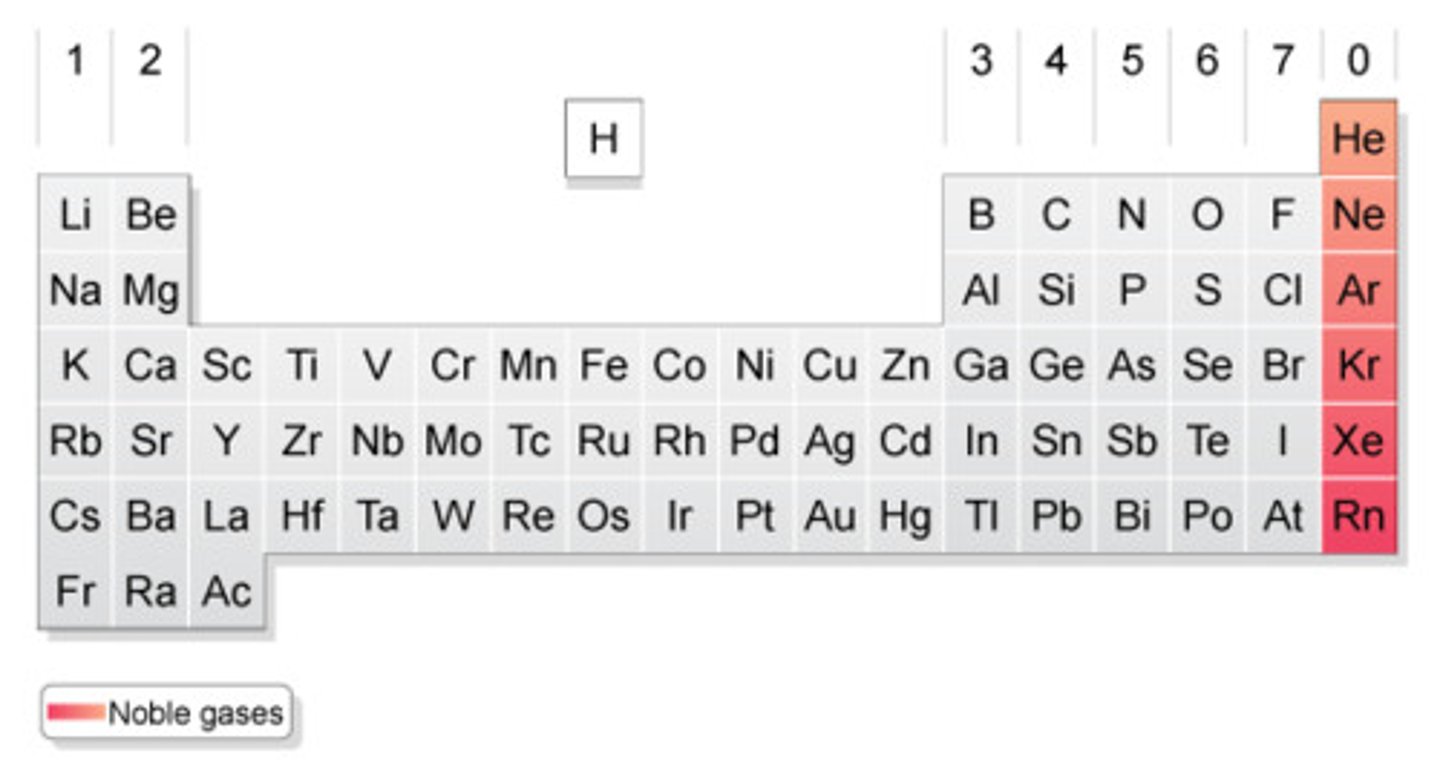
Noble Gases
have eight valence electrons, so no desire to bond with other elements (Helium, Helium, Argon, Krypton, Xenon, Radon)
Major Elements of the Human Body (96%)
oxygen, carbon, hydrogen, nitrogen
Mineral Elements
calcium, magnesium, phosphorus, potassium, sulfur, sodium, chlorine
Trace Elements
iron, zinc, copper, iodine
Atom
the basic unit of a matter/chemical element
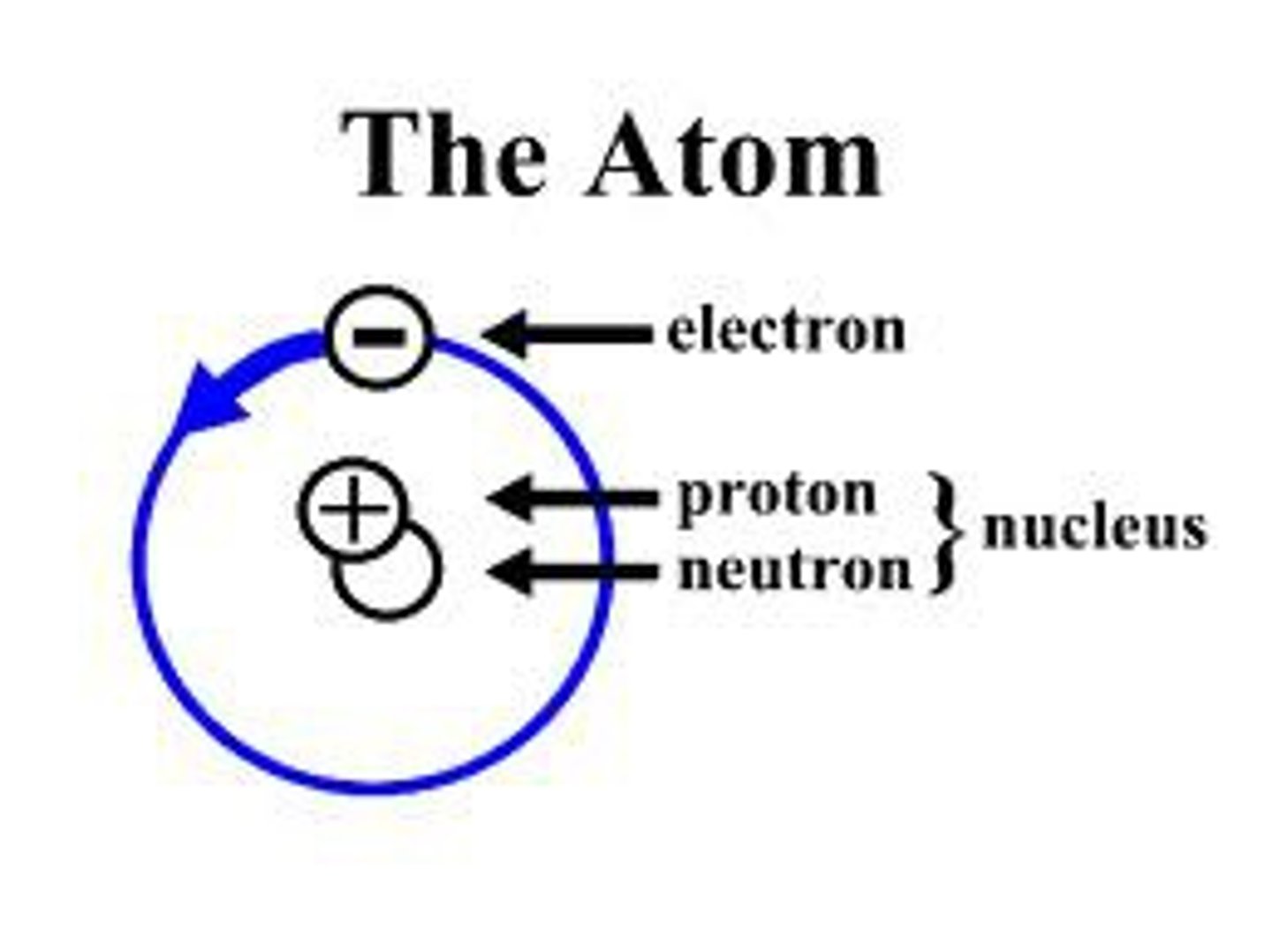
Element
pure substance that consists entirely of one type of atom
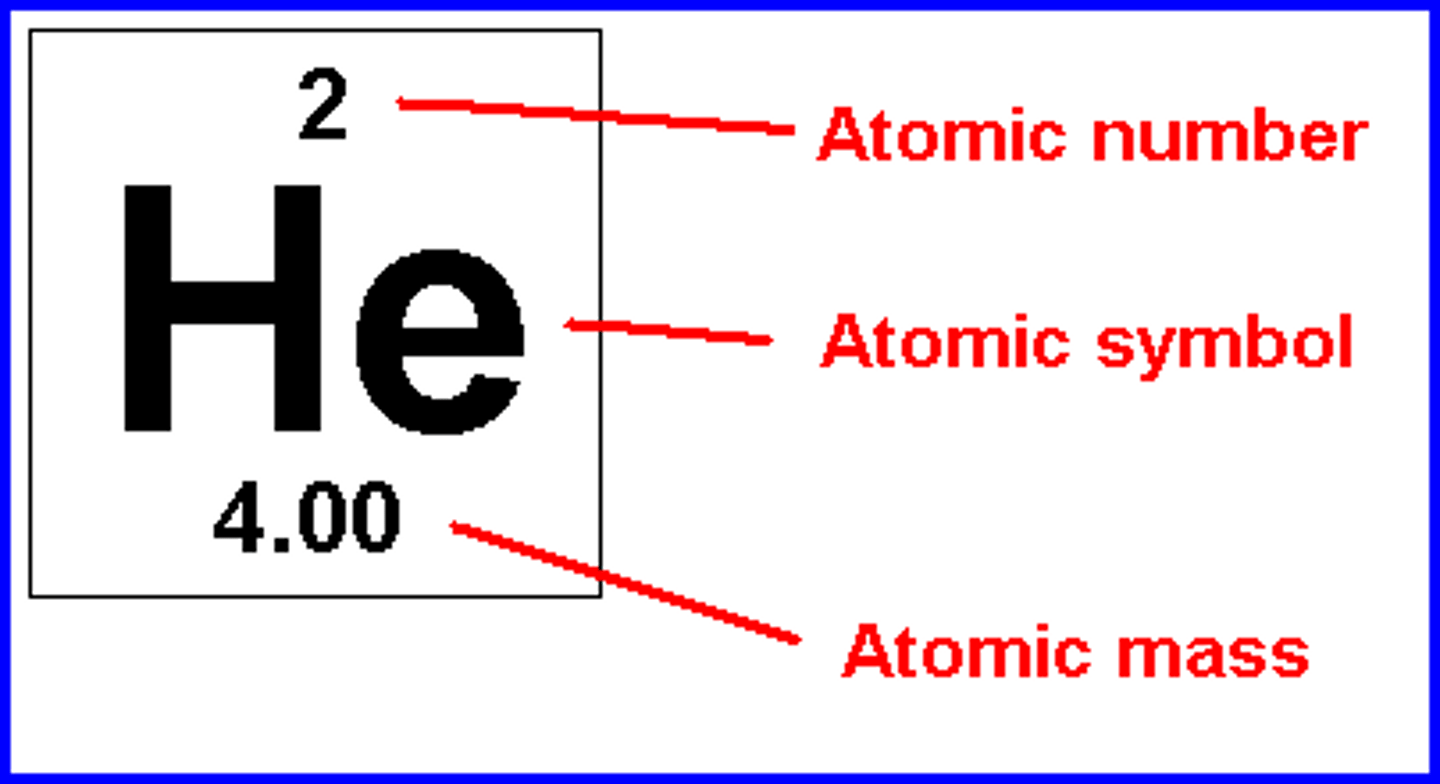
Atomic Number
the number of protons in the nucleus of an atom (usually also the number of electrons, unless cation or anion)
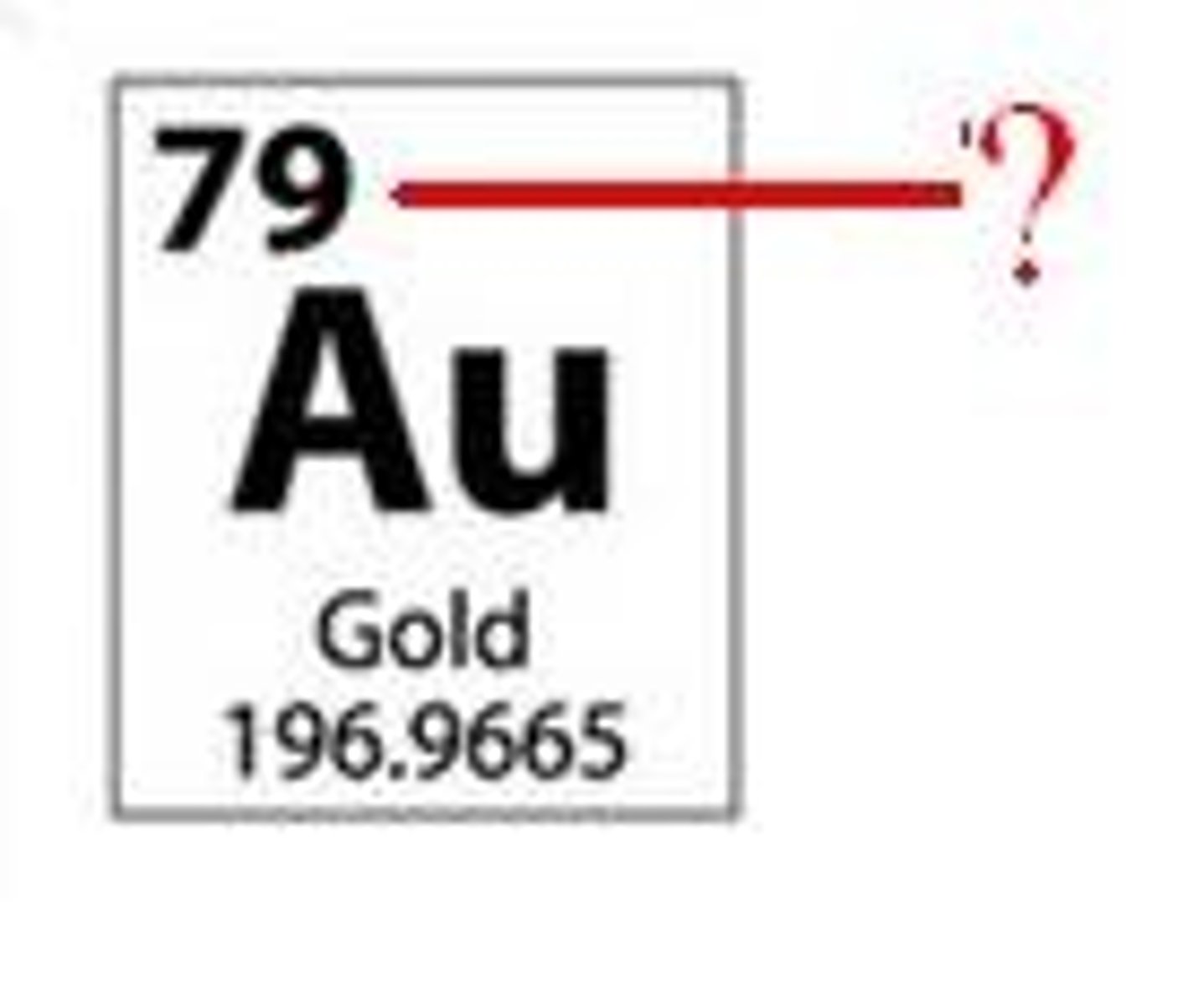
Mass Number
the sum of the number of neutrons and protons in an atomic nucleus
Isotope
atoms of the same element that have different numbers of neutrons
Radioisotope
isotope with an unstable nucleus
How are isotopes made?
they were either formed that way, enriched with neutrons sometime during their life, or are originated from nuclear processes that alter atomic nuclei
Mixture
combination of two or more substances that are physically combined (no change chemically)
Suspension
a heterogeneous mixture that separates into layers over time
ex) vial of blood
Colloid
a heterogenous mixture containing small, undissolved particles that do not settle out
ex) cream, milk, jelly
Solution
a homogeneous mixture of two or more substances uniformly dispersed throughout
ex) salt water
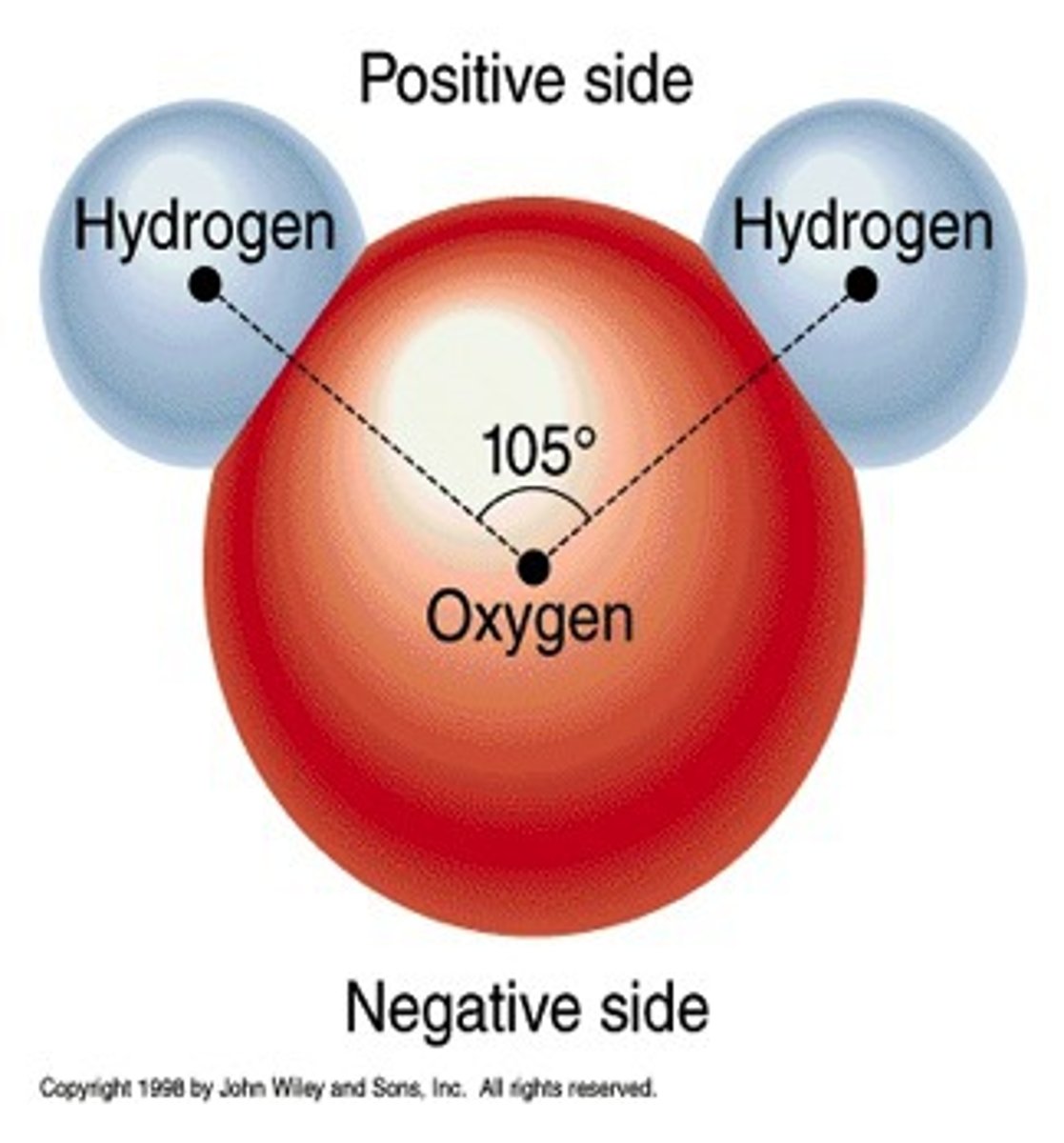
Molecule
a group of two or more atoms held together by chemical bonds
ex) glucose molecule, water molecule
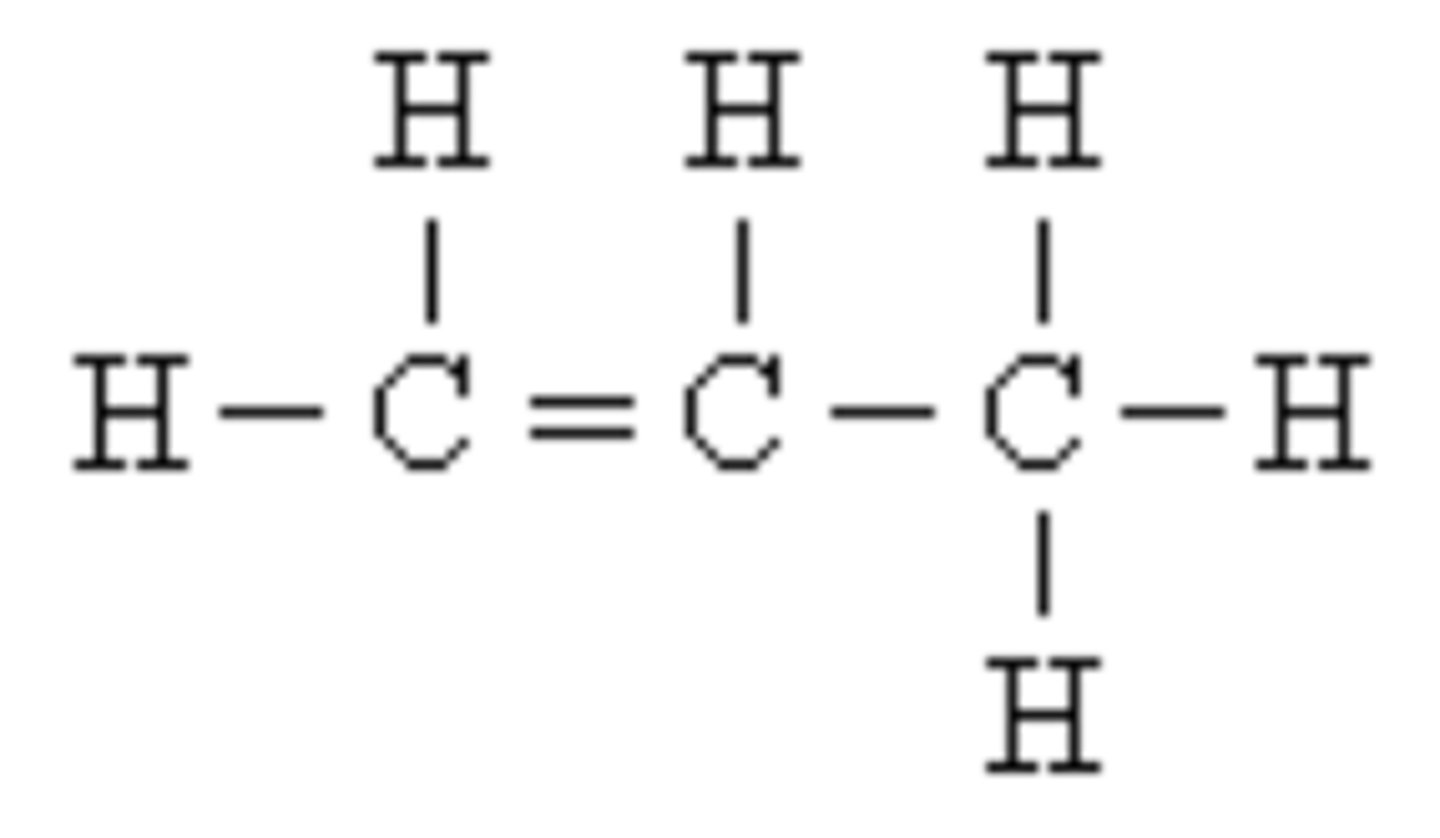
Compound
substance formed by the chemical combination of two or more elements in definite proportions
Note: All molecules are not compounds. All compounds are molecules.
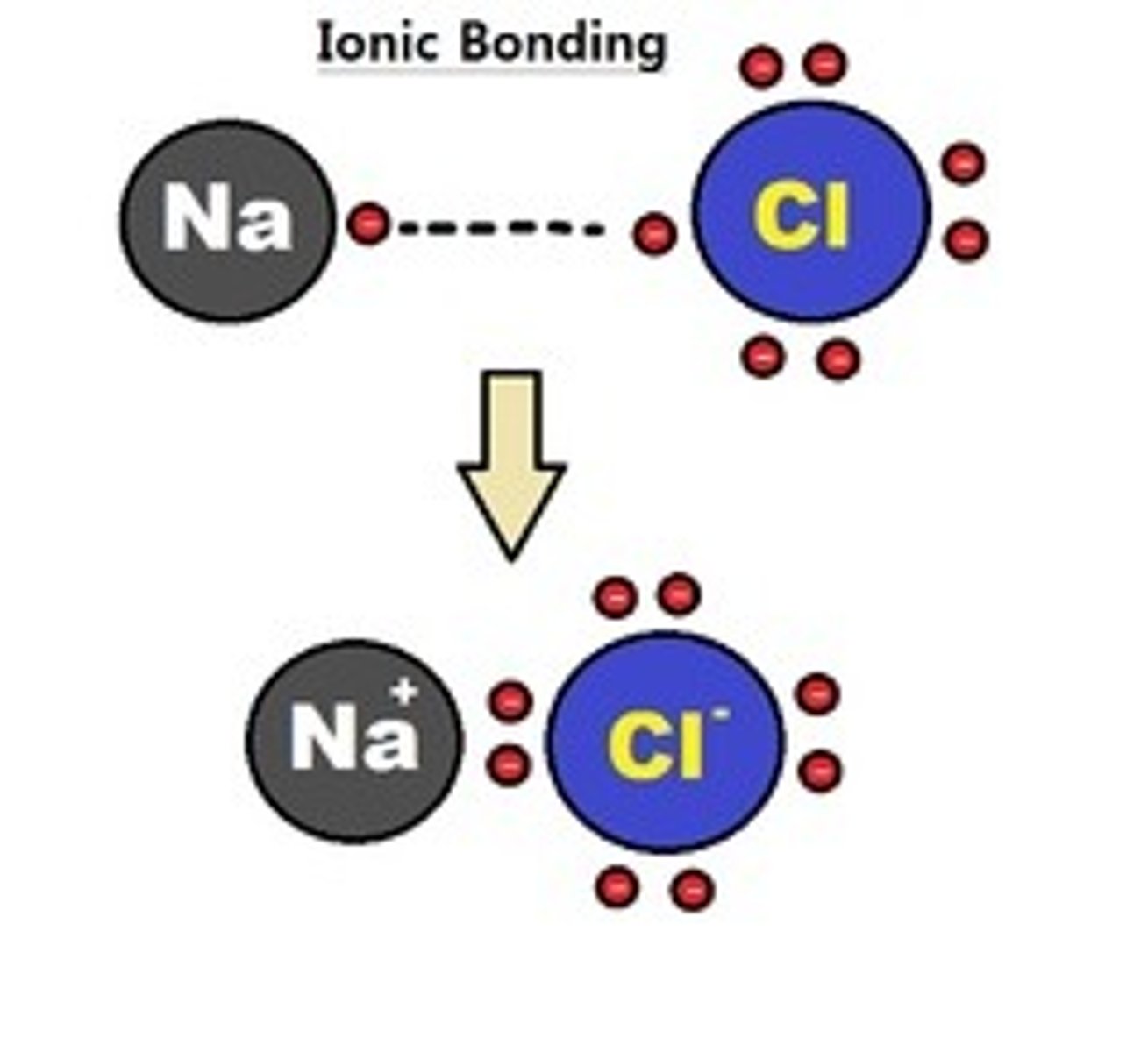
How electrons in a valence shell determine stability and desire for chemical bonds
atoms strive to have a complete valence shell of 8 electrons to become stable. an element with an incomplete shell will seek out another element that will have # of remaining electrons
ex) NaCL - Sodium has 7 electrons in outer shell, wants to bond with Chloride which has 1 electron
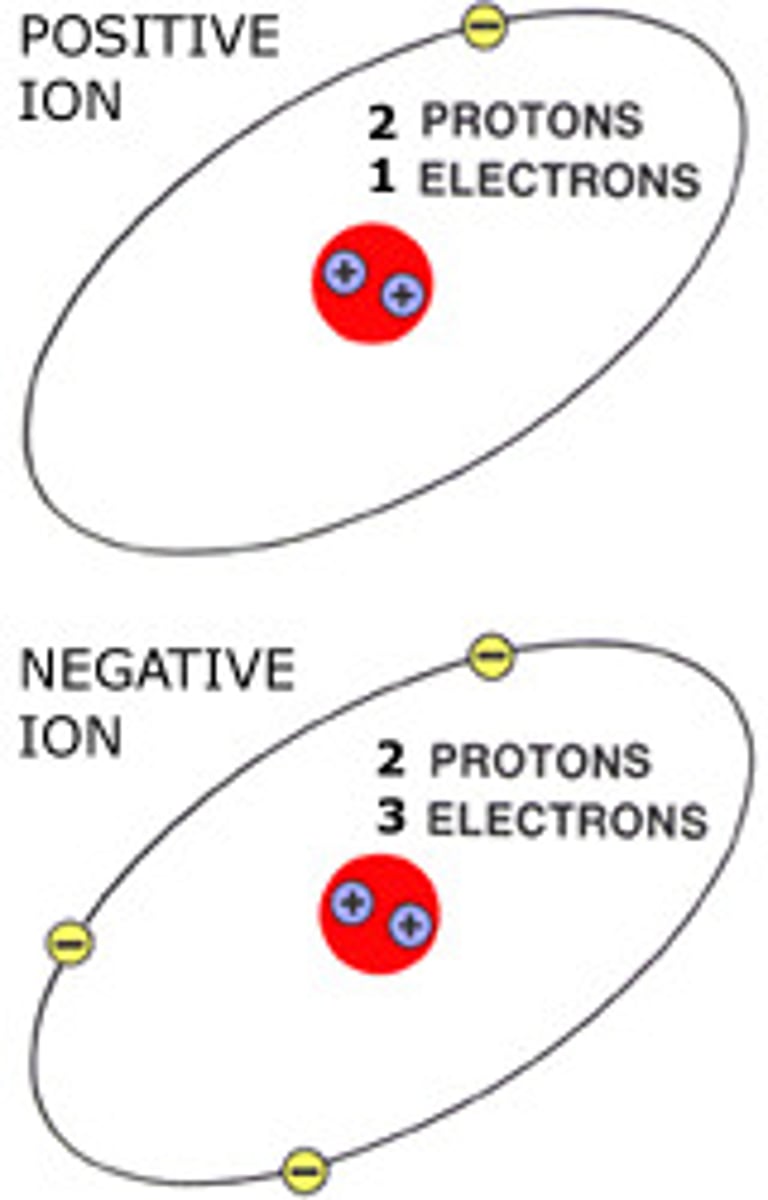
Ion
an atom/molecule that has a positive or negative charge
Cation
positive charged ion due to loss of electron(s)
Anion
negatively charged ion due to gain of electron(s)
Ionic Bond
chemical bond between a metal and non-metal where one or more electrons are transferred from one atom to the other
ex) NaCl
Polar Covalent Bond
unequal sharing of electrons of two non-metals
think: big kid and small kid fighting over a toy
ex) water molecule
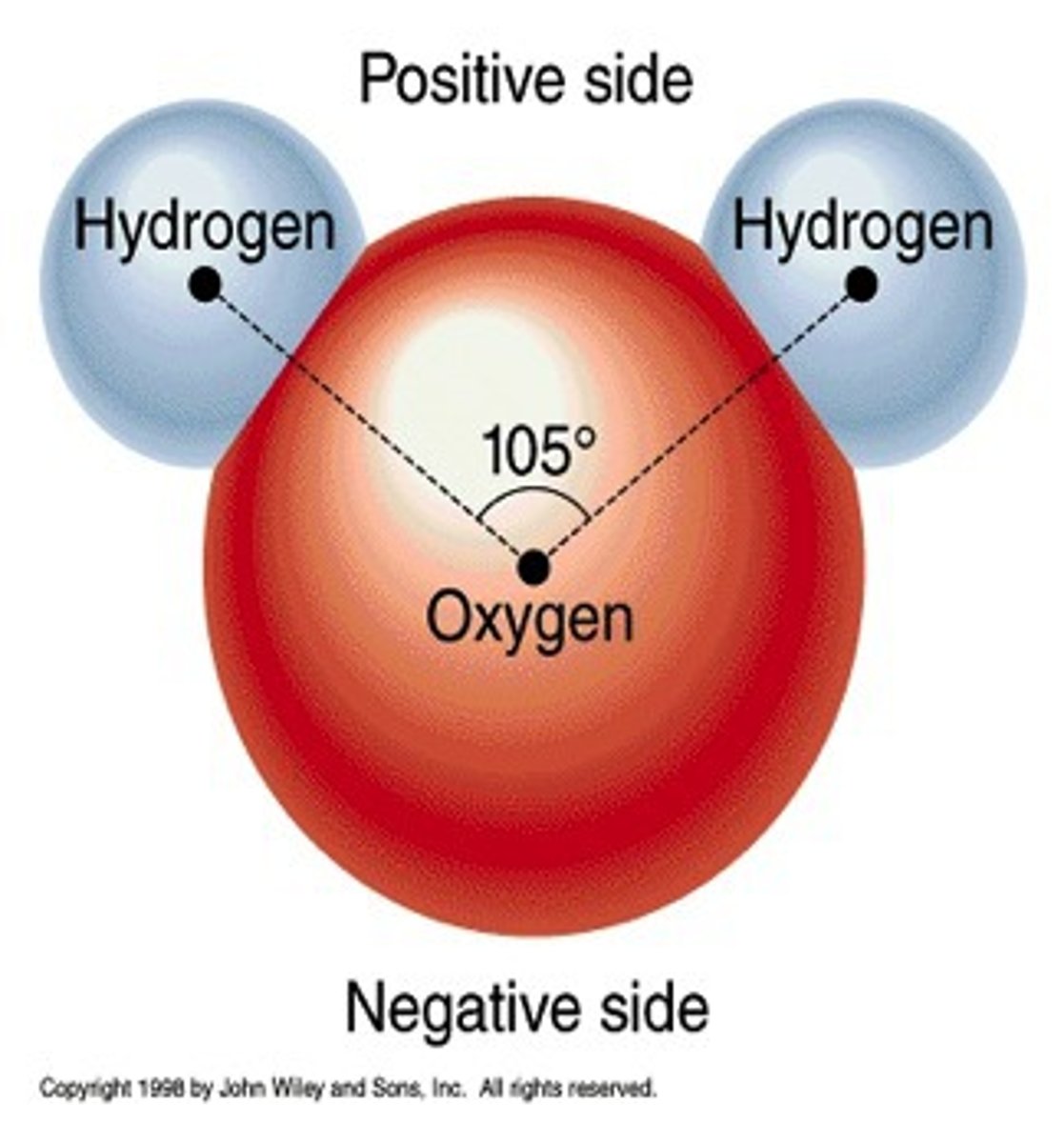
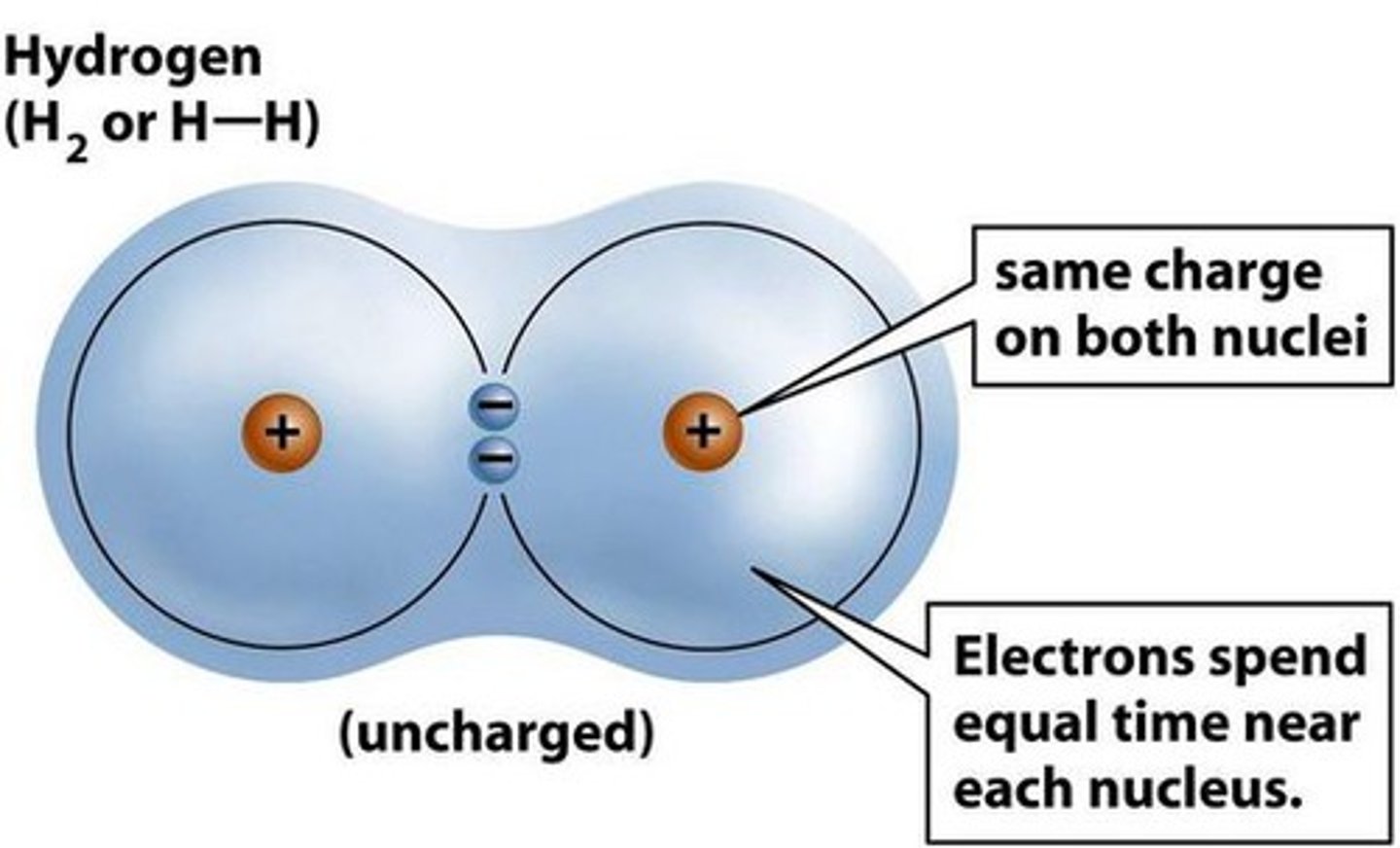
Non-Polar Covalent Bond
equal sharing of electrons, no charge
think: twins of equal strength pulling a toy
three situations:
-atoms sharing are the same element
-the arrangement of atoms makes atom unable to pull more
-bond is between hydrogen-carbon
ex) chlorine gas, He2
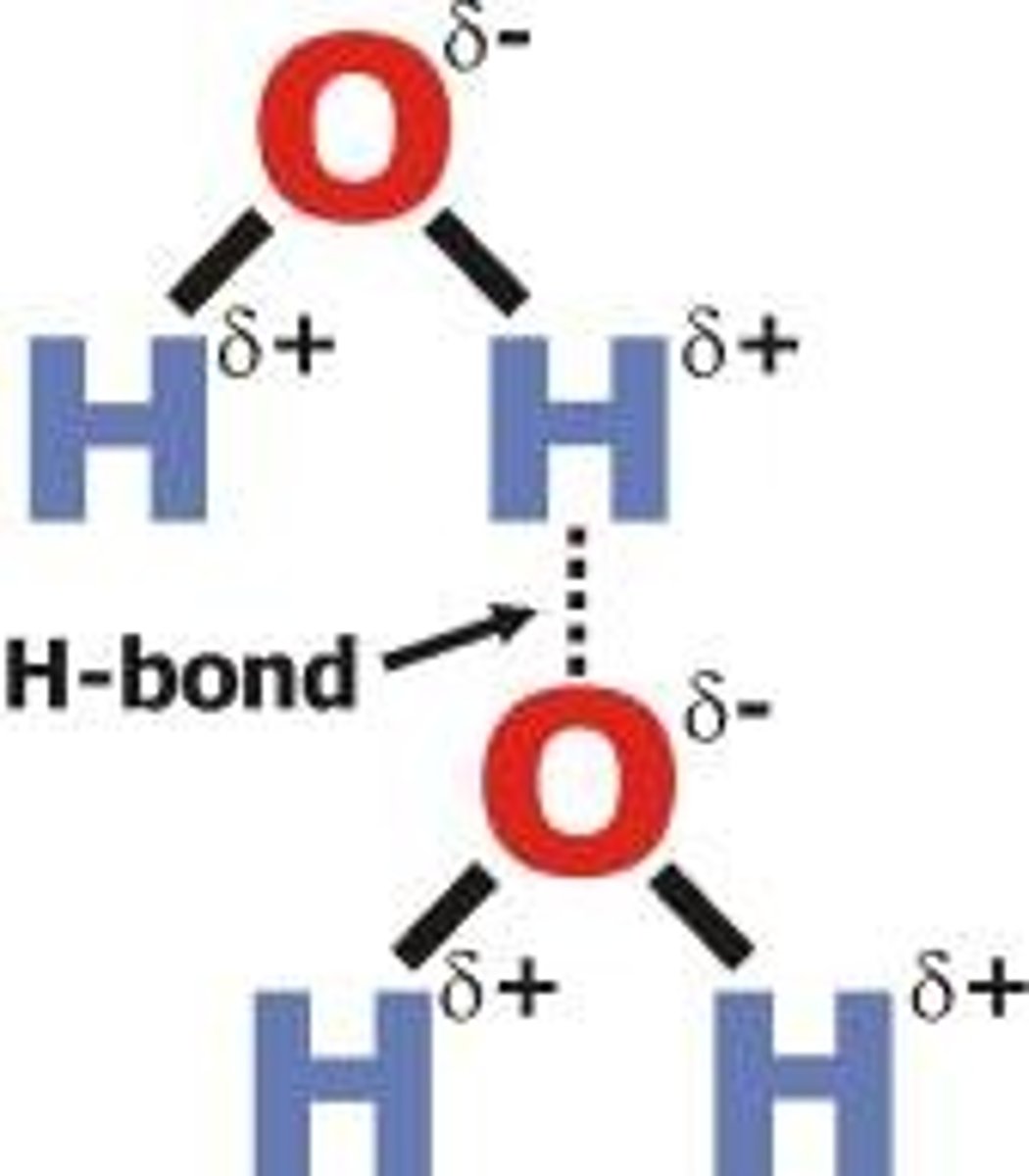
Hydrogen Bond
weak attraction between a slightly positive end of a dipole and a slightly negative dipole end
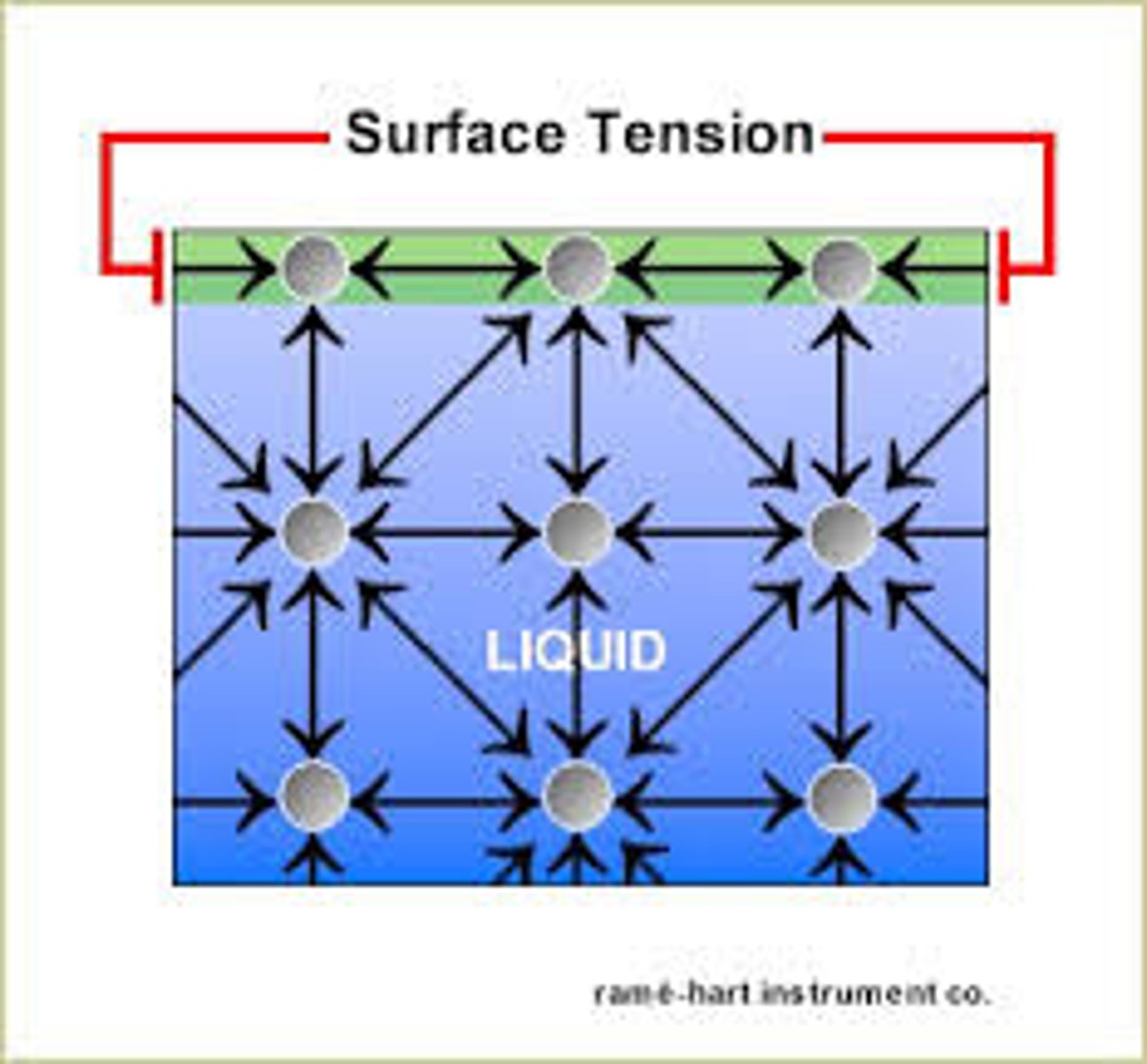
Surface Tension
measure of how difficult it is to stretch or break the surface of a liquid, water's surface tension is based on weak strength of the hydrogen bonds
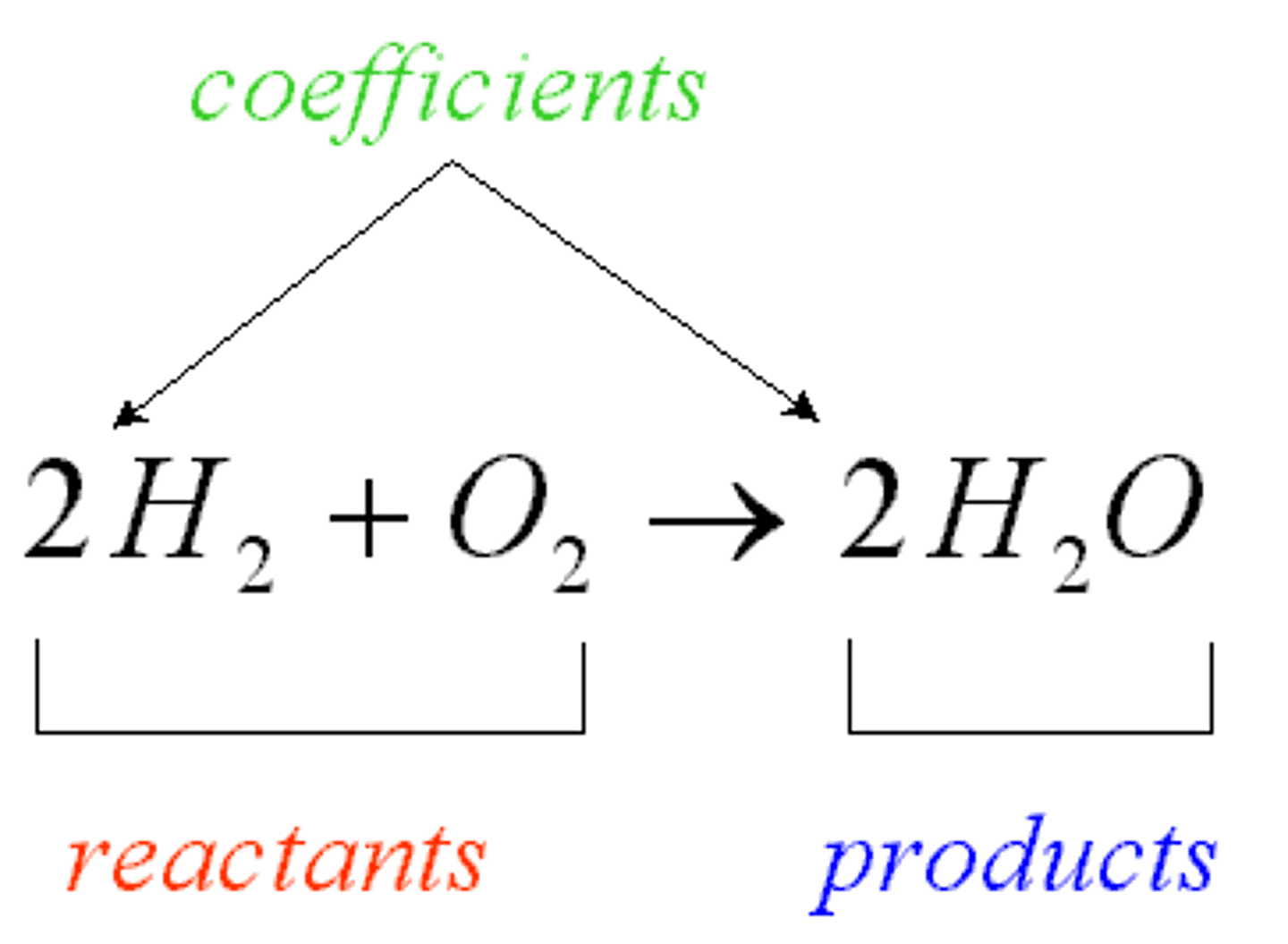
Chemical Reaction
chemical bond is formed, rearranged, or broken or when electrons are transferred between two or more atoms
reactants -> products or products -> reactants
Dipole
a molecule that has two oppositely charged ends
Endergonic Reaction
require energy input from another source; products will have more energy than reactants
Exergonic Reaction
releases excess energy; products have less energy than reactants
Electronegativity
ability of an atom to attract electrons
Note: Noble gases have no electronegativity due to valence shell being full
ex) fluorine is the most electronegative element
Reactant
starting ingredients that undergo chemical reaction
Product
substance produced in a chemical reaction
Energy
the capacity to do work or fuel chemical reaction
Potential Energy
stored energy; can be held to release at a later time
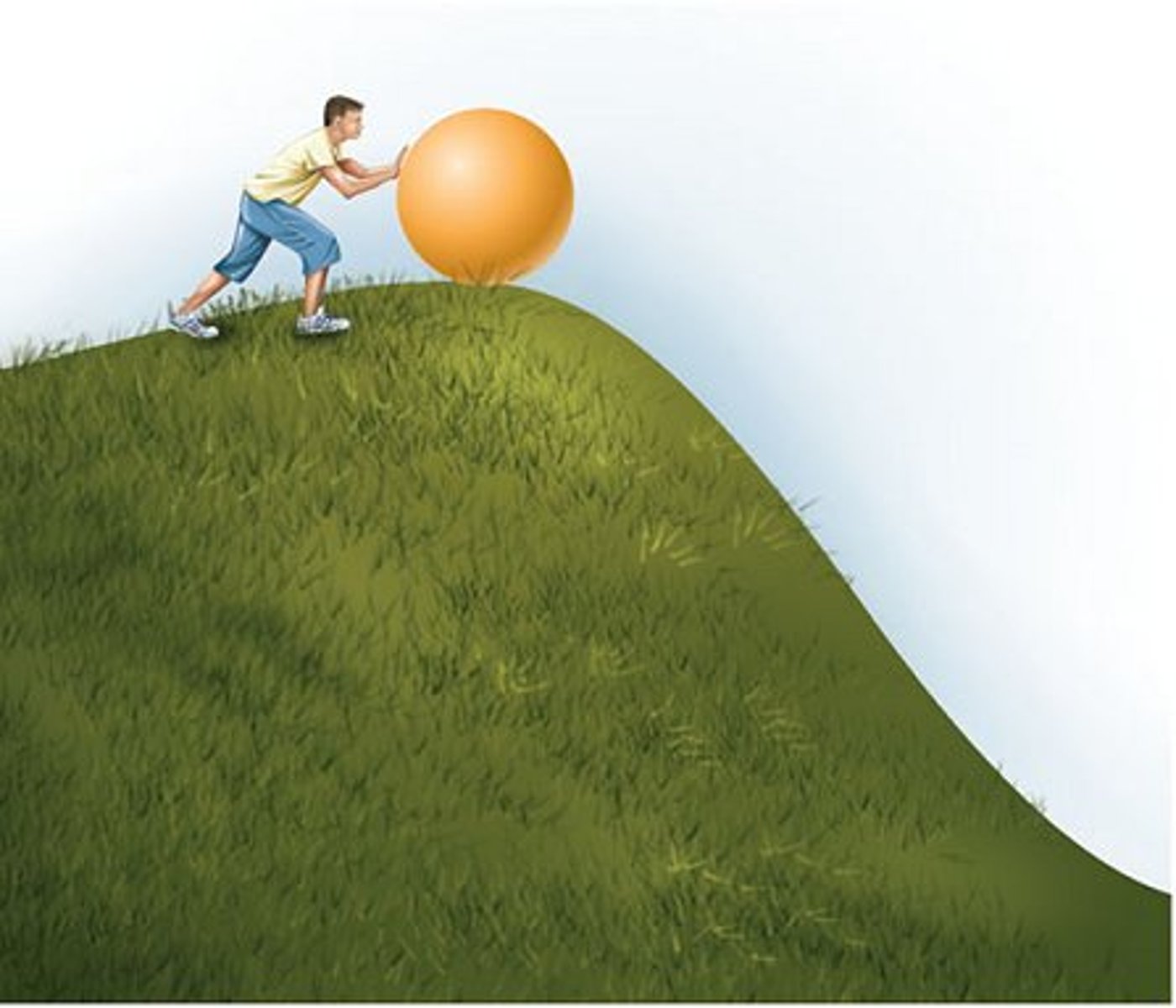
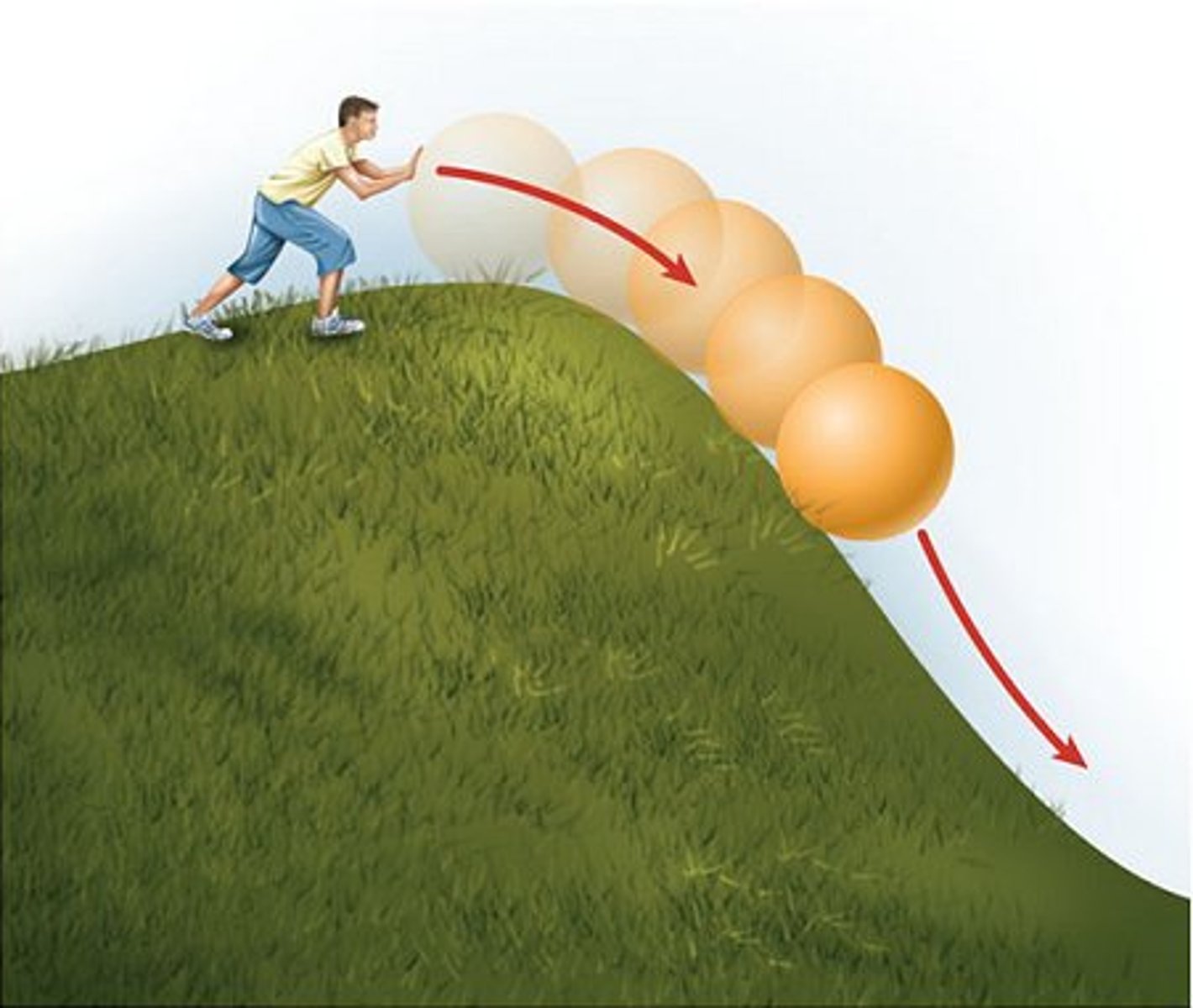
Kinetic Energy
potential energy that has been released or set in motion
Note: ALL atoms have kinetic energy (in constant motion); faster movement = more energy
Three Forms of Energy (Body)
1. chemical- stored in bonds between atoms; drives nearly all chemical processes
2. electrical- generated by movement of charged particles
ex) flow of electrons
3. mechanical- energy directly transferred from one object to another
ex) muscle contraction moving limb
Anabolic Reaction
synthesis = new bonds created

Catabolic Reaction
decomposition = bonds are broken

Exchange Reaction
the reacting molecules are shuffled around to produce new products
