Week 7 - Endocrine System 1: Cell Signalling
 Call Kai
 Learn
Learn Practice Test
 Spaced Repetition
 Match
Match Flashcards
 Knowt Play
1/21

There's no tags or description
Looks like no tags are added yet.
Name | Mastery | Learn | Test | Matching | Spaced | Call with Kai |
|---|
No analytics yet
Send a link to your students to track their progress
22 Terms
7 categories of PROTEINS
Enzymes - catalyse biochemical reactions (e.g lactase)
Membrane transporters - e.g channel proteins
Signal molecules - attach to receptors (e.g neurotransmitters)
Receptors - Provide attachment sites for signal molecules
Binding proteins - Found in extracellular fluid, bind and transport molecules (e.g hemoglobin)
Immunoglobulins/antibodies - Provide immune response
Regulatory proteins - Increase or decrease cellular processes (e.g transcription factors)
Local signalling
Gap junctions
Contact-dependent
Paracrine signalling
Autocrine signalling
Long distance communication
Nervous system - Electrical
Neurotransmitters
Neurohormones
Endocrine system - Chemical
Hormones
Immune system - Chemical
Cytokines
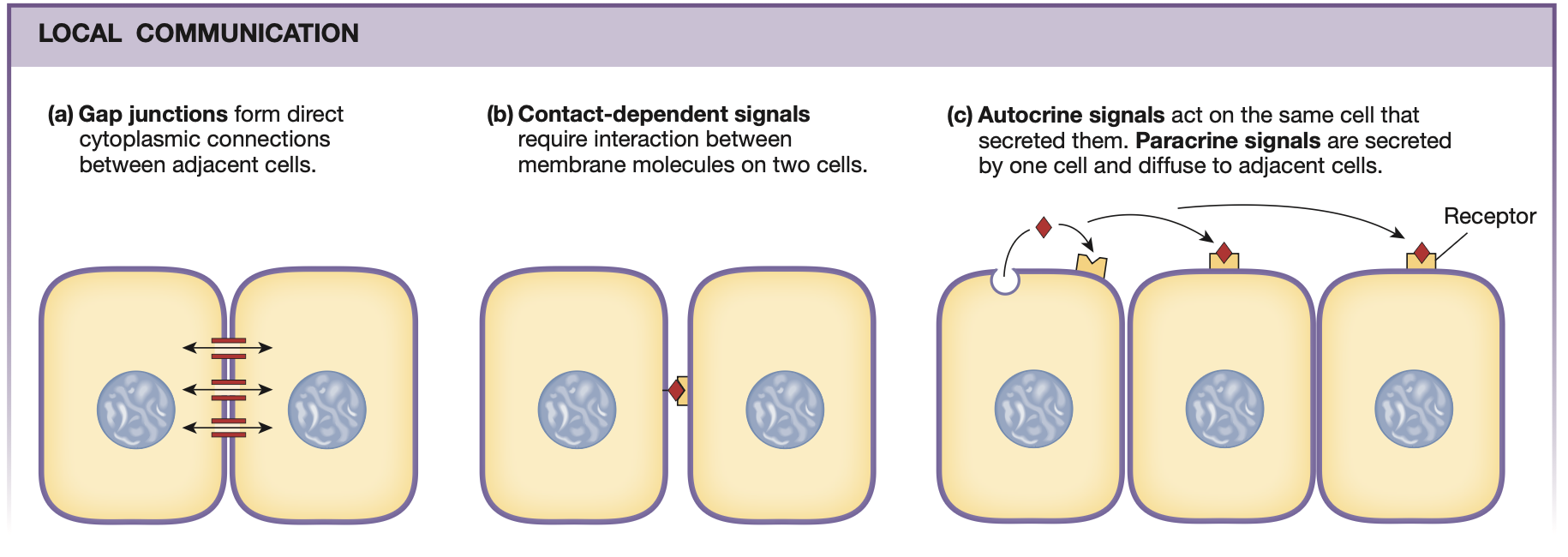
Communication occurs within own or adjacent cells.
Gap junctions: Signals are sent through gap junctions (think cardiomyocytes & action potential propagation) ← CHEMICAL ARE NOT SENT INTO ECF, HENCE NOT A CHEMICAL SIGNAL
Contact-dependent: Signals occur through signal molecules & receptors, requiring brief and direct contact between separate cells ← CHEMICAL ARE NOT SENT INTO ECF, HENCE NOT A CHEMICAL SIGNAL
Paracrine signalling: Chemicals are secreted into ECF and bind to receptors of adjacent cells
Autocrine signalling: Chemicals are secreted into ECF and bind to receptors of own cell — Self-signalling
Some molecules can cause both paracrine & autocrine signals
Local signalling
Gap junctions
Contact-dependent signals
Paracrine signalling
Autocrine signalling
Long distance communication
Nervous system - Electrical
Neurotransmitters
Neurohormones
Endocrine system - Chemical
Hormones
Immune system - Chemical
Cytokines
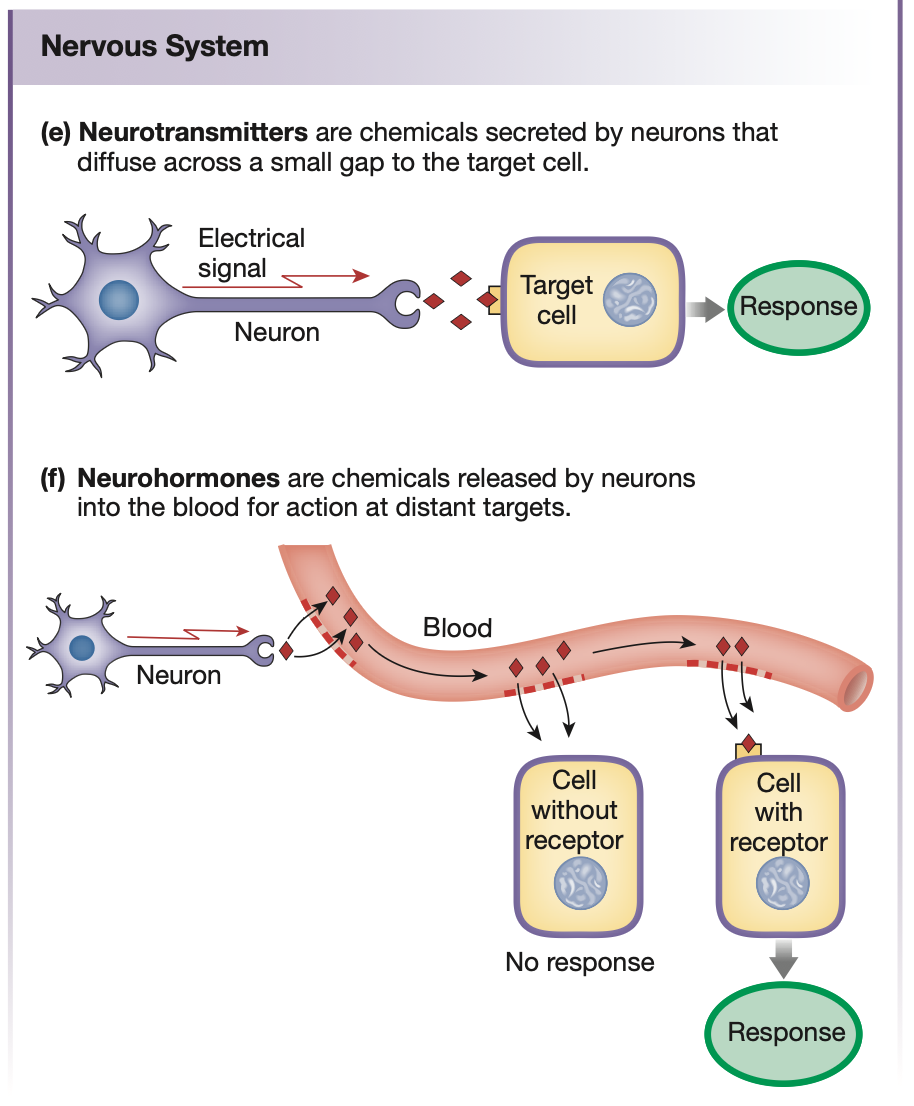
Nervous system:
Neurotransmitters are sent directly from a neuron to a target cell, causing depolarisation.
Neurohormones travel through the blood before arriving to the target cell (which has a specialised receptor) and causing depolarisation.
Local signalling
Gap junctions
Contact-dependent signals
Paracrine signalling
Autocrine signalling
Long distance communication
Nervous system - Electrical
Neurotransmitters
Neurohormones
Endocrine system - Chemical
Hormones
Immune system - Chemical
Cytokines
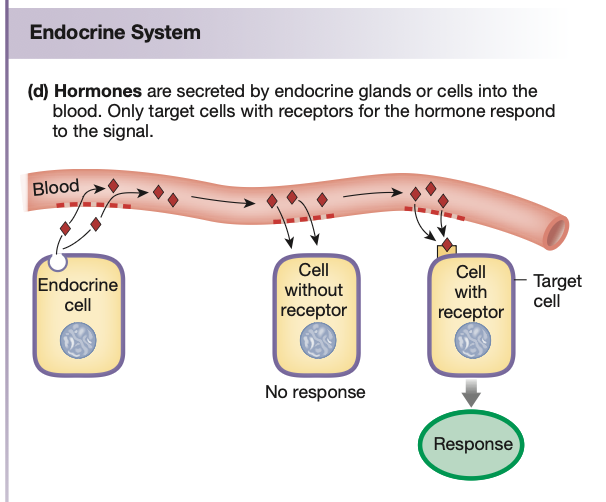
Endocrine system:
Hormones are sent from endocrine cells/glands and travel through the blood before arriving to a cell with a specialised receptor, names a target cell, leading to cell response.
Local signalling
Gap junctions
Contact-dependent signals
Paracrine signalling
Autocrine signalling
Long distance communication
Nervous system - Electrical
Neurotransmitters
Neurohormones
Endocrine system - Chemical
Hormones
Immune system - Chemical
Cytokines
Cells release cytokines which cause an immune response.
2 main CELL SIGNAL PATHWAYS
Electrical signals: Changes in cell membrane potential (NERVOUS SYSTEM)
Chemical signals: Molecules secreted into extracellular fluid (ECF) send signals (ENDOCRINE SYSTEM)
Send signals to target cells
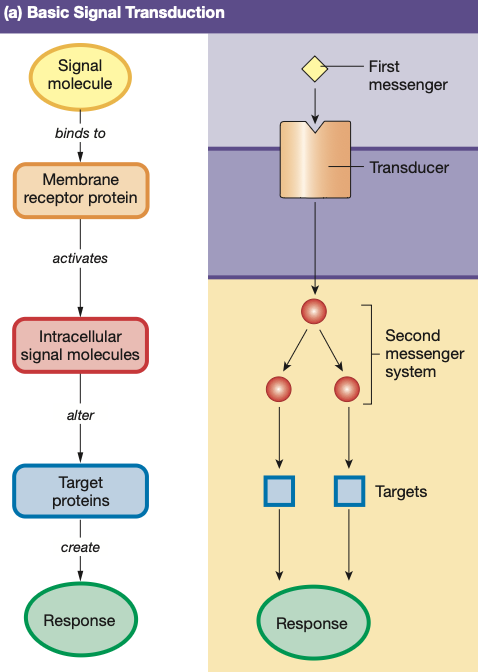
CELL SIGNAL PATHWAY breakdown:
First messenger → Protein receptor → Intracellular signal molecules → Cell response
Signal molecule/ligand brings external stimuli to target cell, binding to a protein receptor — also called a first messenger
Binding of ligand-receptor complex activates protein receptor
Activated protein receptor causes a cascade, activating one or more intracellular signal molecules
Final signal molecule/final messenger causes cell response → protein modification or protein synthesis
CELL SIGNAL PROPAGATION: Non-protein signal molecules 3 TYPES
Calcium — can alters enzyme activity or initiate action potentials
Soluble gases (Nitric oxide, carbon monoxide, hydrogen sulfide) — can impact respiration
Lipids
CELL SIGNAL RECEPTION: Protein receptor 3 LOCATIONS
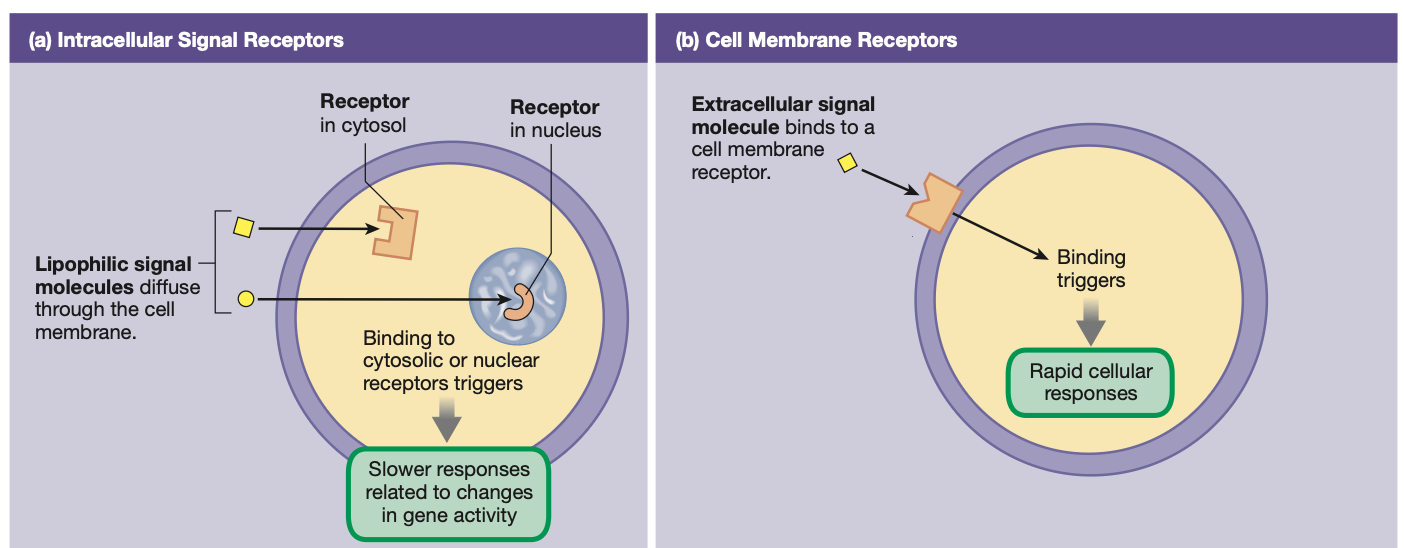
Extracellularly on cell membrane: Lipophobic signal molecules that CANNOT diffuse through the phospholipid bilayer → RAPID cellular response
Intracellularly within cell cytosol or cell nucleus (3): Lipophillic signal molecules that CAN diffuse through the phospholipid bilayer → modifies gene activity, SLOWER RESPONSE
BOTH RECEPTION TYPES CAN OCCUR IN TANDEM
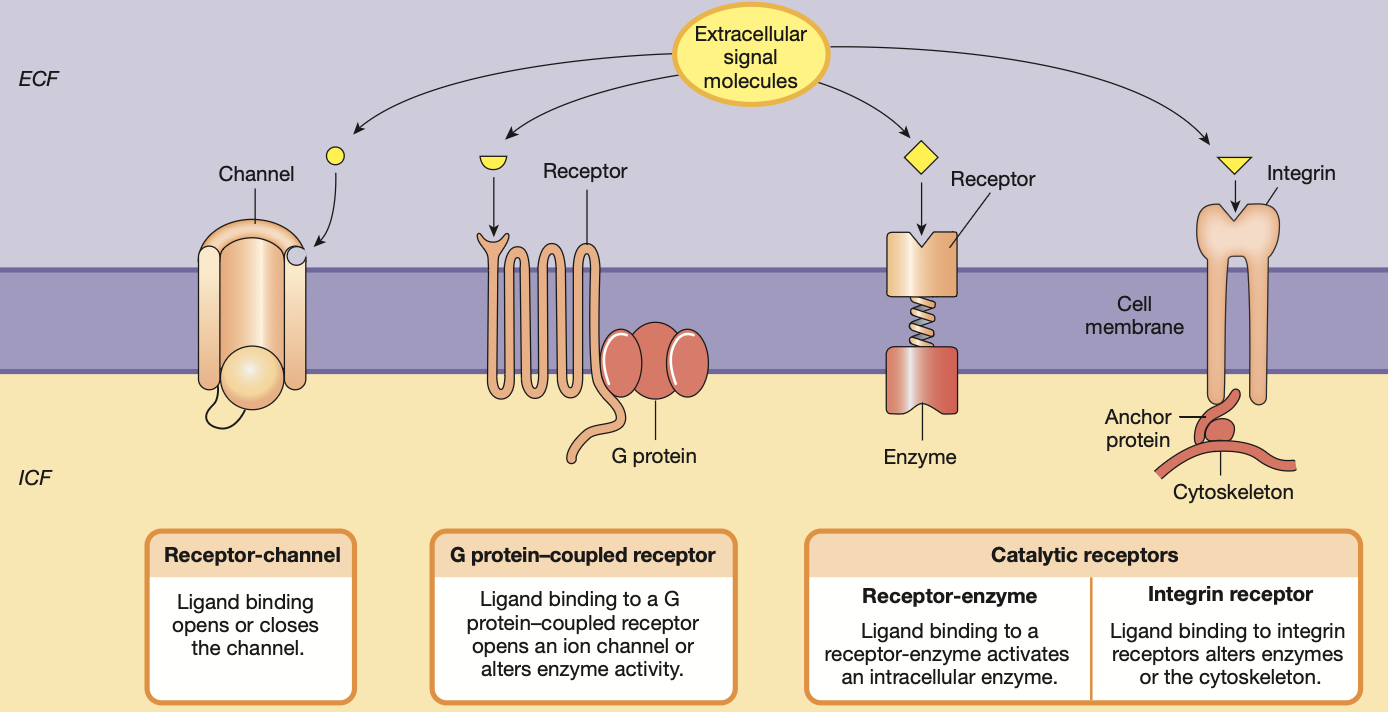
CELL SIGNAL RECEPTION: Protein receptor 4 TYPES
Receptor channel — first messenger binding opens channel allowing passage of molecules in or out of the cell
G-protein coupled receptor (GPRC) — first messenger binding influences inner protein studded on cell membrane to open ion channels or change enzyme activity
Receptor-enzyme — first messenger binding activated an intracellular enzyme
Integrin receptor — first messenger binding alters inner enzymes or cytoskeleton
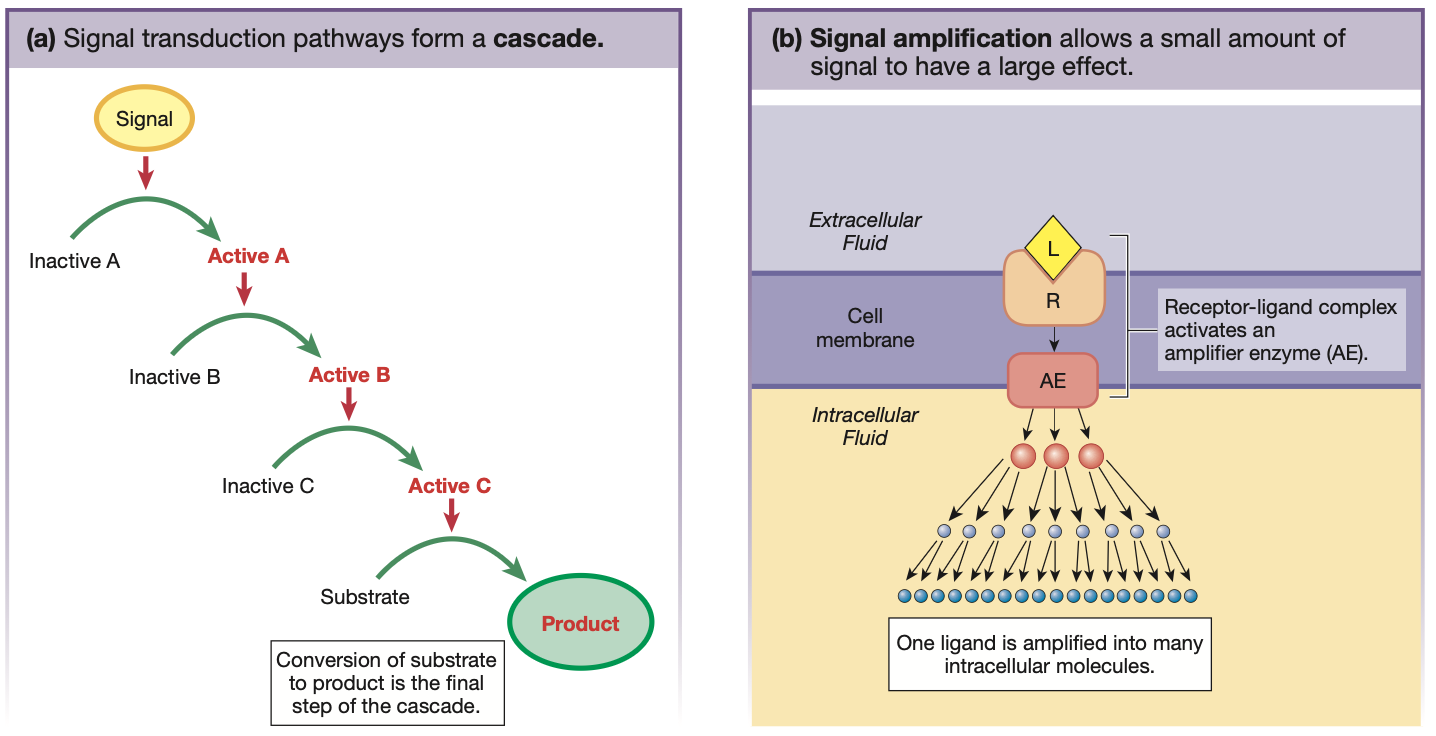
CELL SIGNAL TRANSDUCTION: Intracellular signal molecules 2 forms
Signal cascade — Conga line of signal molecules and activated proteins until last messenger activated conversion of a substrate into a product
Signal amplification — First ligand-receptor complex activated an amplifier enzyme, which propagates the signal to many intracellular molecules ← small signal, BIG response
BOTH TRANSDUCTION TYPES CAN OCCUR IN TANDEM
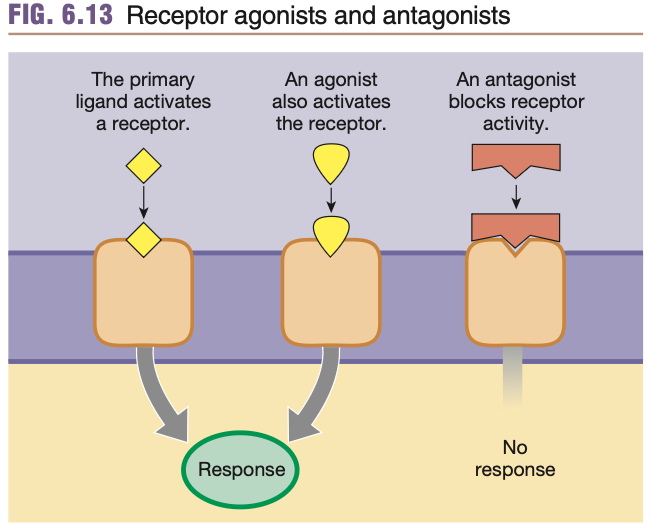
CELL SIGNAL REGULATION: Specificity & competition
Competition: Multiple ligands can bind to a single receptor type
Primary ligand: Original signal molecule that activates receptor
Agonist ligand: Additional signal molecule that also activates receptor
Antagonist ligand: Signal molecule that also deactivates receptor
CELL SIGNAL REGULATION: Isoforms
Isoforms: Multiple receptors can be activated by the same ligand
Each receptor type leads to different cellular response, thus are often located in different locations
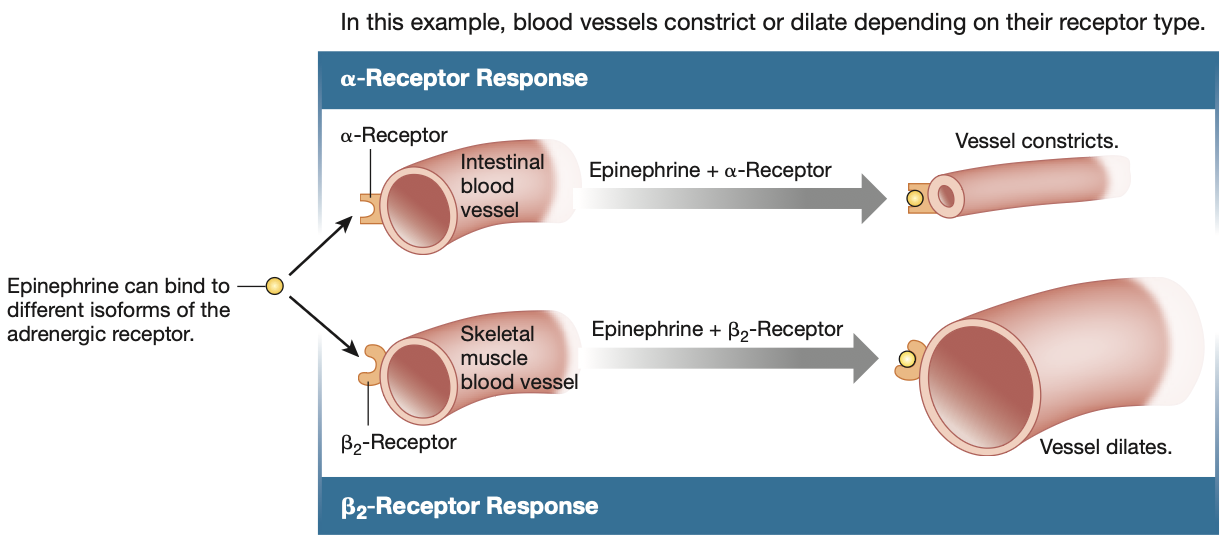
CELL SIGNAL REGULATION: Saturation
Saturation: Maximum activity level within a cell due to the finite number of receptor proteins with each cell.
Downregulation: Decrease in no. receptors, hence lower saturation
Can be done by:
Physical removal of receptor proteins via endocytosis
Desensitisation via attachment of chemical modulators/antagonist ligands (e.g phosphorylation)
Upregulation: Increase in no. receptors, hence higher saturation
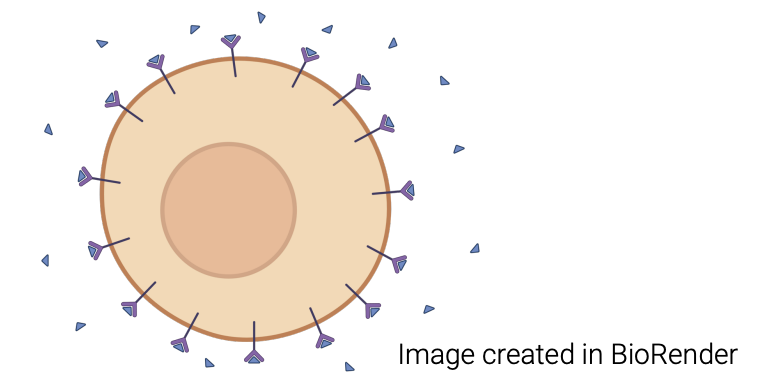
CELL SIGNAL TERMINATION
First messenger can be:
Degraded by extracellular enzymes
Transported into neighbouring cells
Endocytosis of the entire receptor-ligand complex
Intracellularly, ligand is removed and the receptors can be returned to the membrane by exocytosis
Reflex pathways: HOMEOSTASIS in long-distance pathways
Occurs in endocrine, nervous & immune systems
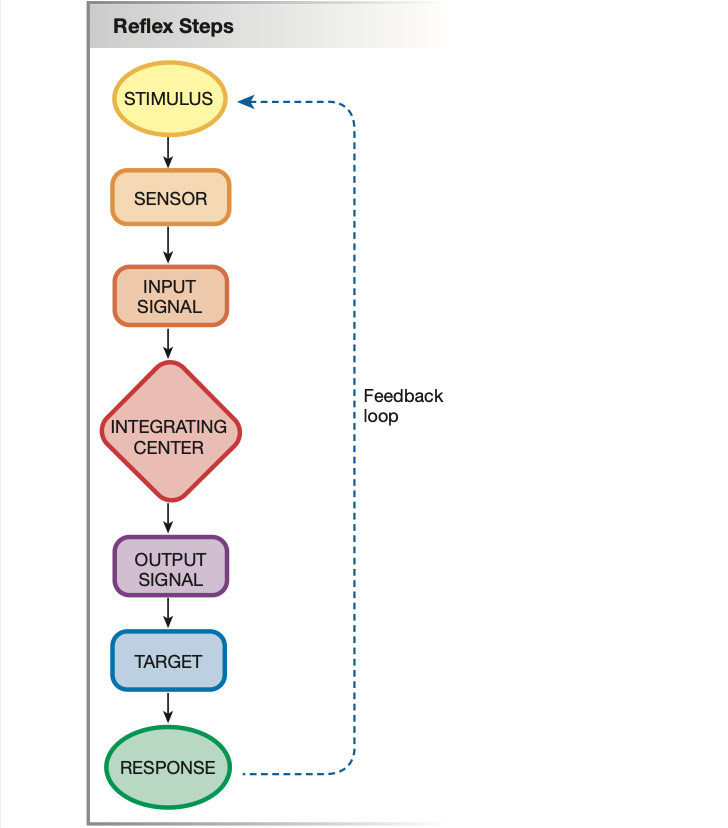
Reflex pathways: Stimulus
A disturbance/change in the environment that initiates the reflex pathway to occur. Often when values fall out of the homeostatic range.
Reflex pathways: Receptor/Sensor
Continuously monitors the environment via tonic control, senses change from a stimulus. Propagates an input signal towards a integrating centre.
Two forms of receptors:
Proteins studded on cell membranes/inside cells
Cells that sense specific stimuli (e.g mechanoreceptors, chemoreceptors, etc.)
Reflex pathways: Integrating centre
Cells that compare the input signals’s value, give from sensors/receptors, with homeostatic values (setpoints). If variable has moved outside of normal range, sends an output signal.
Can receive multiple signals at once and must prioritise
Reflex pathways: Target & Response
Receives the output signal and carries out appropriate response to either return to homeostasis (negative feedback loop) or propagate further away from normal values (positive feedback loop).
3 Types of response:
Cellular response
Tissue/organ response
General systemic response
Written in order of magnitude.
Reflex pathways: Endocrine system
Input & Integration:
Stimulus acts directly on endocrine cells.
Thus, endocrine cells are both the sensor & integrating centres.
Output:
All output signals are transmitted through hormones by BLOOD.
Simple vs Complex reflex pathways
Simple: Entire pathways is either ONLY NEURAL or ONLY ENDOCRINE
Complex: COMBINE NEURAL & ENDOCRINE pathways
Neural & endocrine systems pathways work in tandem, on a continuum