genetics
 Call Kai
 Learn
Learn Practice Test
 Spaced Repetition
 Match
Match Flashcards
 Knowt Play
1/41

There's no tags or description
Looks like no tags are added yet.
Name | Mastery | Learn | Test | Matching | Spaced | Call with Kai |
|---|
No analytics yet
Send a link to your students to track their progress
42 Terms
transcription
dna to mrna
translation
mrna to protein
chromosomes
in cell nucleus, contains dna
genome
the sum of all genetic material in one complete set of chromosomes
autosomes
non-sex chromosomes
cell cycle
G2, S, G2, M
G1
growth, normal metabolic roles
S phase
replication
G2
growth and prep for mitosis
M phase
mitosis and cell division
meiosis
production of gametes, ends in haploid cells
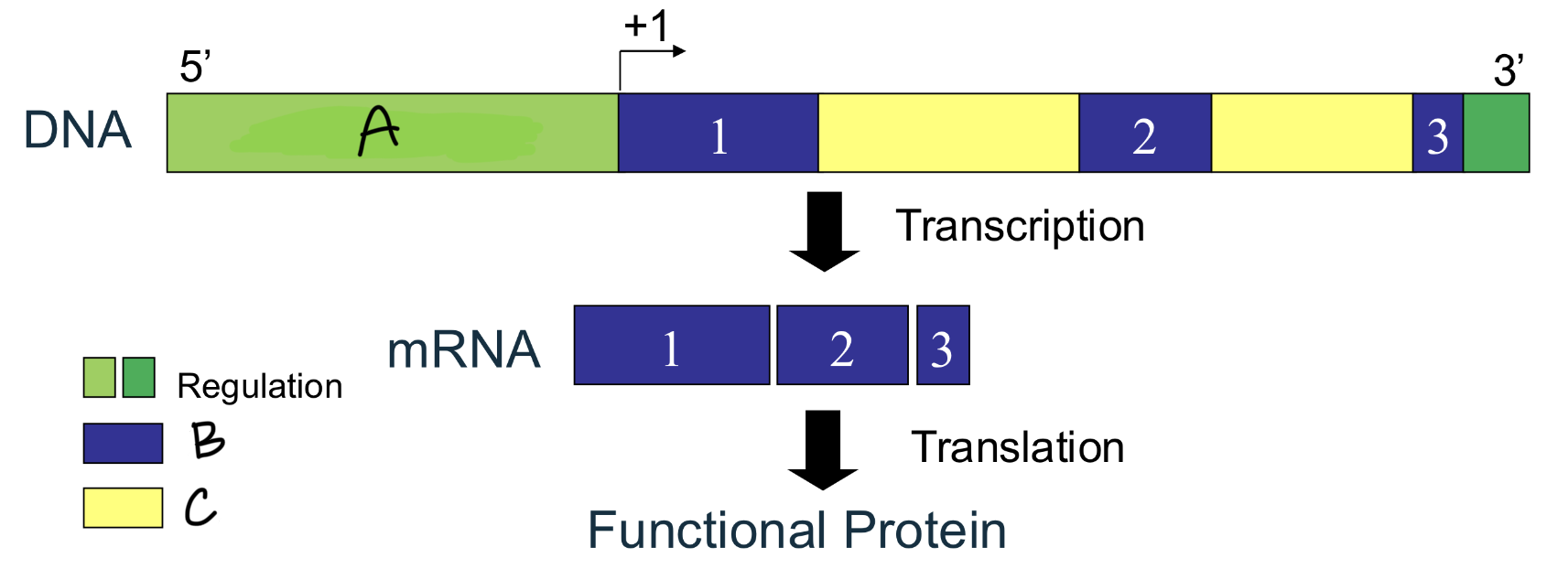
A
promoter
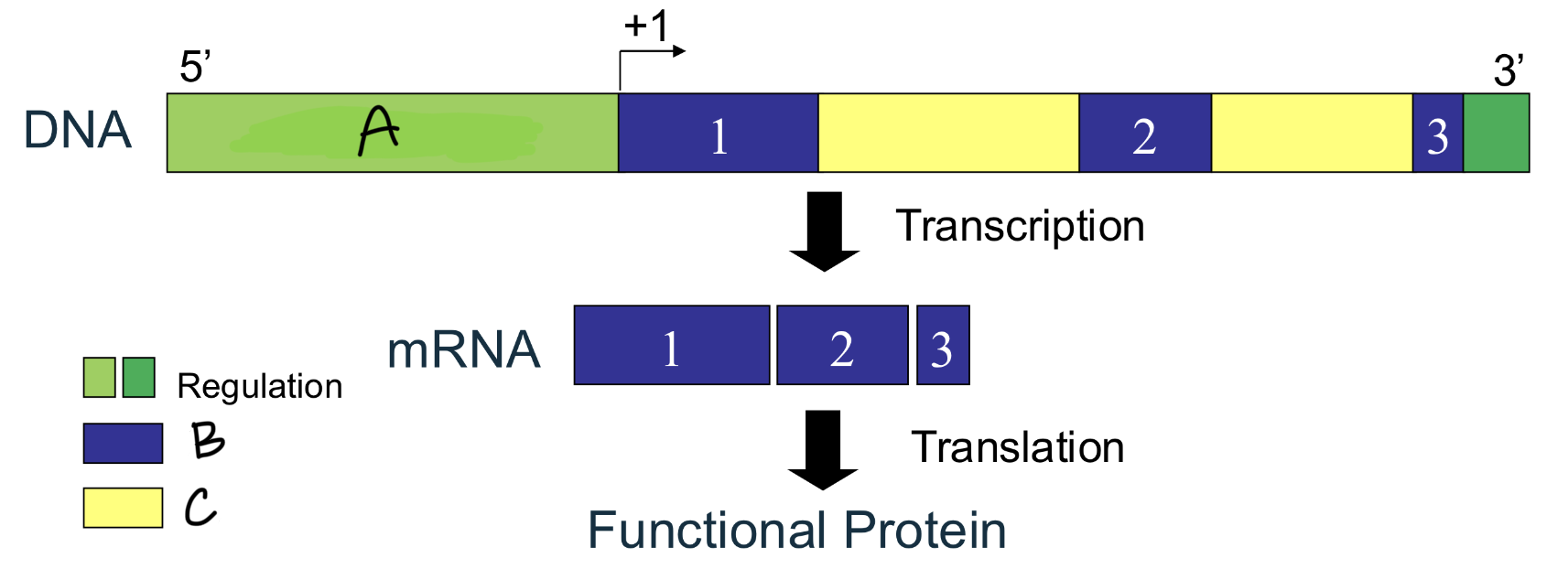
B
exon
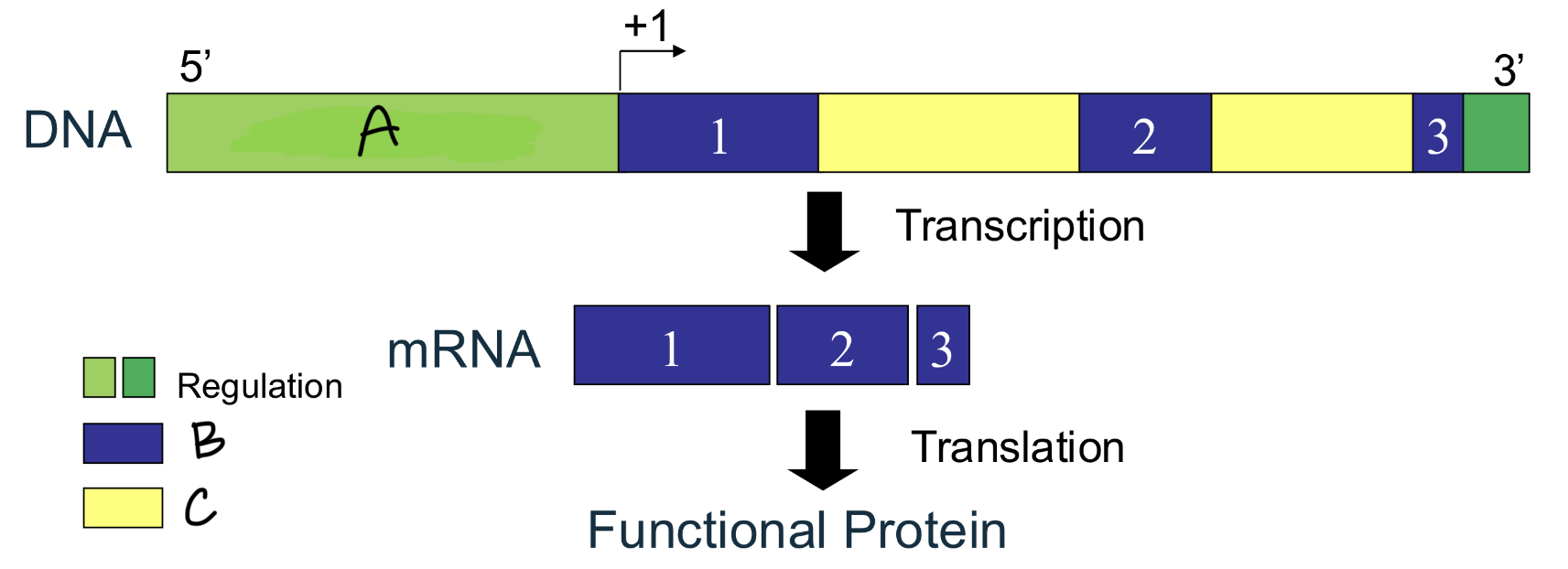
C
intron
locus
site/location on chromosome
gene
functional region at locus
alleles
different versions of a gene
how many alleles can be at a locus
2
genotype
genetic makeup of an individual
phenotype
observable trait on an organism, result of genetics, environment, and interaction btwn genes and environment
processes causing re-shuffling of genes
random migration of chromosomes, crossing over during meiosis
principle of segregation
each gamete will have one allele at any given locus
principle of independent assortment
different allele pairs segregate independently of one another
dominance
action of recessive completely masked by dominant, heterozygote has same phenotype as homozygous dominant
co-dominance
effect of both alleles observed, phenotype of heterozygote different to both homozygotes
incomplete dominance
phenotype of heterozygote is midway btwn phenotype of homozygote
epistasis
interaction of genes at different loci, when phenotype of one gene depends on or is modified by other genes
modifiers
other genes modify but don’t mask a phenotype, agouti locus controls distribution of pigment, dilution genes,
how many alleles can a population have at a locus
more than 2
allele frequency
proportion of different alleles within a population
polymorphic locus
if allele frequency is less than 0.95
factors affecting allele frequencies
population size, natural selection, migration, mutation
hardy-weinberg equilibrium
p² + 2pq + q² = 1
hardy-weinberg equilibrium assumptions
mating is random, allele frequencies are same in males and females, no natural selection, no mutation, no migration, population is large enough for no change in allele frequency btwn generations
exceptions to mendel’s rules
linked genes, mitochondrial genes, epigenetics, genes on sex chromosomes
genetic drift
when allele frequency changes over time, more effective in small populations
qualitative trait
set phenotype, measured descriptively, controlled by one gene
quantitative trait
distribution of phenotypes, measured numerically, controlled by many genes
additive variance
genetic factors that can be predictably transmitted to next generation, breeding value
non-additive variance
gene combinations unique to individual
heritability
proportion of observed variability in traits genetic in nature, capacity to pass on genes
selection differential
superiority/inferiority of selected animals compared to herd average