THEME 1 ECON BIG STACK
 Call Kai
 Learn
Learn Practice Test
 Spaced Repetition
 Match
Match Flashcards
 Knowt Play
1/168

Earn XP
Description and Tags
- All of Theme 1 for edexcel economics
Name | Mastery | Learn | Test | Matching | Spaced | Call with Kai |
|---|
No analytics yet
Send a link to your students to track their progress
169 Terms
what is a public good
A good that is Non-rival and Non-exclusive
what is the free rider problem
There is no insentive for people to produce and so it can result in a missing market
what is a Quasi public good
Could be both public/private
what are the three causes of goverment failure
conflicting objectives
inadaquate information
administeritive costs
what is goverment failure
when goverment intervention in market leads to a net welfare loss in comparison to the free market forces
what are the issues with goverment intervention that lead to the failure
It distorts the price signals
adminsterative costs
information gaps
what is information failure in terms of market failure
Demand would be higher if consumers had more information
information and knowladge are imperfect resulting in a missallocation of reacources
over consumption of demerit goods
under consumption of merit goods
what is asemetric information
when some party members of a transaction have more information of a product than others
when does a goverment use indirect taxes
When there are negitive externalitys in consumption or production
what are the benifits of Indirect taxes
Increaces cost of production → internilises externalitys → Higher P lower QD → reduces overconsumption
creates allocative efficency + revenew for goverments
what are the limitations of indirect taxes
Black markets
Regressive
Levals of tax can be inflatonary
Could be price inelastic e.g alcohol
when are subsides used
When there are positive externalitys in consumption and production
what are the benifits of subsidies
Lowers production cost → lower P higher QD → Increaces consumption + welfare gain
lower prices
what are the limitations of subsidies
High oppertunity costs
setting the leval
Price inelastic demand
what is the minimum price
The floor price set above equilibrium
what are the benifits of the minimum price
prevents exploiation
information failure
increaces consumer surplus
what are the limitations of minimum prices
black markets
excess supply
oppertunity cost
what is an example of a minimum price
Alcohol in scotland
what is an example of a maximum price
new york rent cap
what is the maximum price
price ceiling [bellow equilibrium]
what are the benifits of a maximum price
consumption of neccesitys
reduces information gaps
what are the limitations of maximum prices
excess demand
missalocation
shortages = black market
cost
what is state provision
direct provision of goods/services by goverment free at point of consumption
what are the benifits of state provision of public goods
solves free rider issue
scocialy efficent
scocial welfare gain
removes missing market and inequality
what are the limits to state provision
high opportunity cost
high excess demand
no price signal
inefficeny and information gaps
what are the benifits of trade + polllution permits
insentivises firms to reduce emmisions
reduces negitive externalitys
goverment gains revenew
what are the limitations to permits
high enforcment costs
information gaps
unintended consequences
inequality
what is an example of the failings of permits
Tata + British steel got free premits to help them compeate with chinease competion
what is an example of a permit
EU emmisions trading system
what are the benifits of providing information
reduces gaps
reduces demand for de merit goods
increaces demand for merit goods
low cost
limits to informartion provision
consumers may ignore
time lag
costs
effectiveness due to PED
what is a regulation
a rule/law enacted by a goverment that must be followed by economic agents to ecourage behavioral change
benifits of regulations
corrects market failure
reduces negitive externalitys
protects consumers
fixes information gaps
limitations of regulations
goverment failure
opertunity costs
black market
time lags
what is market failure
When the price mechanism lead leads to an inefficient allocation of resources and deadweight loss of economic welfare
What is another name for market failure?
Allocative inefficiency
What are the causes for market failure?
Externalities
Under provision of public goods
Information gaps
What is complete market failure?
There is no market whatsoever
What is partial market failure?
Occurs when a market exists, but there is a miss allocation of resources
What are externalities?
Costs and benefits to a third-party created by economic agents undertaking their activity
What are negative externalities?
Costs to a third-party that are not included in the price of the economic activity
A.k.a. External costs.
What are merit goods?
Good which are better for the consumers than they realise therefore under consumed e.g. vaccinations
What are demerits?
Good which are was for consumers and they realise therefore over consumed e.g. smoking
What are positive externalities?
Benefits to a third-party that are not included in the price of the economic activity
A.k.a. External benefits.
What are private cost?
The cost of consuming or producing goods/services that have to be paid for by an individual firm for that economic activity
What are social costs?
The total costs of consuming or producing goods paid for society
Private costs + external costs = social costs
What leads to negative externalities?
When private costs are greater than social costs, we have negative externalities.
What are positive externalities?
The difference between private benefits and social benefit benefits
What are negative externalities?
The difference between private costs and social costs
What are private benefits?
The benefits of consuming or producing goods/services that are received by an economic unit, example individual/firm
What does social benefits?
The benefits of consuming or producing goods out of received by society
Social benefits = positive benefits + external benefit benefits
what is the nature of negitive externalitys of production
Costs to the third party due to actions of producers
MSC>MPC
msc=mpc+ec
For example Fossil fuels = air polution
this is due to self intrest of producers leading to overproduction and thus consumption and a missalocation of reacorces
demand stays the same
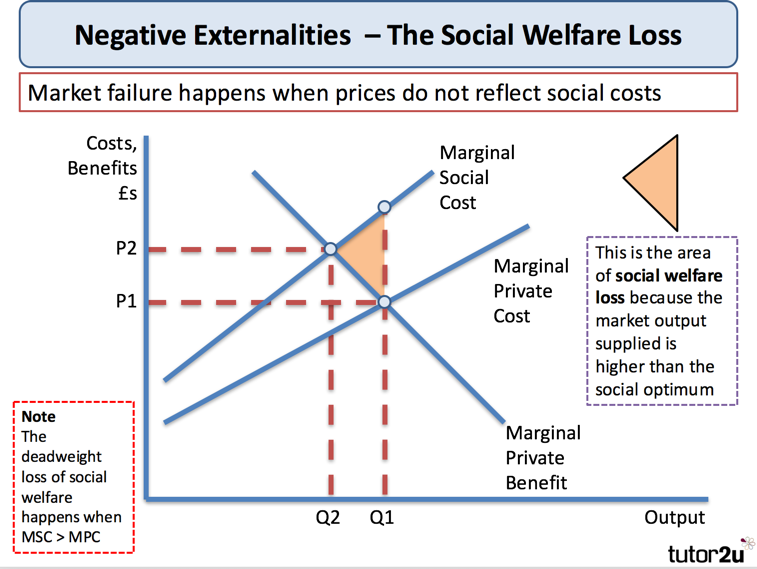
costs =
suply
benifits =
demand
where do consumers and producers opperate at on externality diagrams
private optimum
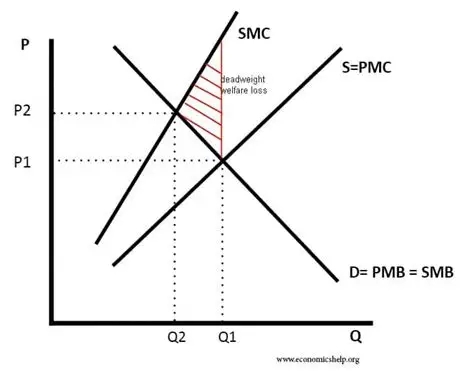
what type of externality
negitive externality on production
what is the nature of positive externalitys of consumption
benifits to third party from conumers actions
MSB > MPB
example vacinations = less spread
msb= mpb + positive eb
this leads to an underconsumption due to self intrest of consumers and a misalocation of reacorces
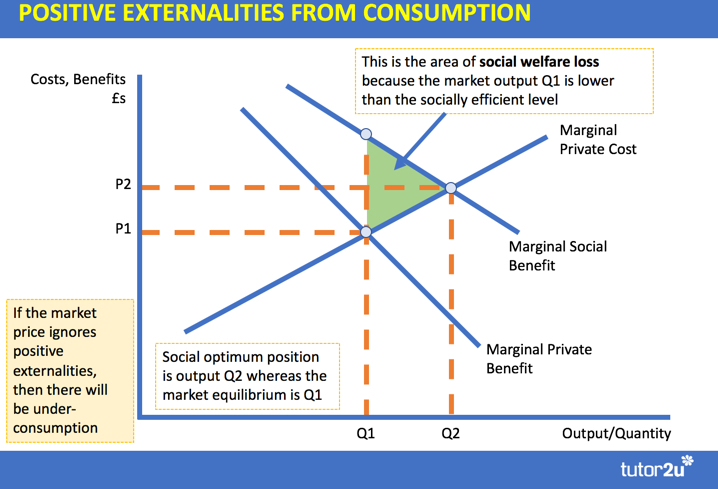
what externality is this
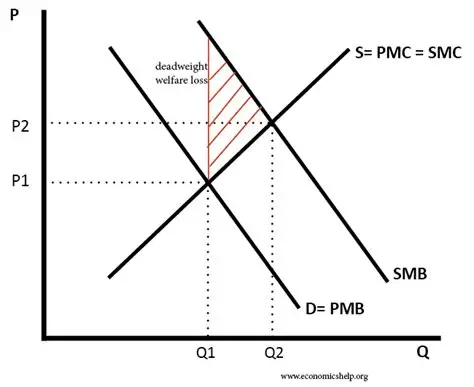
what is the nature of positive externalitys on producers
benifits to third party due to producers
example- training prodrams for employers = other firms
MSC>MPC
sc=pc+ec
leads to under production due to self intrest of the producer
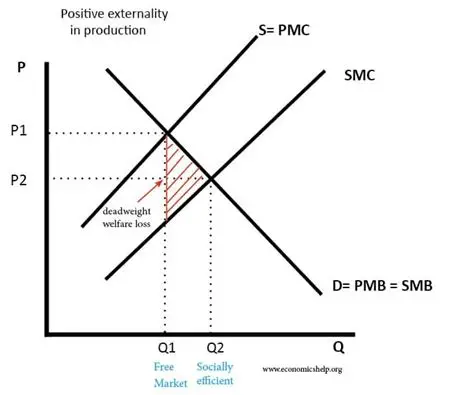
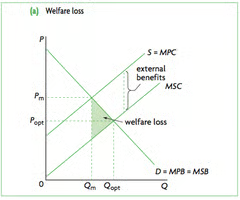
what externality is this?
positive externality of production
negitive externalitys of condumprion
costs to 3rd party due to consmption of other
eg. Smoking = efect on NHS and 2nd hand smoke
MSB<MPB
SB=PB +negitive EB
leads to overconsumption due to consumers self interest and misallocation of reacorces
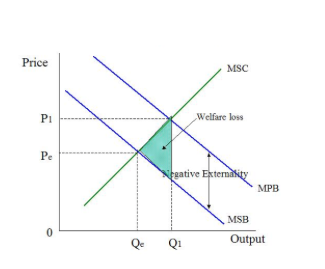
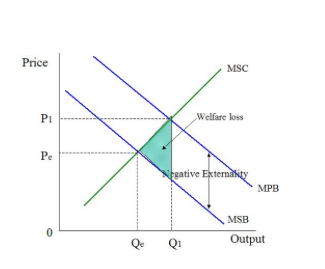
what externality is this?
negitive externalitys on consumers
Ceteris paribus
other variables remain constant/the same
economic goods
resources that are scarce e.g oil
Economic problem
the concept of infinate wants but finate resourced. there is not enough of some recorces causing economic agents to make a decision reluting in trade offs and oppertunity cost
free goods
resources that are not scarce e.g water
how to work out percentage change
new - old / old x 100
Human capital
value of a workforce
identify 8 factors effecting demand
- marketing
- seasonal
- average income
- simmilar products pricing
- population structure
- compleamenting products
- price of good
- trends
Model
a simplified representation of reality used to provide insight into economic descisions and events
non-renewable resource
cant be replaced in a life time e.g gold
normative statement
a statement that involves a value judgement on what ought to be
Oppertunity cost
Next best alternative forgone
physical assets
machinary / non-human tools
positive statement
a statements about what is
renewable scource
replaceable within our life time e.g wood
scarcity
unlimited demand for the finate resorces of the world
value judgement
a statement based on your opinion or beliefs rather than facts
what are the four factors of production
Land, labour, Capital and Enterprise
What are the Four functions of money
- money should have a store of value
- deffered payment should allow depts
-medium of exchange
- mesure of value
what are the three assumptions
Governments wish to maximise welfare, individuals wish to maximise utility and producers wish to maximise profit.
what do we mesure utility with
utils
what factors effect PED
- close substitutes
- cost of substituting for other products
- brand loyalty
- degree of neccesity
What is DEMAND ?
the quantity that consumers are willing and able to buy at a given price at a given time
who belives in more mixed economy
Maynard kenes
who belived in free market
adam smith (invisible hand) and Frederic Hayek
who belived in command market
Karl Marx
what is utility
a mesure of satisfaction
what is total utility
total satisfaction
what is the law of dimminishing marginal utility?
If we consume more and more units of a particular commodity the utility derived from consumption of addditional unit dimisnishes
what is the law of demand ?
demand varies inversly with price
what is Product possibility frontier
can be used to show diffrent combinations of output for two products
Specilisation
the production of a limited range of goods by a company or individual
Division of labour
Specilisation by workers who perform different tasks at different stages of production
bennifits of specilisation
- better pay
- more oppertunitys
- greater economic efficeny
what are the limmitations to specilisation
- overdependancy
- lack or transverable skills
- boring
what is a capital good
physical assets or resources that are used in the production of goods and services
what are consumer goods
products which satisfy our needs and wants directly
what causeses changes in the maximum ppf
migration
natural hazzards
ageing population
labour force
war + ilness
what is the oppertunity cost for customers
how to spend limited time/income