Asian Art - Chapter 12
 Studied by 0 people
 Call Kai
 Learn
Learn Practice Test
 Spaced Repetition
 Match
Match Flashcards
 Knowt Play
1/22

There's no tags or description
Looks like no tags are added yet.
Name | Mastery | Learn | Test | Matching | Spaced |
|---|
No study sessions yet.
23 Terms
Shinto
Japanese Indigenous belief system rooted in shamanism. “Way of the Gods.” Evolved out of needs of agrarian culture, does not require scriptures, dogmas, devotional images, famous teaching or elaborate structures.
Kami
Shinto spirits or deities
Jomon
Japanese prehistoric period from 14,000-300 BCE, name means “cord-marking” because of era’s ceramic vessels that feature distinctive cord patterns
Magatama
curved jewel made from stone, often jade, important part of regalia, high status object found in other asian cultures, esp. Korea.
Haniwa
pottery forms including, cylinders, buildings and human figures that were placed on top of Japanese burial mounds during Kofun period.
mudra
symbolic hand gesture in Buddhist art that denotes certain behaviors, actions, feelings
sutra
sacred Buddhist scripture
terra-cotta
unglazed pottery
Finials
architectural ornament at the top of a roof
Mortise-and-tenon
method of joining elements where a projecting pin (tenon) on one element locks into a hole (mortise) on other element
hipped-and-gabled
roof that is gabled at the top with hipping extending down on all sides
Kannon
Bodhisattva of Compassion
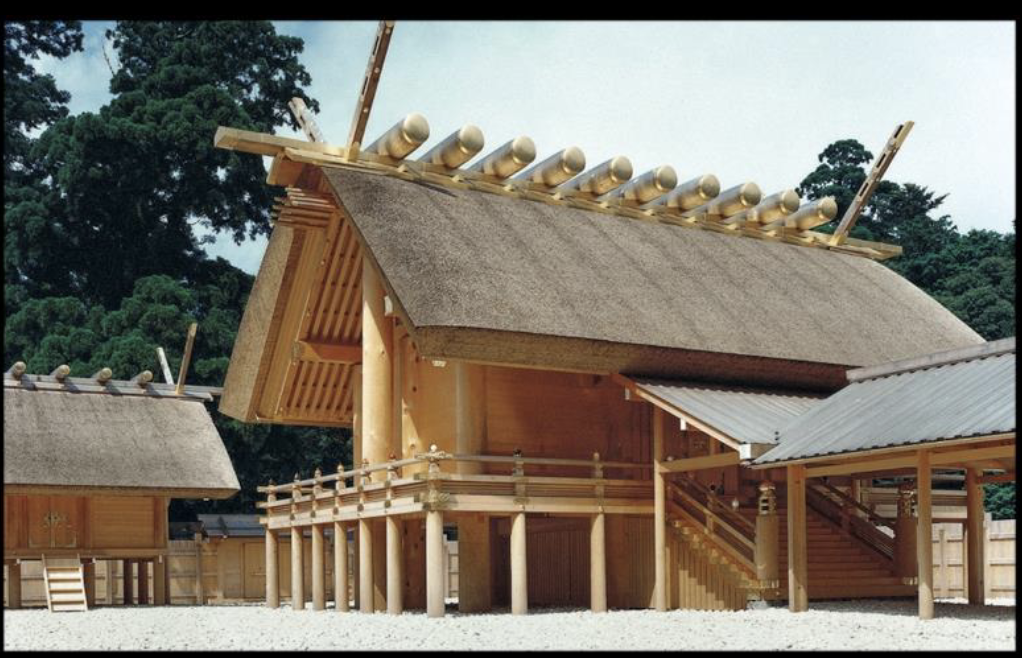
Main Hall, Inner Shrine, Ise-Jingu
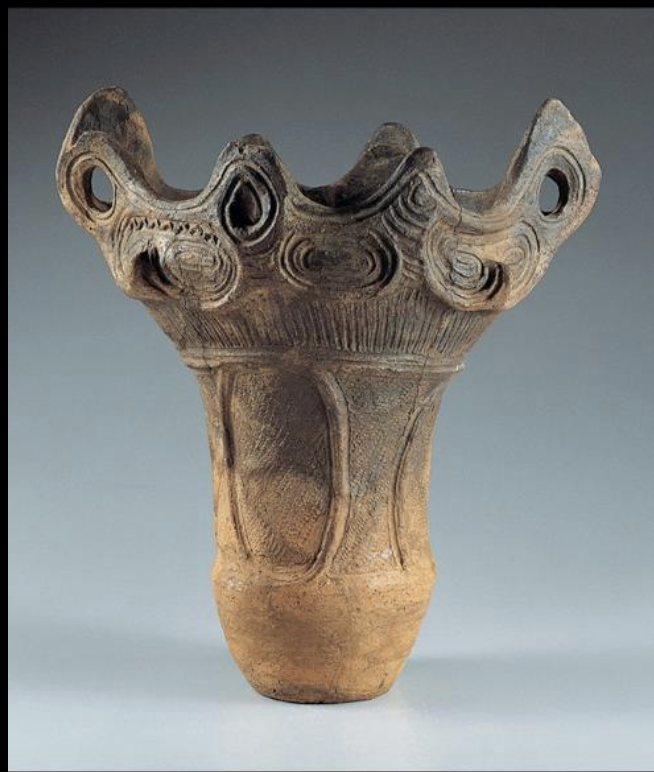
Vessel, Middle Jomon Period, 2500-1500 BCE, low-fired clay
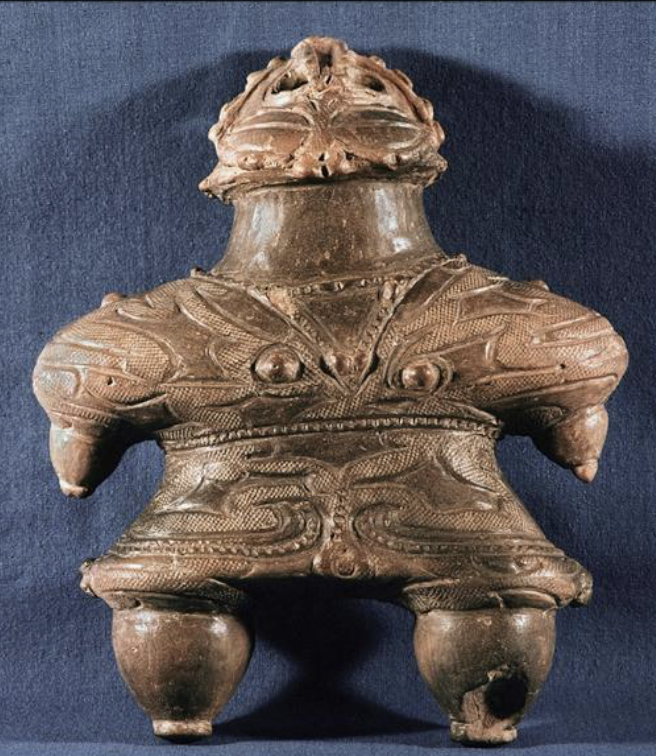
Figurine, Late Jomon Period, 1500-1000 BCE, low-fired clay

Nonakado Stone Circle, Late Jomon Period, 1500-1000 BCE

Dotaku, Late Yayoi Period, 2nd-3rd century CE, bronze

Tomb of Emperor Nintoku, Kofun Period, 4th-5th century CE
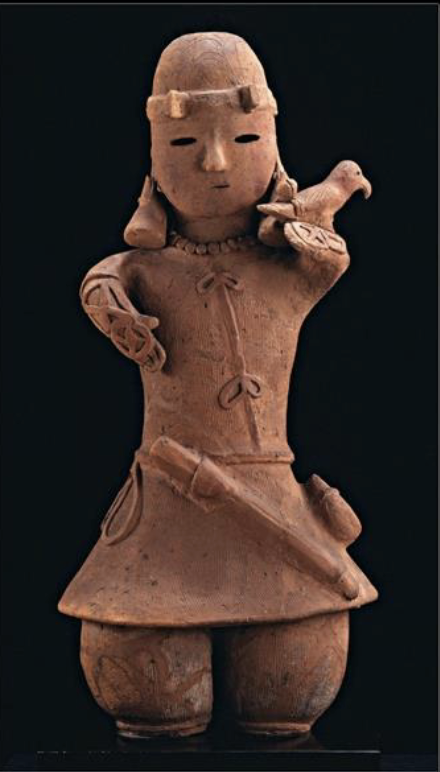
Haniwa Figure of Falconer, Kofun Period, 6th century CE, terra-cotta
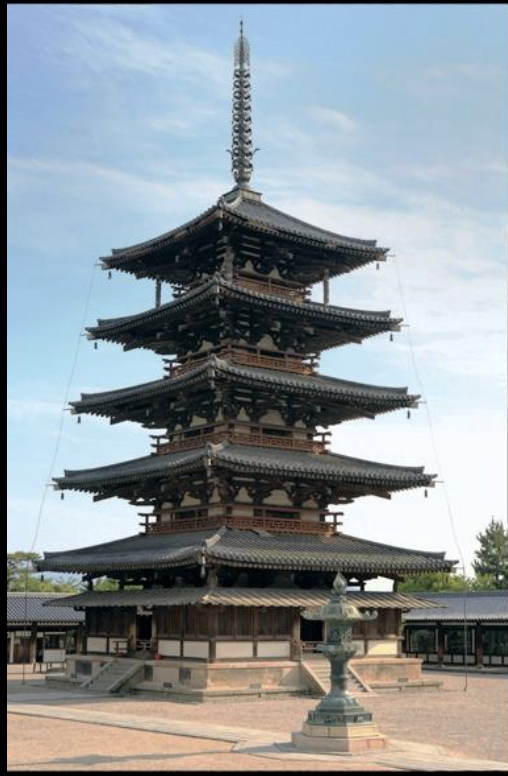
Five-story Pagoda, Horyu-Ji, Asuka Period, 7th century
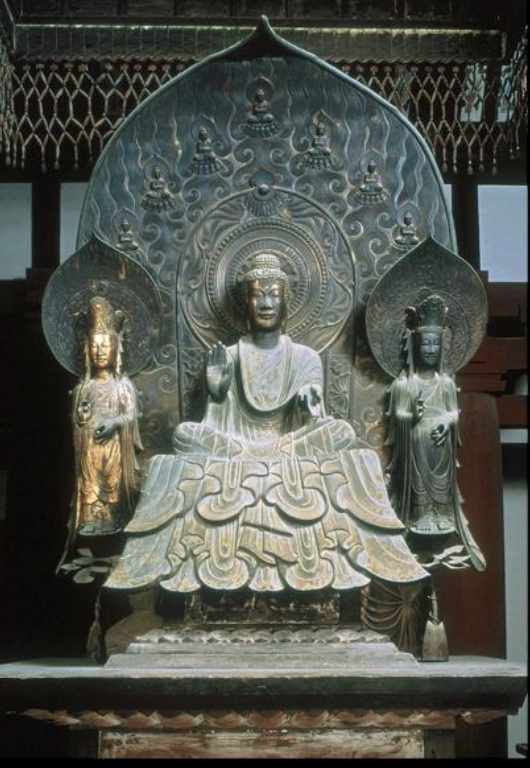
Tori Busshi, Shaka Triad, Asuka Period, 623 CE. Location — Kondo
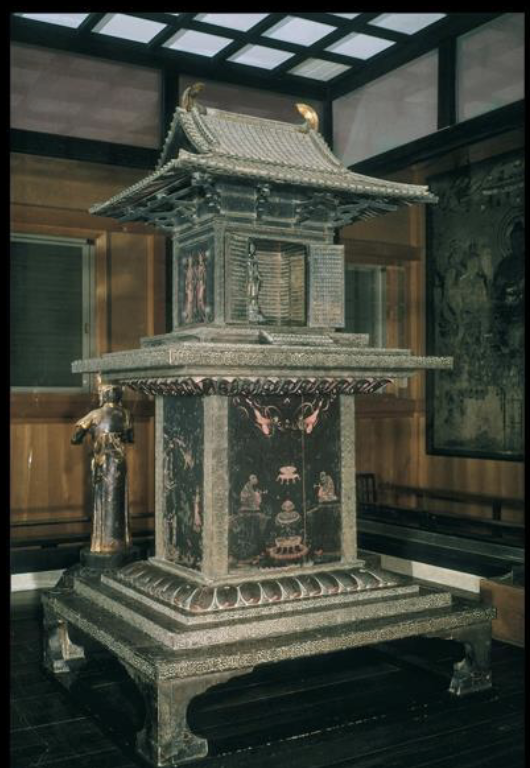
Tamamushi Shrine, Asuka Period, 650 CE, cypress and camphor wood with lacquer