kms practical safety
 Studied by 0 people
 Call Kai
 Learn
Learn Practice Test
 Spaced Repetition
 Match
Match Flashcards
 Knowt Play
1/34

There's no tags or description
Looks like no tags are added yet.
Name | Mastery | Learn | Test | Matching | Spaced |
|---|
No study sessions yet.
35 Terms
What toxic class is acetone in?
a. Mutagen
b. Asphyxiant
c. Teratogen
d. Neurotoxin
d. Neurotoxin
Acetone is not ? [it’s a neurotoxin]
Meaning: if options: “carcinogen,” “teratogen,” etc., acetone should not be picked as those; it’s treated as neurotoxic for your class.
What is true about gloves?
a. Gloves must be removed when they come in contact with any hazardous chemical
b. Latex gloves are the best choice for most people working labs
c. Only non-disposable gloves protect against most chemicals
d. Most gloves protect against most chemicals
e. No glove material protects against all chemicals
e. No glove material protects against all chemicals
a. Gloves must be removed when they come in contact with any hazardous chemical
Which Statement About Gloves is True
A) Take gloves off after getting chemicals on them
B) Nitrile gloves don’t block most chemicals
C) Disposable gloves are best
D) Two of these correct
E) All of these
D) Two of these are correct
(The two truths are: “Disposable gloves are best” + “No glove protects against all chemicals.”)
Toxin?
harm chem, damage living thing
LD50?
dose (amt per kg of body weight) kills 50% of test animals when given as an injection
LD₅₀ is the dose of a chemical that kills 50% of a test population.
LC50
air or water concentration of a chemical that kills 50% of test animals
Acute toxicity
harm quick short-term / single exposure (hrs/days). EX: one big exposure making you very sick quick.
Chronic toxicity
harm effect after long/repeated exposure (months,yrs) EX: slowly causing cancer
50 mice injected, 25 die → what is this?
LD50 bc dose
Which chemical is metabolized and removed by the liver?
a. DDT
b. Ethylene glycol
c. Ibuprofen safe drug
d. Heptane
c. Ibuprofen safe drug → liver handles it
What are known types of carcinogens? (cancer-causing)
a. Benzene
b. Dichloromethane
c. Ethanol
d. Acetone
e. Cyanide
a. Benzene - classic cancer chemical
b. Dichloromethane - methylene chloride
Who Provides Hazard Info?
Manufacturer/supplier
SDS, labels, lab manual
Which of the following are true statements about fume hoods? Select all that apply.
I. A fume hood has it's own power, it's okay to continue work if the power fails.
II. The window on the front of the fume hood is called a sash.
- air is recycled
III. All work should be done at least 6 inches inside the hood.
IV. A tissue paper held at the bottom of a sash should blow into the hood.
V. Room air should be drawn into the fume hood.
VI. Exhaust air from fume hoods is recycled back through the lab.
II. The window on the front of the fume hood is called a sash.
- air is recycled
III. All work should be done at least 6 inches inside the hood.
IV. A tissue paper held at the bottom of a sash should blow into the hood.
V. Room air should be drawn into the fume hood.
Is It Hazardous Left Open on the Bench? Ethyl acetate is left open on the bench, given it’s not knocked over, is it hazardous?
Ethyl acetate is volatile + flammable + inhalation hazard: Can release vapors, Those vapors can be inhaled, Also increases fire risk
Yes, it’s still hazardous because of vapors & flammability.
Which of these chemicals will you smell AFTER it becomes hazardous (select all that apply)
a.[Dichloromethane: 25ppm (PEL), 130 ppm (Odor Threshold)
b. Hexane: 50ppm (PEL), 130ppm (Odor Threshold)
c. Methanol 200ppm (pEL), 5900ppm (odor threshold)]
d. Ethyl Acetate: 400ppm (PEL), 50ppm (odor threshold)
a.[Dichloromethane: 25ppm (PEL), 130 ppm (Odor Threshold)
b. Hexane: 50ppm (PEL), 130ppm (Odor Threshold)
c. Methanol 200ppm (pEL), 5900ppm (odor threshold)]
If PEL < odor threshold → you smell it AFTER it’s already dangerous.
Those are the ones you smell after it’s already hazardous.
Which of the following would NOT determine severity of a hazard?
a. Chemical amount sued - more = more dangerous
b. GHS symbols - directly show hazard type
c. NFPA fire ratings - show flammability/reactivity/health hazard
d. PELs - allowed exposure limit
e. Polarity of chemical
e. Polarity of chemical - does NOT determine severity of hazard. About solubility
mass, how many decimals?
• Mass: 4 decimal places
EX: 1.0235 g
temp, how many decimals
• Temperature (MP + FP): 1 decimal place
EX: 45.0 °C
TLC distances, how many decimals
• TLC distances (xa, xf): 2 decimal places
EX: 2.30 cm
TLC Rf, how many decimals
• TLC Rf: 3 decimal places
EX: Rf = 0.657
Molar mass, how many decimals
2 decimal places
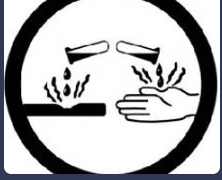
corrosive, skin, burns, eye damage
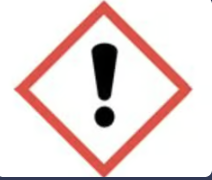
irritant skin and eye, Acute Toxicity (harmful)
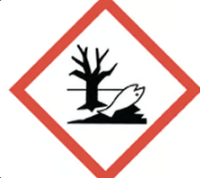
enviromentally damaging
aquatic toxic
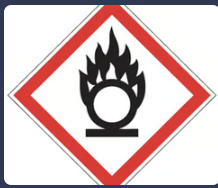
oxidizers
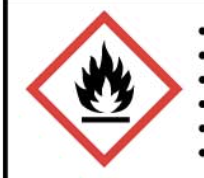
flame
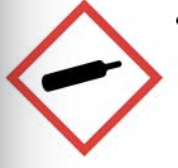
gas under pressure
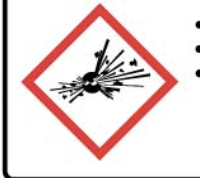
explosive, exploding bomb
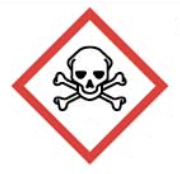
skull and crossbones
acute toxicity
Blue Diamond
Health Hazard Info
0 = safe
1 = minor irritation
2 = harmful
3 = serious injury
4 = deadly
Red Diamond
Fire Hazard Info
0 = won’t burn
1 = must heat to burn
2 = needs moderate heat
3 = ignites easily
4 = ignites instantly
Yellow Diamond
Reactivity Hazard Info
0 = stable
1 = unstable if heated
2 = violent reaction possible
3 = may explode
4 = explodes at room temp
White Diamond
Special Notices Info
w-
• OX = oxidiz
• COR = corro
• W (cross) = reacts w water
• ACID = acid
• ALK = base