Chapter 13: Life Cycle Nutrition: Mother and Infant
 Call Kai
 Learn
Learn Practice Test
 Spaced Repetition
 Match
Match Flashcards
 Knowt Play
1/97

There's no tags or description
Looks like no tags are added yet.
Name | Mastery | Learn | Test | Matching | Spaced | Call with Kai |
|---|
No analytics yet
Send a link to your students to track their progress
98 Terms
The embryo and fetus require
good nutrition
Embryo
•The stage of human gestation from the third to the eighth week after conception
Fetus:
The stage of human gestation from eight weeks after conception until the birth of an infant
A woman who begins her pregnancy underweight and who fails to gain sufficiently during pregnancy is very likely to
bear a baby with a dangerously low birthweight
Low birthweight can potentially impact
impact the infant’s future health
A high-birthweight infant can necessitate
cesarean section ( C-section)
Maternal obesity increases a child’s risk for
•obesity, heart disease, and type 2 diabetes
Low birth-weight
weighs less than 5.5 pounds at birth
Effects of low birthweight
poor nutritional health, low adult IQ, brain impairment and short stature
High birth-weight weigh
more than 9 pounds
Effects of High-birth weight
increase likelihood of heart defects; obesity, heart disease, type 2 diabetes, and asthma
The Placenta is a
supplies depot and waste-removal system for the fetus.
In the placenta, blood containing waste and blood containing nutrients never
mix
The umbilical cord is used as a
conduit
The placenta is composed of
spongy tissue in which fetal blood and maternal blood flow side by side each in it own vessels.
In the placenta, the maternal blood transfers _ to the fetus’ blood and picks up ( )
oxygen/nutrients
fetal wastes to be excreted by the mother
The placenta performs the __ functions that the fetus will do after the birth
nutritives, respiratory, and excretory
The umbilical cord delivers ( ) and takes out ( )
nutrients/O2 to the fetus and takes out waste
amniotic sac
surrounds fetus and serves as a cushionly fluid
Stages of Embryonic and Fetal Development
1) A newly fertilized ovum, called a zygote, is about the size of the period at the end of this sentence. Less than 1 week after fertilization, the zygote has rapidly divided many times and has become ready for implantation
2) After implantation, the placenta develops and begins to provide nourishment to the developing embryo. An embryo 5 weeks after fertilization is about 1⁄2 inch long
3) A fetus develops after 11 weeks of development and is just over an inch long. Notice the umbilical cord and blood vessels connecting the fetus with the placenta
4) A newborn infant after 9 months of development measures close to 20 inches in length. The average birthweight is about 71⁄2 pounds. From 8 weeks to term, the infant has grown 20-fold in length and 50-fold in weight.
zygote —> embryo —> fetus —> infant
A zygote begins as a
a newly fertilized ovum; a single cell that rapidly divides after fertilization;
ovum
egg
a fetus has a
has a complete central nervous system, a beating heart, digestive system, fingers and toes and facial feature
•Implantation
•Occurs within two weeks of fertilization
The fetus develops significantly by the
eighth week of conception
Fetal period
Months 2 to 9 of pregnancy
Gestation duration
•40 weeks
•Split into trimesters
Gestation contains
•Contains critical periods
•Periods of time specific to the development of specific organs
•High-risk pregnancy
•Risk factors that increase the chances of premature delivery, difficult birth, retarded growth, birth defects, and early infant death
•Prenatal medical care required
If development of organ is limited
recover is impossible and usually occurs because of malnutrition
High risk pregnancy factors
•Prepregnancy B M I either less than 18.5 or less than/equal to 25
•Insufficient or excessive pregnancy weight gain
•Nutrient deficiencies or toxicities; eating disorders
•Poverty, lack of family support, low level of education, limited food availability
•Smoking, alcohol, or other drug use
•Age, especially 15 years or younger or 35 years or older
•Twins or triplets
•Many previous pregnancies (3 or more in mothers younger than age 20; 4 or more in mothers age 20 or older)
•Short or long intervals between pregnancies (less than 18 months or more than 59 months)
•Previous history of problems such as low- or high-birthweight infants
•Pregnancy-related hypertension or gestational diabetes
•Diabetes; heart, respiratory, or kidney disease; genetic disorders; special diets and medications
•Energy
Needs vary with
the progression of pregnancy
____ are used by the fetal brain as fuel
carbohydrates
Is Consumption of supplements discouraged?
Yes
T/F: In the first trimester, women don’t need to increase energy intake
True
T/F: Energy needs increase w/ the progression in pregnancy
T
There a __ calorie energy need increase in the second trimester
340
There is a __ calories energy need increase for the 3rd trimester
450
•Folate helps prevent
•neural tube defects (N T Ds)
The neural tube, comprises the embryonic tissue that later forms the
later forms the spinal cord
Common types of N T Ds are
anencephaly and spina bifida
Risk Factors for Neural Tube Defects
⁃Personal or family history of a pregnancy affected by a neural tube defect
⁃Maternal diabetes
⁃Maternal use of certain antiseizure medications
⁃Mutations in folate-related enzymes
⁃Maternal obesity
•Vitamin B12
•Assists folate in the manufacture of new cells
•Found in meat, eggs, milk, and milk products
anencephaly
upper end of neural tube fails to close: results in death
Spina Bifida
incomplete closure of spinal in bony incasement
•Choline is used for
•Structural integrity of cell membranes
•Synthesis of an important neurotransmitter
•Metabolism of lipids
Vitamin D and calcium is used for
•Necessary for fetal bone growth and tooth development
•Calcium absorption doubles during pregnancy
Vitamin D plays a vital role in calcium absorption
•Iron is used for
•Helps increase blood volume
•Fetal absorption increases in second and third trimesters
All women are advised to consume
•Foods containing heme iron
•Additional sources of iron
•Foods that enhance iron absorption
Use for •Zinc
•Vital for protein synthesis and cell development
•Abundant in protein-rich foods
•Benefits of proper weight gain
•Low risk of surgical birth
•Increased chances of delivering a healthy birthweight infant
T/F: •Weight loss during pregnancy is not recommended
•Sudden and significant weight gain is dangerous
T
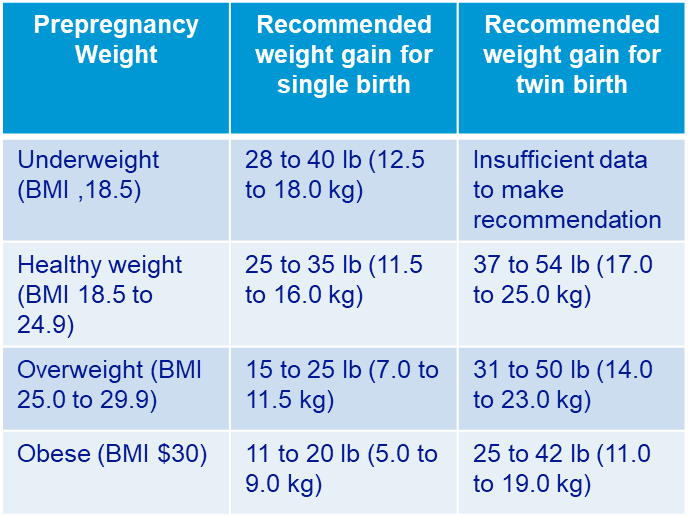
Recommended Weight Gains Based on Prepregnancy Weight
•Benefits of physical activity
•Improves fitness
•Facilitates labor
•Helps prevent or manage gestational diabetes
•Reduces psychological stress
•Choose low-impact activities
•Seek medical advice
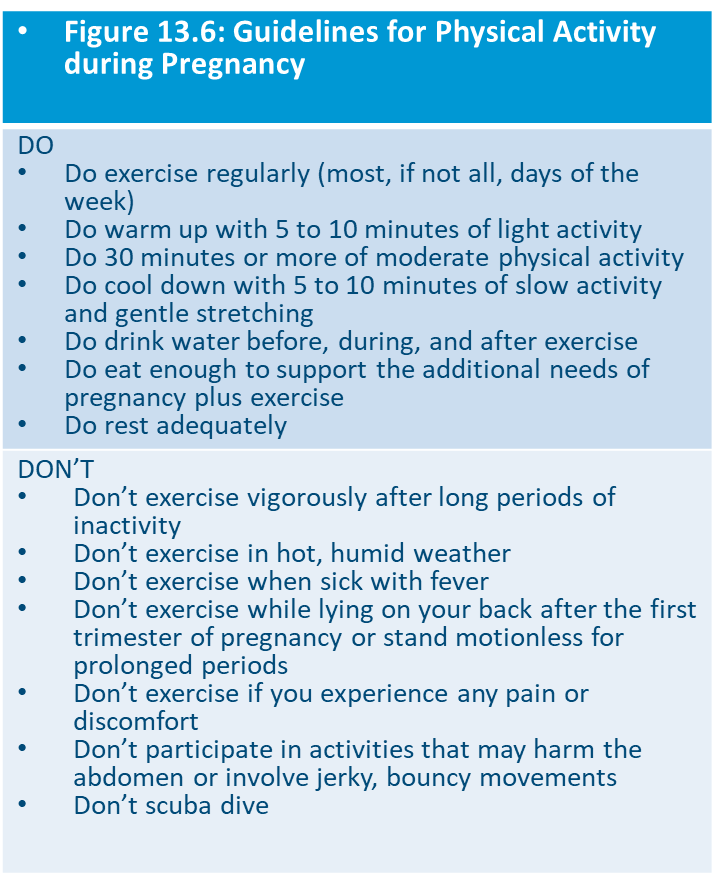
Guidelines for physical activity during pregnancy
•Cravings
•Do not reflect physiological needs
•Caused by hormone-induced changes in taste and sensitivities to smells
•Aversions are caused by normal hormonal changes and can result in:
•Morning sickness
•Heartburn or indigestion
•Change in muscle tone
•Crowding of intestinal organs by growing fetus
Cautions for Pregnant Women
•Do not smoke cigarettes
•Can kill an otherwise heathy fetus or newborn
•Reduces blood supply to the fetus
•Increases the risk of:
•Complications during delivery
•Sudden infant death syndrome (S I D S)
•Nonsmoking pregnant women
•Exposure to environmental tobacco smoke increases the risk of low birthweight and S I D S
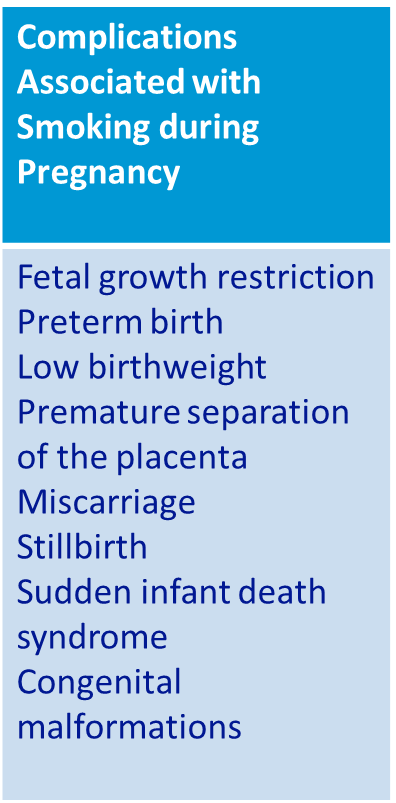
Complications Associated with Smoking during Pregnancy
Medicinal drugs and herbal supplements taken during pregnancy can cause
birth defects
Drugs of abuse easily cross the placenta and impair
•fetal growth and development
Environmental contaminants such as lead may lead to
low-birthweight infants with delayed mental and psychomotor development
Exposure to mercury
Harm caused to the developing fetal brain and nervous system
Foodborne illnesses can leave a pregnant woman
exhausted and dangerously dehydrated
•Pregnant women are more likely than others to contract
listeriosis: •A serious foodborne illness
•Can cause miscarriage, stillbirth, or severe brain or other infections in fetuses and newborns
•Can be avoided by following safe practices
Vitamin A in excess may cause
malformations of the cranial nervous system in the fetus
•Caffeine in __ amounts is allowed
small amounts: •Two cups of coffee are recommended per day
•Alcohol crosses the placenta freely and is directly toxic because
•Can halt the delivery of oxygen through the umbilical cord
•A few minutes of alcohol exposure during fetal brain growth can exert a major detrimental effect
•Interferes with placental transport of nutrients to the fetus and can cause malnutrition in the mother
•Before fertilization, damage can be caused to the ovum or sperm in the mother- or father-to-be, leading to abnormalities in the child
Conditions that affect the fetus if it ingests alcohol
•Fetal alcohol spectrum disorders (F A S D): A spectrum of physical, behavioral, and cognitive disabilities
•A more severe form is fetal alcohol syndrome (F A S): The cluster of symptoms including brain damage, growth restriction, mental retardation, and facial abnormalities seen in an infant or child
•Alcohol-related neurodevelopmental disorder (A R N D): Behavioral, cognitive, or central nervous system abnormalities
•Alcohol-related birth defects (A R B D): Malformations in the skeletal and organ systems such as the heart, kidneys, eyes, ears
•How much alcohol is too much?
•Abstinence is the only acceptable course of action for pregnant women
Pregnant women with unmanaged type 1 or type 2 diabetes may experience
•Severe hypoglycemia or hyperglycemia
•Preterm labor
•Pregnancy-related hypertension
•Infants of women with diabetes may:
•Be large
•Suffer physical and mental abnormalities
•Suffer other complications such as respiratory distress
Gestational diabetes definition and effects
•Abnormal glucose tolerance appearing during pregnancy
•Diabetes risk later in life
•Increased odds of surgical birth, high infant birthweight, and high risk of illness and mortality
Chronic hypertension
•In pregnant women: hypertension that is present and documented before pregnancy
in women whose prepregnancy blood pressure is unknown: the presence of sustained hypertension before 20 weeks of gestation
Gestational hypertension
•High blood pressure that develops in the second half of pregnancy and usually resolves after childbirth
Hypertension increases the risk of
•preeclampsia
Preeclampsia
usually occurs in the first pregnancy and appears after 20 weeks of gestation
Involves high blood pressure and protein in the urine
May lead to eclampisa
A nursing mother produces about
25 ounces of milk a day,
•Energy cost of lactation
•500 calories per day above a woman’s need
•Fluid needs:
Prevent dehydration by ensuring extra fluid intake
Nutritional deprivation of the mother reduces
•the quantity of milk
•Not the quality of milk
•Some substances impair maternal milk production or enter breast milk and interfere with infant development
•Alcohol and illicit drugs
•Alcohol concentration peaks within one hour
•Illicit drug users should not breastfeed
•Tobacco and caffeine
•Production of milk and its fat content are less
•Chemicals in cigarettes are transferred to the infant
•Excess caffeine can make the infant jittery and wakeful
•Medications
•A physician must be consulted as danger levels vary
•Oral contraceptives may suppress milk output
Should the mother breastfeed with an illness?
•Common cold: The mother can continue nursing
•Tuberculosis: The mother can continue nursing once she is treated and is no longer infectious
•H I V: If safe alternatives are available, the mother is advised not to breastfeed
The World Health Organization (W H O) recommends
exclusive breastfeeding for the first six months in the absence of suitable alternatives
An infant’s growth is directly affected by
the infant’s nutrition status
Growth is faster during
•the first year in terms of height and weight:
during this time they have a higher •High basal metabolic rate
During the first year for the baby
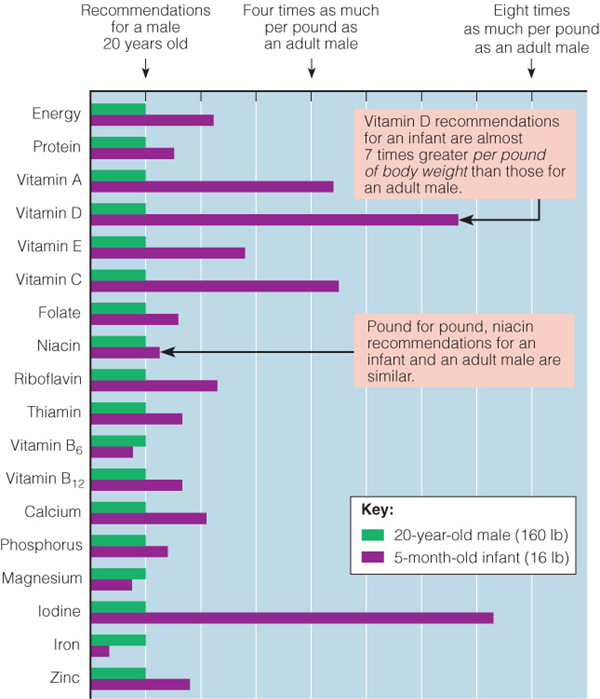
•Energy nutrients, vitamins A and D, calcium, and water are of special importance
Breastfeeding reccomendations
•An infant’s consumption of human milk with no supplementation of any type for 6 months and breastfeeding with complementary foods for at least 12 months
Breast milk •excels as a
source of nutrients:
•Contains abundant oligosaccharides, alpha-lactalbumin, and lactoferrin
•Alpha-lactalbumin: The chief protein in human breast milk
Lactoferrin: A factor in breast milk that binds iron and keeps it from supporting the growth of the infant’s intestinal bacteria
•Vitamins and minerals in breast milk
•Vitamin D concentration is low, requiring mothers to take supplements
Colostrum:
•A milklike secretion from the breasts during the first day or so after delivery before milk appears; rich in protective factors
•It protects against common illnesses of infancy
formula feeding is
•Is an acceptable alternative to breastfeeding
Special formulas have been designed to meet the dietary needs of infants based on
•Hydrolyzed protein: Commercial protein ingredient made by way of hydrolysis, a type of chemical reaction that splits molecules, in this case long protein chains, into smaller fragments
Cow’s milk
•Not appropriate for children who are less than a year old
•Those younger than 6 months of age can suffer intestinal bleeding, which can lead to or aggravate iron deficiency
cow’s milk provides
protein and less carbohydrate than the ideal amounts for infants.
Infant foods should provide
variety, balance, and moderation
•Foods to omit:
•Food with salt and sugar
•Baby food “desserts”
•Sugar alcohols
•Salted canned foods
•Honey and corn syrup
•Unpasteurized milk, milk products, or juices
•Raw or undercooked eggs, meat, poultry, or fish
•Raw sprouts
Milk anemia
: Iron-deficiency anemia caused by drinking so much milk that iron-rich foods are displaced from the diet