Muscular/Neuromuscular Systems, Training Principles, & Warm-Up
 Call Kai
 Learn
Learn Practice Test
 Spaced Repetition
 Match
Match Flashcards
 Knowt Play
1/55

There's no tags or description
Looks like no tags are added yet.
Name | Mastery | Learn | Test | Matching | Spaced | Call with Kai |
|---|
No analytics yet
Send a link to your students to track their progress
56 Terms
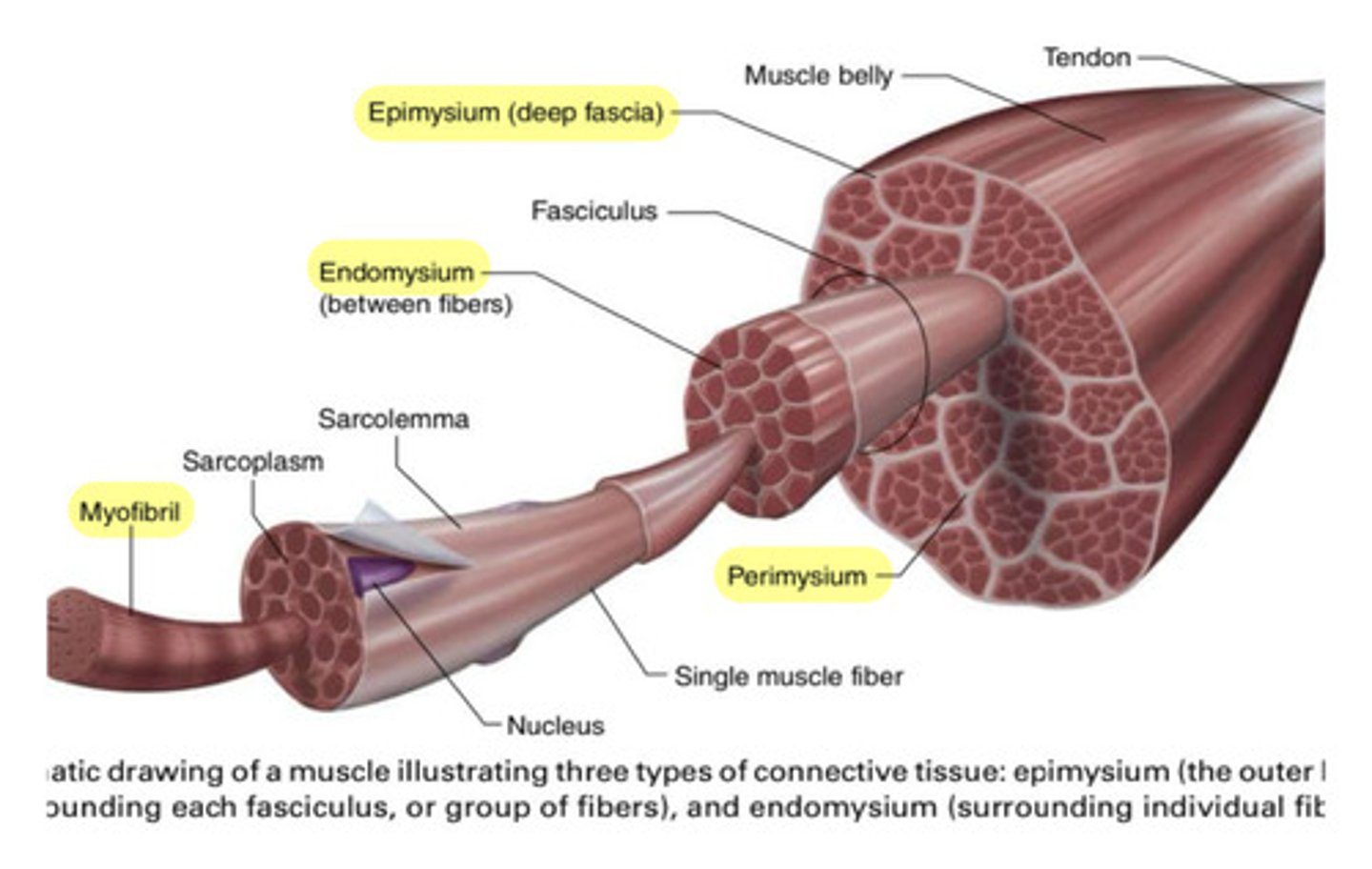
What are the 3 layers of connective tissue?
epimysium: runs along the perimeter of the muscle perimysium: runs between the individual muscle fascicle endomysium: runs between the individual muscle fibers
muscle> muscle fascicle> muscle fibers
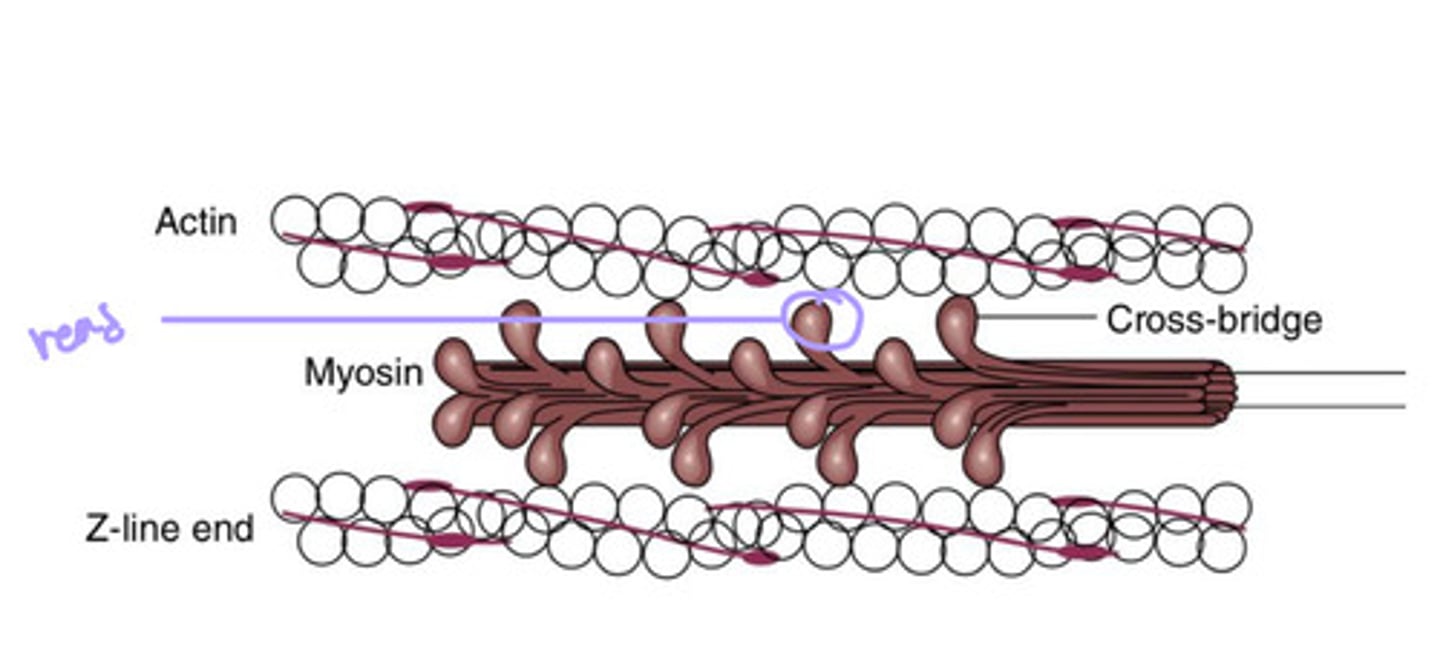
What are the 2 types of myofilaments?
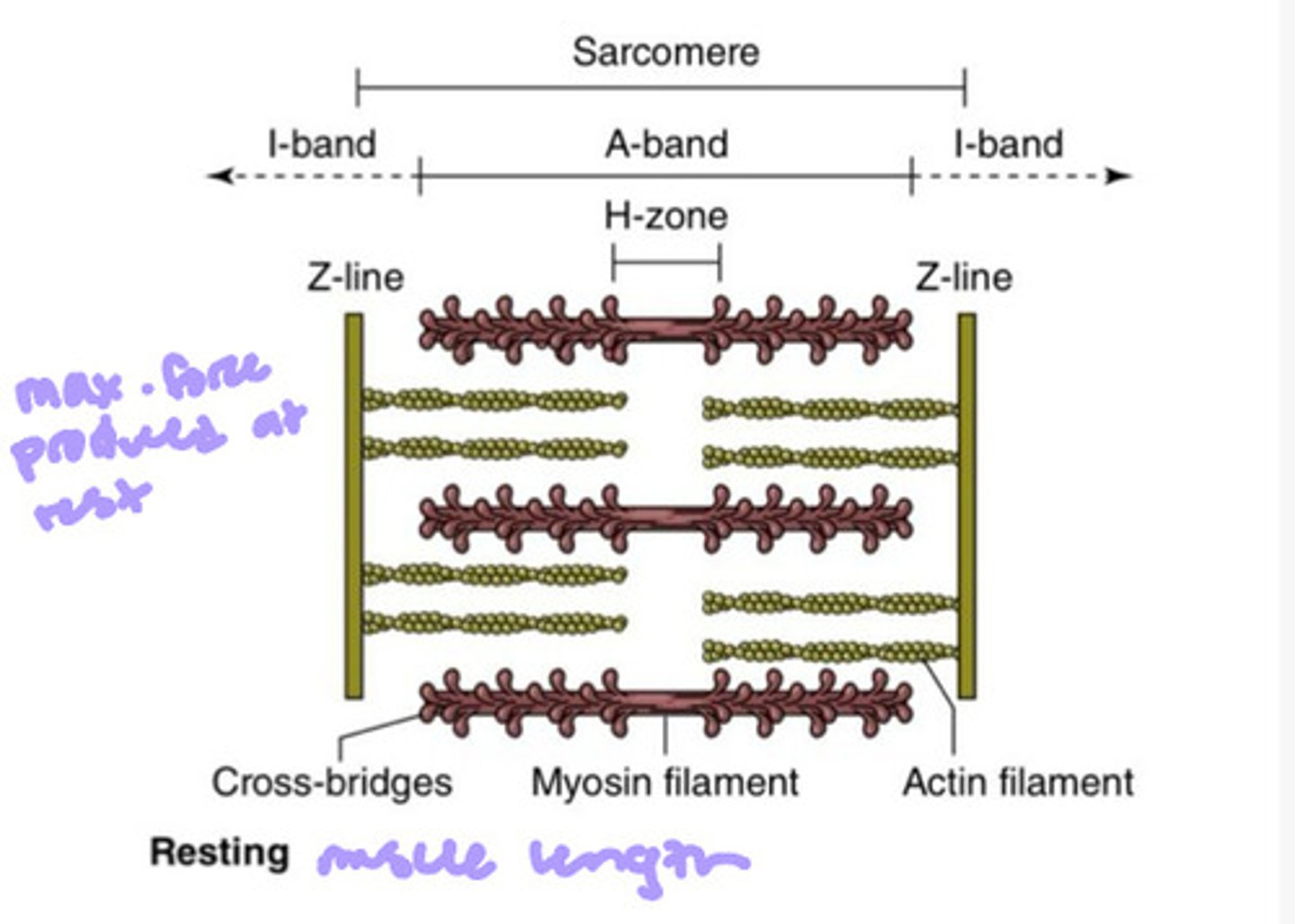
actin (thin) and myosin (thick); 2 globular heads form a crossbridge that interacts with actin during a muscle contraction
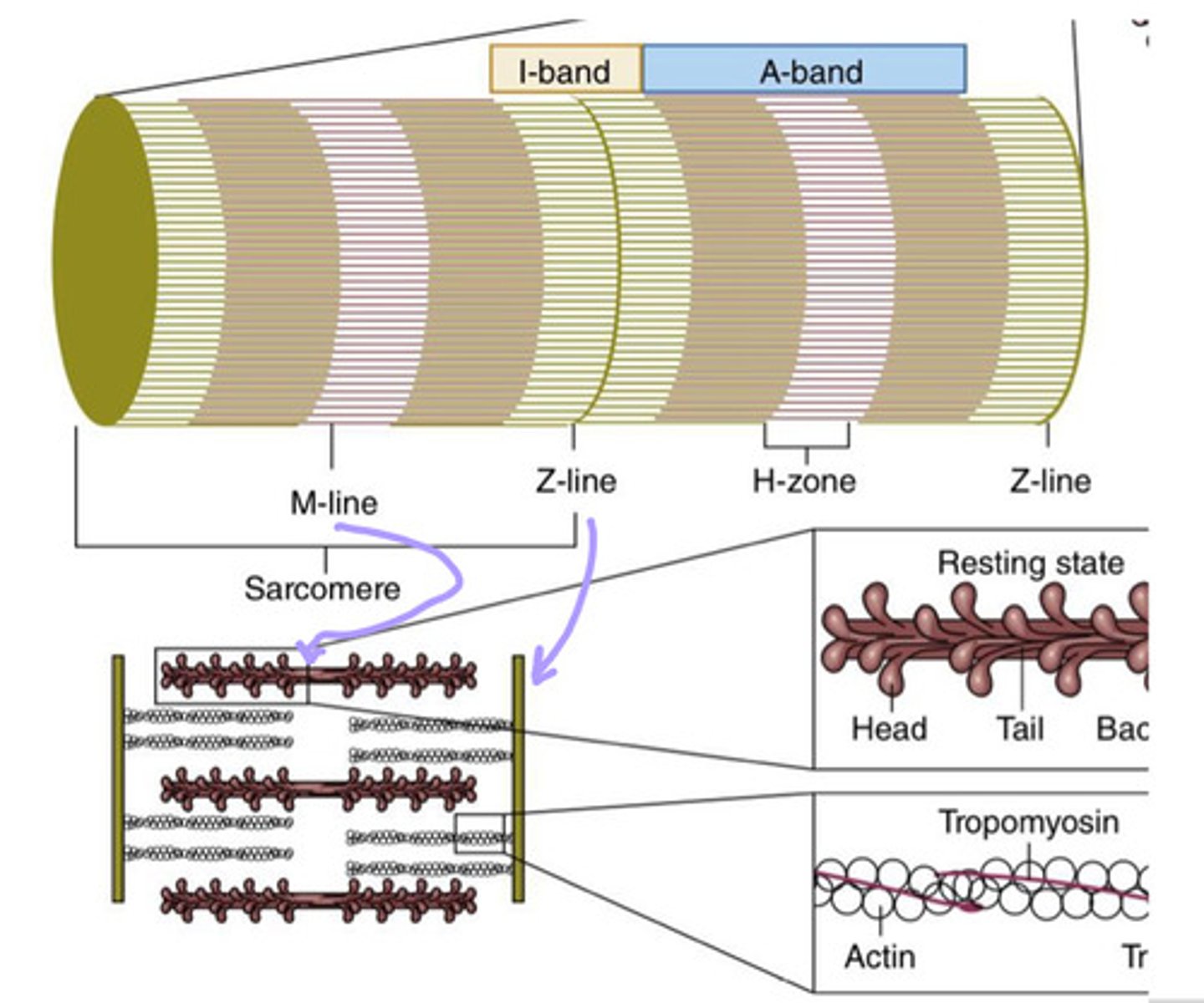
-myosin filaments anchor together at the M-bridge in the center of the sarcomere (H-zone)
-actin filaments are anchored at the end of the sarcomere (Z-line)
-the A-band corresponds with the alignment of the myosin filaments
-the I-band corresponds with the area that contains only actin
What is the sliding filament theory?
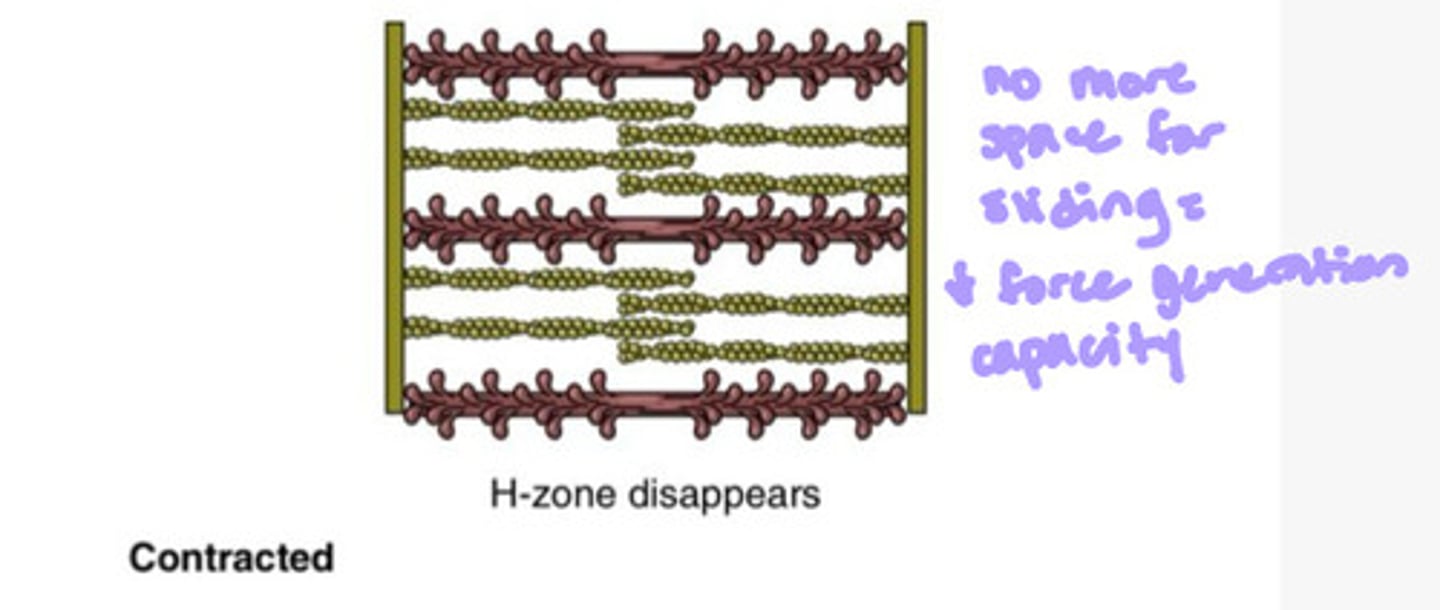
during a contraction, the H-zone/M-line decreases as actin slides over myosin and the Z-lines come together and overlap
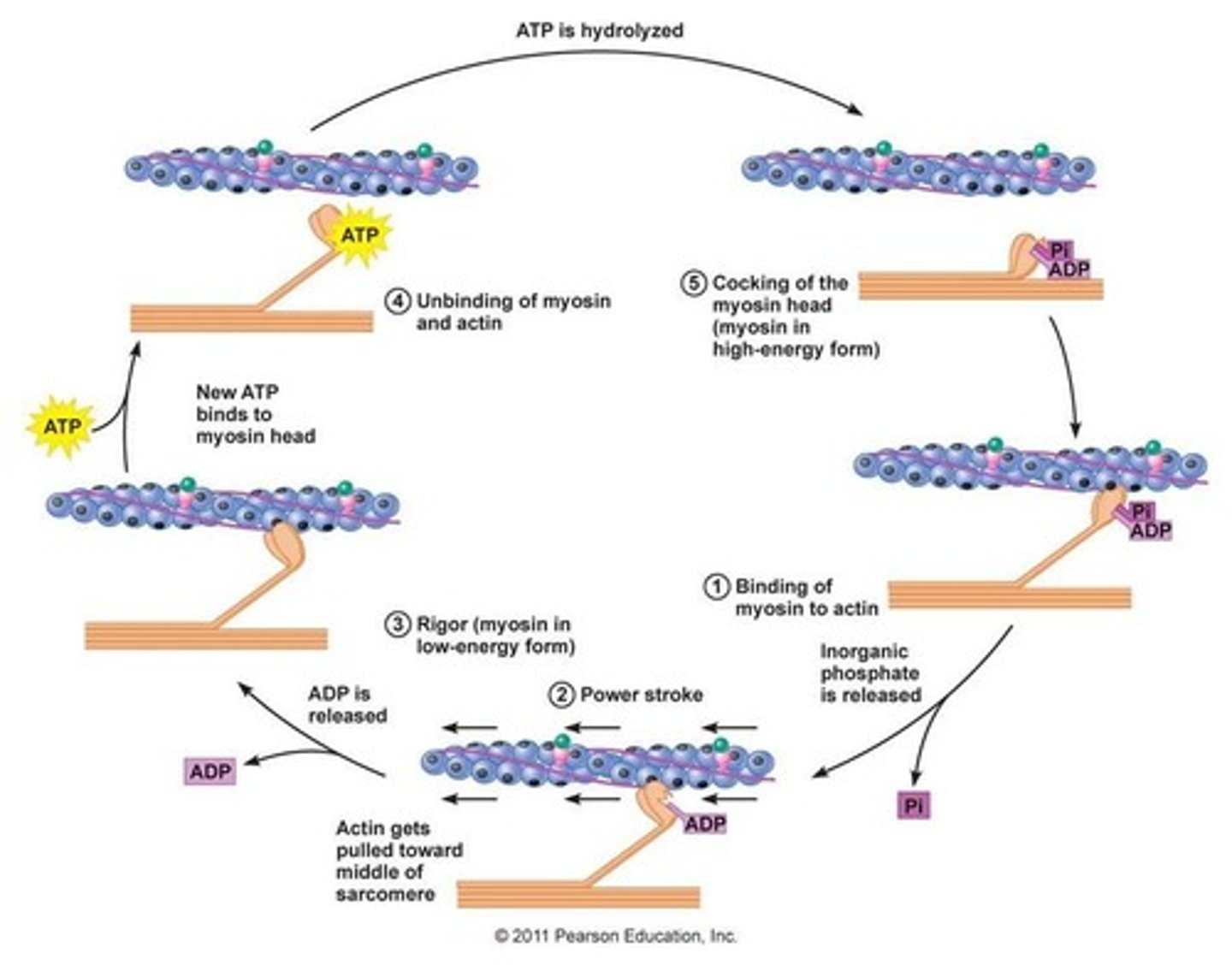
How do muscles activate according to the sliding filament theory?
1) action potential travels down the axon of the alpha motor neuron
2) triggers release of acetylcholine
3) action potential is generated across the sarcolemma
4) calcium is released causing troponin tropomyosin complex to move and allows the myosin head to bind to the actin (contraction)
5) the energy for the pulling of actin over myosin (power stroke) comes from the breakdown of adenosine triphosphate (ATP)
The force of a muscle depends on what?
the number of actin and myosin binding sites
Why does a stretched muscle have a low force potential?
due to reduced actin and myosin cross bridge alignment due to elongation
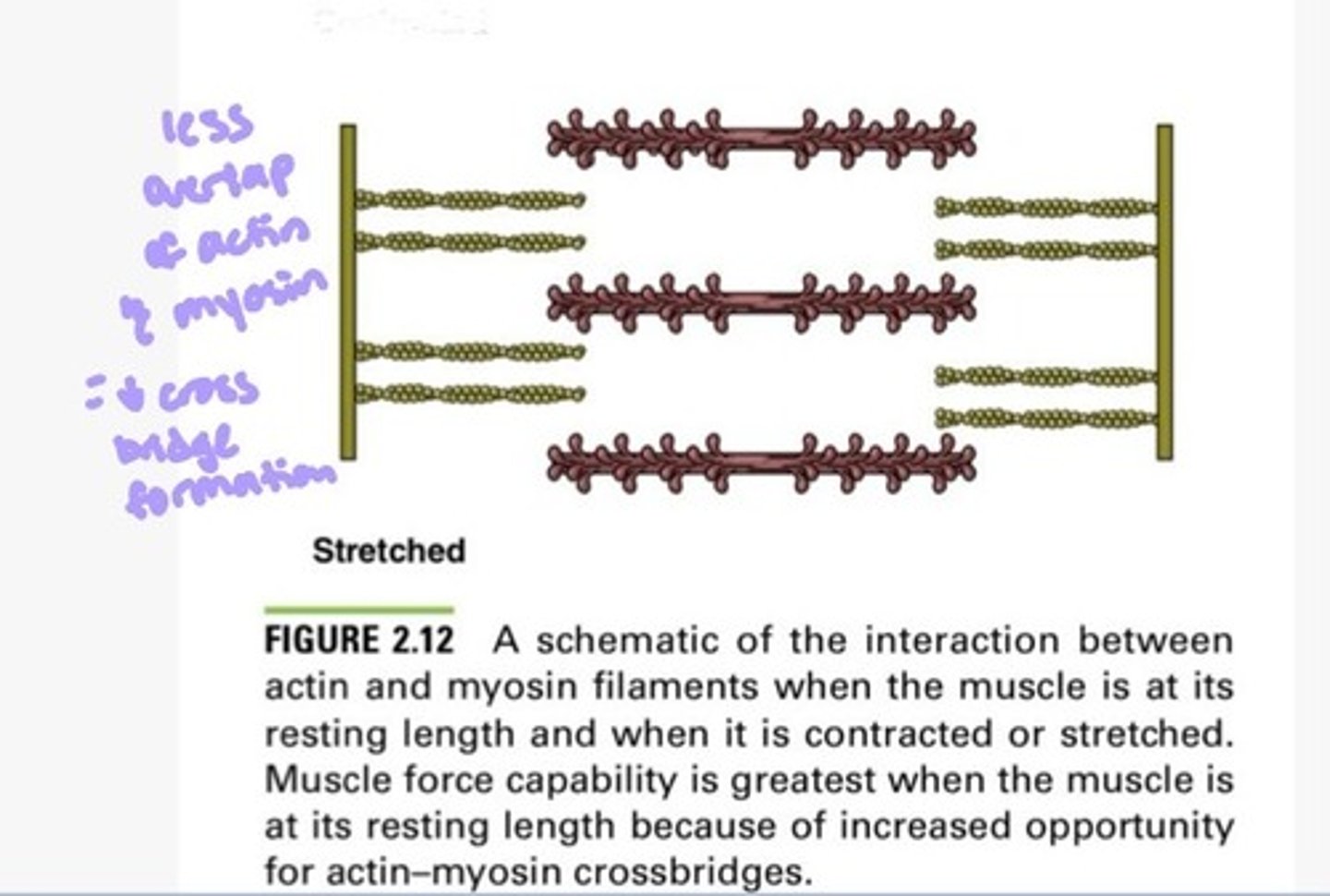
When does optimal length for force production occur?
when there are the greatest number of actin and myosin binding sites
Why does a shortened muscle have a low force potential?
due to reduced actin and myosin cross bridge alignment from maximally shortened position; the actin overlaps and the myosin runs into Z-lines
What is a motor unit?
consists of a single motor neuron and all the muscle fibers it innervates; the contractile unit of muscle tissue
-one motor neuron innervates multiple muscle fibers
The extent of force production depends on what?
the number of muscle fibers within each motor unit
-precision muscles: have a lower number of muscle fibers per motor neuron (ie. finger flexors)
-muscles requiring less precision: have several hundred muscle fibers per motor neuron (ie. glutes)
What is the all or none principle?
all of the muscle fibers in the motor unit contract and produce force at the same time
-they either all contract or they do not contract
-a stronger action potential CANNOT produce a stronger contraction
How can you stimulate a motor unit to contract?
twitch: when an action potential travels down a motor neuron, it causes a short period of activation of the muscle fiber within the motor unit
single twitch: single stimulation with a single action potential
-if a second twitch occurs before the first one has fully dissipated, it is called the summation of two twitches (potential goes up, starts to go back down, then another one goes up)
-if you have a rapid enough signal down the alpha motor neuron, then you can develop the full force capacity of the motor unit
*greater frequency of twitches= greater force generation
What are the different characteristics of muscle fibers?
type I: slow twitch
-smaller motor neuron size
-lower recruitment threshold (less stimulus needed to activate)
-slow contraction speed
-low force production
-high endurance & fatigue resistance
type IIa: fast twitch
-larger motor neuron size
-intermediate recruitment threshold (moderate stimulus needed to activate)
-fast contraction speed
-intermediate force production
-intermediate to low endurance & fatigue resistance
type IIx: fast(er) twitch
-large motor neuron size
-higher recruitment threshold
-fast contraction speed
-high force production
-low endurance & fatigue resistance (tires out fast)
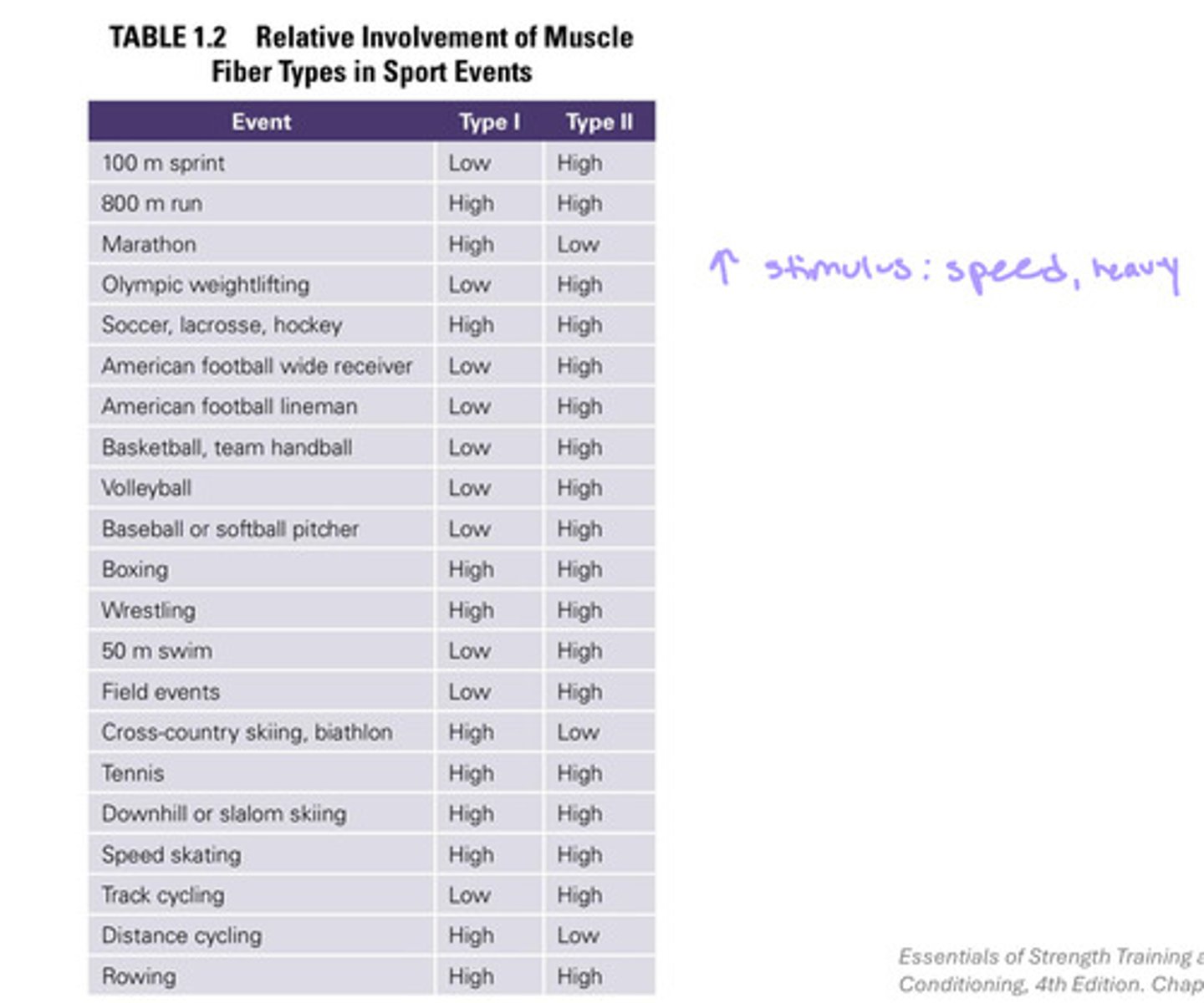
During exercise, you recruit _________.
motor units
How can you vary the force output of a muscle?
1) changing the frequency of individual motor unit activation (how often the motor unit activates)
2) changing the number of activated motor units
active more motor units= more force output
How can you improve force production?
1) incorporating phases of training that use heavier loads
-heavy loads activate higher threshold motor units (type II)
-activates more motor units at one time
-higher frequency of motor unit activation (increased force capacity)
2) increase cross-sectional area of muscles involved in the activity (increase cross bridge sites)
-making the muscle bigger creates more contractile elements in the muscle to produce force (hypertrophy changes the size of the muscle)
3) perform multi-muscle, multi-joint exercises with more explosive actions to optimize fast twitch muscle recruitment
What are the different training principles?
-SAID principle
-overload
-recovery
-variability
-reversibility
-individualization
-phase potentiation
What is the SAID priniciple?
Specific Adaptations to Imposed Demands (specificity): the body will adapt to a specific stimulus
ie. specifically practice pull ups to get a pull up
-training needs to be specific to the individuals' goals
o movement pattern specificity: pivoting, cutting, walking/locomotor, turning, squatting, hinging
o metabolic system specificity: creatine phosphate, aerobic, anaerobic
o neuromuscular system specificity: how the nervous/muscular systems adapt specifically to the exact types of stimuli they are exposed to
o psychological specificity: jumping into a marathon without the proper training; you won't be mentally prepared
-general training supporting specific training
ie. power training can help with a specific task, like a high jump
What is the overload principle?
training must be stimulating enough to drive tissue adaptation
adaptive resistance: organism's ability to maintain homeostasis in the face of greater intensities and volumes of a specific stimulus
-body adapts to a stimulus and no longer experiences tissue adaptation
-overload threshold raises with adaptation (the stronger you are, the more you have to work hard)
What is the recovery principle?
if you don't recover, you will not adapt & you will get injured
-rest periods between sets/reps
-rest days between training days
-deloading weeks/rest weeks
-nutrition & sleep
overload - recovery = injury
What is the variability principle?
change in the type of stimulus (ie. barbell to dumbbell)
benefits:
-reduced overuse injuries
-maximizes adaptability
-decreases adaptive resistance
-prevents burnout
How can we create variability for the squat?
-change BOS (narrow squat vs. sumo squat vs. single leg squat)
-change location of the load (back squat vs. front squat)
How else can we create variability in training?
-exercise selection
-exercise progression
-load
-tempo
-training frequency
-training volume
-training intensity
What is the reversibility principle?
use it or lose it; when you stop training, the gains you made will reverse and revert back to as untrained state
-aerobic endurance & max strength last ~30 days (slowest to go away)
-max speed lasts ~5 days (most sensitive to detraining)
-strength endurance lasts ~15 days
-anerobic endurance lasts ~18 days
What is the individualization principle?
factors that affect training prescription
-biological age
-training age: how long you've been training for
-gender: girls might not want to train bc they are uncomfortable or don't want to get bulky
-sex: there's no difference before puberty
-injuries/medical history
-anthropometrics: body comp
What is the phase potentiation principle?
sequencing of directed adaptation and fitness characteristics so that each phase of training supports and enhances the next (do one thing to help you achieve the next thing)
-general training supports specific training
-guides periodization: break it down and work baclwards
ex. return-to-sport basketball player
hypertrophy training-> power training-> cut, jump, run
What are the different methods of resistance training?
-machines
-dumbbells
-kettlebells
-barbell
-body weight
-resistance bands
-tires
-chains
-instability training
What are some general things to consider for safety?
-alternative objects (ie. tires, water pipes, etc.) may create imbalanced loads & instability
-ensure proper body alignment (generally feet hip width, slight flex in knees)
-neutral spinal alignment
-good core musculature activation
-exhale during concentric
-inhale during eccentric
-with heavy loads (>80% 1 RM), Valsalva may be useful to maintain spinal stability, increasing IAP
What are the benefits of bodyweight training?
-specific to each person's anthropometrics (not always the best place to start)
-strengthens multiple muscle groups at once
-improves neuromuscular control
-can be used to teach technique
-low cost and can be performed anywhere (good for HEP)
What does increasing core stability do?
allows for a stable base for force development
-proximal stability for distal mobility
What muscles are part of the core?
-abdominals
-multifidus
-glutes
-QL
-spinal erectors
-periscapular muscles
-diaphragm
-deep external rotators of the hip/shoulder
What is instability/balance training useful for?
-increase core activation, challenge proprioception, and kinesthetic awareness
-training on an instable surface DECREASES the amount of force you can produce (can lower force output by up to 30%)
What are the different types of resistance?
1) constant external resistance
-the external load remains constant throughout the full ROM (ie. dumbbells)
2) accommodating resistance (semi-isokinetic) manual PNF
-allows for the speed of movement or the isokinetic resistance to be controlled throughout the full ROM
-changes the amount of external force required to move the load
-lighter resistance at the weaker part of the lift and heavier resistance at the strongest part of the lift
3) variable resistance
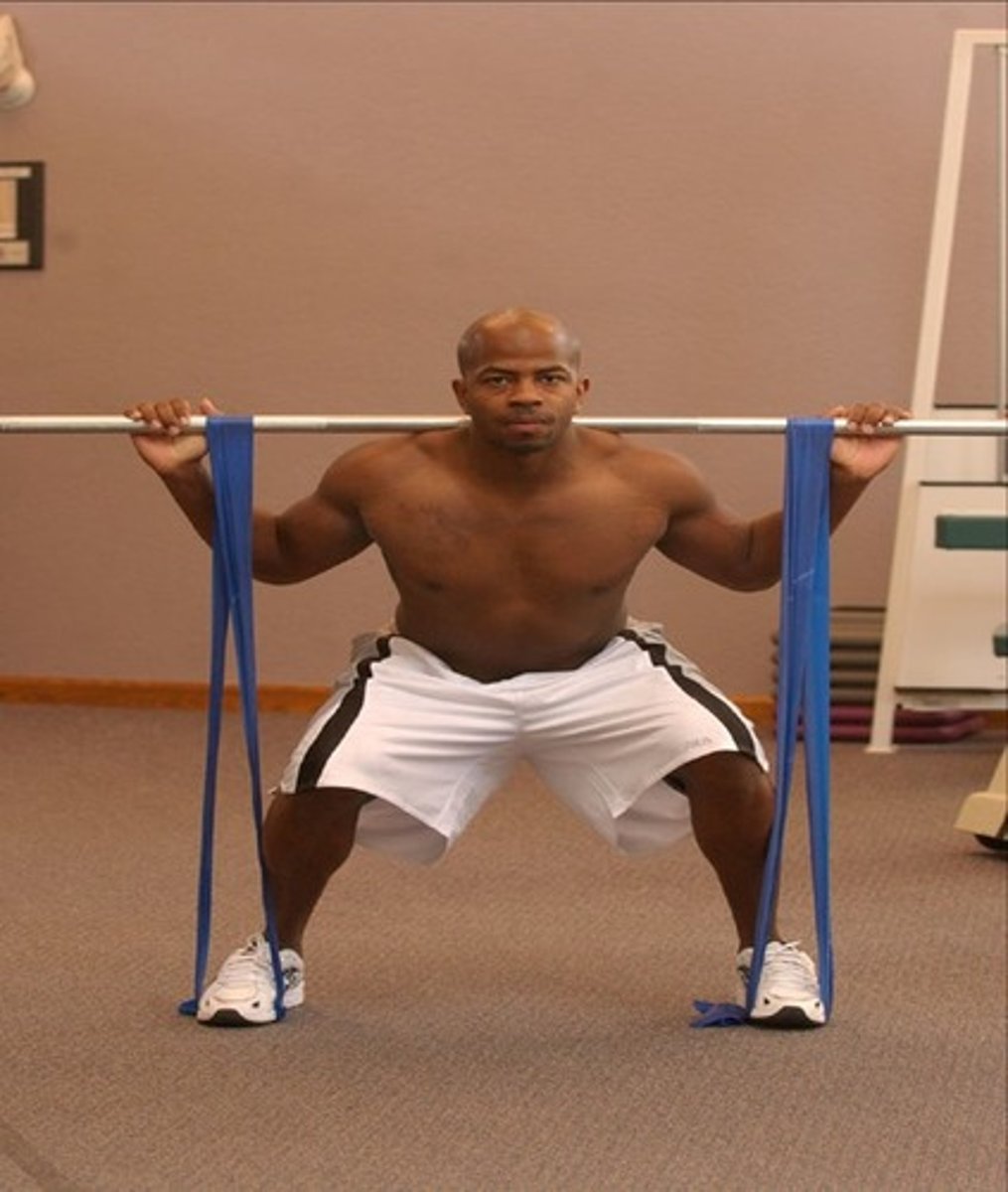
-alters resistance so the muscle maximizes force throughout the full ROM (ie. chains & resistance bands)
What is Hooke's Law?
tension= stiffness x deformation
highest load experienced at the top position
What is accentuated eccentric loading?
additional load on the eccentric portion that then comes off for the concentric portion
-requires training device, training partner (weight releasers) OR creativity!
-good tool to specifically train eccentric loading for strength and power
What are some benefits of unilateral training?
-used to reduce bilateral asymmetries
-can increase core muscle activation
What makes a good warm up?
-increases body & tissue temperature
-enhances neural function (priming the muscle for movement)
-increases mobility
-increases blood flow to the muscle
What are the benefits of an active warm up?
-faster muscle contraction
-improved rate of force development and reaction time
-improved muscle strength and power
-lower muscle and joint resistance
-improved oxygen delivery
-increased psychological preparedness for performance
-reduced injury risk
How do you design a warmup?
-consider how the warmup contributes to the overall development of the athlete
-consider what the athlete will be doing (in the game, in the training session, during the therapy session, etc.)
-consider deficits in mobility that need to be addressed to allow for safe performance of the main task
ex. 40 y/o lumbar contractor with low back pain
goal= squat or hinge
task= goblet squat
WU= address deficits to prepare for squat
What does RAMP stand for?
raise, activate, mobilize, potentiate
should take about 15-20 min
What is the "raise" part of the RAMP warmup?
-raise HR
-raise BP
-raise RR
-raise body temperature
-achieved through 5-10 min of general physical activity (ie. jump rope, jogging, cycling, walking)
What is the "activate" part of the RAMP warmup?
-activate specific muscles that will be used in the sport
-activate specific muscles that will support the goal of the day
What muscles would you want to activate if your rehabilitation goal for the day is to work on frontal plane knee control with bilateral and unilateral plyometrics?
-quad
-glutes
-plantarflexors
-external rotators
-abductors
What are some exercises that can promote core muscle activation?
-glute bridge
-90/90 lift offs at the hip
-clamshells
-banded hip abduction + bridge
-fire hydrants
-bear plank
What are some exercises that can promote periscapular muscle activation?
-Y raises
-no monies
-Y on foam roller
-plank with protraction
What are some exercises that can promote lower body muscle activation?
-banded side stepping
-banded fire hydrant
What is the "mobilize" part of the RAMP warmup?
-mobilize joints/muscles
-mobility depends on the task/limitations of the patient
What muscles and joints would you want to mobilize if you are a pitcher preparing for a game?
-GH IR/ER
-scapular elevation
-scapular retraction
-spinal extension
-pecs
What are some exercises that can promote lower body mobility work?
-inchworm
-walk the dog
-sitting lunch
What are some exercises that can promote upper body mobility work?
-QL/lat stretch
-child's pose lift off
-wall angels
-thread the needle
What is the "potentiate" part of the RAMP warmup?
specific movements that will facilitate the main training task of the day
-increase the effectiveness of the subsequent activity
What type of movement would potentiate the main task of sprinting/plyometrics training?
-light plyometrics
-A skips
-B skips
-submaximal running
-resisted running
What type of movement would potentiate the main task of throwing?
-short distance lower intensity throwing
-1/2 kneel deceleration catch
-rotational medicine ball throws
What type of movement would potentiate the main task of a deadlift?
-body weight single leg RDL
-banded hip hinge
-hip thrusters/bridges
RAMP Case #1: You are working with a 22-year-old collegiate pitcher who you are treating for a right SLAP tear. He is currently 7 months post SLAP repair and your main goal for the session today is to initiate submaximal throwing.
Current deficits:
-tight pectoralis minor
-decreased thoracic extension ROM
-tight latissimus dorsi
-weak posterior RTC
-weak middle and lower trapezius
-poor use of kinematic chain when throwing
R: UBE, jog, elliptical, jumping jacks
A: no monies, Y raises, child pose lift off, 90/90
M: lat stretch, thoracic extension stretch, open books, door stretch, wall angels
P: chops with a step, rainbows with a step, chest pass
RAMP Case #2: You are working with a 50-year-old firefighter who you are treating for a proximal tear of the biceps femoris. He is currently in the no protection phase of rehab and your main goal for today is to initiate deadlifting.
Current deficits:
-tight gastrocnemius
-poor gluteal muscle activation
-poor lumbopelvic control
R: 5 min incline walk
A: PPT + bridge, standing calf raises, good mornings
M: down dog (PF), quadruped rock backs
P: rdls