Histology Slides

0.0(0)
Studied by 0 people
call kaiCall Kai
learnLearn
examPractice Test
spaced repetitionSpaced Repetition
heart puzzleMatch
flashcardsFlashcards
GameKnowt Play
Card Sorting

1/40

flashcard set

Earn XP

Description and Tags

FUCKASS HISTOLOGY SLIDES AND THEIR DESCRIPTION FIRST YEAR

Last updated 12:48 PM on 5/24/26
Name
Mastery
Learn
Test
Matching
Spaced
Call with Kai

No analytics yet

Send a link to your students to track their progress

41 Terms
1
New cards
<p>What is this?</p>

What is this?

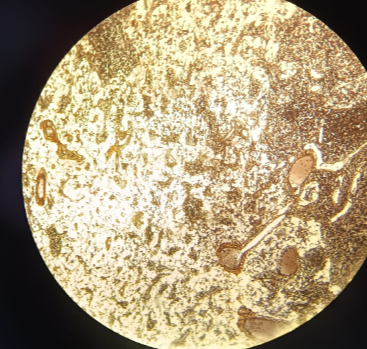
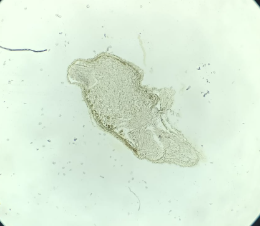
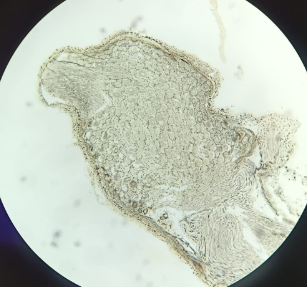
Omentum Majus Simple Squamous Epithelium - Silver Impregnation (AgNO3) (34a)

  • Part of the Peritoneum, which forms unique serous membrane (serosa)

  • built of simple squamous epithelium (mesothelium)

  • look from the top (surface) cells are polygonal

  • nuclei are not visible

  • Cells connect thanks to interdigitations
<p>Omentum Majus Simple Squamous Epithelium - Silver Impregnation (AgNO3) (34a)</p><ul><li><p>Part of the Peritoneum, which forms unique serous membrane (serosa)</p></li><li><p>built of simple squamous epithelium (mesothelium)</p></li><li><p>look from the top (surface) cells are polygonal</p></li><li><p>nuclei are not visible</p></li><li><p>Cells connect thanks to interdigitations</p></li></ul><p></p>
2
New cards
<p>What is this?</p>

What is this?

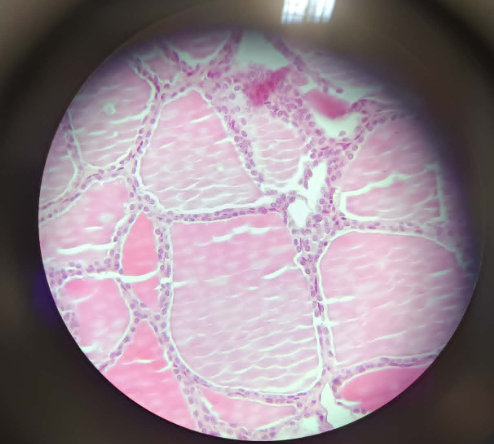
Glandula Thyroidea Simple Cuboidal Epithelium - HE (2)

  • Endocrine gland = hormones (iodine based)

  • built of follicles

  • on top of basal membrane = simple cuboidal epithelium (nucleus = circle)

  • looks like 2 layers of cells

  • colloid content - pre-hormones, iodine ions, and hormones
<p>Glandula Thyroidea Simple Cuboidal Epithelium - HE (2)</p><ul><li><p>Endocrine gland = hormones (iodine based)</p></li><li><p>built of follicles</p></li><li><p>on top of basal membrane = simple cuboidal epithelium (nucleus = circle)</p></li><li><p>looks like 2 layers of cells</p></li><li><p>colloid content - pre-hormones, iodine ions, and hormones</p></li></ul><p></p>
3
New cards
<p>What is this?</p>

What is this?

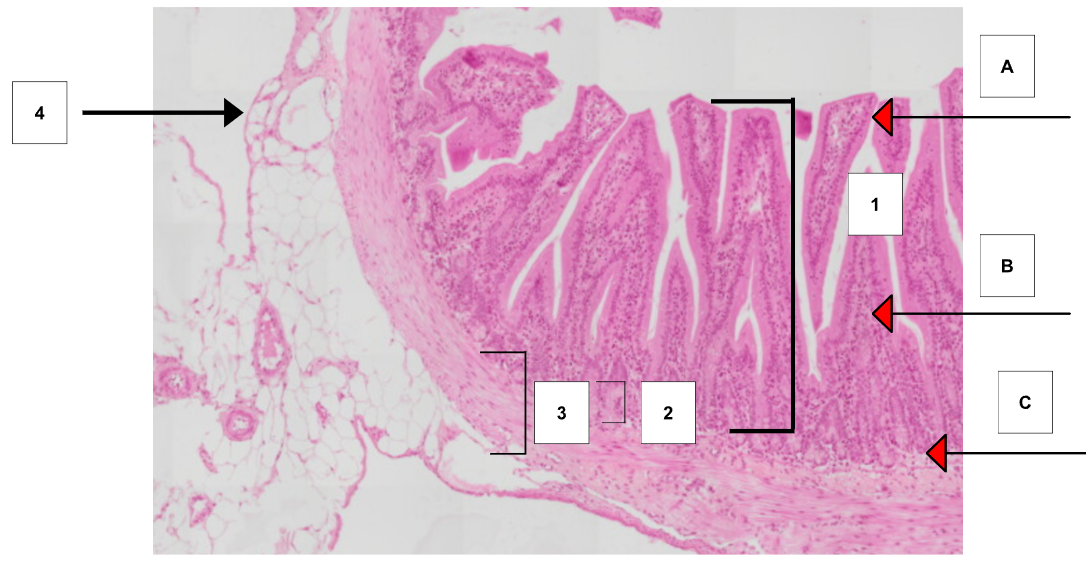
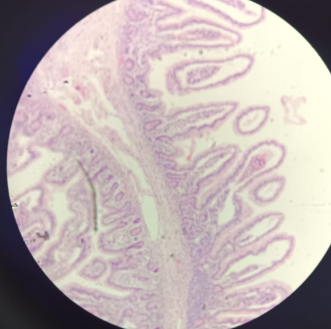
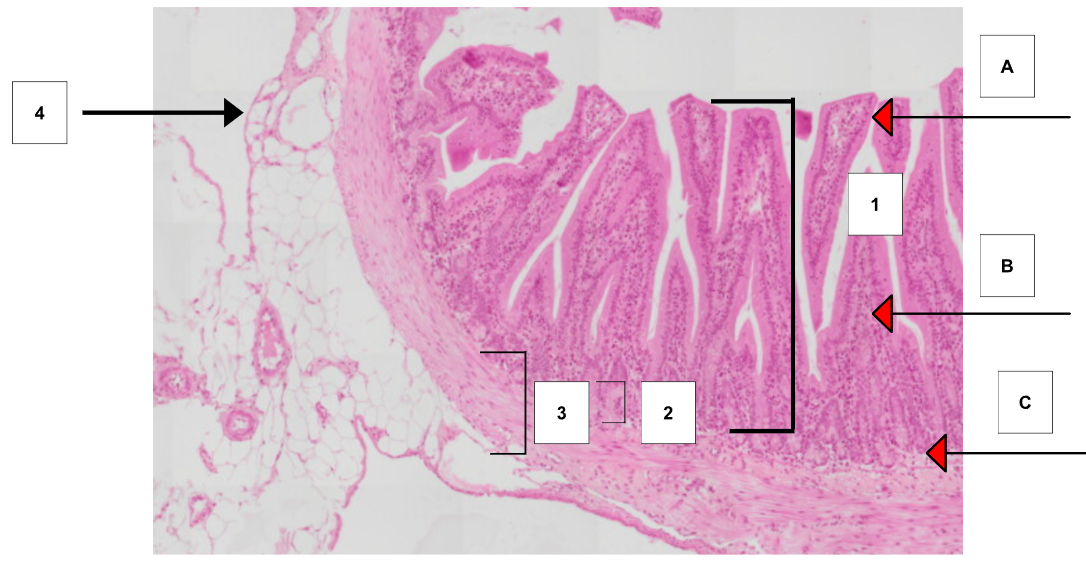
Small Intestine Simple Columnar Epithelium - HE (3, 44)

  1. Tunica Mucosa - mucosa
    A. Lamina Epithelialis - simple columnar resorptive epithelium with microvilli; columnar cells with microvilli (elongated, basal), goblet cells (triangular, basal) and stem cells (cylinder, middle)
    B. Lamina Propria - Loose connective tissue containing blood vessels
    C. Muscularis Mucosae - muscle layer, contains connective tissue and smooth muscles

  2. Tela Submucosa - loose connective tissue, simple tubular glands, goblet cells

  3. Tunica Muscularis - 2 types of smooth muscle cells
    D. Stratum Circulare
    E. Stratum longitudinale

  4. Tunica Serosa (mesothelium) or Tunica Adventitia (loose connective Tissue)
<p>Small Intestine Simple Columnar Epithelium - HE (3, 44)</p><ol><li><p>Tunica Mucosa - mucosa<br>A. Lamina Epithelialis - simple columnar resorptive epithelium with microvilli; columnar cells with microvilli (elongated, basal), goblet cells (triangular, basal) and stem cells (cylinder, middle)<br>B. Lamina Propria - Loose connective tissue containing blood vessels<br>C. Muscularis Mucosae - muscle layer, contains  connective tissue and smooth muscles</p></li><li><p>Tela Submucosa - loose connective tissue, simple tubular glands, goblet cells</p></li><li><p>Tunica Muscularis - 2 types of smooth muscle cells<br>D. Stratum Circulare<br>E. Stratum longitudinale</p></li><li><p>Tunica Serosa (mesothelium) or Tunica Adventitia (loose connective Tissue)</p></li></ol><p></p>
4
New cards
<p>What is this?</p>

What is this?

Trachea pseudostratified epithelium - HE (22)

  • part of the respiratory tract

  • pseudostratified and columnar ciliated epithelium

  • 3 types of cells

    • columnar ciliated cells

    • stem cells (basal cells)

    • goblet cells

  1. Tunica Mucosa

    1. Lamina Propria - LCT to glands

  2. Tunica fibromusculocartilaginea - contains cartilage (hyaline cartilage), 2 ends of cartilage are linked together by muscle layer

  3. Tunica Adventitia - loose connective tissue
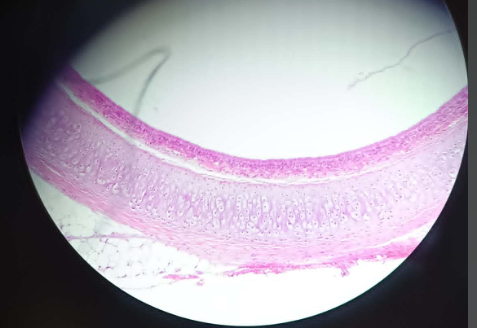
<p>Trachea pseudostratified epithelium - HE (22)</p><ul><li><p>part of the respiratory tract</p></li><li><p>pseudostratified and columnar ciliated epithelium</p></li><li><p>3 types of cells</p><ul><li><p>columnar ciliated cells</p></li><li><p>stem cells (basal cells)</p></li><li><p>goblet cells</p></li></ul></li></ul><ol><li><p>Tunica Mucosa</p><ol><li><p>Lamina Propria - LCT to glands</p></li></ol></li><li><p>Tunica fibromusculocartilaginea - contains cartilage (hyaline cartilage), 2 ends of cartilage are linked together by muscle layer</p></li><li><p>Tunica Adventitia - loose connective tissue</p></li></ol><p></p>
5
New cards
<p>What is this? </p>

What is this?

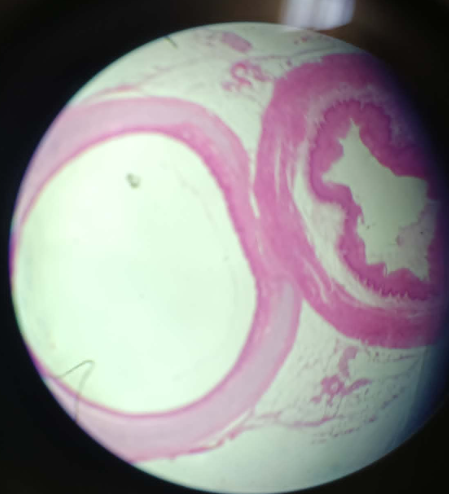
Ureter Transitional Epithelium - HE (59)

  • surrounded by a lot fat tissue (adipose tissue)

  1. Tunica Mucosa
    a. Lamina epithelialis
    - (3 layers) (wrinkle) transitional epithelium of henle
    - stratified epithelium, a lot of membrane (looks like stripes);
    - very small cylindrical shaped cells (stratum basale)
    - on top, polygonal cells (tennis rocket shaped)
    - on top, only one cell (umbrella cells; may have 2 nucleus)
    - outer membrane of the cells, invagination (wrinkling) of the membrane, linked together by uroplakins (proteins) (protects cells from toxicity)

    b. Lamina Propria

  2. Tunica Muscularis - 2/3 layers of cells

  3. Tunica adventitia - has a lot of big blood vessels
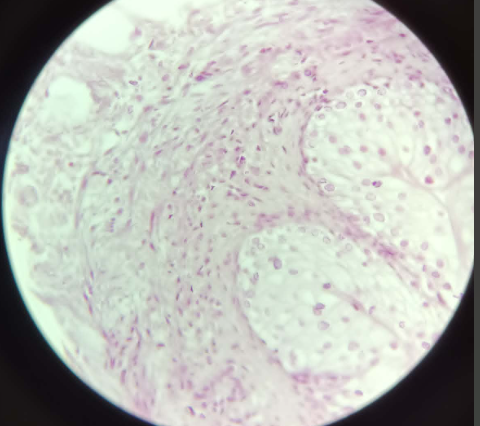
<p>Ureter Transitional Epithelium - HE (59)</p><ul><li><p>surrounded by a lot fat tissue (adipose tissue)</p></li></ul><ol><li><p>Tunica Mucosa<br>a. Lamina epithelialis <br>- (3 layers) (wrinkle) transitional epithelium of henle<br>- stratified epithelium, a lot of membrane (looks like stripes); <br>- very small cylindrical shaped cells (stratum basale)<br>- on top, polygonal cells (tennis rocket shaped)<br>- on top, only one cell (umbrella cells; may have 2 nucleus)<br>- outer membrane of the cells, invagination (wrinkling) of the membrane, linked together by uroplakins (proteins) (protects cells from toxicity)</p><p>b. Lamina Propria</p></li><li><p>Tunica Muscularis - 2/3 layers of cells</p></li><li><p>Tunica adventitia - has a lot of big blood vessels</p></li></ol><p></p>
6
New cards
<p>What is this?</p>

What is this?

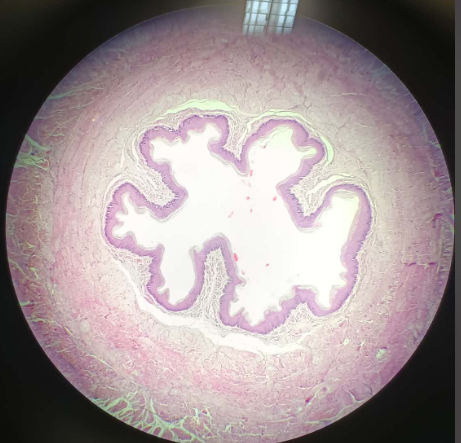
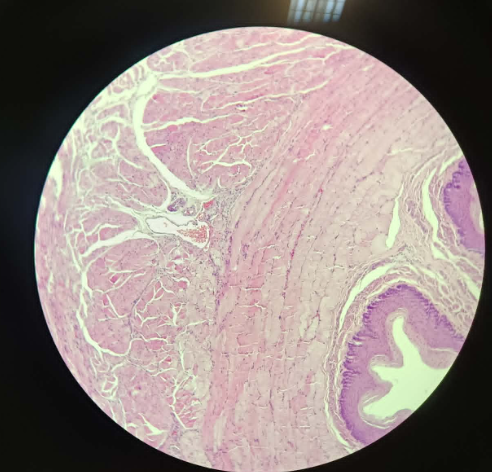
Esophagus Stratified Squamous nonkeratinized - HE (18)

  • Membrane invaginations (wrinkling)

  • all of the cells are alive and has nuclei

  • stratified squamous nonkeratinized epithelium

Top of basal membrane - layer of small cells (stratum germinativum / stratum basale); small cylindrical shaped

On top, bigger cells - Polygonal shaped

On top, flat cells - squamous epithelium cells

  1. Tunica Mucosa
    a. Lamina Epitheliaris
    b. Lamina Propria - may see some glands

  2. Tela submucosa - big glands (esophageal glands, glandula esophage)

  3. Tunica Muscularis

  4. Tunica Adventitia

<p>Esophagus Stratified Squamous nonkeratinized - HE (18)</p><ul><li><p>Membrane invaginations (wrinkling)</p></li><li><p>all of the cells are alive and has nuclei</p></li><li><p>stratified squamous nonkeratinized epithelium</p></li></ul><p></p><p>Top of basal membrane - layer of small cells (stratum germinativum<strong> </strong>/ stratum basale); small cylindrical shaped</p><p>On top, bigger cells - Polygonal shaped</p><p>On top, flat cells - squamous epithelium cells</p><p></p><ol><li><p>Tunica Mucosa<br>a. Lamina Epitheliaris<br>b. Lamina Propria - may see some glands<br></p></li><li><p>Tela submucosa - big glands (esophageal glands, glandula esophage)</p></li><li><p>Tunica Muscularis</p></li><li><p>Tunica Adventitia</p></li></ol><p></p>
7
New cards
<p>What is this? </p>

What is this?

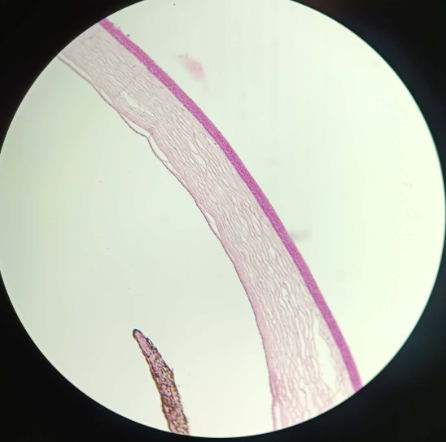
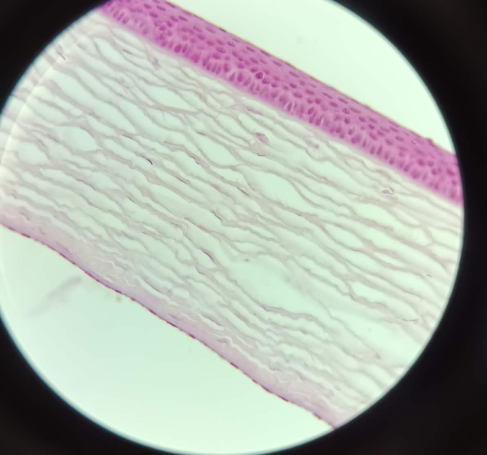
Cornea Stratified Squamous Nonkeratinized - HE (1)

  • Arch Structure

  • Cornea epithelium - Stratified squamous nonkeratinized

  • usually 6-7 layers of cells

  • Endothelium - origin Endothel
    - epithelium anterius- stratified squamous non keratinized
    - epithelium posterius- simple squamous epithelium

  1. Basal Layer - Basal membrane is a straight line (has no blood vessels)

  2. Stratum germinativum

  3. Stratum basale

  4. 1-2 layers polygonal cells

  5. 1-2 layers of flat squamous cells

<p>Cornea Stratified Squamous Nonkeratinized - HE (1)</p><ul><li><p>Arch Structure</p></li><li><p>Cornea epithelium - Stratified squamous nonkeratinized</p></li><li><p>usually 6-7 layers of cells</p></li><li><p>Endothelium - origin Endothel<br>- epithelium anterius- stratified squamous non keratinized<br>- epithelium posterius- simple squamous epithelium</p></li></ul><p></p><ol><li><p>Basal Layer - Basal membrane is a straight line (has no blood vessels)</p></li><li><p>Stratum germinativum</p></li><li><p>Stratum basale</p></li><li><p>1-2 layers polygonal cells</p></li><li><p>1-2 layers of flat squamous cells</p></li></ol><p></p>
8
New cards
<p>What is this?</p>

What is this?

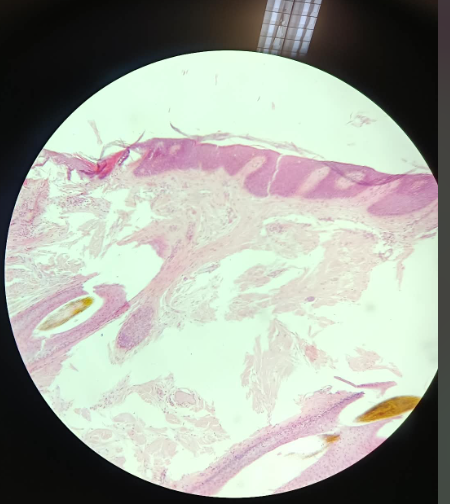
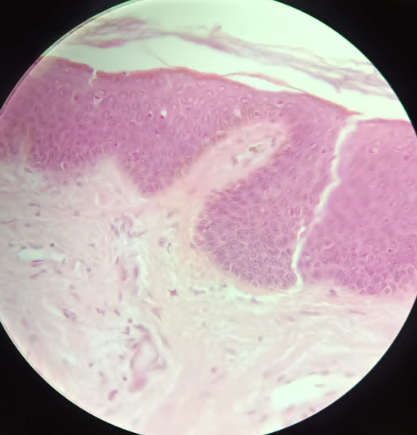
Hairless Skin Stratified Squamous Keratinized - HE (19,25)

  • built of 3 layers

  1. Epidermis - built in Tunica Mucosa
    a. Epithelium - Stratified squamous keratinized epithelium
    b. Stratum Basale - Keratin fiber, cuboidal cells
    c. Stratum Spinosum - Desmosomes, polygonal cells
    d. Stratum Granulosum - Keratohyalin, flat squamous epithelium, final layer with alive cells
    e. stratum Lucidum - keratin
    f. Stratum corneum - keratin, dead cells, cannot be seen

  2. Dermis - LCT

  3. hypodermis - LCT

  • Receptors

BOTH

  • Extra Cellular Matrix (ECM)

    • Fibers: Collagen type 1, elastic fibers, ground substance

    • Cells: Fibroblasts, fibrocytes

<p>Hairless Skin Stratified Squamous Keratinized - HE (19,25)</p><ul><li><p>built of 3 layers</p></li></ul><ol><li><p>Epidermis - built in Tunica Mucosa<br>a. Epithelium - Stratified squamous keratinized epithelium <br>b. Stratum Basale - Keratin fiber,  cuboidal cells<br>c. Stratum Spinosum - Desmosomes, polygonal cells<br>d. Stratum Granulosum - Keratohyalin, flat squamous epithelium, final layer with alive cells<br>e. stratum Lucidum - keratin<br>f. Stratum corneum - keratin, dead cells, cannot be seen</p><p></p></li><li><p>Dermis - LCT </p></li><li><p>hypodermis - LCT </p></li></ol><ul><li><p>Receptors</p></li></ul><p>BOTH </p><ul><li><p>Extra Cellular Matrix (ECM)</p><ul><li><p>Fibers: Collagen type 1, elastic fibers, ground substance</p></li><li><p>Cells: Fibroblasts, fibrocytes</p></li></ul></li></ul><p></p>
9
New cards
<p>What is this?</p>

What is this?

Intestinum Tenue - Mucicarmine (3b)

Staining: Mucicarmine (not a lot of pink, but purples structures (vacuoles of goblet cells)

  • Microvilli also has staining, due to excretion produced by goblet cells and tubular glands and tubular glands are going to resurface, to scratch the surface of the cell

  • Tela Submucosa - big tubular glands (simple Tubular glands)
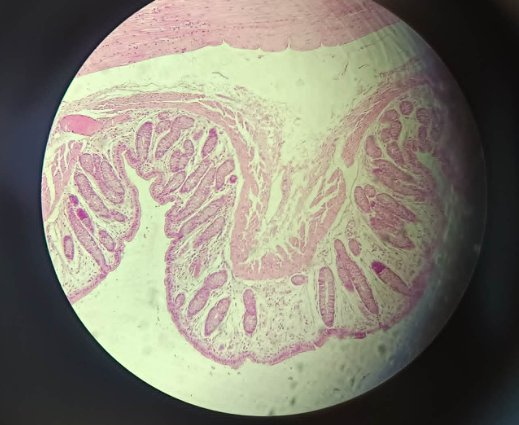
10
New cards
<p>What is this?</p>

What is this?

Intestinum Crassum (Large Intestine) (45) - HE

  • Epithelium: Same as the small intestine, Simple columnar resorptive epithelium with microvilli

  • Difference: Lamina Propria: tissue of glands (Simple Tubular Glands), Goblet cells usually dominate these glands
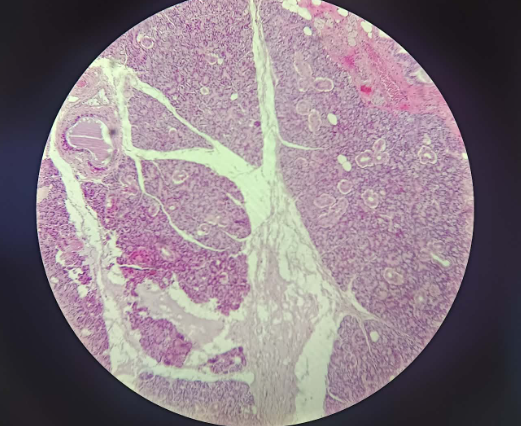
11
New cards
<p>What is this?</p>

What is this?

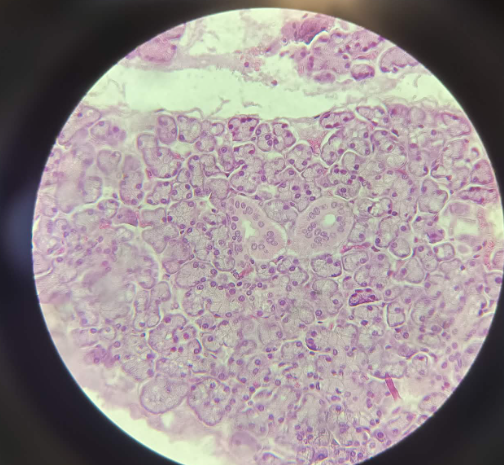
Glandula Parotis - HE (28)

  • Big saliva gland located behind the ears

  • Has fat tissue

  • contains only serosa acini (circular nucleus, with pyramidal outline, new epithelial cells, no lumen) (with ribosomes, produces protein rich solutions)

  • Epithelium: Cuboidal Epithelium

<p>Glandula Parotis - HE (28)</p><p></p><ul><li><p>Big saliva gland located behind the ears</p></li><li><p>Has fat tissue</p></li><li><p>contains only serosa acini (circular nucleus, with pyramidal outline, new epithelial cells, no lumen) (with ribosomes, produces protein rich solutions)</p></li><li><p>Epithelium: Cuboidal Epithelium</p></li></ul><p></p>
12
New cards
<p>What is this</p>

What is this

Glandula Submandibularis - HE (30)

  • under the mandibula bone (jaw)

  • 2 different structures:
    1. serosa tsinin (no lumen, circular nucleus, pyramidal outline, ribosomes, new epithelial cells) 70% (purple)
    2. mucosa tsinin (big lumen, squamous nucleus, squamous like outline, new epithelial cells) 30%, but it looks big so 50-50% ratiov (pink)
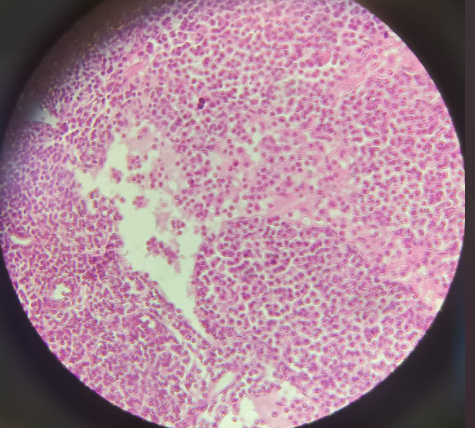
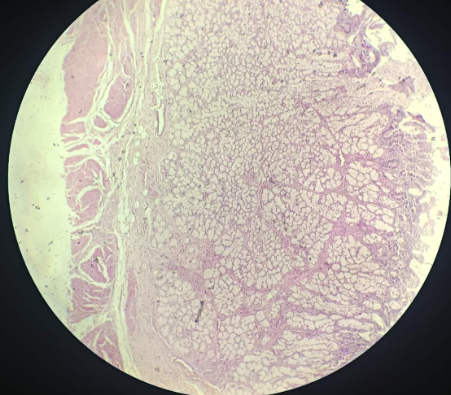
<p>Glandula Submandibularis - HE (30)</p><p></p><ul><li><p>under the mandibula bone (jaw)</p></li><li><p>2 different structures:<br>1. serosa tsinin (no lumen, circular nucleus, pyramidal outline, ribosomes, new epithelial cells) 70% (purple)<br>2. mucosa tsinin (big lumen, squamous nucleus, squamous like outline, new epithelial cells) 30%, but it looks big so 50-50% ratiov (pink)</p></li></ul><p></p>
13
New cards
<p>What is this?</p>

What is this?

Glandula Sublingualis - HE (29)

  • located underneath the spine

  • more light structures

  • mucosa tsinin are dominating than serosa tsinin

  • also mixed atsinin (mucoctyes dominates the serocytes)
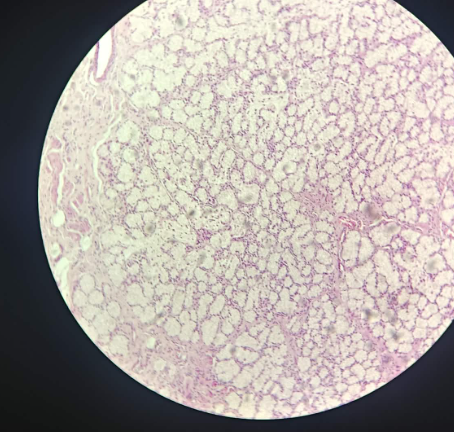
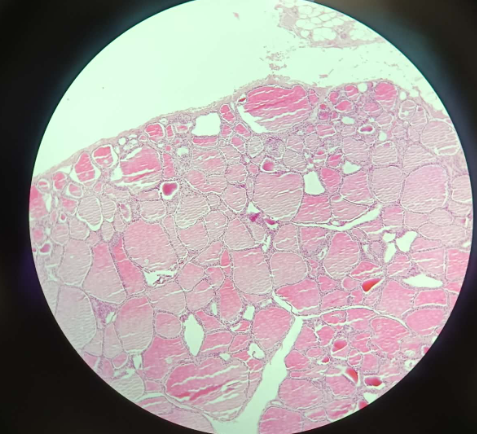
<p>Glandula Sublingualis - HE (29)</p><ul><li><p>located underneath the spine</p></li><li><p>more light structures</p></li><li><p>mucosa tsinin are dominating than serosa tsinin</p></li><li><p>also mixed atsinin (mucoctyes dominates the serocytes)</p></li></ul><p></p>
14
New cards
<p>What is this?</p>

What is this?

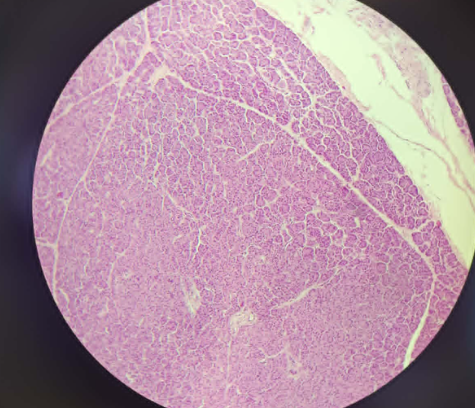
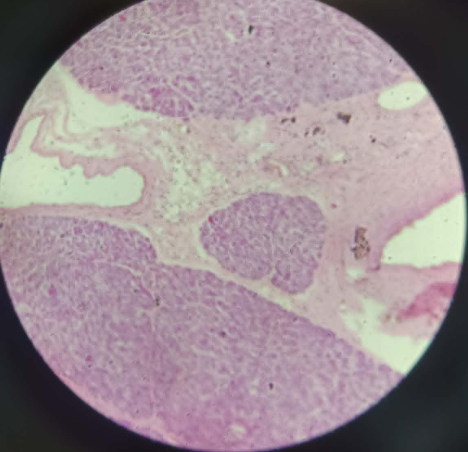
Pancreas - HE (47)

  • Exocrine
    fully serosa tsini (they don’t have new epithelial cells), but will gain centroacinal cells inside the lumen

  • Endocrine
    - lining house ions - endocrine (hormones)

  • islets of langerhans

<p>Pancreas - HE (47)</p><ul><li><p>Exocrine<br>fully serosa tsini (they don’t have new epithelial cells), but will gain centroacinal cells inside the lumen<br></p></li><li><p>Endocrine<br>- lining house ions - endocrine (hormones)</p></li><li><p>islets of langerhans</p></li></ul><p></p>
15
New cards
<p>What is this?</p>

What is this?

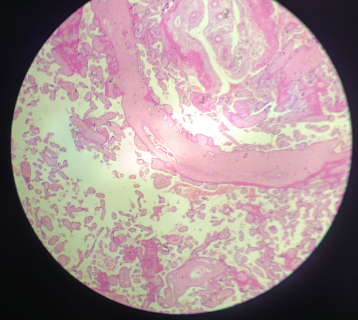
Placenta - HE

  • chorionic villi goes inside the endometrium

  • placenta is formed by the maternal and the fecal parts

  • placenta is normally formed in the endometrium of the mother

  • Structure of villi:

    • 2 layers of cells surrounding the embryonic part

    • cytotrophoblast (inside)

    • syncytiotrophoblast (outside)

    • with time, cytotrophoblast will disappear and left with syncytiotrophoblast

  • Chorion villi has a lot of blood vessels, because placenta helps get nutrition and oxygen from mother to babies

  • these two tissues never mix

  • mucous embryonic connective tissue - built of collagen type 1 small fibers and round cells, very limited amount of ground substance
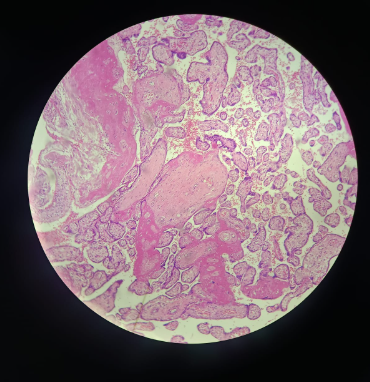
<p>Placenta - HE</p><ul><li><p>chorionic villi goes inside the endometrium</p></li><li><p>placenta is formed by the maternal and the fecal parts</p></li><li><p>placenta is normally formed in the endometrium of the mother</p></li><li><p>Structure of villi:</p><ul><li><p>2 layers of cells surrounding the embryonic part</p></li><li><p>cytotrophoblast (inside)</p></li><li><p>syncytiotrophoblast (outside)</p></li><li><p>with time, cytotrophoblast will disappear and left with syncytiotrophoblast</p></li></ul></li><li><p>Chorion villi has a lot of blood vessels, because placenta helps get nutrition and oxygen from mother to babies</p></li><li><p>these two tissues never mix</p></li><li><p>mucous embryonic connective tissue - built of collagen type 1 small fibers and round cells, very limited amount of ground substance</p></li></ul><p></p>
16
New cards
<p>What is this?</p>

What is this?

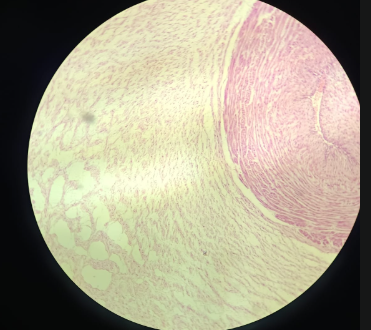
Umbilical Cord - HE

  • structure which carries out blood vessels (looks like Loose connective tissue)

  • 3 types of blood vessels:

    • 1. venaumbilicaries

    • 2. arterieumbilicaries

  • Epithelium: Amion, simple cuboidal epithelium

  • Wharton Jelly - very soft tissue, built of small non-refinigated microcollagen type 1 fibers

  • Stem cells: triangular shaped from the umbilical cord

  • Empty space is filled with ground substance

  • Umbilical cord is very

<p>Umbilical Cord - HE</p><ul><li><p>structure which carries out blood vessels (looks like Loose connective tissue)</p></li><li><p>3 types of blood vessels:</p><ul><li><p>1. venaumbilicaries</p></li><li><p>2. arterieumbilicaries</p></li></ul></li><li><p>Epithelium: Amion, simple cuboidal epithelium</p></li><li><p>Wharton Jelly - very soft tissue, built of small non-refinigated microcollagen type 1 fibers</p></li><li><p>Stem cells: triangular shaped from the umbilical cord </p></li><li><p>Empty space is filled with ground substance </p></li><li><p>Umbilical cord is very</p></li></ul><p></p>
17
New cards
<p>What is this?</p>

What is this?

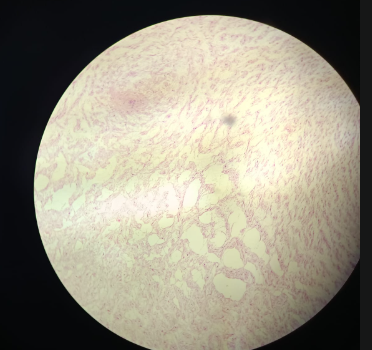
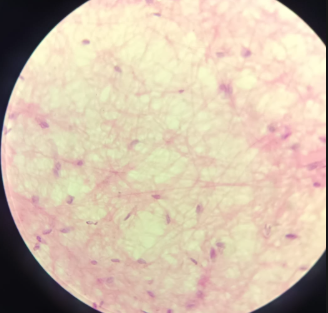
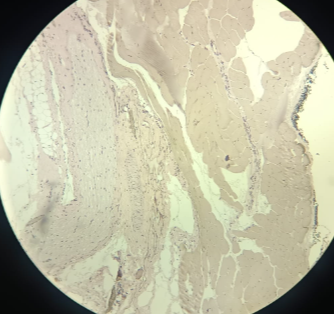
Hypoderma - HE

  • no blood vessels inside

  • example of loose connective tissue

  • loose connective tissues built of collagen and elastic fibers

  • Collagen fibers: big fibers and cells attach to them

  • elastic fibers: thin and smaller, cells don’t attach to them ( because they change composition, stretched and relaxed)

  • Cells that attach to collagen fibers are called Adherent oblique cells (fibroblast/fibrocytes)

  • fibroblasts - cells which produce the whole component of extracellular matrix (fibers, collagen, ground substances)

  • Defense cells - not attach, but moving, come from blood vessels (granulocytes, macrophages, lipocytes)
<p>Hypoderma - HE</p><ul><li><p>no blood vessels inside</p></li><li><p>example of loose connective tissue </p></li><li><p>loose connective tissues built of collagen and elastic fibers</p></li><li><p>Collagen fibers: big fibers and cells attach to them</p></li><li><p>elastic fibers: thin and smaller, cells don’t attach to them ( because they change composition, stretched and relaxed)</p></li><li><p>Cells that attach to collagen fibers are called Adherent oblique cells (fibroblast/fibrocytes)</p></li><li><p>fibroblasts - cells which produce the whole component of extracellular matrix (fibers, collagen, ground substances)</p></li><li><p>Defense cells - not attach, but moving, come from blood vessels (granulocytes, macrophages, lipocytes)</p></li></ul><p></p>
18
New cards
<p>What is this?</p>

What is this?

Tendon - Van-Gison

  • Dense irregular connective tissue

  • usually don’t have blood vessels

  • avascular aminavein structure (IDK)

  • collagen tendon organ

  • tenocytes - cells of tendons, and maintains collagen fibers inside

  • blood vessels in the sheaths

19
New cards
<p>What is this?</p>

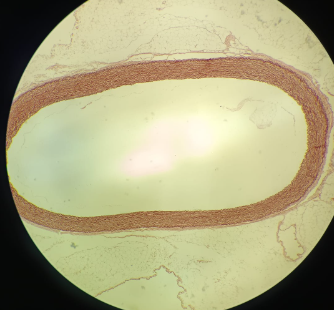
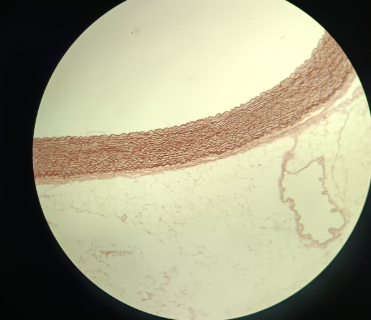
What is this?

Aorta - Orcein

  • Orcein stains elastic structure only

  • its a blood vessel, with epithelium (simple squamous epithelium, endothlium)

  • Tunica etimum - contains endothelium

  • Suped utelium - loose connective tissue

  • 2 layers:

    • top: membrana elastica externa

    • inside: tunica media which contains membrana elastica interna

  • Tunica adventitia

  • Smooth muscle cells

<p>Aorta - Orcein</p><ul><li><p>Orcein stains elastic structure only</p></li><li><p>its a blood vessel, with epithelium (simple squamous epithelium, endothlium)</p></li><li><p>Tunica etimum - contains endothelium</p></li><li><p>Suped utelium - loose connective tissue</p></li><li><p>2 layers:</p><ul><li><p>top: membrana elastica externa</p></li><li><p>inside: tunica media which contains membrana elastica interna</p></li></ul></li><li><p>Tunica adventitia</p></li><li><p>Smooth muscle cells</p></li></ul><p></p>
20
New cards
<p>What is this?</p>

What is this?

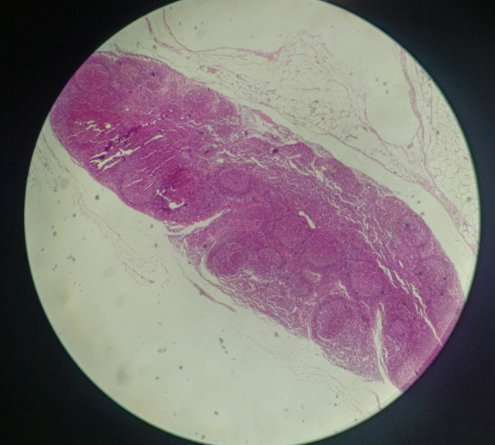
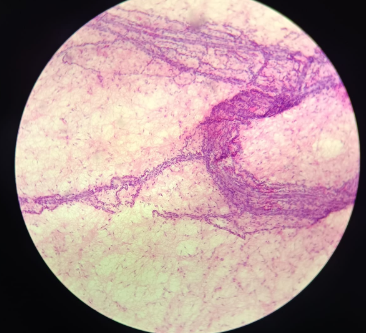
Lymph node - AgNO3

  • reticular connective tissue

  • has 2 surfaces

    • corticol: primary and secondary follicles

    • mendular part (inside)

  • reticular fibers (spider web) - collagen type 3 fibers has the affinity to silver ions

  • cells: reticular cytes

  • cells inside: lymphocytes

21
New cards
<p>What is this?</p>

What is this?

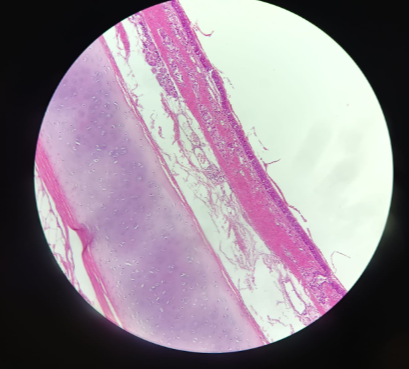
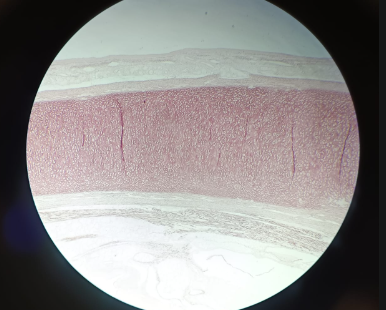
Trachea - HE

  • Epithelium - pseudo stratified and columnar ciliated epithelium

  • Loose connective tissue - contains the blood vessels

  • Hyaline cartilage - has 2 perichondrium (top and bottom)

  • perichondrium = chondroblasts

  • inside = chondrocytes in the hyaline cartilage forms huge isogenic groups. Halo around is called territorial matrix

  • Bright pink - interterritorial matrix, built of collagen type 2 and aggrecan, very robust?

  • tunica adventitia

  • Tunica fibromusculocartilaginea - it contains smooth muscle and fibers that connect two edges of the cartilage caalled “U-shaped” or “Horseshoe cartillage”
22
New cards
<p>What is this</p>

What is this

Epiglottis - Orcein

  • located at the end of mouth cavity

  • 2 different types of epithelium:

    • Facing the mouth: stratified squamous non-keratinized epithelium

    • Facing the larynx: pseudo stratified columnar ciliated epithelium

  • Orcein - stains elastic structures of elastic cartilage

  • has 2 perichondrium

  • Deep zone of cartilage - middle has a lot of cells, very narrow space between cells stained with orcein
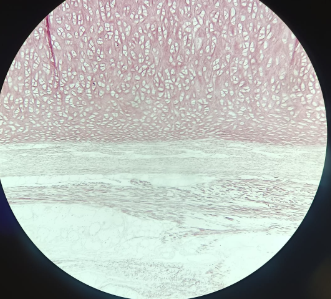
<p>Epiglottis - Orcein</p><ul><li><p>located at the end of mouth cavity</p></li><li><p>2 different types of epithelium:</p><ul><li><p>Facing the mouth: stratified squamous non-keratinized epithelium</p></li><li><p>Facing the larynx: pseudo stratified columnar ciliated epithelium </p></li></ul></li><li><p>Orcein - stains elastic structures of elastic cartilage</p></li><li><p>has 2 perichondrium </p></li><li><p>Deep zone of cartilage - middle has a lot of cells, very narrow space between cells stained with orcein</p></li></ul><p></p>
23
New cards
<p>What is this?</p>

What is this?

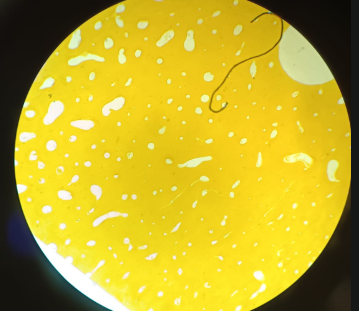
Bone - Schmorl Staining

  • dense bone tissue contains osteons

  • osteons - center hole is called haversian channel that carries out blood vessels

  • concentric circle of collagen type 1 and hydroxyapatite

  • Lacunae (holes) - places where osteocytes reside

  • cracks of the bones (small channels “canaliculus”) - forms pathways towards center and also communicate between osteocytes
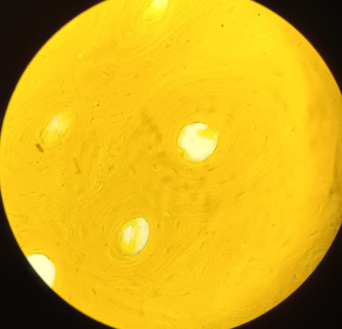
<p>Bone - Schmorl Staining</p><ul><li><p>dense bone tissue contains osteons</p></li><li><p>osteons - center hole is called haversian channel that carries out blood vessels</p></li><li><p>concentric circle of collagen type 1 and hydroxyapatite</p></li><li><p>Lacunae (holes) - places where osteocytes reside </p></li><li><p>cracks of the bones (small channels “canaliculus”) - forms pathways towards center and also communicate between osteocytes</p></li></ul><p></p>
24
New cards
<p>What is this?</p>

What is this?

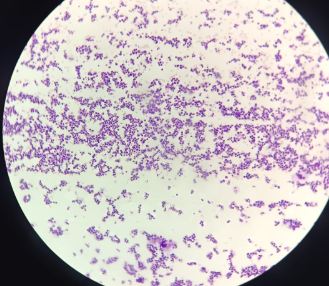
Blood Film - Wright-Giemsa

  • blood is a liquid connective tissue

  • extracellular matrix is liquid called blood plasma

  • blood plasma contains water and organic and non organic components

  • RBC - males (4-6×10^12 cells/L) Females (3.5-5.5 ×10^12 cells/L)

  • Erythrocytes are cells without nucleus, but have a lot of hemoglobin inside

  • on top of erythrocytes has a lot of factors (blood lines factors, A Group, B Group, AB Group, and O group)

  • has also rhesus factor

  • WBC - 4-10×10^9 Cells / L, all has nucleus, and all has lysosome (phagocytic cells)

  • granulocytes:

    • Neutrophils (55-60%) - contains segmented low nucleus (3-5), has granules but not stained

    • Eosinophils (2-4% or 1-3%) - specific cells, they will not divide in the blood stream

    • Basophils (0.1-1%) - biggest granulocytes, contains granules which are stained, contains inside hestamine and serotonin inflamatory cells

  • Agranulocytes:

    • Lymphocytes - built of B and T cells Ratio (20-80%), B cells don’t produce antibodies, they have the ability to turn inside the plasmacytes the one which are going to produce the antibody. They have the ability to differentiate

    • monocytes (4-5%) - the biggest white blood cells macrophages, kidney shaped nucleus, phagocytic cell has the ability to migrate closer to connective tissue

    • platelets - are not cells (200-400×10^9 Units/Liter)
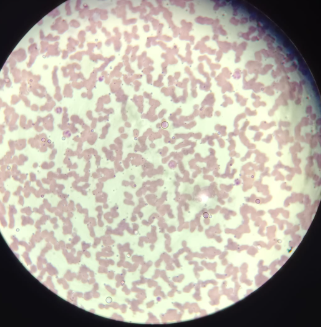
<p>Blood Film - Wright-Giemsa</p><ul><li><p>blood is a liquid connective tissue</p></li><li><p>extracellular matrix is liquid called blood plasma</p></li><li><p>blood plasma contains water and organic and non organic components</p></li><li><p>RBC - males (4-6×10^12 cells/L) Females (3.5-5.5 ×10^12 cells/L)</p></li><li><p>Erythrocytes are cells without nucleus, but have a lot of hemoglobin inside</p></li><li><p>on top of erythrocytes has a lot of factors (blood lines factors, A Group, B Group, AB Group, and O group)</p></li><li><p>has also rhesus factor</p></li><li><p>WBC - 4-10×10^9 Cells / L, all has nucleus, and all has lysosome (phagocytic cells)</p></li><li><p>granulocytes:</p><ul><li><p>Neutrophils (55-60%) -  contains segmented low nucleus (3-5), has granules but not stained</p></li><li><p>Eosinophils (2-4% or 1-3%) - specific cells, they will not divide in the blood stream</p></li><li><p>Basophils (0.1-1%) - biggest granulocytes, contains granules which are stained, contains inside hestamine and serotonin inflamatory cells  </p></li></ul></li><li><p>Agranulocytes:</p><ul><li><p>Lymphocytes - built of B and T cells Ratio (20-80%), B cells don’t produce antibodies, they have the ability to turn inside the plasmacytes the one which are going to produce the antibody. They have the ability to differentiate</p></li><li><p>monocytes (4-5%) - the biggest white blood cells macrophages, kidney shaped nucleus, phagocytic cell  has the ability to migrate closer to connective tissue</p></li><li><p>platelets - are not cells (200-400×10^9 Units/Liter) </p></li></ul></li></ul><p></p><p></p>
25
New cards
<p>What is this?</p>

What is this?

Bone Marrow - Wright-Giemsa

  • reticular connective tissue

  • built of collagen type 3 fibers

  • inside the bone marrow - formation of several blood lineages

  • most likely to observe the stages of erythropoiesis (basophilic, erythroblast, polychromotophic, etc)

  • observe stages of granulopoiesis

  • very big cells (megakaryocytes) which produce platelets
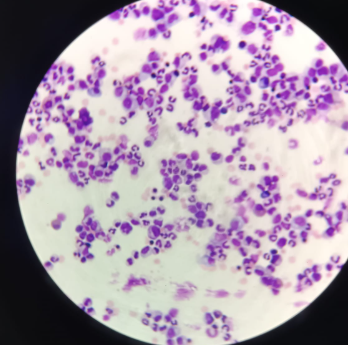
<p>Bone Marrow - Wright-Giemsa</p><ul><li><p>reticular connective tissue</p></li><li><p>built of collagen type 3 fibers</p></li><li><p>inside the bone marrow - formation of several blood lineages</p></li><li><p>most likely to observe the stages of erythropoiesis (basophilic, erythroblast, polychromotophic, etc)</p></li><li><p>observe stages of granulopoiesis </p></li><li><p>very big cells (megakaryocytes) which produce platelets</p></li></ul><p></p>
26
New cards
<p>What is this?</p>

What is this?

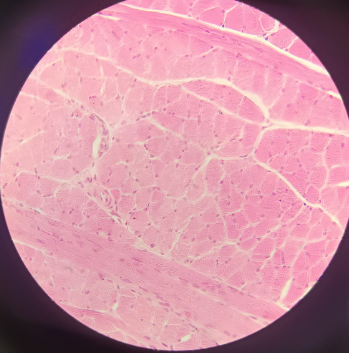
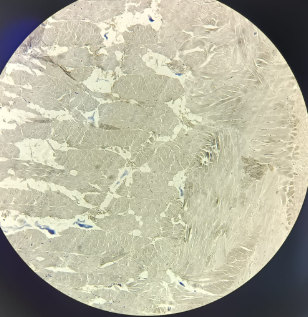
Tongue (lingua) - HE

  • Epithelium: Stratified squamous (non-keratinized).

  • Papillae: Highly deep structures containing taste buds.

  • Tunica Submucosa: Contains serous glands (circular nuclei) and mucous glands.

  • Muscle Cells: Rhabdomyocytes (striated voluntary muscle).

  • Nuclei: Up to 100 nuclei per cell, located underneath the sarcolemma (plasma membrane).

  • Connective Tissue Sheets: Endomysium (individual cells), perimysium (bundles), and epimysium (whole muscle)
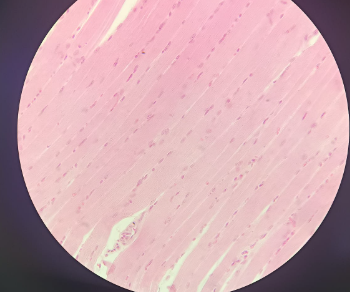
<p>Tongue (lingua) - HE</p><ul><li><p><strong>Epithelium:</strong> <strong>Stratified squamous</strong> (non-keratinized).</p></li></ul><ul><li><p><strong>Papillae:</strong> Highly <strong>deep structures</strong> containing <strong>taste buds</strong>.</p></li><li><p><strong>Tunica Submucosa:</strong> Contains <strong>serous glands</strong> (circular nuclei) and <strong>mucous glands</strong>.</p></li><li><p><strong>Muscle Cells:</strong> <strong>Rhabdomyocytes</strong> (striated voluntary muscle).</p></li><li><p><strong>Nuclei:</strong> Up to <strong>100 nuclei</strong> per cell, located <strong>underneath the sarcolemma</strong> (plasma membrane).</p></li><li><p><strong>Connective Tissue Sheets:</strong> <strong>Endomysium</strong> (individual cells), <strong>perimysium</strong> (bundles), and <strong>epimysium</strong> (whole muscle)</p></li></ul><p><br></p>
27
New cards
<p>What is this?</p>

What is this?

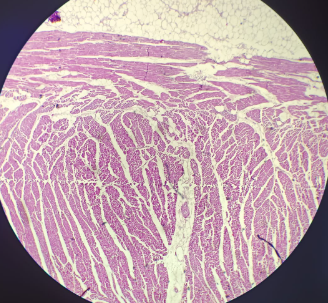
Tongue (Lingua) - FeH

  • Purpose: Specific stain to visualize striation.

  • Visuals: Consecutive dark and bright bands (isotropic and anisotropic).

  • Scale: One cell contains up to 10,000 sarcomeres
28
New cards
<p>What is this?</p>

What is this?

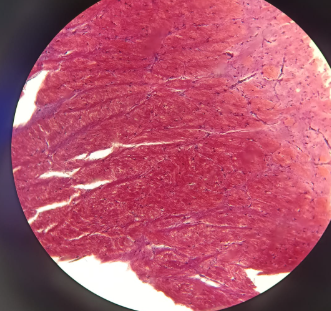
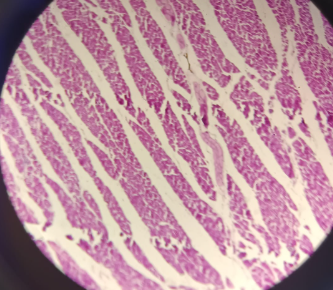
Heart (cor) - HE

  • Cells: Cardiomyocytes; typically a single-nucleus cell.

  • Organization: Each cell is wrapped in its own endomysium.

  • Connections: Linked by intercalated discs.

  • Conducting System: Large conducting cells (Purkinje fibers) that are not red because they lack myofibrils.

  • Endocrine Cells: Produce atrial natriuretic factor to control blood pressure/kidneys
<p>Heart (cor) - HE</p><ul><li><p><strong>Cells:</strong> <strong>Cardiomyocytes</strong>; typically a single-nucleus cell.</p></li><li><p><strong>Organization:</strong> Each cell is wrapped in its own <strong>endomysium</strong>.</p></li><li><p><strong>Connections:</strong> Linked by <strong>intercalated discs</strong>.</p></li><li><p><strong>Conducting System:</strong> Large <strong>conducting cells</strong> (Purkinje fibers) that are <strong>not red</strong> because they <strong>lack myofibrils</strong>.</p></li><li><p><strong>Endocrine Cells:</strong> Produce <strong>atrial natriuretic factor</strong> to control blood pressure/kidneys</p></li></ul><p></p>
29
New cards
<p>What is this?</p>

What is this?

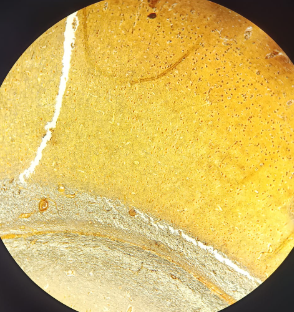
Small Intestine (intestinum tenue) - HE

  • Epithelium: Simple columnar resorptive epithelium with microvilli.

  • Cell Types: Columnar cells (elongated nuclei), goblet cells, and stem cells (circular nuclei).

  • Stem Cell Activity: Nuclei can be euchromatic (active/bright) or heterochromatic (resting/dark).

  • Lamina Propria: Loose vascular connective tissue with Type IV collagen.

  • Glands: Lieberkühn glands (simple tubular) dominated by goblet cells.

  • Muscle Layers: Two layers of smooth muscle (leiomyocytes): stratum circulare and longitudinale.

  • Outer Layer: Tunica serosa (mesothelium/simple squamous) or tunica adventitia (loose connective tissue)
30
New cards
<p>What is this?</p>

What is this?

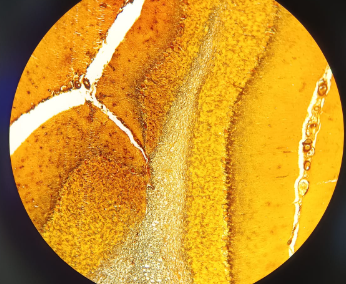
Cerebrum - AgNO3

  • Purpose: Used because astrocytes have an affinity for gold.

  • Visuals: Astrocytes look like "spiders or like stars".

  • Color: Appears as a "pink purple structure" even though gold is used.
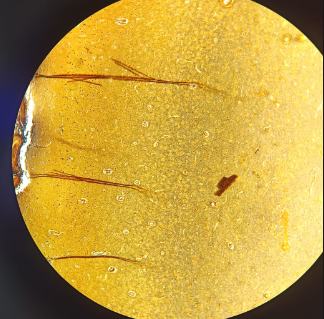
<p>Cerebrum - AgNO3</p><ul><li><p><strong>Purpose:</strong> Used because <strong>astrocytes</strong> have an affinity for gold.</p></li><li><p><strong>Visuals:</strong> Astrocytes look like "<strong>spiders or like stars</strong>".</p></li><li><p><strong>Color:</strong> Appears as a "<strong>pink purple structure</strong>" even though gold is used.</p></li></ul><p></p>
31
New cards
<p>What is this?</p>

What is this?

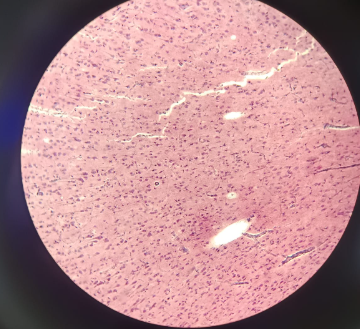
Cerebrum- HE

  • Layers: Contains six layers of cells in the gray matter.

  • Organization: Gray matter is on the outside (bodies and dendrites); white matter is on the inside (axons).

  • Key Cells: Features pyramidal neurons, including the "big pyramidal cells of Betz" in the fifth layer.

  • Glial Cells: Contains protoplasmic astrocytes that maintain the balance between neurons.

  • Staining: This is the slide referred to as the "pink purple staining
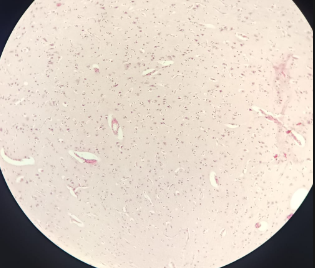
<p>Cerebrum- HE</p><ul><li><p><strong>Layers:</strong> Contains <strong>six layers</strong> of cells in the <strong>gray matter</strong>.</p></li><li><p><strong>Organization:</strong> <strong>Gray matter is on the outside</strong> (bodies and dendrites); <strong>white matter is on the inside</strong> (axons).</p></li><li><p><strong>Key Cells:</strong> Features <strong>pyramidal neurons</strong>, including the "big pyramidal cells of Betz" in the fifth layer.</p></li><li><p><strong>Glial Cells:</strong> Contains <strong>protoplasmic astrocytes</strong> that maintain the balance between neurons.</p></li><li><p><strong>Staining:</strong> This is the slide referred to as the "<strong>pink purple staining</strong></p></li></ul><p></p>
32
New cards
<p>What is this?</p>

What is this?

Cerebrum - Fuschin

<p>Cerebrum - Fuschin</p>
33
New cards
<p>What is this?</p>

What is this?

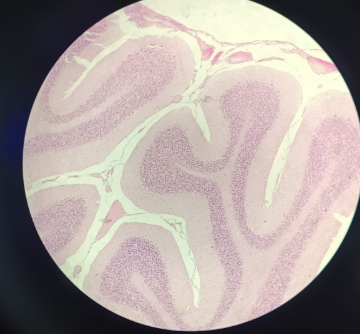
Cerebellum - HE

  • Organization: Gray matter outside, white matter inside.

  • Layers: Contains three layers of cells.

  • Key Cell: Features large Purkinje cells (referred to by the professor as "protein cells")
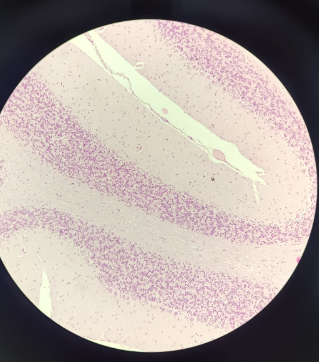
<p>Cerebellum - HE</p><ul><li><p><strong>Organization:</strong> <strong>Gray matter outside</strong>, <strong>white matter inside</strong>.</p></li><li><p><strong>Layers:</strong> Contains <strong>three layers</strong> of cells.</p></li><li><p><strong>Key Cell:</strong> Features large <strong>Purkinje cells</strong> (referred to by the professor as "protein cells")</p></li></ul><p></p>
34
New cards
<p>What is this?</p>

What is this?

Cerebellum - AgNO3

  • Organization: Gray matter outside, white matter inside.

  • Layers: Contains three layers of cells.

  • Key Cell: Features large Purkinje cells (referred to by the professor as "protein cells")
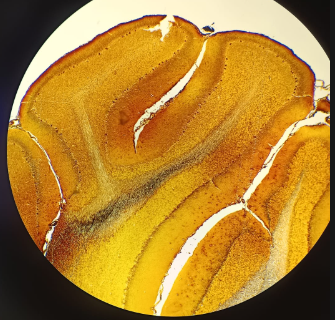
<p>Cerebellum - AgNO3</p><ul><li><p><strong>Organization:</strong> <strong>Gray matter outside</strong>, <strong>white matter inside</strong>.</p></li><li><p><strong>Layers:</strong> Contains <strong>three layers</strong> of cells.</p></li><li><p><strong>Key Cell:</strong> Features large <strong>Purkinje cells</strong> (referred to by the professor as "protein cells")</p></li></ul><p></p>
35
New cards
<p>What is this?</p>

What is this?

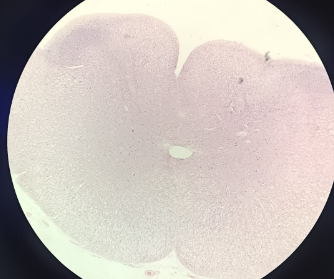
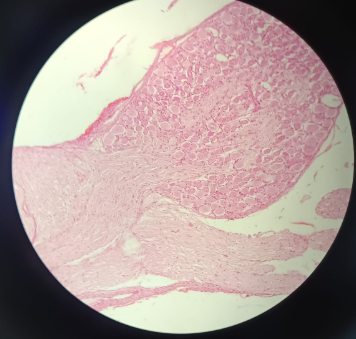
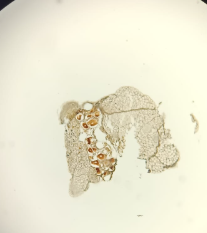
Medulla Spinalis - HE

  • Organization: White matter outside, gray matter inside (butterfly or 'H' shape).

  • Anterior Horn: Contains very large alpha motor neurons that innervate skeletal muscles.

  • Central Canal: Lined with ependymal cells (simple columnar with microvilli/cilia) which produce cerebrospinal fluid.

  • Note: The description is the same for HE or Silver staining, but silver clearly shows the cell shape
<p>Medulla Spinalis - HE</p><ul><li><p><strong>Organization:</strong> <strong>White matter outside</strong>, <strong>gray matter inside</strong> (butterfly or 'H' shape).</p></li><li><p><strong>Anterior Horn:</strong> Contains very large <strong>alpha motor neurons</strong> that innervate skeletal muscles.</p></li><li><p><strong>Central Canal:</strong> Lined with <strong>ependymal cells</strong> (simple columnar with microvilli/cilia) which produce <strong>cerebrospinal fluid</strong>.</p></li><li><p><strong>Note:</strong> The description is the <strong>same for HE or Silver staining</strong>, but silver clearly shows the cell shape</p></li></ul><p></p>
36
New cards
<p>What is this?</p>

What is this?

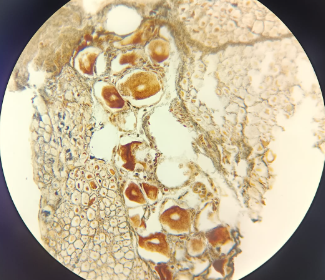
Medulla Spinalis - AgNO3

  • Organization: White matter outside, gray matter inside (butterfly or 'H' shape).

  • Anterior Horn: Contains very large alpha motor neurons that innervate skeletal muscles.

  • Central Canal: Lined with ependymal cells (simple columnar with microvilli/cilia) which produce cerebrospinal fluid.

  • Note: The description is the same for HE or Silver staining, but silver clearly shows the cell shape
<p>Medulla Spinalis - AgNO3</p><ul><li><p><strong>Organization:</strong> <strong>White matter outside</strong>, <strong>gray matter inside</strong> (butterfly or 'H' shape).</p></li><li><p><strong>Anterior Horn:</strong> Contains very large <strong>alpha motor neurons</strong> that innervate skeletal muscles.</p></li><li><p><strong>Central Canal:</strong> Lined with <strong>ependymal cells</strong> (simple columnar with microvilli/cilia) which produce <strong>cerebrospinal fluid</strong>.</p></li><li><p><strong>Note:</strong> The description is the <strong>same for HE or Silver staining</strong>, but silver clearly shows the cell shape</p></li></ul><p></p>
37
New cards
<p>What is this?</p>

What is this?

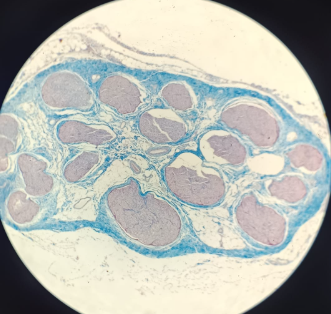
Peripheral Nerve - Azan

  • Focus: Used specifically to identify non-myelinated neurons.

  • Visuals: Axons appear as red dots with a blue outline called the endoneurium.

  • Layers: Includes perineurium (red line) and epineurium (outermost loose connective tissue)
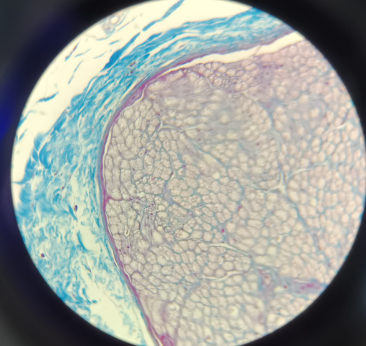
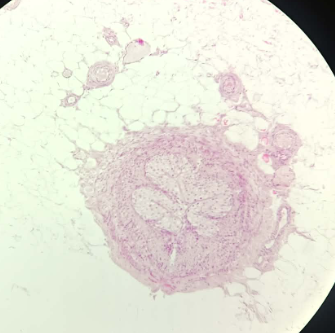
<p>Peripheral Nerve - Azan</p><ul><li><p><strong>Focus:</strong> Used specifically to identify <strong>non-myelinated neurons</strong>.</p></li><li><p><strong>Visuals:</strong> Axons appear as <strong>red dots</strong> with a <strong>blue outline</strong> called the <strong>endoneurium</strong>.</p></li><li><p><strong>Layers:</strong> Includes <strong>perineurium</strong> (red line) and <strong>epineurium</strong> (outermost loose connective tissue)</p></li></ul><p></p>
38
New cards
<p>What is this?</p>

What is this?

Peripheral Nerve - OsO4

  • Focus: Used specifically to visualize myelinated neurons.

  • Visuals: The axon is in the center, wrapped in a dark/black myelin sheath.

  • Connective Tissue: Also identifies the endoneurium, perineurium, and epinurium
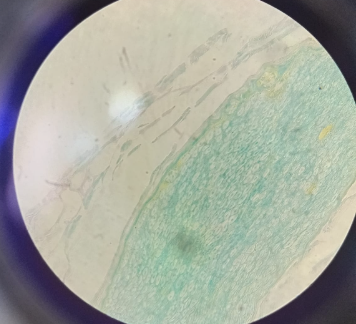
<p>Peripheral Nerve - OsO4</p><ul><li><p><strong>Focus:</strong> Used specifically to visualize <strong>myelinated neurons</strong>.</p></li><li><p><strong>Visuals:</strong> The <strong>axon</strong> is in the center, wrapped in a dark/black <strong>myelin sheath</strong>.</p></li><li><p><strong>Connective Tissue:</strong> Also identifies the <strong>endoneurium</strong>, <strong>perineurium</strong>, and <strong>epinurium</strong></p></li></ul><p></p>
39
New cards
<p>What is this?</p>

What is this?

Ganglion Spinale - HE

  • Neurons: Contains pseudounipolar neurons (T-shaped neurons).

  • Satellite Cells: Neuron bodies are surrounded by a "mud-like" layer of satellite cells for protection/trophic function.

  • Note: There are no synapses in this structure; the description is identical for both HE and Silver slides.
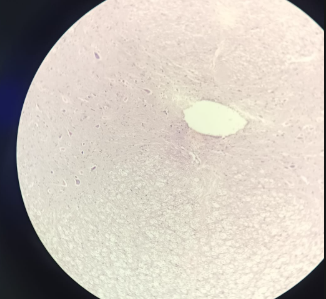
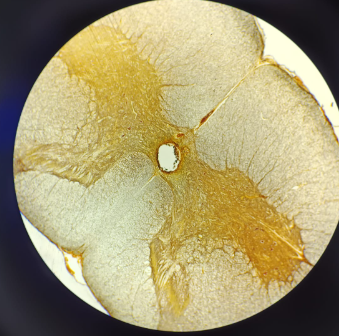
<p>Ganglion Spinale - HE</p><ul><li><p><strong>Neurons:</strong> Contains <strong>pseudounipolar neurons</strong> (T-shaped neurons).</p></li><li><p><strong>Satellite Cells:</strong> Neuron bodies are surrounded by a "<strong>mud-like</strong>" layer of <strong>satellite cells</strong> for protection/trophic function.</p></li><li><p><strong>Note:</strong> There are <strong>no synapses</strong> in this structure; the description is identical for both HE and Silver slides.</p></li></ul><p></p>
40
New cards
<p>What is this?</p>

What is this?

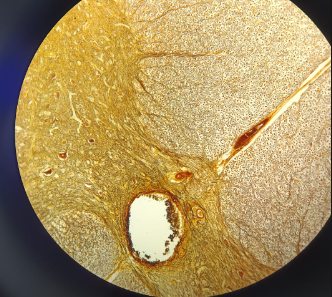
Ganglion Spinale - AgNO3

  • Neurons: Contains pseudounipolar neurons (T-shaped neurons).

  • Satellite Cells: Neuron bodies are surrounded by a "mud-like" layer of satellite cells for protection/trophic function.

  • Note: There are no synapses in this structure; the description is identical for both HE and Silver slides.
<p>Ganglion Spinale - AgNO3</p><ul><li><p><strong>Neurons:</strong> Contains <strong>pseudounipolar neurons</strong> (T-shaped neurons).</p></li><li><p><strong>Satellite Cells:</strong> Neuron bodies are surrounded by a "<strong>mud-like</strong>" layer of <strong>satellite cells</strong> for protection/trophic function.</p></li><li><p><strong>Note:</strong> There are <strong>no synapses</strong> in this structure; the description is identical for both HE and Silver slides.</p></li></ul><p></p>
41
New cards
<p>What is this?</p>

What is this?

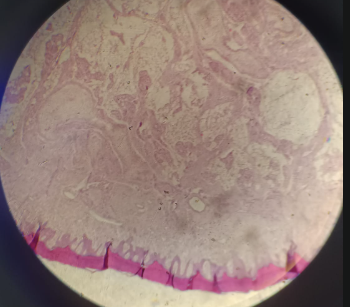
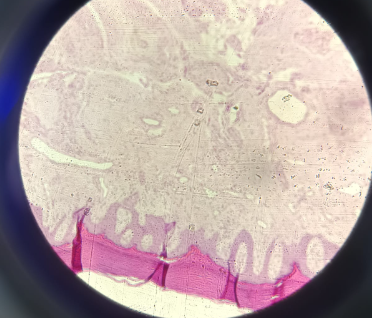
Cutis (skin) - HE

  • Location: Found in the deep dermis.

  • Structure: Looks like a large capsule filled with Type I collagen and fibroblasts arranged in concentric circles.

  • Function: These are pressure and vibration receptors; when you squeeze or touch them, the internal structure indents to trigger the bare neuron inside.
<p>Cutis (skin) - HE</p><ul><li><p><strong>Location:</strong> Found in the <strong>deep dermis</strong>.</p></li><li><p><strong>Structure:</strong> Looks like a large <strong>capsule</strong> filled with <strong>Type I collagen</strong> and fibroblasts arranged in concentric circles.</p></li><li><p><strong>Function:</strong> These are <strong>pressure and vibration receptors</strong>; when you squeeze or touch them, the internal structure indents to trigger the bare neuron inside.</p></li></ul><p></p>