Chapter 47: Animal Reproduction
 Call Kai
 Learn
Learn Practice Test
 Spaced Repetition
 Match
Match Flashcards
 Knowt Play
1/39

There's no tags or description
Looks like no tags are added yet.
Name | Mastery | Learn | Test | Matching | Spaced | Call with Kai |
|---|
No analytics yet
Send a link to your students to track their progress
40 Terms
What are the major forms of asexual reproduction and how do they differ?
All produce offspring w/o a mate and rely largely on mitosis (highly similar genetically)
Budding: a new individual grows from the body of the parent and eventually detaches. Seen in hydras
Fission: an organism splits into two or more pieces that each develop into a complete individual; i.e. sea anemones
Parthenogenesis: offspring develop from unfertilized eggs without fertilization, seen in some lizards and invertebrates
What is fertilization and how do internal and external fertilization differ?
Fusion of a haploid sperm and haploid egg to form a diploid zygote
External: eggs and sperm are released into the environment and unite outside the body (often in aquatic animals)
Requires large #s of gametes and can produce large #s of ofsspring
Many gametes are lost/developing embryos exposed to predators
Internal: sperm are deposited within the female reproductive tract and fertilization occurs inside the body
Generally more efficient, provides greater protection for gametes and embryos
How do oviparity and viviparity differ, and why might viviparity evolve?
Oviparity: laying eggs that finish development outside the mother's body
Embryos obtaining nutrients primarily from yolk
Viviparity: retaining embryos within the mother's body + giving birth to live young.
More protection/regulation of developmental conditions
Evolves b/c of cold external/environmental temperatures. Retaining embryos internally maintain favorable conditions/aid in survival
How do marsupial and eutherian mammals differ?
Marsupials: short gestation periods; give birth to underdeveloped young that continue development while attached to a nipple (often in a pouch)
Eutherians (placental): complex placenta supporting longer gestation period
Generally more developed at birth
What is gametogenesis and how do oogenesis and spermatogenesis differ?
Production of haploid gametes through meiosis
Oogenesis: occurs in females and produces eggs
Spermatogenesis occurs in males and produces sperm
What is oogenesis?
Process by which female gametes (eggs) are produced in the ovaries
Both mitosis and meiosis; results in formation of a single large functional ovum
Unequal division of cytoplasm (one cell receives more developmental resources)
Begins before birth w/ long periods of developmental arrest
Resulting egg contains nutrients, organelles, and genetic material needed for early development
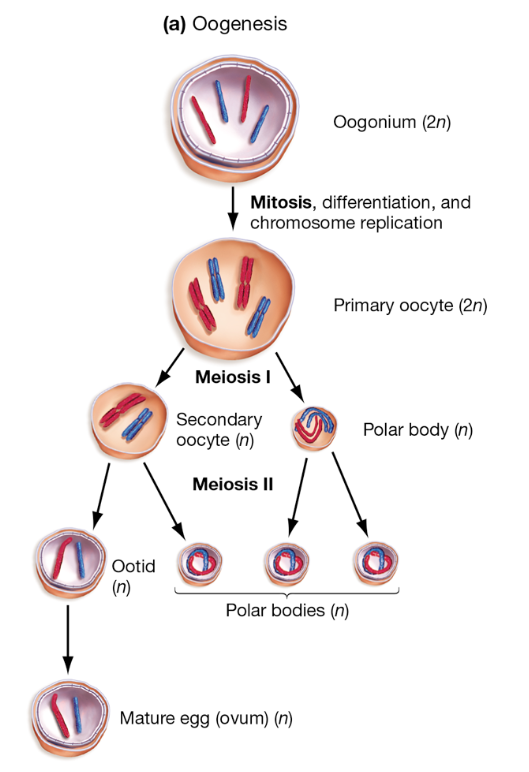
What are the stages of oogenesis and the ploidy of each cell?
Begins with an oogonium (2n) → mitosis, differentiation, chromosome replication → primary oocyte (2n)
Meiosis I → secondary oocyte (n) and polar body (n)
Meiosis II in the secondary oocyte → an ootid (n) and a polar body; meiosis II in the first polar body → two more polar bodies
Ootid → mature egg/ovum (n)
What is spermatogenesis?
Process by which male gametes (sperm) are produced in the testes
Begins w/ diploid stem cells → meiosis → generates haploid sperm
Highly efficient; each primary spermatocyte generates 4 sperm
~ equally divided cytoplasm among daughter cells
Occurs continuously after sexual maturity
Produces large #s of sperm throughout life
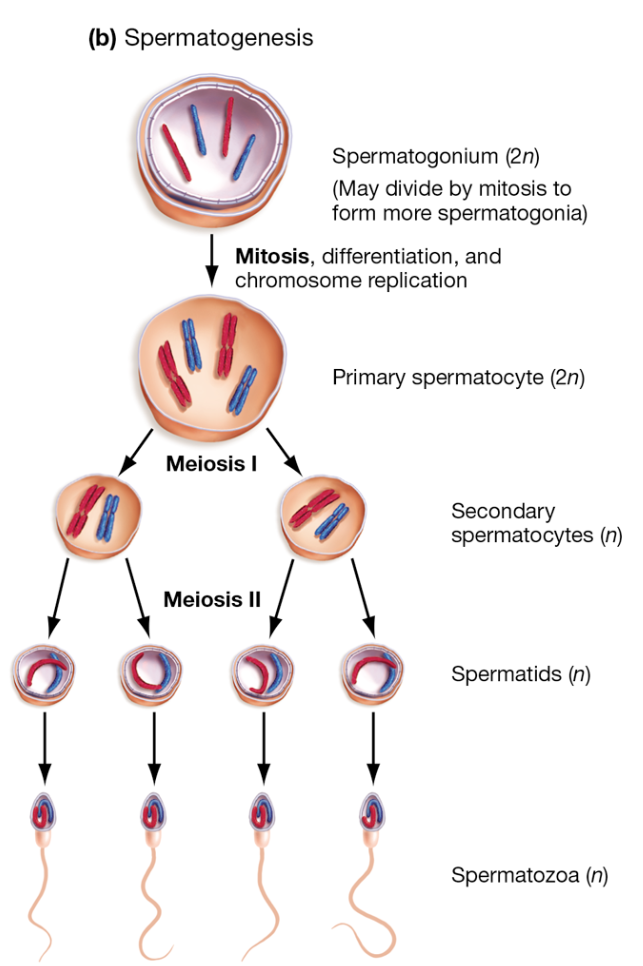
What are the stages of spermatogenesis and the ploidy of each cell?
Begins w/ spermatogonium (2n) → mitosis, differentiation, chromosome replication → primary spermatocyte (2n)
Meiosis I → two secondary spermatocytes (n)
Meiosis II from each spermatocyte → 4 total spermatids (n)
Spermatids develop into spermatozoa (n)
Why are polar bodies produced during oogenesis?
B/c cytoplasm is dividing unequally among daughter cells. Most is concentrated into a single developing egg to ensure the ovum revives sufficient nutrients, organelles, and cellular machinery to support early embryonic development
How do egg and sperm structure reflect their functions?
Eggs = large cells w/ abundant cytoplasm, nutrients, organelles, and genetic material to support early embryonic development
Sperm = smaller, specialized for mobility and delivery of genetic information
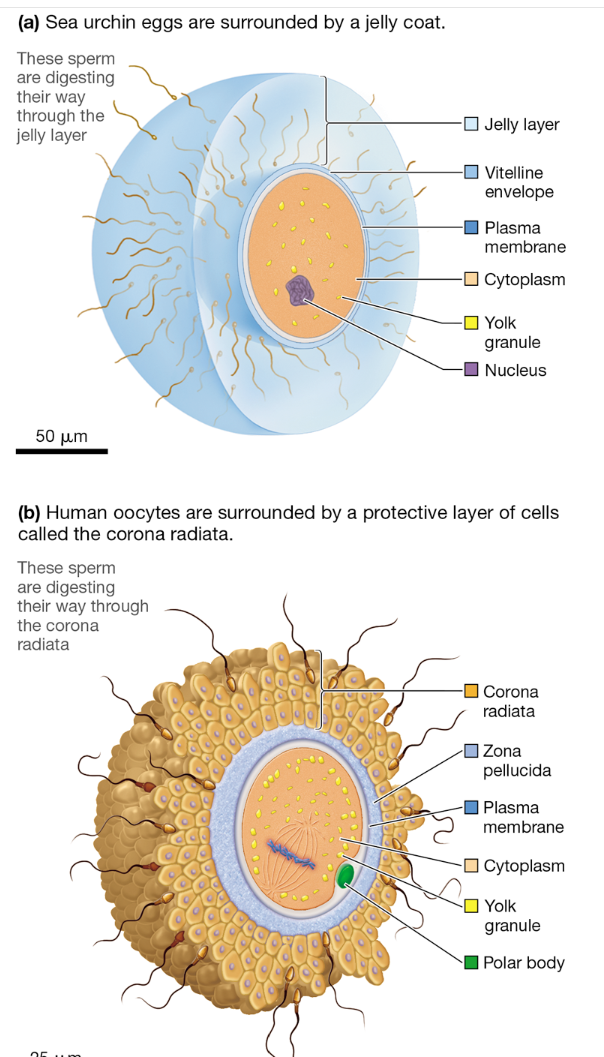
What protective structures surround sea urchin and mammalian eggs?
Protective layers help prevent physical damage and participate in sperm recognition during fertilization (help prevent polyspermy)
Sea urchin eggs are surrounded by a jelly layer and a vitelline envelope
Mammalian eggs possess corona radiata and zona pellucida
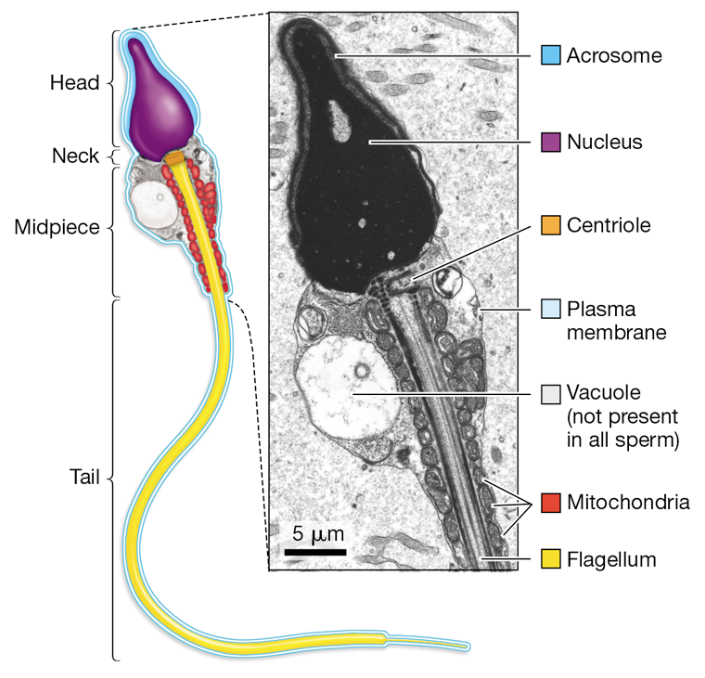
What are the functions of the acrosome, nucleus, mitochondria, and flagellum in sperm?
Acrosome: contains digestive enzymes that help the sperm penetrate the egg
Nucleus contains the haploid genetic material that combines w/ egg's genome during fertilization
Mitochondria in the midpiece generate ATP needed for movement.
Flagellum propels the sperm toward the egg through fluid environments
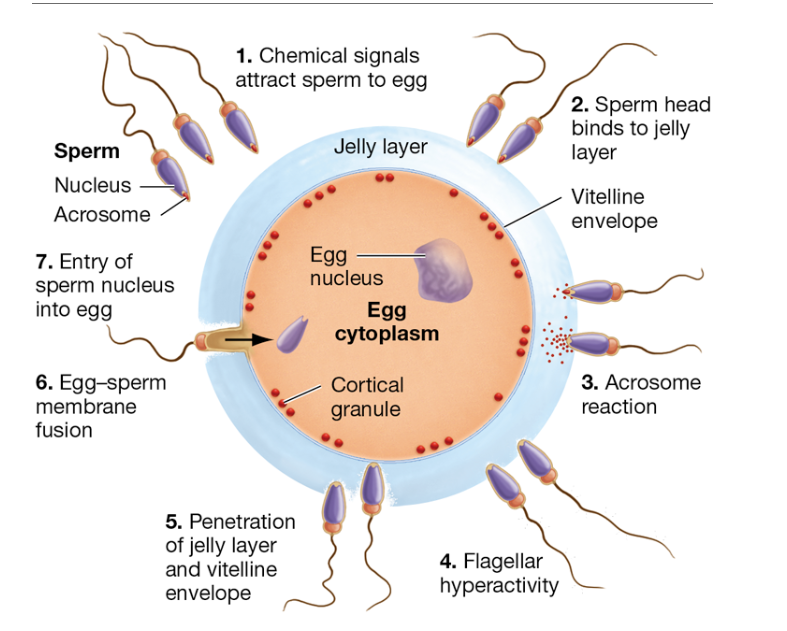
What is the step-by-step process of fertilization in sea urchins?
Sea urchin eggs release a chemical to help the sperm find them
Head of the sperm binds to the jelly layer
Binding triggers acrosome reaction; enzymes contained in the acrosome digest portions of the jelly layer and vitelline envelop
Contact w/ jelly layer increases sperm flagellum movement, powering it towards the egg’s plasma membrane
Plasma membrane proteins induce membrane fusion w/ the sperm
Sperm nucleus enters the egg, egg nuclei + sperm fuse and reestablish diploid #
Egg is activated + ready for development
What are bindin and bindin receptors, and why are they important?
Bindin = protein located on the surface of sea urchin sperm
Bindin receptors = proteins located on the egg's vitelline envelope
Interaction b/w them allows sperm to attach to eggs of the same species, helping to prevent cross-species fertilization
What is polyspermy and why is it dangerous?
Occurs when more than one sperm fertilizes a single egg and produces an abnormal chromosome # in the zygote. This genetic imbalance disrupts normal development and is usually lethal
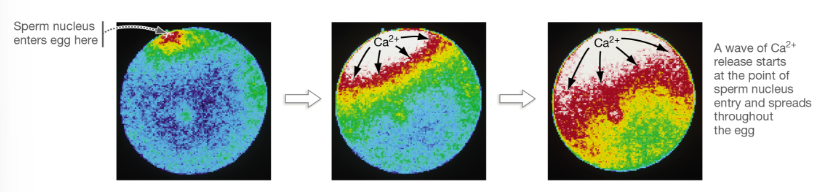
How is polyspermy prevented and what role does calcium play?
Sperm enters egg → calcium ions are released throughout egg cytoplasm
Triggers exocytosis of cortical granules (membrane-bound vesicles)
Granules release enzymes/other molecules that modify the egg’s outer layers
Helps to prevent additional sperm from attaching/entering the egg
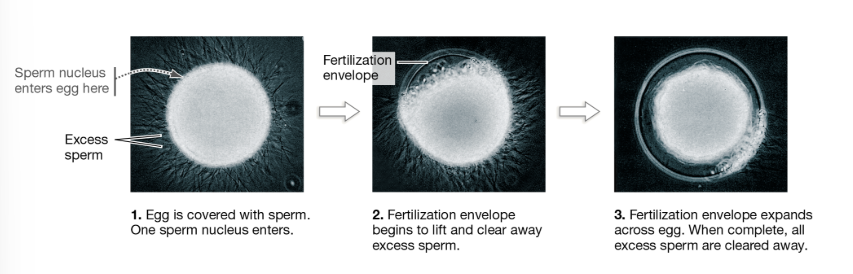
How do cortical granules and the fertilization envelope prevent polyspermy?
Following fertilization cortical granules release enzymes and solutes through exocytosis
Proteases modify proteins within the vitelline envelope; solutes draw water into the space surrounding the egg
Lifts the vitelline envelope away from the egg surface → converts it into a fertilization envelope which acts as a physical barrier that prevents additional sperm from entering
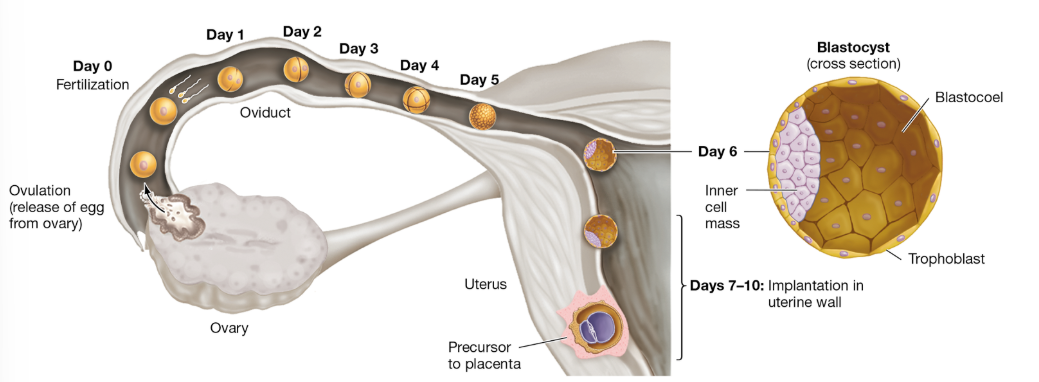
What is cleavage and how does it produce a blastula?
One of the stages of embryonic development that involves a series of rapid mitotic divisions that occurs immediately after fertilization
Zygote divides repeatedly w/o significant growth
Produces many blastomeres (smaller cells) while the embryo maintains size and eventually develops into the blastula (hollow ball of cells)
Blastula stage = completion of early cleavage
What is a blastula?
Early embryonic stage formed after cleavage
Hollow ball of unspecialized cells surrounding a fluid-filled cavity
Arrangement of cells est. the framework for later body organization
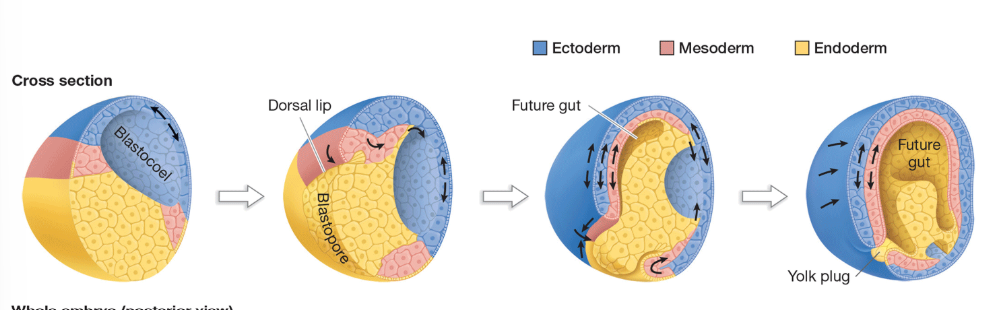
What happens during gastrulation and what are the blastopore and gastrula?
An embryonic stage in which cells migrate and reorganize to establish the basic body plan of the embryo
Blastopore forms as cells move inward and the embryo becomes a gastrula that contains multiple layers of cells that form tissues/organs
Germ layers (ectoderm, mesoderm, and endoderm) are established
What is neurulation?
One of the embryonic development stages that forms the neural tube
Specialized ectodermal cells fold inward/fuse to create the neural tube which later develops into the brain + spinal cord
Errors during neurulation can result in serious developmental abnormalities
What is organogenesis?
Stage of development during which organs and tissues begin to form from the germ layers
Cells become increasingly specialized
Interactions among tissues guide formation of complex organ systems.
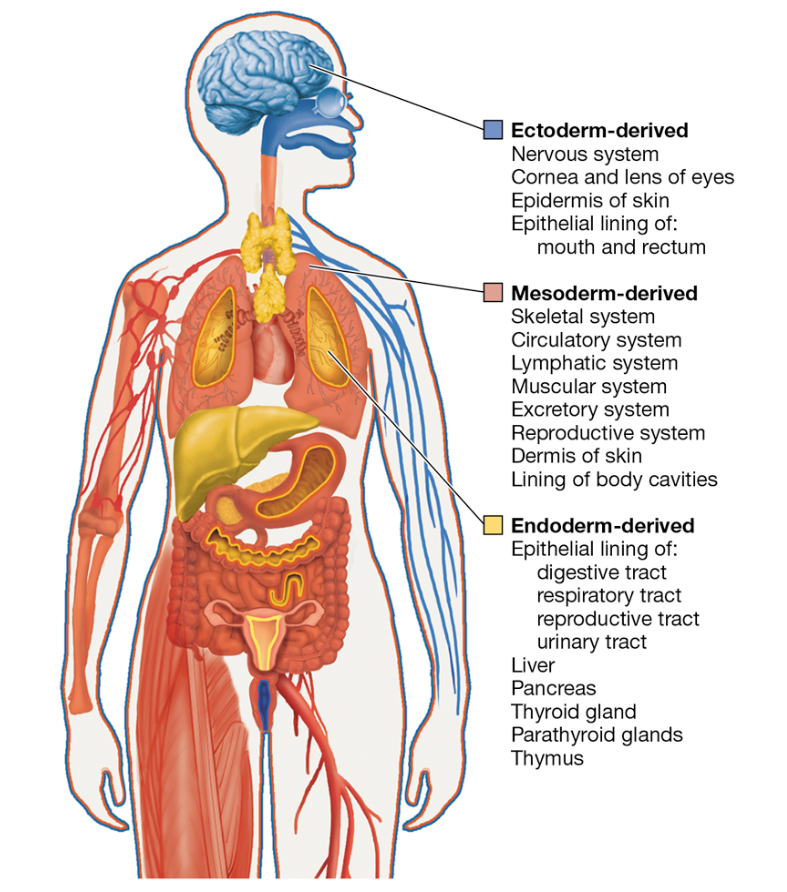
What is the ectoderm and what structures develop from it?
Outermost germ layer formed during gastrulation
Gives rise to the nervous system (brain + spinal cord), epidermis of skin, many sensory structures
Plays a major role in communication and perception
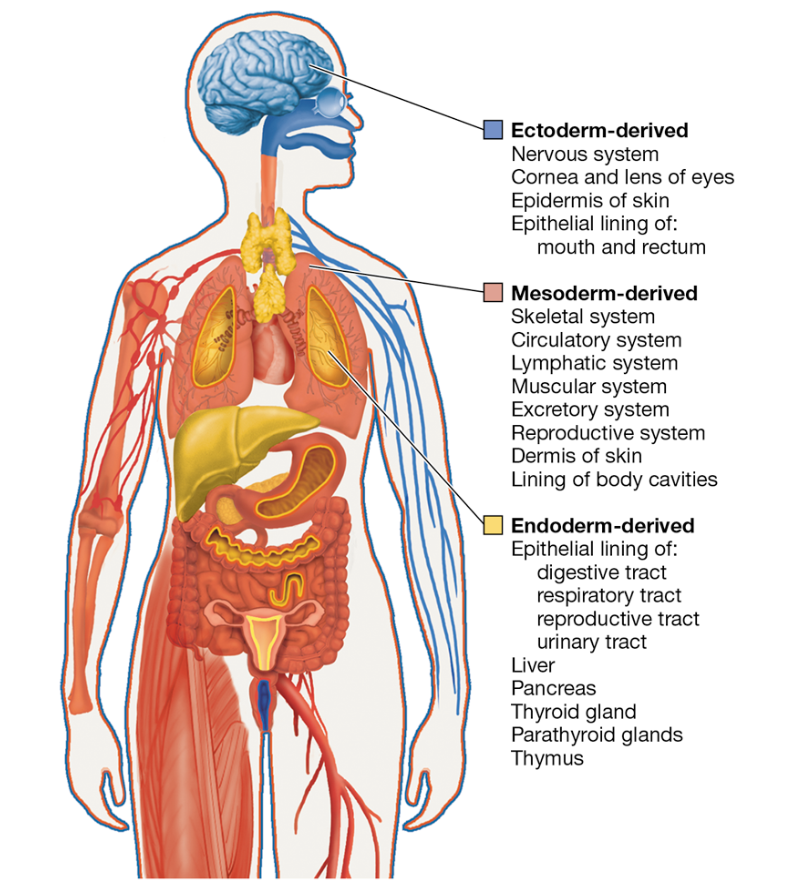
What is the mesoderm and what structures develop from it?
Middle germ layer formed during gastrulation
Gives rise to muscles, bones, connective tissues, the circulatory system, and components of the reproductive + excretory systems
Critical for body organization (support, movement, transport systems)
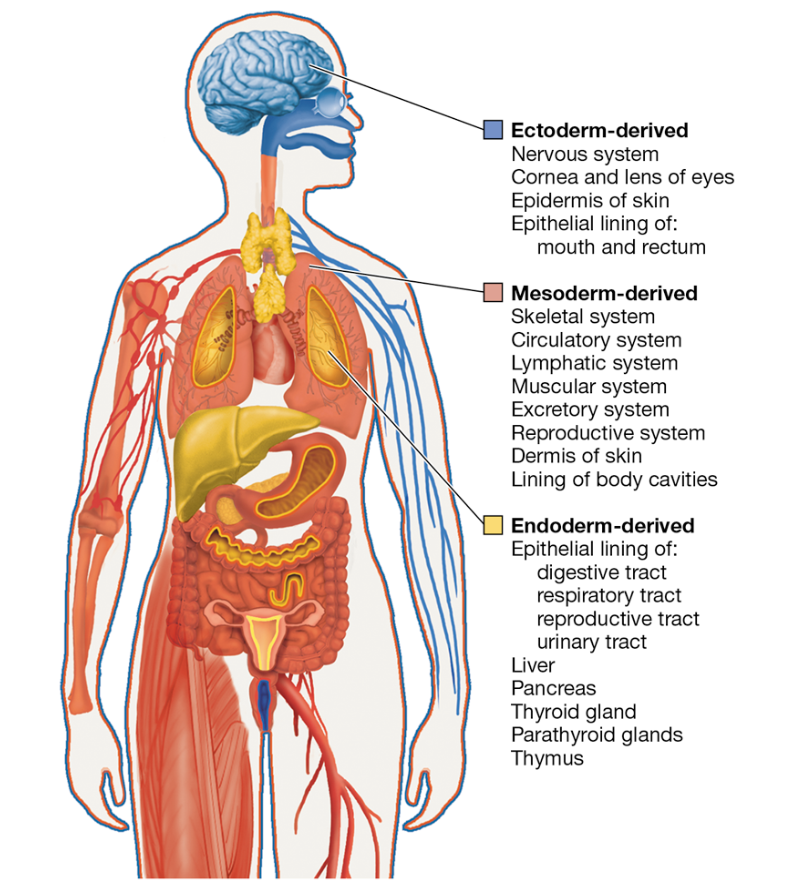
What is the endoderm and what structures develop from it?
Innermost germ layer formed during gastrulation
Lines the developing digestive tract and respiratory system
Gives rise to the epithelial linings of GI tract/respiratory system + associated organs like liver and pancreas
Critical role in internal physiological functions (nutrient processing and gas exchange)
What are the major structures of the female reproductive system and what are their functions?
Ovaries, oviducts, uterus, cervix, vagina, and clitoris
Ovaries produce eggs and hormones (E2 and P4)
Oviducts transport eggs/often site of fertilization
Uterus houses + nourishes developing embryo and fetus
Cervix connects the uterus to vagina
Vagina functions in sperm reception and childbirth
Clitoris is a sensory organ (sexual stimulation)
What are the major structures of the male reproductive system and what are their functions?
Testes, epididymis, vas deferens, seminal vesicles, prostate gland, penis, and urethra
Testes produce sperm and testosterone
Epididymis stores and matures sperm
Vas deferens transports sperm toward the urethra
Seminal vesicles and prostate gland contribute fluids that form semen/support sperm survival
Penis delivers semen to female tract
Urethra = passageway for semen to exit body
What are the functions of the accessory glands in semen production?
Seminal vesicles contribute fructose that provides energy for sperm and prostaglandins that influence female reproductive tissues
Prostate gland contributes fluids that support sperm survival
Bulbourethral glands secrete alkaline mucus that lubricates the urethra and helps neutralize acidity
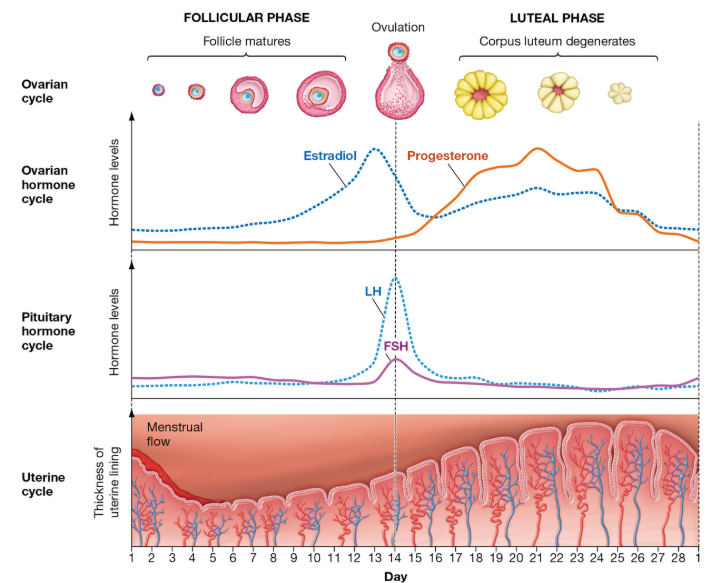
What hormones regulate the menstrual cycle?
GnRH, FSH, LH, estrogen, and progesterone
GnRH is released by hypothalamus → stimulates secretion of FSH/LH from anterior pituitary
FSH promotes follicle development within the ovary
Estrogen is produced by developing follicle, influences reproductive tissues + hormone secretion
LH triggers ovulation/formation of the corpus luteum
Progesterone produced by the corpus luteum prepares/maintains uterine lining
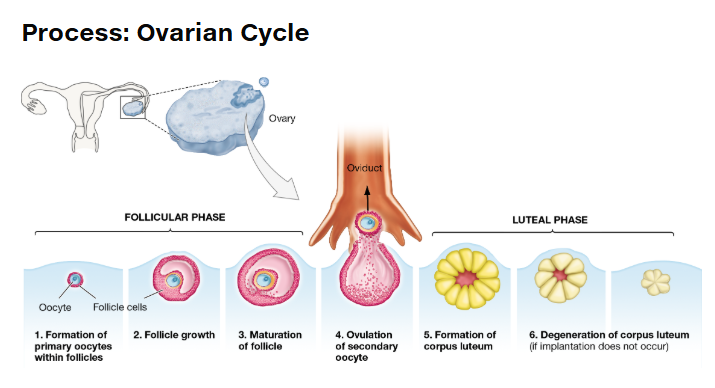
What occurs during the follicular phase?
Begins with menstruation, continues until/prepares body for ovulation
FSH stimulates growth/development of ovarian follicles that produce increasing amounts of E2 as they grow
Rising E2 levels promote growth of the uterine lining → trigger positive feedback on the pituitary → causes surge of LH This positive feedback results in a surge of LH secretion
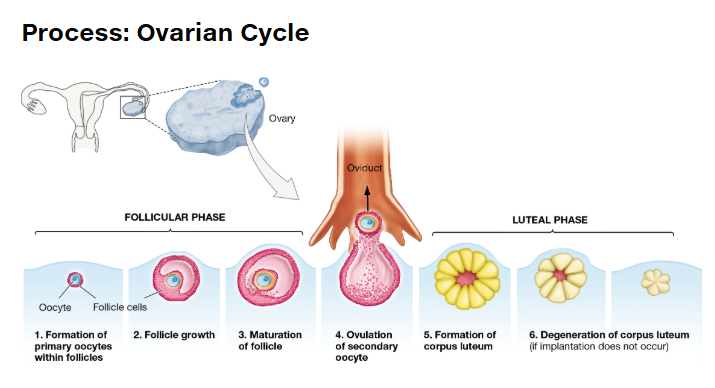
What causes ovulation?
Surge in luteinizing hormone (LH)
LH surge stimulates rupture of the mature follicle and release of the secondary oocyte and is dependent on rising E2 levels that causes positive feedback
What occurs during the luteal phase and what is the corpus luteum?
Begins after ovulation when the ruptured follicle transforms into the corpus luteum
Corpus luteum secretes progesterone + small amount of estrogen
P4 maintains/further develops the uterine lining in preparation for possible implantation
High P4 suppresses GnRH, FSH, and LH via negative feedback
If no fertilization → corpus luteum degenerates
What causes menstruation?
When fertilization and implantation do not take place
Corpus luteum degenerates → P4 levels decline
Causes the uterine lining to break down and detach, so blood/tissue from uterine lining are shed through the vagina
Menstruation = beginning of a new menstrual cycle
How does pregnancy alter hormone regulation?
During pregnancy, hormones maintain the uterine lining and prevent additional ovulation
P4 remains elevated, supports endometrium, continues to suppress GnRH, FSH, and LH to prevent development of new follicles and additional ovulation
How do barrier methods prevent pregnancy?
Physically blocking sperm from reaching the egg
Condoms, diaphragms, and cervical caps
Do not alter hormone levels or ovulation
How do birth control pills prevent pregnancy?
Contain synthetic hormones similar to progesterone and sometimes estrogen
Exert negative feedback on hypothalamus/pituitary gland, decreasing GnRH, FSH, and LH
W/o adequate LH → no ovulation
Uterine lining develops differently, reducing the likelihood of successful implantation
How does emergency contraception prevent pregnancy?
Contains hormones similar to those found in birth control pills
Helps to prevent or delay ovulation before fertilization occurs (acts before pregnancy is establishes)
How does the abortion pill differ from birth control and emergency contraception?
Abortion pill, mifepristone, functions as a progesterone receptor antagonist.
Blocks P4, so it prevents maintenance of the uterine lining and terminates the pregnancy
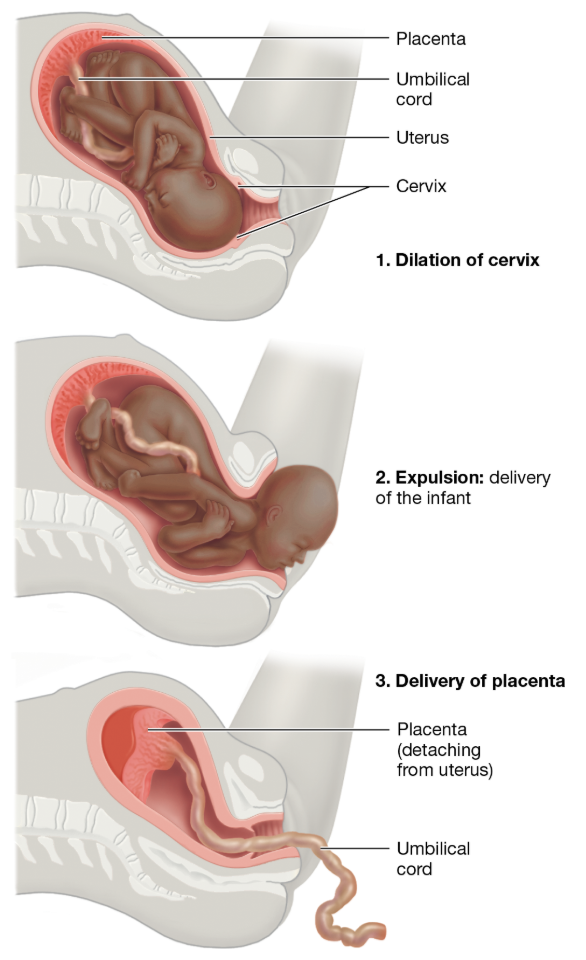
What are the three stages of parturition in humans?
Dilation of the cervix
Uterine contractions gradually widen the cervical opening
Expulsion: strong contractions/maternal pushing deliver the baby through the birth canal
Delivery of the placenta (remains attached to the uterine wall after birth)