BioPsych
 View linked note
 Call Kai
 Learn
Learn Practice Test
 Spaced Repetition
 Match
Match Flashcards
 Knowt Play
1/99

There's no tags or description
Looks like no tags are added yet.
Name | Mastery | Learn | Test | Matching | Spaced | Call with Kai |
|---|
No analytics yet
Send a link to your students to track their progress
100 Terms
Biological perspective
focuses on brain, nervouse system, hormones, and more that influence behavior and mental processes
Behavioral Perspective
observable behaviors are learned and processed through stimuli in the environment or through interactions
Behavioral
reward system
Cognitive Perspective
mental processes such as memory, problem solving, language, and learning
Problem solving
cognitive
memory
cognitive
language
cognitive
learning
cognitive
Piaget
cognitive
conditioning
behavioral
Pavlov
Behavioral
Watson
Behavioral
individual growth
Humanistic
Free-will
Humanistic
self- determination
humanistic
ones full potential
humanistic
Psychodynamic perspective
Unconscious thoughts
unconsious feelings
childhood experiences
Freud
Psychodynamic
Evolutionary Perpective
aid survival
adaptations
Sociocultural perpective
social norms and expectations
Nature
genes
Nurture
Enviroment
working on what nature gave us
Genetic predisposition
increased likelyhood of developing a specific trait, condition, or disease due to inherited genetic factors
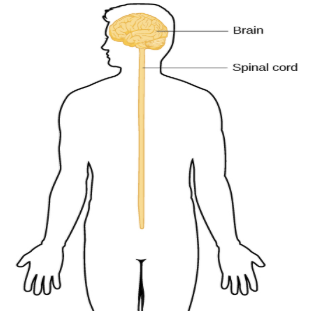
Identify which system
Central Nervous system
Parts of the CNS
Brain
spinal cord
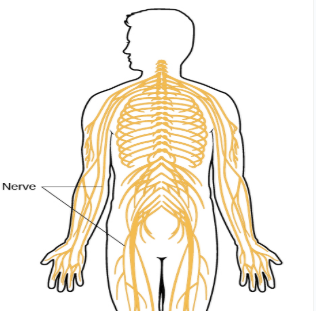
Identify which system
Peripheral Nervous System
Parts of the PNS
sensory nuerons
motor nuerons
nerves
What are the two subdivisions of the PNS?
Autonomic
Somatic
Somatic NS
communicates sensory information to the CNS like
pain
touch
temp
position
move or how to move from the CNS out to the various muscles needed
Voluntary Control
Involuntary Reflexes
Autonomic
controls
glands
internal organ
muscles
regulates involuntary functions:
heart rate
breathing
digestion
blood pressure
Involuntary
Subdivisions of Autonomic
Parasympathetic and sympathetic
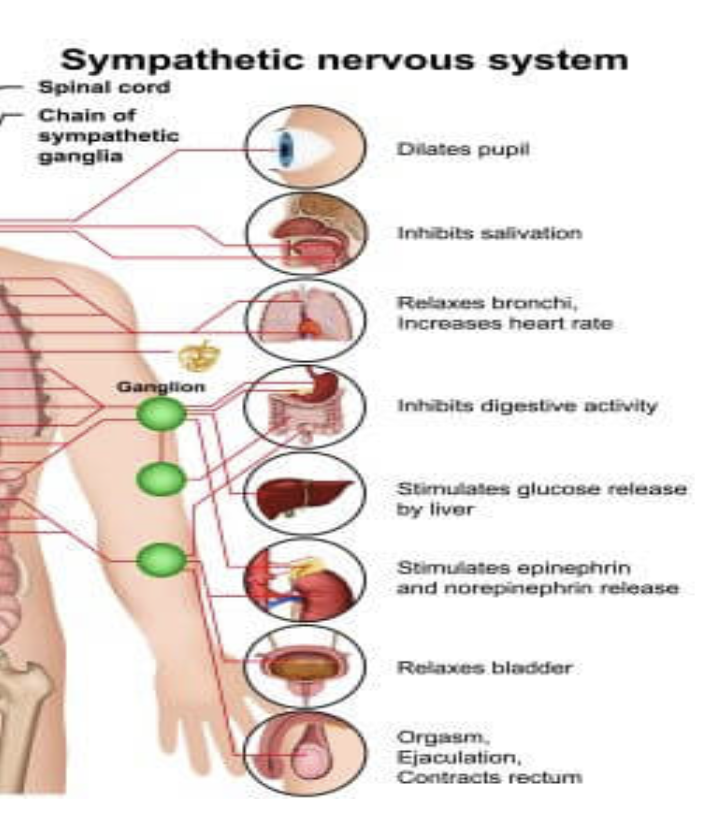
Sympathetic
Fight or Flight
pupils dialate
salivation stops
increased breathing and heart rate
digestion stops
stimulates glucose
relaxes bladder
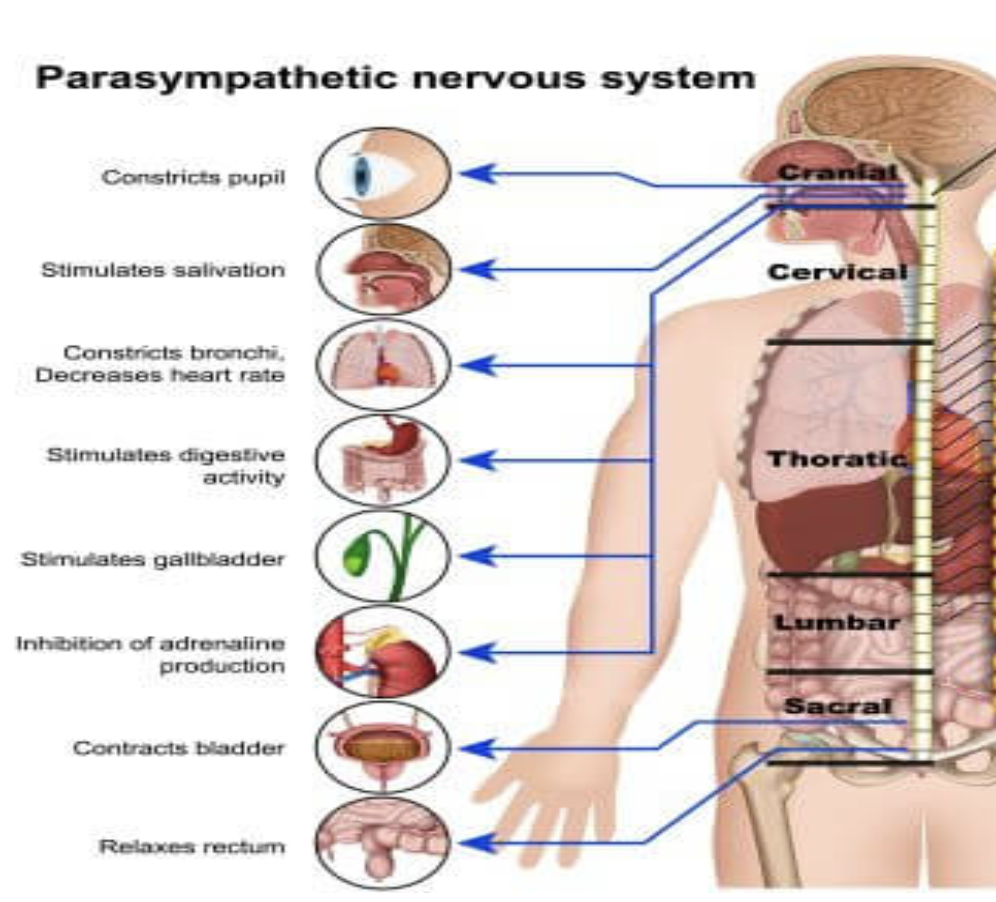
Parasympathetic
Rest and Digest
constrifcts pupils
salivation
decresed heart rate
digestion increases
gallbladder
contracts bladder
relaves rectum
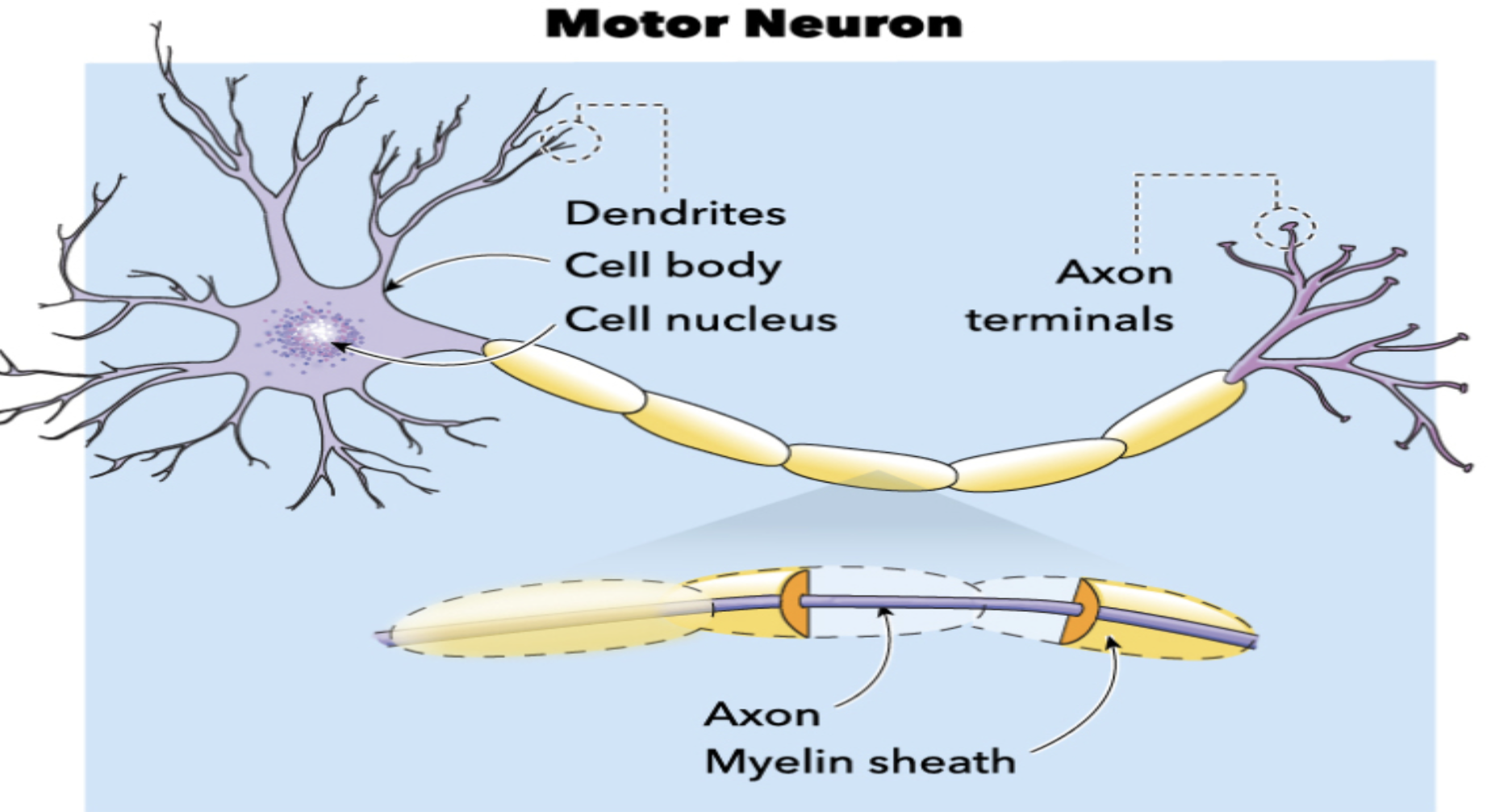
Identify the nueron
motor nueron
dendrites
recieve and integrate messages
axons
passes messages through
axon terminals
send messages
myelin sheath
increases speed and greater transmittion
deterieration of mylin sheath leads to
multiple sclerosis
reuptake and gap between nuerons is
synapse
Action potential
A neuron sends a message by firing an impulse
what do glial cells do?
support
nourish
protect
guide
nuerons
depolarization
axon opening gates
refractory period
breif resting pause after nueron is fired
all or none responce
nuerons fire or dont
Threshold
level of stimulation required to trigger impulse
Sensory nuerons
Afferent
carries mesages from tissues and receptors to CNS
Internuerons
nuerons in CNS procces info between sensory and motor
Motor nuerons
Efferent
Carries instructions from CNS to rest of body
Nuerotransmitter
chemical messengers that cross the synaptic gap between neurons and bind to the receptor sites on the receiving neuron, influencing whether that neuron will generate a neural impulse
Acetlycholine
muscle action
memory
messages between motor nuerons
Lack of Acetlycholine
Alzheimers
Dopamine
muscle control
positive emotion
reward motivated behavior
Ex) excersize, foods, shopping, sex, addiction
Undersupply of dopamine
Parkinsons
Oversupply of dopamine
schizophrenia
Seretonin
positive emotion
tells us when to sleep
sexual arousal
hunger
Low levels of seretonin
depression
SSRI
selective serotonin reuptake inhibitors are used as antidepressants
Norepherine =
adrenaline
Norepherine
alterness
arousal
exciting
Undersupply of Norepherine
depress mood
GABA
slows down or turns off brain
Undersupply of GABA
siezures and insomnia
Gluatamate
excitatory neurotransmitter
memory
overstimulate the brain producing migraines or seizures
Endorphins
pain or pleasure
natural pain killer
boost self esteem
natural feel good drug
may help to alleviate depression
endocrine system
secretes hormones instead of nuerotransmitters (hormones travel and take longer in general)
Adrenaline
increases heart rate
increased blood pressure
increased blood sugar
surge of energy
Autonomic
Oxytocin
“cuddle hormone” around friends
Psychoactive drugs
depressants
stimulants
hallucinogens
depressants
calm neural activity and slow body functions
Stimulants
excite neural functioning and speed up body functions
Examples of depressant
heroin
alcohol
example of stimulant
caffeine
Hallucogens
distort perception and evoke sensory images in the absence of sensory input
example of hollucogen
extacy
marajuana
agonist
increases neurotransmitter’s action
antagonist
inhibits neurotransmitter’s action
3 major parts of brain
forebrian
midbrain
hindbrain
Parts of the Hindbrain
brainstem
medulla
pons
reticular formation
cerebellum
medulla function
breathing,
heartbeat,
blood pressure
vomiting
coughing
sneezing
Taste aversion
Autonomic
pons
crontols sleep
coorinates movement
pain signals
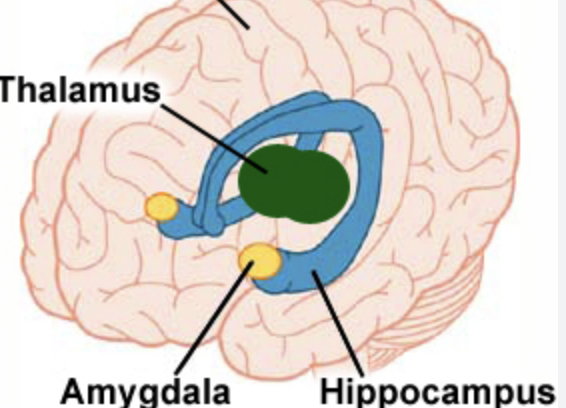
Thalumus
egg shaped It relays most sensory signals to the cortex except smell
reticular formation
arousal awakeness
Cerebellum
little brain
balance
coordination
limbus
border
amygdala
fear
agression
opioids help
lesson pain and anxiety
Hypothalamus
eating
drinking
body temperature
helps govern the endocrine system through the pituitary gland
rewards center
Maintains steady internal state
Hippocampus
memories
if damaged cannot make new memories (caused by concussion)
4 lobes
prefrontal, frontal, occipital, temporal
cerebral cortex
“Bark” of hempisheres (covers them)
the hemisphere constists of FPOT
Frontol lobe
Higher level thinking (prefrontal cortex, motor cortex)
Temporal lobe
hearing
prefrontal cortex
judgement
planning
social interaction
18-25
parietal lobe
receives sensory input for touch and body position
occipital lobe
visual cortext (vision)
left side
language
Bronca
speaking
Wernicke
understanding language
corpus callosum
connects brain hemipsheres by neural fibers