3 Market research
 Call Kai
 Learn
Learn Practice Test
 Spaced Repetition
 Match
Match Flashcards
 Knowt Play
1/23

Earn XP
Description and Tags
Name | Mastery | Learn | Test | Matching | Spaced | Call with Kai |
|---|
No analytics yet
Send a link to your students to track their progress
24 Terms
Market research
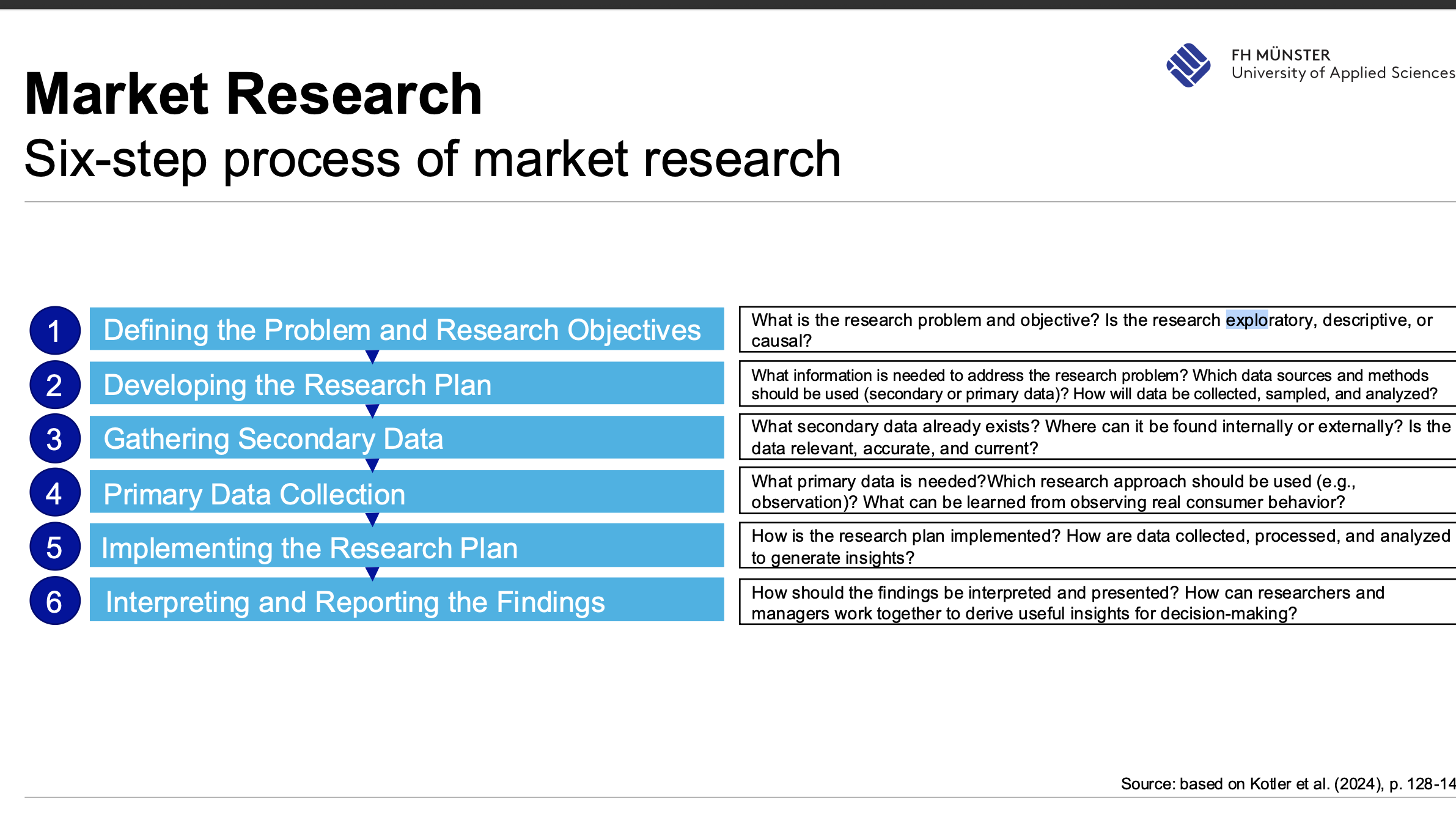
the systematic collection, analysis and interpretation of data about markets and consumers. It helps managers make better marketing decisions
Primary research vs Secondary research
Primary research means collecting new, fresh data for a specific problem. Secondary research means using existing data that was already collected for another purpose
Exploratory research
Research used to gather preliminary information. It helps to define a problem better and suggest initial hypotheses
Descriptive research
research used to describe market problems or situations. it focuses on details like the market or the demographics of costumers
Casual Research
Research used to test hypotheses about cause and effect relationships. For example, checking if a lower price actually increases sales
Qualitative Research
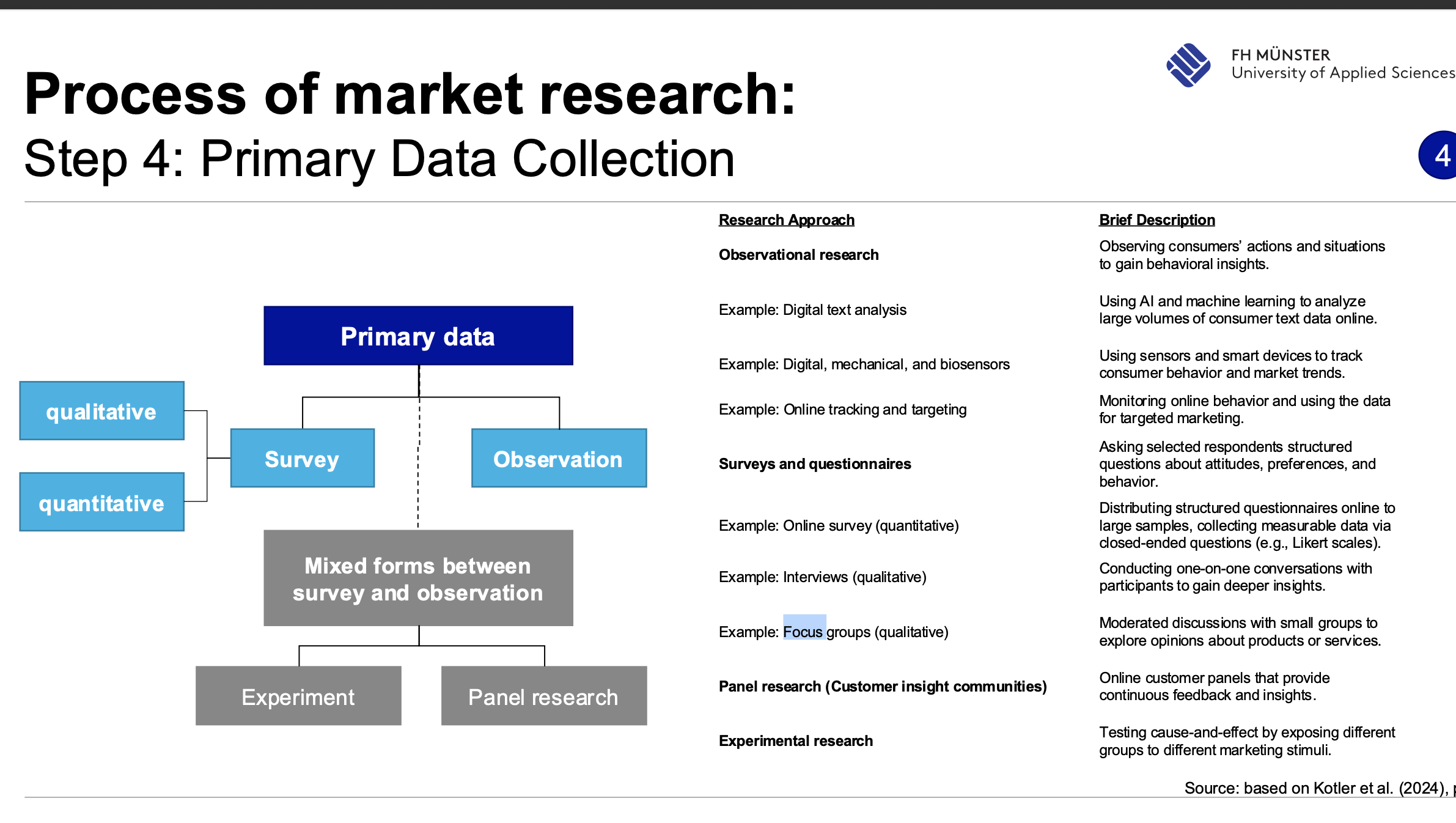
Research that explores deep human motives, feelings and behaviors. It uses small groups of people and open questions instead of numbers
Quantitative research
research that focuses on gathering numerical data. It uses large groups of people to find precise statistics and clear market trends
Focus group interview
a small group of people (usually 6 to 10) who talk about a product or service with a trained moderator. It is a classic qualitative method
Ethnographic Research
a method where researchers watch and interact with consumers in their natural environment to see how they really use products
Survey research
the most common method for quantitative data collection. It asks people questions about their knowledge, attitudes and buying behavior
experimental research
a method where researchers change one factor (like the price) while keeping other factors the same. This is used to find cause and effect links
Population vs. Sample
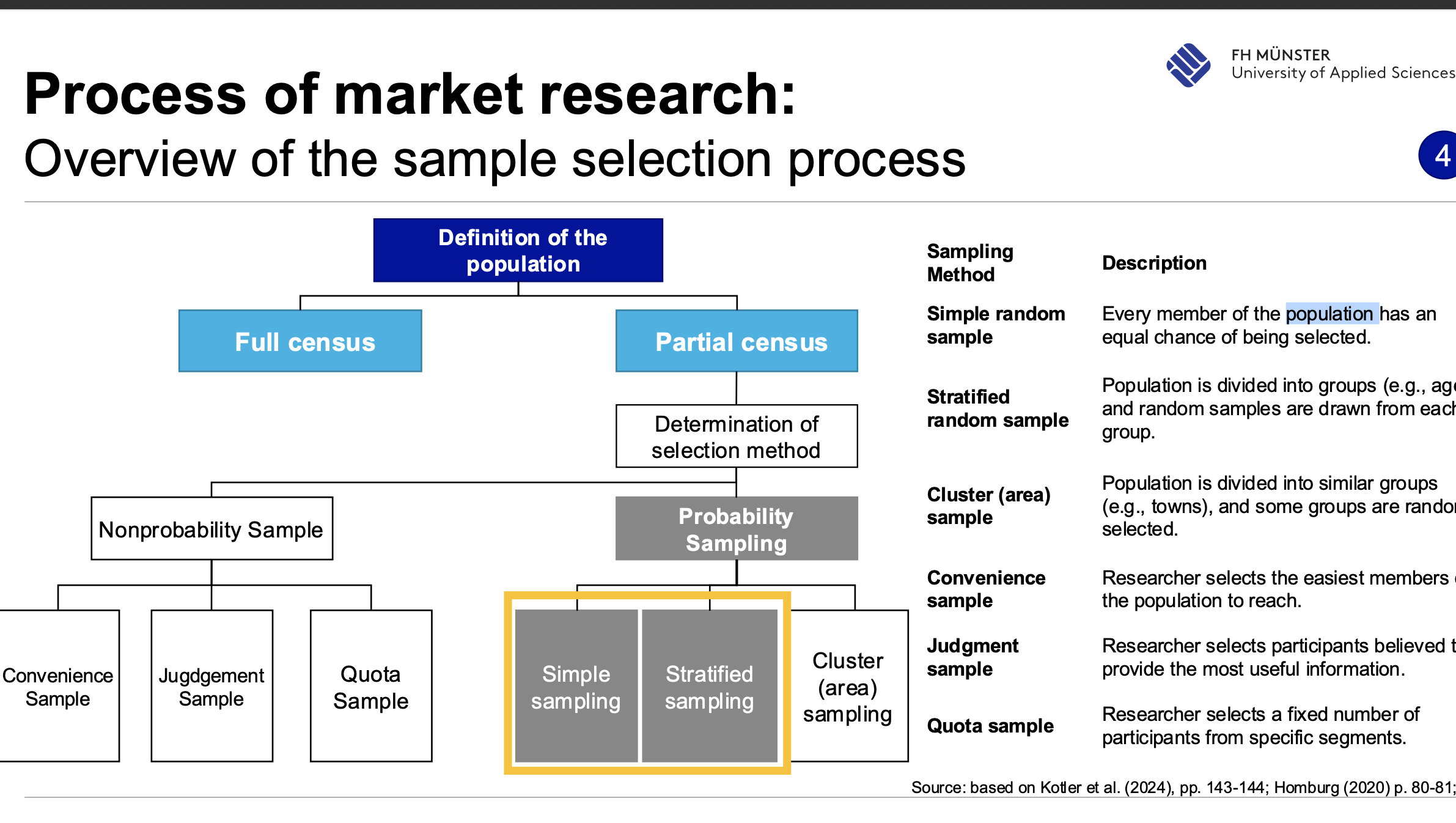
the population is the complete group of people you want to study. A sample is a smaller segment of that group chosen to represent the whole population
Probability sample vs Non probability sample
in a probability sample, every member of the population has a known equal chance of being chosen. In a non probability sample, the selection is based on convenience or judgment
Objectivity
a quality standard showing that the research results are neutral. It means different researches will get the same results from the same data
Reliability
a quality standard showing that the research is accurate and stable. if you repeat the study unter the same conditions, you should get the same results
Validity
A quality standard showing if the research showing actually measures what it was planned to measure