Pharmacology Quiz 1 (CH 1-5)
 Studied by 0 people
 Call Kai
 Learn
Learn Practice Test
 Spaced Repetition
 Match
Match Flashcards
 Knowt Play
1/169

There's no tags or description
Looks like no tags are added yet.
Name | Mastery | Learn | Test | Matching | Spaced |
|---|
No study sessions yet.
170 Terms
Pharmacology
study of drugs that alter functions of living organisms
Drug therapy
used of drugs to prevent, diagnose, or treat signs, symptoms, and disease processes
Medications
drugs given for therapeutic purposes
-given for local or systemic effect
Type of effects of medications
local and systemic
Local
act mainly at the site of application (ex: sunscreen, hydrocortisone creams)
Systemic
taken into the body, circulated via the bloodstream to sites of action in various body tissues (ex: intravenous antibiotic therapy)
T/F: Pharmacology is the use of drugs to prevent, diagnose, or treat signs, symptoms, and diseases.
False
Pharmacotherapy (clinical pharmacology)
The use of drugs to prevent, diagnose, or treat signs and symptoms and diseases
- Focuses on the drug effect on the body and the bodies response to the drug**
Drug sources
plants, animals, minerals, synthetic compounds, semisynthetic
Synthetic compounds
•manufactured in laboratories
•More standardized in chemical compounds, more consistent in affect, less likely to produce allergies
Semisynthetic
naturally occurring substances that have been chemically modified
ex: many antibiotics
Classifications
classified according to effects on
- specific body systems (ex: morphine- CNS depressant)
- therapeutic uses (ex: morphine- potent analgesic)
- chemical characteristics (ex: morphine- narcotic)
** drugs often overlap classifications
Prototypes
Individual drugs that represent groups of drugs
- Often the first drug of a particular group to be developed
* Ex: morphine (represents opioid analgesics)
* Ex: penicillin (represents beta-lactam antibacterial drugs)
Drug names
chemical name, generic name, brand/trade name
T/F: Over-the-counter medications are not regulated by law.
False
Prescription
Written by a licensed health care provider, such as a physician, dentist, or nurse practitioner
Over-the-counter (OTC)
- drugs available without a prescription
- regulated by various laws
Orphan drugs
Drugs that are not financially viable and not adopted by a drug company.
Which law (and its amendments) requires that official drugs meet standards of purity and strength?
Food, Drug, and Cosmetic Act of 1938
Controlled Substances Act (1970)
-regulates manufacturing and distribution of narcotics, depressants, stimulants, hallucinogens, and anabolic steroids
-developed categories for ranking the abuse potential of various drugs
Drug Enforcement Administration (DEA)
- Enforces Controlled Substances Act
- Registers individuals and companies legally empowered to handle controlled substances
- Regulates documentation and handling of controlled substances
Schedule 1 drugs
- Highest potential for abuse
- no currently accepted medical use in the U.S.
- Lack of accepted safety for use of the drug under medical supervision
Schedule 2 drugs
• High abuse potential
• Accepted medical use
• Severe physical and/or psychological dependence
Schedule 3 Drugs
- potential for abuse less than schedule 1 and 2 drugs
- currently accepted medical use in the US
- abuse may lead to moderate or low physical dependence or high psychological dependence
Schedule 4 Drugs
• Lower abuse potential than schedule 3 drugs
• Accepted medical uses
• Abuse may lead to limited physical or psychological dependence relative to schedule 3 substances
Schedule 5 Drugs
- Low potential for abuse relative to schedule 4 substances
- Currently accepted medical use in the U.S.
- Abuse may lead to limited physical or psychological dependence relative to schedule 4 substances
Legal regulation of Drugs
- FDA regulates the development and sale
- Local laws further regulate/approves Prescription and OTC
- Nurses must know the laws of the area in which they practice
Federal Food, Drug, and Cosmetic Act of 1938
standards for testing drug toxicity and monitoring labeling
FDA Pregnancy Categories
A= No risk to fetus
B= Little risk to fetus
C= Risk to fetus; must evaluate risks vs benefits
D= Proven risk to humans
X=Risks outweigh benefits
Cells
dynamic factories that
- take in raw materials
- manufacture products to maintain bodily functions
- deliver those manufactured products to the appropriate destination within the body
- differ from one tissue to another
- exchange materials with immediate environment
- obtain energy from nutrients
- reproduce
- communicate with one another via biologic chemicals
T/F: While all cells differ from one tissue to another, they share certain common characteristics.
True
How do drugs transport through the cell membranes?
drugs must reach and interact with cell membrane to affect cellular function
Most drugs are given for...
systemic effect
What moves drug molecules through the body?
transport pathways and mechanisms
Pharmacodynamics
reactions between living systems and drugs/drug actions on target cells and the resulting alterations in cellular biochemical reactions and functions
4 ways drugs work
1. replace or act as substitutes for missing chemicals
2. To increase or stimulate certain cellular activities
3. To depress or slow cellular activities
4. To interfere with the functioning of foreign cells leading to cell death (chemotherapeutic drugs)
Drugs exert their effects by chemically binding with receptor cells through...
- Activation, inactivation, or alteration of intracellular enzymes
- Changes in the permeability of cell membranes to one or more ions
- Modification of the synthesis, release, or inactivation of neurohormones
Receptors
specialized protein structures that are found on cell membranes
Drugs designed to target specific types of receptors to...
initiate, limit, or prevent a biologic response
Response to a drug will depend on...
the affinity or attraction to a receptor and the concentration of the drug already at the receptor site
Drugs are considered ______ or ________ depending on receptor response
agonists or antagonists
Agonists
drugs that produce a response or prolong activity
Antagonists
drugs that block a response
- can be competitive for the receptor site
Nonreceptor drugs
drugs that do not act on receptor sites
What are some examples of nonreceptor drugs?
antacids, osmotic diuretics, several anticancer drugs, and metal chelating agents
Nonspecific drug effect
work on certain receptors but those receptors may be in different organs or tissues. (Ex/cholinergic receptors)
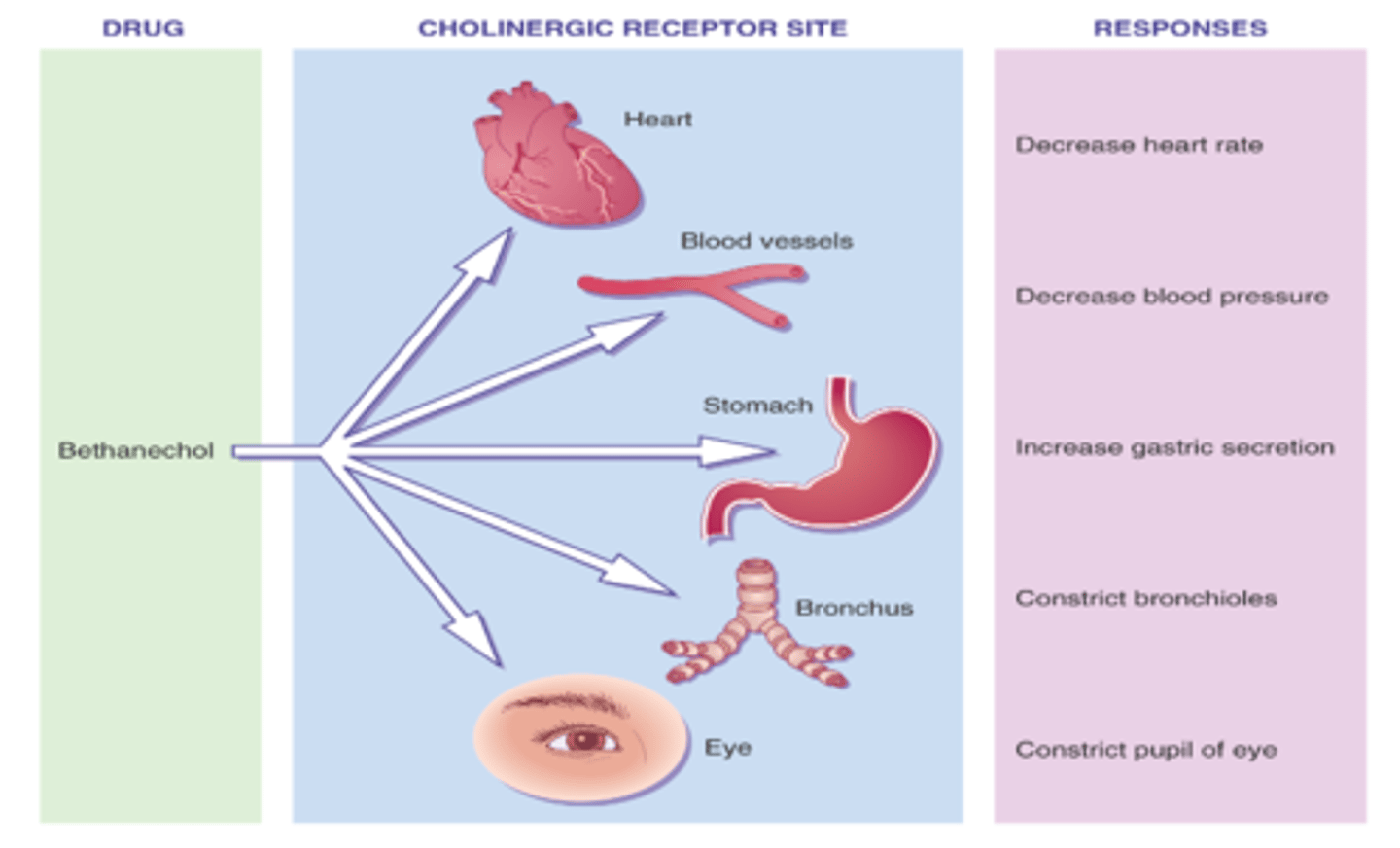
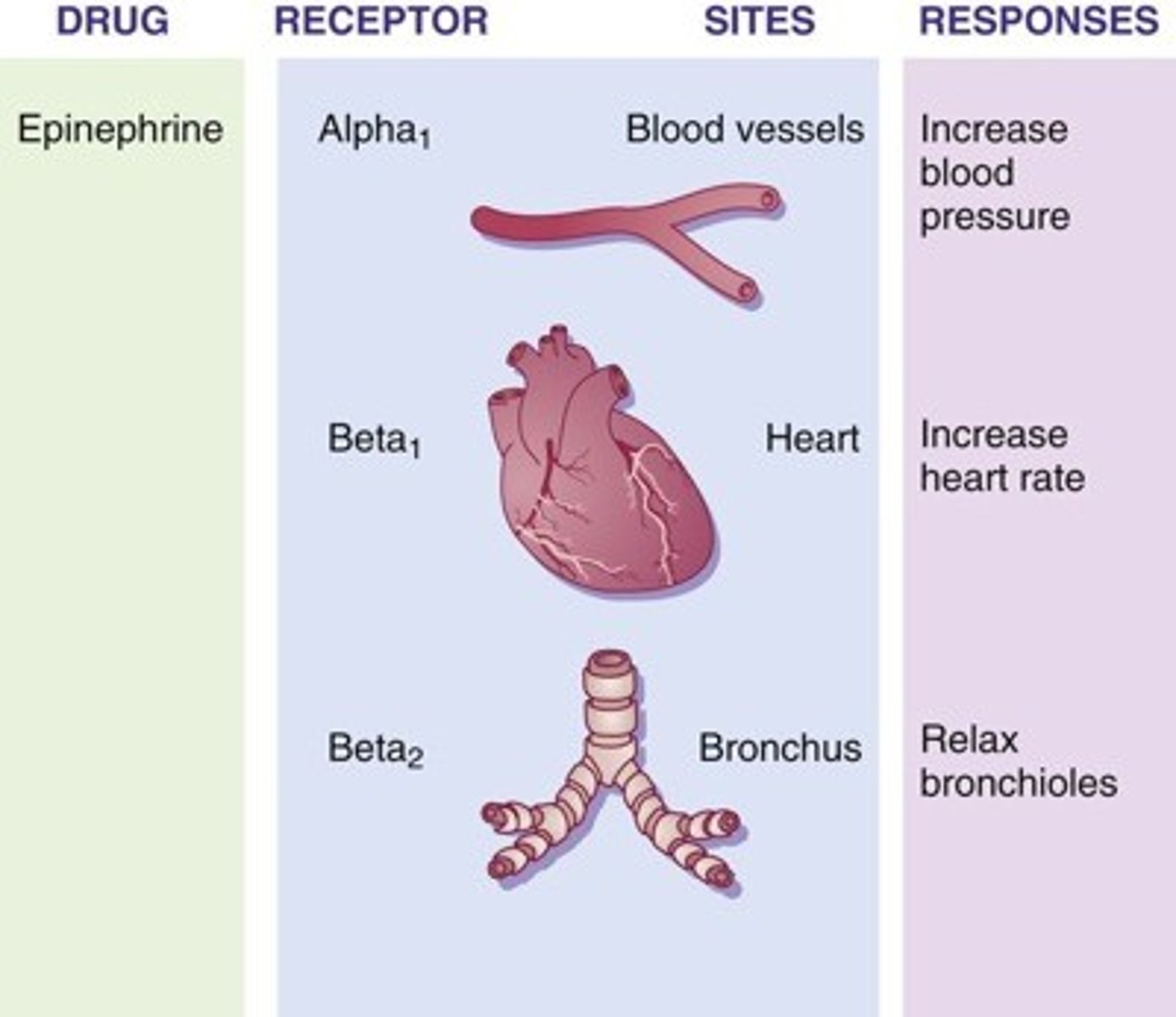
Nonselective drug effect
not selective to just one type of receptor, it can act on different receptors throughout the body.
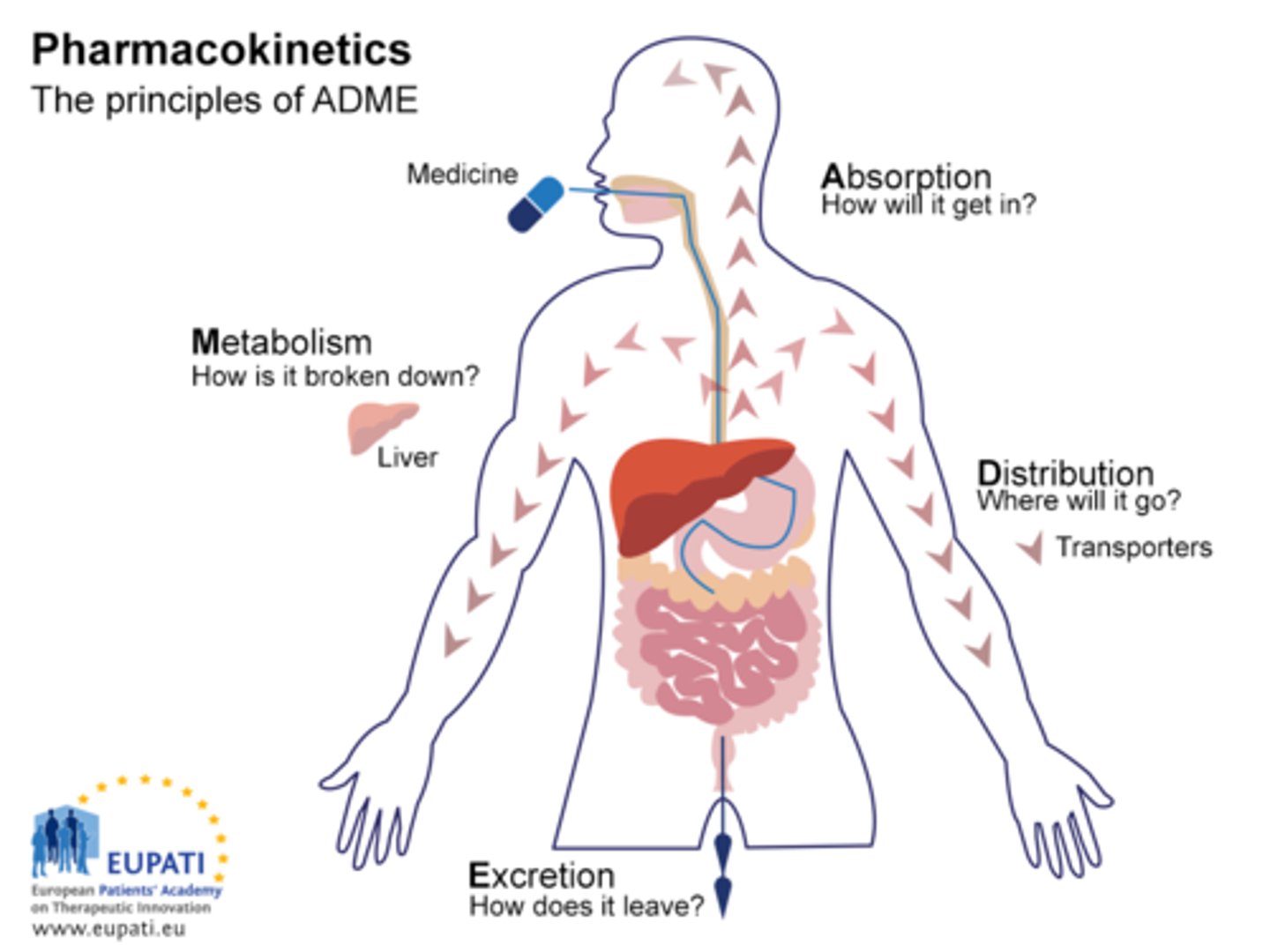
Pharmacokinetics
drug movement through the body to reach sites of action, metabolism and excretion.
- specific processes involves
* absorption
* distribution
* metabolism (biotransformation)
+ excretion
Absorption
process that occurs from the time a drug enters the body to the time it enters the blood stream to be circulated to tissues
- Process: Active and Passive transport
Onset of drug action is determined by...
the rate and extent of drug absorption
Factors that affect rate and extent of drug absorption
- dosage, form, route of administration
- administration site blood flow, GI function (gastric pH)
- The presence of food or other drugs
Absorption of enteral medications (meds given through mouth, or any GI tubes) are altered by...
- GI motility
- presence of food in stomach
- pH of stomach
- amount of bowel surface area
- influenced by pain, stress that could divert blood from GI/stomach
Absorption of Parenteral (outside of GI tract)
- Includes routes of administration such as IV, IM, Sub Q
- altered by blood flow to area
- altered by tissue type (fat/muscle)
What is important with Sub Q or IM med injection?
- muscle tissues have more blood vessels, so absorption is faster
- subcutaneous (fatty) tissue has less blood vessels, so absorption is slower
What is not affected by absorption rules?
intravenous administration as the drug immediately enters the circulation via the blood vessel.
Distribution
the transport of drug molecules within the body
Drugs are carried by blood and tissue fluids to...
- Action sites/Metabolism sites/Excretion sites
*Depends on adequacy of blood circulation
Distribution process is affected by?
1. protein binding
2. blood-brain barrier
3. pregnancy
4. lactation
5. drugs lipid solubility
6 drug's ionization
7 perfusion of reactive tissue
Protein binding
drugs attach to protein molecules and travel to site of action (mostly bind to albumin)
- When drug is bound to protein it is inactive unbound drug is free, active drug
- Only unbound drug is able to move through capillaries.
Plasma proteins (mainly albumin) act as carriers for...
drug molecules
Metabolism
the method by which drugs are inactivated or bio transformed by the body
How does metabolism effect drugs?
- can be changed into new, less active chemicals to be excreted
- from active to inactive metabolites then excreted
- inactive prodrugs that become active when metabolized
Drug-metabolizing enzymes are located within...
- kidneys
- liver (most important)
- red blood cells, plasma
- Lungs
- gastrointestinal mucosa
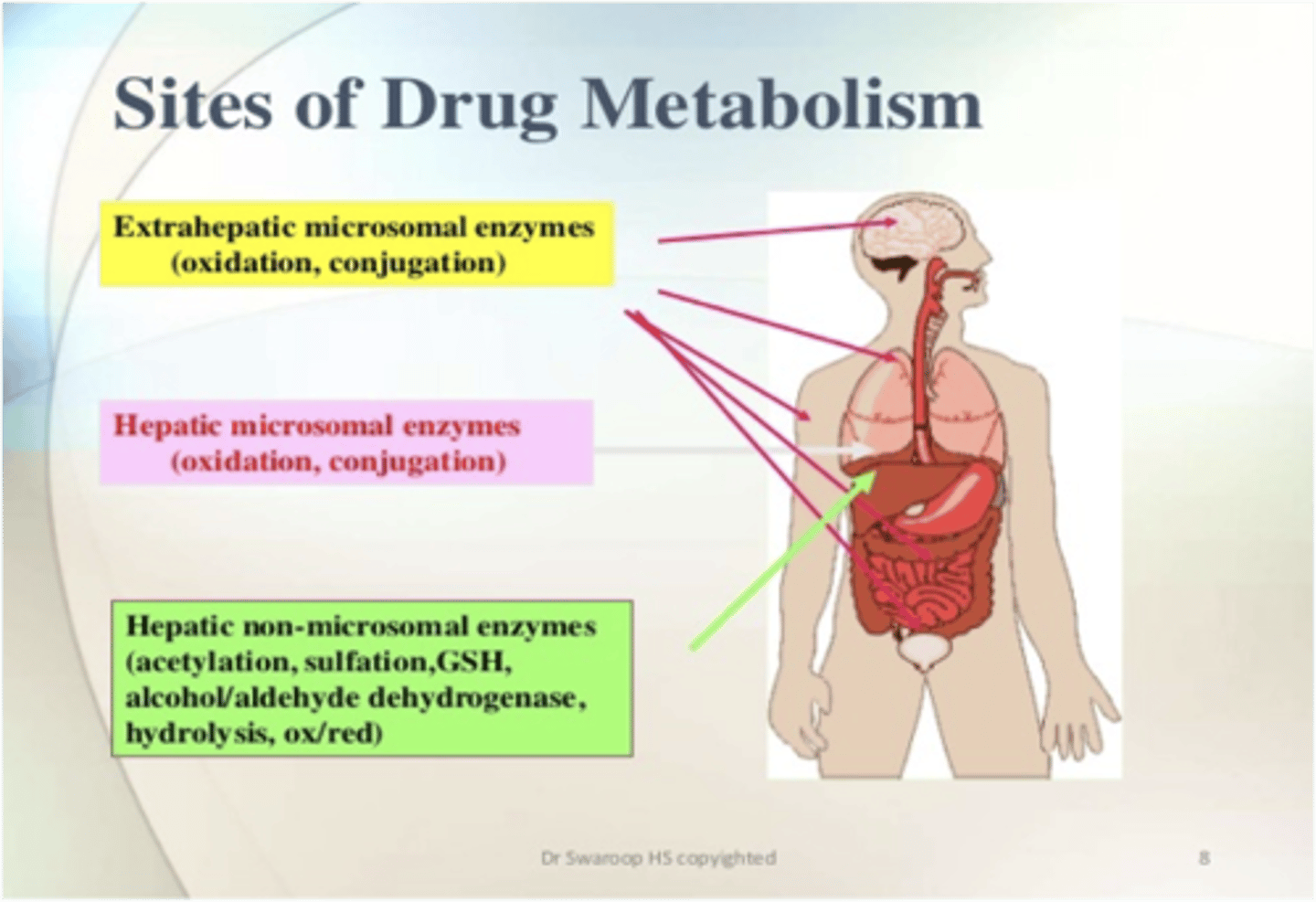
What is the most important site for drug metabolism?
liver
First-pass effect
The initial metabolism in the liver of a drug absorbed from the gastrointestinal tract before the drug reaches systemic circulation through the bloodstream.
enzyme induction
process by which the presence of a chemical that is biotransformed by a particular enzyme system in the liver causes increased activity of that enzyme system
enzyme inhibition
the decrease in hepatic enzyme activity that results in reduced metabolism of drugs
Excretion
elimination of a medication from the body
What organs function during excretion?
- kidneys (most important)
- skin
- saliva
- lungs
- bile
- feces
Factors affecting excretion
- glomerular filtration rate
- urine acidity
T/F: Absorption is the transport of drug molecules within the body.
False
Variables influencing drug therapy
* Clinical factors - age and weight, health disorder, other diseases, client drug compliance
* Administration - Drug form, route of drug administration, multiple drug therapy, drug interactions
* Pharmacokinetics - absorption, distribution, metabolism, excretion
* Pharmacodynamics - Onset, peak, and duration, therapeutic range/window, side effects, adverse reactions.
Onset
time it takes to produce a response
Peak
time to reach highest effect concentration
Trough
Lowest level of concentration reached before next scheduled dose
Duration
Length of time that the concentration is great enough to produce a response
Plateau
maintained level of concentration with repeated fixed doses
Half life
the time it takes for the amount of the drug in the body to decrease in one half (50%) of the peak level it previously achieved
Patient related variables include
Pharmacogenomics,
genetics, ethnicity, sex, pre-existing conditions, psychological factors, tolerance and cross-tolerance
Pharmacogenomics
study of genetic variations in drug responses
Serum drug level
a laboratory measurement of the amount of a drug in the blood at a particular time
what does serum drug level reflect?
-dosage, absorption
-bioavailability, half-life
-rates of metabolism, excretion
What does half-life determine?
appropriate timing and dosing
Factors affecting half-life
- Absorption rate
- Distribution
- Speed of biotransformation
- Rate of excretion
Therapeutic index
the margin between effectiveness and toxicity of a medication
Narrow TI medication
very dangerous r/t the margin of the level of acceptable blood levels is very narrow
What is an example of a narrow TI medication?
digoxin (cardiac glycoside) and inotropic medication that improves the heart muscle contractility in heart failure patients.
- patients taking Digoxin must have their serum blood levels drawn to be sure they are within the acceptable level IE: not subtherapeutic/ therapeutic/ not toxic (TI=0.5-2ng/ml)
____________ must be present for efficacy of serum drug level
minimum effective concentration (MEC)
Toxic concentration
excessive level of medication in the blood stream
What causes toxic concentration?
-single large dose
-repeated small doses
-slow metabolism of medication
Dosage
frequency, size, and number of doses
Route of administration
influences absorption and distribution
Drug-diet interactions
When elements of ingested nutrients interact with a drug and this affects the disposition of the drug
Drug-drug interactions
when the effect of a medication is changed, enhanced, or diminished when taken with another drug, including herbal substances
Interactions that can increase therapeutic or adverse effects include...
- additive effects
- synergism
- interference
- displacement
Interactions in which drug effects are decreased include...
- antidote medication
- decreased intestinal absorption of drugs
- increased metabolism rate of drugs
Adverse effects
any undesired responses to medication administration
- all drugs can produce this.
- can occur with usual therapeutic dosing
- most likely to occur or be more severe with high dosing.
- especially likely to occur with specific drugs and in older adults who take multiple drugs .
Common or serious adverse drug effects
•Central Nervous System
•Gastrointestinal
•Hematologic
•Nephrotoxicity
•Hypersensitivity
•Serum Glucose Levels
drug fever
fever assoc with admin of a drug. Usually because of allergic reaction but can cause by damaging tissues, increasing body heat or interfering with its dissipation or acting on temp regulating center in brain.
Idiosyncrasy
qualitatively abnormal or unusual response