Week 15
 Studied by 0 people
 Call Kai
 Learn
Learn Practice Test
 Spaced Repetition
 Match
Match Flashcards
 Knowt Play
1/67

There's no tags or description
Looks like no tags are added yet.
Name | Mastery | Learn | Test | Matching | Spaced |
|---|
No study sessions yet.
68 Terms
Cell death is triggered by an absence of
Survival signals and grow/divide signals
And a presence of pro-death signals
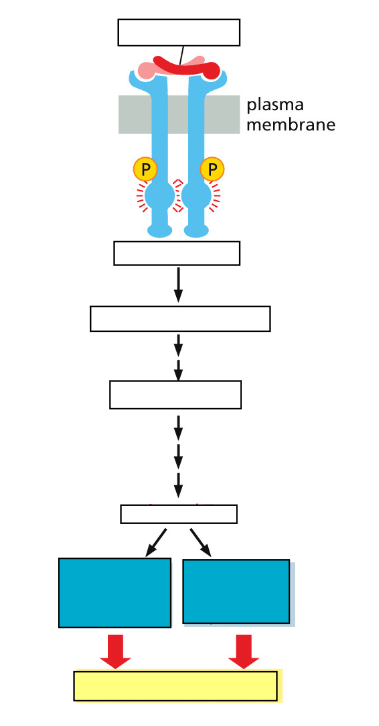
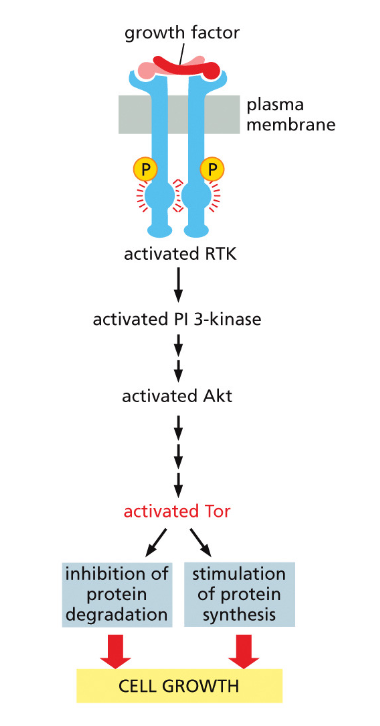
programmed cell death is carefully
regulated and maintains a balance between cell proliferation and constant cell numbers (e.g. tissue growth).
programmed cell death eliminates
potentially dangerous cells (e.g. infected or damaged cells)
Abnormalities of cell death are associated with
cancers, autoimmune diseases, and neurodegenerative diseases
Programmed Cell Death In Nervous system development:
up to 50% of neurons are eliminated by programmed cell death (surviving neurons have established proper connections with target cells, which secrete growth factors that block cell death programs)
Mutation of the myostatin gene leads to a
dramatic increase in muscle mass
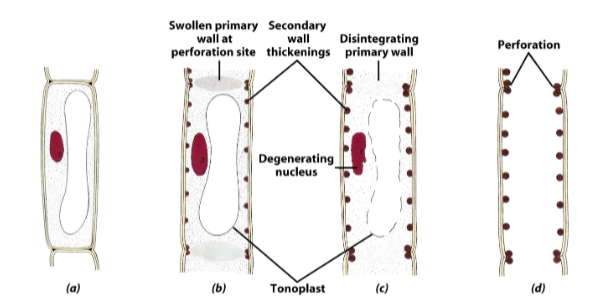
Programmed Cell Death in Developing Plant Vasculature
Starts out as: protoxylem and protophloem – fully intact, isolated functioning cell, with all organelles present
Matures to: xylem and phloem with full and partial organelle loss, respectively, but fully connected to top and bottom and neighboring cells
Programmed cell death
Apoptosis-like process
• Necrosis (Necroptosis)
• Autophagy
• as a localized process and is often quite rapid
Senescence
death as a recycling process
• In Plants - slower, systemic process that includes nutrient remobilization, and usually culminates in the death of cells
• In Animals – happens in fibroblast cell lines, and is induced in cells with an inflammatory response
Programmed Cell Death (PCD) Pathways:
Apoptosis, Autophagic, Necrosis
Apoptosis
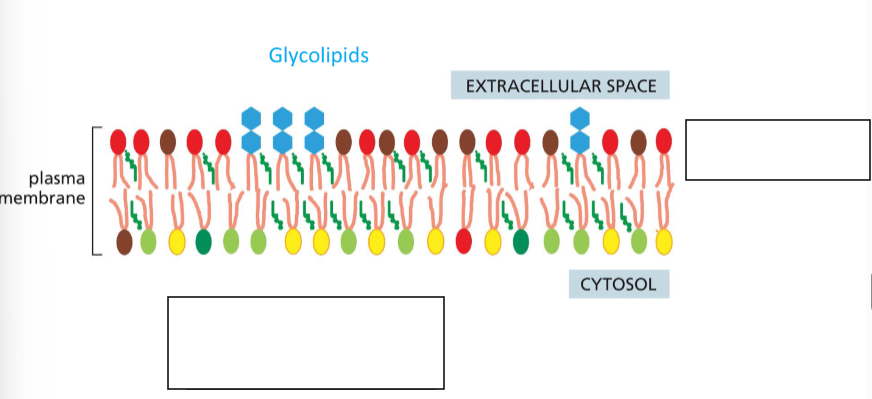
“Eat me” signal: phosphatidylserine on the outer leaflet of the plasma membrane.
• Phosphatidylserine is typically restricted to the inner leaflet of the plasma membrane.
• Highly regulated process that involves the breakdown of organelles, plasma membrane, nuclear envelope, and cellular fragmentation.
A synonym for “ pro-survival” is
Anti-apoptotic
Membrane Polarity and Composition
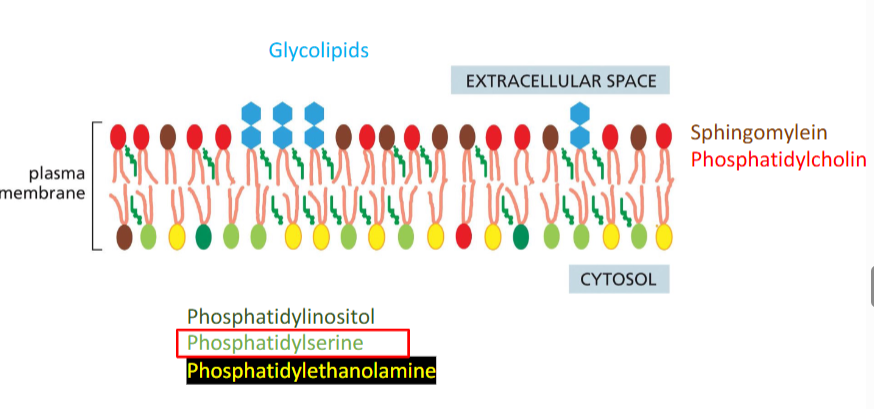
Phagocytosis of apoptotic cells
In normal cells, phosphatidylserine is restricted to the inner leaflet of the plasma membrane
After receiving ”death” signals, lipids are swapped to the outside of the cell. Don by Scramblase
Is Necrosis reversible?
Yes
Is apoptosis reversible?
No. Breakdown of organelles, pm, nuc env, and cellular fragmentation
What results in a potential for recovery with necrosis?
ER and Mito swelling, mem blebbing
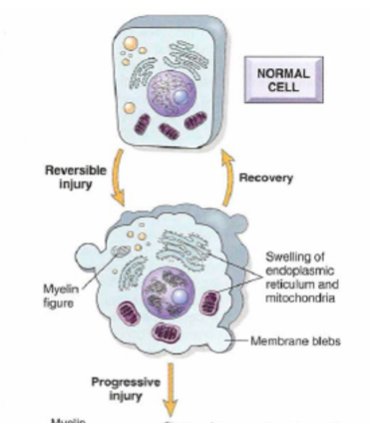
When is Necrosis committed?
Bd of pm, organelles and leakage of cellular contents
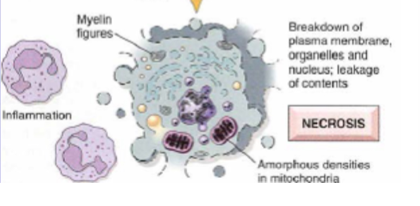
What is an alternative pathway of cell death if apoptosis doesn’t occur?
Regulated necrosis - nercroptosis.
What signal can induce apoptosis or necrosis?
“death” signal TNF (Tumor necrosis factor) which can activate RIPK3 (receptor interacting protein kinase-3) is stimulated and phosphorylates MLKL monomers (effector protein) → forms oligomers of MLKL that disrupsts PM → neroptosis
Why is it important that cell proliferation and cell death are balanced during development?
What are some examples of developmental processes in which regulated cell death is important?
What are some examples of damage to cells that can result in cell death?
What would be the result of inhibiting apoptosis during development of the mouse paw?
What is the result of inhibiting or knocking out the myostatin gene?
What are some key distinctions between apoptosis, necrosis, and autophagic cell death?
What types of morphologies would you use to distinguish apoptotic vs necrotic vs autophagic cell death by transmission electron microscopy?
What is the cellular “eat me” signal?
Is Apoptosis Reversible?
If death signals (extrinsic - from the outside) or intrinsic (autophagy) win out, then the scale is tipped to pro-apoptotic (pro-death) fate.
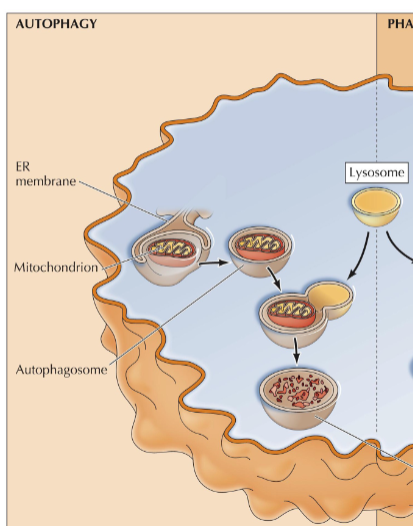
Autophagy:
turnover of the cell’s own components. Important in embryonic development and programmed cell death.
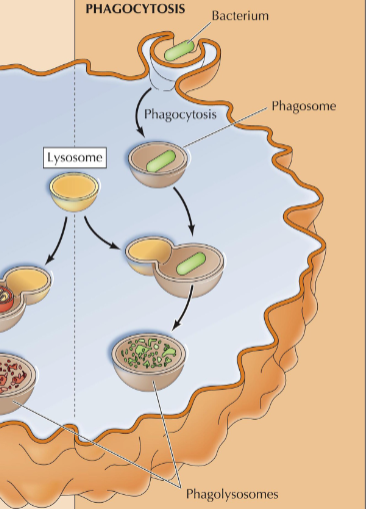
Phagocytosis:
specialized cells such as macrophages take up and degrade large particles— bacteria, cell debris, aged cells, cells with eat me signals
Apoptosis is dependent on what?
Caspase
What happens to the cell in Apoptosis?
DNA fragmentation, chromatin condensation, fragmentation of the nucleus and cell. Apoptotic cells are fragmented and fragments are phagocytosed by neighboring cells or macrophages
What is autophagy dependent upon?
Cathepsin.
What can autophagy result in?
may not result in cell death, targeted degradation of damaged organelles. In autophagic cell death, dying cells are characterized by an accumulation of lysosomes.
Cathepsins are
proteases found in lysosomes.
Autophagy eliminates
proteins, organelles and pathogens from the cytoplasm
Autophagy in plants vs. humans
Plants: implicated in defense, starvation response, and senescence
Humans: implicated in Alzheimer’s disease
What regulates autophagy?
ATG genes. Highly conserved in yeast, plants, and animals.
Autophagosome
What does the autophagosome fuse with?
Lysosome
What can autophagosomes engulf?
entire cells!
Damaged mitochondria are degraded by…
autophagy - important for cellular homeostasis
Autophagosomes are
double- membrane enclosed organelles that selectively recruit poly-ubiquitylated substrates and deliver them to lysosomes for terminal degradation
Polyubiquitylated substrates (proteins, organelles, vesicles) are recognized by selective autophagy receptors and recruited into the autophagosome through interaction with ___
LC3 (ATG receptor proteins). backup to the ubiquitn proteasome pathway
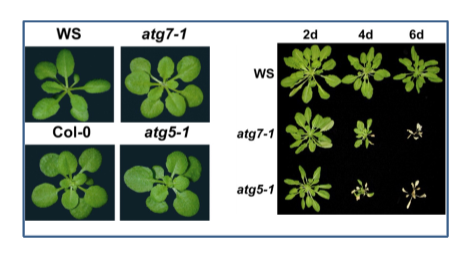
atg mutants…
Cannot tolerate starvation (days recovery after darkness.
Starvation-sensitive and shows runaway cell death.
Autophagy allows for recovery from starvation damage.
Autophagy is considered both a _____ and a _______ process
regulated and constitutive
Constitutively active =
(always on) in cells
always some low level of autophagy occurring to manage misfolded and long-lived proteins, for regular turnover of organelles, and for degradation of damaged organelles.
Programmed Cell Death – C. elegans
Proper C. elegans development includes/relies the death of 131 specific cells. Clumps of dying cells are easily visible.
• Clumps of dying cells are not visibly present – proper development cannot occur
In C. elegans, the genes _____ and _____ are required for developmental cell death
ced-3 (caspases) and ced-4 (pro-caspases, activate ced-3). Considered pro-apoptotic
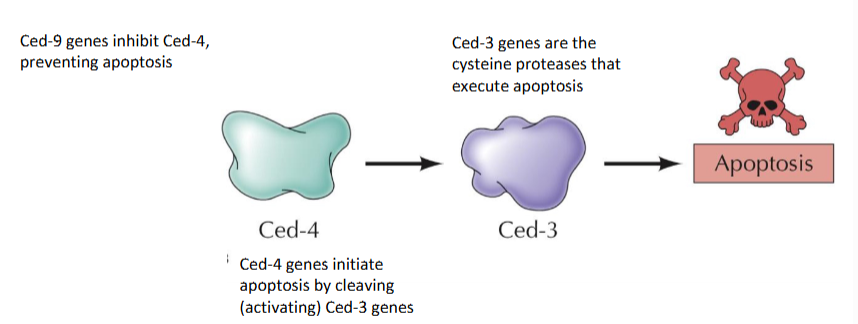
ced-9`
(BCL-2) is a negative regulator. Considered anti-apoptotic
Ced genes are
central regulators that are highly conserved.
How do caspases trigger apoptosis?
Ced-3 is the prototypical caspase protease
Caspases are cys proteases
cys residues at their active sides and cleave after asd residues in their substrate prot.
ultimate executioners of pcd by cleaving over 100 different target proteins
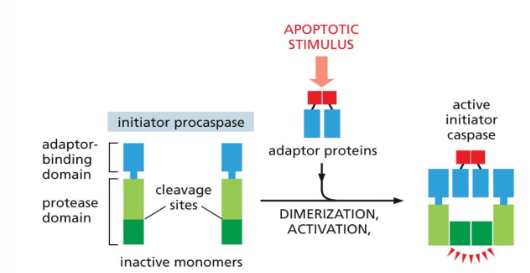
Activation of an initiator caspase starts a
Activation of an initiator caspase (e.g. Caspase 8, 9, or 10) starts a chain reaction of caspase activation leading to cell death
Caspases are synthesized as
precursors (procaspases) that convert to the active form upon proteolytic cleavage
Initiator caspases are activated by
post- translational modification (dimerization, phosphorylation, and ultimately by cleavage)
Apoptotic signal trigger the assembly of
adaptor proteins that dimerize the initator procaspase monomers
inactive monomers of initiator procaspases are activated by
cleavage in thier protease domains that leads to a conformational change.
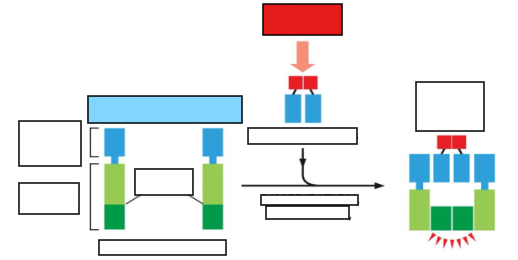
Regulation of Caspases
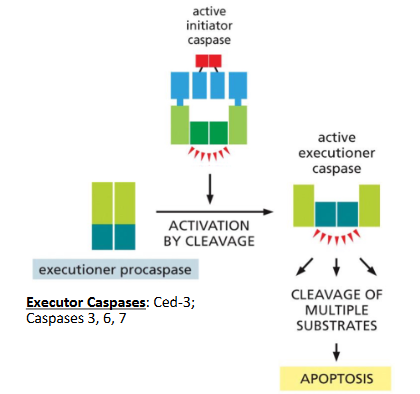
Executioner procaspases are also synthesized, but
Inactive as oligomers
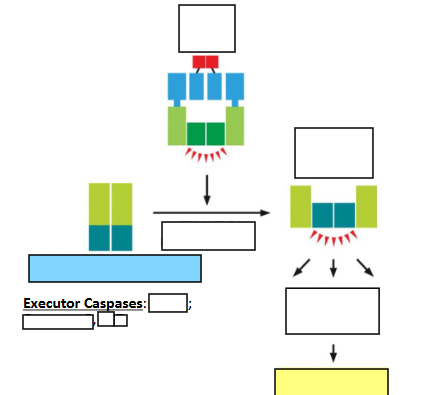
What cleaves executioner procaspases?
Active initiator caspases.
What happens when executioner procaspases are cleaved again?
Induces a conformational change, activating the executioner caspase.
Regulation of Caspases
How were C. elegans used to discover critical apoptotic genes?
What is the role of Ced-9 genes in regulating apoptosis? What is the role of Ced-4 genes in regulating apoptosis? What is the role of Ced-3 genes in regulating apoptosis?
Describe the general structure of caspases. What are some ways of classifying caspases?
Caspases are classified as cysteine proteases. What does this mean?
How is the caspase cascade activated? What are the roles of initiator and executor caspases in this cascade? Name the initiator caspases and the executor caspases.