SPAN 0400 Exam 3 Grammar
 Call Kai
 Learn
Learn Practice Test
 Spaced Repetition
 Match
Match Flashcards
 Knowt Play
1/14

There's no tags or description
Looks like no tags are added yet.
Name | Mastery | Learn | Test | Matching | Spaced | Call with Kai |
|---|
No analytics yet
Send a link to your students to track their progress
15 Terms
what we’re expected to do
Pretérito perfecto de subjuntivo (Presente Perfecto Subjuntivo), 8 pts
Pretérito perfecto indicativo/subjuntivo (presente p subj , presente p indicativo): Rellena los espacios en blanco con los verbos en paréntesis, 8pts
Lo neutro. Rellena espacios en blanco, 5 pts
Present perfect subjunctive
refers to recently completed actions or past actions that bear relevance to the present. Used mainly in subordinate clause when main clause has expressed will, uncertainty, emotion, or doubt
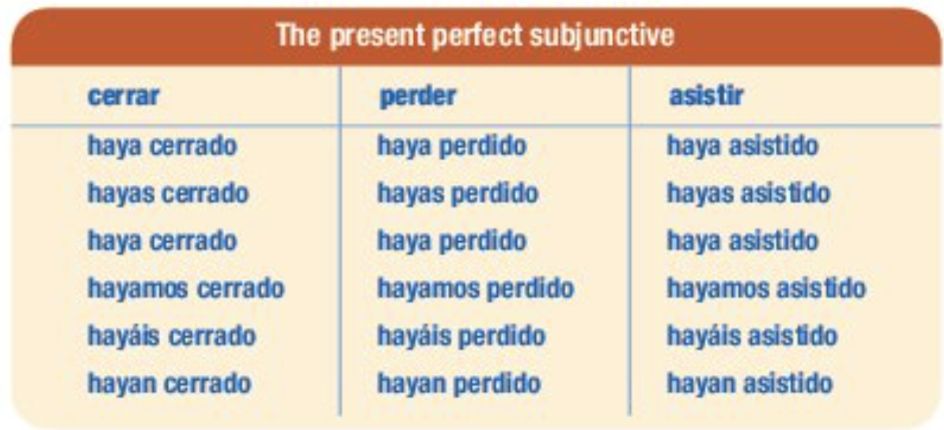
present perfect subjunctive conjugation
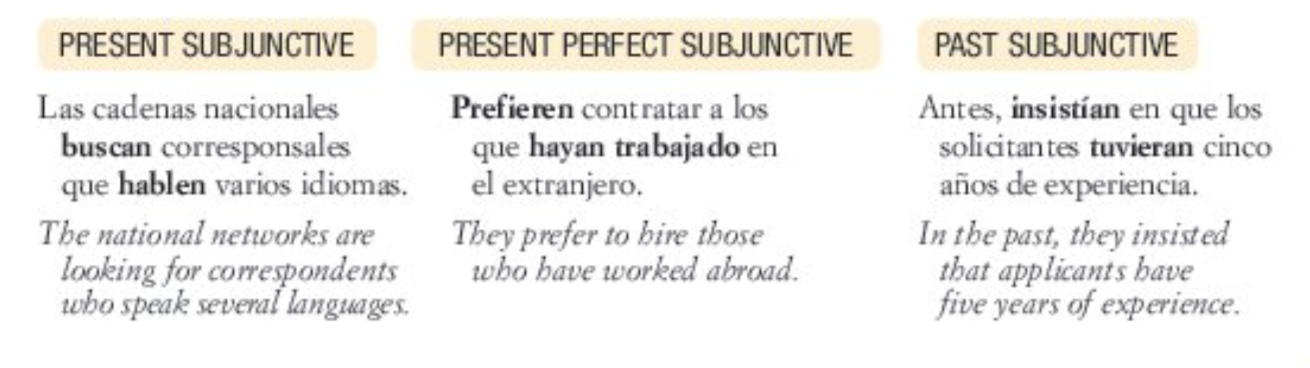
difference between 3 subjunctive tenses so far
Present perfect subjunctive primarily used when
action of main clause is in present tense, but subordinate clause is in past tense
in spanish present perfect subjunctive is
preterito perfecto subjuntivo
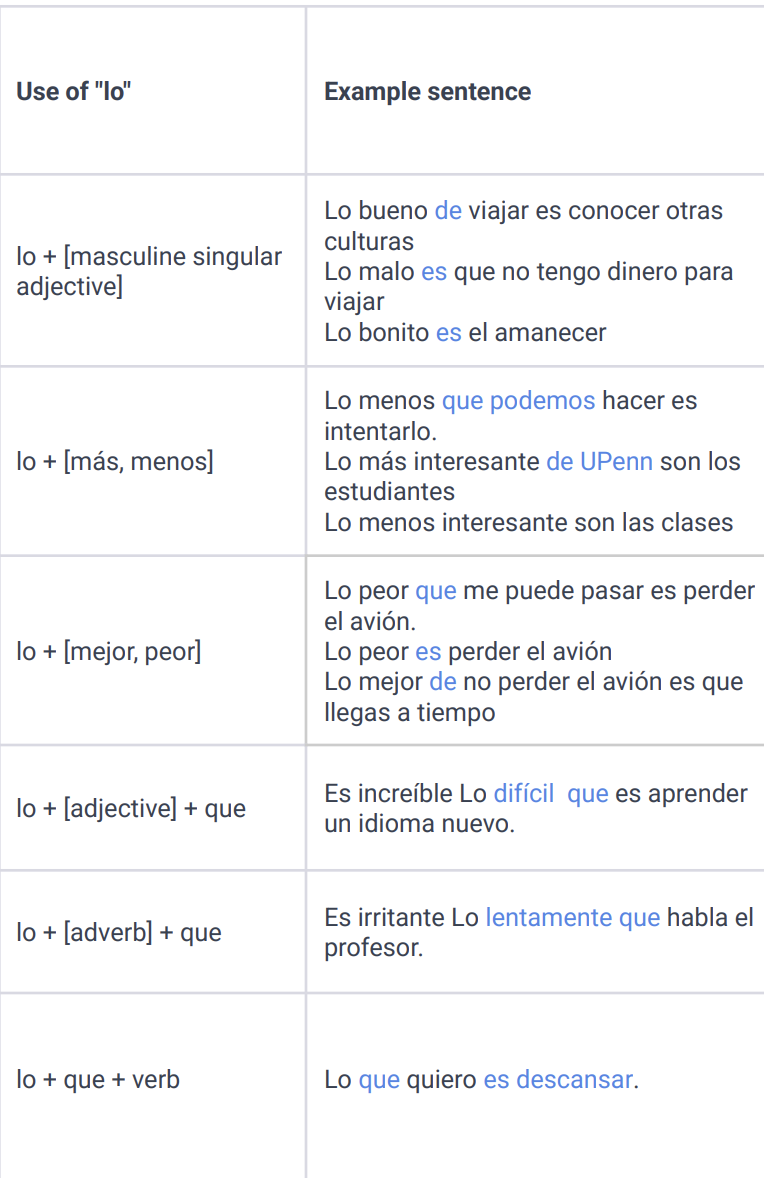
neuter lo
refers to concepts that have no gender
lo + masculine singular adjective
express general characteristics and abstract ideas
English equivalent is the + [adjective] + thing
![<p>express general characteristics and abstract ideas</p><p>English equivalent is the + [adjective] + thing</p>](https://assets.knowt.com/user-attachments/d6862337-76cf-45b8-b4e0-b27cad642c07.png)
expressing the most/least/best/worst
lo más/menos/mejor/peor

lo + adjective/adverb + que
expresses how + adjective
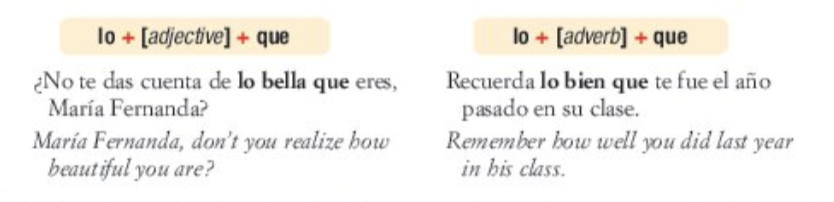
Lo + adjective and adverb + que agreement
must agree in gender and number
lo que
used to refer to what, that, or which as an idea

lo + adjective + de
used usually to abstract ideas, esp w/ singluar masculine adjective
so que - how
de - thing/what
lo + que + verb
what + verb
tabla lo