ASCI 220 Exam 2 Study Guide: Key Concepts and Definitions
 Call Kai
 Learn
Learn Practice Test
 Spaced Repetition
 Match
Match Flashcards
 Knowt Play
1/176

There's no tags or description
Looks like no tags are added yet.
Name | Mastery | Learn | Test | Matching | Spaced | Call with Kai |
|---|
No analytics yet
Send a link to your students to track their progress
177 Terms
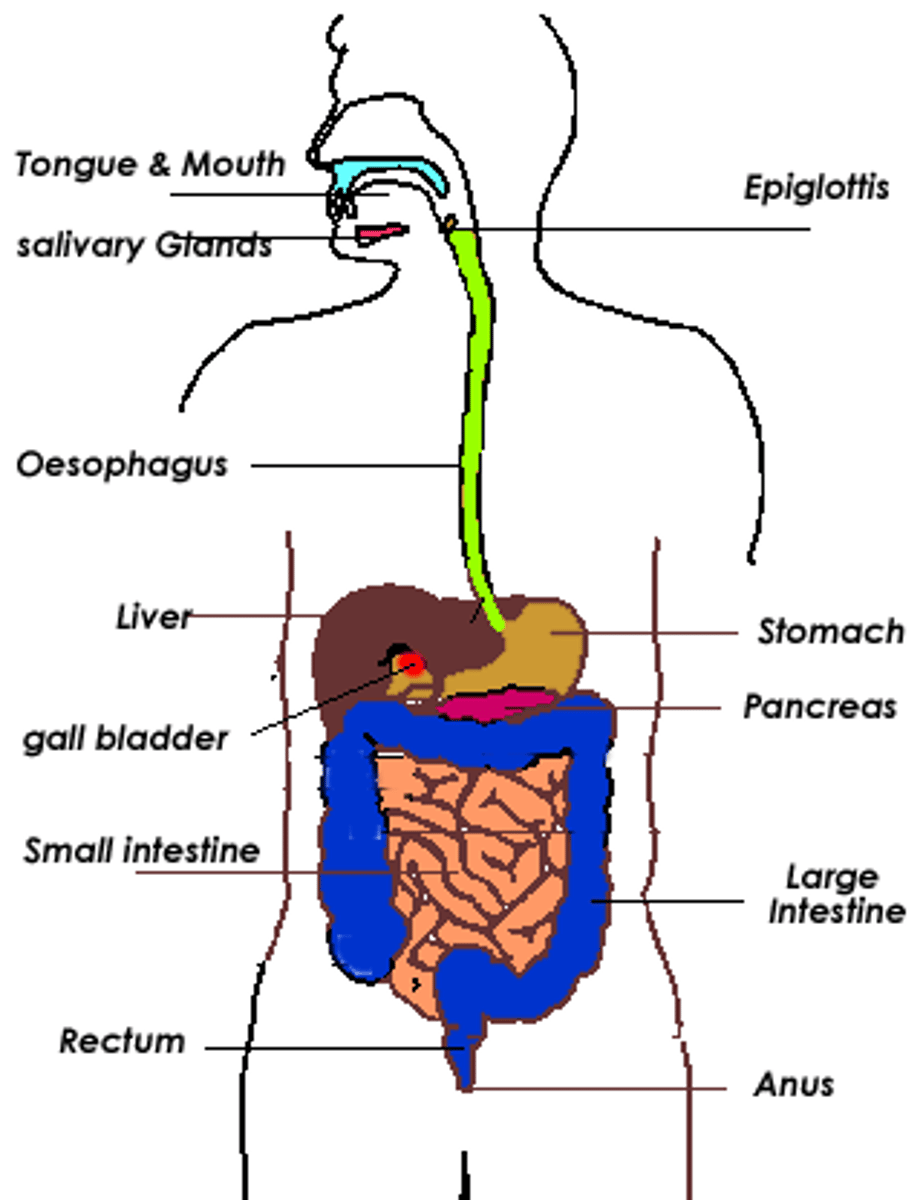
parts of human GIT
esophagus, liver, gallbladder, pancreas, stomach, small intestine, large intestine, cecum, rectum
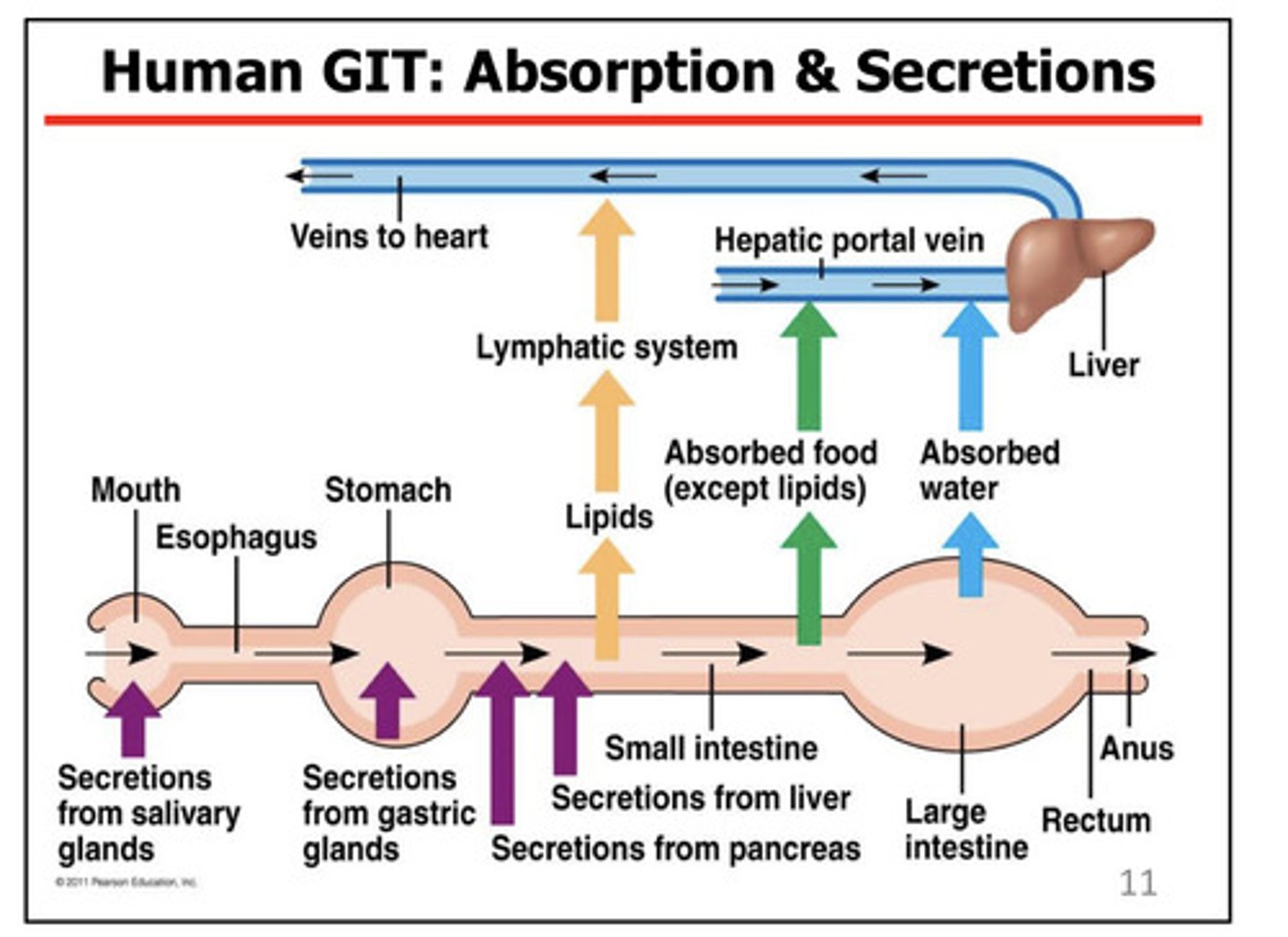
GIT Absorptions & Secretions
large intestine is composed of
cecum, COLON, (rectum)
accessory organs
pancreas, liver, gallbladder
(connect at duodenum)
accessory organs provide __________
secretions
an animal's GIT is reflective of what?
the diet that the animal lives on
the macronutrients of the diets of animals include:
1. proteins
2. lipids
3. CHOs
which macronutrient largely determines the structure of the GIT?
CHO (ex. large cecums in herbivores)
non-structural CHO example
starch
structural CHO example
cellulose
digestibility of proteins
generally easily digestible by animal's enzymes
peptides are formed by
amino acids
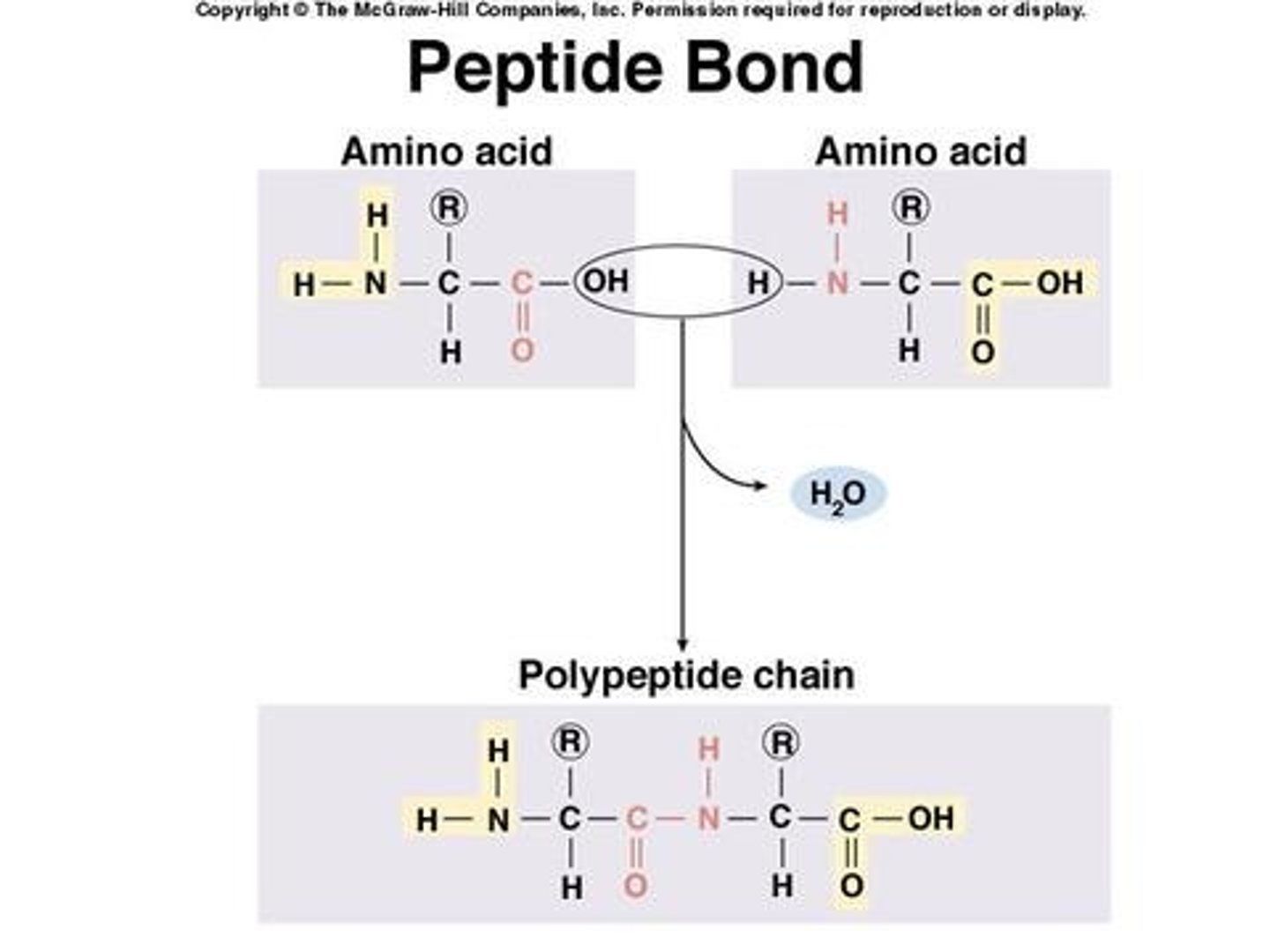
what 2 enzymes cleave peptide bonds?
proteases and peptidases
proteins are broken down into peptides by which enzyme
protease
peptides are broken down into AAs by which enzyme
peptidase
digestibility of lipids
generally easily digestible by animal's enzymes
what cleaves ester bonds?
lipase
difference between triglyceride and monoglyceride
triglycerides are 3 fatty acids attached to a glycerol
monoglycerides are 1 fatty acid attached to a glycerol
which enzyme breaks triglycerides down into monoglycerides
lipase
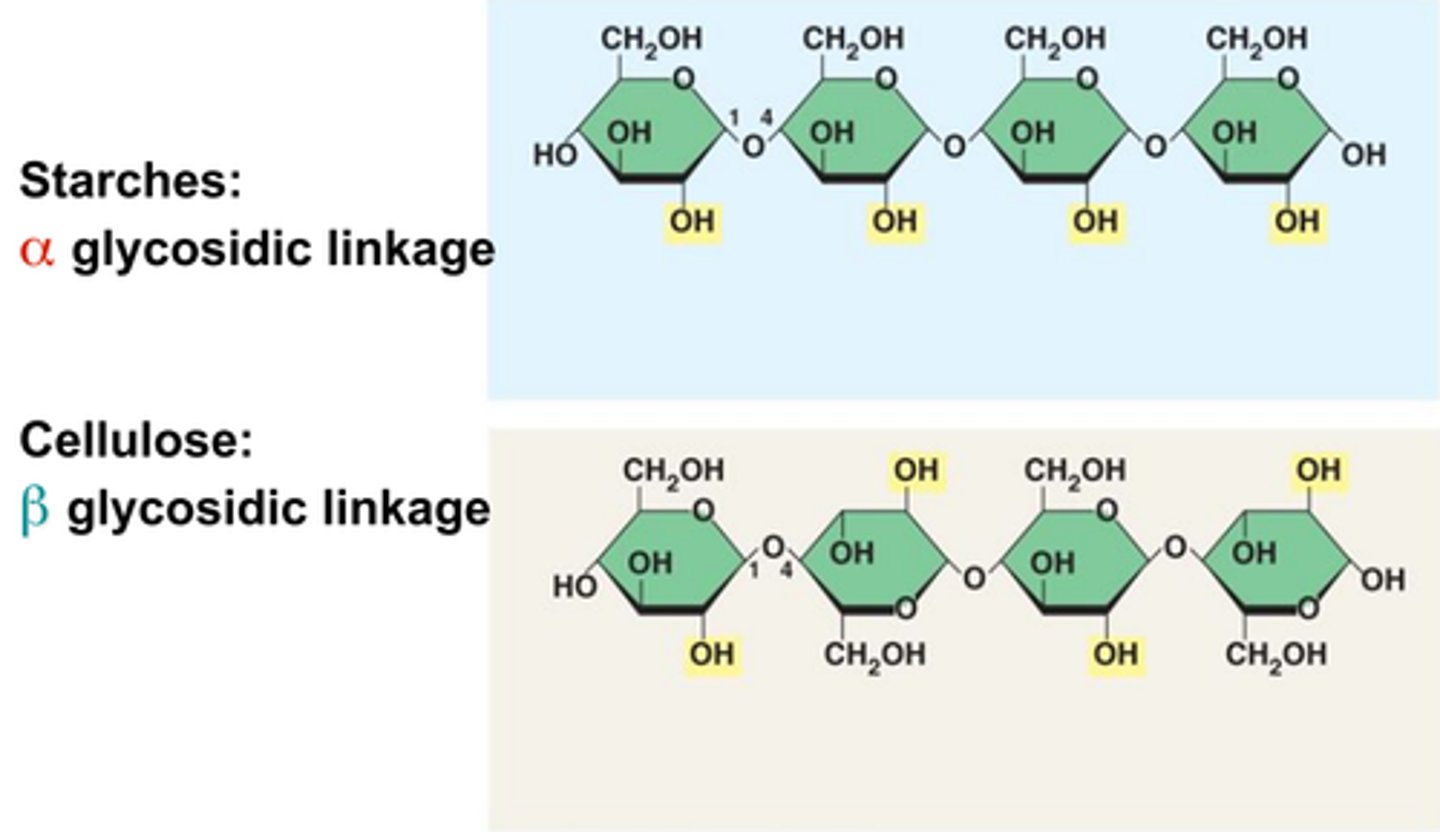
starch
a polymer of a-1,4 glucose molecule
easily digested by an animal's enzymes
which enzyme digests starch into smaller molecules?
amylase
cellulose is an example of a ________
fiber
cellulose is a polymer of...
b-1,4 glucose molecules
digestibility of cellulose
not digestible by animal's enzymes, requires microbial fermentation
why do fermentation chambers of animals GIT arise?
cellulose is not digestible and requires microbial fermentation
speed of fiber digestion
SLOW
animals with what type of diet consume cellulose?
herbivores and some omnivores
cellulose is broken down into smaller molecules by...
cellulolytic bacteria
- cellulase
starch: 1-4 linkage of a glucose monomers
vs
cellulose: 1-4 linkage of B glucose monomers
summarize the differences, and explain the reasons why those differences exist, between the GIT of a carnivore and a herbivore
form fits the function
carnivore
- consumes less CHO
- no need for a sizeable large intestine because consumes less cellulose
herbivore
- consumes more CHO (fiber and cellulose) through plants
- has large microbial fermentation section to digest cellulose
which diet classification of animals is fibrous?
herbivores
pre-gastric fermenters
type of herbivore that conducts fermentation BEFORE gastric digestion
(eg. ruminants)
which diet classification of animals is starchy?
omnivores
post-gastric fermenters
type of herbivore that conducts fermentation AFTER gastric digestion
(eg. horses, rabbits)
size of CHO fermentation chamber in omnivores
omnivores do NOT need a big CHO fermentation chamber
omnivores mainly consume which type of macromolecules?
protein and TG
gastric
- "stomach"
- NO ABSORPTION
- acid (HCl) and pepsin digestion
- protein digestion
- low pH
pre-gastric fermenters have an (aerobic/anaerobic) microbial fermentation chamber
ANAEROBIC
aerobic
requires oxygen
anaerobic
without oxygen
the 4 chambered stomach parts
1. rumen (largest)
2. reticulum
3. omasum
4. abomasum (true stomach)
low fiber diet means a relatively small _____ _________
large intestine
true or false: we would expect the stomach to have a morphology supporting extensive surface area
FALSE
- because there is NO absorption in the stomach
primary interest of gastric digestion: gross anatomy
gastric pit
secretions enter the duodenum from where
pancreas, gallbladder, and liver
gastric digestion: gastric pits sequence
1. chief cell
2. HCl from parietal cell aids in turning pepsinogen to pepsin
3. back to HCl into pepsin
what does the inactive zymogen pepsinogen have that the active enzyme pepsin lacks?
there is a masking sequence that is dropped when pepsinogen becomes pepsin, and this exposes an active site on pepsin
why don't we want pepsin in the gastric pit?
we dont want to digest our own stomach
three stages of gastric digestion
1. physical (mechanical) digestion
- squeezing and mixing
- NOT cleaving bonds
2. chemical digestion
- HCl (also kills many bacteria)
3. enzymatic digestion
- pepsin (proteins → polypeptides)
*NO fat or CHO digestion
*NO absorption
digestion sequence
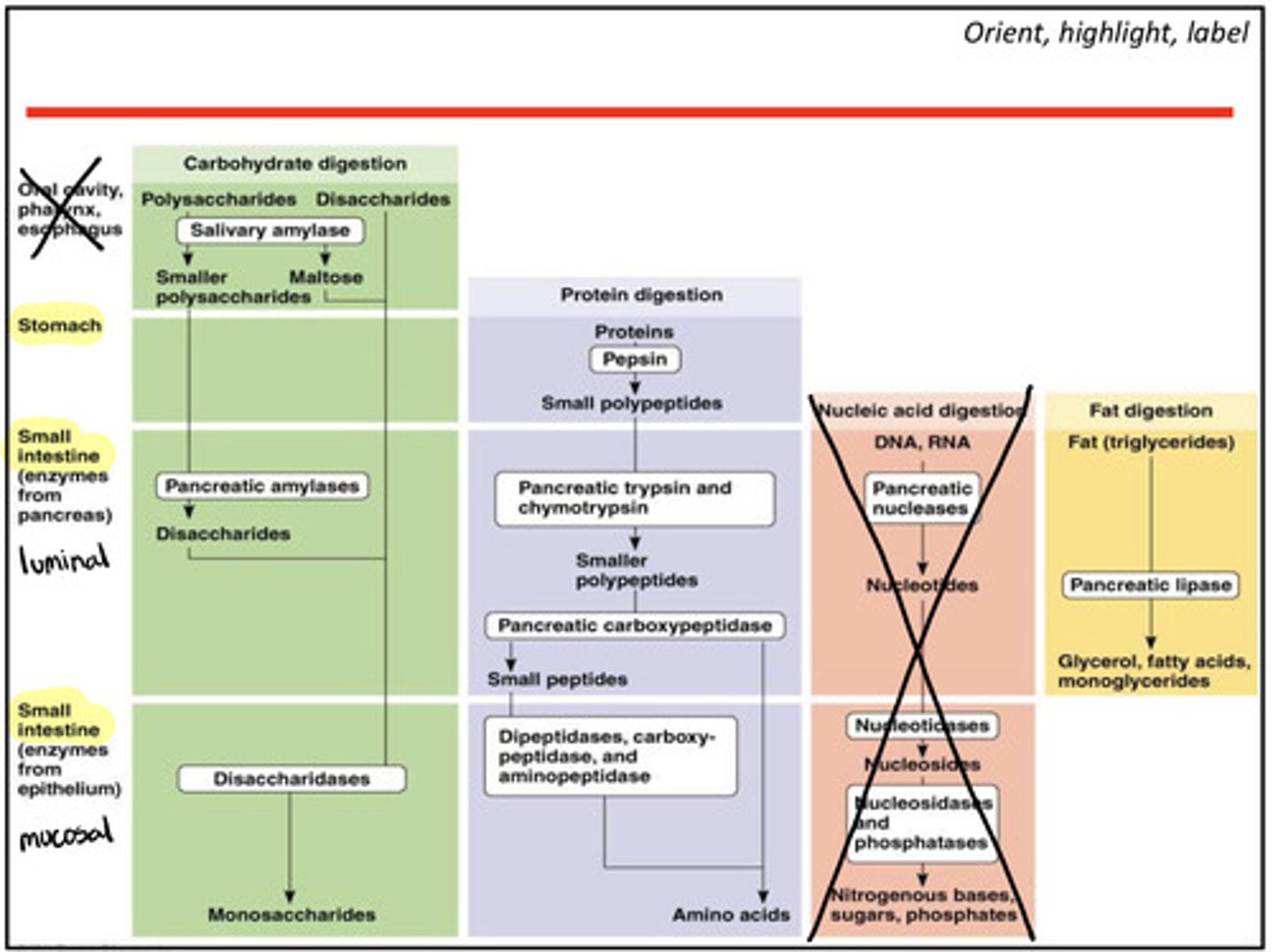
true or false: we would expect the small intestine to have a morphology supporting extensive surface area
TRUE
- because extensive nutrient absorption in the SI
small intestinal digestion is initiated by enzymes originating from the __________
pancreas
- in luminal phase of digestion
- enzymes: protease, lipids, starches
key aspect of small intestinal morphology
nutrient absorption
3 main parts of small intestinal morphology
mucosal folds, villi, microvilli (brush border)
enterocyte
absorptive cell of the small intestine
microvilli
- location
- relation to digestion and absorption
projections that confer surface area of enterocyte
- mucosal phase of digestion and absorption
brush border
composed of microvilli that greatly increase the surface area
mucosal region is made up of ___________
enterocytes
intestinal villi are (projections/indentations)
projections into the lumen
intestinal crypts are (projections/indentations)
indentations
what is absorbed from the large intestine?
water and VFA
(1) luminal phase of intestinal enzymatic digestion
- pancreatic enzymes begin hydrolysis in the 'bulk phase' of the digesta
- pancreatic enzymes and bile (ONLY lipids- TGs) are active
- digestion, but NOT absorption
(2) mucosal (brush border) phase of intestinal enzymatic digestion
end-products of pancreatic digestion are often substrates for brush border enzymes; these end-products are then absorbed
- true for proteins and starch
pancreatic enzymes in luminal phase (3)
proteases
protein digestion:
- polypetides (substrates) → smaller peptides (products)
amylase
starch digestion:
- starch → maltose (disaccharide)
lipase
lipid digestion:
- TG → FA + B-MG
liver function
- bile synthesis
- many metobolic functions
gallbladder function
- bile storage and secretion
- role in fat emulsification
pancreas function
secretes enzymes and sodium bicarbonate (NaCHO3)
maltase
- intestinal enzyme
- never moves
- involved with proteins
glucose transporter
- cell membrane associated
- never moves
fat digestion sequence
1. emulsification (amphipathic)
2. hydrolysis
3. re-esterification
4. lymph → blood
amphipathic
having both a hydrophilic region and a hydrophobic region
emulsification
physical process of breaking up large fat globules into smaller globules, increasing surface area that enzymes use to digest fat
micelles
lipid molecules
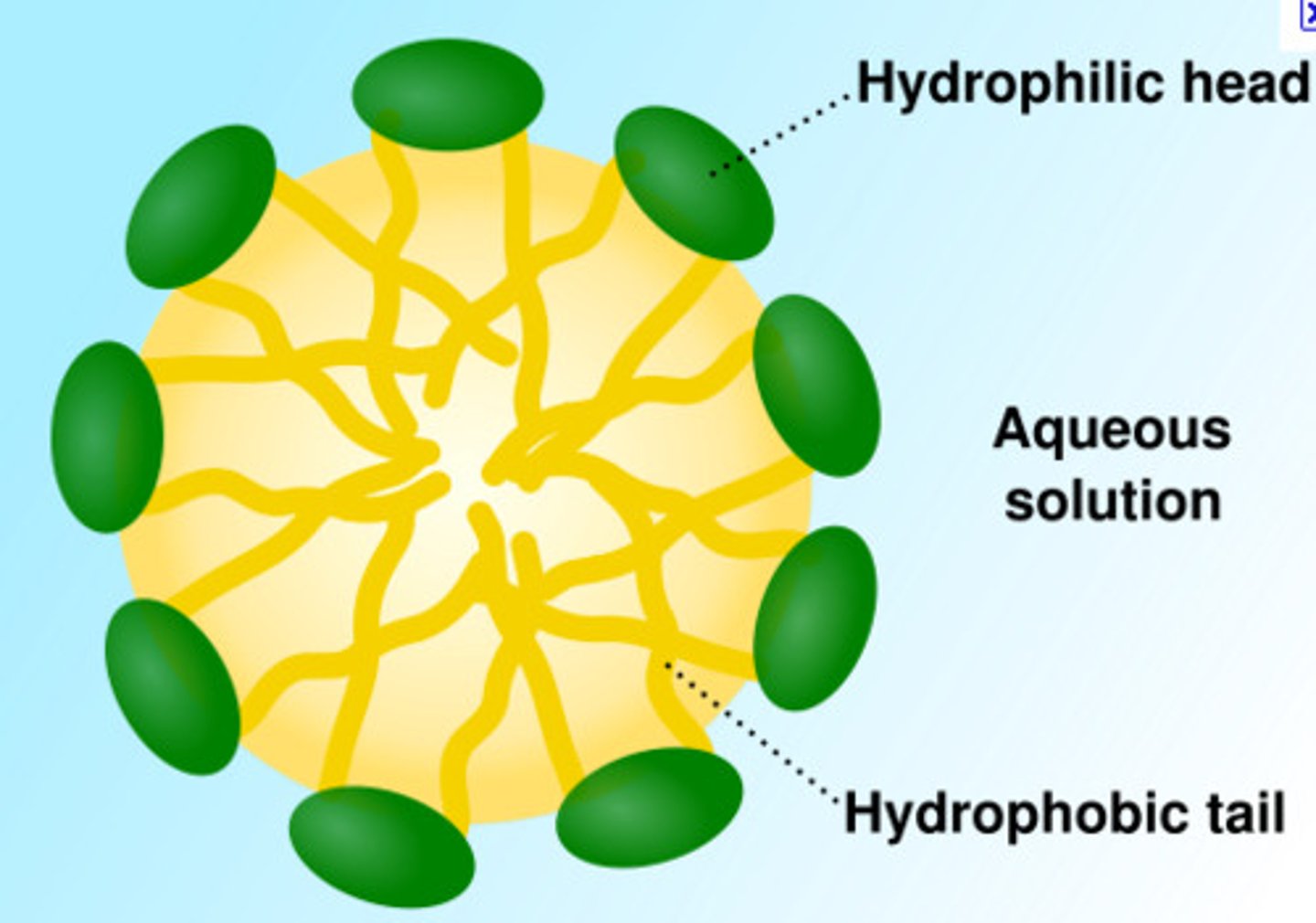
what kind of diffusion and transport do micelles use?
- passive diffusion to absorb
- active transport
re-esterification
process of reattaching a fatty acid to glycerol that has lost a fatty acid
explain what happens when a fatty acid and a monoglyceride enter an enterocyte
chylomicrons are formed, then are transported to the lymph, then bypass the liver and enter the thoracic duct
Fat Digestion, Emulsification, & Absorption in SI
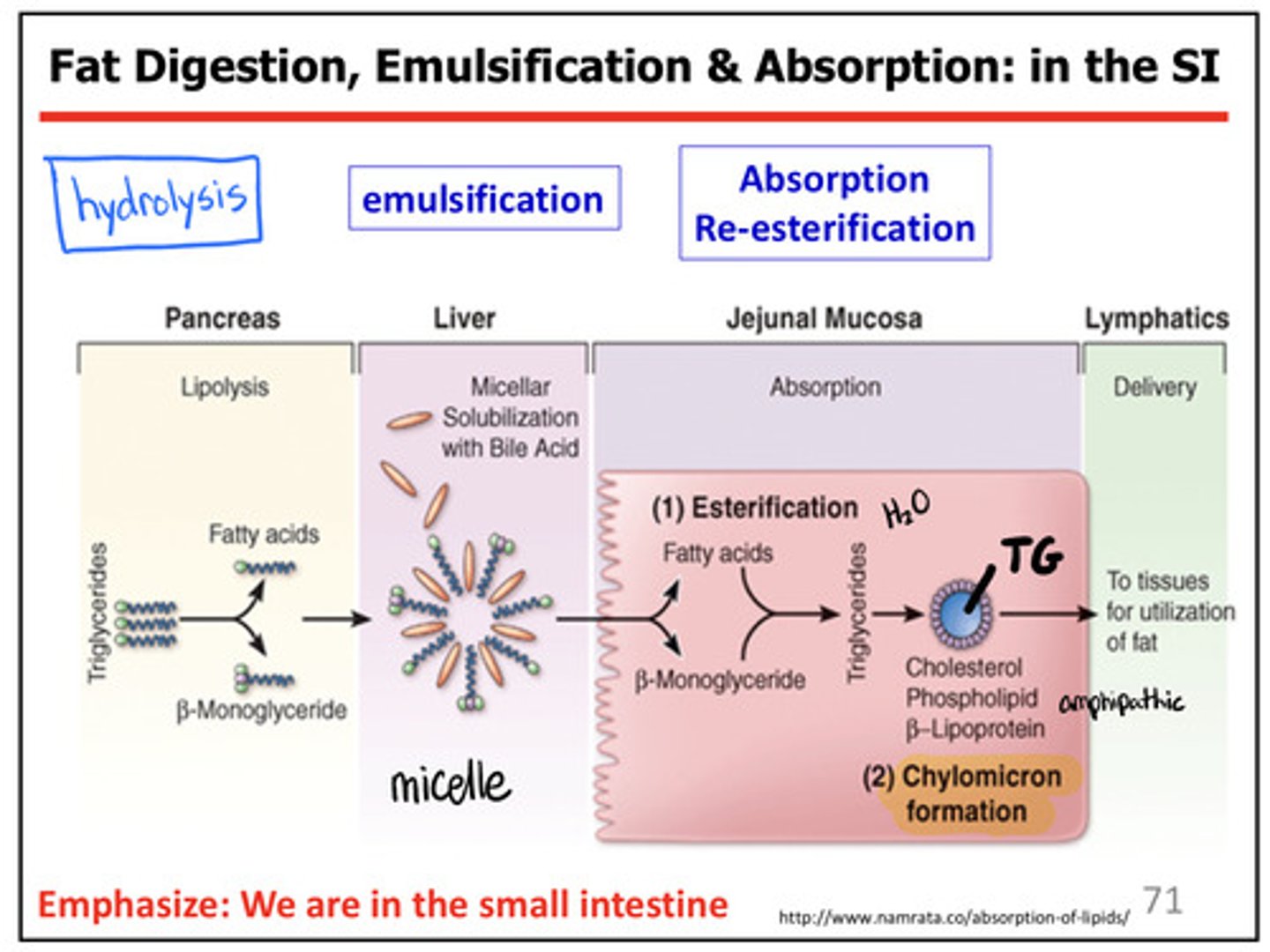
fat digestion
there is NO mucosal phase of fat digestion
- the end products (FA & MG) of luminal digestion are absorbed directly
- the FA & MG are then re-esterified into TG
the TG are then packaged into chylomicrons and enter the lymph
- chylomicrons are like lipoprotein particles
serosa
outermost layer of GI tract
mucosal phase is in the area of the _________
microvilli
which enzymes are active in the mucosal phase?
S.I. enzymes
in the mucosal phase, digestion and absorption are ____________.
expand.
coupled.
- maltose → glucose
- small peptides → AA, dipeptides...
- MG & free FA: no further digestion
only part of GIT where active S.I. enzymes (maltose, small peptides, MG, and FFA) are absorbed
mucosal phase
what is needed to absorb the S.I. enzymes active in the mucosal phase (maltose, small peptides, MG, and FFA)
transporters needed for absorption
- glucose or AA
why are transporters needed to absorb amino acids and sugars?
AA and glucose are very polar so they need active transport across the nonpolar region of the enterocyte cell membrane
small intestinal absorption at the villus
- absorbed AA and glucose directly into bloodstream
- absorbed FA and B-MG (which are now present as TG in chylomicrons) DO NOT - they enter the lymph system
- lipids enter the lymph as chylomicrons
size of chylomicrons
relatively huge
lacteal is another word for __________
lymph
how are FA and MG metabolized?
absorption
- passive diffusion and via transporters
intracellular metabolism
- re-esterification
- packaged into chylomicrons (lipoprotein particles)
two stages of large intestinal digestion
1. water absorption
(stool formation)
2. some fiber digestion
- cellulolytic microbes
- VFA produced and absorbed
major structural difference of small v large intestines
the large intestine has no villi
why are there lots of goblet cells in the colon?
they secrete mucin (mucus) to make surfaces slippery (lubricant)
digestion by microbial fermentation in L.I.
- bacterial fiber digestion
- production and absorption of VFA
absorption of water in L.I.
- the digesta becomes drier
- secretion of mucus from goblet cells, making digesta slippery
cecum
- blind pouch
- small in humans
colon
- water re-absorption
- leads to the rectum and outside the body
rectum
storage and removal of feces
the absorption of amino acids, fatty acids, and glucose into the bloodstream occurs in the...
small intestine
what makes up the fore-stomach in ruminants?
rumen, reticulum, omasum
what is the true stomach?
abomasum