Mechanisms & Properties
 Call Kai
 Learn
Learn Practice Test
 Spaced Repetition
 Match
Match Flashcards
 Knowt Play
1/21

Earn XP
Description and Tags
Reagents, conditions, stereochemistry, and functional groups of each mechanism
Name | Mastery | Learn | Test | Matching | Spaced | Call with Kai |
|---|
No analytics yet
Send a link to your students to track their progress
22 Terms
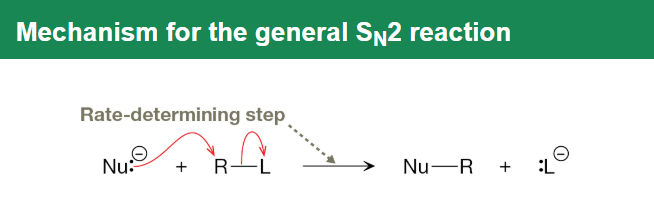
SN2
Strong nucleophiles in polar aprotic solvents attack unhindered primary or methyl alkyl halides in a one-step backside substitution causing inversion of stereochemistry without changing the carbon skeleton.
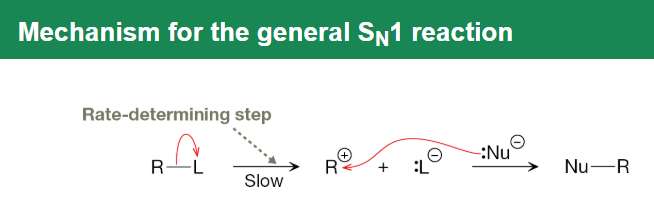
SN1
Weak nucleophiles in polar protic solvents react with tertiary or resonance-stabilized alkyl halides through carbocation intermediates causing racemization and possible rearrangements without changing the carbon skeleton.
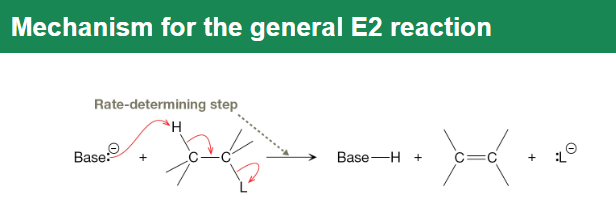
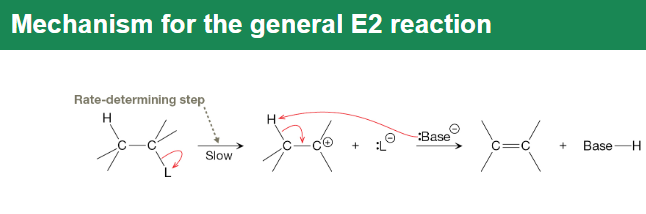
E2
Strong bases, often with heat, remove anti-periplanar β-hydrogens from primary, secondary, or tertiary alkyl halides in a one-step elimination forming alkenes without changing the carbon skeleton.
E1
Weak bases in polar protic solvents and heat promote carbocation formation from tertiary or resonance-stabilized alkyl halides followed by elimination to form alkenes with possible rearrangements and no carbon skeleton change.
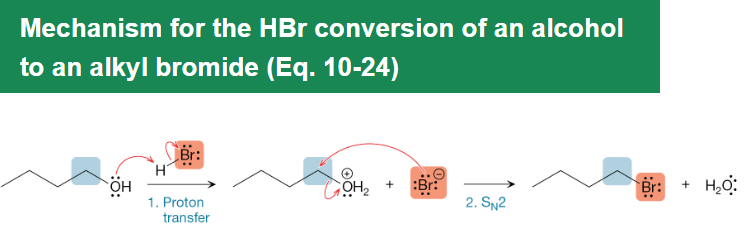
Converting Alcohol into Alkyl Halide (HX)
Alcohols react with HX acids under acidic conditions to replace OH with halides through SN1 or SN2 pathways depending on substitution without changing the carbon skeleton.

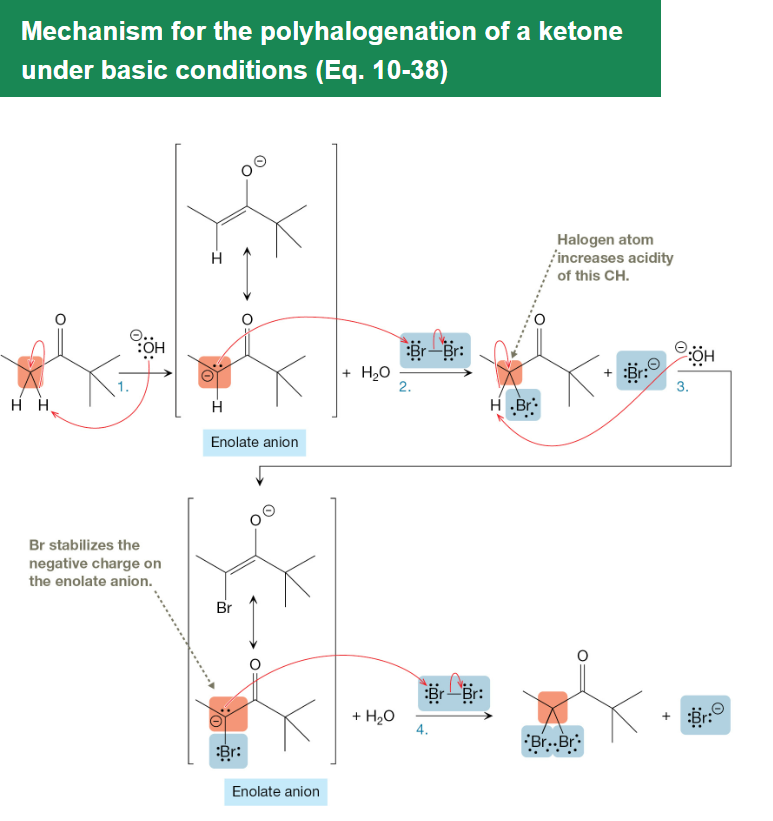
Halogenation of Alpha Carbons (Basic)
Enolates formed under basic conditions react with halogens to repeatedly substitute α-hydrogens adjacent to carbonyls, often leading to polyhalogenation without altering the carbon skeleton.
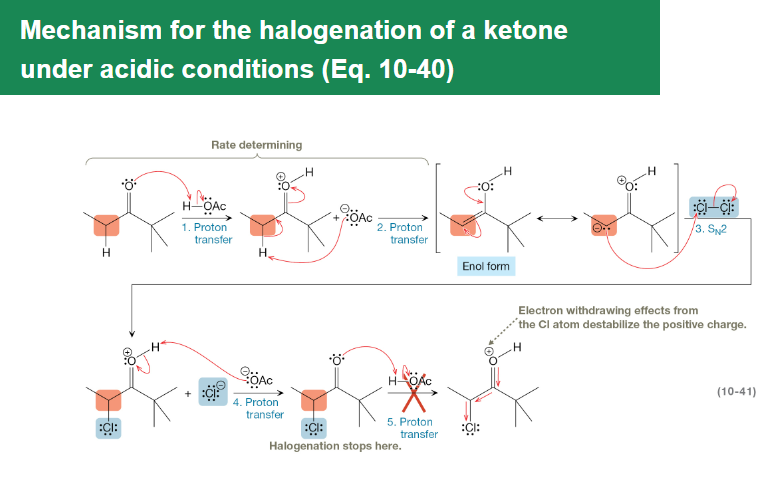
Halogenation of Alpha Carbons (Acidic)
Enols formed under acidic conditions react with halogens to selectively substitute one α-hydrogen adjacent to carbonyls without altering the carbon skeleton.
Nucleophilic Addition to Epoxides (Basic)
Strong nucleophiles under basic conditions attack the less substituted epoxide carbon in an SN2-like backside attack causing inversion and ring opening while forming a new σ bond.
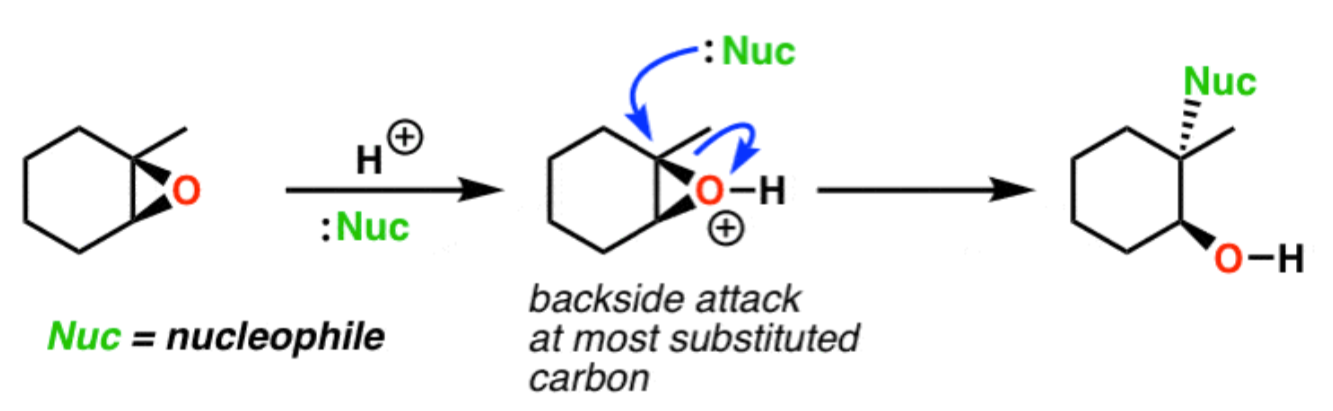
Nucleophilic Addition to Epoxides (Acidic)
Weak nucleophiles under acidic conditions attack the more substituted protonated epoxide carbon causing inversion and ring opening while forming a new σ bond.
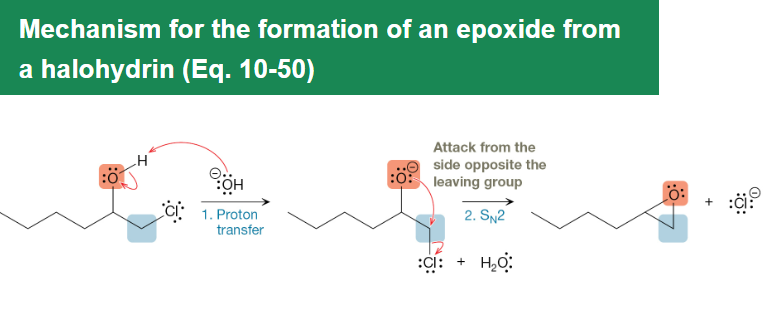
Formation of Epoxides by Nucleophilic Substitution
Alkoxides formed from halohydrins perform intramolecular SN2 attack on adjacent carbons to form epoxides with inversion at the attacked carbon and no carbon skeleton change.
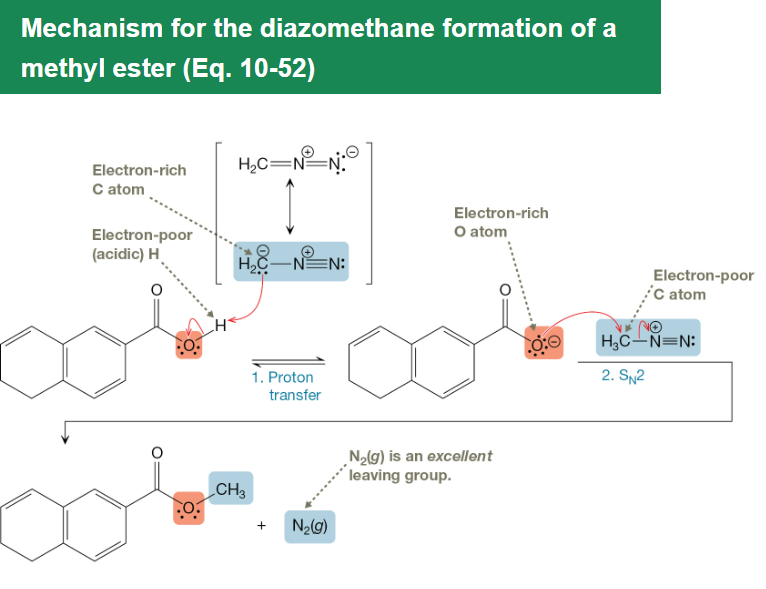
Diazomethane Formation of Methyl Esters
Diazomethane methylates carboxylic acids under mild conditions to form methyl esters through nucleophilic substitution without changing the carbon skeleton.
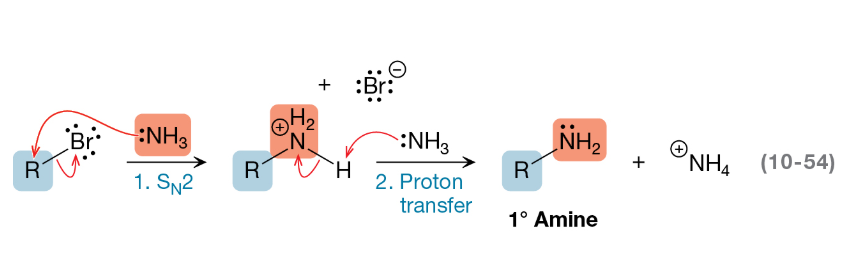
Forming Amines & Quaternary Ammonium Salts from Alkyl Halides
Amines perform SN2 substitution on alkyl halides to form more substituted amines or quaternary ammonium salts without changing the carbon skeleton.
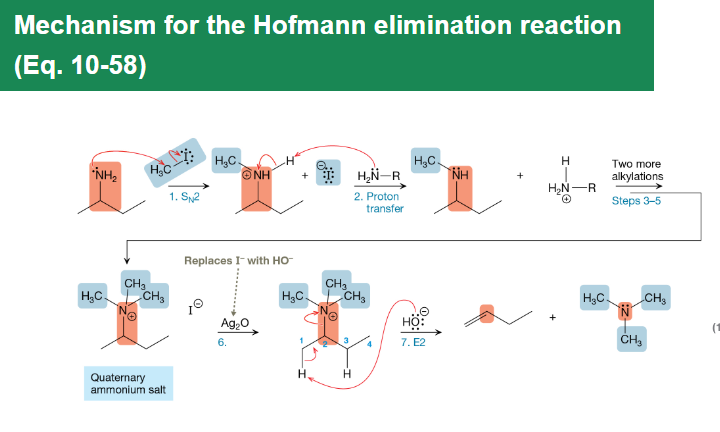
Hofmann Elimination
Quaternary ammonium salts treated with strong base and heat undergo E2 elimination to form the least substituted alkene without changing the carbon skeleton.
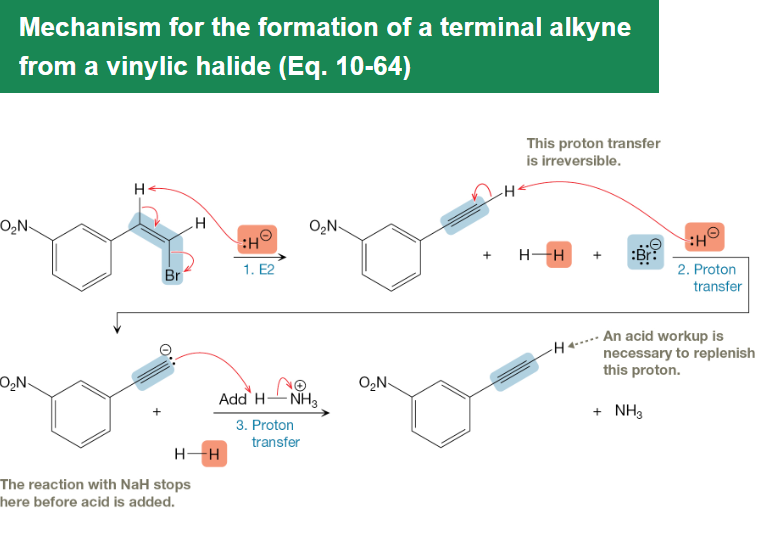
Generating Alkynes by Elimination
Strong bases perform double E2 eliminations on vicinal or geminal dihalides to form alkynes without changing the carbon skeleton.
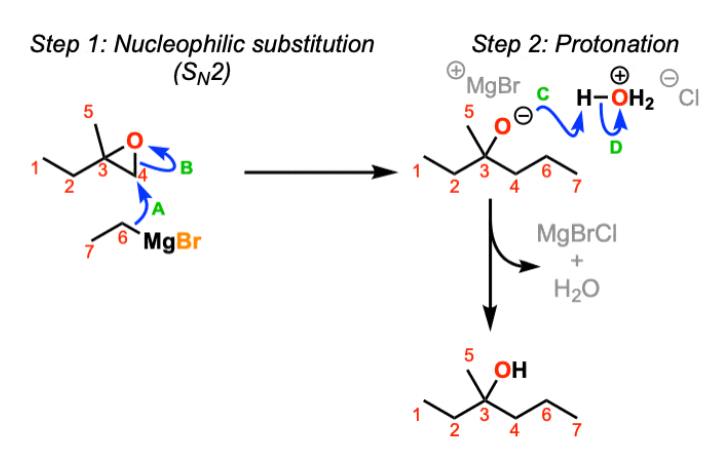
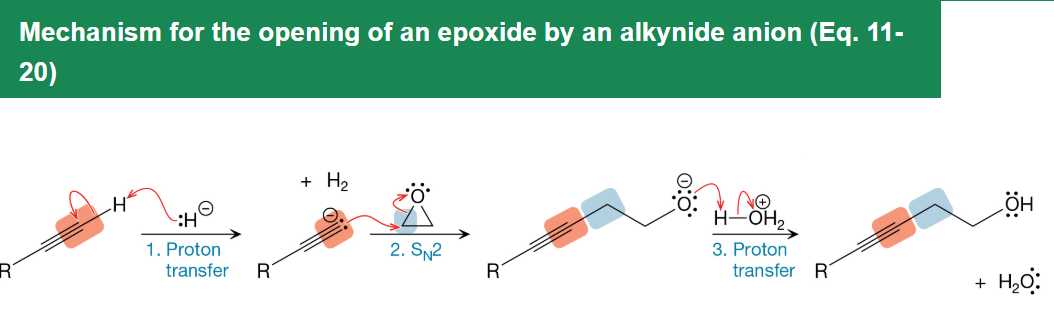
Opening Epoxides with Carbon Nucleophiles
Carbon nucleophiles such as Grignards, organolithiums, or acetylides attack epoxides in SN2-like ring openings to form alcohols while creating new C–C bonds.
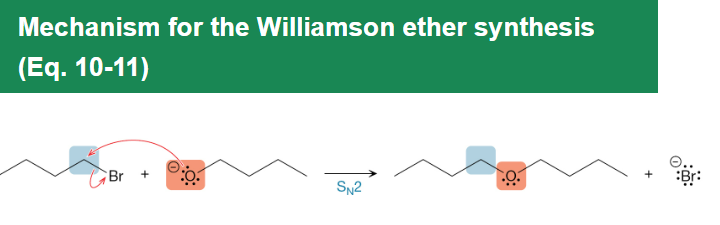
Williamson Ether Synthesis
Alkoxides perform SN2 substitution on primary alkyl halides in polar aprotic solvents to form ethers without changing the carbon skeleton.
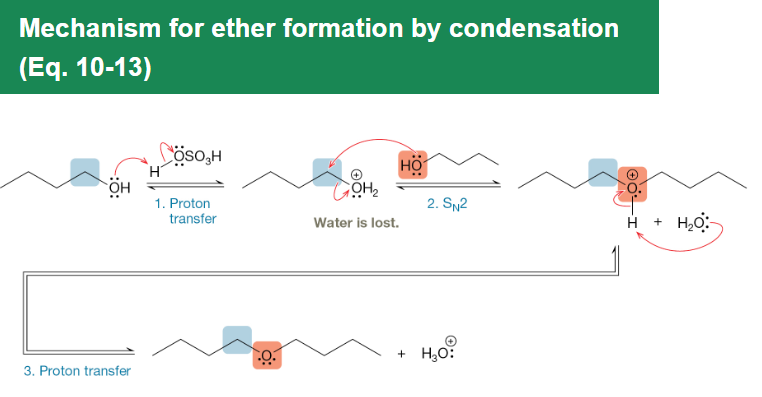
Condensation Reaction to Form Ether
Two alcohols under acidic conditions condense through substitution to form ethers and water without changing the carbon skeleton.
Turning OH into a Good Leaving Group with Acid
Strong acids protonate alcohols to convert OH into water, a good leaving group, enabling substitution or elimination reactions without altering the carbon skeleton.
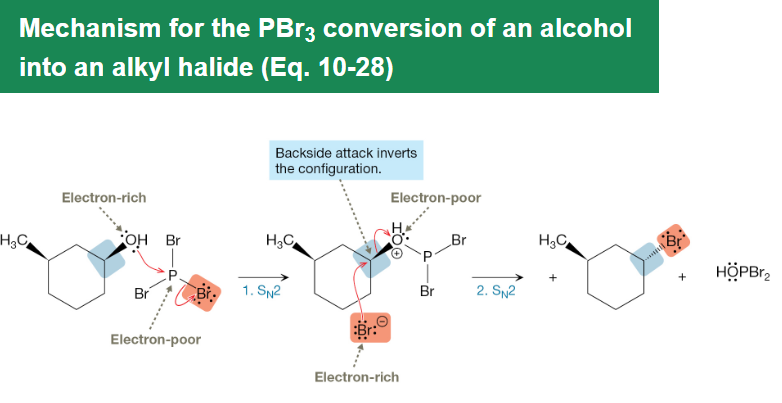
Turning OH into a Good Leaving Group with PBr3/PCl3
PBr3 or PCl3 convert alcohols into alkyl bromides or chlorides through SN2 substitution causing inversion on primary or secondary alcohols without changing the carbon skeleton.
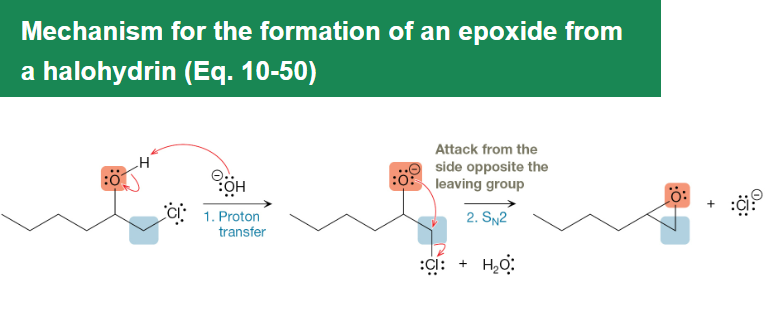
Epoxide Synthesis from Halohydrin
Bases deprotonate halohydrins to form alkoxides that cyclize through intramolecular SN2 reactions into epoxides with inversion at the attacked carbon.
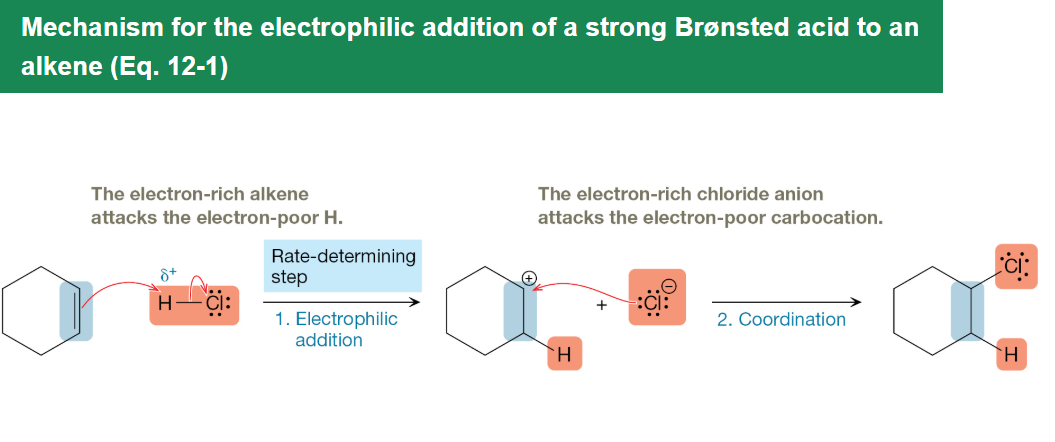
Electrophilic Addition of Brønsted Acid to Alkenes
Strong acids add across alkene π bonds through carbocation intermediates following Markovnikov regioselectivity with possible rearrangements and no carbon skeleton change.
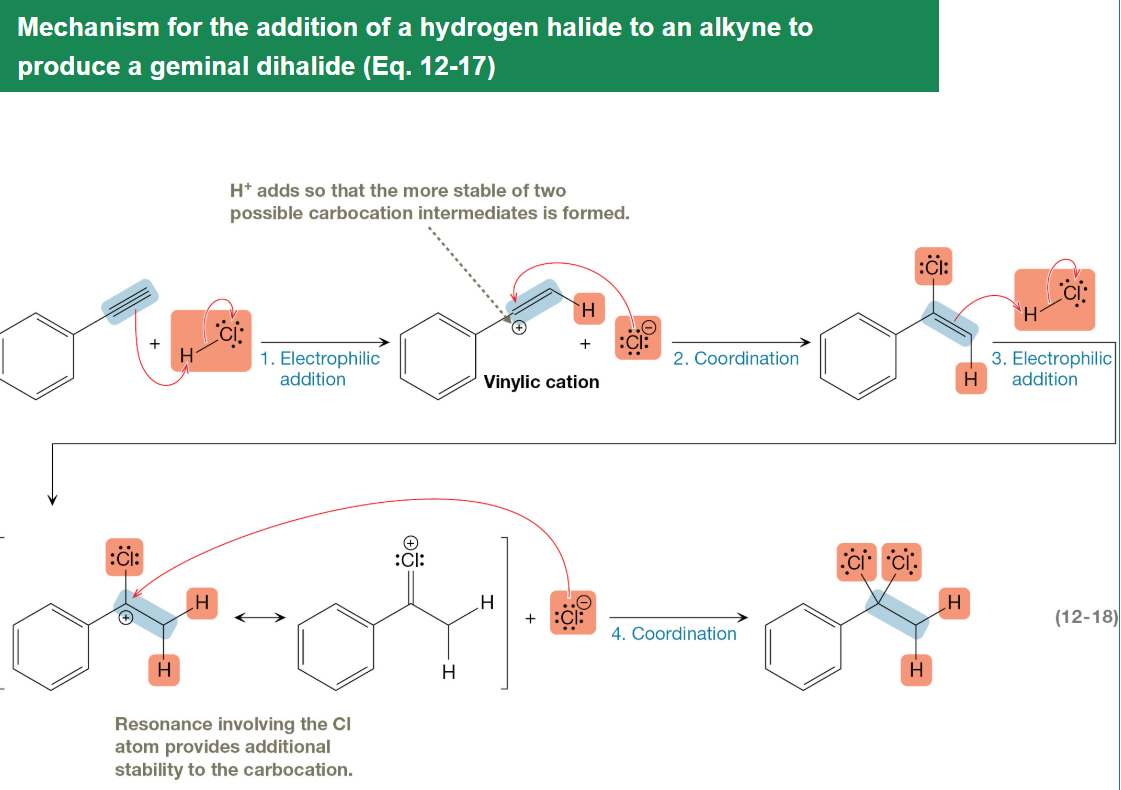
Electrophilic Addition of Brønsted Acid to Alkynes
Strong acids add across alkyne π bonds through vinyl carbocation intermediates following Markovnikov regioselectivity to form vinyl halides or geminal dihalides without changing the carbon skeleton.