Session 6: Functional groups
 Call Kai
 Learn
Learn Practice Test
 Spaced Repetition
 Match
Match Flashcards
 Knowt Play
1/30

There's no tags or description
Looks like no tags are added yet.
Name | Mastery | Learn | Test | Matching | Spaced | Call with Kai |
|---|
No analytics yet
Send a link to your students to track their progress
31 Terms
1
2
Functional group concept
Whats the relationship between species diversity and functional richness
Functional effect or functional response?
Defining functional groups
Body size
Sediment stabilisers-destabilisers
Consideration of habitat structure
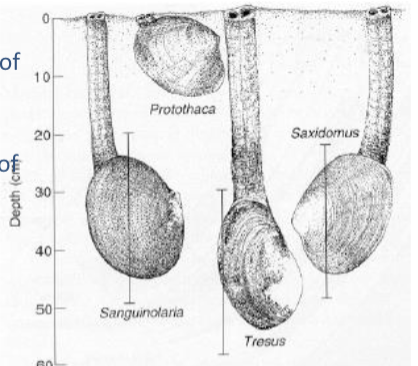
Are species vertically separated?
YES
X-ray used to look at bivalves (instead of sieves)
→ segregated by depth
How vertical separation affect what species do? with example
Similar depths feeders have more competition
e.g.
Saxidomus and Tresus are more dominant filter feeders
The growth of Sanguinolaria was reduced by 80% in their presence
but unaffected by Protothaca (it is also not affected by others)
Functional feeding groups
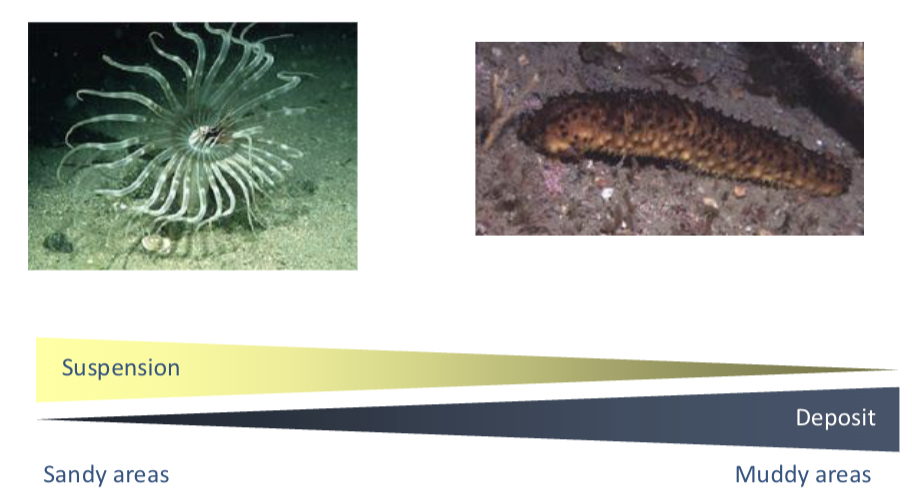
Are feeding groups spatially segregated?: The food availability hypothesis suggest
Suggest:
Sandy sediments were dominated by suspension feeders
Muddy sediments were dominated by deposit feeders
by food avaliability
Are feeding groups spatially segregated?:
3 reasons that The food availability hypothesis is incorrect
(i) more organics in water column above mud, but still no suspension feeders
(ii) boundaries between suspension feeding and deposit feeding were often too sharp to reflect food supply gradients,
(iii) hard substrata (e.g. rocks) in otherwise muddy sediments were not necessarily covered in suspension feeders.
Does one feeding group really replace another?
Do deposit feeders increase erosion?
Does sediment resuspension benefit suspension feeders?
The Trophic Group Amensalism Hypothesis
How applicable is the trophic group amensalism hypothesis?
3 Trophic groups
Detritivores
Carnivores
Herbivores
6 subcategories that capture detritus WITHOUT hard mouthparts
pseudopodial feeders (e.g. Foraminifera)
filter feeders with cilia (e.g. Porifera)
tentaculate feeders (e.g. holothurians)
proboscoidal feeders (e.g. sipunculids)
tube feet (e.g. some echinoderms)
nematocysts (e.g. jellyfish and hydroids)
4 subcategories that capture detritus with hard mouthparts
radula (e.g. molluscs)
mandibles or teeth (e.g. priapulids)
chitinous limbs (e.g. crustaceans)
calcareous tooth jaws (e.g. echinoids)
Extension of trophic groups
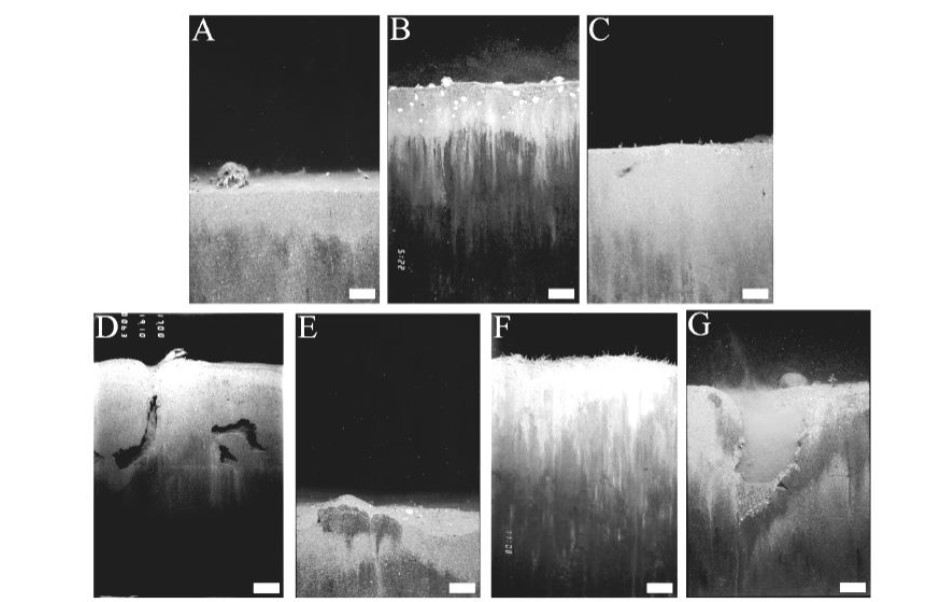
Bioturbation: 7 types of bioturbation
A, epifaunal;
B, surficial modifiers;
C, biodiffusers;
D, gallery biodiffusers;
E, upward conveyors;
F, downward conveyors;
G, regenerators
Example for changing feeding mode on impacting bioturbation
As Species can simultaneously have multiple functional designations
polychaete Cirriformia grandis is a urficial modifier and an epifaunal detritivore
….
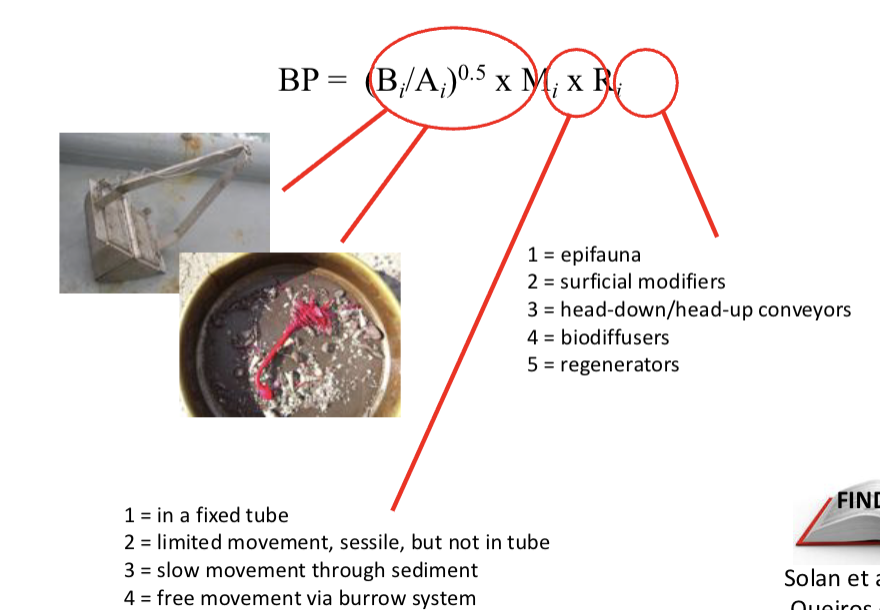
Combining feeding, motility and burrowing
Bioturbation potential
Biological Trait Analysis
Are the traits relevant in looking at nutrient etc.
→ lacking evidence
Which functional group approach should we use? Why?
Depends and need justification when using one
What does a functional group need to be?
Unlikely to be a single universal solution as
Based on common attributes rather than
phylogenetic relationshipsIncorporate interactions between
organisms and their environmentrelevant to ecosystem function/property
of interest
→ need to be supported by empirical evidence and accompanied by caveats (limitations,
scale, context etc.)