Genetics (DNA & RNA)
 Call Kai
 Learn
Learn Practice Test
 Spaced Repetition
 Match
Match Flashcards
 Knowt Play
1/22

There's no tags or description
Looks like no tags are added yet.
Name | Mastery | Learn | Test | Matching | Spaced | Call with Kai |
|---|
No analytics yet
Send a link to your students to track their progress
23 Terms
What does DNA stand for?
Deoxyribonucleic acid
What is DNA composed of?
Nuclotides
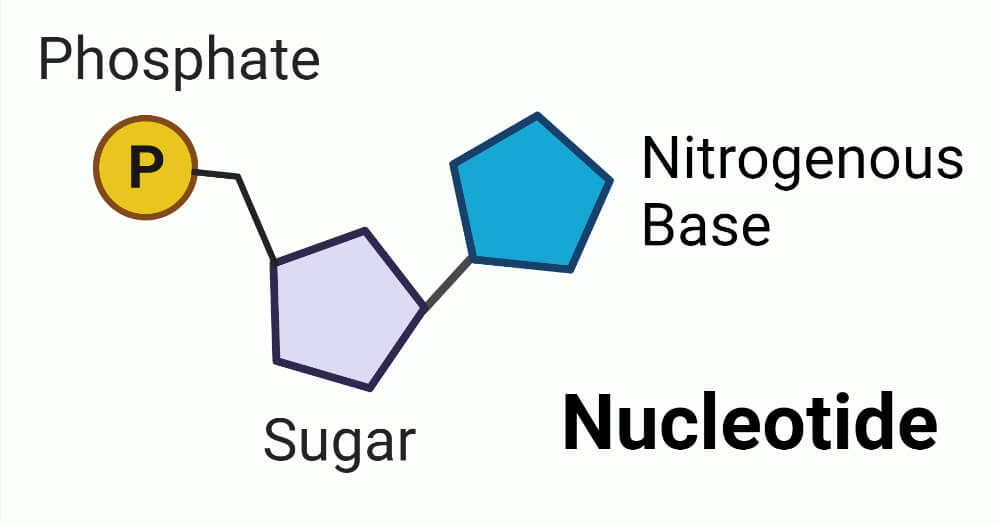
What is the structure of a nucleotide?
Base
Sugar (deoxyribose)
Phosphate
Distinguish between Purine and Pyrimidine bases.
Purine: Adenosine (A), guanine (G)
Pyrimidine: Thymine (T), cytosine (C)
How are nitrogenous bases joined together?
Hydrogen bonds
What are the complimentary base pairs?
A & T (2 hydrogen bonds)
G & C (3 hydrogen bonds)
What is a codon/triplet?
A sequence of 3 bases that codes for an amino acid.
Distinguish between coding DNA and non-coding DNA.
Coding DNA: Carries code for a specific protein
Non-coding DNA: Does not code for a specific protein.
What does RNA stand for?
Ribonucleic Acid
What are the 3 types of RNA and their functions?
mRNA (messenger):
tRNA (transfer):
rRNA (ribosome):
What is thymine replaced with in RNA?
Uracil (U)
Outline the process of DNA replication.
Double helix unwinds and the stands separate
DNA Ligase (enzyme) joins bases from cytoplasm to thee complimentary bases of each DNA stand
Two exact replicas of DNA are formed (each containing 1 original + 1 new stand)
DNA re-winds into double-helix shape
What is the significance of DNA replication?
DNA is able to produce exact copies of itself
Pass genes onto future generations
What are the two stages of protein synthesis?
Transcription
Translation