Chemistry Prep
 Call Kai
 Learn
Learn Practice Test
 Spaced Repetition
 Match
Match Flashcards
 Knowt Play
1/198

Earn XP
Description and Tags
Name | Mastery | Learn | Test | Matching | Spaced | Call with Kai |
|---|
No analytics yet
Send a link to your students to track their progress
199 Terms
Redox Reaction Definition
-a chemical reaction in which electrons are lost from one substance (oxidation) and added to another (reduction).
- oxidation and reduction always occur together.
- there is no net change of the number of electron
-short for Oxidation-Reduction
Nitrite (Nick the, -ite)
NO2(1-)
Carbonate (Camel had a)
CO3(2-)
Hydrogen/Bicarbonate (Camel had a, Hydrogen/Bi___ate)
HCO3(1-)
Chlorate (Clam for)
ClO3(1-)
Hydrogen Phosphate (Phoenix, Hydrogen/Bi___ate)
HPO4(2-)
Cyanide
CN(1-)
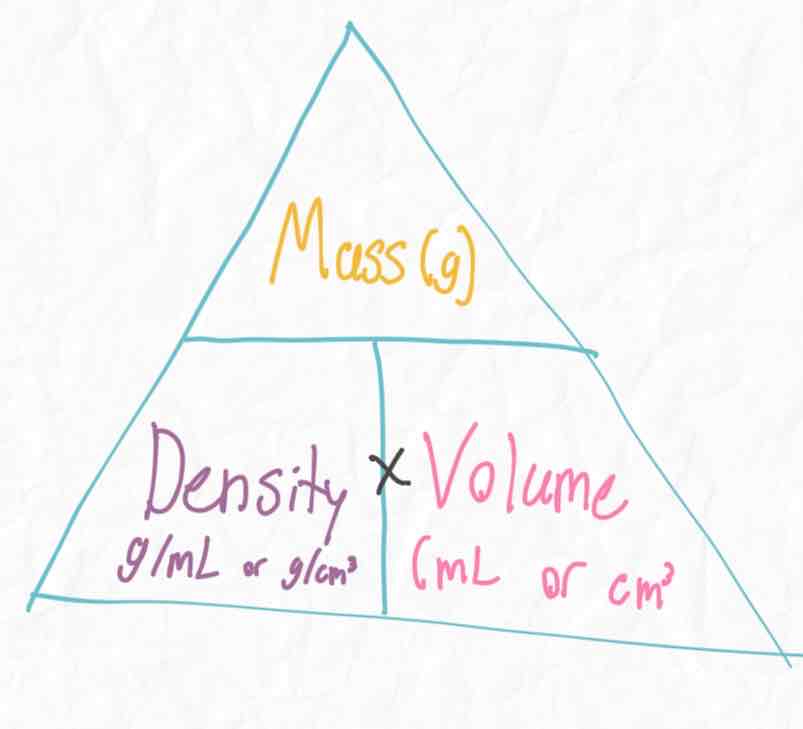
DMV Triangle (draw)
D = M/V
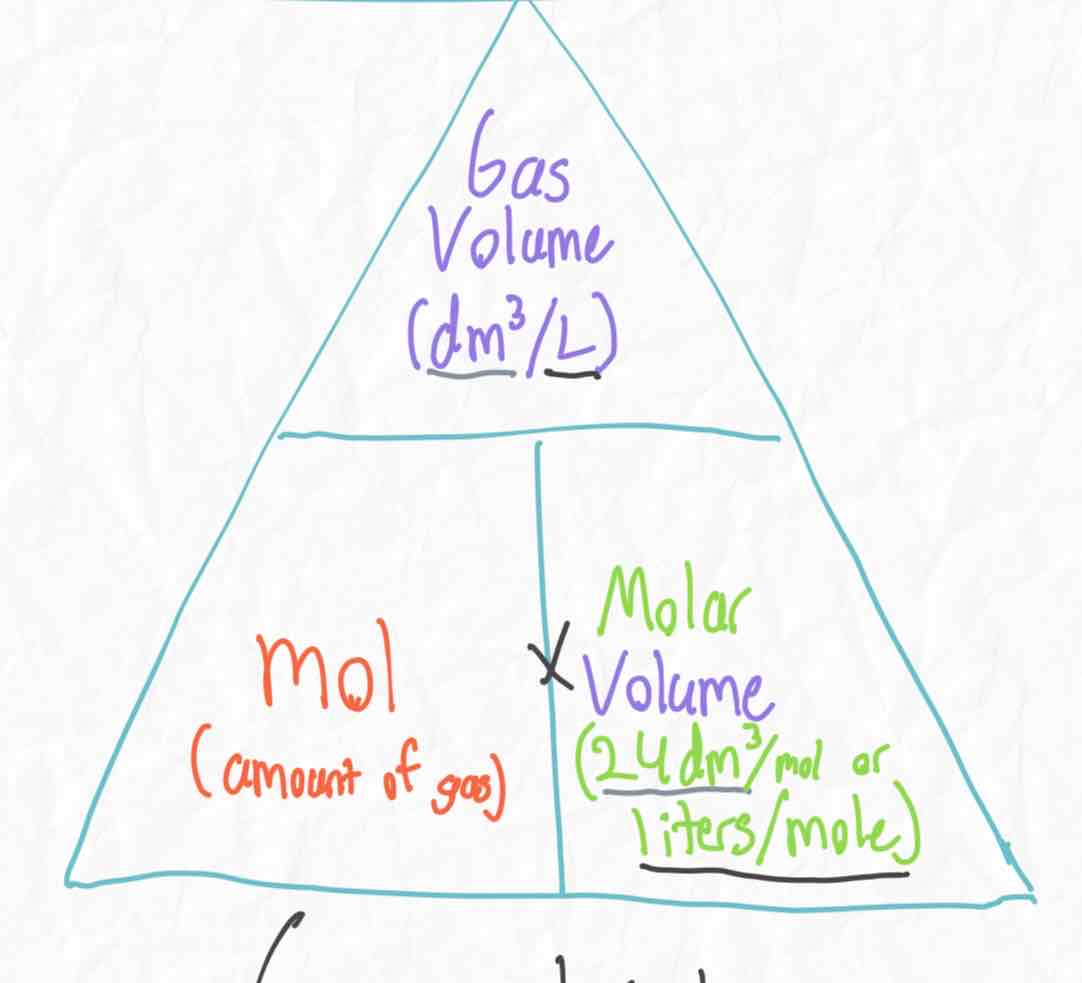
Gas Volume Triangle (draw)
Gas Volume (L or dm^3) = mol gas x molar volume (L/mol or 24dm^3)
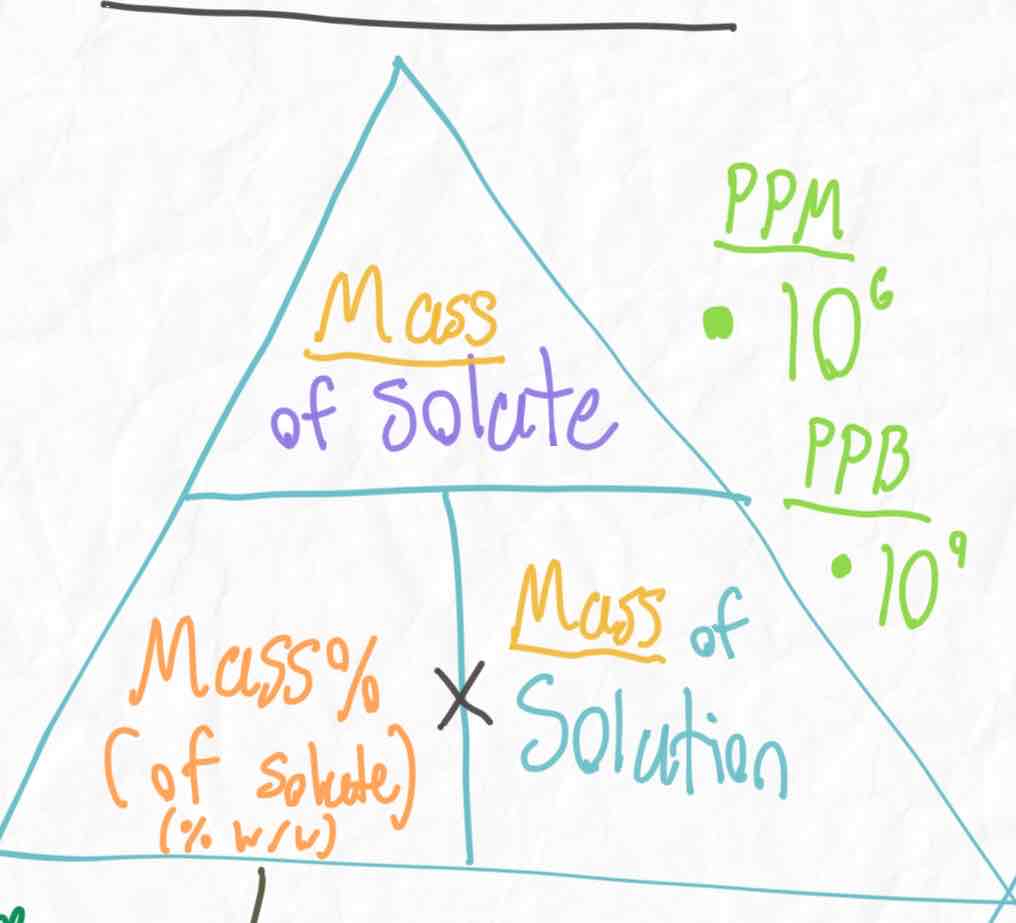
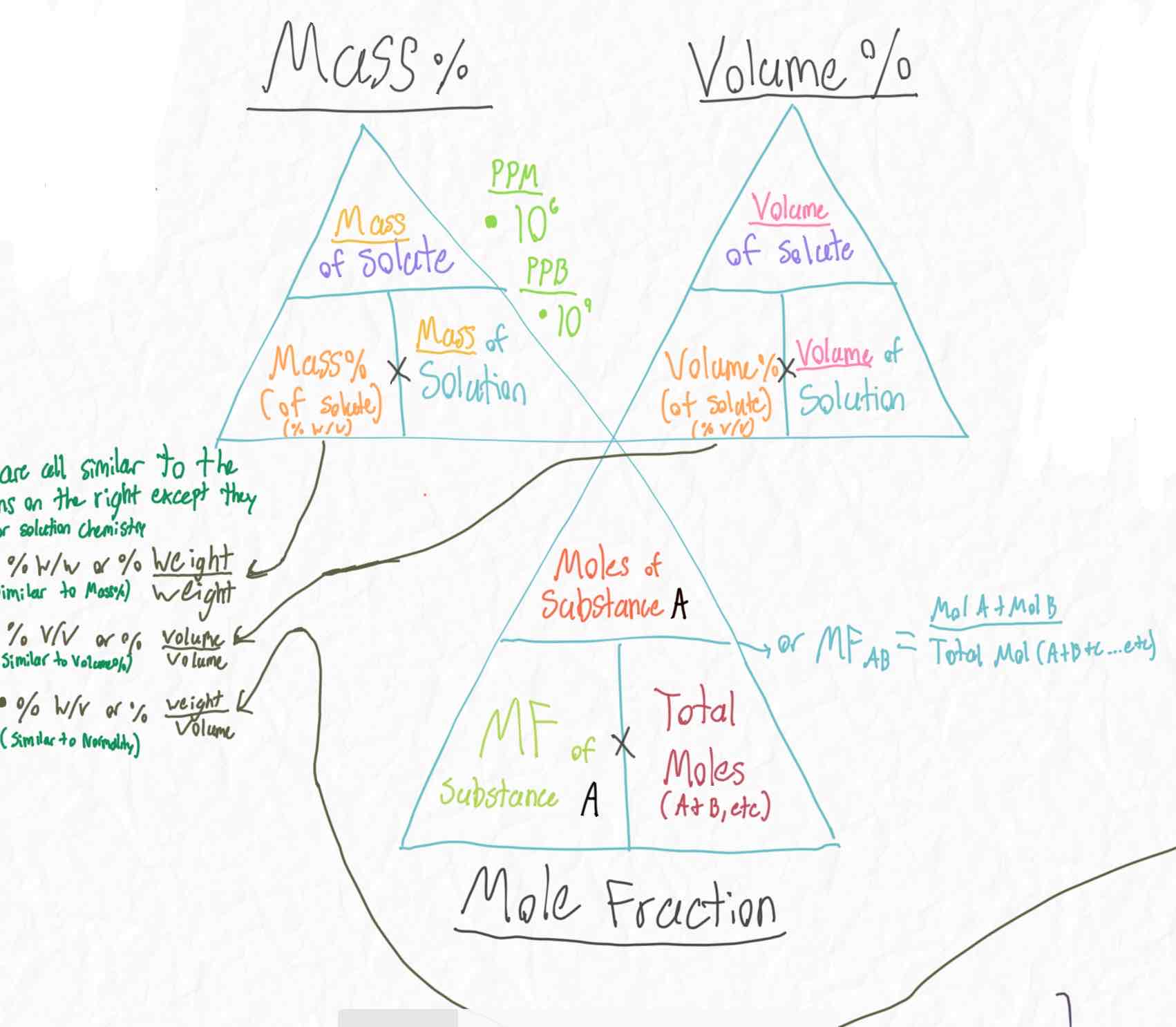
Mass % Triangle (draw)
Mass % = Mass solute/Mass solution
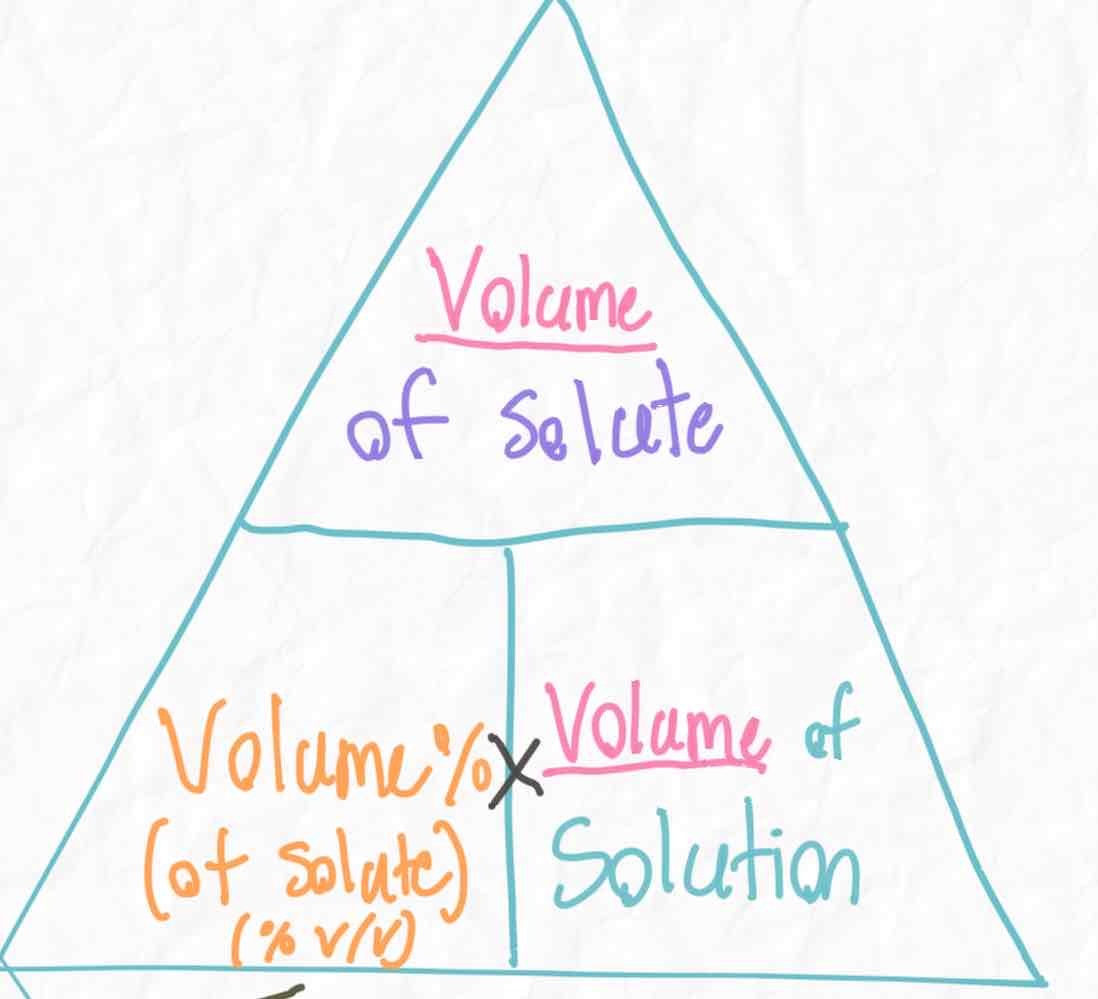
Volume % Triangle (draw)
Volume % = Volume solute/Volume solution
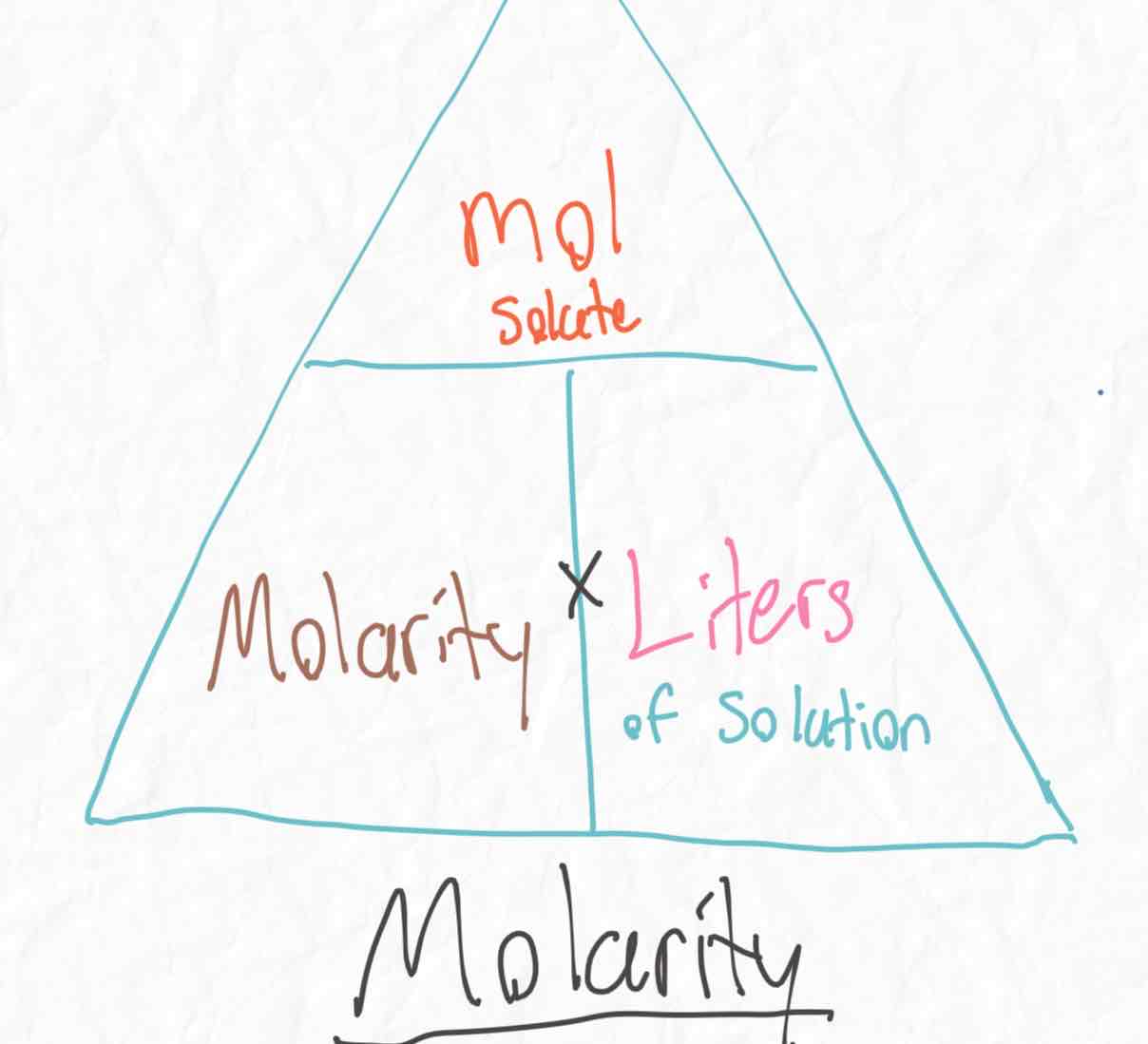
Molarity Triangle (draw)
Molarity = mol solute/liters solution
Hydro- (element) -ic acid
+H, no oxygen, Binary acid
(ex. Hydrochloric Acid: HCl) (Polyatomic acids DONT INCLUDE HYDRO, ONLY BINARY ONES DO)
(element) -ic acid (acid version of -ate)
+H, normal oxygen
Base in reactions
A compound that produces OH- ions in water (Arrhenius definition);
a compound that accepts H+ ions (Brønsted-Lowry definition).
electron pair acceptor (Lewis)
these dissociate
Amount of specific substance (BU)
mole (mol)
Luminous intensity (BU)
candela (cd)
Length (BU)
meter (m)
Time (BU)
second (s)
Electric Current (BU)
ampere (A)
Mass (BU)
kilogram (kg)
SI Base Unit
the universal measurement system of basic units
Tera (T)
10^12
Giga (G)
10^9
Mega (M)
10^6
Kilo (k)
10^3
Hecto (h)
10^2
Deka (da)
10^1
Deci (d)
10^-1
Centi (c)
10^-2
Milli (m)
10^-3
Micro (u thing)
10^-6
Nano (n)
10^-9
Pico (p)
10^-12
SI Derived Units
a unit of measurement obtained by multiplication or division of different base units
NaCl or Sodium Chloride is typically a? (solute or solvent)
Solute
KI or Potassium iodide is typically a? (solute or solvent)
Solute
NaOH or Sodium Hydroxide is typically a? (solute or solvent)
Solute
NaF or Sodium Fluoride is typically a? (solute or solvent)
Solute
H20 or Water is typically a? (solute or solvent)
Solvent
CH3OH or Methanol is typically a? (solute or solvent)
Solvent
CH3CH2OH or Ethanol is typically a? (solute or solvent)
Solvent
When dealing with two compounds that are typically solvents
The larger compound becomes the solvent
Per________ate
+1 oxygen than normal
________ate
normal # of oxygens
________ite
-1 oxygen than normal
Hypo________ite
-2 oxygens than normal
Hydrogen/Bi________ate
+H, 1 charge closer to 0 than normal
Nick the Camel had Plums and Clam for Supper in Phoenix
First Consonant = Name of Ion,
The # of Consonants = # of Oxygens,
The # of Vowels = ion's negative charge
Nitrate (Nick the)
NO3(1-)
Perchlorate (Clam for, Cl is counts as one, +Per ate)
ClO4(-1)
Chlorite (Clam for, Cl is counts as one, -ite)
ClO2(1-)
Hypochlorite (Clam for, -hypo ite)
ClO(1-)
Sulfate (Supper in)
SO4(2-)
Sulfite (Supper in, -ite)
SO3(2-)
Hydrogen/Bisulfate (Supper in, Hydrogen/Bi___ate)
HSO4(-1)
Phosphate (Phoenix)
PO4(3-)
Phosphite (Phoenix, -ite)
PO3(3-)
Ammonium
NH4(1+)
Acetate
C2H3O2(1-) or CH3COO(1-)
Hydronium (strongest acid in aq. solutions)
H3O(1+)
Permaganate (Plums)
MnO4(1-)
Hydroxide
OH(1-)
Peroxide
O2(2-)
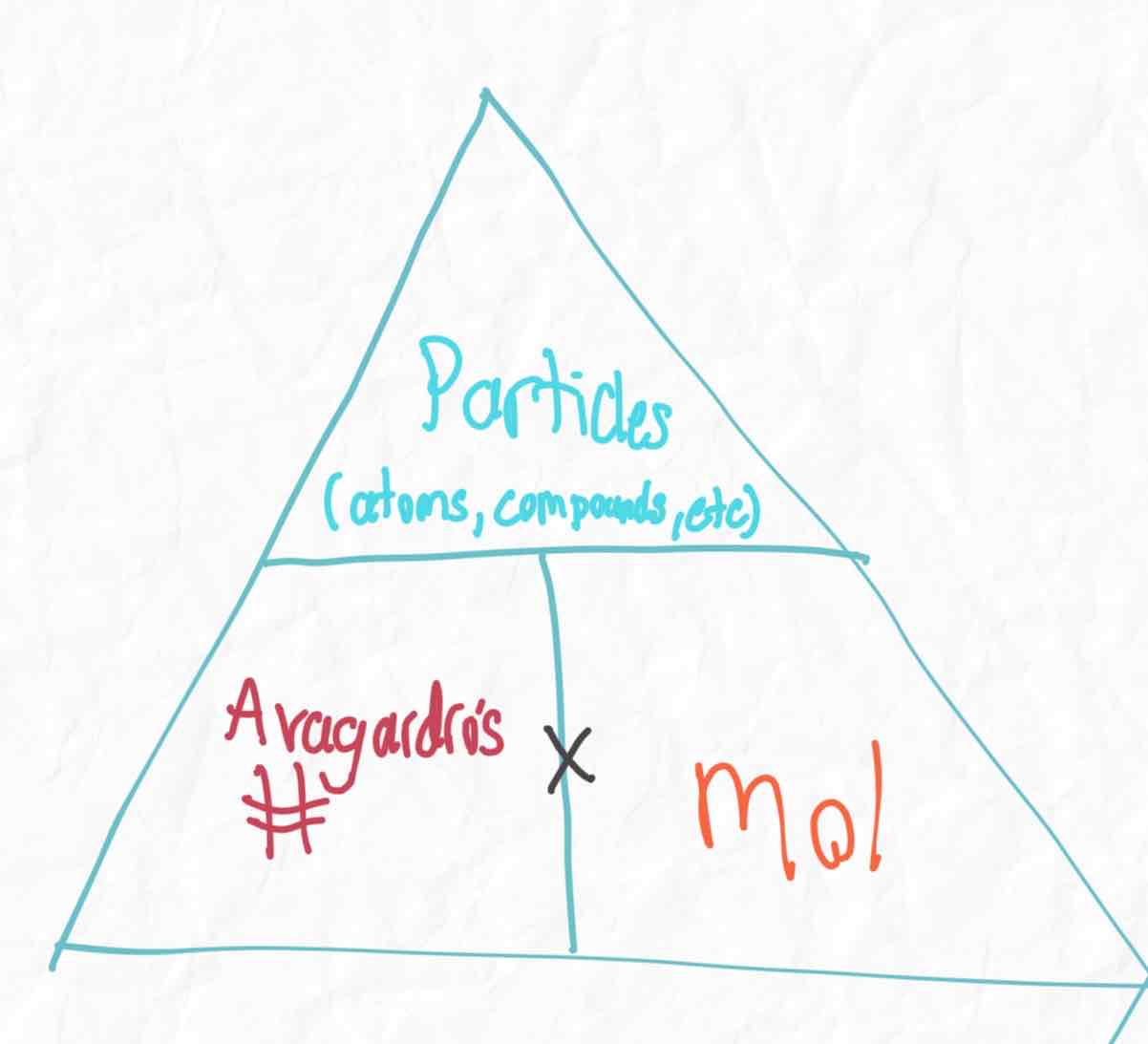
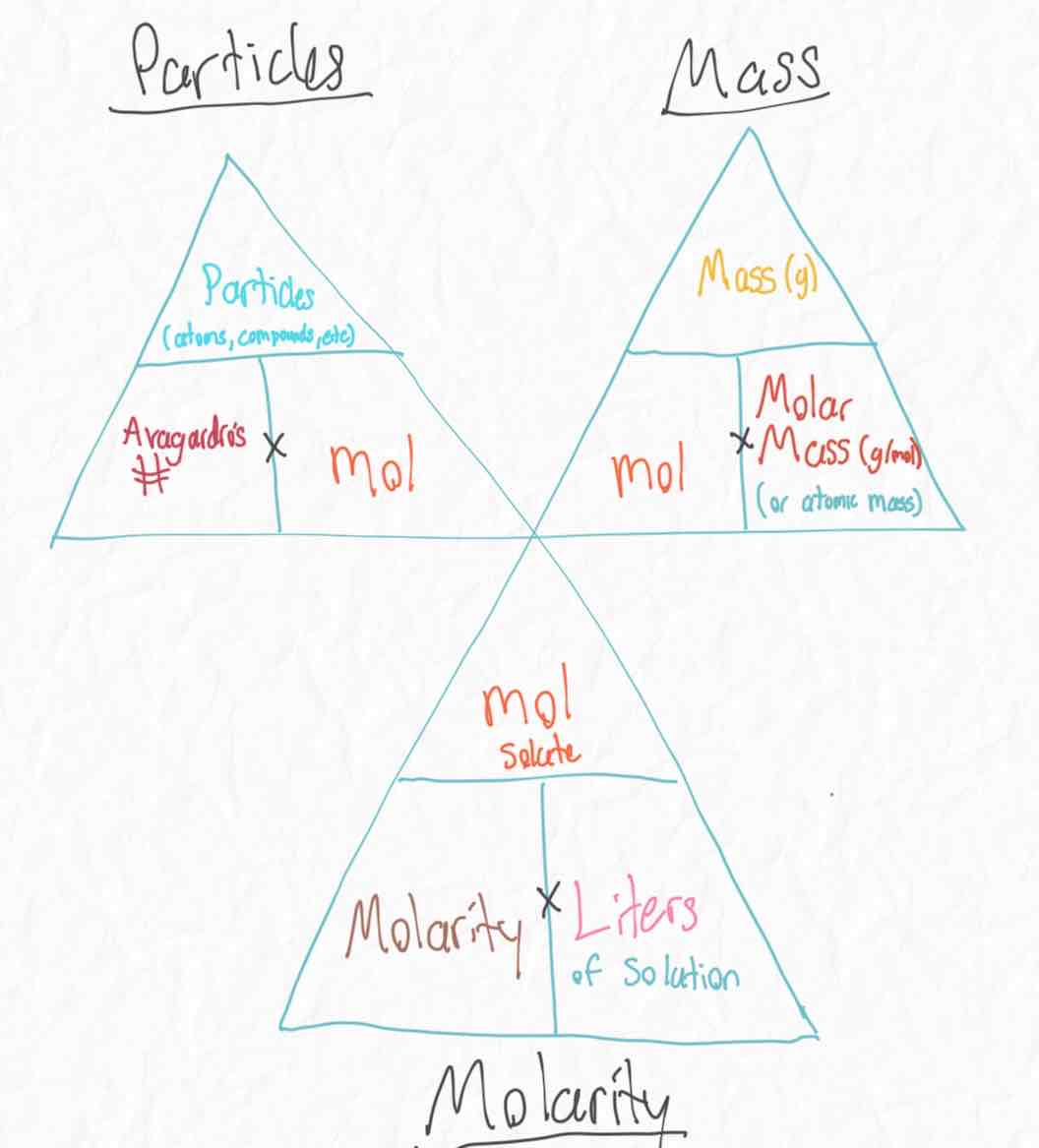
Particles Triangle (Draw)
Particles = Avogadro's # x mol
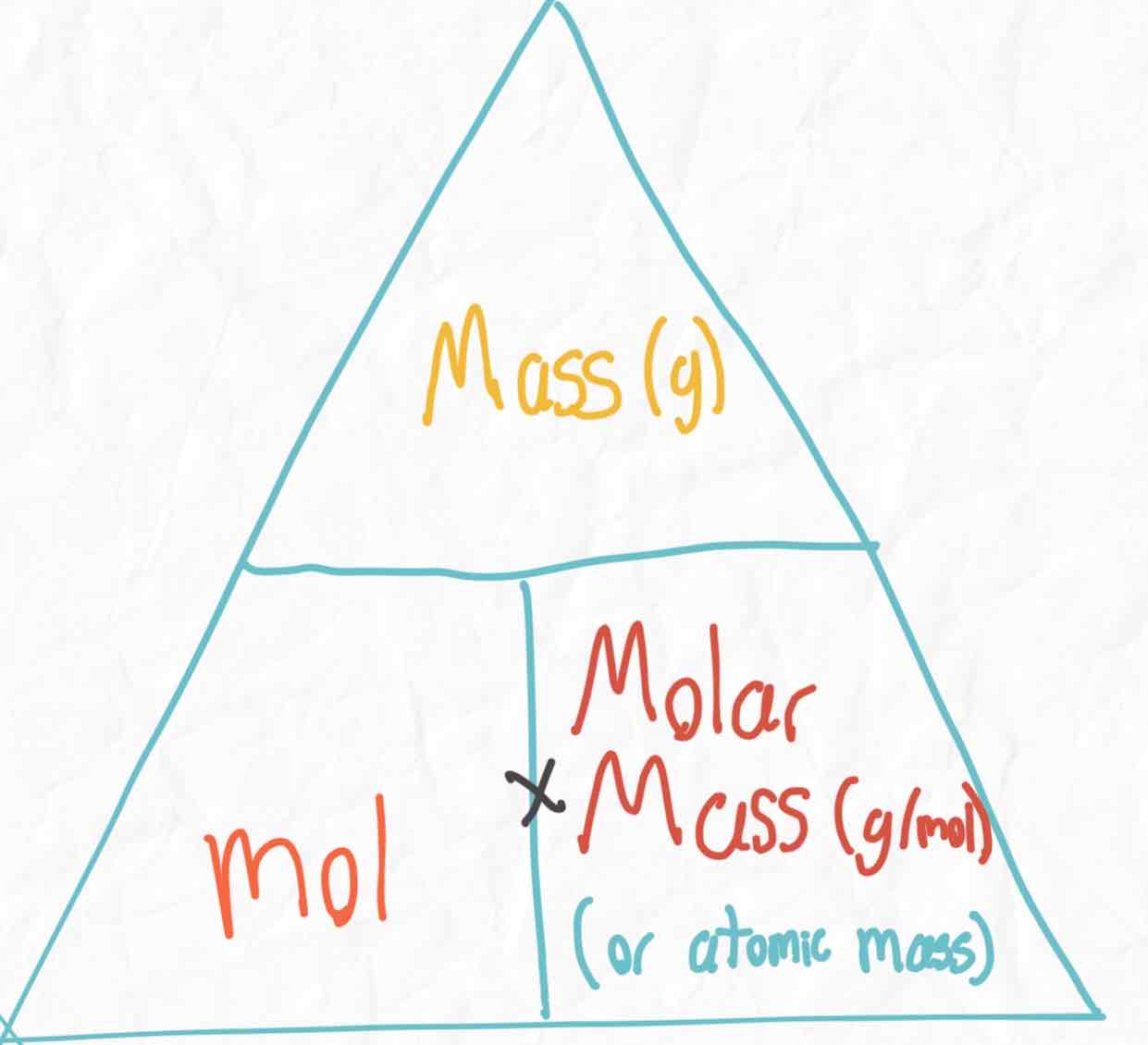
Molar Mass Triangle (draw)
Molar Mass = Mass/mol
Molar Concentration Triangle (draw)
Concentration = mol substance/ Liquid Volume (L)

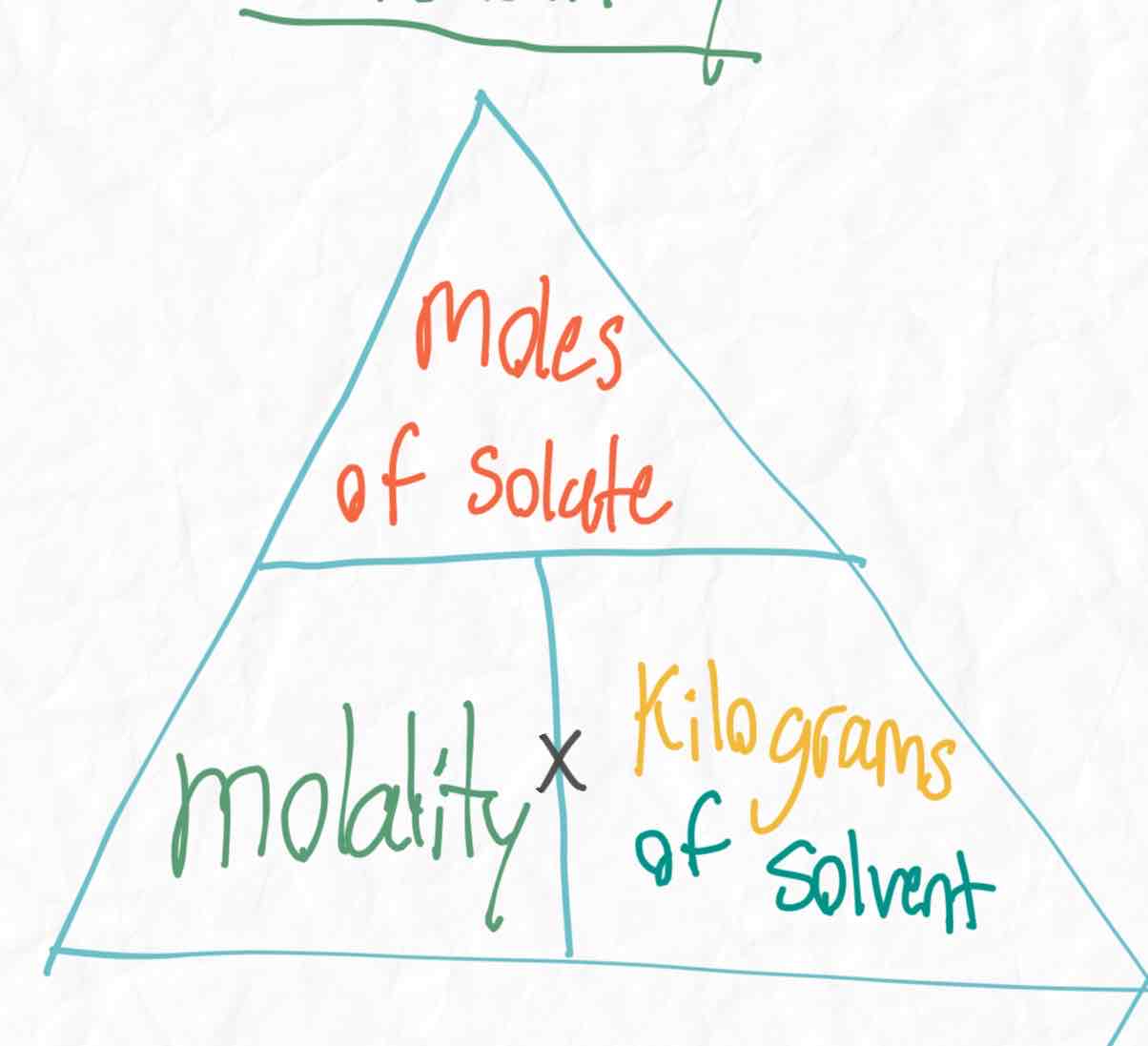
Molality Triangle (draw)
Molality = mol solute / Kg solvent
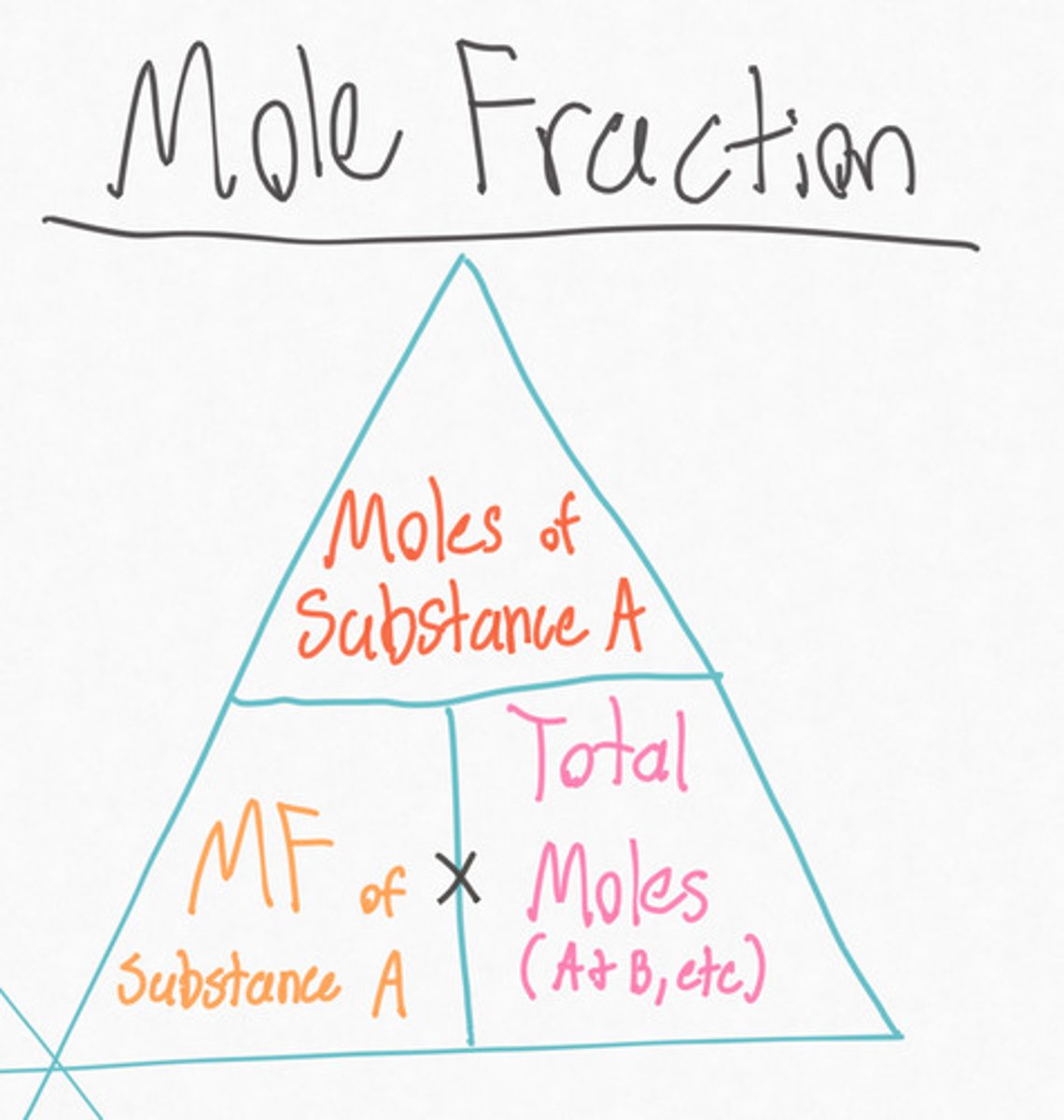
Mole Fraction Triangle (draw)
MF A= mol A/total mol
Solution Chemistry Trio 1 (draw)
Solution Chemistry Trio 2 (draw)
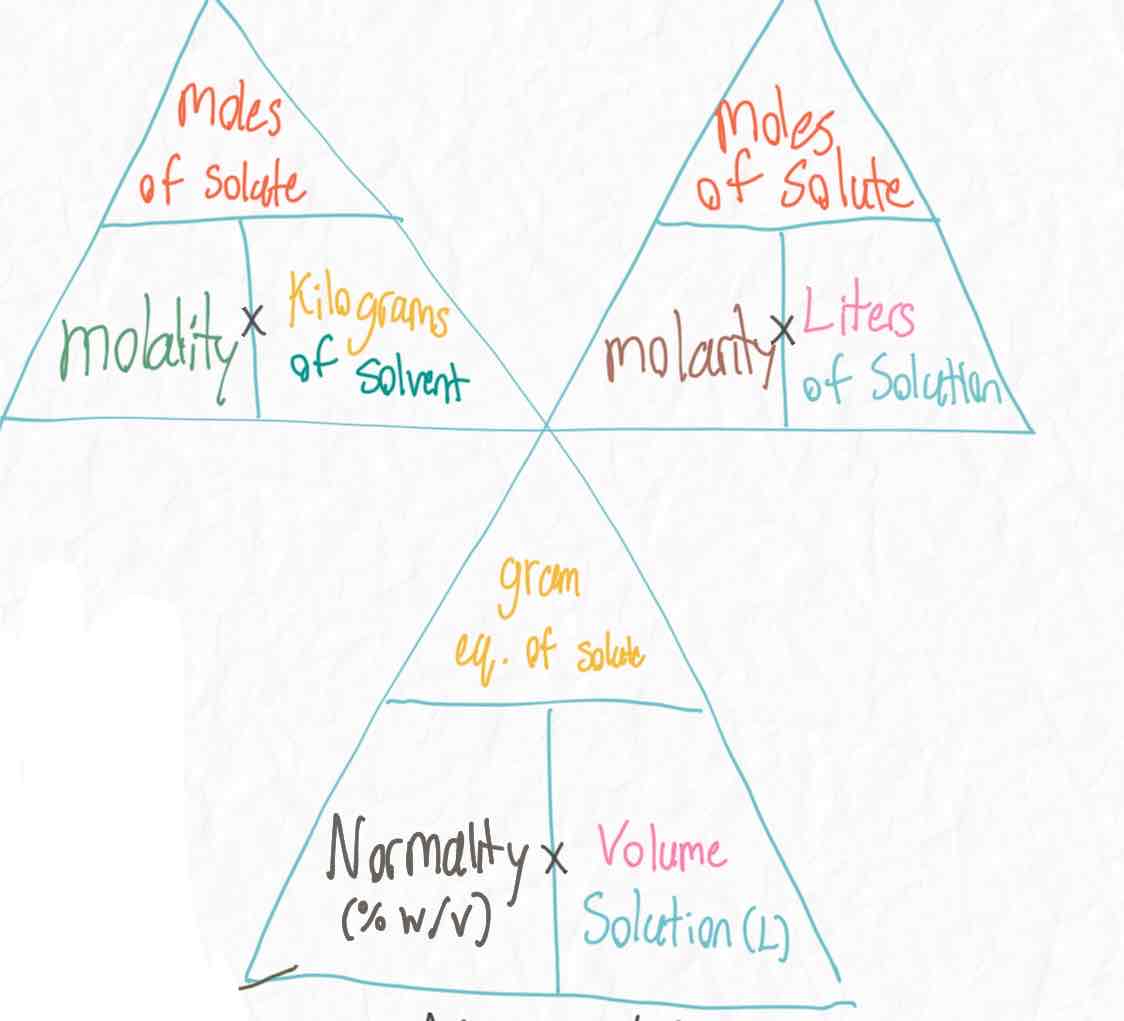
General Mole Conversion Trio
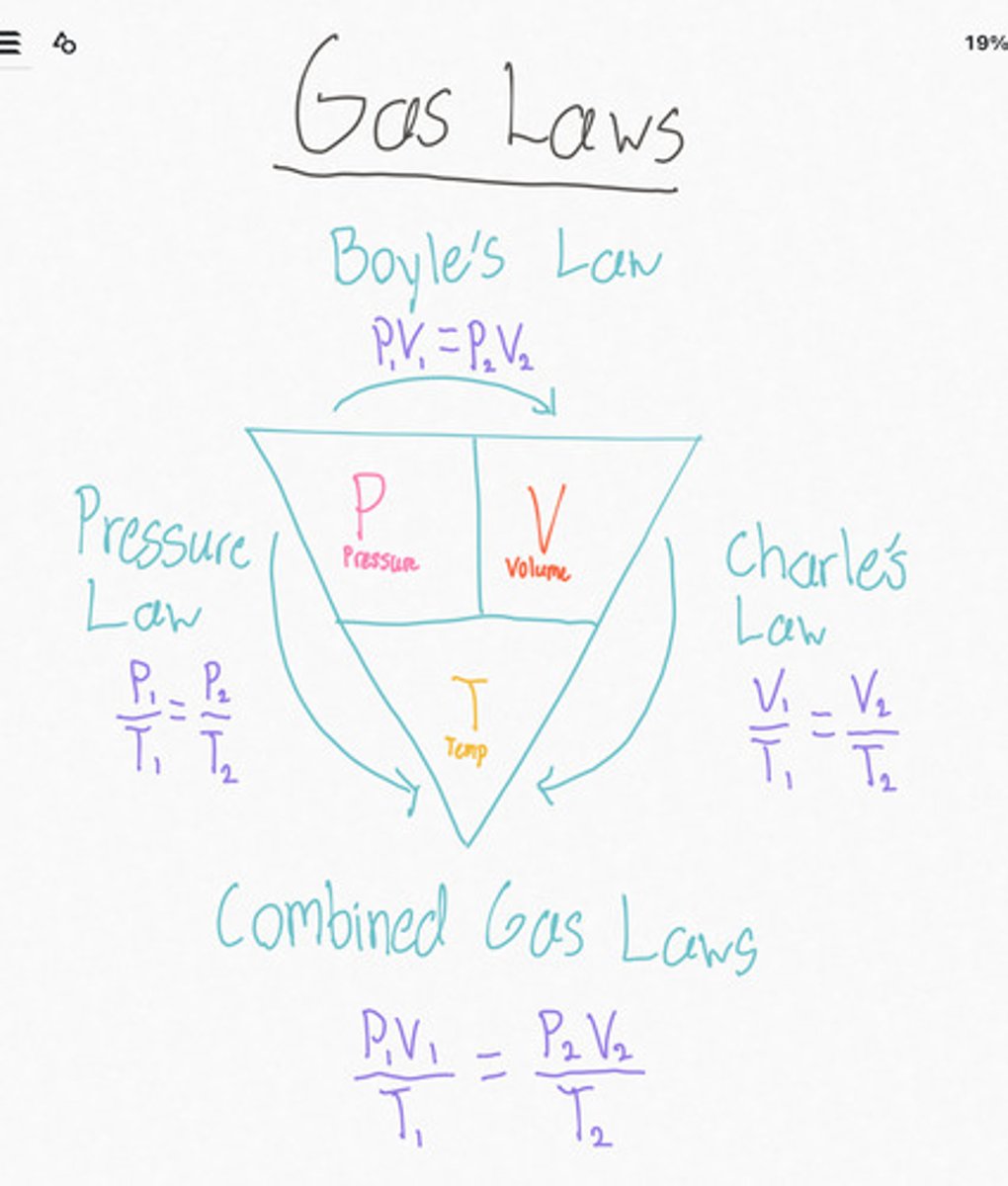
Gas Laws Triangle (draw)
Molarity Problems: Mixture of Same Substance Solutions Concentration Equation
M1V1 + M2V2.... etc = M (V1 + V2...etc)
(ex. Two solutions of a substance are mixed in the following manner. 480ml(V1) of 1.5M first solution (M1), 520mL (V2) of 1.2M second solution (M2). What’s the final mixture (M)?
(1.5)(480) + (1.2)(520) = M (480 +520)
M= 1.344
Hypo- (element) -ous acid
+H, -2 oxygen than normal (-ic acid)
(element) -ous acid (acid version of -ite)
+H, -1 oxygen than normal (-ic acid)
Per- (element) -ic acid
+H, +1 oxygen than normal (-ic acid)
(element) -ol
-1H, +OH group (ex. Methane: CH4 -> Methanol: CH3OH)
Synthesis
A + B -> AB (elements/compounds combining to make a larger single compound)

Synthesis: To remember
1. Find oxidation #
2. If equally opposite, it yields a 1:1 ratio product; If not equal, remove current subscript then subscript swap using oxidation numbers to find product.
3. Balance
Decomposition
AB -> A + B (a compound breaking into two or more smaller substances)
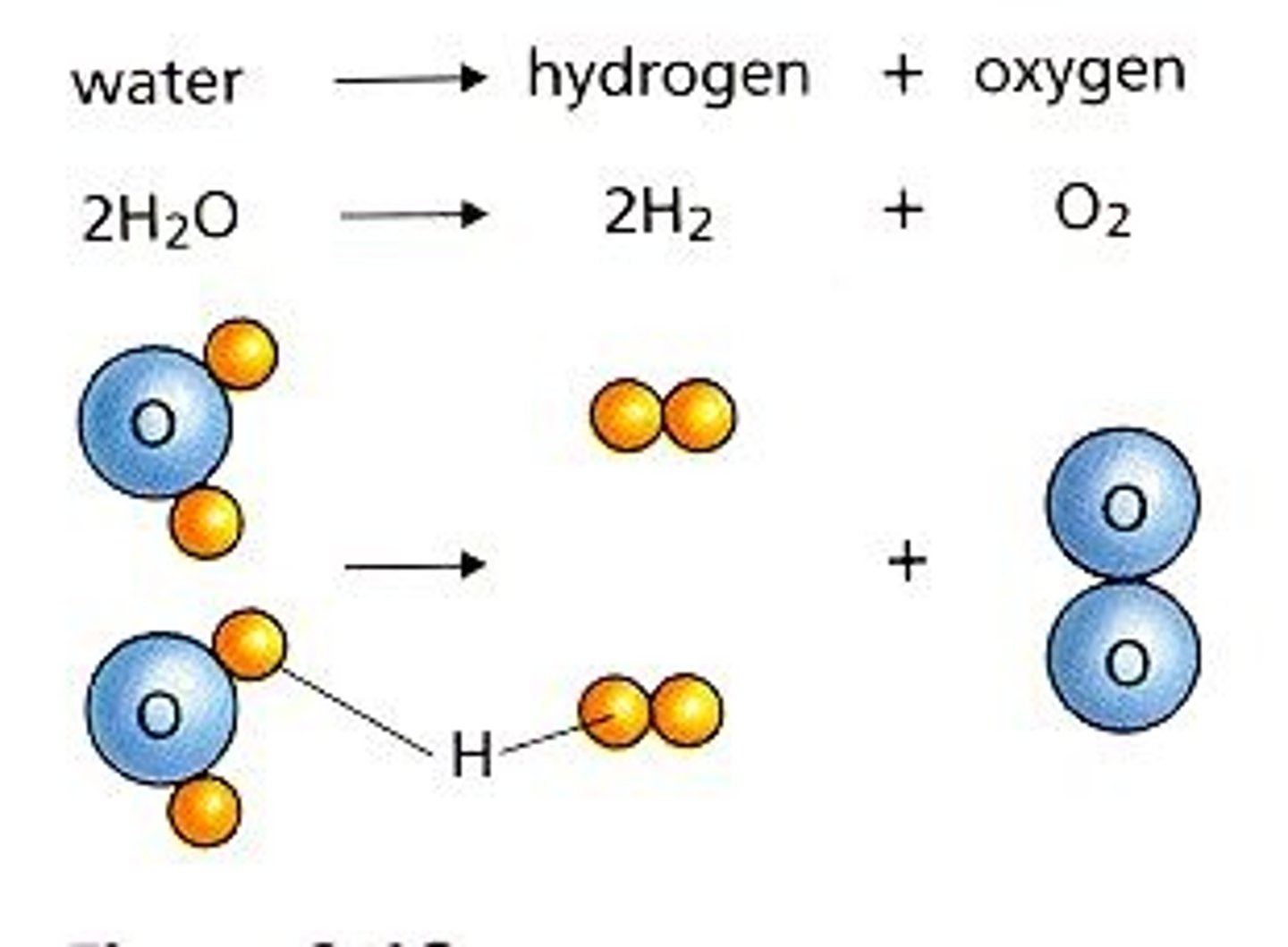
Thermal Decomposition: What to look for?
Metal Carbonate Decomp.
Metal Carbonate —-heat—> Carbon Dioxide+ Metal Oxide
MgCO3 —heat—> CO2 + MgO
Metal Hydrocarbon Decomp.
Metal Hydrocarbon —-heat—> Water + Metal Oxide (ex. CaO)
(ex. Ca(OH)2) —heat—> H2O + CaO
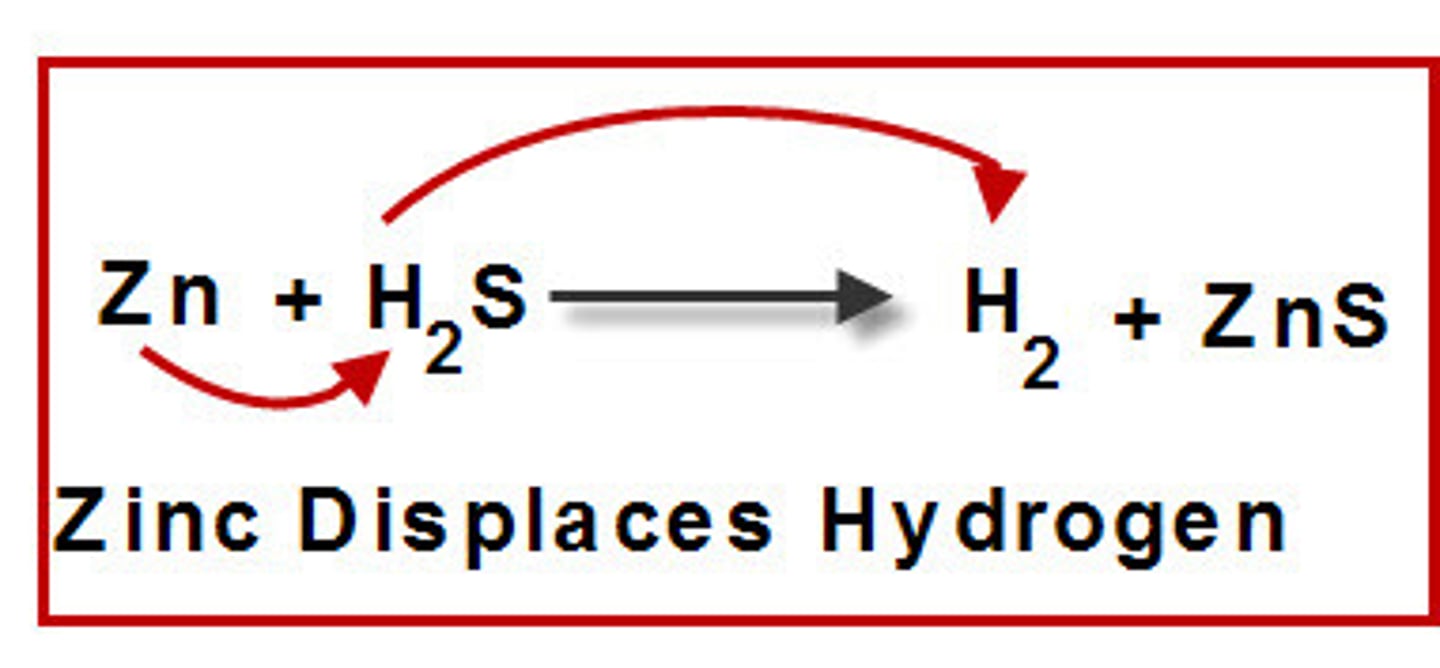
Single Replacement
A + BC -> B + AC (elements & compounds)
(one element is substituted for another in a compound to make a new compound + a pure element)
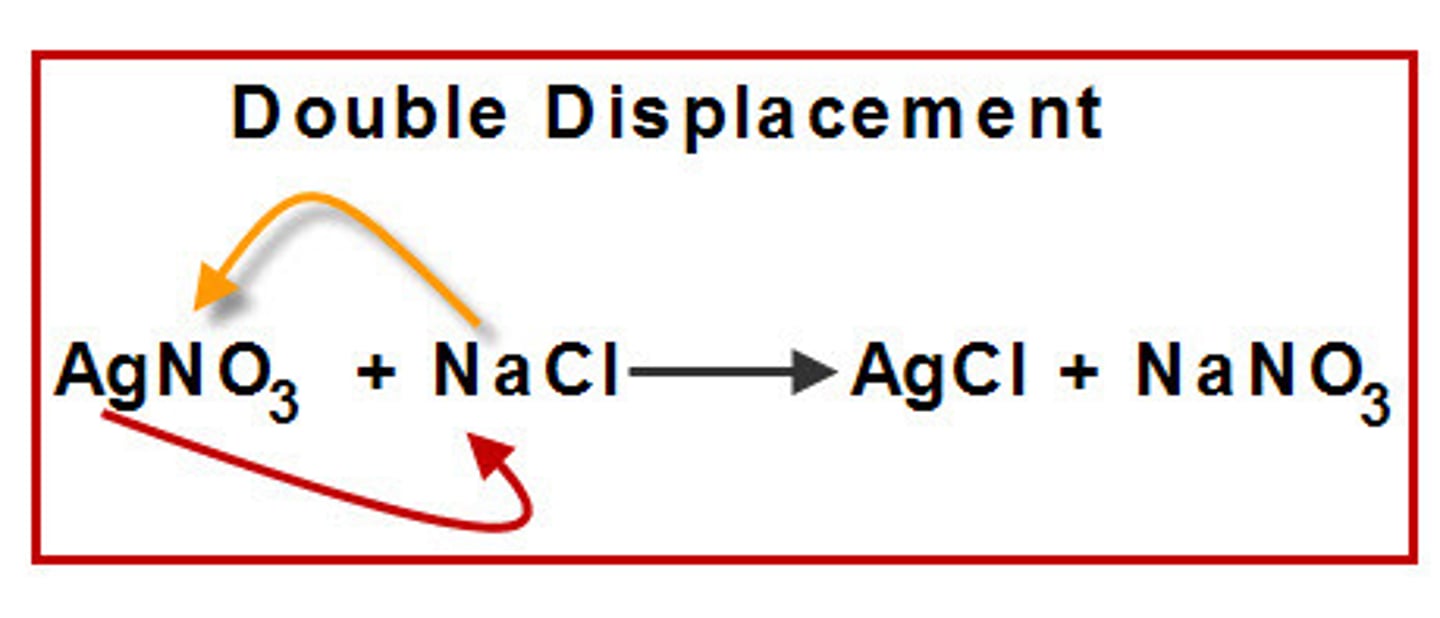
Double Replacement
AB + CD -> AD + CB (Ionic compounds exchanging cations or anions to form new compounds)
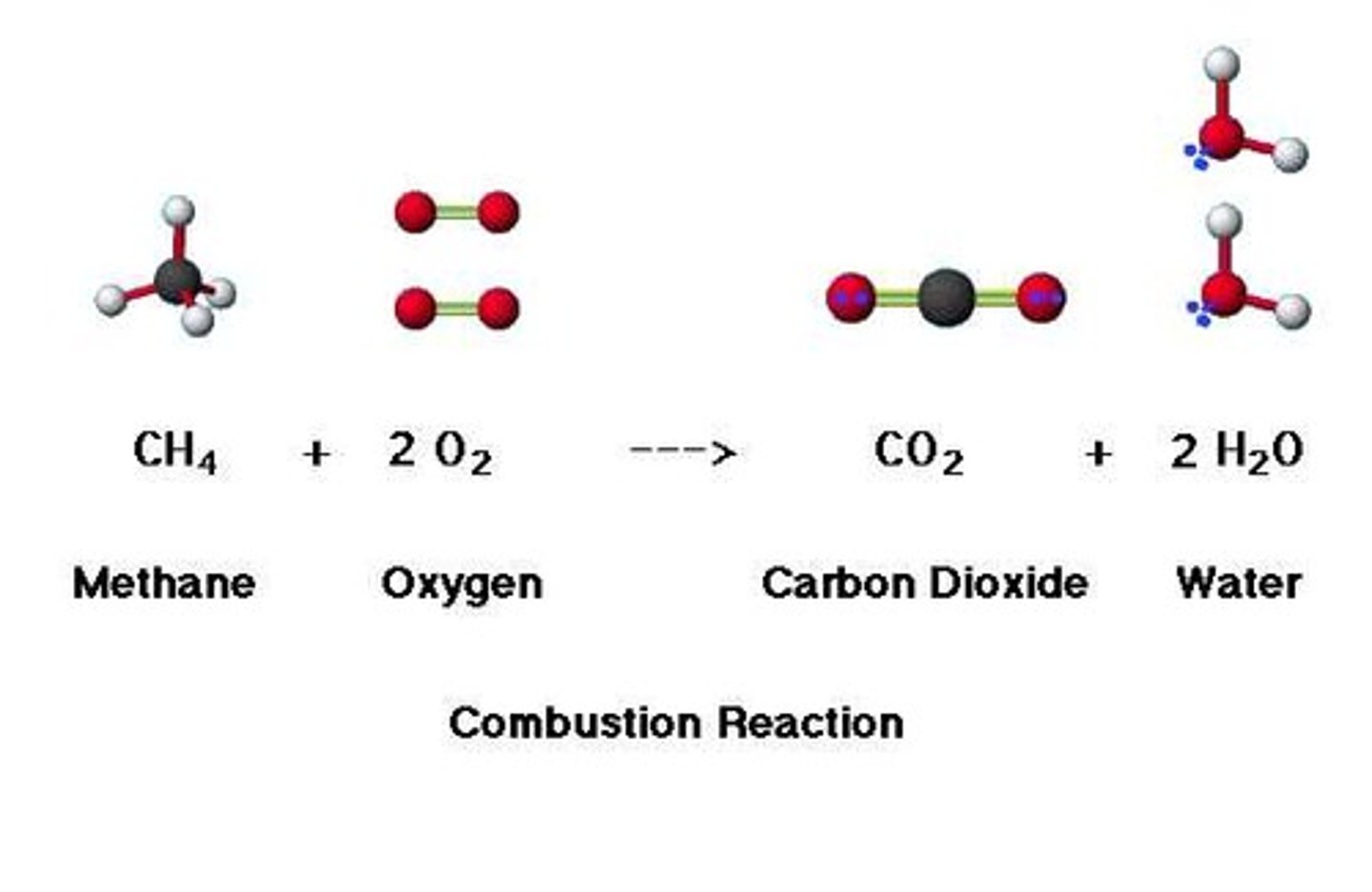
Combustion
fuel + O2 -> H2O + CO2
(a fuel, usually a hydrocarbon reacts with oxygen gas to form carbon dioxide and water, generates heat & light in the process)
Combustion: What to look for?
Hydrocarbons (anything with C & H are often fuel sources)
And obviously O2 = other reactant
ex. C2H6O + 2O2 → 3H2O + 2CO2
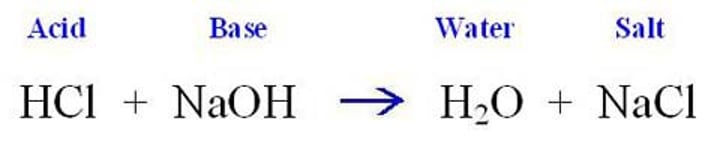
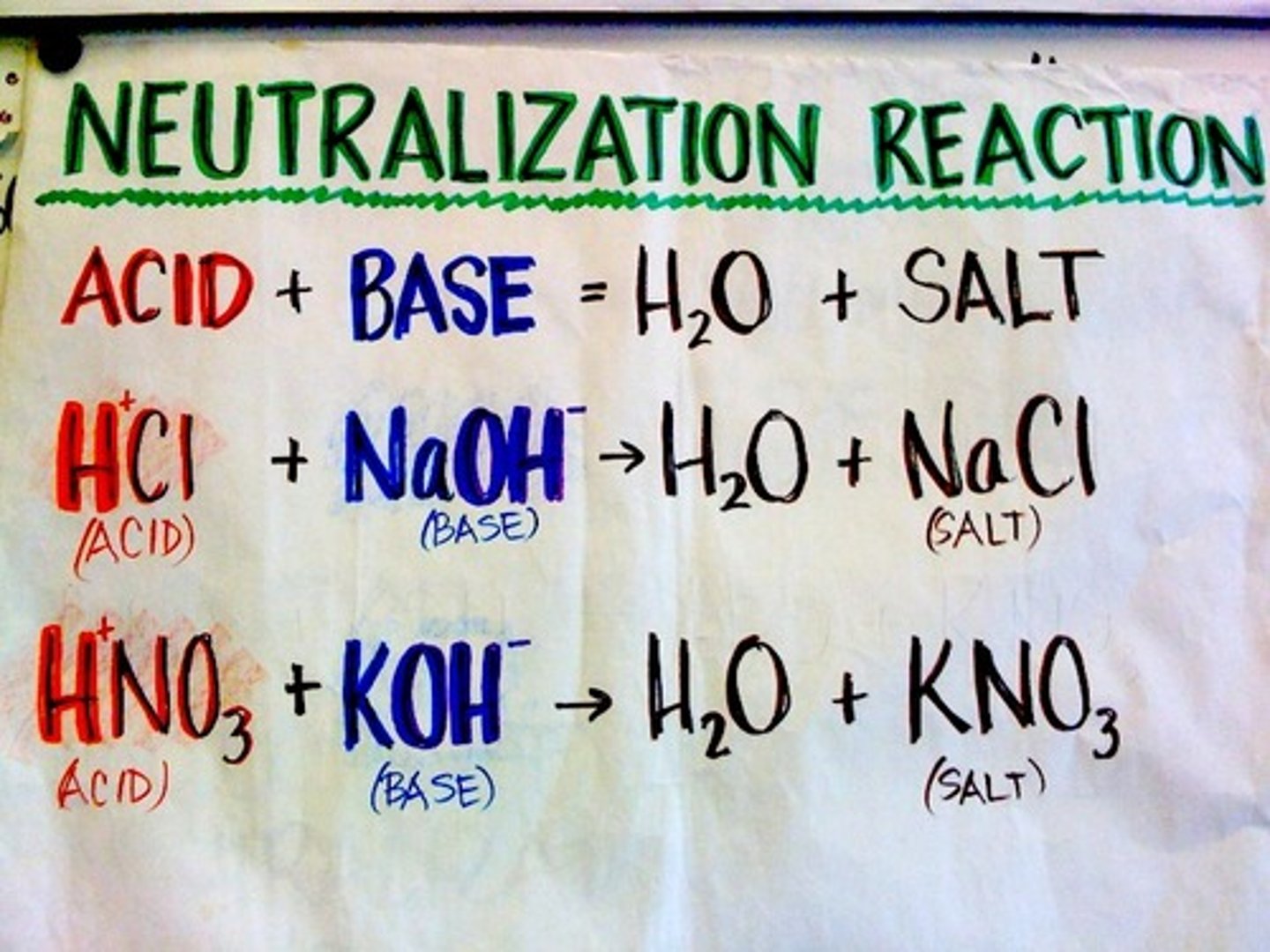
Neutralization (Type of Double Rep.)
Acid + Base -> H2O + Salt
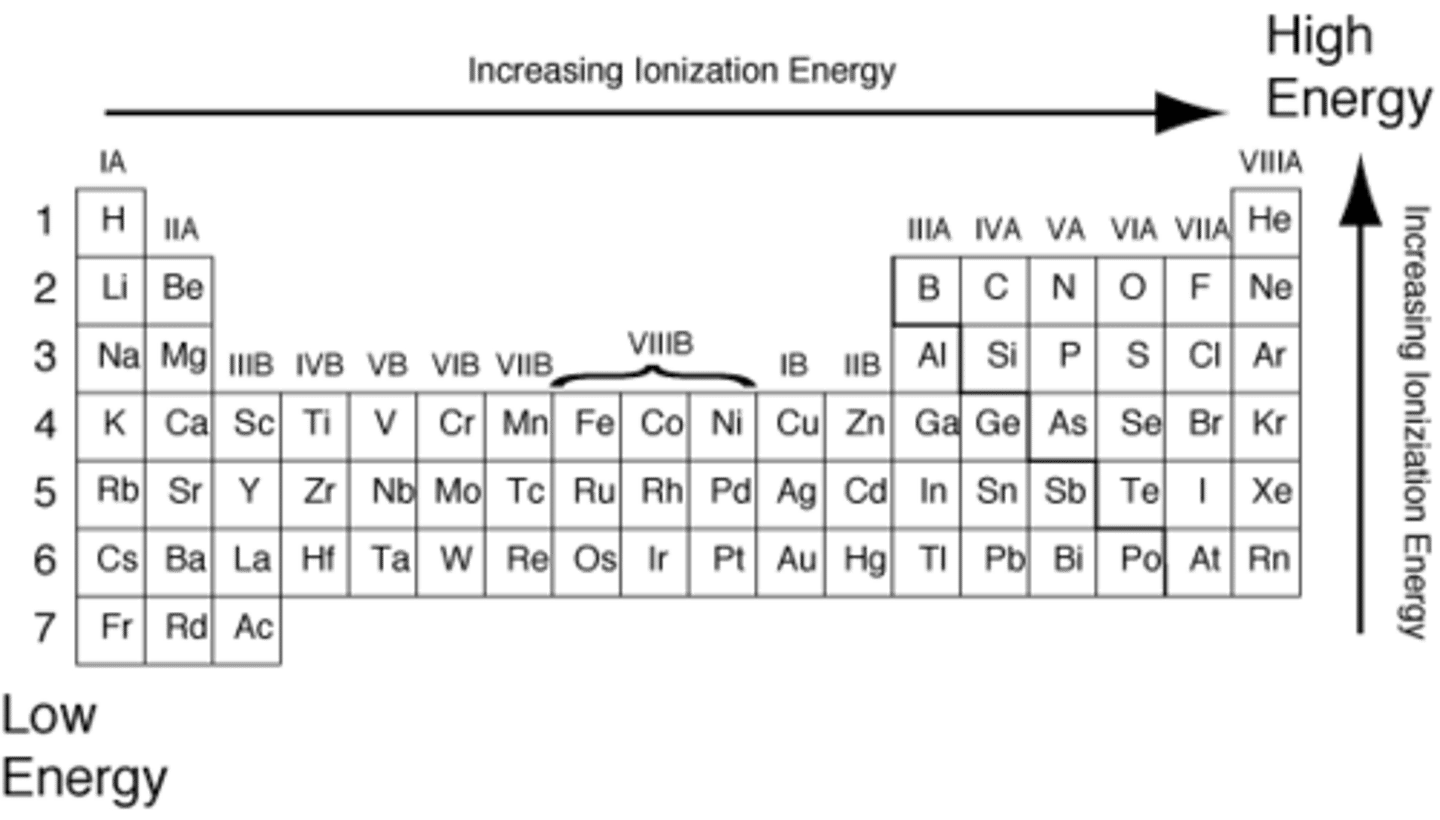
Ionization
the process of adding or removing electrons from an atom or molecule, which gives the atom or molecule a net charge and forms an ion.
Acids do this by releasing protons H+
Arrhenius definition
Describes an acid as a compound that produces H+ or H3O+ (Hydronium) ions in water (increasing H+ concentration), and a base as a compound that produces OH- ions in water (increasing OH- concentration).
limited to only reactions that occur in water
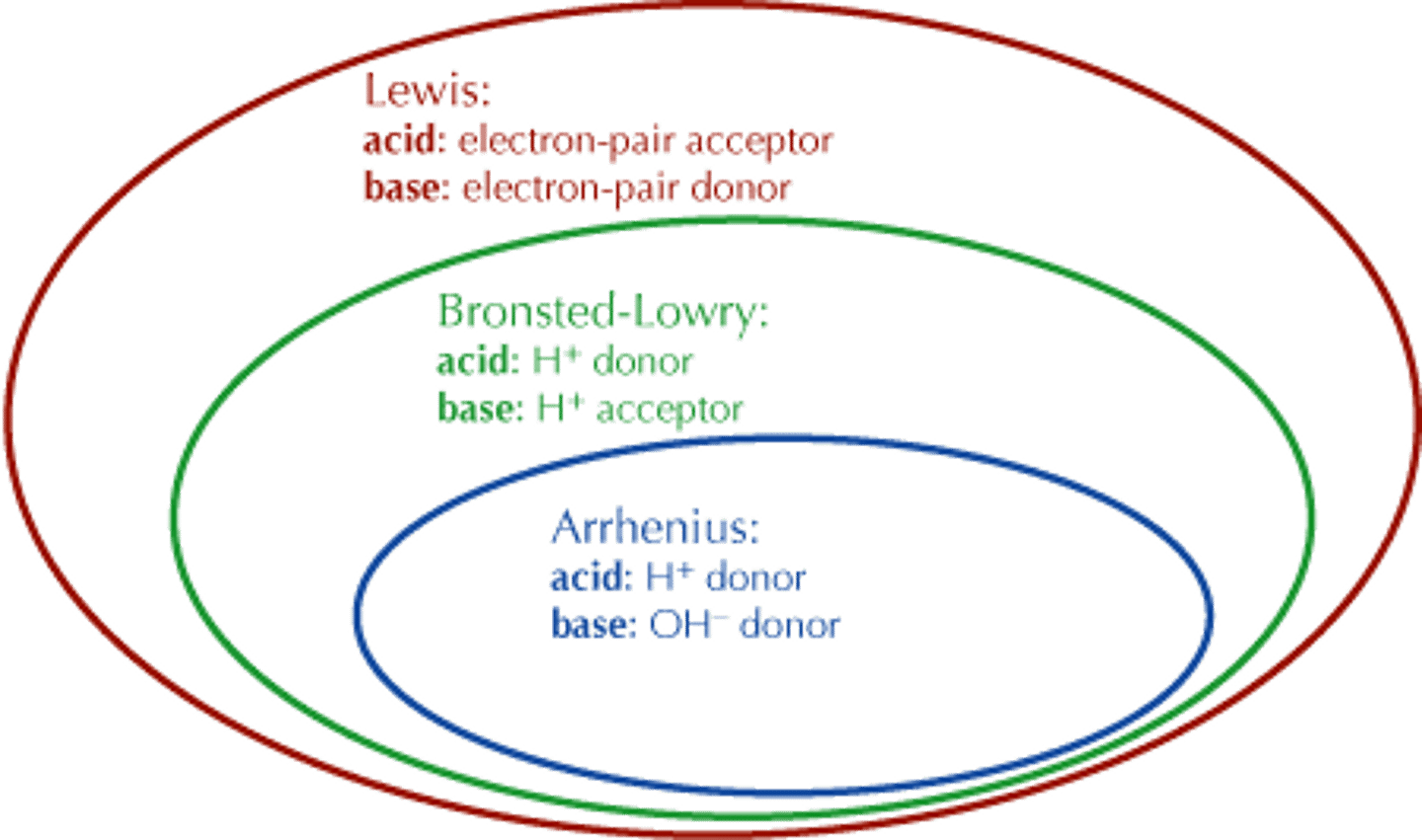
Acid
A compound that produces H+ or H3O+ ions (cations) in water (Arrhenius definition);
a compound that donates H+ ions (Brønsted-Lowry definition).
electron pair donator (Lewis)
these ionize
lower the [H+] concentration, the weaker the acid (more basic)
In most, a hydrogen atom is bonded to a strongly electronegative element, like oxygen or one of the halogens (group/column 7).
![<p>A compound that <strong>produces H+ or H3O+ ions </strong>(cations) <strong>in water</strong> <u>(Arrhenius definition);</u></p><p>a compound that <strong>donates H+ ions</strong> (<u>Brønsted-Lowry definition</u>).<br><br><strong>electron pair donator</strong> (<u>Lewis</u>)</p><p>these <u>ionize</u><br><br><mark data-color="yellow">lower the [H+] concentration, the weaker the acid (more basic)</mark></p><p><mark data-color="yellow">In most, a hydrogen atom is bonded to a strongly electronegative element, like oxygen or one of the halogens (group/column 7).</mark></p>](https://knowt-user-attachments.s3.amazonaws.com/4f772d27-4cfc-417e-899c-12e79b7960b4.image/jpeg)
Permanganate (Plums and)
MnO4(1-)
Synthesis/Reverse Thermal Decomposition
Metal Oxide + Carbon Dioxide → Metal Carbonate (Just reverse of Thermal Decomp.)
(ex. CaO +CO2 → CaCO3)
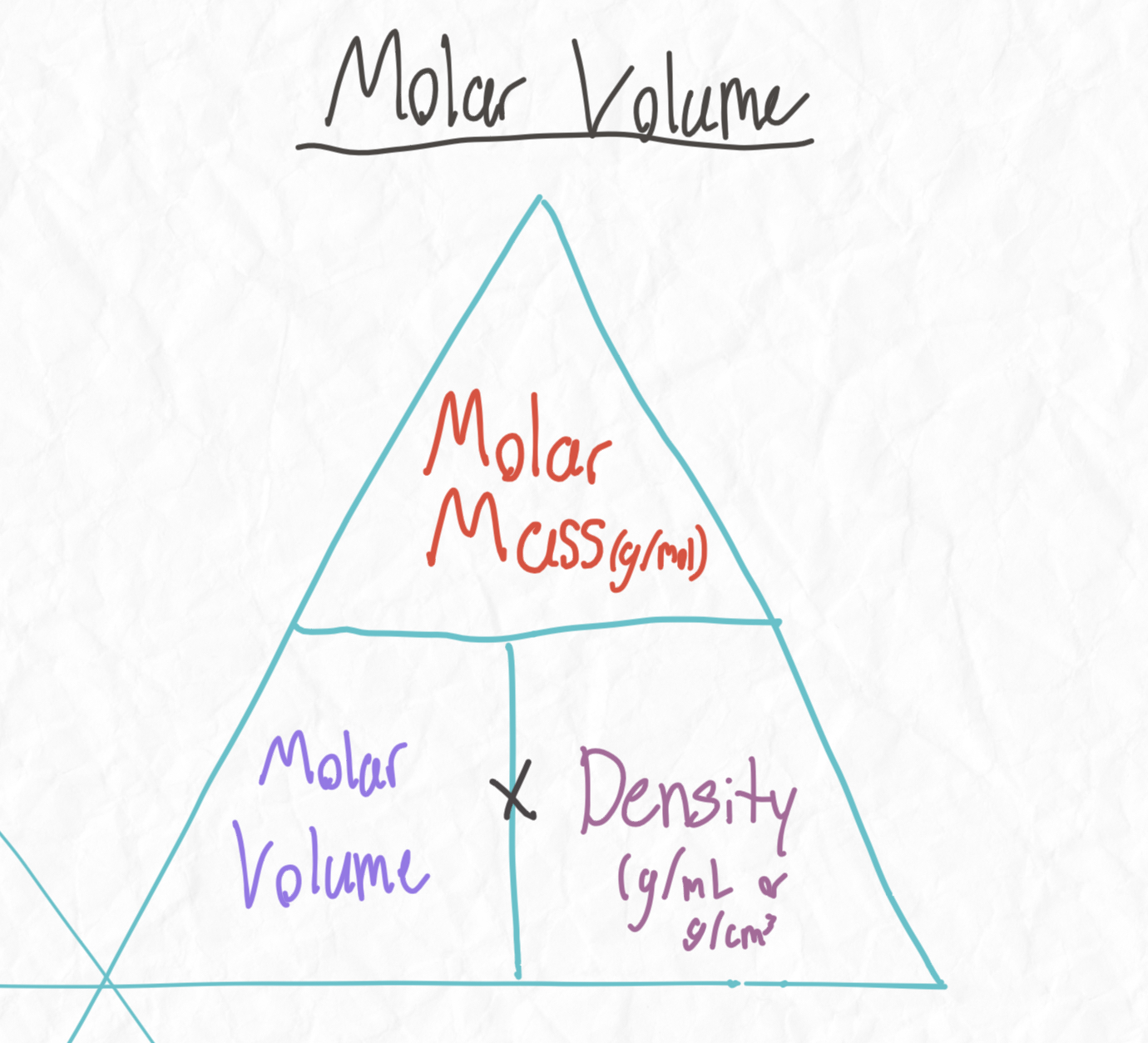
Molar Volume Triangle
Molar Volume = molar mass/density
Single Replacement: What to Look For Detailed:
Metal + MetalNonmetal → MetalNonmetal + Metal
(ex. Fe + CaCl2 → FeCl2 + Ca)
Swap
Subscript Swap to find first product
Left alone substance is the other product (balance if needed)
Nonmetal + MetalNonmetal → MetalNonmetal + Nonmetal
(Cl2 + NaBr → NaCl + Br2)
if there are two aqueous products swap them instead of metals
lone non-metal doubles
Metal + AcidNonmetal → MetalNonmetal + Hydrogen Gas (H2)
(ex. Zn + HCl → ZnCl2 + H2)
Same steps except, H doubles in products like the lone non-metal
Double Replacement: To Remember Detailed
Traditional (C = Cation, A = Anion)
M1NM1 + M2NM2 —>M1NM2 + M2NM1
(AgNO3 + MgCl2 → AgCl + Mg(NO3)2)
Metals
Subscript swap to find products (polyatomic ions stick together)
balance
Neutralization Double Rep
AcidNM1 + M2Base → M2NM1 (salt) + Water
(ex. H2SO4 + 2KOH → 2H2O + K2SO4)
If Hydrogen: H (Acid) is one of your metals and and hydroxide: OH (Base) is one of your non metalsthe product will yield water (H2O)
The other a salt from the other two reactants
Gas Evolution Double Rep
M1Carbonate(A2) + HydrogenNM2 → M1NM2 + Water + Carbon Dioxide
(ex. Na2CO3 + HCl → NaCl + H20 + CO2)
If Carbonate (CO3) and Hydrogen (H) are present in products they’ll form Carbonic Acid (H2CO3) which will decompose into Water (H2O) and Carbon Dioxide (CO2)
A Double Replacement Reaction that that yields a solid and an aq. from two aq. reactants is called a what?
Precipitation Reaction (Aqueous + Aqueous → Solid + Aqueous)
What does it mean if a Double Replacement reaction yields two aqueous solutions?
If a double replacement reaction doesn’t yield a precipitate (solid) there is NO REACTION
Neutralization (Type of Double Rep.): What to Look For
H (cation) + OH (anion) in products, swapping together to become H2O
(ex. H2SO4 (acid) + KOH (base) → H2O (water) + K2SO4 (salt))
Aqueous vs Liquid
Aqueous: A dissolved substance in a liquid (ex. Sodium Chloride or NaCl)
Liquid: natural fluid state of something at room temp (ex. Water or H2O)
Traditional Double Rep
Traditional
Cation1Anion1 + Cation2Anion2 —>Cation2Anion1 + Cation1Anion2
(AgNO3 + MgCl2 → AgCl + Mg(NO3)2
Swap Cations/Metals
Subscript swap to find products (polyatomic ions stick together)
balance