Financial insolvency
 Call Kai
 Learn
Learn Practice Test
 Spaced Repetition
 Match
Match Flashcards
 Knowt Play
1/8

There's no tags or description
Looks like no tags are added yet.
Name | Mastery | Learn | Test | Matching | Spaced | Call with Kai |
|---|
No analytics yet
Send a link to your students to track their progress
9 Terms
What is insolvency
When a company or person can’t pay back their debts as they fall due
What is financial distress
The stages before and including insolvency
Types of insolvency and explain
Cash flow/flow based insolvency
when a firm doesn’t have enough cash to meet its contractually obligated commitments
essentially cash rich, house poor
common in young firms or firms waiting on AR
Balance sheet insolvency
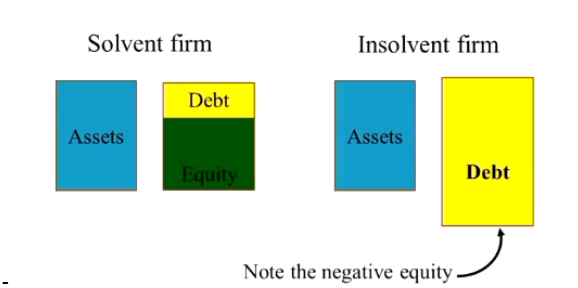
when the value of a firms assets is less than the value of debt.
essentially cash poor and house poor
Equity no longer exists since equityholders are residual claimants so they get wiped out the second debt=assets
How is equity similar to a call option
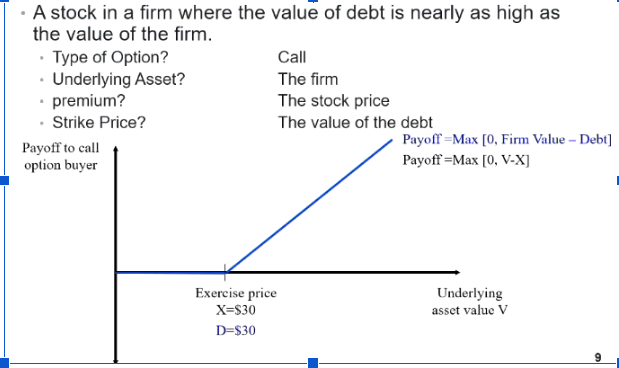
Type of option: call option
underlying asset: the value of the firm
strike price: value of debt
premium: equity value/stock price
hence shares in a firm with financial distress are still considered valuable because volatility increases the chance of it being in the money
Distortions arising from financial distress
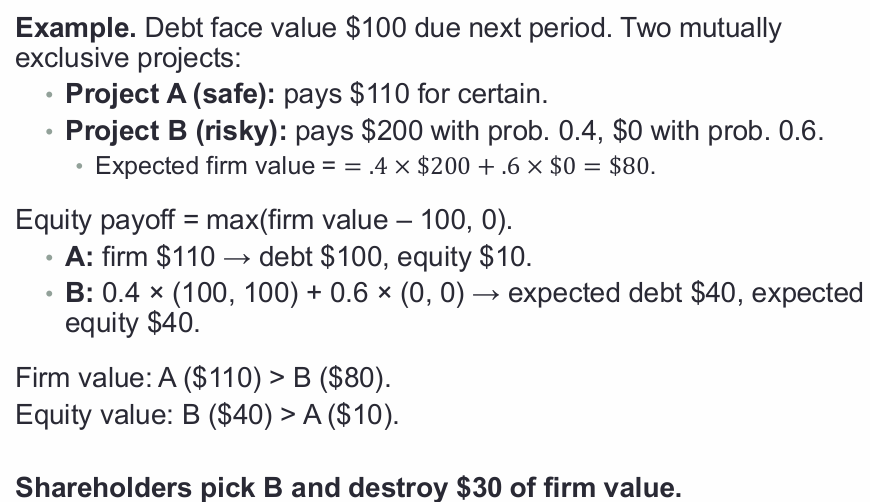
asset substitution
tendancy for managers to pursue excessive risk-taking investments because the upside to shareholders is unlimited but their downside is limited
hence in the example, even though the more certain option increases firm value, equityholders still prefer the risky one since it increases their expected return.
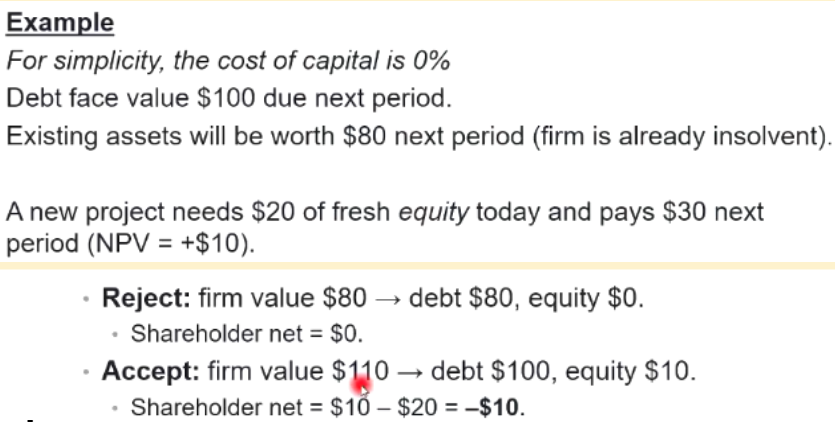
Debt overhang/underinvestment
incentive for managers to underinvest in good projects because most of the benefit goes to creditors/lenders.
Options when firm is in financial distress
liquidation(if the firm is worth more dead to debtholders) or reorganisation(if the firm is worth more alive to debtholders)
Reogranisation
keep the firm operating just restructure the claims
ie. such as issuing new securities to replace old ones, or selling assets to raise cash, engiotating with creditors to reduce debt or issuing new equity in a new company
if things are too bad, the firm goes into voluntary administration
this is when independent registered liquidator who takes control of the company and they decide if company should be saved or liquidated
this gives time for third parties or management to see if they can save the company
Voluntary administrator proposes a DOCA which is a binding agreement between the company and creditors regarding how the company will be handled and how much creditors will be paid
If creditors approve DOCA, company is saved, if not it gets liquidated
Liquidation
assets are sold for salvage and the proceeds go to paying creditors in order of priority
Liquidation costs:
Paying lawyers, pay liquidator fees
Secured creditors: paying creditors with secured assets (where the debt is guaranteed by some asset, ie. if you borrowed money for a company car, if you didn’t pay them back they would just take the car)
Employee entitlements: super, wages
Unsecured creditors: suppliers, customers (in order of seniority)
Shareholders
Z-score critera:
is less than <1.81: high prob of insolvency
if more than >3, low prob of insolvency