Feedback Loops of the Endocrine System + Stress
 Call Kai
 Learn
Learn Practice Test
 Spaced Repetition
 Match
Match Flashcards
 Knowt Play
1/26

Earn XP
Description and Tags
SBI4U Howes
Name | Mastery | Learn | Test | Matching | Spaced | Call with Kai |
|---|
No analytics yet
Send a link to your students to track their progress
27 Terms
Endocrine vs Exocrine Glands
Endocrine: secretes hormones directly into bloodstream
Exocrine: secretes hormones through a duct or similar structure
Name the hormones that regulate blood sugar (3)
Insulin
Glucagon
Glucocorticoids (mainly cortisol)
Insulin is produced in the pancreas, specifically in ____ ___________ called the:
Cell clusters, islets of Langerhans
when is insulin secreted?
in response to raised blood glucose levels
i.e. after a meal
what does insulin do?
instructs cells to take in blood’s glucose: LOWERS blood glucose
besides lowering blood glucose, what else does insulin do?
promotes protein synthesis and storage of lipids while inhibiting their breakdown (to fatty acids)
“Body doesn't need alt. fuel, so it will store the fuel instead”
where is glucagon produced?
islets of Langerhans (pancreas) — alpha cells
when is glucagon secreted?
in response to reduced blood glucose levels
i.e. following an exercise or missing a meal
what does glucagon do?
raises blood glucose by stimulating breakdown of glycogen (a glucose-storing molecule)
besides breaking down glycogen, what else does glucagon promote the breakdown of?
fats → fatty acids
proteins → amino acids
the other kind of glucose regulators are:
glucocortinoids!
unlike insulin and glucagon, which are produced in the ___________, glucocorticoids are produced by the ________ _________.
pancreas, adrenal cortex
explain the three ways cortisol raises blood sugar
Stimulates glucose synthesis from lipid and protein sources
Reduces glucose uptake by the body's cells **except for CNS cells
Promotes breakdown of proteins, lipids (into amino acids/fatty acids)
3 kinds of diabetes mellitus
Type 1
Type 2
Gestational
type 1 cause + treatment
β-cells in pancreas unable produce to insulin
monitoring blood glucose, take reg insulin injections (or perm. pump!)
type 2 cause + treatment
low insulin sensitivity; can be caused by reduced insulin production or by weak response
medications or lifestyle changes
Gestational cause + treatment
rare, due to higher blood glucose during pregnancy
typically goes away on its own
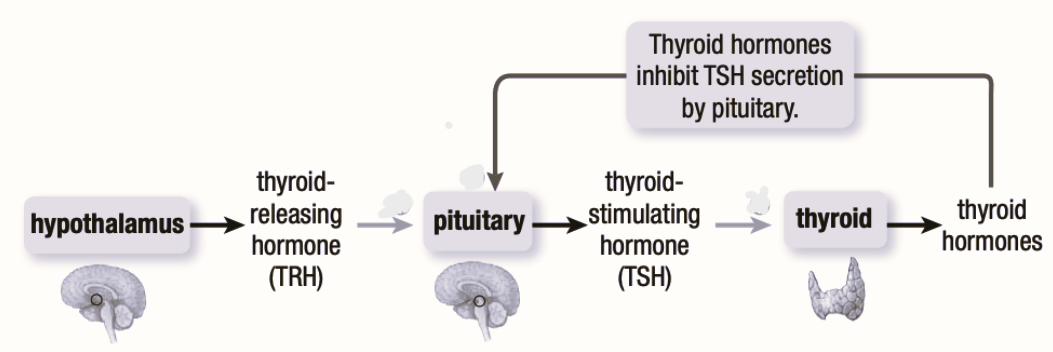
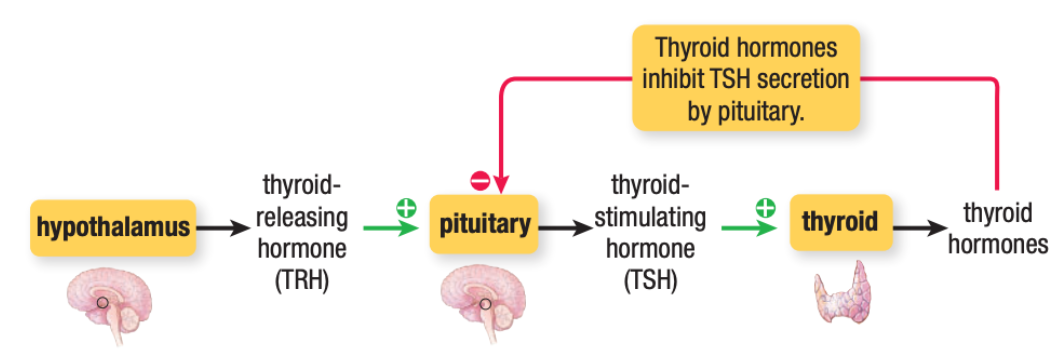
The endocrine system uses many feedback loops; explain one related to TSH
hypothalamus → TRH → pituitary → TSH → thyroid → thyroid hormones (inhibit secretion of TSH)
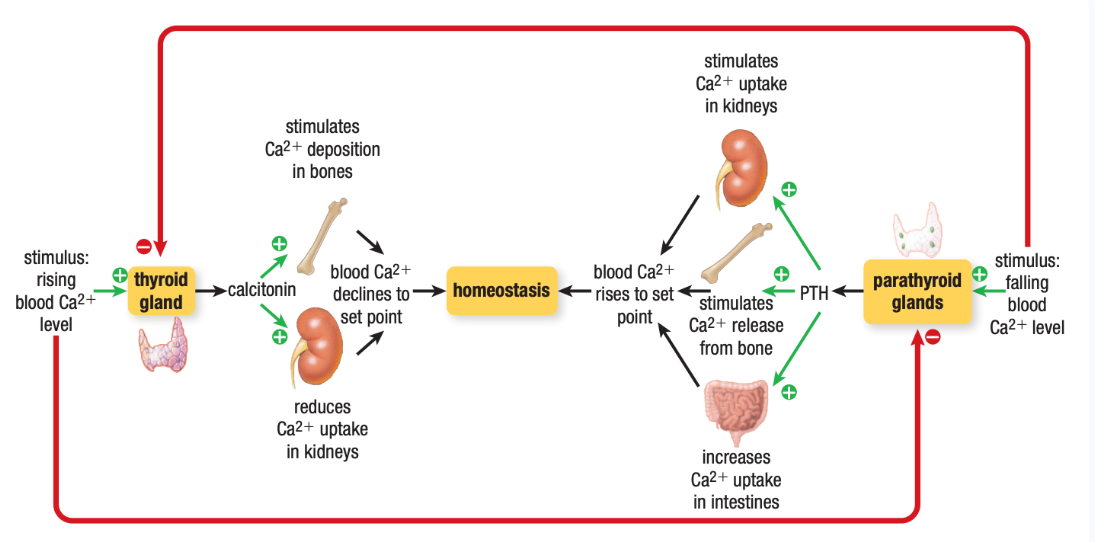
describe the negative feedback loop in calcium-related hormones.
rising calcium in the blood → thyroid gland → calcitonin (Ca2+ declines)
falling calcium in blood → parathyroid gland → PTH (Ca2+ rises)
basically, the rise of Ca2+ inhibits the parathyroid gland, and the fall of Ca2+ inhibits the thyroid gland
recall that homeostasis is regulated by _ systems:
2, NERVOUS & ENDOCRINE
Stress
the body’s response to stimuli/stressors, that cause a disruption to homeostasis (the body is trying to return to homeostasis)
stress can be both positive (_______) or negative (________)
eustress, distress
other categories of stress:
physical vs emotional vs psychological
short-term vs long-term
in extreme cases where stress has _________ long after the ________ was removed, this is called ______
lingered, stressor, PTSD
3 stages to stress
Alarm Reaction: body recognizes a stressor and prepares for defense ⏰
Resistance: body adapts and aims to restore balance ⚔️
Exhaustion: occurs if the body's resources are depleted 🥱
outline the body’s response to short-term stress
adrenal medulla procudes epinephrine + norepinephrine
⇨ result is ↑ breathing, heart rate, blood glucose, cell metabolism, dilation of pupils & blood vessels
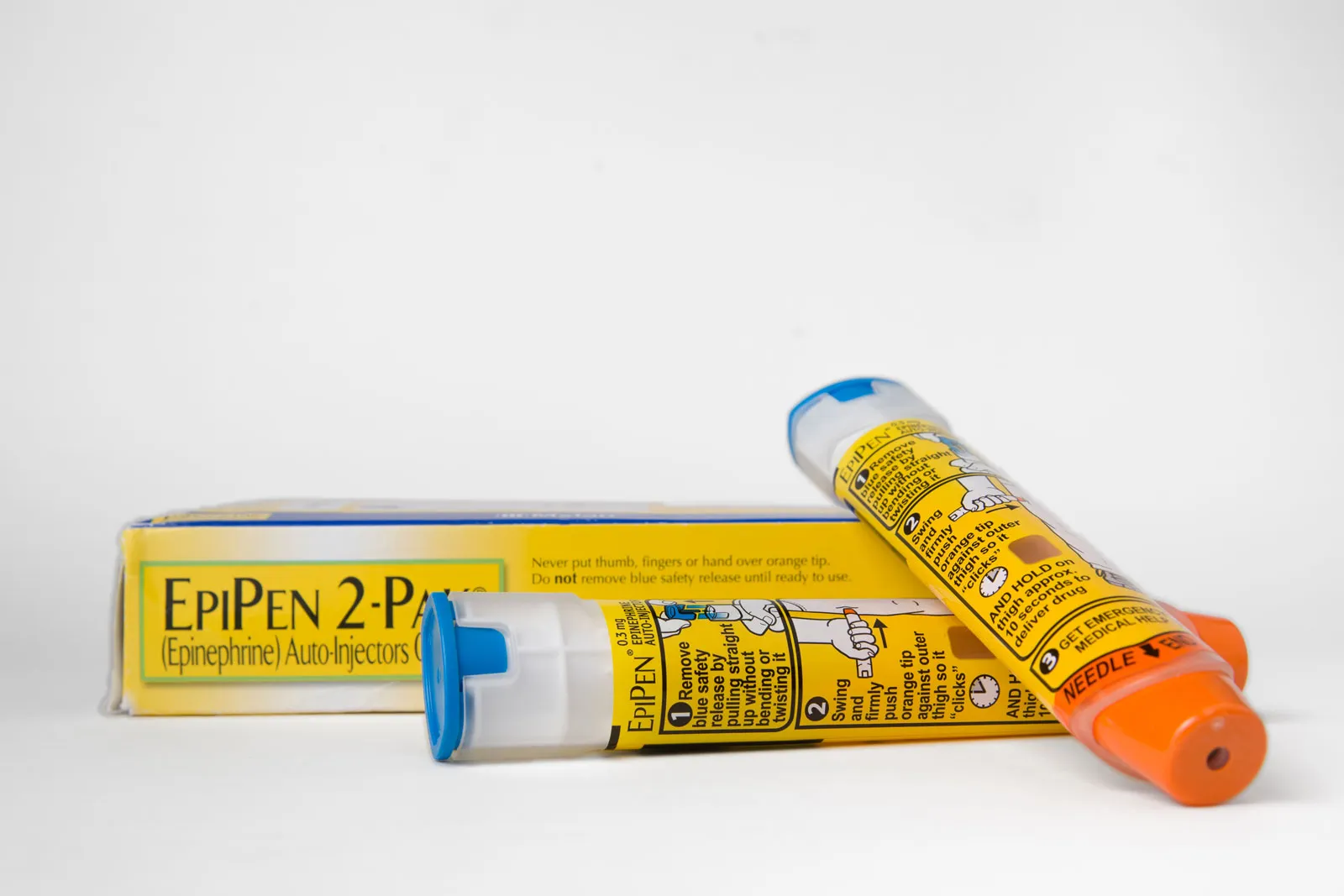
outline the body’s response to short-term stress
adrenal cortex produces mineralocortinoids + glucocortinoids (ex: cortisol)
⇨ result is ↑ sodium and water is reabsorbed in the kidneys
⇨ result is ↑ blood glucose, ↓ insulin production, ↓ inflammatory response of the immune system