PS351 Psychology and the Law (lectures)
 Call Kai
 Learn
Learn Practice Test
 Spaced Repetition
 Match
Match Flashcards
 Knowt Play
1/177

There's no tags or description
Looks like no tags are added yet.
Name | Mastery | Learn | Test | Matching | Spaced | Call with Kai |
|---|
No analytics yet
Send a link to your students to track their progress
178 Terms
how common are wrongful convictions?
-tendency to think they are rare, exceptional occurrences
-more common than we think as many cases don't receive media coverage
-Court of Appeal or the Crown Court often quashes criminal convictions
-extremely difficult to estimate prevalence (Risinger, 2006)
example of wrongful conviction cases
-Birmingham six
-Guildford four
-Bridgewater four
-M25 three
-Cardiff three
-Stephen Downing
-Andrew Malkinson
prevalence of wrongful convictions in the US
-US judge estimated 5% error rate (Radin, 1964)
-Criminal Justice Research Centre estimated 6,000 people per year wrongfully convicted of felonies
-at least 4.1% of death-sentenced defendants (Gross, O'Brien, Hu, & Kennedy, 2014)
-probably between 2%-10% (Chicago Tribune report by Grisham, 2018)
prevalence of wrongful convictions in the UK
-wrongful conviction rate may be as high as .1%
-Criminal Cases Review Commission (CCRC) has overturned 540 convictions or sentences in its quarter-century of operation
advances in forensic technology and wrongful conviction cases
-advances in forensic technology mean more cases coming to the surface
-United States Innocence Project
-Worldwide Innocence Network
DNA exonerations in the US facts
-1989: the first DNA exoneration took place
-375: DNA exonerations to date
-37: states where exonerations have been won
-14: average number of years served
-5284: total number of years served
-26.6: average age at the time of wrongful conviction
-43: average age at exoneration
-21 out of 375 people served time on death row
-44 out of 375 plead guilty to crimes they did not commit
causes of wrongful convictions
-false accusations
-misleading police investigative work
-inept defence council
-community pressure to convict
-perjury by witness/criminal justice officials
-false/coerced confessions
-inadequate or misinterpreted forensic evidence
-judicial bias
-negligence by criminal justice officials
-mistaken identification evidence
why do we use eyewitness testimony?
1. only evidence available sometimes (e.g. in a hit and run)
2. witness evidence is very powerful in the courtroom
-people place an unreasonable amount of faith in the accuracy of eyewitness testimony (Tversky & Kahneman, 1977)
3. EWT is historically among the most convincing forms of evidence
-Devlin Report- nearly 3/4 of the cases involving lineups in the UK in 1973 (347 in total) resulted in convictions based solely on eyewitness reports
why do people continue to place such profound faith in EWT?
-popular media and literary depictions of witnesses suggest they are highly accurate
-crimes and accidents are unusual, distinctive, often stressful, sometimes terrifying, and people believe these events should be memorable
-witnesses are often sincere and confident, which makes them persuasive
-confirmation bias- people tend to notice the times when their memory works well but forget the times when their memory failed them
flashbulb memory
highly vivid and detailed memories that we feel very confident about based on surprising public events
-e.g. where you were and what you were doing when it happened/you found out about it
the Challenger Study (Neisser & Harsch, 1992)
-flashbulb memory study
-NASA sent a civilian teacher up into space on the Challenger rocket and it exploded killing everyone inside not long after launch
-asked 106 participants where they were, what they were doing, who they were with etc.. when they found out about the Challenger exploding
-2 conditions
a. one day after the event
b. three years later
results:
-mean correct= 2.95 out of 7 details
-1/4 of students were wrong about everything
-only 3 people (7%) received perfect scores
-yet confidence was very high (4.2/5)
-no significant accuracy-confidence correlation
-one of the first flashbulb memory studies to show that these types of memories don't stay perfectly in our memory forever and that they are prone to distortion too
factors affecting event memory- acquisition
event factors:
1. exposure time- linear vs. log relationship (Bornstein et al., 2012)
2. frequency- number of opportunities to perceive particular details
3. viewing conditions- light, distance
4. "weapon focus"- presence of a weapon during a crime affects accuracy of recall (Fawcett et al., 2011)
5. disguises- full face masks, stockings are effective at diminishing facial feature cues (Cutler, Penrod & Martens, 1987)
witness factors:
1. stress and arousal
-controversy surrounding effect of stress on memory
-violence present in many crimes
-research is tricky- it's hard to create ecologically valid, yet ethical, procedures for studying stress
-variety of experimental manipulations (e.g. violent vs. non-violent videotaped crimes)
-mixed results
-increased violence leads to decrements in performance (Clifford & Hollin, 1981; Clifford & Scott, 1978)
-increased violence has no effect on performance (Cutler, Penrod & Martens, 1987)
2. age
3. face recognition skills
4. personality
5. alcohol
factors affecting event memory- retention
early misinformation research- Loftus (1975):
-Ss viewed scene in which 8 demonstrators interrupted a classroom before receiving a 20 item memory test
-"Was the leader of the four/twelve demonstrators who entered the class a male?"
-1 week later, Ss were given another memory test
-"How many demonstrators did you see entering the class?"
-results- Four-group Ss reported M = 6.4 demonstrators whereas Twelve-group Ss reported M = 8.9 demonstrators
-event → post-event information → memory test
different types of information can be implanted into memory:
-facial features
-hairstyles
-colours
-buildings
-speed estimates
post-event information (PEI)
two types of information that go into memory:
-information received during original event
-information supplied after the event (e.g. media, co-witnesses)
-over time information from both sources may be integrated in such a way that we're unable to tell where each bit of info has come from
-but what happens to original memory? is it lost forever? is it overwritten? is it blocked by new info?
-not everything is encoded so there are gaps in memory
-over time more information fades from memory
-information from other co-witnesses can be used to fill in the gaps in your memory (supplement)
-PEI can also override what we already know and can remember (transform)
factors affecting event memory- retrieval
1. retrieval environment
-encoding specificity principle (Tulving (1972) posits that people are better at remembering events when encoding and retrieving conditions similar
2. wording of the question
-classic misinformation studies (Loftus & Zanni, 1975)
-"Did you see a/the broken headlight?"
-the subjects were twice as likely to report seeing glass as A-subjects
3. who is asking
4. confidence
5. hypnosis
sex differences in EWT
-neither males nor females have superior memory in terms of total correct details reported
-females may have better memory for person-related memory
-while males may have better memory for environment-related details
-evidence of an own-gender bias
early problems with investigative interviews
eyewitness evidence:
-typically collected by non-specialists in human memory
-protocols for collective, preserving, and interpreting evidence aren't often guided by scientific research
-often directly links suspect to crime
analysis of investigative interviews by experienced officers (Fisher, Geiselman & Raymond, 1987):
1. all requested a free narrative but interrupted on average after 7.5 sec
2. witnesses who went off-track were interrupted
3. many asked questions incompatible with the witness's efforts to represent the incident
4. questions were rapid-fire and pressuring (on average only 1 sec separated an answer from the next question)
4. questions were directive, constraining and obstructed retrieval
5. judgemental comments were common
6. disrupted time course of recall by interrupting to return to earlier points
7. officers used formal stylised language, technical terms and jargon (beyond the intellectual capacity of interviewees)
8. little or no assistance given to enhance witnesses' memory
9. none of the detectives had received formal training in interviewing techniques
psychologists responded by created the cognitive interview
the cognitive interview
an interviewing technique based on principles of memory retrieval and general cognition, social dynamics and communication
includes techniques known to facilitate retrieval:
-report everything instruction
-mental reinstatement of context
-recalling events in a variety of different orders
-change perspectives techniques
enhanced cognitive interview phases
1. phase 1: greet and establish rapport
2. phase 2: explain the aims of the interview
3. phase 3: initiate a free report (report everything)
4. phase 4: questioning- mental reinstatement of context
5. phase 5: varied and extensive retrieval
6. phase 6: summary
7. phase 7: closure
phase 1 of the enhanced cognitive interview
-aim to personalise the interview and reduce anxiety
-rapport requires the interviewer to interact meaningfully with witness
-use of open-ended questions and no interruptions
additional elements based on psychological research"
-non-verbal behaviour (e.g. mirroring)
-relaxed non-confrontational position
-non-verbal behavioural feedback should not be qualitative (e.g. expressing surprise)
-repeated interruptions tells interviewees they only have limited time o reply which results in shorter answers
phase 2 of the enhanced cognitive interview
-interviewee should feel that there is unlimited time for recall and provision of elaborate, detailed responses
-the role of the interviewer is as a facilitator
-control should be passed from interviewer to interviewee
-"I do not know what happened. You are the one with all the information, so tell me everything you can remember"
phase 3 of the enhanced cognitive interview
-encourage reporting without any editing, even if witnesses consider details to be unimportant or trivial (research on metamemory)
-witnesses are instructed to avoid guessing
- maximises the completeness of the report
- allows the witness to generate his/her own retrieval cues- capitalises on the way episodic memories are represented in memory
-enables the interviewer to gain a more complete picture
phase 4 of the enhanced cognitive interview
-encourages witness to mentally recreate the psychological and physical environment which existed at the time of the event
-descriptions of the environment, the people, smells, feelings, and reactions to events
-instructions must be delivered with sufficient time for interviewees to picture the events/reinstate the context
-draws upon the "encoding specificity" principle of memory (e.g. Thompson & Tulving, 1970)
-witness compatible questioning
phase 5 of the enhanced cognitive interview
-multiple retrieval attempts encouraged
-recall events using different orders
-reverse order
-starting from the most salient point and moving forward/backwards from that point
-recall events from different perspectives (e.g. in the shoes of another witness)
-forces change in retrieval description, allowing additional information to be recalled from new perspective
-extreme care recommended in the use of this technique
-varied retrieval strategies (RO, CP, Senses)
phase 6 of the enhanced cognitive interview
repeat in summary from the interviewee's account in the interviewee's own words
phase 7 of the enhanced cognitive interview
-leave the interviewee in a positive state of mind
-return to neutral topics
-positive conclusions
-maintain report in case of further interviewing in the future
pros of the cognitive interview
-yields significantly more information than standard police interviews without adverse effects on accuracy
-effective with both children and older adults
cons of the cognitive interview
-time consuming and resource intensive
-officers already have heavy workload and limited training
-officers don't always understand the psychology behind CI
context reinstatement considered inappropriate for potentially traumatised victims
-change perspectives could encourage the use of imagination
-reverse order instruction difficult to apply and underlying logic not apparent
-police don't often use the techniques (Clarke & Milne, 2001)
-or if they do they are used poorly (Clarke & Milne, 2001; Dando, Wilcock & Milne, 2009)
the self-administered interview
-often many eyewitnesses at an event but not enough officers to conduct thorough and detailed interviews with all of them
-if a witness cant be interviewed quickly his/her memory is vulnerable to forgetting and being influenced by other witnesses
-the SAI was invented only recently to prevent this
-a system for getting witnesses to provide their own statement via a self-administered interview
-paper or electronic questionnaire
-available at the scene of the crime
-eyewitness ideally completes the form near the crime scene or as soon as possible somewhere else without speaking to others
-used by police forces around the UK
-after all SAI are examined the police will decide which eyewitnesses will be interviewed further
-does not replace the formal interview
-aimed to incorporate most effective components from the Cognitive Interview
-context reinstatement
-report everything
-carefully designed information/instructions regarding what is expected from the witnesses
-guidelines and questions providing retrieval support
-e.g. asking for forensically relevant perpetrator details (build, facial appearance, clothes), action details, etc...
-sketch instructions to record spacial layout
does immediate recall (SAI) help
yes:
-an early recall opportunity can help 'inoculate' against forgetting (Brooke, Fisher & Cutler, 1999; McCauley & Fisher, 1995)
-an item once retrieved in more likely to be retrieved in the future (e.g. Bjork, 1988; McDaniel et al., 1989; Shaw et al., 1995)
-hypermnesia- repeated retrieval events led to increased recollection (Turtle & Yuille, 1994)
however:
-partial or incomplete recall, or a very brief initial report prior to a more comprehensive recall attempt can led to poorer memory for unrecalled information (Koutstaal et al., 1999)
testing the SAI
results:
-significantly more correct items recalled in CI and SAI conditions than control condition (free recall)
-no significant difference in error rate across conditions
research clearly shows that completing an SAI after witnessing a (mock) crime:
-minimises forgetting over a delay
-maintains high accuracy rates
-preserves fine-grain details
-enhances performance in a subsequent cognitive interview
-protects against memory distortions caused by exposure to misleading questions and post-event information
why are researchers so interested in lineups?
1. false identifications occur with surprising frequency (e.g. Cutler, Penrod & Martens, 1987)
2. some eyewitnesses may be quite confident in their identifications regardless of their accuracy (Deffenbacher, 1980; Wells & Murray, 1984)
3. many documented cases of wrongful convictions
event memory procedure (or the "Staged Crime" or "Witness Memory" Procedure)
staged crime → filler task → identification task
-crucially in this experimental method the researchers know who the perpetrator/target is in the lineup
-in field studies the researchers cannot always know if the suspect in the lineup is the actual perpetrator
important variables studied in these experiments:
-gender of witness
-intelligence of witness
-age of witness
-face recognition skills
-personality
-alcohol
-prior experience
-view
-disguise of perp
-exposure time
-same vs. other-race identification
-stress
-weapon
-retention interval
-interpolated mugshots
-overheard descriptions
-pre-lineup instructions
-structure of lineup/fillers
-simultaneous/sequential procedure
-suggestive behaviours during lineup
-post-identification feedback
system vs. estimator variables in experiments on lineups
two categories of variables/factors that can affect an eyewitness' memory/identification ability
1. system
-factors that are manipulated in the experiment which can also be controlled in actual cases
-e.g. number of fillers in a lineup, pre-lineup instructions, lineup environment, person conducting the lineup
2. estimator
-factors that are beyond the control of the criminal justice system
-e.g. amount of stress witness experiences, witness' personality
-researchers have spent the most time on system variables
-if they can be controlled in the experiment then they can be controlled in a real lineup
what is the purpose of a lineup? (identification parade)
to establish proof that the suspect and perpetrator are/aren't the same person
-perpetrator- person who committed the crime
-suspect- the person suspected to be the perpetrator
-but this definition suggests that identification evidence establishes some absolute proof when in reality there is always uncertainty
two basic structural properties/types of lineups (Wells & Turtle, 1986)
1. target-present (TP) lineups
-include the target (perp) whereas target-absent (TA) lineups don't
-using both TP and TA lineups in an experiment is crucial for assessing witnesses' (participants') identification performance
2. single-suspect lineups
-include one suspect plus foils who are known innocents
-the safest lineup that is less likely to lead to errors is a single-suspect lineup
-mixed-lineups or all-suspect lineups include more than 1 suspect or all lineup members are suspects
decreasing the chance of errors in lineups
1. blank lineup control
-present witness with a lineup that contains no suspects before they see the real lineup (Wells, 1984)
-to see if they'll just make a guess because they feel like they have to select someone
2. mock witness control (Wells, 1984)
-give mock witnesses a brief description of the crime and see how many choose the suspect from the lineup
-in a fair lineup mock witnesses should spread their guesses in a relatively equal frequency across lineup members
how do witnesses make identifications? (Malpass & Devine, 1981)
relative judgement process:
-tendency to choose the person who most resembles the culprit relative to the other members in the lineup
-seems like a rational strategy but what about target-absent lineups?
-telling witnesses that "the actual culprit might or might not be present in the lineup" is crucial for reducing false IDs without affecting correct IDssequential lineups
sequential lineups
-lineup photos presented one-by-one, which prevents relative judgements
-sequential is superior to the traditional (simultaneous) method
-fewer errors in target-absent lineups
-no reduction in accurate IDs in target-present lineups
-works best when witnesses are NOT told how many members are in the lineup
functional size
-number of viable/plausible lineup members (cf nominal size which is the number of people in the lineup)
-e.g. witness describes a black perpetrator and a black suspect is placed in a lineup with four hispanics (nominal size = 5, functional size = 1)
-in fair lineups the functional and nominal size are equal all members of the lineup should match the perp description and look fairly similar
-social cognition and social influence affect witness identifications
-conformity, obedience, and compliance all play a role, especially when circumstances are ambiguous and an authoritative figure (i.e., the investigating officer) is involved
calculating functional size:
-some disagreement over best method
0mock witnesses can provide the best data for calculating functional size
index of functional size (Wells et al., 1979):
-N/NS where NS is number of mock witnesses who choose the suspect, N is total number of mock witnesses
-e.g. 100 mock witnesses and everyone chooses suspect, then functional size = 100/100 = 1
-e.g. if 20 choose suspect then 100/20 = 5
-functional size should equal nominal size
strategies for selecting foils:
-suspect-resemblance strategy- police select people who look like the suspect (either from video or photo of the perp)
-culprit-resemblance strategy- select people who match the witness' description of the culprit
generally argued that:
-culprit-description offers same level of protection for innocent suspects as the suspect-resemblance strategy
-but culprit-description more likely to produce accurate IDs of culprit than suspect-resemblance
-doesn't bias against suspect
-doesn't eliminate important cues for recognition
critical science-based recommendations for lineups
-in 1998 Wells et al. wrote a white paper containing 4 key recommendations that police forces around the world could use to improve eyewitness identification
9 recommendations (updated 2020 paper):
1. conduct a pre-lineup interview of the witness
2. the need for reasonable (evidence-based) suspicion before conducting an identification procedure
3. the person who conducts the lineup should NOT know which person is the suspect (double-blind)
4. there should be only one suspect per lineup plus at least five appropriate fillers who do not make the suspect stand out
5. witnesses should be given clear pre-lineup instructions:
(a) the lineup administrator does not know which person is the suspect and which persons are fillers;
(b) the culprit might not be in the lineup at all, so the correct answer might be "not present" or "none of these";
(c) if they feel unable to make a decision they have the option of responding "don't know";
(d) after making a decision they will be asked to state how confident they are in that decision; and
(e) the investigation will continue even if no identification is made
6. confidence judgements should be documented immediately after an identification
7. video recording the entire identification procedure
8. avoiding repeated identification attempts with the same witness and same suspect
9. avoid the use of show-ups when possible and improving how show-ups are conducted when they are necessary
-just a single suspect with no fillers- 'was this the person?'
Police and Criminal Evidence Act (PACE, Code D, 2017) for lineups
1. conduct a pre-lineup interview of the witness
-YES
-section 3, para 1 states: a record shall be made of the description of the suspect as first given by the eye-witness
2. the need for reasonable (evidence-based) suspicion before conducting an identification procedure
-YES
-section 3, para 1
3. the person who conducts the lineup should NOT know which person is the suspect (double-blind)
-NO
4. there should be only one suspect per lineup plus at least five appropriate fillers who do not make the suspect stand out
-YES
5. clear pre-lineup instructions
-NO
6. confidence judgements should be documented immediately after an identification
-NO
7. video recording the entire identification procedure
-NO
8. avoiding repeated identification attempts with the same witness and same suspect
-NO
9. avoid the use of show-ups when possible and improving how show-ups are conducted when they are necessary
-NO
selecting foils
-lineups must not suggest which person is the focus of the police investigation
-if the witness chooses a suspect who stands out then we don’t know if the witness is relying on their memory of the culprit or selecting the person they think is the suspect
-thus foil (filler) selection is crucial
-the suspect should not stand out
Police and Criminal Evidence Act (PACE, Code D, 2017, Annex B):
-foils in live identification parades (isn’t as common) should: “so far as possible, resemble the suspect in age, height, general appearance and position in life”
how do the police deal with distinctive features in a lineup?
1. block
-area with distinctive feature (tattoo above eyebrow) has been blocked out on all people in the lineup
-often used with still image lineups (not video parades)
2. pixelation
-area is pixelated on the suspect and everyone in the lineup
-easier to use and often used in video lineup
3. replication
-restricted to being used in still image lineups
-not used as much because it costs more
-when replicating a distinctive feature (e.g. tattoo) they tend to replicate it slightly differently on each person
-you still want the distinctive feature to be a helpful cue for their memory
-the suspect won't stand out amongst the foils but the witness can still use the tattoo to help identify him
digitally editing lineups
-30-40% of parades in the UK require image manipulation (P. Burton, West Yorkshire Police)
-70% of US police officers reported using image manipulation techniques when creating lineups for suspects with distinctive features (Wogalter, Malpass & McQuiston, 2004)
-30% of US police officers reported having 'done nothing to deal with a suspect's distinctive mark (Wogalter, Malpass & McQuiston, 2004)
-the officer responsible for the case can decide which technique
-although Viper create most of the video parades
-police tend to prefer concealment (blocking or pixelation)
-Northumbria Identification Unit - 2,496 lineups in 2008 of which 40% concealment
-but there are good reasons to predict that concealing a feature will impair eyewitness memory ( Zarkadi, Wade, & Stewart, 2009; Badham, Wade, Watts, Woods, & Maylor, 2013)
-if a distinctive feature is covered up their face changes and witnesses' facial recognition skills get worse
Colloff et al. (2016):
-explored the influence of replication, pixelation, block, and nothing lineups on witness identification performance
predictions:
-if the suspect does not unduly stand out (i.e., replication, pixelation, block lineups) then witnesses should be less willing to identify the suspect
-because the distinctive feature appears either on every line-up member (replication) or on none (pixelation, block), witnesses should be more likely to evaluate other characteristics of the faces, rather than the distinctive feature, to make their identification
-however if a suspect is allowed to stand out (do-nothing lineup) witnesses should be more willing to choose the suspect, and they should find it harder to distinguish between the culprit and an innocent suspect
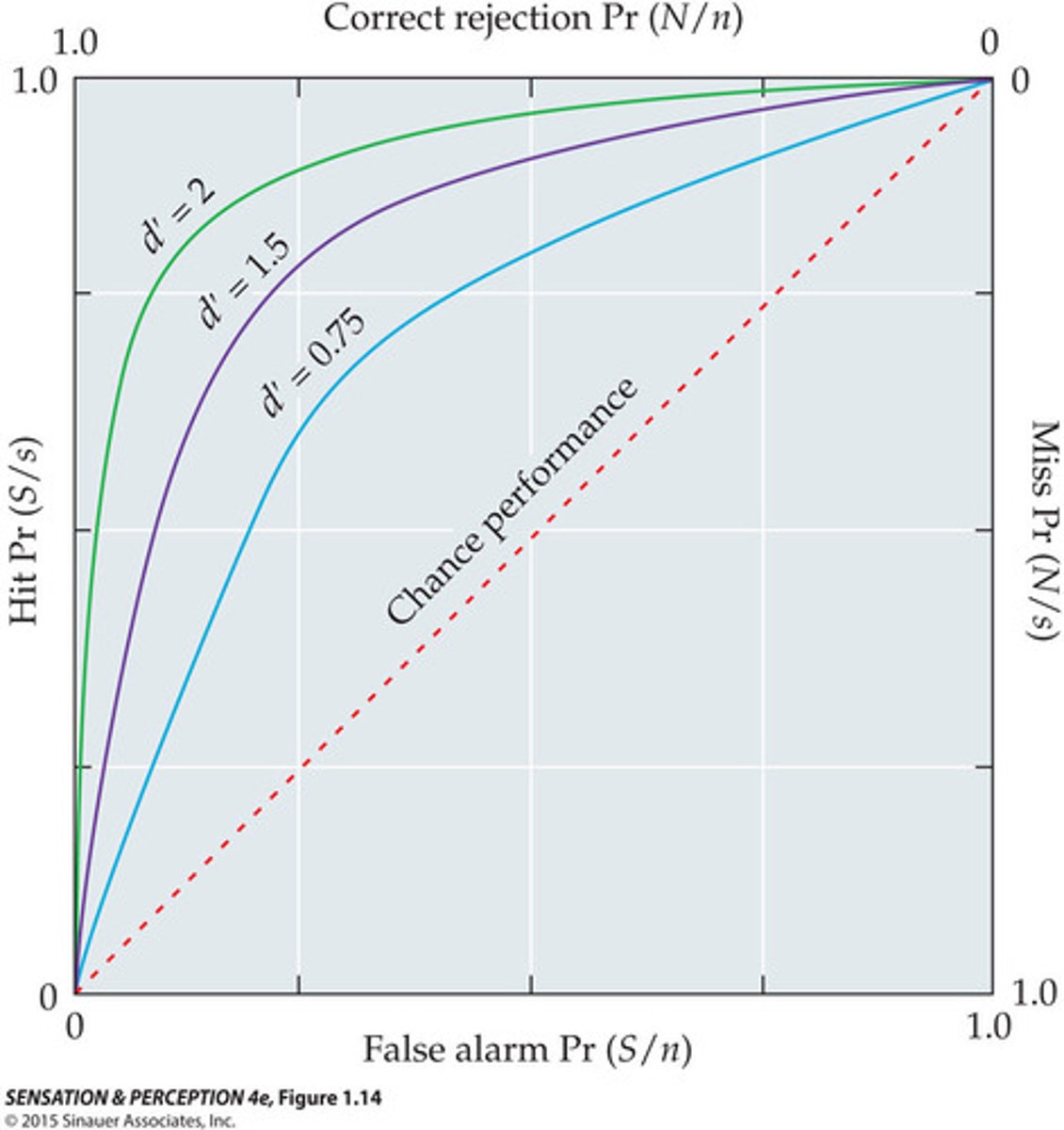
receiver operation curve (ROC) analysis
way to analyse identification parade studies:
-correct ID rate (y-axis) v. false ID rate (x-axis)
-ROC curves plot the correct-ID rate (hit rate) of guilty suspects in target-present lineups
-how frequently participants make a correct identification when the suspect is in the lineup
-against the false-ID rate (False alarm rate) in target-absent lineups
-how frequently they make a false identification when the suspect is not in the lineup
-several False ID-Correct ID points are plotted over decreasing levels of confidence
-the lowest points (shaded grey) show correct- and false-ID rates at the highest level of confidence (100% certain)
-then the second highest level of confidence (100% and 90% certain) etc...
-identification performance is thought to be good when the ROC curve arches close to top left
-i.e. we observe a high rate of correct IDs with low rate of false IDs
-the dotted line indicates that participants are making false IDs just as often as correct IDs
-make a curve for every condition
Colloff, Wade, & Strange (2016)
how should police obscure a suspect's distinctive feature?
design:
-4 lineup type (replication, pixelation, block, do-nothing) x 2 target (suspect present, suspect absent) between subjects
-total n= 8925
-watch video → 8 minute filler → lineup task
-watched 2 videos in which suspect had distinctive feature
-then had a break (8 minute filler) followed by a lineup task
-for one of the videos they had a target-present lineup
-and for the other video they had a target-absent lineup
ROC analyses (actual results):
-when the suspect was left to stand out (do-nothing lineup) subjects were more likely to make a positive ID (responding was more liberal) which is why the line is much longer
-subjects found it more difficult to discriminate between guilty and innocent suspects
-replication, pixelation, and block lineups produced a similar level of identification performance
confidence-accuracy (C-A) curves:
-what is the relationship between identification performance and witness confidence?
-when the suspect stands out (do-nothing condition), identification accuracy is reduced at every level of confidence
-even people who are 100% confident are not accurate all the time (many studies show highly confident people are overly confident)
diagnostic feature detection model (Wixted & Mickes, 2014)
1. unfair target-absent lineup
-one innocent suspect is the only one in the lineup with the same distinctive feature as the guilty suspect
-witness fail to appreciate that the suspect's distinctive feature is not useful in an unfair lineup
-innocent suspect stands out because he is the only one with similar facial hair to the guilty suspect
-so they rely heavily on it to make their identification
2. fair target-absent lineup
-all suspects in the lineup have the same distinctive feature as the guilty suspect
-by contrast, when lineups are fair and the suspect does not stand out (i.e., replication, concealment, block), witnesses can
-appropriately discount the distinctive feature
-and give more weight to other, more informative (diagnostic) cues
predicting identification accuracy
-given ID errors are common, researchers have sought independent markers of identification accuracy
e.g.
-phenomenological reports (Dunning & Stern, 1994; Palmer et al., 2010)- ask witnesses how they made their identification (e.g. “did you use process of elimination?”)
-eye movement patterns (Mansour & Flowe, 2010)- follow witnesses’ eyes as they make an identification
two most studied markers are:
1. response latency- how fast a witness makes an identification
2. eyewitness confidence (best measure we have as of right now)
-police are encouraged to ask witnesses how confident they are on a scale of 1-100 immediately after making an identification in a highly controlled way
-witness confidence exerts a powerful influence on decision making in legal settings (e.g. to a jury) (Deffenbacher & Loftus, 1982; Potter & Brewer, 1999)
-theory predicts a positive confidence-accuracy relationship (Horry & Brewer, 2016)- theoretically how confident a witness is should reflect how accurate their decision is
-we think there should be a correlation because of recognition memory tasks as the degree of match between the witness’s memorial image and the identified lineup member increases, the likely accuracy of the identification and the witness’s confidence also increases
-early studies suggest that the confidence-accuracy relationship was moderate at best (r = 0-0.4)
-a meta-analysis suggested r = .25 (Sporer et al., 1995)
-researchers were sceptical
-73% of psychological experts would testify that confidence is NOT a reliable predictor of accuracy (Kassin et al., 2001)
-but there were many problems with early research
problems with early research on eyewitness confidence
-studies used small samples and participants typically viewed the same (pristine) eyewitness scenario
-yet real eyewitnesses encounter events under a variety of conditions that influence their accuracy and confidence
-real eyewitness scenarios are likely to produce wider variation in accuracy and confidence than in tightly controlled lab studies (Brewer & Wells, 2006)
-by minimising variability, lab studies were eliminating the primary basis for the confidence-accuracy relationship across witnesses (i.e., need variability in the data to observe a relationship)
-Lindsay et al. (1998) observed a substantial C-A correlation (r = .59) when analysing data
-calculations of the confidence-accuracy correlation typically combined target IDs, filler IDs and non-IDs
-the C-A relationship is stronger (r = ~.41) when only target IDs and filler IDs are included
-the legal system is most interested in “choosers” as non-choosers are unlikely to testify in court (Wixted & Wells, 2017)
-studies used inappropriate statistics now known to undermine the strength of the confidence-accuracy relationship (Juslin et al., 1996; Wixted et al., 2018)
point-biserial correlation
-confidence-accuracy (C-A) correlation plotted as binary accuracy vs continuous confidence rating
-confidence (y-axis) against accuracy (x-axis)
-dashed line represents a perfect correlation
-resulting coefficient represents the level of covariation between confidence and accuracy
-for target-present lineups we would expect the correlation to be stronger when the analysis is limited to “choosers”
target-present lineup:
-a point is plotted for each response and a straight line is fitted through the data
-for the target present lineup, the class produced r = .327 (p = .008)
-there was a significant moderate, positive relationship between confidence and accuracy
target-present lineup- “choosers” only:
-the C-A correlation was stronger when the analysis was restricted to choosers
-r = .510 (p = .0004)
-police do not know whether the “target” (ie. perpetrator) is in the lineup so it’s important to explore what happens when the target is absent
target-absent lineup:
-when the perpetrator was absent from the lineup, the confidence-accuracy correlation was not significant
-the class data produced r = -.0009 (p = .994)
-this suggests confidence was not a reasonable indicator of witness accuracy when the perpetrator wasn’t there
-confidence judgements, in this case, should *not* be used to discriminate between incorrect IDs (false IDs) and correct rejections (not present responses)
problems with the point-biserial correlation
-the size of the correlation coefficient depends on how confidence judgements are distributed across the confidence scale
-as lab participants in a study typically view the exact same eyewitness scenario, the range of confidence judgements is restricted
-because correlation measures the level of covariation, the C-A correlation is reduced
-lab studies are likely to underestimate the strength of the C-A relationship in real world cases
-it doesn't provide the information required by the legal system (Wixted & Wells, 2017)
-the legal system wants to estimate the likely accuracy of an eyewitness based on their confidence
-correlation only tells us whether correct responses are associated with higher confidence than incorrect responses
-it does not tell us about the likelihood of a correct response at any given level of confidence
-i.e., we can't know what it means when a witness says "I am 50% [or 70% or 80%] positive that's the guy I saw"
recent research on eyewitness confidence
-methodological developments have altered the view of the C-A relationship
-the C-A relationship is strong when memory is tested using an alternative analysis: Calibration
-data is broken down to look at how accurate people are at every level of confidence
-e.g. we can know that a witness in these conditions who is 50% confident is likely to be about 50% accurate and if they are 100% confident they are likely to be 100% accurate
-thus confidence can provide useful information about the reliability of an ID
but there are caveats:
-witnesses typically display over-confidence
-over-confidence increases as the ID task gets harder and with more target-absent lineups- the weaker the witnesses’ memory trace is the harder it will be for them to make an ID and the more likely it’ll be that they’ll be more confident
-children can show high levels of confidence
-over-confidence is influenced by people’s meta-cognitive beliefs about their memory ability- if someone thinks they have really good memory they are more likely to be over-confident
-very high levels of confidence don’t guarantee accuracy
-confirming post-ID feedback can inflate confidence and undermine the C-A relationship
-e.g. if someone makes an ID and the officer says “well done, that’s our guy [suspect]” this increases confidence and in the courtroom they are likely to say they definitely got the right person even if they weren’t confident when they initially made the ID
novel approaches to collecting identification evidence
-traditionally lineups require witnesses to make a (very difficult) single decision (Brewer, Weber, Wootton, & Lindsay, 2012)
many factors affect ID decisions:
-limited encoding time, lighting conditions, alcohol, delay etc
-social, metacognitive and heuristic influences
-overly lax (prone to identifying someone even if no one in the parade is a good match to their memory) vs. unduly stringent (reluctant) criteria
-perceived significance of the ID
-"If I pick this person, he'll probably get a long jail sentence" or "If I don't pick this person, a dangerous man may walk free so I better be certain before I say he's not the one"
a new method:
-two key components
1. witnesses rate the degree of match between the culprit and each lineup member
-more of a confidence judgement
2. witnesses perform this matching process under severe time constraints
-mock crime → standard test
-see faces one by one and have to say yes or no to each person as they come up
-make a selection (say yes) as to who they think is the perp
-or mock crime → deadline test
-only see face for 3 seconds each and have to say how confident they are that the person is the perp
note the scoring in the deadline condition:
-a single maximum confidence value (e.g. they were only 80% confident for one person but 60% for the others) was treated as a selection (positive ID)
-if no single face was rated highest, researchers assumed no selection (No-ID)
key findings:
-decision accuracy was significantly higher in deadline subjects than in control subjects (higher by 27%, 24%, and 66% across 3 separate experiments)
-this effect was replicated when the retention interval was extended to 1 week
-subjects' confidence profiles were a good indicator of accuracy
the memory wars
-late 1980s/early 1990s starting in the US
-sudden surge of repressed and recovered memory cases coming into courtroom
-cases in which adults (usually women) came to remember after years that they were abused as children despite having no memory of it for most of their adult life
-pretty much all of these recovered memories came about when these adults entered some sort of psychotherapy
-when this surge of cases came about scholars started wondering to what extent can we be sure that these memories that are recovered in therapy are actually all authentic
-could some of them be based on suggestion and created and reconstructed through the process of therapy
-scholars were concerned because people were being convicted solely based on these recovered memories as evidence
at the core of this debate (1990s-now):
-how do people remember traumatic events?
-are traumatic memories prone to error or not?
-are these memories/events processed differently compared to non-traumatic memories?
repression
-refers to warding off any conscious experience of a frightening memory or fantasy (Singer, 1990)
-repressed memories are thought to be inaccessible and banished to the unconscious yet still affect a person's experience
-proponents of repression posit that symptoms (intrusions, nightmares etc) can only be alleviated by recovering the memory
central to this argument is the claim that:
-recovered memories brought back in therapy are retrieved accurately
trauma-memory argument
-posits that traumatic memories are "special" (Shobe & Kihlstrom, 1997, 2001)
-a lot of people think that traumatic memories are preserved for a long time and are immune to error
-we know that this is not the case
rooted in psychodynamic tradition (Breuer & Freud, 1893-1895):
-horrific memories are thought to be buried in the unconscious by special processes and can later be recovered with minimal distortion
modern advocates emphasise that traumatic memories lack coherency (Van der Kolk, 1994):
-traumatic memories cannot be recalled in a conscious narrative
-instead traumatic memories are experienced unconsciously through bodily sensations and involuntary memory intrusions
-these processes lead to psychological illness
current theories of PTSD:
-also contain the underlying assumption that traumatic memory is special (e.g., Dual processing model of PTSD, Brewin et al., 1996)
-traumatic memories are remembered in a very fragmented way and cannot be processed verbally or consciously well so they are often experienced as intrusions
remembering emotional vs. neutral events
-many people believe that some emotional experiences are indelibly preserved in memory (Talarico & Rubin, 2006)
-and that emotional memories are fixed over time (e.g., Brown & Kulik, 1977; Peterson & Bell, 1996)
"flashbulb memory" studies:
-have been used to argue that when shocking events occur, a special memory mechanism records the event with almost perfect accuracy
but field studies have limitations:
-don't include baseline measure so can't infer that a special mechanism exists for emotionally significant events alone
-emotional events are often rehearsed which aids memory
-reported event details often can't be corroborated so it's impossible to know if participants' reports are accurate
-there is now substantial evidence to show that flashbulb events tend to be remembered inconsistently over time (e.g. Neisser & Harsch, 1992)
Talarico & Rubin (2003)
-flashbulb memory study
-compared with everyday memories are flashbulb memories more consistent over time?
-Sept 12, 2001: 54 students reported their memories of
a. hearing about the WTC terrorist attack and
b. an everyday event from their life
-tested again either 7, 42 or 224 days later (~equal delays on log scale)
-open-ended questions- e.g. who or what first told you the info?
-autobiographical memory questions- e.g. do you feel as though you are reliving the experience as you remember? how vivid is your memory?
-emotional aspects- e.g. rate the emotional intensity of your memory. do you feel the same emotions you felt at the time of the event? do you feel your heart pound?
-two independent raters scored the recall data by counting the number of details subjects provided and determined the consistency of those details
results:
-although FB memories were similarly consistent to everyday memories
-participants (erroneously, but reliably) reported that they had higher levels of belief, recollection, remembering and vividness in their memories for the Sept 11 terrorist attacks than their everyday memories
-also FB memories came as more coherent stories than everyday memories
-and were less likely to come in pieces- counter to what most people (and some PTSD theorists) would expect for a potentially traumatic event
key finding:
-a flashbulb event enhanced feelings of vividness and confidence in our memories- but not the consistency of the memory
-so the mystery is not why FB memories are so accurate for so long
-but why are people so confident for so long int he accuracy of their FB memories?
emotional events and poor memory retention
-real world FB memory studies suggest emotional events are subjectively well preserved in memory over time
-however lab studies show that emotional events are poorly retained
e.g. Clifford & Hollin (1981)
-exposed participants to either a violent film (man aggressively mugging woman) or non-violent film (man asks woman for directions)
-results- witnesses to the violent incident were significantly worse at identifying the perp
-conclusion- emotion impairs memory rather than facilitates it
-but it is more complicated than that
-the type of information being recalled matters
central vs. peripheral details and memory narrowing
1. central details
-spatially, conceptually or temporally associated with an emotional stimulus
-e.g. perp's weapon
-better remembered in emotional events than in neutral events
2. peripheral details
-unrelated to emotional details
-e.g. what a background bystander was wearing
-less likely to be remembered in emotional events than in neutral events
memory narrowing:
-this effect is often referred to and explained by "memory narrowing" (Reisberg & Heuer, 2004)
-our attention when we're under stress is narrowed onto central details and our ability to process peripheral details in inhibited
-well supported by lab-based research and findings in real world contexts
-but emotion sometimes enhances memory for peripheral info (Heuer & Reisberg, 1992; Laney et al., 2004) and/or impairs memory for central info (Morgan et al., 2004)
explaining memory narrowing
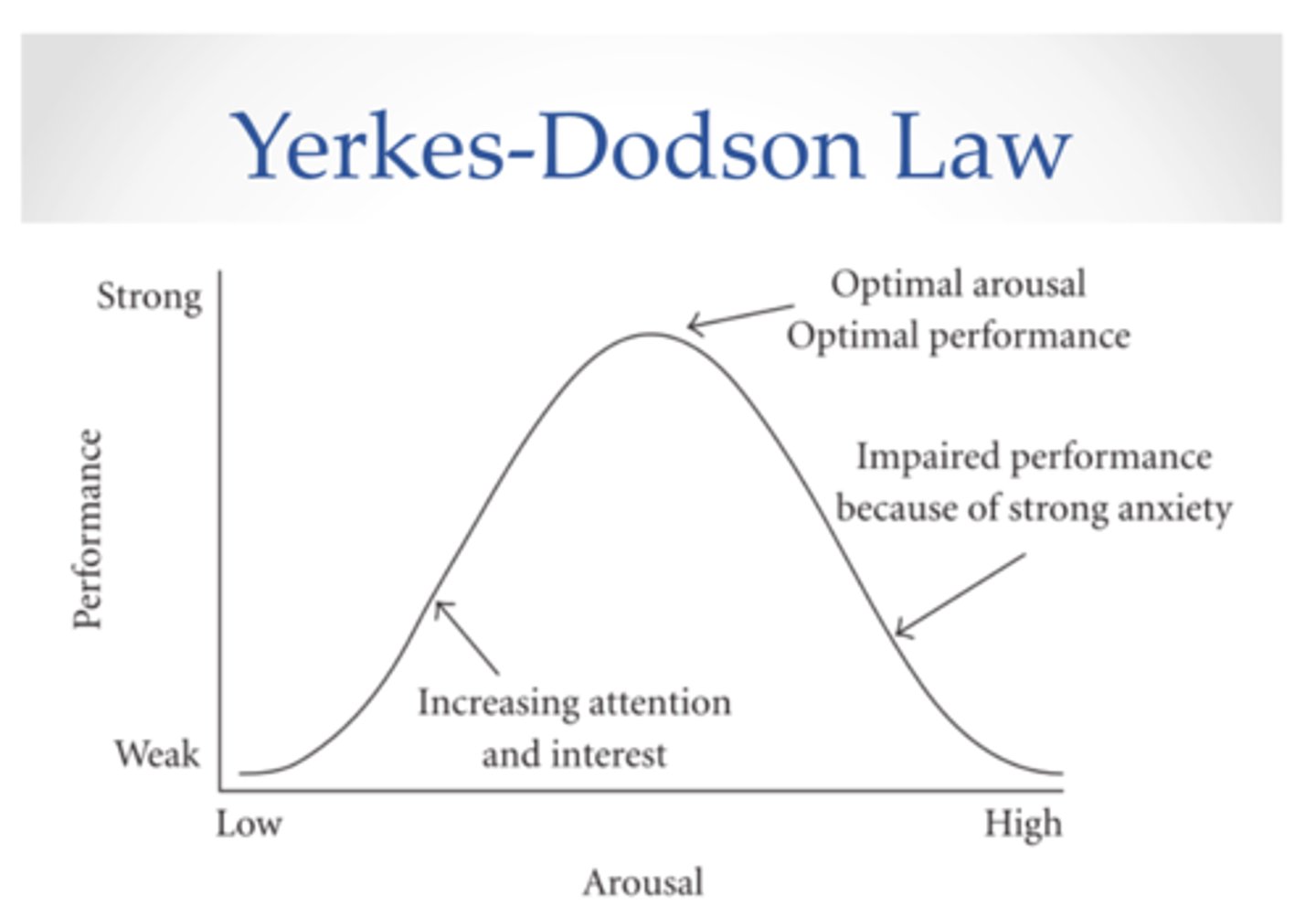
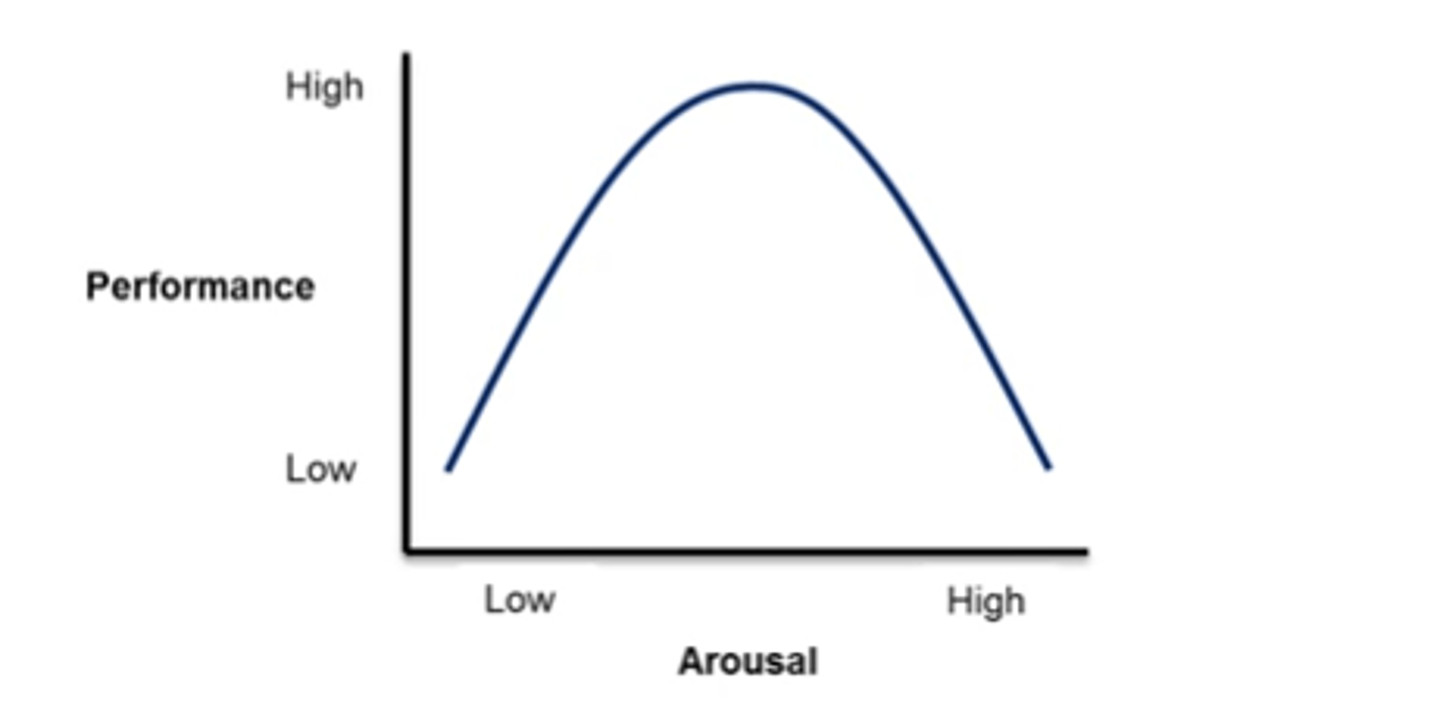
1. Easterbrook's (1959) cue utilisation hypothesis
-the more arousal a person experiences, the less info they can attend to
-increase in emotional arousal facilitates the encoding of central info and impoverishes encoding of peripheral info
-based on Yerkes-Dodson law
2. Mather & Sutherland's (2011) arousal-biased competition theory
-arousal enhances selective attention toward high-priority info, determined by bottom-up sensory factors and top-down cognitive factors
-emotion does not "narrow" attention per se, it simply exaggerates a preexisting bias of attention towards high-priority information, which is frequently central information but not always
false memory and emotions- external factors
1. "crashing memory" studies (e.g. Crombag et al., 1996)
-crashing memory paradigm- participants are asked lots of questions for a shocking, public event
-in 1992, El Al Flight 1862 flew into an apartment complex in Amsterdam
-10 months later participants were asked factual questions plus one suggestive question
-"Did you see the TV film of the moment the plane hit the apartment building?"
-over 60% said they had seen the crash on TV, although no TV footage exists
2. "memory implantation" studies (e.g. Porter et al., 1999)
-show how people can misremember personal experiences
-adult participants were asked about several childhood experiences, one of which was fake
-fake events included a serious medical procedure, getting lost, and a serious animal attack
-interviewers encouraged participants to focus on "recovering their memories" and to "visualise what it might have been like..."
-26% of participants reported experiencing the suggested event
-and a further 30% "remembered" aspects of the suggested event
-evidence that suggestive techniques can affect memory for self-involving, emotional experiences
false memory and emotions- internal factors
"memory amplification" (review by Giezen et al., 2005):
-victims trauma tend to report being exposed to more traumatic events over the course of time
-traumatic memories become more severe
e.g. Southwick et al. (1997)
-asked Gulf War veterans about their exposure to seeing others killed/wounded both 1 month and 2 years following deployment
-88% changed their response to at least one event at follow-up
-most changes were from no to yes (70% recalled an event they didn't report originally)
why might internal factors amplify memories for traumatic events?
-people who believe heavily in repression would say that the repressed memories are being recovered over time
-no scientific evidence that memory works like this
-reading media reports which are distorting their memories
-no evidence for this
-people who have high levels of re-experiencing (memory intrusions) are most likely to experience memory amplification
-this suggests some sort of internal process
-some researchers are currently thinking that these memories are becoming more traumatic over time because this helps the sufferers to explain the PTSD symptoms they are experiencing
-if they believe that really awful things happened to them then this justifies their physical symptoms/illness
-cyclical process
two main theories on PTSD and memory
1. Brewin et al.,'s (1996) dual representation theory
-describes memory intrusions of traumatic events as the involuntary retrieval of sensory information
-intrusions represent re-experiencing of the event as it happened
-this doesn't explain why their memories are getting more and more traumatic over time if they are just re-experiencing the memories as they happened
2. Rubin et al.,'s (2008) memory-based model of PTSD
-posits the current memory of a traumatic event, not the event itself per se, determines the symptomology of PTSD
-voluntary and involuntary memories are not consistent over time
-they are not memories of the actual event, they are driven by what the person is experiencing
-many factors can distort traumatic memories
-e.g. current emotions, expectations, feedback from others
legal implications of witness memory of emotional events
-victims/witnesses are commonly affected by highly emotional events
-having a clear understanding of how trauma effects the validity and accuracy memory is important in the courtroom
-when assessing the credibility of witnesses/victims, the accuracy and stability of emotional memories is critical
-although emotional events may be recalled with confidence, trauma memories are prone to alteration
-jurors should be cautious of cases in which witnesses have come into contact with several external sources following an emotional event
-triers of fact should not give testimony more credibility when it is accompanied by emotion
-witnesses can be genuinely emotional and confident about an event that never occurred
source monitoring framework
-why do people come to remember events that never happened? why is eyewitness memory prone to distortion?
-memories don't come with tags that tell us how they were created or where they came from
-memory is an inferential process
tenets of the source monitoring framework
1. thoughts, images, and feelings that are experienced as memories are attributed, by the rememberer, to particular sources
-memories come from a variety of sources (thoughts, dreams, perceived events)
-there are several types of memory errors we might make
2. three types of source monitoring
-reality
-external
-internal
3. in all three situations there are multiple cues to source
4. cues are categorised as perceptual, contextual, semantic, affective, or cognitive operations
5. two processes are used to make source judgements: heuristic processes and systematic processes
6. the ease and accuracy of source judgements is determined by
a. the type and amount of memory characteristics contained in the memory
b. how unique these characteristics are for a given source
c. the efficacy of the judgement process used
three types of source monitoring (second tenet of SMF)
1. reality monitoring (external-internal discrimination)
-e.g. "did i ring mum or only dream about doing it?"
2. external source monitoring
-"did Neil or Derick say that joke?"
-distinguish between 2 or more external sources
3. internal source monitoring
-"did i dream about failing that test or did i think about it some time?"
how do people distinguish between memories from different sources?
-by evaluating the characteristics of their memories
-perceptual information (colour, sound)
-cognitive operations (records of organising, elaborating, retrieving and identifying the memory)
-contextual information (spatial, temporal)
-semantic information (meaning, importance)
-affective information (emotional reactions)
cues (fourth tenet of SMF)
why use cues?
-research shows that memories originating from different sources have different characteristics (Johnson, Foley, Suengas & Raye, 1988)
-exploring the characteristics of memories- study by Johnson, Foley, Suengas & Raye (1988)
-conclusion- memories of perceived (real) events contain more perceptual and contextual information than memories of imagined events
-but what about cognitive operations? do they differ systematically as well?
-some evidence that memories of internally generated (imagined) events contain more information about cognitive operations than memories of externally generated (perceived) events (Johnson, Foley, Suengas & Raye, 1984)
cognitive operations (Finke, Johnson, & Shyi, 1988):
-takes more cognitive resources to imagine the shape on the X-axis
-completing (imagining) forms on about the y-axis is easier and requires fewer cognitive operations (less effort)
-this shape contains more records of cognitive operations because it took more effort to encode
-memories of imagined y-axis shapes should contain less info about the cognitive operations involved in creating them
prediction:
-if memories of perceived (complete) shapes contain little info about the cognitive operations involved in perceiving them, then participants should find it harder to distinguish between imagined and perceived vertical shapes than between imagined and perceived horizontal shapes
-study phase → memory test
-study phase- subjects exposed to shapes that they imagined or perceived (viewed) in full
-memory test- subjects shown full shapes and asked if they imagined or perceived each one in study phase
why do source monitoring errors occur?
source monitoring depends on:
1. the quality of the encoded information
-anything that prevents a person from fully contextualising an event at encoding will hinder SM
2. how unique that information is to the particular source
-memories of vivid dreams can be mistaken for memories of real events because they contain vivid perceptual info
3. the decision process engaged in
-anything that limits the judgement process (time pressure, severe stress, distraction, alcohol) will limit accuracy
criminal law and confession evidence
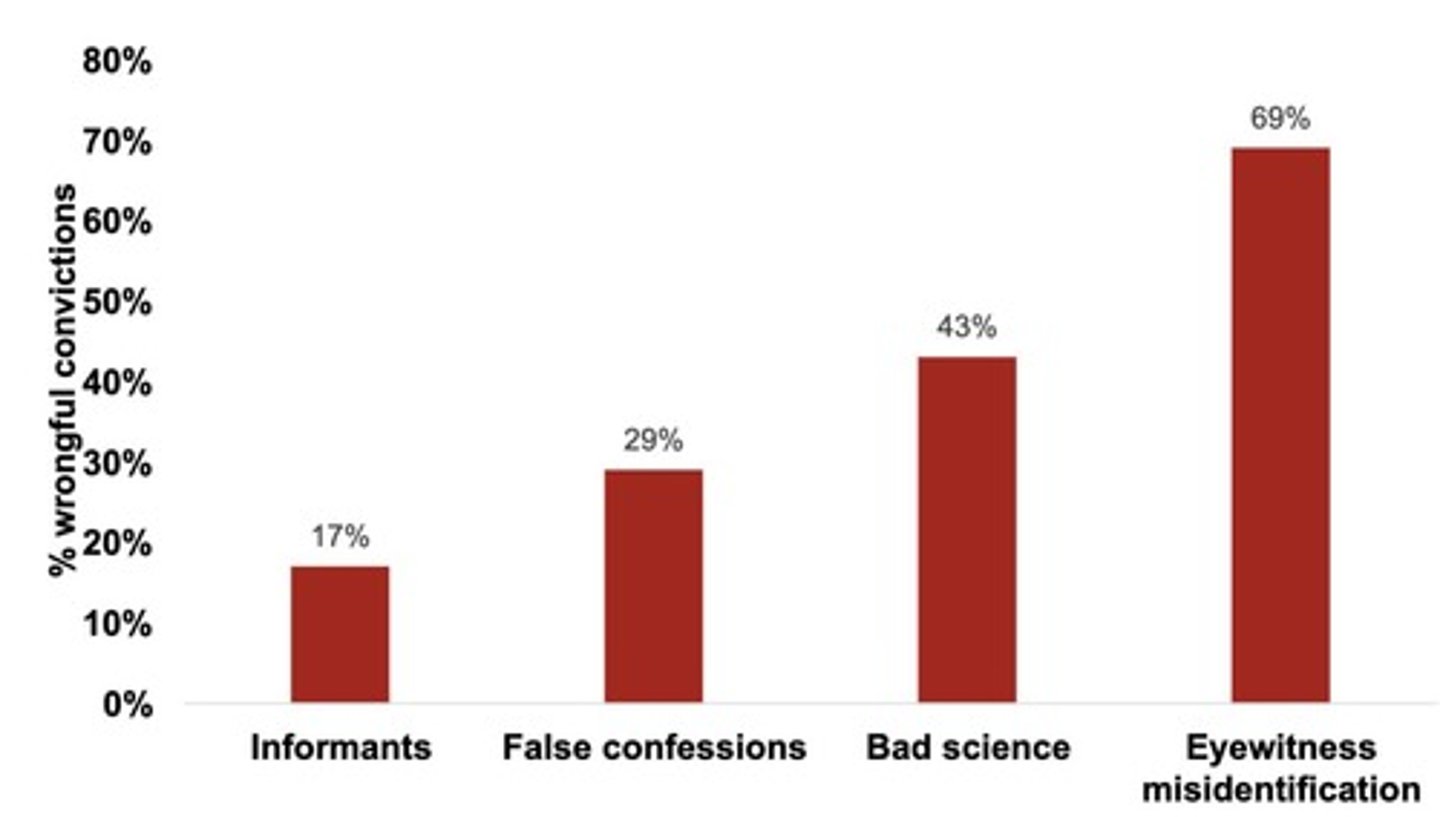
-15-25% of wrongful conviction cases have contained confession evidence (Kassin, 2005)
Kassin & Neumann (1997; Wigmore (1970):
-courts have guidelines for the admission of confession evidence (CE) and how we use and view CE in England has evolved
-16th & 17th century- no restrictions on use of CE
-mid 17th century- physical torture considered legitimate means for extracting CE (e.g. strappado, the rack)
-19th century- courts increasingly skeptical of confessions; quick to reject CE
-20th century & today- confessions aren't rejected or accepted outright
today:
-considered on case-by-case basis
-"totality of the circumstances"- no one individual factor that tells us whether or not there i probable cause in the case
-must be voluntary
excluded if elicited by:
-brute force
-deprivation of food, sleep or other biological needs
-threats of punishment/harm
-promises of immunity or leniency in prosecution
-or without apprising the suspect of their legal rights
research on false confessions
-knowledge from all fields of psychology to understand why people falsely confess
-cognitive, social psychology etc
leading researchers in this field:
-Professor Saul Kassin and Professor Gisli Gudjonsson
-most research has been conducted in the US where interrogations can be highly confrontational
-some research in England, Ireland, Iceland where interrogations tend to be less aggressive
eliciting confessions
police follow a certain process:
1. pre-interrogation interview
-neutral, info-gathering session to help determine if suspect is guilty or innocent based on
-information from witnesses or informants
-crime-related schemas or "profiles" that police hold
-a 'hunch' the investigator forms during pre-interrogation interview
2. Miranda waiver warning (US) or caution (UK)
-their rights need to be read before the formal interrogation begins
-US- "you have the right to remain silent, if you give up that right, anything you say can and will be used ***
-UK- "you do not have to say anything but it may harm your deference if you do not mention when questioned something that you later rely on in court. anything you say may be given in evidence" (Home Office, 1995, p. 50)
-many say that the right to silence has been abolished by this
3. interrogation
4. full narrative confession
-and written statement
how good are people at distinguishing between guilty and innocent subjects?
proponents of the Reid Technique (training manual not used in the UK anymore) claim:
-"behaviour analysis interview" can be used to look for behavioural symptoms or indicators of truth and deception
-verbal cues (e.g. hinting, unsure, rehearsed response)
-non-verbal cues (e.g. posture, eye gaze)
-behavioural attitude (e.g. anxious, guarded)
-also recommends "behaviour invoking questions"- "what do you think should happen to the person who's guilty of this crime?"
-investigators can be trained to judge truth and deception at 85% level of accuracy
lie detection:
-no research suggest that people are good at judging truth and deception (Memon, Vrij, & Bull, 2003; Vrij, 2000; Zukerman, DePaulo, & Rosenthal, 1981)
-some training programmes produce small to moderate improvements, but effectiveness depends on type of training, content, trainee expertise and type of lie told (Driskell, 2011; Bull, 1989;Porter, Woodsworth, & Birt, 2000)
-non-verbal signs are unreliable indicators of deception (Kassin & Fong, 1999; Vrij, Edward, Roberts, & Bull, 2000; Vrij, 2018)
does the Reid Technique increase people's ability to detect deception? (Kassin & Fong, 1999)
-Kong (Kassin's student) went in undercover to receive the training as Reid wouldn't give it to Kassin to disprove
-training OR no training → videos of suspects being interviewed by an officer → guilty/innocent judgements and confidence ratings
-suspects in all 8 videos were all denying accountability
-some of them were lying, some were not
results:
-overall mean accuracy score= 4.1/8 (52%)
-those who received training were less accurate (M= 3.7) than naive participants (M= 4.4)
-those who received training were more confident (6.6) despite being less accurate than naive participants (5.9)
-training biased participants towards seeing deception
conclusion:
-training in deception detection may lead investigators to make prejudgements of guilt with high confidence that are frequently in error
modern interrogations- the Reid Technique
physical layout of a police interrogation room:
-small, barely furnished, soundproof room
-hard, armless, straight-back chair
-light switches, thermostats, control devices out of reach
-encroach upon suspect's personal space
- one-way mirror so other detectives can watch for signs of anxiety, withdrawal, fatigue
series of methods to illicit confession:
1. confront the suspect with assertions of guilt (maximation)
2. develop "themes" that justify and excuse the crime (minimisation)
-suggest actions were spontaneous, accidental, provoked, result of peer-pressure, drug induced or otherwise justifiable
-to help the suspect think that confessing is in their best interest
3. interrupt efforts at denial and defense
4. overcome suspect's factual, moral, and emotional objections
5. ensure that passive subjects do not withdraw
-encourage suspects to keep speaking and not switch off
6. show sympathy and understanding
-aim to make the suspect more cooperative
7. offer face-saving alternative
8. get suspect to recount the details
9. convert part 8 into full written confession
widely used in the US but is it "diagnostic"?
-does it tell us whether people are confessing purely because they're guilty?
-we know false confessions occur (e.g., Central Park Jogger, Timothy Evans, The Confait Case, Peter Reilly, Guilford Four)
-widely criticised for being unethical due to use of deception within its core principles
-control, social isolation, certainty of guilt, minimisation or elimination of culpability, interpretation of suspect's behaviour
-although such accusatorial approaches have prevailed historically, the Reid technique is NOT used as an interview model in the UK because it increases the risk of interviewees providing unreliable information (Evans et al., 2013)
modern interrogations- the PEACE model
UK takes an "information-gathering" approach to investigation interviews (interrogations)
P- planning and preparation
-become well versed in the facts of the case
-go into the interview with an open mind
E- engage and explain
-explain what the purpose of the interview is
-build rapport (based on literature that shows rapport between interviewer and interviewee is essential for how much information is illicited)
A- account, clarification, and challenge
-challenge what a suspect is saying but it is done in an investigative, non-aggressive way
C- closure
E- evaluation
-retrospectively consider how the information gathering process went and evaluate the extent to which good processes were utilised
-highlights the importance of respect and rapport-building within the interview setting and the use of appropriate questioning
modern interrogations- Mendez Principles
-in 2021 the UN supported the development of a universal protocol for making non-coercive interviewing the minimum standard adopted by all law enforcement agencies
-recognised the importance of eliminating aggressive interrogation techniques
-the Mendez principles aim to modify police practices by replacing coercive interrogations with rapport-based interviews
six main principles of effective interviewing:
1. "is instructed by science, law and ethics"
2."is a comprehensive process for gathering accurate and reliable information while implementing associated legal safeguards"
3. "requires identifying and addressing the needs of interviewees in situations of vulnerability"
-certain types of vulnerability (e.g. age- teenagers, mental illness) can make people at risk of falsely confessing
4. "is a professional undertaking that requires specific training"
5. "requires transparent and accountable institutions"
6. "requires robust national measures"
taxonomy of false confessions (Kassin & Wrightsman, 1985)
different types of false confessions:
1. voluntary= confess without prompting or pressure from police
-pathological desire for notoriety (Henry Lee Lucas)
-need for punishment to rid feelings of guilt
-inability to distinguish facts from fantasy
-to aid/protect a real criminal
2. compliant= confessions induced through police interview
-escape adverse situation, avoid explicit or implied threat
-Gudjonsson (2003) identified specific incentives such as being allowed to sleep, eat, make phone call, go home, feed drug habit
3. internalised= suspects who come to believe (internalise) they committed a crime
-e.g. Case of Paul Ingram (Ofshe & Watters, 1994)
Kassin & Kiechel (1996) Computer-Crash Paradigm
-can false evidence lead individuals to confess to and internalise a crime?
method:
-ss participated in psuedo-reaction time task
-told "do not press the Alt key" or computer will crash
-computer crashed anyway and participants were accused of pressing Alt key
-asked to sign a confession
-manipulated
a. pace of task (fast vs. slow)
b. presentation of false evidence (witness vs. no witness)
researchers checked for 3 levels of influence:
-compliance (sign the confession statement)
-internalisation (take responsibility when later describing the experience to a waiting subject/confederate)
-confabulation (reconstruct what happened and create details)
results:
-69% signed confession (compliance)
-28% believed they did it (internalisation)
-9% described cheating (confabulation)
Nash & Wade (2009)- False Confessions
-participants who were exposed to a fabricated video of themselves cheating on an online gambling task
-were more likely to fully internalise guilt than participants who were merely told a video of them cheating existed
future recommendations for interrogations
-law enforcement officials, lawyers, judges, social scientists, policy makers need to evaluate the methods of interrogation that are commonly used
-existing literature strongly suggests that certain interrogation practices are posing risks to innocent suspects
all interrogation sessions should be fully recorded:
-deters lengthy interrogations and dangerous tactics
-deters frivolous defense claims of coercion
-provides objective and accurate record of all that transpired
police-suspect vs. intelligence interviews
1. police-suspect interviews:
-focus on lying about the past- interview suspect because they committed a crime in the past
-formal, overt, take place in custodial settings
-typically focus on an individual rather than a group
2. intelligence interviews:
-focus on future activities and interventions- what is this suspect going to do, what have they planned (e.g. terrorism)?
-may be covert ad take place in public spaces
-country borders, security checkpoints, airports, bus terminals, train stations, shopping malls, sports venues
-can involve groups of people who are interviewed together
Vrij, Granhag, Mann, & Leal (2011)- lying about intentions
-is it possible to detect when people are lying about their intentions?
-60 passengers in departure hall at an international airport
-truth tellers told to answer all questions truthfully and liars told to lie
results:
-liars were more plausible, included more contradictions, and fewer spontaneous corrections
-but did not differ to truth-tellers answers in terms of detail
-overall detection accuracy of truth and lies was 70%
-72% truth tellers and 74% liars were detected
conclusion:
-lies about intentions are detectable
unanticipated questions
DePaulo et al., (2003); Granhag, Anderson, Stromwall, & Hartwig (2004); Vrij et al., (2009):
-liars prepared for anticipated questions
-preparation makes lying easier
-planned lies contain fewer cues to deceit
-but planning is only fruitful to the extent that the anticipated questions are asked
the theory:
-liars might answer unanticipated questions by saying "i don't know" or "i can't remember"
-but if questions tap into central details then this should create suspicion and liar has little option but to fabricate (plausible) details
-fabrication is cognitively demanding
-and the different liars experience in cognitive load when answering unanticipated vs. anticipated questions should be evident (cf truth tellers)
questions can be unanticipated because they target:
-an unanticipated domain (e.g. planning phase of the trip where the intentions were formed)
-an anticipated domain (e.g. forthcoming trip) but stretch beyond the set of expected questions (e.g. transportation to airport
-an expected question (e.g. can you describe the restaurant where you had dinner last night)
-but the response format is unanticipated (e.g. please make a sketch of the restaurant)
targeting unanticipated domain (Knieps, 2013; Mac Giolla, Granhag, & Liu-Jonsson, 2013; Sooniste, Granhag, Knieps, & Vrij, 2013):
-asking questions about planning phase
-much less anticipated than questions about intentions
-truth tellers provide more detailed answers
-truth tellers show more markers of good planning (e.g. effective time allocation, references to potential problems)
-truth tellers more likely to have episodic future thoughts and mental images
-episodic future thoughts- our ability to pre-experience future events through mental simulation (basically imagining the future)
undercover interviewing
-used when investigator doesn't want interviewee knowing she is being interviewed
-overcome the liar's tendency to withhold information
-e.g. invite suspects to engage in an apparently innocent activity that establishes their presence in a certain place at a certain time
-overcome a liar's tendency to be aversive or uncooperative
genuine tourist photos or sinister photos? (Jundi, Vrij, Mann, Hillman & Hope, 2014):
-when planning large scale bombing campaigns
-terrorists often conduct reconnaissance missions, and take photos/videos, to identify key targets
-might it be possible to distinguish between people taking sinister photos versus, say, tourist photos?
-study in which Ss were asked to take photos on a town square for tourist or terrorist purposes
-as Ss left the square, a mime artist approached them and asked if they had photographed him
-if 'yes', mime artist asked if he could see the photo. If 'no' he asked if he could check
results:
-similar proportions of tourists and terrorist Ss (74%) had taken a photo of the mime artist
but...
-truth tellers (36%) were more likely than liars (8%) to tell the mime artists they had taken a photo of him
-and truth tellers were more likely to show him the photo (60% vs. 20%)
collective interviewing
-people often commit crimes or carry our reconnaissance missions in groups
-sometimes it's more suitable, timely, and convenient to interview group members simultaneously (e.g. border check points)
-investigators can pay attention to communication cues (i.e. how suspects interact)
interviewing pairs (Driskell et al., 2012; Jundi, Vrij, Hope, Mann, & Hillman, 2013; Vrij, Mann et al., 2012):
-truth tellers communicate more in an attempt to collectively recall more
-add info to each other's stories
-make corrections or interpret each other
-pose questions to one another to tap into their memory domain
-because truth tellers communicate more they had a tendency to gave more at each other and less at the interviewer compared to liars
-liars don't have joint experience to recall
-provide prepared answers to anticipated questions
-one person may take lead and others simply agree
-much less interactive approach
real or fake marriage? (Hollingshead, 1998; Wegner, 1987):
-couples are interviewed simultaneously to determine if wedding is a sham
transactive memory theory suggests
-real couples have specialised system ('division of labour') for memory
-this becomes evident when they discuss jointly experienced events
catching fake couples (Vernahm, Vrij, Mann, Leal & Hillman, 2014):
-real couples and fake couples were interviewed about their (real or fictitious) relationship
truth-telling pairs more likely to:
-pose questions to one another
-provide cues for each other
-hand over remembering responsibility
-finish each others' sentences (useful for categorising truth tellers (84%) and liars (91%))
the Scharff Technique
Hanns Joachim Scharff:
-German interrogator and German Luftwaffe in WW2
-interrogated US and UK fighter pilots
-perceived to be a gentleman
-good at extracting info from pilots without them even being aware he was doing it
-now an important figure in interrogation research
the Scharff technique:
1. a friendly approach
2. not pressing for info
3. playing on the 'illusion of already knowing it all'
4. working with confirmations/disconfirmations (instead of asking direct questions
series of three studies comparing Scharff and Direct Approach (typically used by the US army) (Oleszkiewicz, Granhag, & Kleinmann, 2017; May, Granhag, & Oleszkiewicz, 2014):
-subjects (source) received incomplete info about upcoming terrorist attack
-told to appear cooperative in a forthcoming interview but not to reveal too much
Scharff interview subjects:
-revealed more information
-worse at establishing which into the interviewer was after
-thought they revealed less new info than they actually did- when a source underestimates how much info they revealed during the interaction, it's an important indicator of an effective human intelligence technique
rapport
-why do people resist cooperation in intelligence interviews? are there techniques interviewers can use to overcome this resistance?
-rapport-based approach to interviewing is more reliable and productive than a confrontational, accusatorial approach
rapport helps to:
-overcome the source's resistance (Alison et al., 2013)
-increase the amount of information the source provides (Goodman-Delahunty et al., 2014; Redlich et al., 2014)
-promote the likelihood of eliciting a true confession (Holmberg & Christianson, 2002; Kebbell et al., 2010; Wachi et al., 2014)
defining rapport:
-field research suggests interviewers often define rapport as a working relationship in which there is wilful communication by the subject, trust between the interviewer and source, and mutual respect (Russano et al., 2014)
-studies have experimentally manipulated rapport tactics in interviews with reluctant interview subjects, but the focus was on how rapport affected the likelihood of a confession
-findings have been mixed (Villalba, 2014; Wachi et al., 2018)
-how does rapport affect information-gathering and is it possible to increase rapport by modifying the subject's sense of affiliation with the interviewer during the interview?
enhancing cooperation and disclosure (Brimbal, Dianiska, Swanner, & Meissner, 2019)
rationale:
-although people generally feel connected to others who are a part of the same social groups (e.g., gender, nationality, sports team), affiliation can be artificially created (Tajfel et al., 1971)
-if the interviewer can shape how an individual perceives their affiliations it may build rapport and reduce the individual's resistance to sharing critical information
-Brimbal et al. developed and assessed two techniques designed to shift a participant's affiliations in an attempt to develop rapport, increase cooperation, and increase information disclosure
method:
-116 psych students 'study exploring students' general knowledge"
-control- interviewer questioned Ss directly by asking if they had cheated followed by open-ended request for info ("why don't you tell me everything that happened?")
-approach- interviewer highlighted similarities between themselves and the Ss ("you seem to be an honest and sincere person, like me. You pride yourself on being accountable for your actions")
-avoid- interviewer highlighted the stark contrast between the Ss and the cheat
-approach + avoid- combined both the approach and avoid manipulations
hypotheses:
-our inherent motivation to be good (Sedikides, 1993) given both the approach and avoid manipulations (independently and in conjunction) should
-increase perceived rapport with the interviewer (hypothesis 1)
-increase information disclosure by the ss (hypothesis 2)
results:
-only the approach technique led to increased feelings of rapport for the interviewer which indirectly facilitated cooperation and facilitated the elicitation of key admissions
-the avoid technique led to fewer admissions of critical information
what is deception?
"a successful or unsuccessful deliberate attempt, without forewarning, to create in another a belief which the communicator considers to be untrue" (Vrij, 2000, p.6)
three categories of lies:
1. falsification (total falsehoods, "outright lies")
2. distortions (departures from the truth)
3. concealments (claims to not know/remember)
cues to deception
beliefs about cues to deception (e.g. Zuckerman, DePaulo & Rosenthal, 1981):
-two methods typically used to study people's beliefs
1. surveys- ss rate the extent to which they believe a particular behaviour (e.g. gaze aversion) is indicative of deception
2. lab-based- ss watch videos of liars and truth tellers, then judge these "suspects" in terms of their veracity. ss are asked to justify their veracity judgements or researchers calculate the correlation between objective behaviours of the suspect and the judgements made by ss
both (presumed) experts and laypeople believe:
-nervous behaviours indicate deception (e.g. eye contact decreases when lying)
-increases in body movement indicate deception (e.g. fidgeting, moving arms and fingers)
-truthful accounts are more detailed
-truthful statements are more consistent over time
self-reported cues to deception- how do police offers justify their veracity judgements?
Mann, Vrij & Bull (2004):
-UK police officers asked to watch videotaped real-life police interviews with suspects
-asked which cues they relied on to determine whether the suspect was lying
-officers relied on "gaze" then "movements"
Hartwig et al. (2004):
-asked experienced officers to interrogate students who acted as suspects
-officers relied on verbal cues (details, plausibility) and nonverbal cues (gaze and movements) equally
why the misconceptions about deception cues?
feedback hypothesis (DePaulo, Stone & Lassiter, 1985):
-feedback is inadequate and unsystematic- professionals (e.g. immigration officers) don't receive enough feedback to improve at deception detection
-erroneous beliefs are cemented rather than corrected
-mere experience of judging veracity isn't sufficient
-frequent, reliable, and immediate feedback is required
support for the "feedback" account:
-Vrij & Semin (1996)- criminals (prison inmates) have more accurate beliefs about cues to deception than other presumed lie experts (customs officials, detectives, officers, prison guards)
-Hartwig et al. (2004)- criminals detect lies more accurately than chance
-Norwick et al. (2002)- criminals can produce convincing false confessions
-but Schindler et al. (2021)- across two studies they found no difference between offenders' and non-offenders' (clinical staff) ability to accurately classify true vs. false messages
deception detection
two key points about procedure and terminology:
1. ground truth
-in the lab, researchers know who is lying, but in real-life situations we don't know who is lying
2. truth bias
-ss in lie detection studies tend to judge statements as "true" more often than "false"
methods:
-speech analyses
-physiological analyses
-behavioural analyses
speech analyses (deception detection method)
statement validity analysis (SVA):
-developed in Germany, originally to determine the credibility of children's testimony in trials for sexual offences
-SVA results are accepted as evidence in criminal courts in several countries (Germany, Netherlands, Sweden)
-based on Undeutsch (1967)- statements derived from memory differ in content and quality from statements based on invention
three phase approach:
1. free recall
2. criteria-based content analysis
3. validity checklist
does SVA work?
-several lab and field studies have tested whether SVA works
Vrij (2005):
-reviewed 37 CBCA studies, 16 assessed reliability of CBCA method
-73% average accuracy for detecting truths
-72% average accuracy for detecting lies
Haunch et al. (2017):
-found "acceptable inter-rater reliabilities for most CBCA criteria"
-however, level of agreement was often affected by the research paradigm, intensity of rater training, type of rating scale used, and base rate for some CBCA criteria
Oberlader et al. (2016):
-conducted a meta-analysis of 55 English and German-language CBCA studies with adults
-CBCA discriminated between true and fabricated statements with an overall correction effect size of g = 0.98 (large effect), 69% hit rate (correct decision)
physiological analyses (deception detection method)
polygraphs:
-display direct and valid representation of various types of bodily activity (sweating fingers, BP, respiration)
-currently used all over the world in criminal investigations
-but generally not admissible as evidence in court
-"lie detector" is misleading- doesn't detect lies, but rather the arousal assumed to accompany lie telling
comparison question test (CQT):
-relevant questions- specifically about the crime ( "On March 12, did you shoot Jane Freeman?"
-control questions- related to crime, but not to the specific crime in question ("have you ever tried to hurt someone to get revenge")
-innocent suspects = control > relevant
-guilty suspects = control < relevant
Ben-Shakhar & Elaad (2003) does the CQT work?
-tested in lab-based studies
-"guilty suspects" instructed to commit a mock crime
-whereas "innocent subjects" are told that they are suspected of the crime
-hooked up to a polygraph and told to plead innocent
-correct classifications in 83-89% of guilty cases, 53-78% of innocent cases