prenatal development dev psych

0.0(0)
Studied by 0 people
call kaiCall Kai
learnLearn
examPractice Test
spaced repetitionSpaced Repetition
heart puzzleMatch
flashcardsFlashcards
GameKnowt Play
Card Sorting

1/13

encourage image

There's no tags or description

Looks like no tags are added yet.

Last updated 2:45 AM on 6/9/26
Name
Mastery
Learn
Test
Matching
Spaced
Call with Kai

No analytics yet

Send a link to your students to track their progress

14 Terms

1
New cards

PRENATAL DEVELOPMENT - IT STARTS AT CONCEPTION

  • Conception is a war zone

    • Millions of sperm battling to reach and implant in a single egg

2
New cards

Key concepts

  • Zygote 

    • A fertilized egg that now has 23 chromosomes from the female and 23 from the male. No cell division has occurred

  • Mitosis 

    • CELL DIVISION RESULTING IN TWO IDENTICAL CELLS

  • Cell migration 

    • MOVEMENT OF NEWLY FORMED CELLS AWAY FROM THEIR POINT OF ORIGIN

  • Cell differentiation 

    • Embryonic stem cells can give rise to the >200 possible cell types in the human body

    • Cells location (nearby cells) and what genes are switched on influence the destiny of the cell

  • Apoptosis 

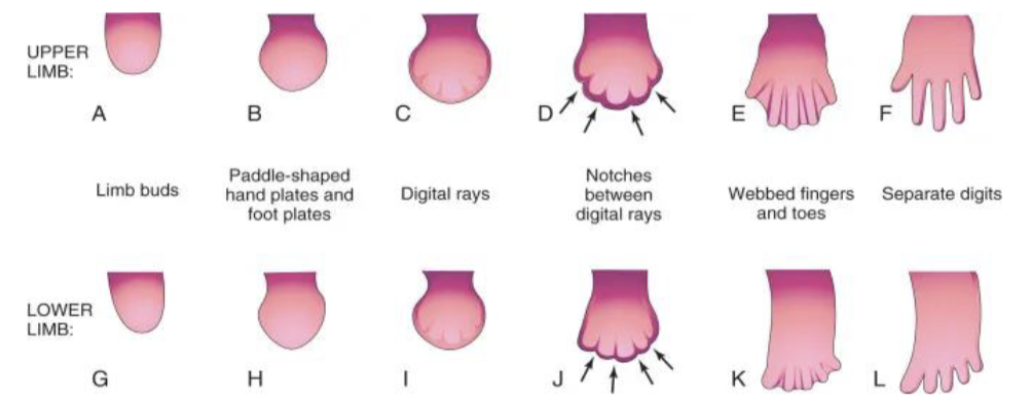
    • Programmed cell death 

    • Cells in between each finger die on a schedule to reveal a hand/foot from the earlier limb plates

  • Embryo (3-8 weeks)

    • The developing organism from 3-8 weeks. Inner cell mass becomes the embryo and the outer cell mass becomes the amniotic sac and placenta

  • Mitosis, cell migration, cell differentiation, cell death. By the 4th day the cells arrange themselves into 2 cell masses. After 1 week implantation into uterine wall (< 50% of zygotes)

  • Fetus (9 weeks - birth)

    • After lots of growth (cephalocaudal - head to toe) and proximodistal (midline outward), a fetus gets ready for birth

    • Neural tube starts to develop into the brain and spinal cord at 4 weeks. External genitalia develop (androgens - penis and testes)
<ul><li><p><span style="background-color: transparent;">Zygote<strong>&nbsp;</strong></span></p><ul><li><p><span style="background-color: transparent;">A fertilized egg that now has 23 chromosomes from the female and 23 from the male. No cell division has occurred</span></p></li></ul></li><li><p><span style="background-color: transparent;">Mitosis&nbsp;</span></p><ul><li><p><span style="background-color: transparent;">CELL DIVISION RESULTING IN TWO IDENTICAL CELLS</span></p></li></ul></li><li><p><span style="background-color: transparent;">Cell migration&nbsp;</span></p><ul><li><p><span style="background-color: transparent;">MOVEMENT OF NEWLY FORMED CELLS AWAY FROM THEIR POINT OF ORIGIN</span></p></li></ul></li><li><p><span style="background-color: transparent;">Cell differentiation&nbsp;</span></p><ul><li><p><span style="background-color: transparent;">Embryonic stem cells can give rise to the &gt;200 possible cell types in the human body</span></p></li><li><p><span style="background-color: transparent;">Cells location (nearby cells) and what genes are switched on influence the destiny of the cell</span></p></li></ul></li><li><p><span style="background-color: transparent;">Apoptosis&nbsp;</span></p><ul><li><p><span style="background-color: transparent;">Programmed cell death&nbsp;</span></p></li><li><p><span style="background-color: transparent;">Cells in between each finger die on a schedule to reveal a hand/foot from the earlier limb plates</span></p></li></ul></li><li><p><span style="background-color: transparent;">Embryo (3-8 weeks)</span></p><ul><li><p><span style="background-color: transparent;">The developing organism from 3-8 weeks. Inner cell mass becomes the embryo and the outer cell mass becomes the amniotic sac and placenta</span></p></li></ul></li><li><p><span style="background-color: transparent;">Mitosis, cell migration, cell differentiation, cell death. By the 4th day the cells arrange themselves into 2 cell masses. After 1 week implantation into uterine wall (&lt; 50% of zygotes)</span></p></li><li><p><span style="background-color: transparent;">Fetus (9 weeks - birth)</span></p><ul><li><p><span style="background-color: transparent;">After lots of growth (cephalocaudal - head to toe) and proximodistal (midline outward), a fetus gets ready for birth</span></p></li><li><p><span style="background-color: transparent;">Neural tube starts to develop into the brain and spinal cord at 4 weeks. External genitalia develop (androgens - penis and testes)</span></p></li></ul></li></ul><p></p>
3
New cards

HOW DOES THE INNER CELL MASS BECOME AN EMBRYO?

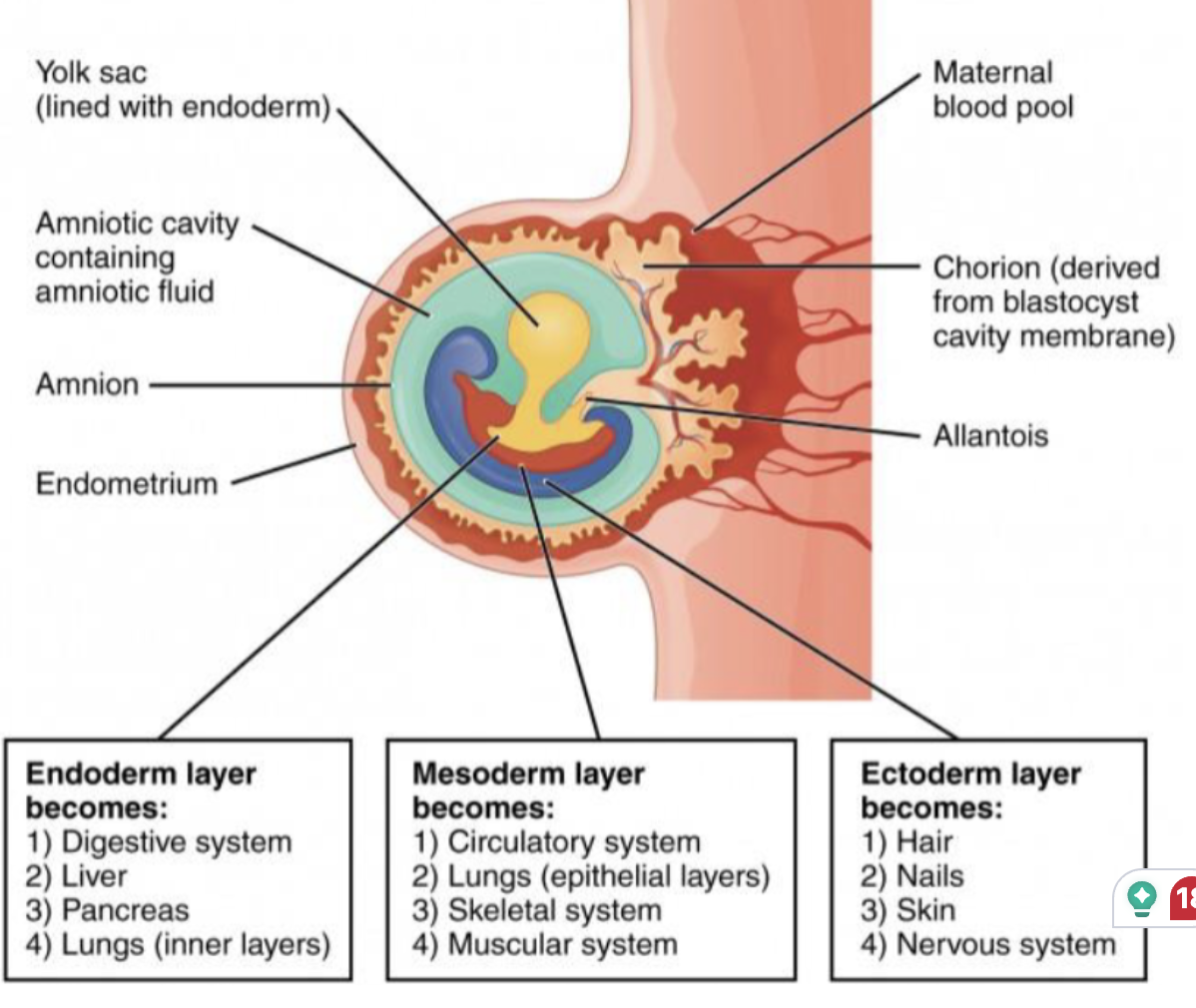
  • By the end of the 2nd week, the inner cell mass changes from one thick layer to three layers with a different developmental destiny

  • After the 3 layer structure has developed, a U-shaped groove forms down the center of the top layer. Zips up from the middle. The top will become the brain and the rest will become the spinal cord
<ul><li><p><span style="background-color: transparent;">By the end of the 2nd week, the inner cell mass changes from one thick layer to three layers with a different developmental destiny</span></p></li></ul><ul><li><p><span style="background-color: transparent;">After the 3 layer structure has developed, a U-shaped groove forms down the center of the top layer. Zips up from the middle. The top will become the brain and the rest will become the spinal cord</span></p></li></ul><p></p>
4
New cards

THE 4TH TRIMESTER

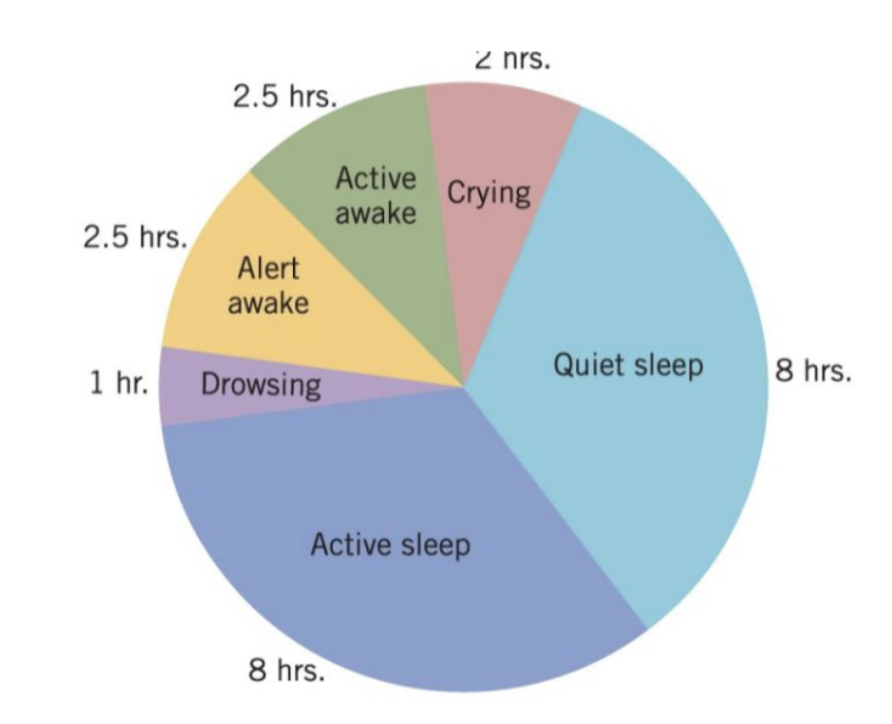
  • Humans are born altricial (i.e., dependent on their parents for survival).

  • The first 3 months after birth is often called the 4th trimester (the newborn period)
<ul><li><p><span style="background-color: transparent;">Humans are born altricial (i.e., dependent on their parents for survival).</span></p></li><li><p><span style="background-color: transparent;">The first 3 months after birth is often called the 4th trimester (the newborn period)</span></p></li></ul><p></p>
5
New cards

A RISKY PHASE OF DEVELOPMENT?

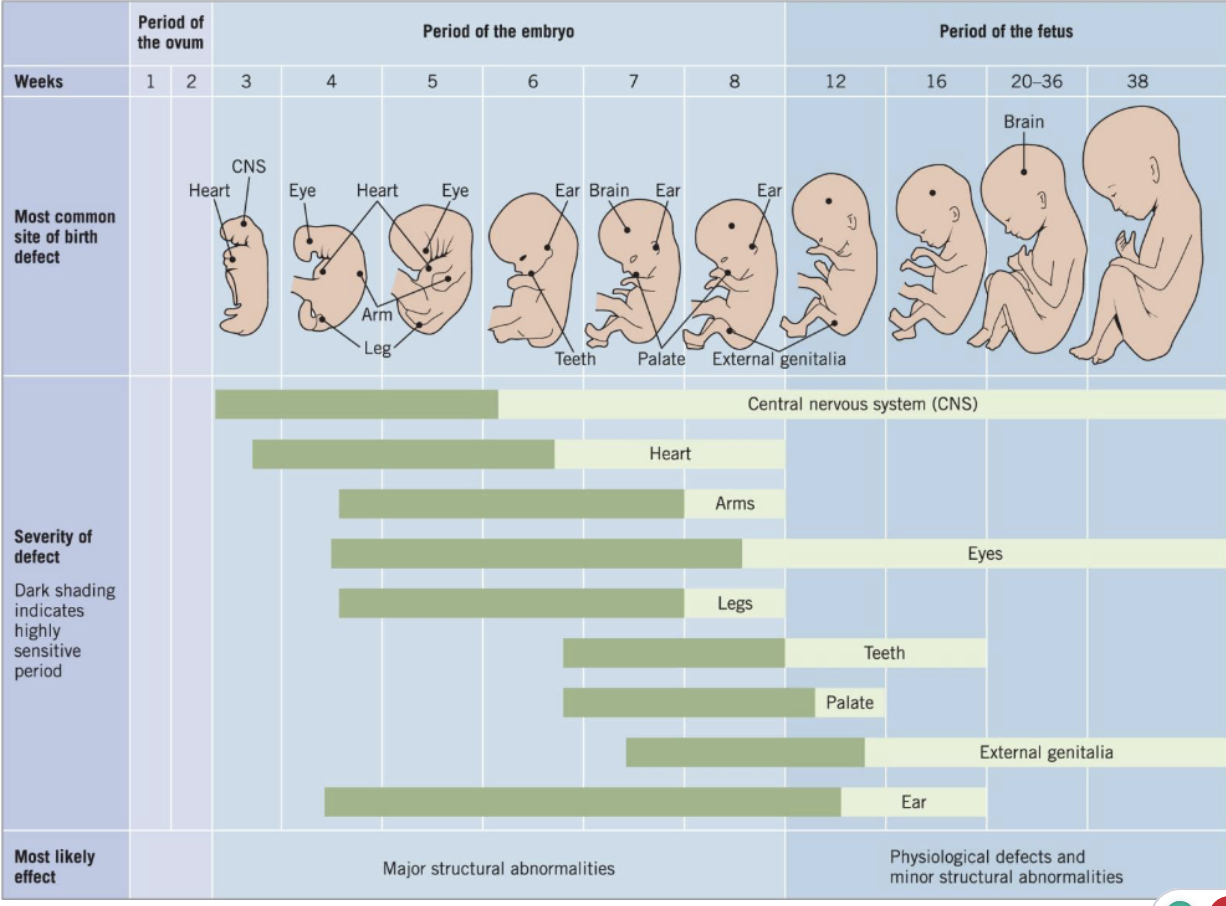
  • Stages of rapid growth can make the developing system vulnerable to the environment
<ul><li><p><span style="background-color: transparent;">Stages of rapid growth can make the developing system vulnerable to the environment</span></p></li></ul><p></p>
6
New cards

FETAL PROGRAMMING

  • Negative effects of prenatal experience may not be immediately evident.

  • Fetal programming refers to the belated emergence of effects of prenatal experiences that program physiological set points that govern physiology in adulthood.

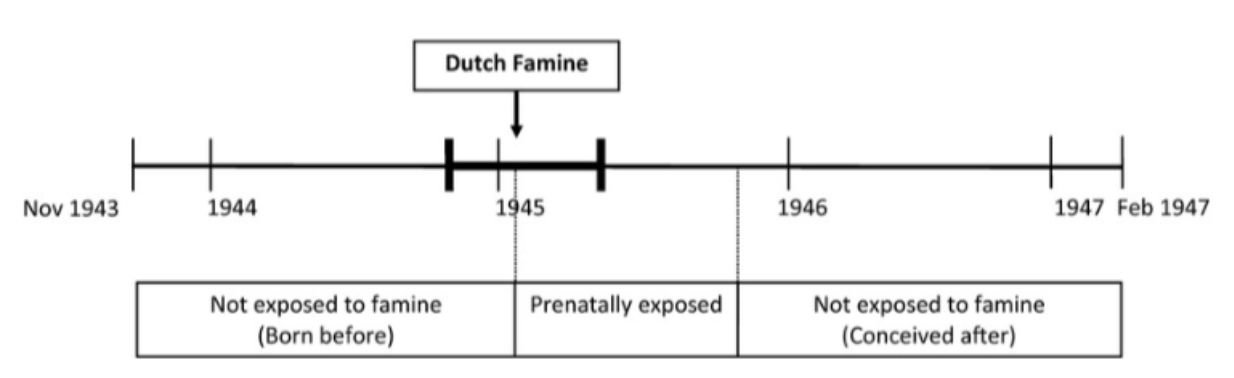
  • Dutch Hunger Winter study

  • Individuals conceived before the famine and exposed to an energy-poor fetal environment late in gestation as adults had increased risk for insulin resistance and impaired glucose tolerance. Those conceived during the famine as adults had increased risk for high serum cholesterol and coronary heart disease. Although they were normal birth weight, they grew up to be at increased risk for obesity
<ul><li><p><span style="background-color: transparent;">Negative effects of prenatal experience may not be immediately evident.</span></p></li><li><p><span style="background-color: transparent;">Fetal programming refers to the belated emergence of effects of prenatal experiences that program physiological set points that govern physiology in adulthood.</span></p></li><li><p><span style="background-color: transparent;">Dutch Hunger Winter study</span></p></li><li><p><span style="background-color: transparent;">Individuals conceived before the famine and exposed to an energy-poor fetal environment late in gestation as adults had increased risk for insulin resistance and impaired glucose tolerance. Those conceived during the famine as adults had increased risk for high serum cholesterol and coronary heart disease. Although they were normal birth weight, they grew up to be at increased risk for obesity</span></p></li></ul><p></p>
7
New cards

FETAL PROTECTIONS - THE PLACENTA

  • The placenta is an organ that is developed in the uterus during pregnancy.

  • The placenta provides oxygen and nutrients for the fetus and removes waste products.

  • The placenta is not a perfect barrier against environmental toxins and drugs.

    • Drugs (alcohol, cigarettes, marijuana, opioids)

    • Environmental pollutants (e.g., lead)

8
New cards

OTHER RISK FACTORS FOR PRENATAL DEVELOPMENT

  • Maternal age (higher maternal age is associated with more risks, as is very low maternal age)

  • Nutrition (e.g., folic acid for spina bifida prevention)

  • Disease (e.g., Rubella, Zika)

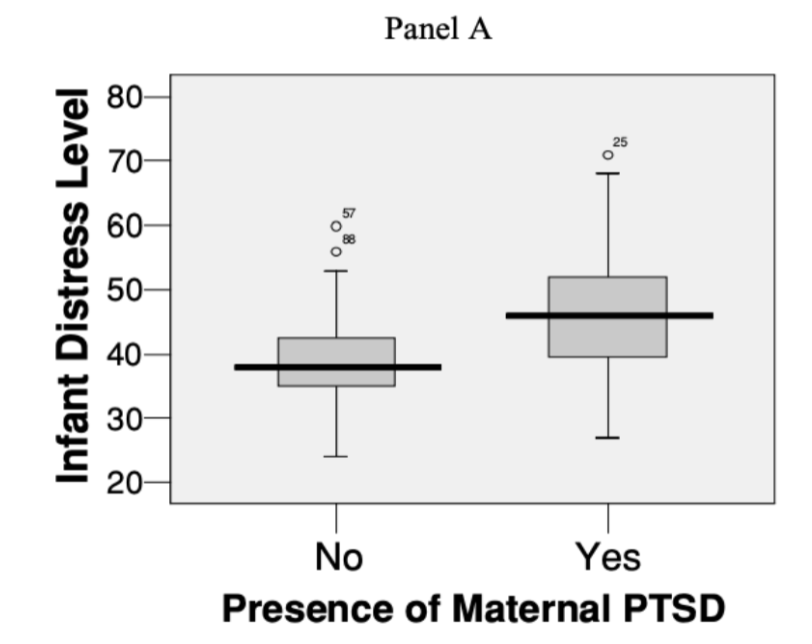
  • Maternal emotional state (more on next slide).

  • Some of these effects can be mediated through the father (e.g., Zika can be sexually transmitted)

  • Complicated area to study:

    • Risk factors can go together (e.g., poverty can increase risks at the level of nutrition, maternal emotional state, disease, teratogen exposure)

    • Some associations (like maternal age) are not linear
<ul><li><p><span style="background-color: transparent;">Maternal age (higher maternal age is associated with more risks, as is very low maternal age)</span></p></li><li><p><span style="background-color: transparent;">Nutrition (e.g., folic acid for spina bifida prevention)</span></p></li><li><p><span style="background-color: transparent;">Disease (e.g., Rubella, Zika)</span></p></li><li><p><span style="background-color: transparent;">Maternal emotional state (more on next slide).</span></p></li><li><p><span style="background-color: transparent;">Some of these effects can be mediated through the father (e.g., Zika can be sexually transmitted)</span></p></li><li><p><span style="background-color: transparent;">Complicated area to study:</span></p><ul><li><p><span style="background-color: transparent;">Risk factors can go together (e.g., poverty can increase risks at the level of nutrition, maternal emotional state, disease, teratogen exposure)</span></p></li><li><p><span style="background-color: transparent;">Some associations (like maternal age) are not linear</span></p></li></ul></li></ul><p></p>
9
New cards

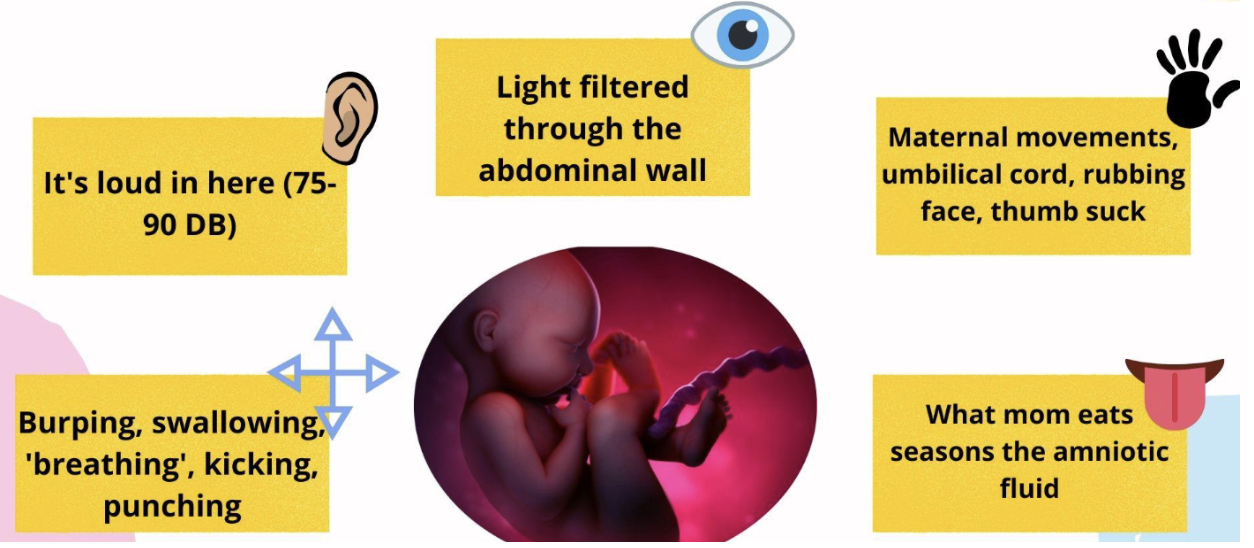
Life in the Womb

knowt flashcard image
10
New cards

WHAT CAN FETUSES LEARN?

  • Newborn infants have been shown to recognize rhymes and stories presented before birth.

  • Newborns prefer sounds, tastes and smells that are familiar because of prenatal experience

11
New cards

DECASPER & FIFER, 1980

  • Baseline rate of sucking bursts established (within 24 hours of birth).

  • For half of the infants, sucking at or above their baseline turned on their mother’s voice reading a story, and sucking below baseline turned on another female voice reading the same story (vice versa for the other half of infants).

  • Infants showed a preference for sucking patterns that produced the maternal voice

12
New cards

Diversity 

  • Developmental Psychologists are interested in individual differences: what makes me different than you (and what doesn’t?).

    • Multifinality vs. Equifinality

      • Children grow up in extremely diverse environments

    • Parenting, attitudes towards children, sleeping arrangements, food, transition to adolescence, culture, natural environment, etc..

    • Preponderance on data from WEIRD populations

13
New cards

thalidomide example

a notorious sedative, developed in the late 1950s, that caused severe birth defects in thousands of children when taken for morning sickness during pregnancy. As a potent teratogen, it disrupted fetal development—notably limb formation (phocomelia)—by binding to the SALL4 protein, leading to widespread developmental abnormalitie

14
New cards

summary

  • prenatal life is a fight for survival

  • great vulnerability, and protective structures only go so far

  • sensitive periods of development highlight the progression of prenatal development there is a lot of growth before birth

  • windows of vulnerability in prenatal development

  • the placenta is not an impenetrable barrier

  • fetuses can learn and remember