SJSU MICR20 CHAPTER 15
 Call Kai
 Learn
Learn Practice Test
 Spaced Repetition
 Match
Match Flashcards
 Knowt Play
1/91

There's no tags or description
Looks like no tags are added yet.
Name | Mastery | Learn | Test | Matching | Spaced | Call with Kai |
|---|
No analytics yet
Send a link to your students to track their progress
92 Terms
third line of defense
- adaptive/acquired immunity
- product of B & T lymphocytes dual system
- immunocompetence
- antigens
immunocompetence
ability of body to interact w/a wide spectrum of foreign substances
antigens
- molecules/substance that elicits immune response in specific lymphocytes
- antigens are molecules, so their chemical structures can vary over a very wide range (potentially exhibiting billions of uniquely different structures & shapes)
- sources of antigens include microorganisms & chemical compounds in environment
2 features that characterize specific immunity
- specificity
- memory
specificity
- antibodies produced
- function only against antigen that they were produced in response to
memory
- lymphocytes are programmed to "recall" their 1st encounter w/an antigen & respond rapidly to subsequent encounters
development of immune response system
- cell receptors or markers confer specificity & identity of a cell
major functions of receptors
- perceive & attach to foreign molecules
- promote recognition of self molecules
- receive & transmit chemical messages among other cells of system
- aid in cellular development
major histocompatibility complex (MHC)
- set of cell surface proteins/receptors essential for acquired immune system in recognition of self & in rejection of foreign molecules
- MHC molecules found on all cells except RBCs
- MHC also known as human leukocyte antigen system
- MHC gene family divided in two groups: class I genes & class II genes
MHC class I gene
- codes for markers that display unique characteristics of self & allow recognition of self molecules & regulation of immune reactions
- required for T lymphocytes to interact w/pathogens
- found on all nucleated human cells
MHC class II gene
- code for immune regulatory receptors found on antigen-presenting cells
- involved in presenting antigen to T cells
- found on some types of WBCs
antigen-present cells
- macrophages
- dendritic cells
- B cells
lymphocyte receptors
- role lymphocytes play in surveillance & recognition is a function of their receptors
- B cell receptors
- T cell receptors
B cell receptors
bind free antigens
T cell receptors
bind processed antigens together with MHC molecules on cells that present antigens to them
development of lymphocytes
- in bone marrow, lymphocytic stem cells differentiate into either T or B cells
- B cells stay in bone marrow
- T cells migrate to thymus
- both T & B cells migrate to secondary lymphoid tissue
- secondary lymphoid tissues constantly be resupplied w/B & T cells
immunoglobulins (Ig)
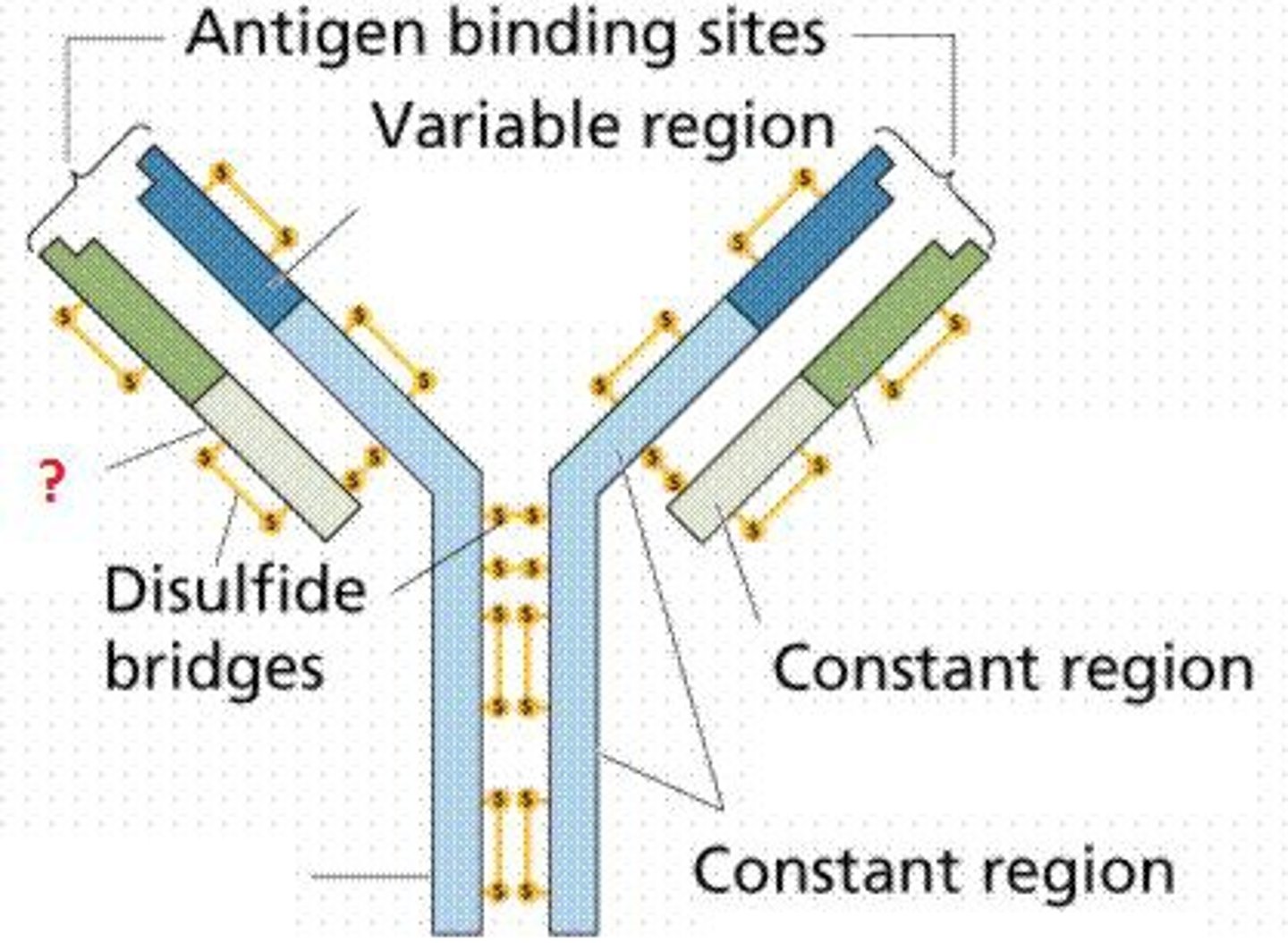
- large glycoproteins that serve as specific receptors of B cells & as antibodies
- composed of 4 polypeptide chains in Y shape
- wide range of variable antigen binding sites at end of the forks formed by these chains is due to variable (V) regions
- constant (C) regions do not vary greatly
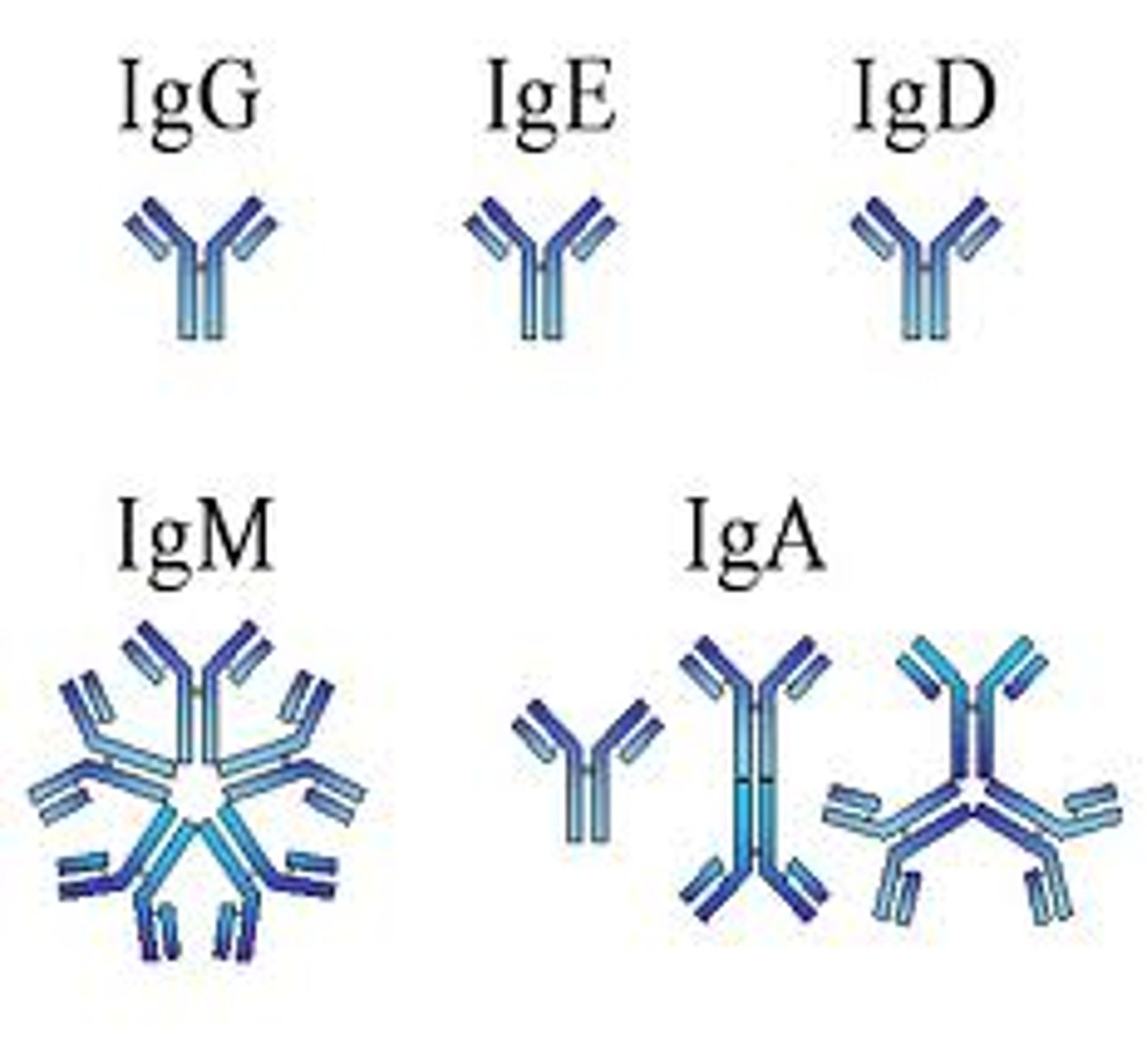
4 polypeptide chains of immunoglobulins
- 2 identical heavy chains (H)
- 2 identical light chains (L)
T cell receptors for antigen
- formed by genetic recombination like B-cell receptors, with variable & constant regions
- 2 parallel polypeptide chains
- unlike B-cell receptors, T-cell receptors are small, not secreted
specific events in T-cell maturation
- maturation directed by thymus gland & its hormones
- different classes of T-cell receptors termed CD receptors
- mature T cells migrate to lymphoid organs
clusters of differentiation (CD)
- CD4 on T helper cells
- CD8 on T cytotoxic cells
specific events in B-cell maturation
- maturation directed by bone marrow sites that harbor stromal cells, which nurture lymphocyte stem cells & provide hormonal signals
- millions of distinct B cells develop & "home" to specific sites in lymph nodes, spleen, & GALT
- come into contact w/antigens throughout life
- have immunoglobulin as surface receptors for antigens
contrasting properties of T cells & B cells
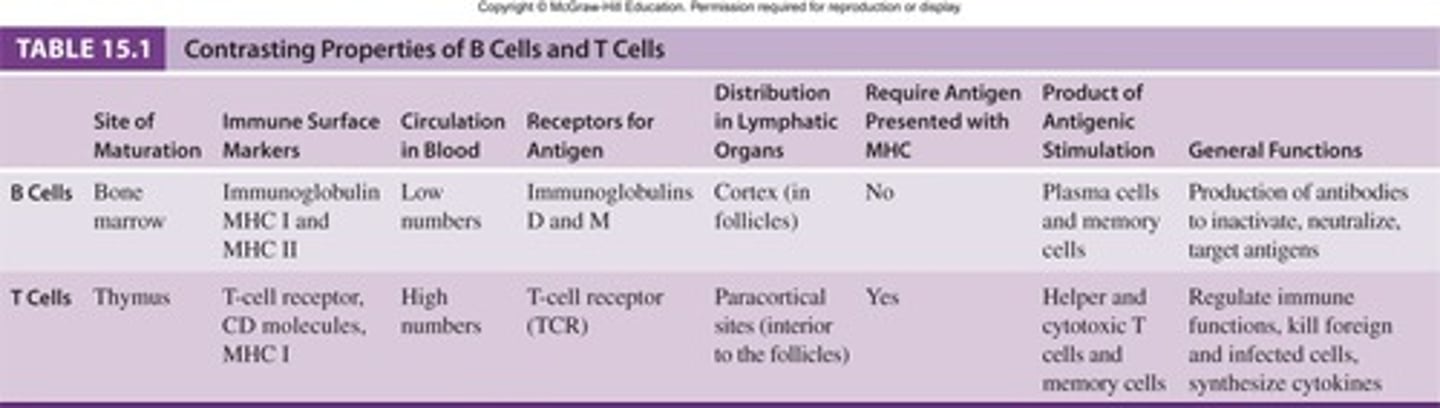
antigenicity
- property of behaving as an antigen
- foreignness, size, shape, & accessibility
characteristics of antigen
- antigenicity
- have many antigenic determinants (epitopes)
epitopes
small molecular group recognized by lymphocytes
alloantigens
- cell surface markers & molecules that occur in some members of same species but not in others
- determine blood group & major histocompatibility profile
- responsible for incompatibilities in blood transfusion or organ grafting
superantigens
- potent T cell stimulators
- toxic shock toxin
- found normally in bacteria & viruses
- form of virulence factor
- provoke overwhelming immune responses by large numbers of T cells regardless of specificity
toxic shock toxin
massive release of cytokines leading to cell death
allergens
antigens that evoke allergic reactions
autoantigens
molecules on self tissues for which tolerance is inadequate
functional categories of antigens
- alloantigens
- superantigens
- allergens
- autoantigens
cooperation in immune reactions to antigens
- basis for most immune responses is encounter b/w antigens & WBCs
- lymph nodes & spleen concentrate the antigens & circulate them so they will come into contact w/lymphocytes
role of antigen processing & presentation
- t cell dependent antigens must be processed by phagocytes called antigen-presenting cells (APC) before their contact with t cells
- antigen presentation involves a direct collaboration among an APC & T helper cell
antigen-presenting cells (APC)
- 3 types: macrophages, dendritic cells (most common), B cells
- APCs modify antigen, then moved to APC surface & bound to MHC class II receptor
interleukin-1 (IL-1)
- cytokine secreted by APC to activate T helper cells
interleukin-2 (IL-2)
- cytokine produced by T helper cell to activate B & other T cells
T cell activation step 1
- APCs are found in large numbers in lymphatic tissues
- they frequently encounter complex antigens such as microbes
- APCs engulf microbes & takes them into intracellular vesicles
- degrade them into smaller, simpler peptides
T cell activation step 2
- antigen peptides complexed w/MHC-II receptors
- transported to APC membrane (inset A)
- antigens readily presented to a T helper cell, which is specific for the antigen being presented
T cell activation step 3
- APC & T helper cell cooperate in formation of a receptor complex that triggers T cell activation (inset B)
- MHC-II antigen on APC binds to T cell receptor
- coreceptor on T cell (CD4) hooks itself to position on MHC-II receptor (ensures simultaneous recognition of antigen (nonself) & MHC receptor (self)
- stimuli provide signal that is relayed to T cell genetic material, thus activating T helper cell
- activated T cell stimulated to release interleukins & assist other lymphocytes in their functions
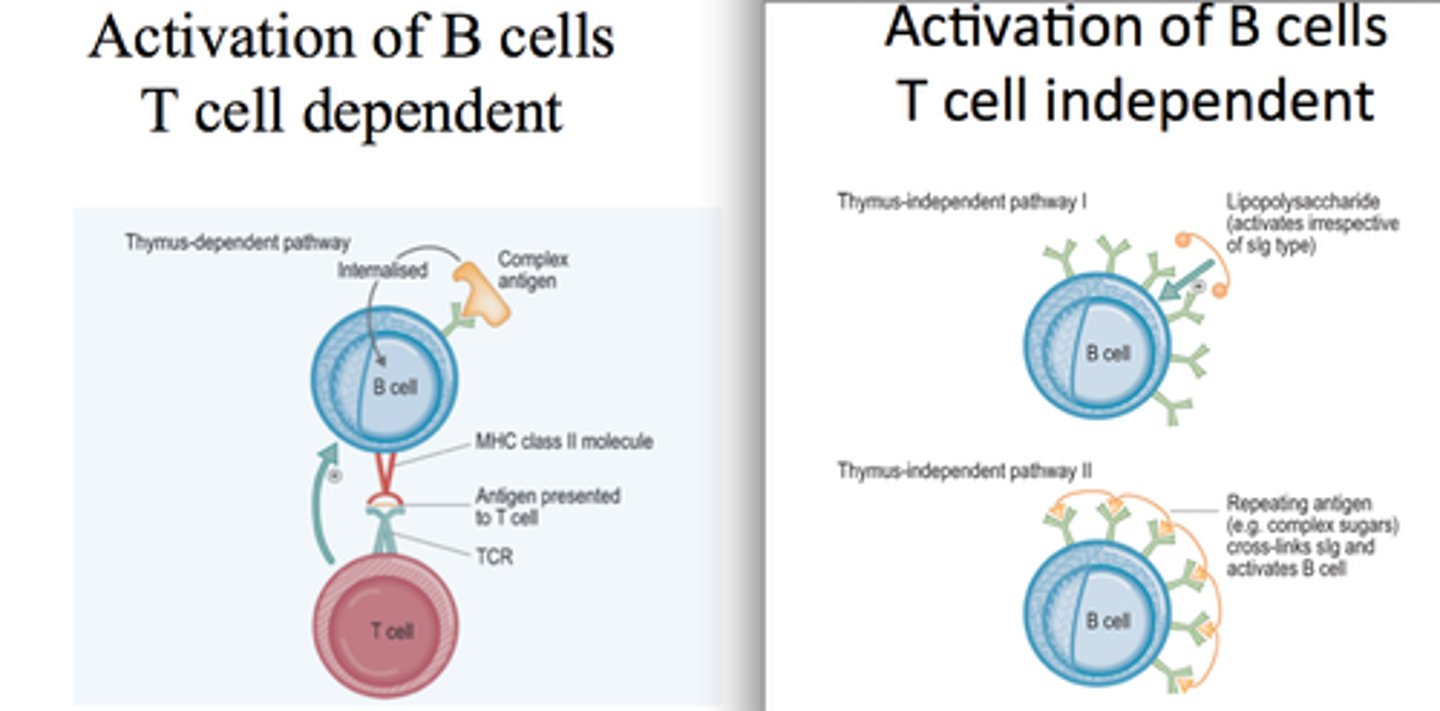
cell-mediated immunity (CMI)
- required direct involvement of T lymphocytes in immune response
- T cells secrete cytokines that act directly on other cells
- before T cells get activated, the antigen must be presented in association w/MHC complex on a APC, to ensure recognition of self
- once activated, T cell transforms in preparation for mitotic divisions to become a subset of effector & memory cells
- differentiation will be determined by APC interleukin secretion
characteristics on subsets of T cells
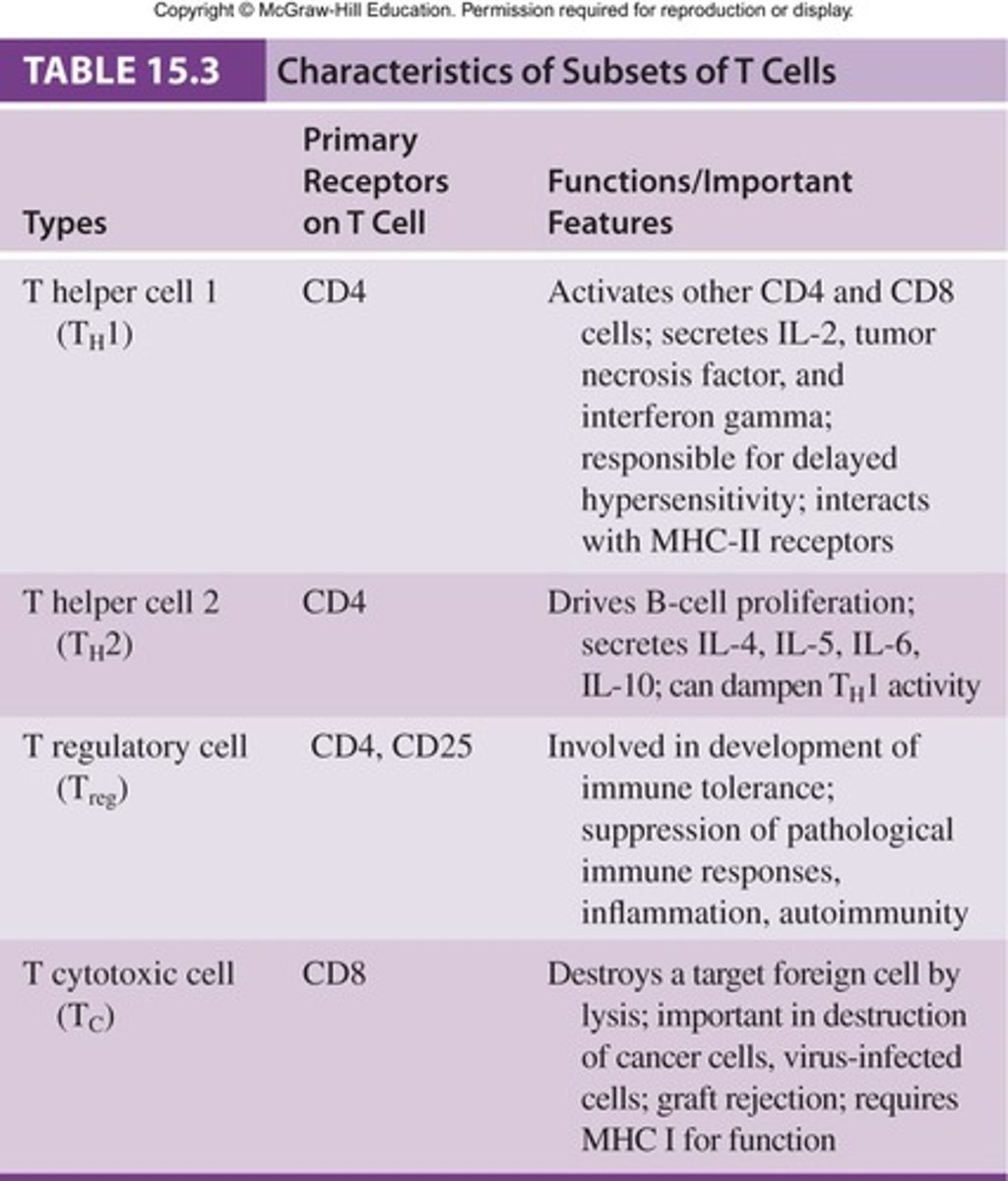
T helper cell/CD4 cells
- express CD4 receptors & are activated by antigen/MHC II
- most prevalent type of T cell in blood & lymphoid organs
- regulate immune reaction to antigens, including other T & B cells
- also involved in activating macrophages & increasing phagocytosis
- differentiation (T helper 1 or T helper 2 cells) depends on what set of cytokines is released from APCs
types of T cells
- T helper cell
- cytotoxic T cells/CD8 cells
- natural killer cells
cytotoxic T cell/CD8 cell
- express CD8 receptors & are activated by antigen/MHC I
- destroy foreign or abnormal cells by secreting perforins & granzymes
natural killer cell
- lack specificity
- circulate through spleen, blood & lungs
- release perforins
- granzyme degrade foreign cell proteins
- foreign cell dies by apoptosis
- macrophage engulfs & digests dying cell
perforin
polymerize & form a hole in foreign cell membrane
granzymes
enter perforin hole & degrade foreign cell proteins
reaction of T cell to superantigen
- release massive amount of cytokines
- blood vessel damage
- toxic shock
- multiorgan failure
antibody structure & functions
- all antibodies have two functionally distinct segments/fragments
- antigen binding fragments
- crystallizable fragment
antigen binding fragments (Fabs)
- "arms" with their amino-terminal end as antigen-binding sites
- variable regions of heavy & light chains
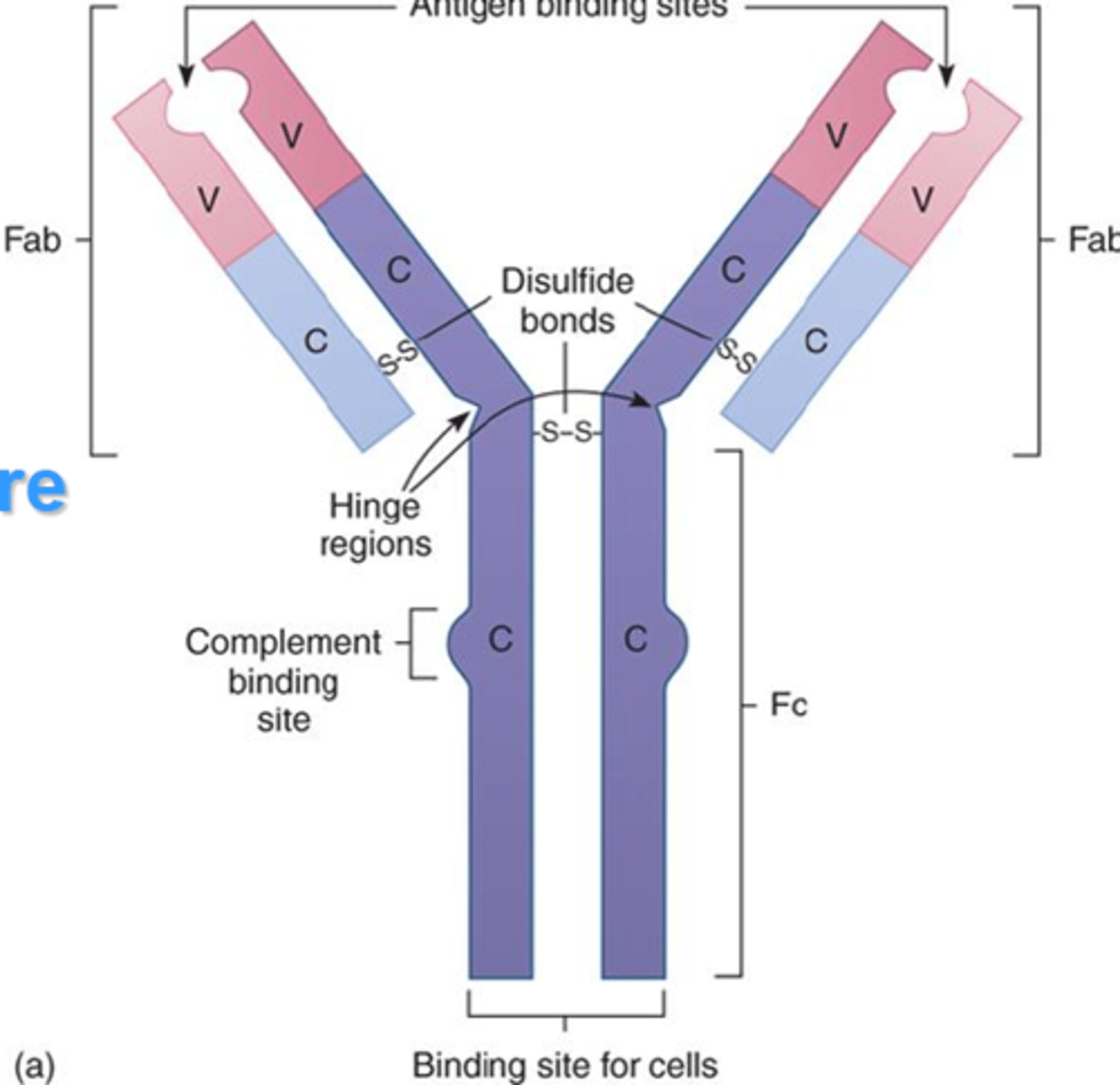
crystallizable fragment (Fc)
- binds to various cells & molecules of immune system
antigen-antibody binding
- Fab antigen-binding is composed of hypervariable regions w/an extremely variable amino acid content
- groove of this antigen binding site has specific 3-dimensional fit for the antigen
- specificity of the 2 Fab sites is identical for each antigen
- Ig molecule can bind antigenic determinants on same cell or on 2 separate cells & thereby link
principle activity of antibodies
unite with, immobilize, call attention to, or neutralize the antigen for which it was formed
opsonization
- process of coating microorganisms or other particles w/specific antibodies so they are more readily recognized by phagocytes
- carried out by antibodies called opsonins
neutralization
antibodies fill surface receptors on a virus or the active site on a microbial enzyme to prevent it from attaching
agglutination
- antibody aggregation
- cross-linking cells or particles into large clumps
complement fixation
activation of the classical complement pathway can result in specific rupturing of cells & some viruses
precipitation
aggregation of particulate antigen
functions of crystallizable fragment (Fc)
- Fc fragment binds to cell membranes
- macrophages, neutrophils, eosinophils, mast cells, basophils, lymphocytes
- regions on Fc portion in certain antibodies fix complements
- binding of Fc may cause release of cytokines
monoclonal antibodies
- originate from a single clone & have single specificity for antigens
- pure preparation of antibody
- single specificity antibodies formed by fusing a mouse B cell w/cancer cell
- used in diagnosis of disease, identification of microbes & therapy
immunity categories by mode of acquisition
- active immunity
- passive immunity
- natural immunity
- artificial immunity
active immunity
- results when a person is challenged w/antigen that stimulates production of antibodies
- creates memory, takes time, & is lasting
passive immunity
- performed antibodies are donated to an individual
- does not create memory
- acts immediately
- short term
natural immunity
acquired as part of normal life experiences
artificial immunity
acquired through a medical procedure such as a vaccine
origin of natural active immunity
- getting infection
- after recovering from infectious disease, a person may be actively resistant to reinfection
- period varies according to disease
origin of natural passive immunity
- mother to child
- IgG antibodies from maternal bloodstream can pass or be actively transported across placenta to fetus
- IgA antibodies from mother's milk react against microbes entering intestine
origin of artificial active immunization
- vaccination
- microbial (antigenic) stimulus, which triggers immune system to produce antibodies & memory cells
origin of artificial passive immunization
- immunotherapy
- patient at risk for acquiring a particular infection is administered a preparation that contains specific antibodies against that infectious agent
providing immune protection through therapy
- antisera & antitoxins of animal origin
- artificial active immunity
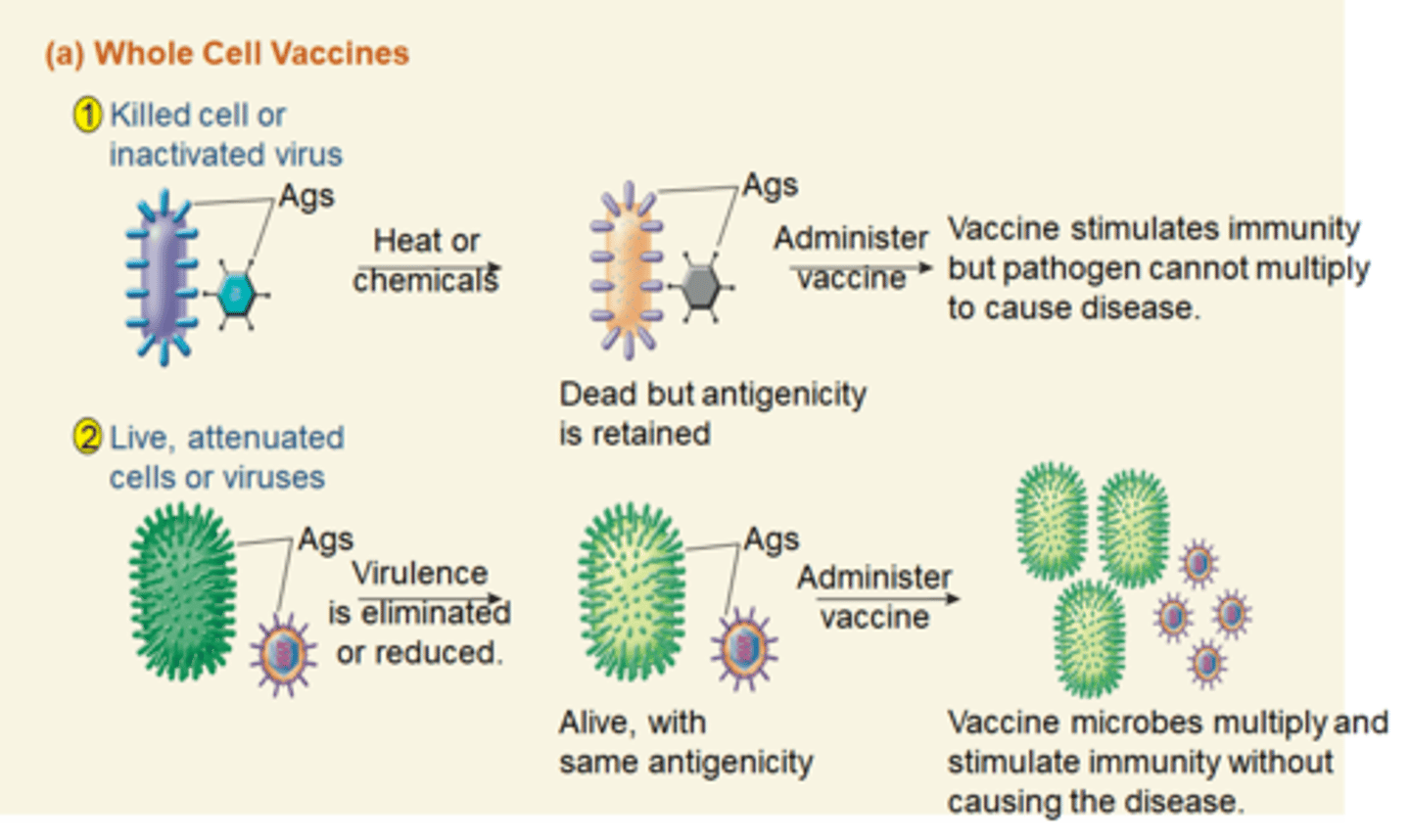
most vaccines prepared from
- killed whole cells or inactivated viruses
- live, attenuated cells or viruses
- antigenic molecules derived from bacterial cells or viruses
- genetically engineered microbes or microbial agents
checklist of requirements for an effective vaccine
- low level of adverse side effects or toxicity & not cause serious harm
- protect against exposure to natural, wild forms of pathogen
- stimulate both antibody (B cell) response & cell mediated (T cell) response
- long-term, lasting effects (produce memory cells)
- work w/minimal doses or boosters
- inexpensive, have a relatively long shelf life, easy to administer
advantages of live preparations
- organisms can multiply & produce infection (but not disease) like the natural organism
- confer long-lasting protection
- usually require fewer doses & boosters
disadvantages of live preparations
- require special storage
- can be transmitted to other people
- can conceivably mutate back to virulent strain
whole cell vaccines
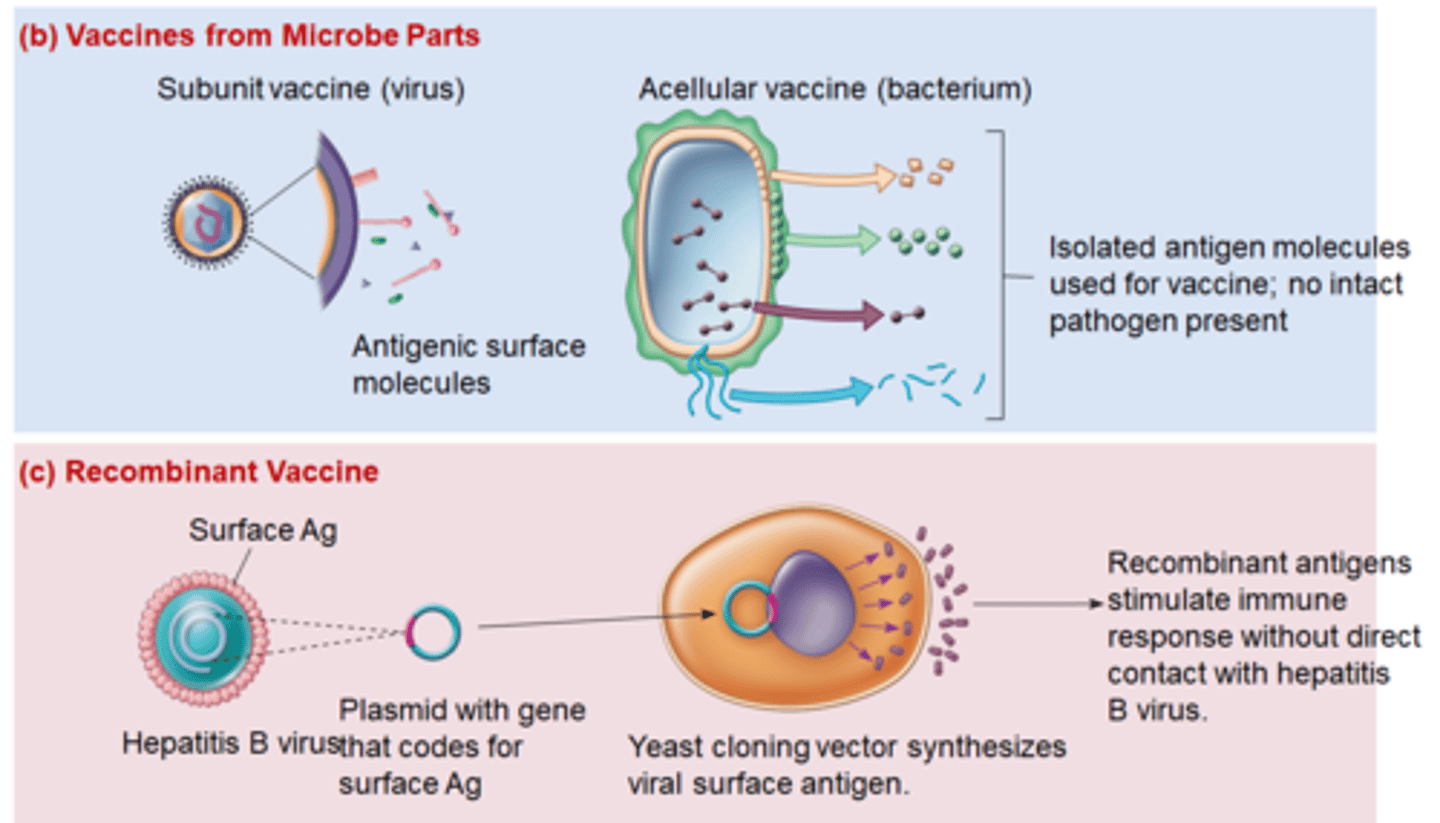
vaccines from microbe parts
- exact antigenic determinants can be used when known such as: capsules, surface protein, exotoxins
- antigen can be taken from cultures, produced by genetic engineering, or synthesized
capsules
- pneumococcus
- meningococcus
surface protein
- anthrax
- hepatitis B
exotoxin
- diphtheria
- tetanus
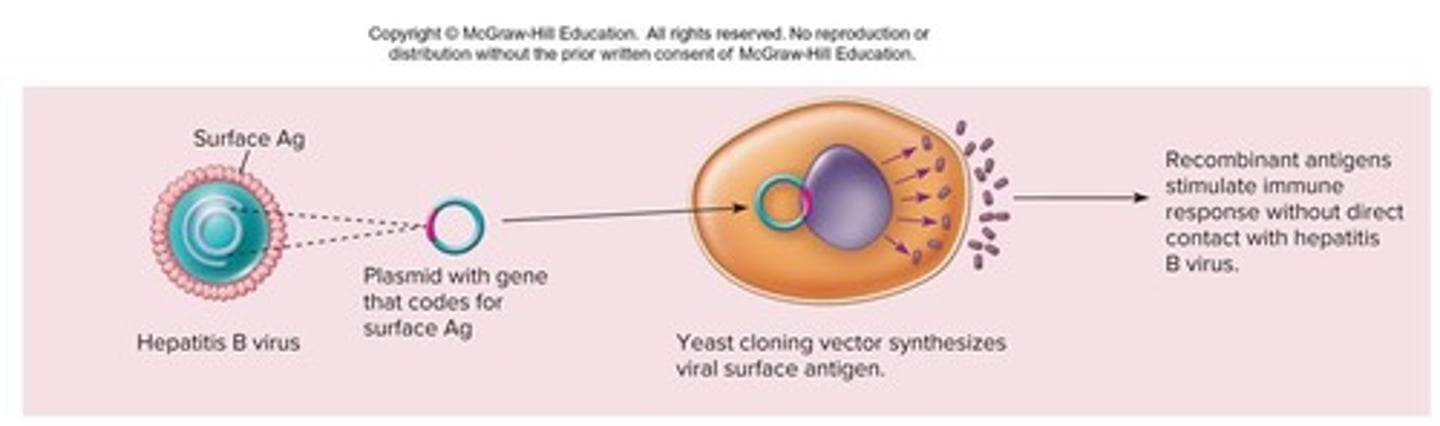
recombinant vaccine
- insert genes for pathogen's antigen into plasmid vector, & clone them in an appropriate host
- stimulated clone host to synthesize & secrete a protein product (antigen), harvest & purify protein
- "trojan horse" vaccine
strategies in vaccine design
- whole cell vaccines
- vaccines from microbe parts
- recombinant vaccine
"trojan horse" vaccine
- genetic material from pathogen is inserted into a live carrier nonpathogenic
- recombinant expresses foreign genes
DNA vaccines
- create recombination by inserting microbial DNA into plasma vector
route of administration of vaccines
- most administered by injection
- few oral, nasal
- some vaccines require an adjuvant
- stringent requirements for development of vaccines
adjuvant
compound to enhance immunogenicity & prolong retention of antigen
side effects of vaccines
- more benefit than risk
- possible side effects include local reaction at injection site, fever, allergies; rarely back-mutation to a virulent strain, neurological effects
- when known or suspected adverse effects have been detected, vaccines are altered or withdrawn
herd immunity
- immune individuals will not harbor it, reducing occurrence of pathogens
- less likely that a nonimmunizied person will encounter the pathogen
cytokines
- broad category of signaling proteins that mediate & regulate immunity, inflammation, & hematopoiesis
cytokine functions
- cell communication
- inflammation regulation
- immune activation
- hematopoiesis
chemokines
- subset of cytokines specifically involved in chemotaxis of immune cells to site of infections or inflammation
types of cytokines
- interleukins
- tumor