Pure A1&2 Level Maths OCR tiny little things to remember
 Call Kai
 Learn
Learn Practice Test
 Spaced Repetition
 Match
Match Flashcards
 Knowt Play
1/42

There's no tags or description
Looks like no tags are added yet.
Name | Mastery | Learn | Test | Matching | Spaced | Call with Kai |
|---|
No analytics yet
Send a link to your students to track their progress
43 Terms
set notation and interval notation for -4
set notation: {x: x>4} U {x: x<9}
interval notation: (-4,9)
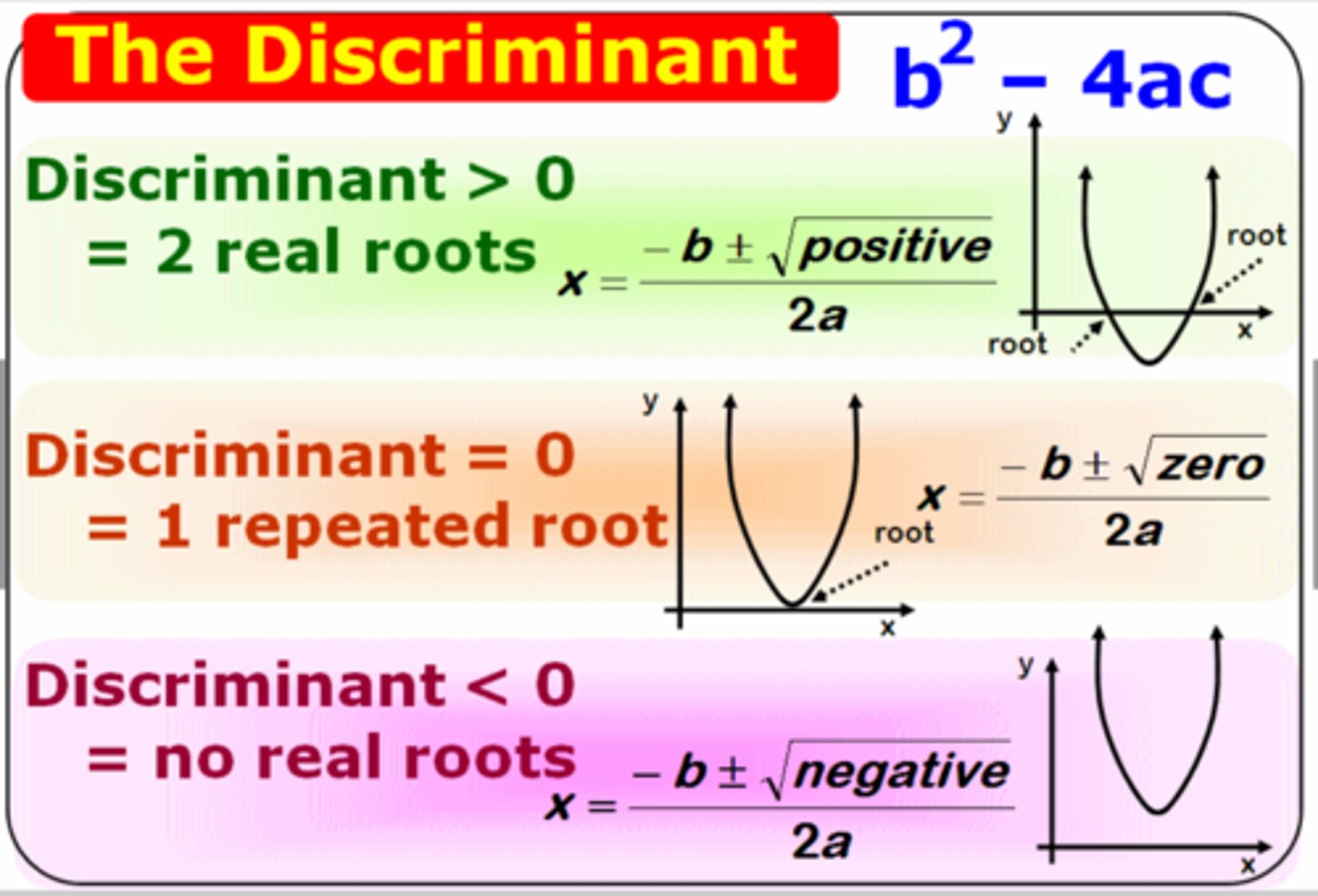
the discriminant
graph reflections
reflection in x axis: y = -f(x)
reflection in y axis: y = f(-x)
if you times the gradients of two perpendicular lines, what do you get
-1
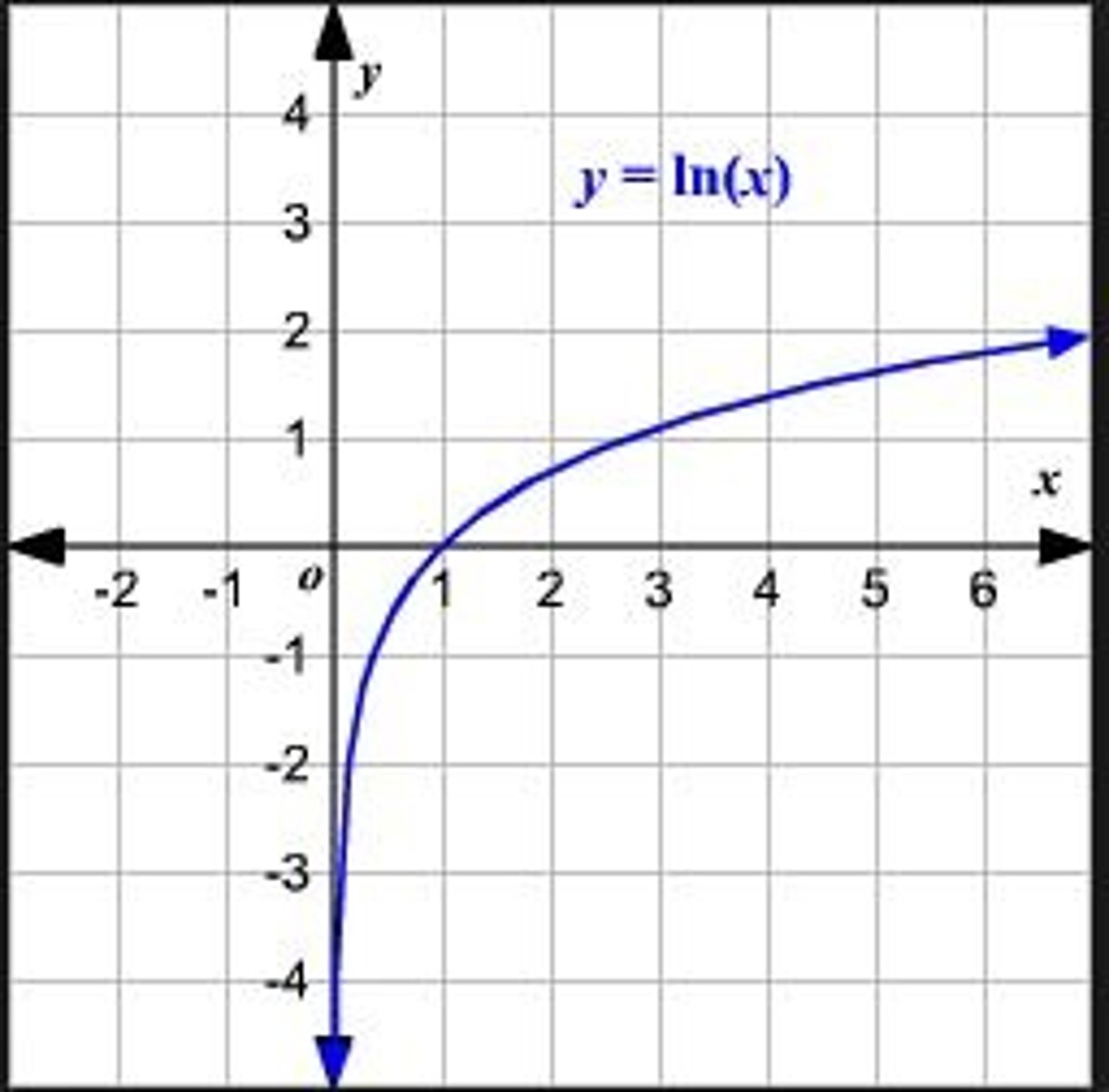
graph of y = ln(x)
graph of y = a^x
x-axis is an asymptote, y-intercept is 1
what is sinx in terms of cosx and vice versa (A1 formula)
sinx == cos(90-x)
cosx == sin(90-x)
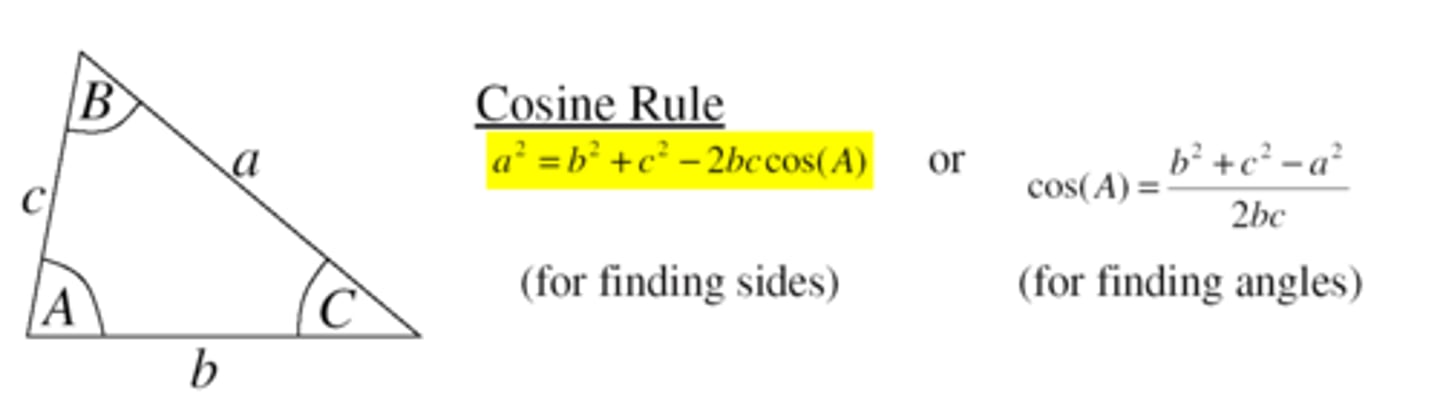
cosine rule both ways
what do we know when dy/dx = 0
and when d2y/dx2 = 0
when dy/dx = 0, we know there is a stationary point
when d2y/dx2 = 0, we know that no conclusion can be drawn
what do you do for integration if the curve goes below the x-axis
you need to find the areas of the parts below and above seperately
what to look out for when criticising proofs
flaws in logic, mistakes in algebra, mistakes in arithmatic
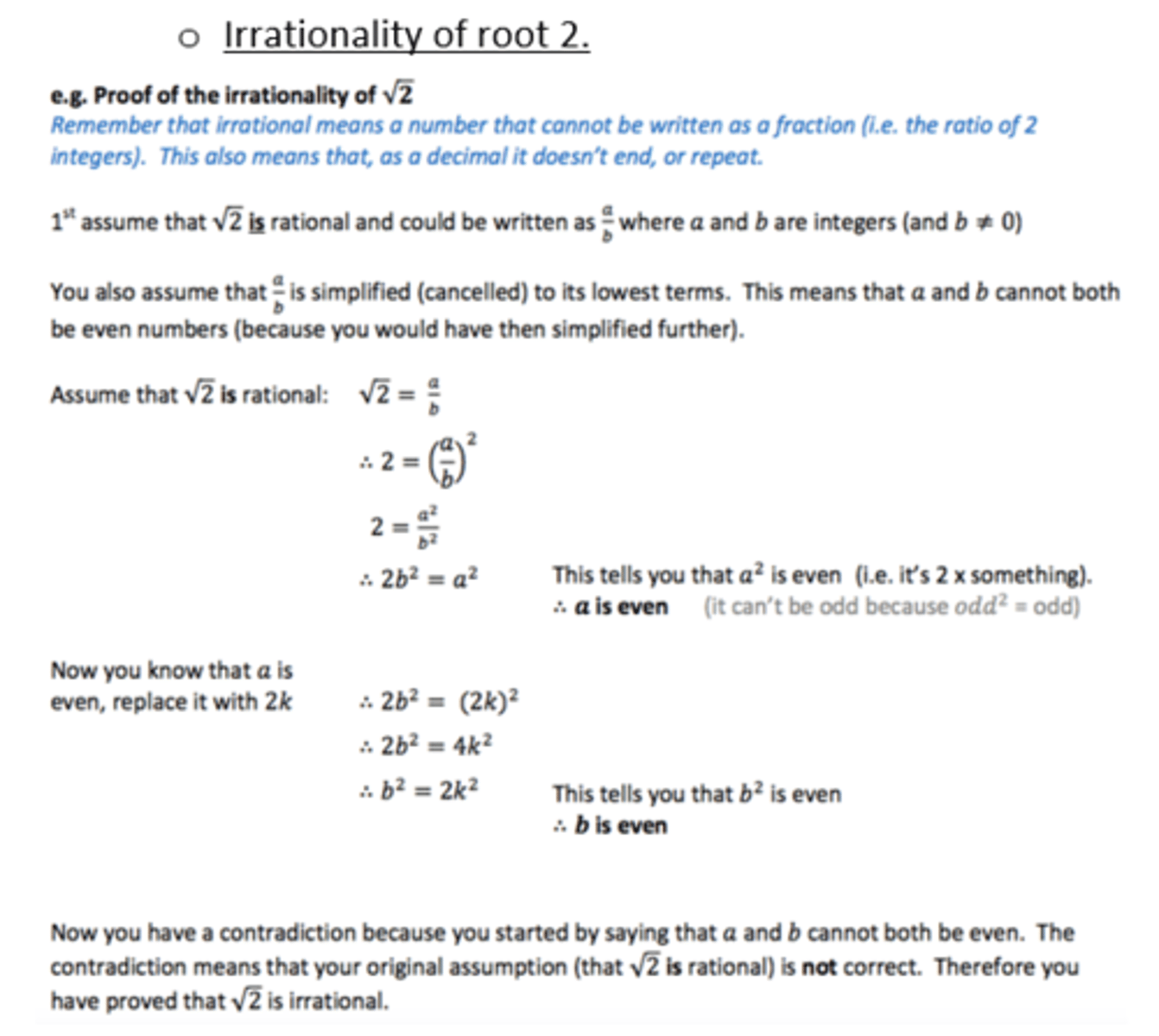
proof that root 2 is irrational
one-one, many-one , one-many
a functions has to be either:
- one-one (every y value has one x value)
- many - one (one y value that comes from more than one x value)
a mapping is not a function if it is:
- one-many (a single x value corresponds to more than one y value)
what happens if you input the inverse function to its functions and vice versa
f(f-1(x)) == f-1(f(x)) == x
what types of functions have inverse functinos
only one-one functions
similarities between y = f(x) and y = f^-1(x)
- reflection on the line y = x
- the domain of f^-1(x) == range of f(x)
- range of f^-1(x) == domain of f(x)
when you are doing two vertical transformations or two horizontal transformations, what order do you do them in
- for y = pf(x) + c:
- stretch is performed before translation
- for y = f(qx + d):
- translation is performed before stretch
*remember the order doesn't matter if its one horizontal and one vertical and vice versa
for graph of y = I mx + c I where is it reflected and where is the vertex
-part of graph below the x-axis is reflected over the x-axis
- vertex at (-c/m , 0)
how do you express this inequality without the modulus symbol
I x-a I < b
I x-a I < b is the same as:
a-b < x < a+b
formula for a arithmetic sequence and geometric sequence
arithmetic: Un = a + (n-1)d where a = first term, d = difference
geometric: Un = ar^(n-1)
*remember for geometric, if mod(r) < 1, the series converges and it has a sum to infinity
polynomial division layout and requirements of the degrees of the powers
P(x)/ax+b == Q(x) + r/ax+b
-where Q(x) is the quotient and r is the remainder
- you can only do polynomial division if degree of numerator is same or greater than degree of denominator
* if degree of denominator is greater, than you do partial fractions
how to rewrite (a + bx)^n so that you can do general binomial expansion, and what is it valid for
(a + bx)^n == a^n( 1 + bx/a)^n
this expansion is valid for mod(bx/a) < 1
for graph y = a sinb(x+c) + d what does each letter represent
for y = a sinb(x+c) + d
mod(a) = amplitude
d = central value
d- mod(a) = minimum value
d + mod(a) = maximum value
2pi/mod(b) = period
domain and range of inverse trig functions
arcsinx: domain [ -1, 1 ] range [-90 , 90]
arcosx: domain [ -1, 1 ] range [ 0 , 180 ]
arctanx: domain R range [ -90 , 90 ]
*remember these are just the opposites of domain/range of normal trig functions
equation for length of an arc and area of a sector
l = rx
A = 1/2 r^2 x
where r is radius and x is angle in radians
trig identity for 2cos^2(x) and 2sin^2(x) to remove the 'squared' in integration
2cos^2(x) == 1 + cos2x
2sin^2(x) == 1 - cos2x
the two Pythagorean identities for reciprocal trigonomic functions
sec^2(x) == 1 + tan^2(x)
cosec^2(x) == 1 + cot^2(x)
how to differentiate a ln(bx + c)
and integrate a/bx+c
f'(a ln(bx+c)) = ab/bx+c
integral = a/b (lnbx+c)
chain rule
used to differentiate composite functions
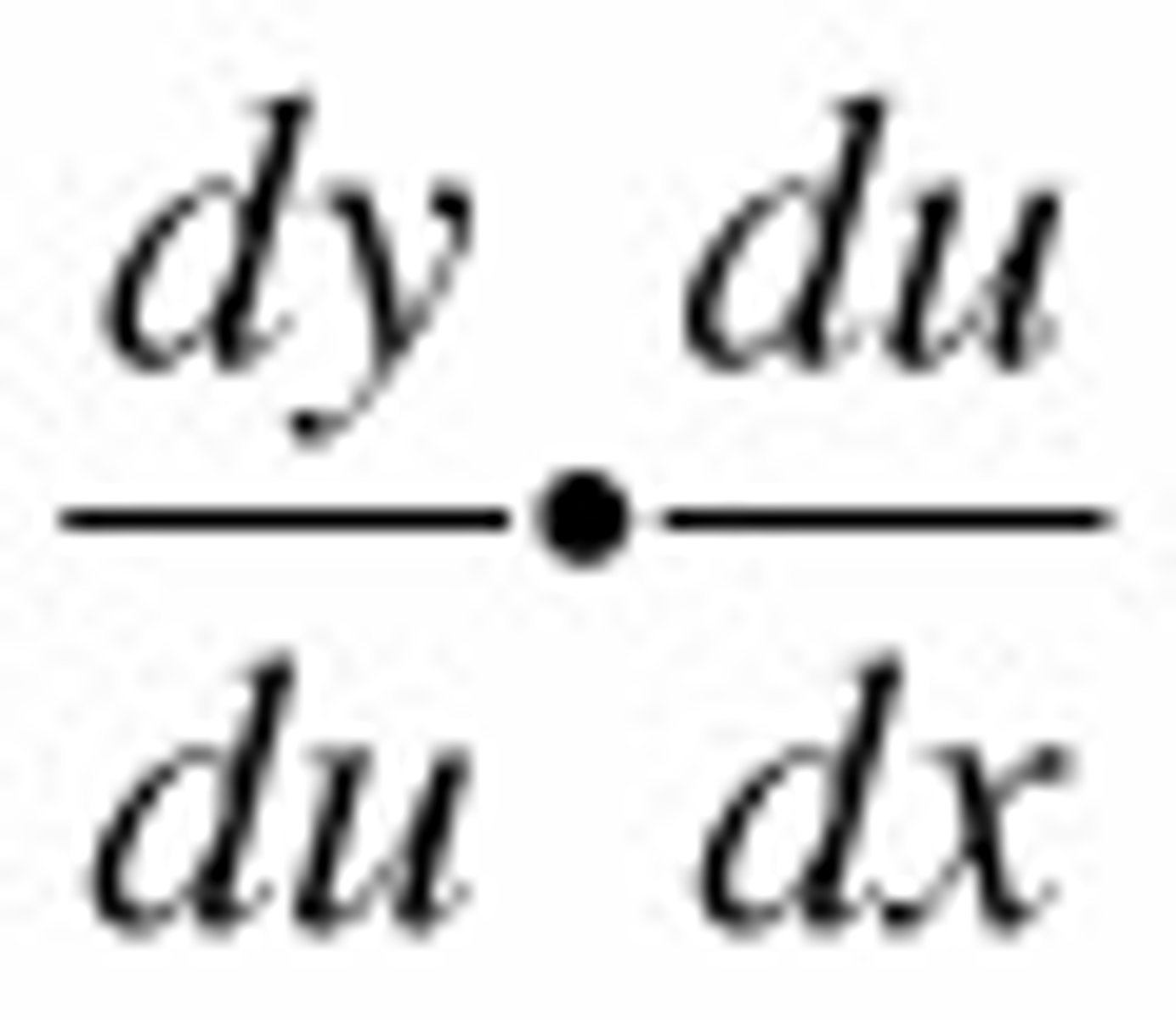
derivative of a^(kx)
a^(kx) ln(a^k)
how to differentiate y in respect to x (implicit differentiation)
d/dx (f(y)) == f'(y) x dy/dx
e.g. d/dx(y) = 1 dy/dx
steps for integration by subsitution
1. differentiate substitution and express dx in terms of du
2. simplify resulting expression
3. find the limits for u
inverse chain rule
integral of f(x)(ax+b)
is 1/a g(x) (ax+b) where g(x) is the integral of f(x)
integral of f'(x)/f(x)
lnf(x) + c
what substitution should you use to find the integral of sqrt(a^2 - x^2)
x = asinu
difference of the second derivative for a convex curve vs a concave curve and at a point of inflection
- a convex curve has f''(x) > 0
- a concave curve has f''(x) < 0
- at inflection f''(x) = 0 and the curve changes from convex to concave or vice cersa
how to integrate a parametric equation with respect to t to find the area bound by the x axis
A = y x (dx/dt) dt
where A = the area
*make sure the parameters are in terms of t
how to find the area between the y-axis and the lines y =a and y = b and the curve g(y)
A = integral of g(y) .dy
where the parameters are a and b
how to solve most differential equations
separate the variables
* initial conditions can be used to find the constant of integration
limitations of the sign change method (when may it not work)
- if the graph of f(x) has a vertical asymptote
- if it has a break
- if it has a tangent to the x-axis
when does an iteration converge and when does it diverge
- converges if mod(g'(x)) < 1 near the root
- diverges if mod(g'(x)) > 1 near the root
*if the equation has several roots, different rearrangements might converge to different roots
rectangle method vs trapezium
- rectangle rule will have an upper bound and lower bound for the area, as the rectangles get smaller the bounds will get closer together. The actual area is the limit of the sum of the rectangles
- for the trapezium rule, you need fewer trapezia than rectangles to achieve the same level of accuracy
Still learning (9)
You've started learning these terms. Keep it up!