PYB304 Behavioural Neuroscience: Introduction and Brain Structures
 Call Kai
 Learn
Learn Practice Test
 Spaced Repetition
 Match
Match Flashcards
 Knowt Play
1/46

Earn XP
Description and Tags
A collection of vocabulary flashcards covering the introductory concepts and anatomical structures of the brain as presented in the first week of PYB304 Behavioural Neuroscience.
Name | Mastery | Learn | Test | Matching | Spaced | Call with Kai |
|---|
No analytics yet
Send a link to your students to track their progress
47 Terms
Behavioural Neuroscience
Also termed 'biopsychology' or 'physiological psychology', it is the study of the biological and neural basis of behaviour in humans and animals, examining the interplay between the brain, behaviour, and the environment.
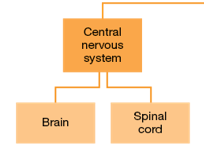
Central Nervous System (CNS)
The division of the nervous system located within the skull and the spine.
Peripheral Nervous System (PNS)
The division of the nervous system located outside the skull and the spine, including nerves within the spinal cord.
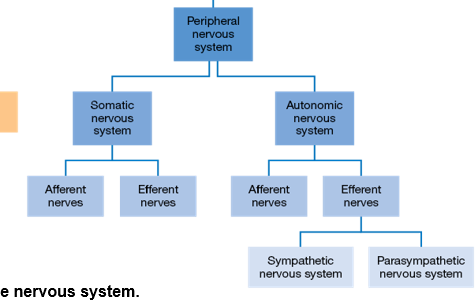
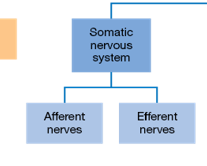
Somatic Nervous System (SNS)
A division of the Peripheral Nervous System (PNS) that interacts with the external environment.
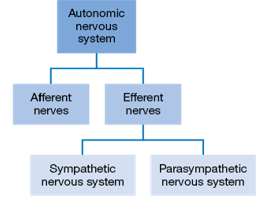
Autonomic Nervous System (ANS)
A division of the Peripheral Nervous System (PNS) that regulates the body’s internal environment.
Afferent nerves
Nerves that carry signals towards the Central Nervous System (CNS); also known as signals.
external=5 senses to CNS vise versa
Efferent nerves
Nerves that carry signals away from the Central Nervous System (CNS); also known as' signals.
internal=signals from internal organs to CNS vise versa
Sympathetic Nervous System
The part of the Autonomic Nervous System (ANS) responsible for psychological arousal states, projecting from the lumbar and thoracic sections of the back.
Parasympathetic Nervous System
The part of the Autonomic Nervous System (ANS) responsible for psychological relaxation (PEACE), projecting from the brain or the sacral areas of the spine.
Adult Human Brain Weight (DONT HAVE TO KNOW?)
The brain weighs about 3pounds (1.3-1.4kg), which is about 2% of total body weight.
Neurons and Connections
The adult human brain has about 90billion neurons and an estimated 100trillion connections.
Meninges (3)
The three membranes that provide protection around the brain: Dura Mater, Arachnoid meninx, Pia Mater,
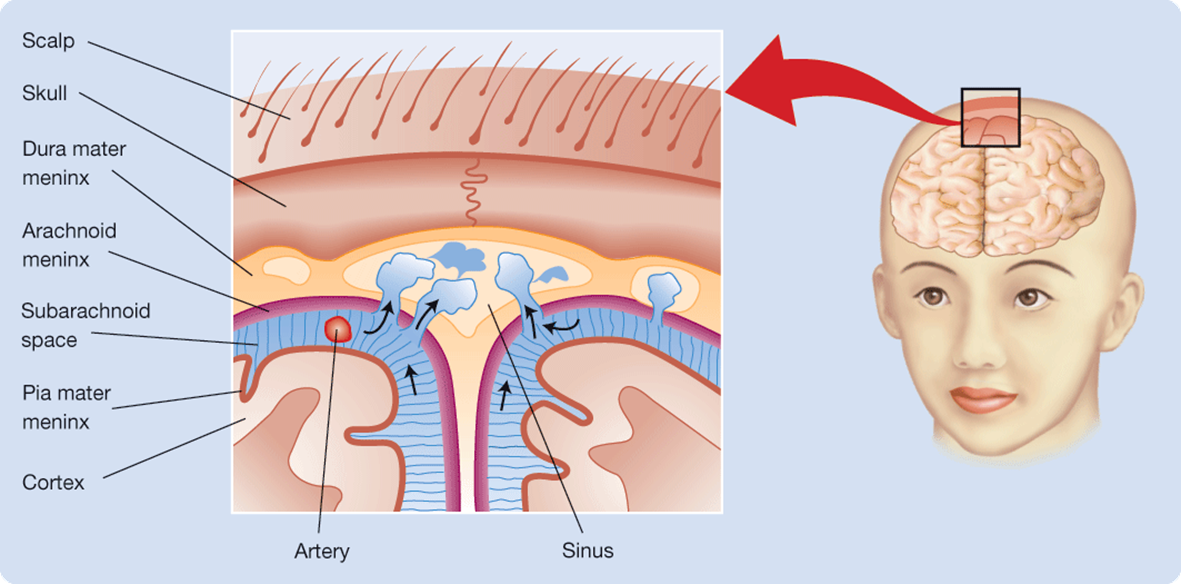
Dura Mater
The 'tough membrane' that serves as the outermost layer of the meninges.
Arachnoid meninx
The 'spider-like' middle membrane of the meninges.
Pia Mater
The delicate innermost membrane of the meninges that sticks directly to the surface of the cerebral cortex.
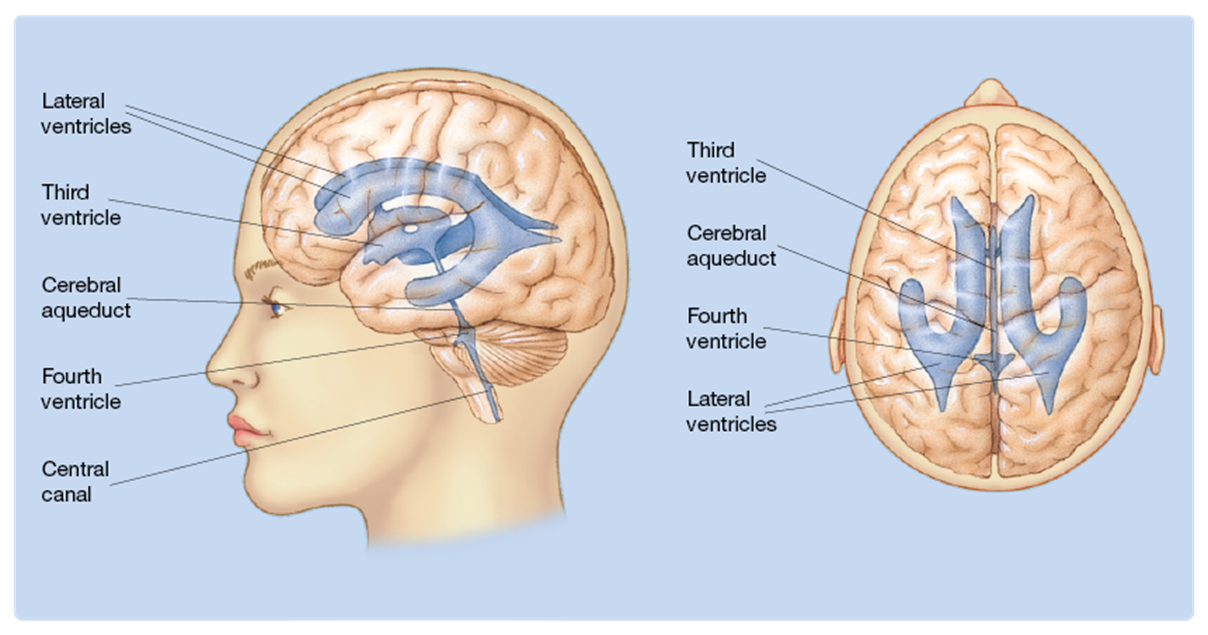
Cerebrospinal fluid (CSF)
produced by?
fills what? (3)
what does it act as?
what two meninges is it in between?
*Fluid produced by the Choroid Plexus
*that fills the subarachnoid space, the central canal of the spinal cord, and the 4 cerebral ventricles;
*it acts as a shock absorber.
*arachnoid meninx and pia mater
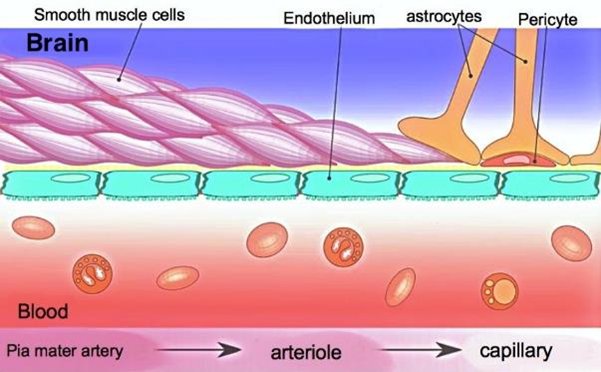
Blood-Brain Barrier
Specially structured cerebral blood vessels with tightly packed walls that prevent the influx of large or toxic molecules while allowing the passage of small molecules, lipid-soluble molecules, gases, and important ones (glucose)
•Can be penetrated (e.g., therapeutic/recreational drugs)
Anterior - Posterior
front to back sequence. (forehead to back of head)
Dorsal - Ventral
toward the top or back versus under, belly, or front. (top of brain-bottom of brain but changes with spine to chest-back)
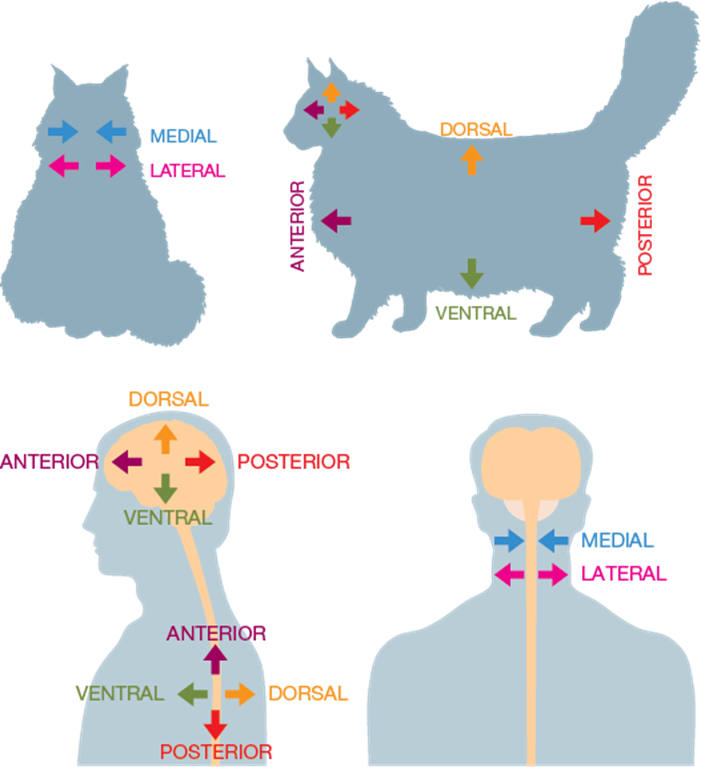
Medial (M) - Lateral
towards the midline (M) versus away from the midline.
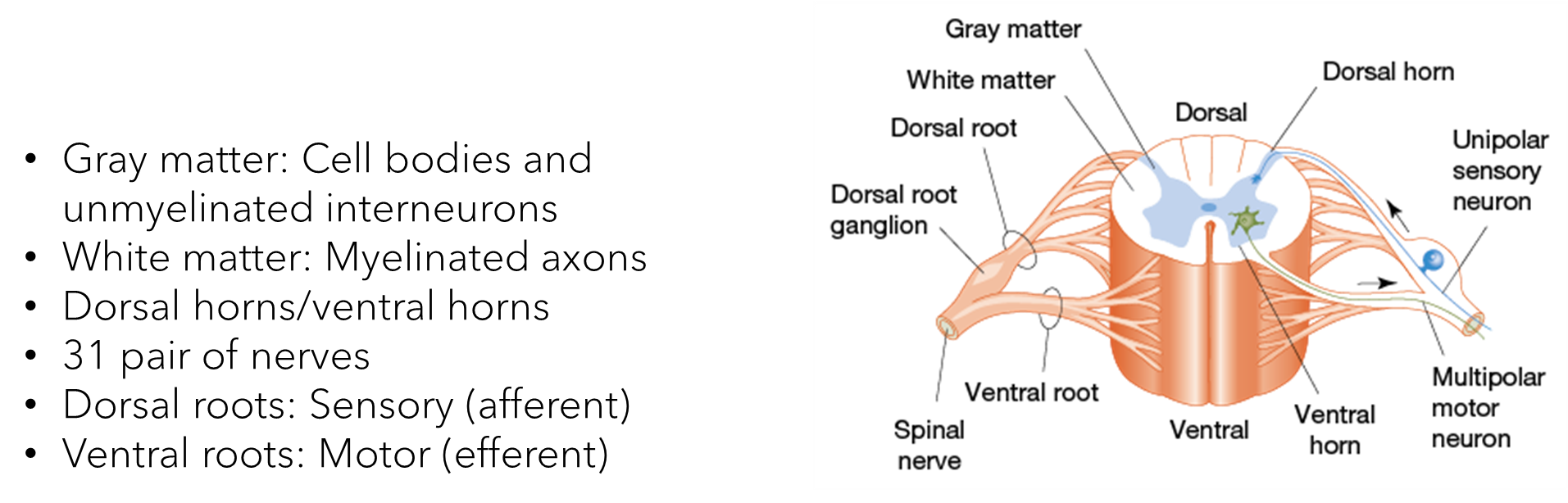
Gray matter what does it consist of?
Spinal cord tissue consisting of cell bodies and unmyelinated interneurons.
White matter- what does it consist of
Spinal cord tissue consisting of myelinated axons.
Dorsal roots
The part of the 31 pairs of spinal nerves that carry sensory (afferent) signals.
Ventral roots
The part of the 31 pairs of spinal nerves that carry motor (efferent) signals.
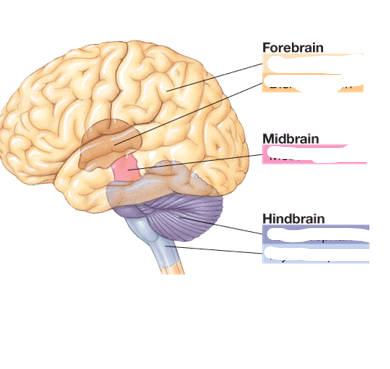
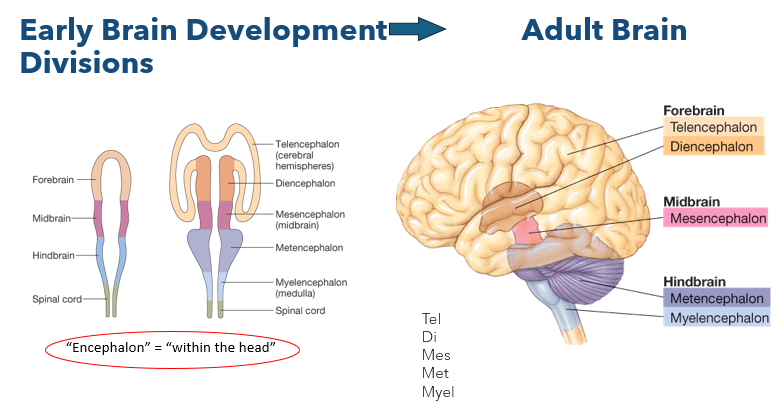
Telencephalon- what does it contain? (5 (2))
A division of the forebrain (cerebral hemispheres) containing the major fissures, gyri, lobes, limbic system, and basal ganglia.
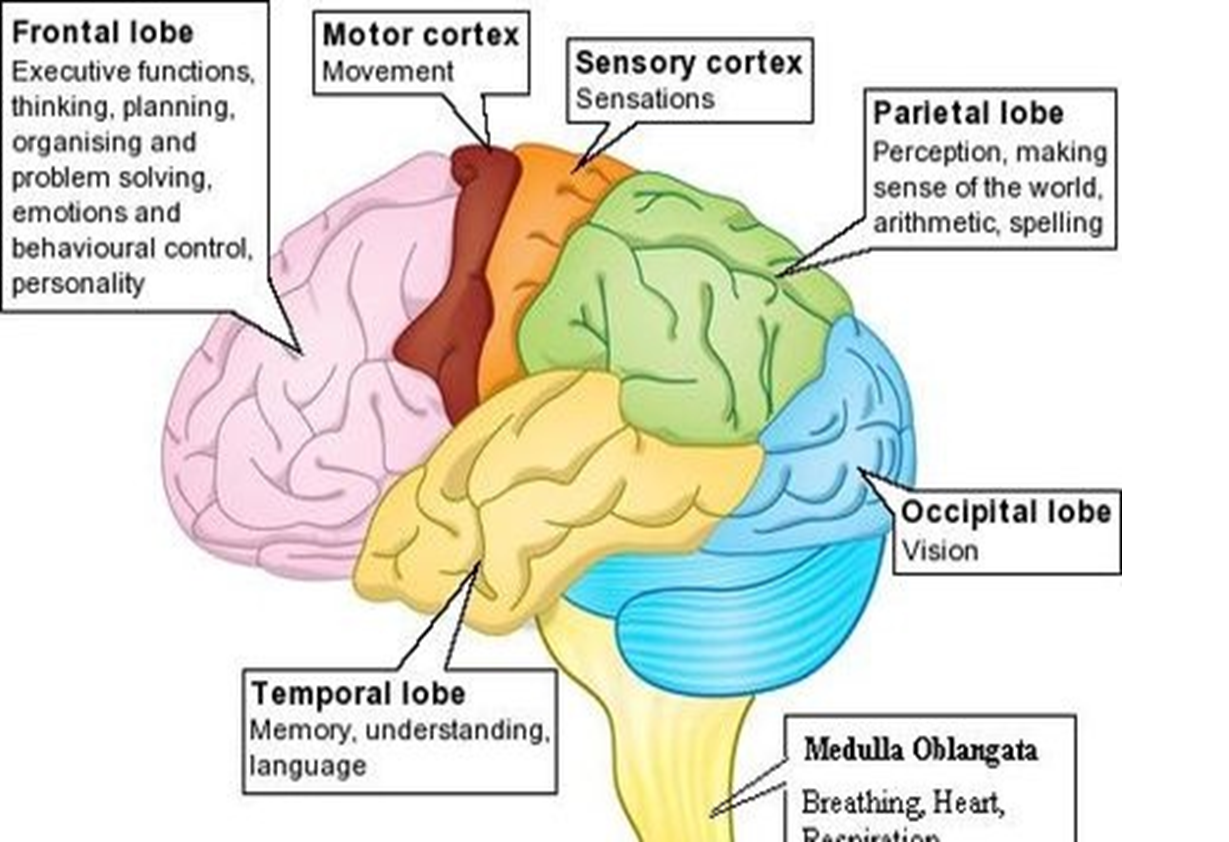
Diencephalon- what does it contain (2)
A division of the forebrain containing the Thalamus and Hypothalamus.
Mesencephalon- what does it contain (2)
The division of the brain known as the midbrain, containing the Tectum and Tegmentum.
Metencephalon- what does it contain (2)
met=met club what is another 2 valley clubs?
A division of the hindbrain containing the Pons and the Cerebellum.
met and prohibition and casa as in mi casa= M and P and C
Myelencephalon (Medulla)- what does it contain?
The division of the hindbrain comprised largely of tracts carrying signals between the brain and body; contains the Reticular formation.
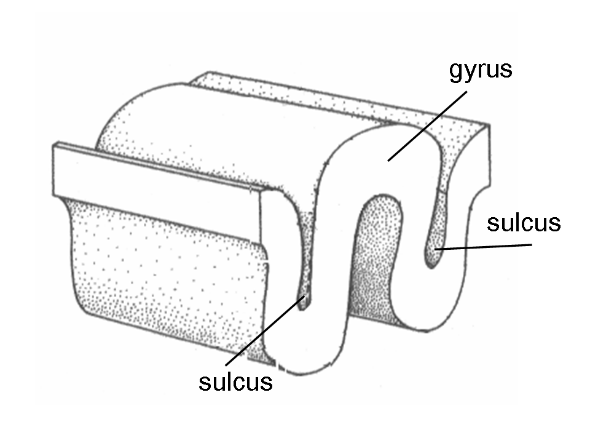
Sulcus
A small furrow or groove on the surface of the brain.
Fissure
A large furrow or groove on the brain's surface,
such as the longitudinal fissure that separates the two hemispheres.
Gyrus
A bump or ridge on the surface of the brain.
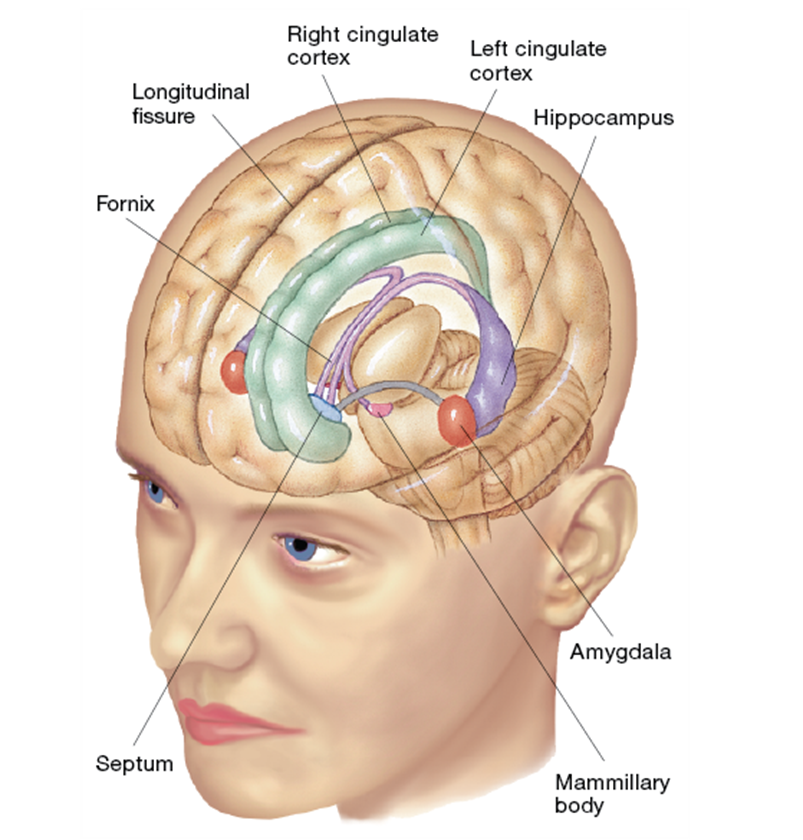
Limbic System- what does it regulate and what structures included (6 (2))
A system involved in regulating motivated behaviours (the '4Fs': feeding, fighting, fleeing, and $exual behaviour);
structures include mammillary bodies, hippocampus, amygdala, fornix, cingulate cortex, septum
Basal Ganglia- what does it regulate and what structures and particular intrest to do with this?
regulates movement (•voluntary motor responses and decision making)
including the Amygdala (again), Striatum (Caudate and Putamen), and globus pallidus.
•Of particular interest: altered pathway from substantia nigra (midbrain or mesencephalon) to striatum (putamen plus caudate) – Parkinson’s disease
Thalamus
Part of the Diencephalon
consisting of sensory relay nuclei for visual, auditory, and somatosensory systems that project information in a two-way fashion: from and to the cortex
Hypothalamus- what does it do and 2 things within are?
Part of the Diencephalon located below the thalamus (hypo →below)
implicated in motivated behavior through hormone regulation via the pituitary gland.
Optic Chiasm and Mammillary Bodies
HPA axis
Hypothalamic-pituitary-adrenal axis, the subject of Assessment Task 1 regarding its functioning and irregular work hours.
optic chiasm
points where optic nerves meet
Mammillary Bodies
memory function
Tectum
•Superior colliculi (visual-motor function)
•Inferior colliculi (auditory function) (inferior-inside-ear and sound inside)
Tegmentum
•Periaqueductal grey: grey matter around aqueduct that connects 3rd and 4th ventricles; mediates analgesia
•Substantia nigra
•Red nucleus
•Reticular formation
Pons (bridge)
•bulge-like, contains the Reticular formation (essential survival functions) (also part of the medulla and mesencephalon) – collection of nuclei with variety of functions
Cerebellum (little brain)
important sensorimotor system; likely broader function due to observed cognitive deficits in cerebellar damage
Reticular Formation
netlike appearance) is a complex network of about 100 nuclei – collection of nuclei with variety of functions (e.g., respiratory, circulatory, cardiac reflexes
essential survival functions
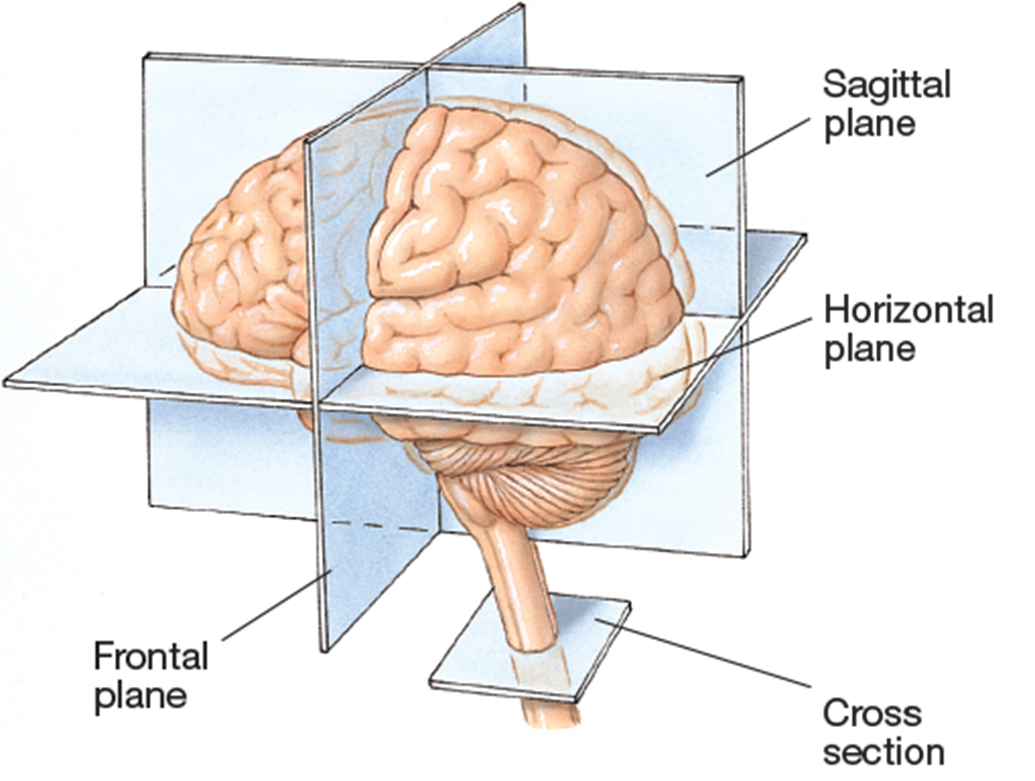
Planes of the brain and which directions (4-based on image)
what is in the spinal cord
•Gray matter: Cell bodies and unmyelinated interneurons
•White matter: Myelinated axons
•Dorsal horns/ventral horns
•31 pair of nerves
•Dorsal roots: Sensory (afferent)
•Ventral roots: Motor (efferent)