1.5
 Call Kai
 Learn
Learn Practice Test
 Spaced Repetition
 Match
Match Flashcards
 Knowt Play
1/24

There's no tags or description
Looks like no tags are added yet.
Name | Mastery | Learn | Test | Matching | Spaced | Call with Kai |
|---|
No analytics yet
Send a link to your students to track their progress
25 Terms
Meisosis
cell division produce gametes for sexual reproduction
crossing over:
the exchange of genes by homologous chromosomes
Homologus
chromosomes that have the same genes in the same order
Meiosis produces haploid cells -
These cells only have one copy of each autosome and one sex chromosomes
is important that the gametes have half the number of chromosomes so that the zygote (new cell formed) has the correct number .
Mums egg + Dad’s sperm = Human zygote
(23) (23) (46)
meiosis vs meitosis
P
| MITOSIS | MEIOSIS |
Where does it occur ? | All cells except sex cells. (somatic cells) | Ovaries and Testes |
How many divisions occurs? | 1 | 2 |
How many cells are produced? | 2 | 4 |
Number of chromosomes in daughter the cells: | Same as parent cell | Half of parent cell |
What types of organisms do this type of cell division? | Multicellular for growth and repair. Unicellular organisms for reproduction | Sexually reproducing organisms |
Genetic variability of the cells produced. | Identical to each other and parent cell | Different to each other and parent cells |
Purpose mitosis : growth and repair , meisosis: profuce gamtes for reprotudction
Whats a karyotype and how many homologus inchromosomes in karyotype human somatic cells:
Complete set of chromosomes , theirs 22 hologus in chromosmes and one pair of sex chromosomes so that equals 23
Crossing over in prophase 1
Note in Prophase 1 homologous chromosomes pair up.
Crossing over can occur here, where small segments of DNA can be exchanged between chromosomes. This increases genetic variation.
Theirs 8 phases in meiosis start with 1
Meiosis stage 1 : first division of meisos called "reduction " division cause it halves number of chromosomes ,
homologous , what are they and how they work
Homologous chromosomes(pairs of chromosomes) l
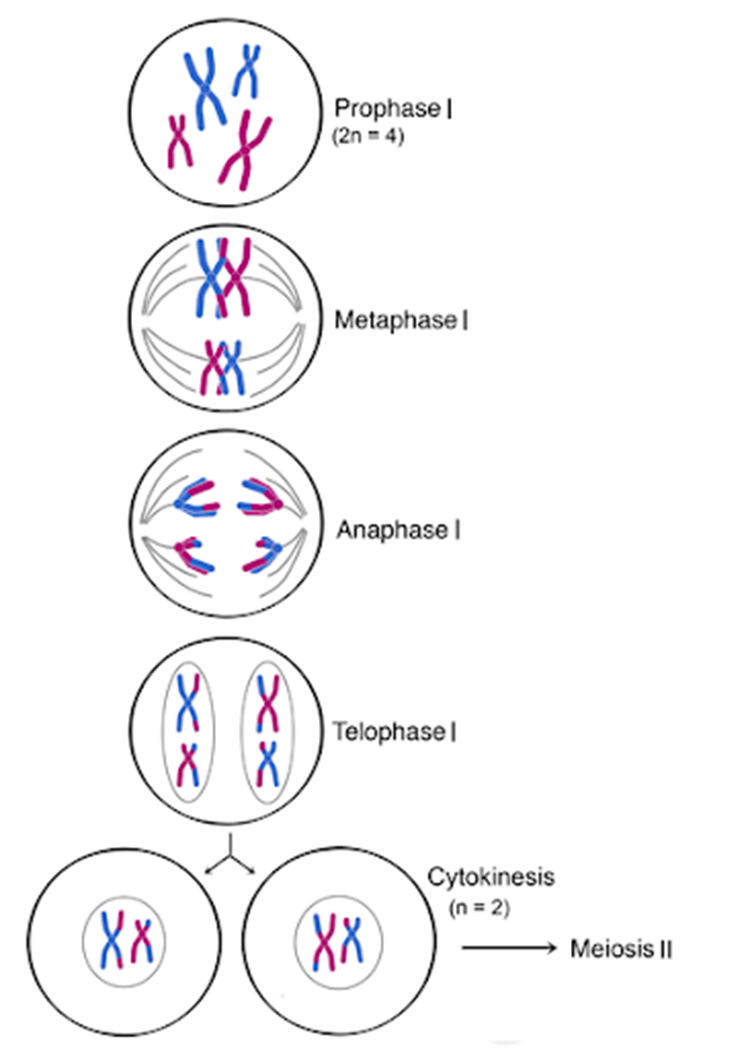
Prophase 1
: nuclear membrane dissolves and DNA coils to become visible as pairs of homologous chromosomes. Crossing over occurs here as non-identical chromatids swap bits of information. This increases genetic variation.
Metaphase I:
spindle fibers attach to the centromeres and pairs of homologous chromosomes line the equator of the cell
Anaphase I:
• Spindle fibres contract and pull pairs of homologous chromosomes apart, moving them to the opposite ends of the cell (poles)
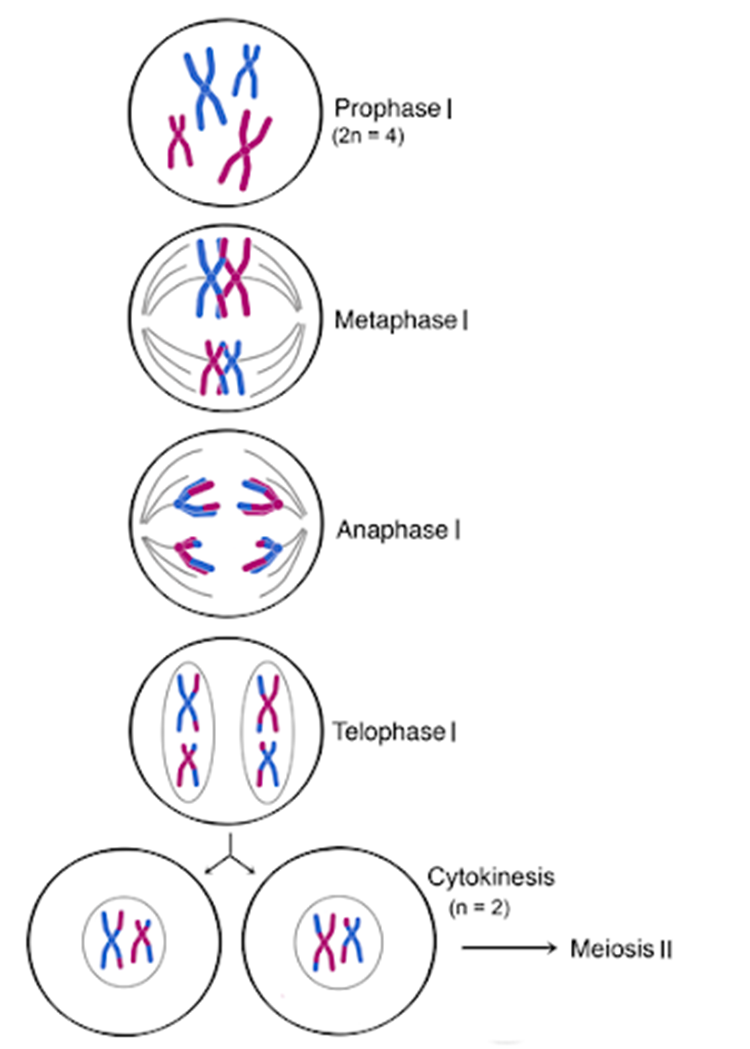
Telophase I
chromosomes uncoil, and new nuclear membranes form around the two sets of chromosomes. 2 haploid cells produced
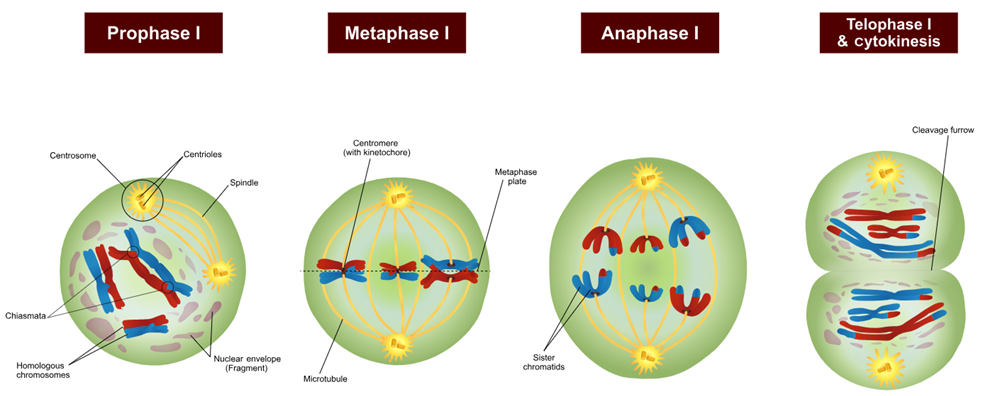
Chromosomes rearrange during meiosis , whats the process (cro’’)
When the homologous pairs are aligned the DNA can become entangled.
Pieces from one non-sister chromatid can exchange with another non-sister chromatid.
This is called crossing over and helps to mix the maternal and paternal genes. This increases variation in the gametes
Meiosis stage 2 :
At the end of this first division one chromosome from each homologous pair has been donated to each intermediate cell.
The second division of meiosis is called a ‘mitotic’ division, because it is similar to mitosis.
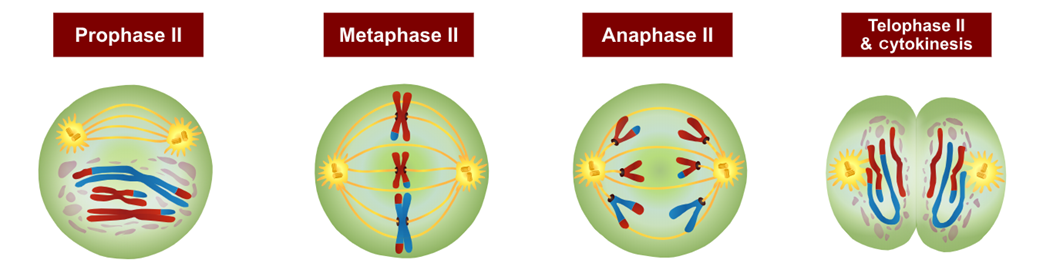
Prophase II:
very similar to prophase I but now pairs of chromatids become visible
Metaphase II:
Now single chromosomes (called a pair of chromatids) line up along the equator of the cell. This contrasts with Metaphase I where pairs of homologous chromosomes lined up
Anaphase II:
pairs of chromatids are pulled apart by spindle fibres
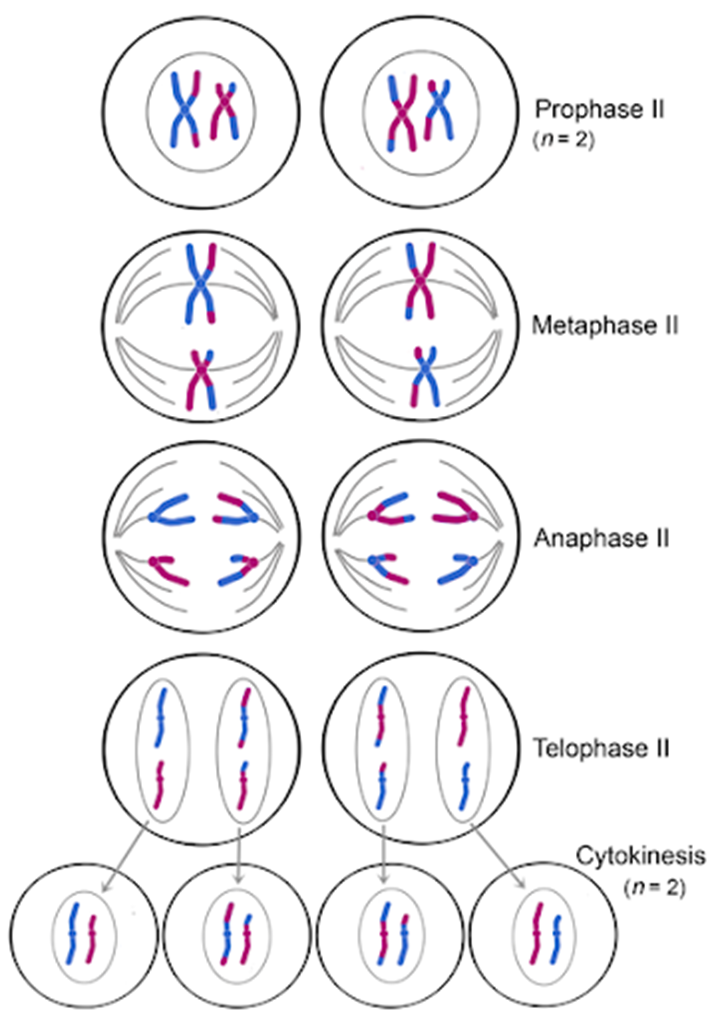
Telophase II:
4 new nuclear membranes form around the separated chromosomes.
Cytokinesis II
Cytoplasm divides to produce 4 non identical daughter cells (gametes).
Each daughter cell is haploid.
Fertilisation
fertilition introduces further variation because:
A male and female gamete fuse randomly.
Any sperm can fertilise any egg, increasing genetic diversity.