L8 - How are Proteins Studied?

0.0(0)
Studied by 0 people
call kaiCall Kai
learnLearn
examPractice Test
spaced repetitionSpaced Repetition
heart puzzleMatch
flashcardsFlashcards
GameKnowt Play
Card Sorting

1/18

encourage image

There's no tags or description

Looks like no tags are added yet.

Last updated 12:47 AM on 5/24/26
Name
Mastery
Learn
Test
Matching
Spaced
Call with Kai

No analytics yet

Send a link to your students to track their progress

19 Terms
1
New cards
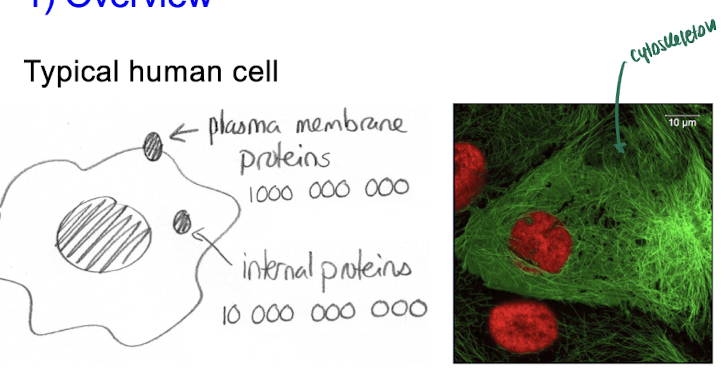
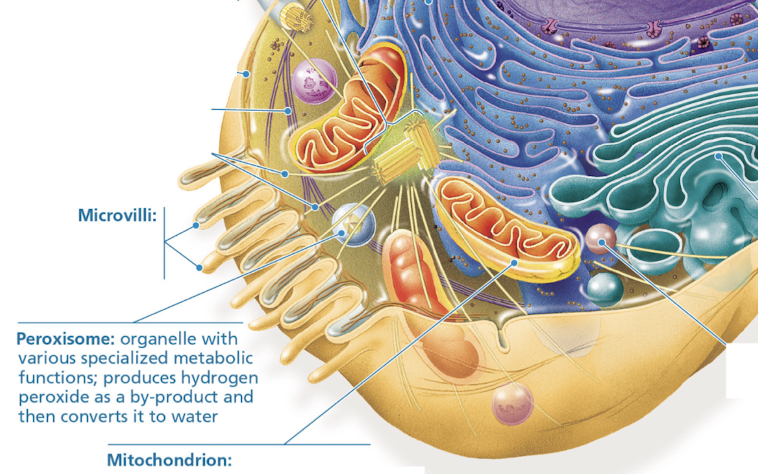
<p>Typical human cell</p>

Typical human cell

2
New cards

3 Methods of studying Proteins

  1. immunofluorescence (direct/indirect)

= antibodies covalently attached to fl. dye

  1. fluorescent fusion proteins

= gene + fl. protein

  1. tagged fusion proteins (direct/indirect)

= gene + HA-tag + antibodies for tag
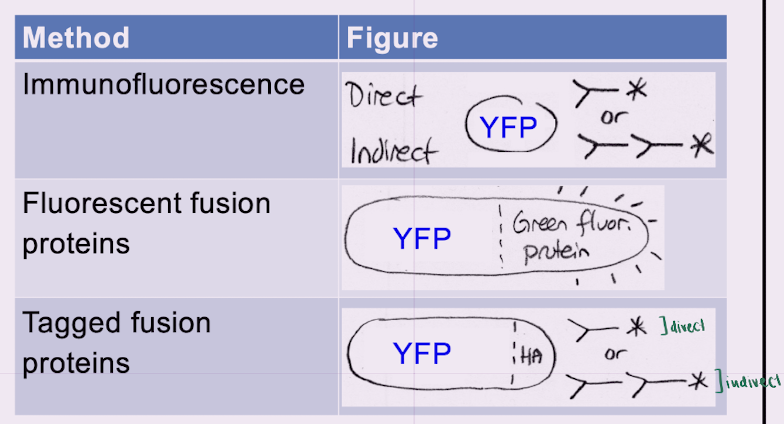
<ol><li><p>immunofluorescence (direct/indirect) </p></li></ol><p>    = antibodies covalently attached to fl. dye</p><ol start="2"><li><p>fluorescent fusion proteins </p></li></ol><p>    = gene + fl. protein</p><ol start="3"><li><p>tagged fusion proteins (direct/indirect) </p></li></ol><p>    = gene + HA-tag + antibodies for tag</p>
3
New cards
<p>Method 1 : Immunofluorescence</p>

Method 1 : Immunofluorescence

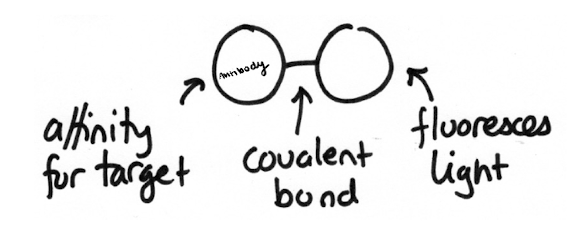
  • uses a fluorescent probe = antibodies covalently attached to fl. dye

→ antibodies = small proteins made by B-cells

types: IgG (monomer), IgA (dimer) , IgM (pentamer)
4
New cards
<p>Method 1 : Immunofluorescence - Types</p>

Method 1 : Immunofluorescence - Types

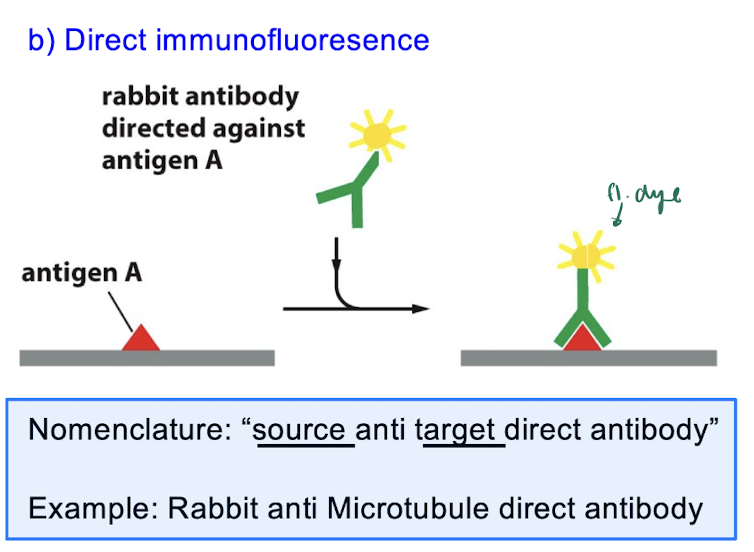
Direct immunofluorescence = probe directly attached to antigen

  • nomenclature: “source anti-target antibody”

ex. “rabbit anti-microtubule direct antibody”

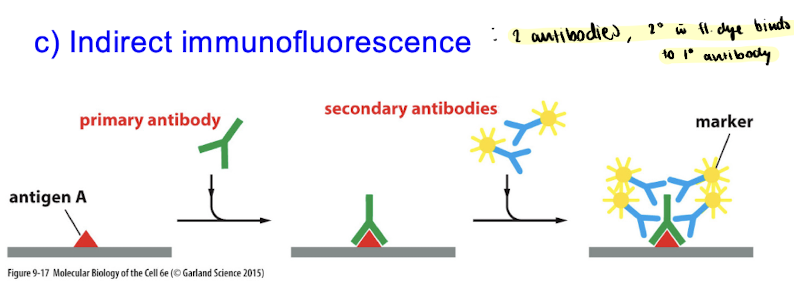
Indirect immunofluorescence = 2 antibodies, secondary w fl. dye binds to primary antibody

  • more steps, BUT more fluorescence

  • if it says “source anti-animal ….” : a secondary antibody

  • if it says “source anti-protein/organelle …” : a primary antibody
<p>Direct immunofluorescence = probe directly attached to antigen </p><ul><li><p>nomenclature: “<span><u>source</u></span> anti-<span><u>target</u></span> antibody”</p></li></ul><p>ex. “rabbit anti-microtubule direct antibody”</p><p></p><p>Indirect immunofluorescence = 2 antibodies, secondary w fl. dye binds to primary antibody </p><ul><li><p>more steps, BUT more fluorescence </p></li><li><p>if it says “source anti-animal ….” :   a secondary antibody </p></li><li><p>if it says “source anti-protein/organelle …” : a primary antibody</p></li></ul><p></p>
5
New cards

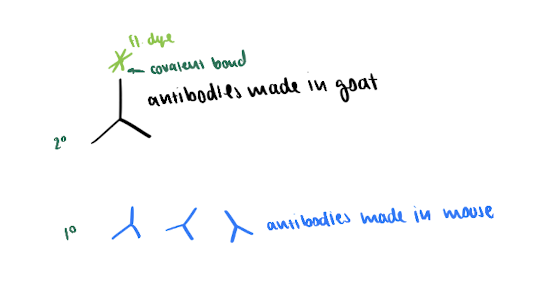
Goat anti-mouse antibody, Alexa Fluor 488 conjugate

these are ___ antibodies made in a __?

secondary antibodies made in a goat

  • bc it says “anti-animal”, NOT “anti-protein/organelle”
<p>secondary antibodies made in a goat</p><ul><li><p>bc it says “anti-animal”, NOT “anti-protein/organelle”</p></li></ul><p></p>
6
New cards
<p>What is red?</p>

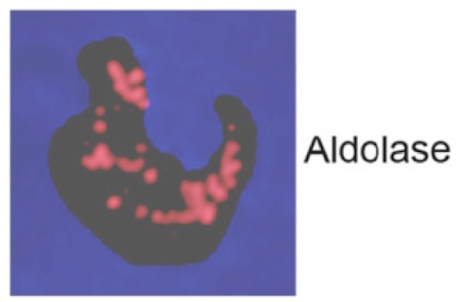
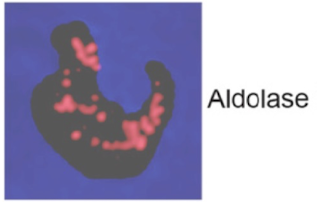
What is red?

Red is adolase, one of the glycolysis enzymes
7
New cards
<p>How did they make adolase red?</p>

How did they make adolase red?

  • via indirect immunofluorescence

(answer in image)
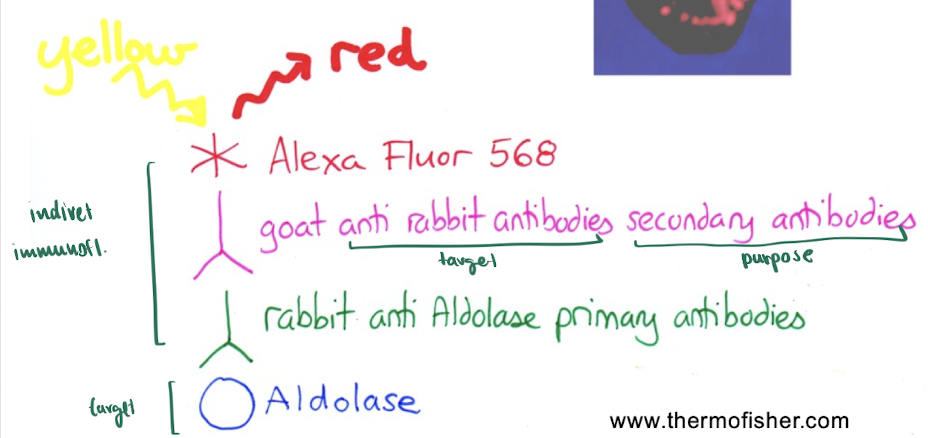
<ul><li><p>via indirect immunofluorescence</p></li></ul><p>(answer in image)</p><p></p>
8
New cards

obtaining antibodies from mammals

primary antibodies : from small mammals

secondary antibodies : from larger mammals
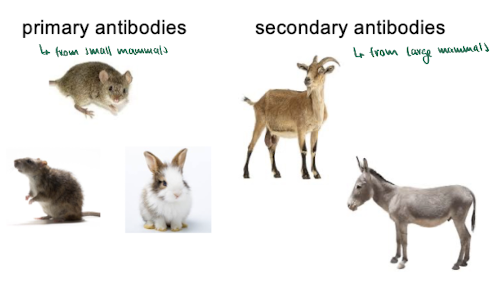
<p>primary antibodies : from small mammals</p><p>secondary antibodies : from larger mammals </p>
9
New cards
<p>Method 2 : Fluorescent Fusion Proteins </p>

Method 2 : Fluorescent Fusion Proteins

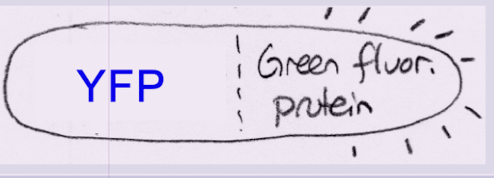
= gene + fl. protein

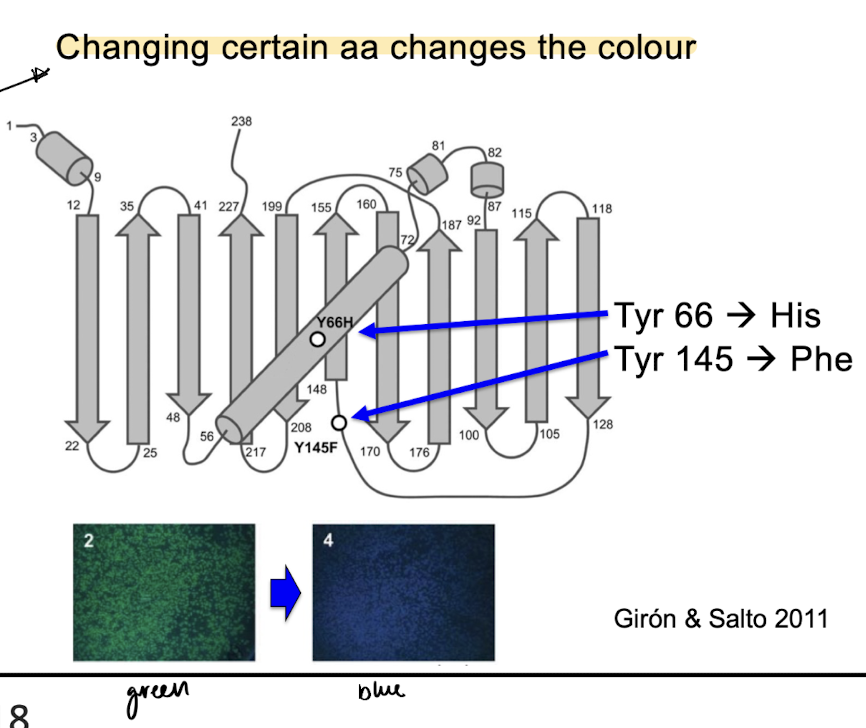
  • fl. protein is GFP from jellyfish → can change proteins colour with a change in AA

  • easiest way to detect a new protein

<p>= gene + fl. protein</p><ul><li><p>fl. protein is GFP from jellyfish → can change proteins colour with a change in AA</p></li><li><p>easiest way to detect a new protein </p></li></ul><p></p>
10
New cards
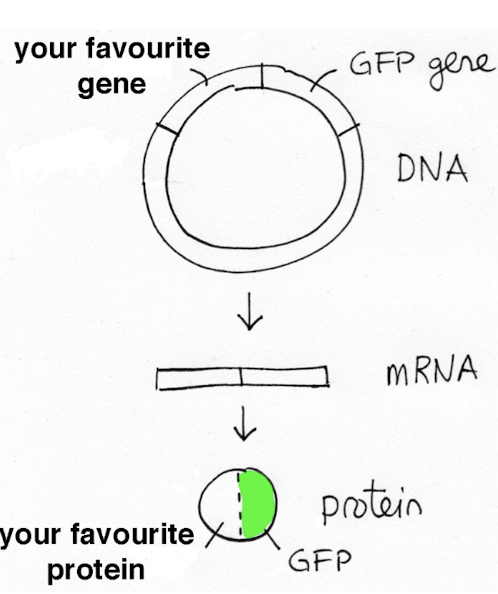
<p>Method 2 : Fluorescent Fusion Proteins - Plasmids</p>

Method 2 : Fluorescent Fusion Proteins - Plasmids

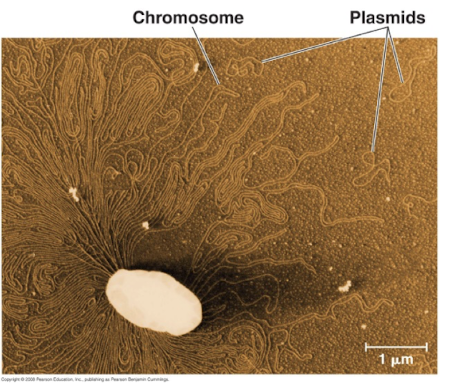
  • natural plasmids = circles of DNA found in bacteria

  • recombinant plasmids = made by scientists and put into animal cells via temporary transfection
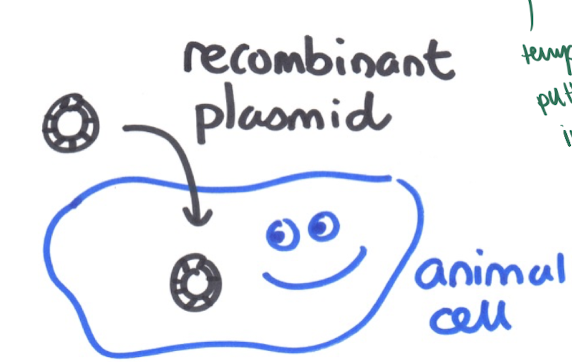
<ul><li><p>natural plasmids = circles of DNA found in bacteria </p></li></ul><p></p><ul><li><p>recombinant plasmids = made by scientists and put into animal cells via temporary transfection </p></li></ul><p></p>
11
New cards
<p>Method 2 : Fluorescent Fusion Proteins - making fusion proteins</p>

Method 2 : Fluorescent Fusion Proteins - making fusion proteins

  1. make recombinant plasmid

  2. transfect the cells w plasmid

  3. proteins are synthesized inside the cells

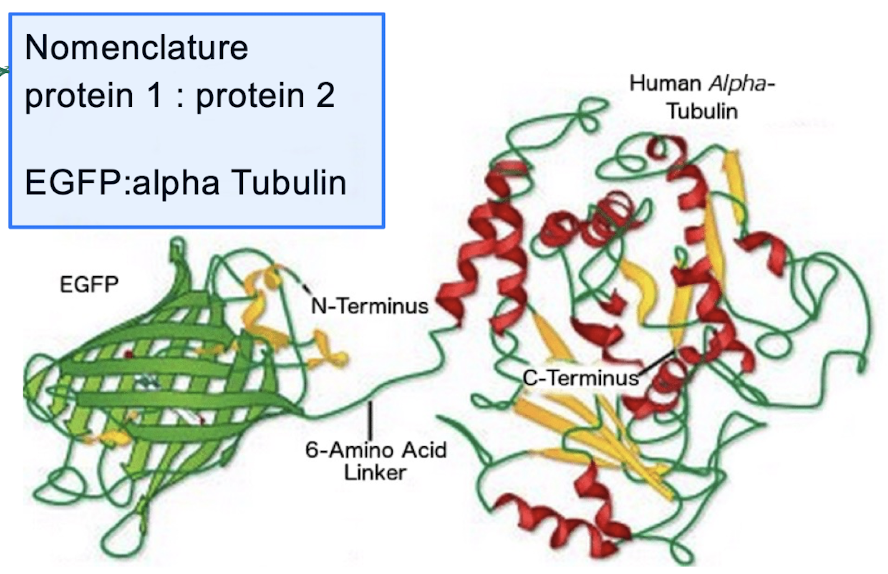
  • nomenclature: protein 1 : protein 2

<ol><li><p>make recombinant plasmid</p></li><li><p>transfect the cells w plasmid</p></li><li><p>proteins are synthesized inside the cells</p></li></ol><p></p><ul><li><p>nomenclature:      protein 1 : protein 2</p></li></ul><p></p>
12
New cards
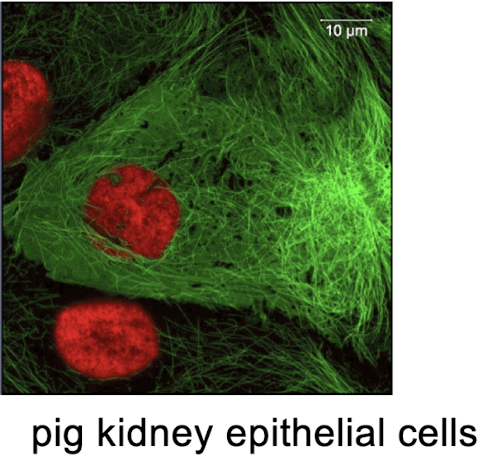
<p>What microscope was used? what is green? what is red?</p>

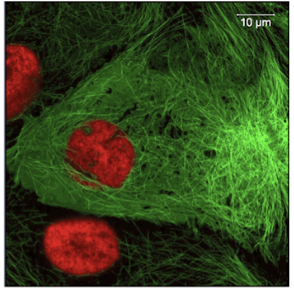
What microscope was used? what is green? what is red?

microscope: confocal fluorescence

green : microtubules

red : chromosomes
13
New cards
<p>How did they make the microtubules green?</p>

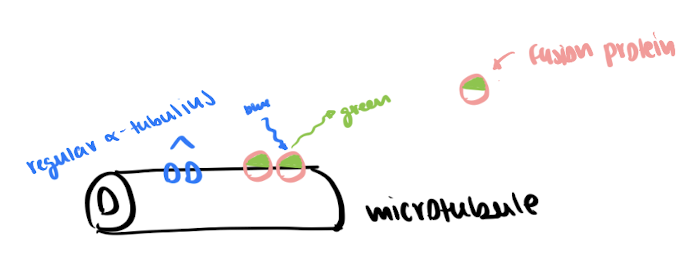
How did they make the microtubules green?

  • using a fluorescent fusion protein ( EGFP : alpha tubulin )
<ul><li><p>using a fluorescent fusion protein ( EGFP : alpha tubulin )</p></li></ul><p></p>
14
New cards
<p>Method 3 : Tagged Fusion Proteins </p>

Method 3 : Tagged Fusion Proteins

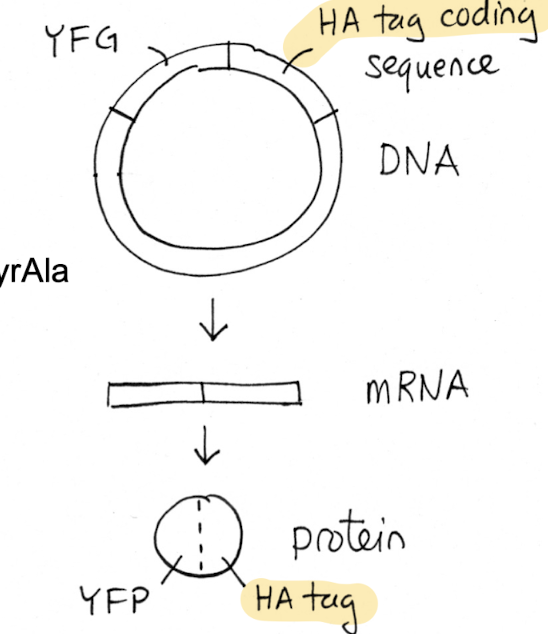
= gene + HA-tag + antibodies for tag

  • w/o antibodies for target protein: add HA-tag to plasmid → use anti-HA antibodies

  • tag adds to either end of protein ( N or C )

protein tags : FLAG, HA, His, Myc
15
New cards
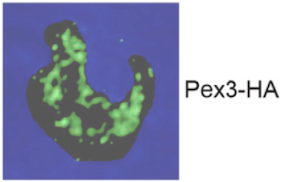
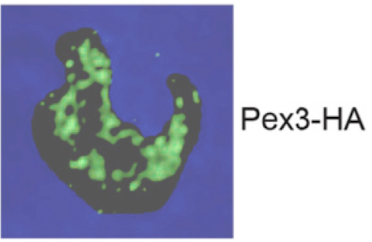
<p>What is green?</p>

What is green?

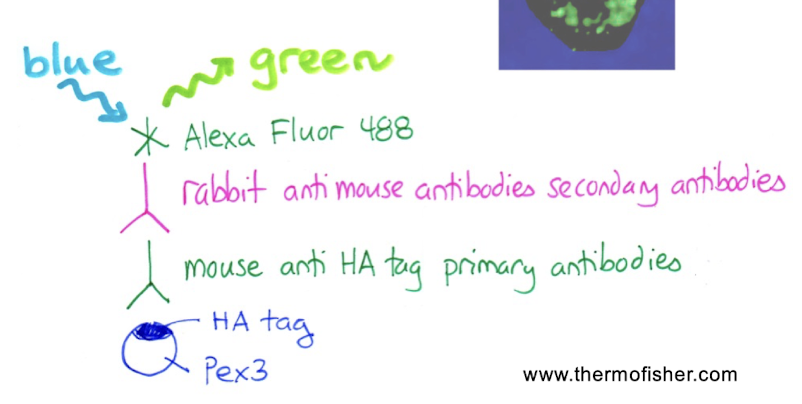
green is Pex3, a peroxisome protein
16
New cards
<p>peroxisomes</p>

peroxisomes

= small round organelles that import protein from cytosol

  • use tagged fusion proteins to study

<p>= small round organelles that import protein from cytosol </p><ul><li><p>use tagged fusion proteins to study</p></li></ul><p></p>
17
New cards
<p>How did they make the peroxisome protein green?</p>

How did they make the peroxisome protein green?

  • using tagged fusion proteins and Alexa Fluor 488 as fl. dye
<ul><li><p>using tagged fusion proteins and Alexa Fluor 488 as fl. dye</p></li></ul><p></p>
18
New cards
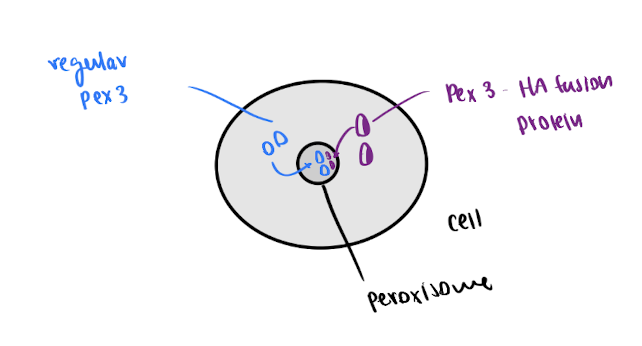
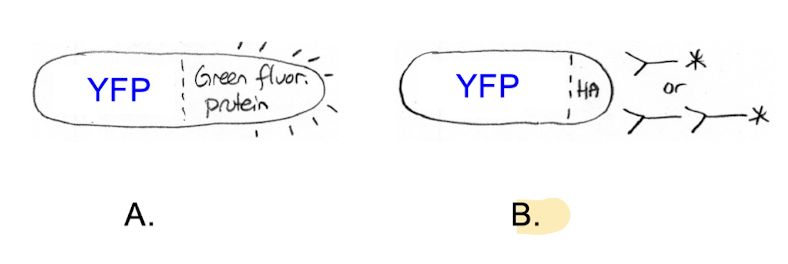
<p>which of these fusion proteins is most likely to go to its proper cellular location?</p>

which of these fusion proteins is most likely to go to its proper cellular location?

B, the tagged-fusion protein
19
New cards
<p>Examinable content </p>

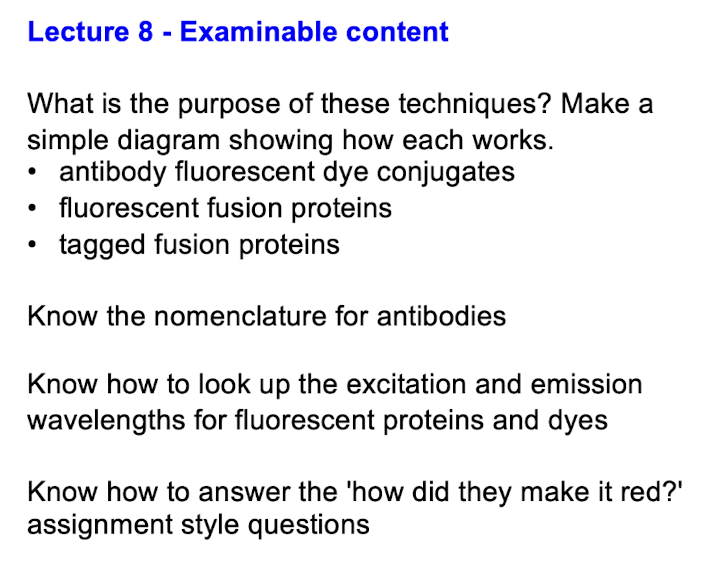
Examinable content