SJSU MICR20 SJSU CHATER 20
 Call Kai
 Learn
Learn Practice Test
 Spaced Repetition
 Match
Match Flashcards
 Knowt Play
1/56

There's no tags or description
Looks like no tags are added yet.
Name | Mastery | Learn | Test | Matching | Spaced | Call with Kai |
|---|
No analytics yet
Send a link to your students to track their progress
57 Terms
gram-negative bacilli
- non-spore forming bacteria
- range of habitats: large intestines, zoonotic, respiratory, soil, water
- outer membrane LPS (endotoxin)
opportunistic gram- bacilli
Pseudomonas & Burkholderia
zoonotic pathogens gram- Bacilli
Brucella & Francisella
human pathogens
Bordetella & Legionella
aerobes ferment carbohydrates
false
facultative anaerobes ferment carbohydrates
true
lactose fermenters
- Escherichia
- Klesiella
- Citrobacter
- Enterobacter
oxidose-negative
- Salmonella
- Shigella
- Proteus
- Serratia
- Yersinia
oxidase positive
- Haemophilus
- Pasteurella
Pseudomonas aeruginosa pathogen
- skin/skeletal: complication of burns, skin rashes
- nervous/muscle: corneal ulcers, meningitis
- cardiovascular/lymphatic/systemic: endocarditis
- respiratory: complication of cystic fibrosis
- urogenital: UTI
Bordetella pertussis pathogen
- whooping cough (communicable childhood affliction
- acute respiratory syndrome
- often severe, life-threatening complications in babies
Escherichia coli pathogen
- gastrointestinal: acute diarrhea
- urogenital: UTI
Escherichia coli O157:H7
- gastrointestinal: acute diarrhea
- urogenital: hemolytic uremic syndrome
Pseudomonas
- small gram- rods w/ single polar flagellum
- primary in soil, sea water & fresh water
- important decomposers & bioremediators
- frequent contaminants in homes & clinical settings
- aerobic respiration (doesn't ferment carbohydrates
- oxidase & catalase positive
- produce water soluble pigments
Pseudomonas aeruginosa
- common in soil & water
- intestinal resident in 10% of people
- resistant to soap, dyes, quaternary ammonium disinfectants, drugs (multidrug), drying
- frequent contaminant in ventilators, IV solutions, anesthesia equipment
- opportunistic pathogen
- grapelike odor & green-blue pigment (pyocyanin)
Bordetella pertussis
- encapsulated coccobacillus
- reservoir: healthy carriers
- transmission by direct contact or inhalation of aerosols
- vaccine: DTaP
Bordetella pertussis virulence factors
- Receptors that recognize and bind to ciliated respiratory epithelial cells
- Toxins that destroy and dislodge ciliated cells
- loss of ciliary mechanism leads to buildup of mucus & blockage of airways
Genus Alcaligenes
- live in soil & water
- may become normal flora
- Alcaligenes faecalis is most common clinical species
Legionella pneumophila
- distributed in water, in close association w/ amoebas
- outbreak in 1976
Legionellosis
- Legionnaires' disease (most severe) & Pontiac fever
- prevalent in males over 50
- nosocomial disease in elderly patients
- not contagious
- fever, cough, diarrhea, & abdominal pain
- treatment: Levofloxacin or Azithromycin
Family Enterobacteriaceae
- gram- bacteria
- small, non-spore forming rods
- inhabit soil, water, decaying matter
- most frequent cause of diarrhea through enterotoxins
characteristics of Enterbacteriaceae
- glucose ferment
- nitrate reduction
- oxidase negative
- presence of flagella
- regular, straight rods
- coliforms & non-coliforms
Virulence factor: H
flagellar antigen
virulence factor: K
capsule and/or fimbrial antigen
virulence factor: O
somatic or cell wall antigen
antigen structure & virulence factor
- complex surface antigen contribute to pathogenicity & trigger immune response
- not all species carry H & K antigens, but all have O (endotoxic shock)
Escherichia coli
- most common aerobic & non-fastidious in gut
- pathogenic strain grouped as: Enterohemorrhagic E. coli & Enterotoxigenic E. coli
Enterohemorrhagic E. coli (EHEC)
hemorrhagic syndrome & kidney damage
Enterotoxigenic E. coli (ETEC)
- severe diarrhea due to heat-labile toxin & heat-stable toxin
- stimulate secretion & fluid loss
- has fimbriae
clinical cases of E. coli
- most clinical diseases transmitted exclusively among humans
- cause infantile diarrhea, traveler's diarrhea, UTI
- oral antimicrobics may be effective in early infection
E. coli O157:H7
- virulence due to cell wall receptor that fuse w/ host cell membrane & create direct port that bacteria secrete toxins from
- toxins enter host cell, binds ribosomes & disrupt protein synthesis, leading to death & shedding of intestinal cells
Klebsiella pneumoniae
- normal inhabitant of respiratory tract
- large capsule
- cause of nosocomial pneumonia, meningitis, bacteremia, wound infections, & UTI
Enterobacter sp. pathogen
UTI & surgical wounds
Citrobacter sp. pathogen
opportunistic UTI & bacteremia
Serratia marcescens
- produce red pigment
- causes pneumonia, burn & wound infections, septicemia, & meningitis
Proteus sp.
- swarm on surface of moist agar in a concentric pattern
- UTI, wound infections, pneumonia, septicemia, & infant diarrhea
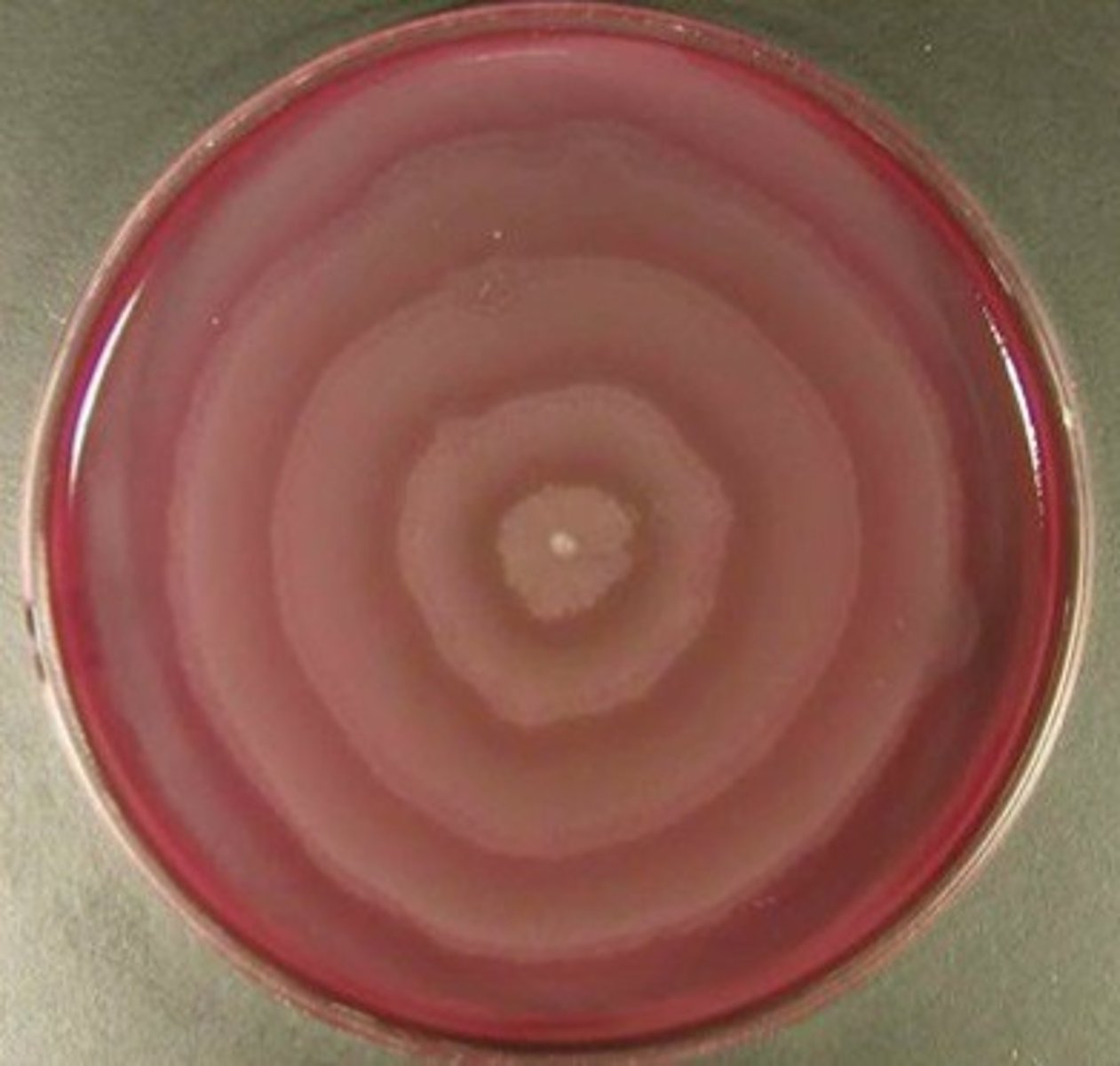
Salmonella bongori
- found almost exclusively in cold-blooded animal
Salmonella enterica
- divided into 6 subspecies (enterica, salamae, arizonae, diarizonae, houtenae, indica)
typhoid fever
- caused by Salmonella serotype Typhi
- Bacillus enters w/ ingestion of food or water contaminated by feces
- asymptomatic carriers; some chronic carriers shed bacilli from gallbladder
- Bacilli adhere to small intestine, cause invasive diarrhea that leads to septicemia
- treatment with ciprofloxacin or ceftriaxone
- 2 vaccines for temporary protection
Shigellosis
- common incapacitating dysentery
- fever, nausea, painful abdominal cramps, & frequent defecation of watery stool filled w/ mucus & blood
- cause: S. dysenteriae, S. sonnei, S. flexneri, & S. boydii
- invade villus of LI, does not perforate intestine or invade blood
- enters Peyer's patches instigate inflammatory response; endotoxin & exotoxin
- treatment: fluid replacement & ciprofloxacin & sulfatrimethoprim
Yersinia enterocolitica
- domestic & wild animals, fish, fruits, vegetables, & water
- bacteria enter SI mucosa, or lymphatic
- survive in phagocytes
- inflammation of ileum can mimic appendicitis
Yersinia pseudotuberculosis
- infection similar to Y. enterocolitica, but w/ more lymph node inflammation
Yersinia pestis
- nonenteric bacteria
- tiny, gram- rod, unusual bipolar staining & capsule
- virulence factors: capsular & envelope proteins protect against phagocytosis & foster intracellular growth
- coagulase, endotoxin, murine toxin
Plague
- humans develop plague through contact w/ wild animals (sylvatic plague), domestic (urban plague), or infected humans
- found in 200 species of mammals - rodents, without causing disease
- flea vectors: bacteria replicates in gut, coagulase causes blood clotting that blocks esophagus; flea becomes ravenous
pathology of plague
- infectious dose: 3-50 bacilli
- infection leads to: Bubonic plague, Septicemic plague, or Pneumonic plague
Bubonic plague
- bacillus multiplies in flea bite
- enters lymph
- causes necrosis & swelling of lymph nodes (called a bubo) in groin or axilla
Septicemic plague
- progression to massive bacterial growth
- virulence factors cause intravascular coagulation, subcutaneous hemorrhage, & purpura (black plague)
Pneumonic plague
- infection localized to lungs
- highly contagious
- fatal w/o treatment
diagnosis of plague
depends on history, symptoms, & lab findings from aspiration of buboes
treatment of plague
- streptomycin, tetracycline, or chloramphenicol
- killed or attenuated vaccine available
prevention of plague
by quarantine & control of rodent pop. in human habitats
Haemophilus
- blood-loving Bacilli
- tiny, gram- pleomorphic rods, fastidious
- sensitive to drying, temp. extremes, & disinfectants
- none can grow on blood agar w/o special techniques; requires hemin, NAD, or NADP
Haemophilus influenzae
- acute bacterial meningitis, epiglottis, otitis media, sinusitis, pneumonia, & bronchitis
Haemophilus ducreyi
cause of chancroid STD
Haemophilus parainfluenzae & Haemophilus aphrophilus
- members of normal oral & nasopharyngeal flora
- involved in infective endocarditis
sylvatic plague
- found in wild rodent population, in rural or semi-rural areas
- vector: fleas that infestwild rodents
- transmission: affects wild animal pop., but can transmit to humans
Urban plague
- occurs in urban areas, affecting domestic animals & human pop.
- vectors: fleas that infest domestic rodents, such as rats & mice
- transmission: rodents to humans, especially in crowded livnig conditions w/ high rodent pop.
- distributed in cities