Ortho: Cephalometric Anatomy Tracing & Analysis
 Call Kai
 Learn
Learn Practice Test
 Spaced Repetition
 Match
Match Flashcards
 Knowt Play
1/112

There's no tags or description
Looks like no tags are added yet.
Name | Mastery | Learn | Test | Matching | Spaced | Call with Kai |
|---|
No analytics yet
Send a link to your students to track their progress
113 Terms
Lateral cephalometric radiograph
--> side of the head
Posterior-anterior cephalometric radiograph
--> front of the head
What are the two main types of cephalometric radiograph?
Lateral Cephalometric Radiograph
What cephalometric radiograph do we use in our ortho class?
They are for analysis of the patient's skeletal, dental, and soft tissue
pattern
--> Landmarks are primarily, but not always, anatomic structures
What are the purpose of identifying landmarks on a cephalometric radiograph?
False
T/F: Landmarks on a cephalometric radiograph are always anatomical structures
cephalometric tracing
The process of identifying landmarks and creating a line drawing of the radiograph is called ____ _____
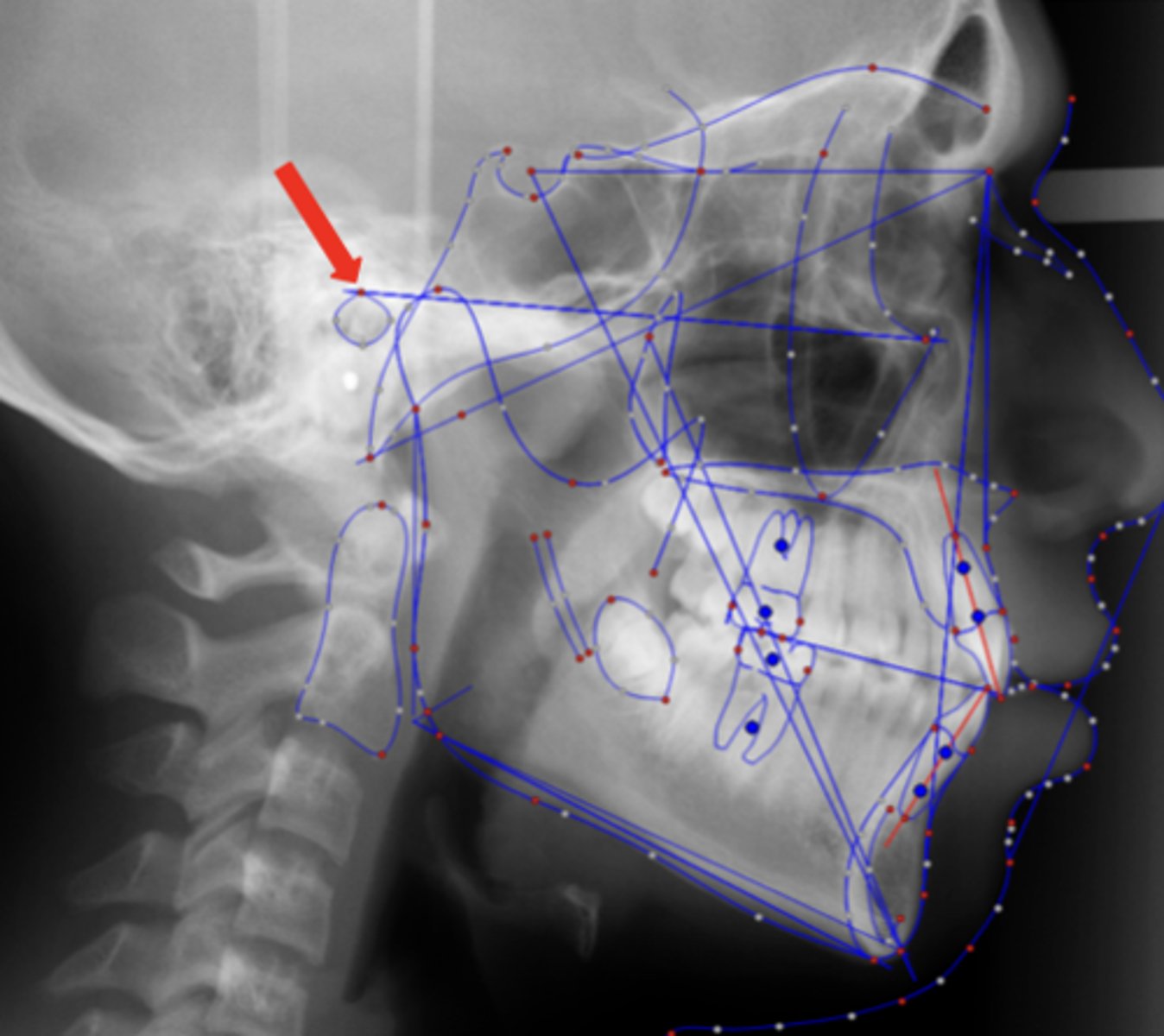
Porion (Po)
Highest point of the ear canal
-Most superior point of the external auditory meatus
-Immediately distal to the condyle
What landmark is this?
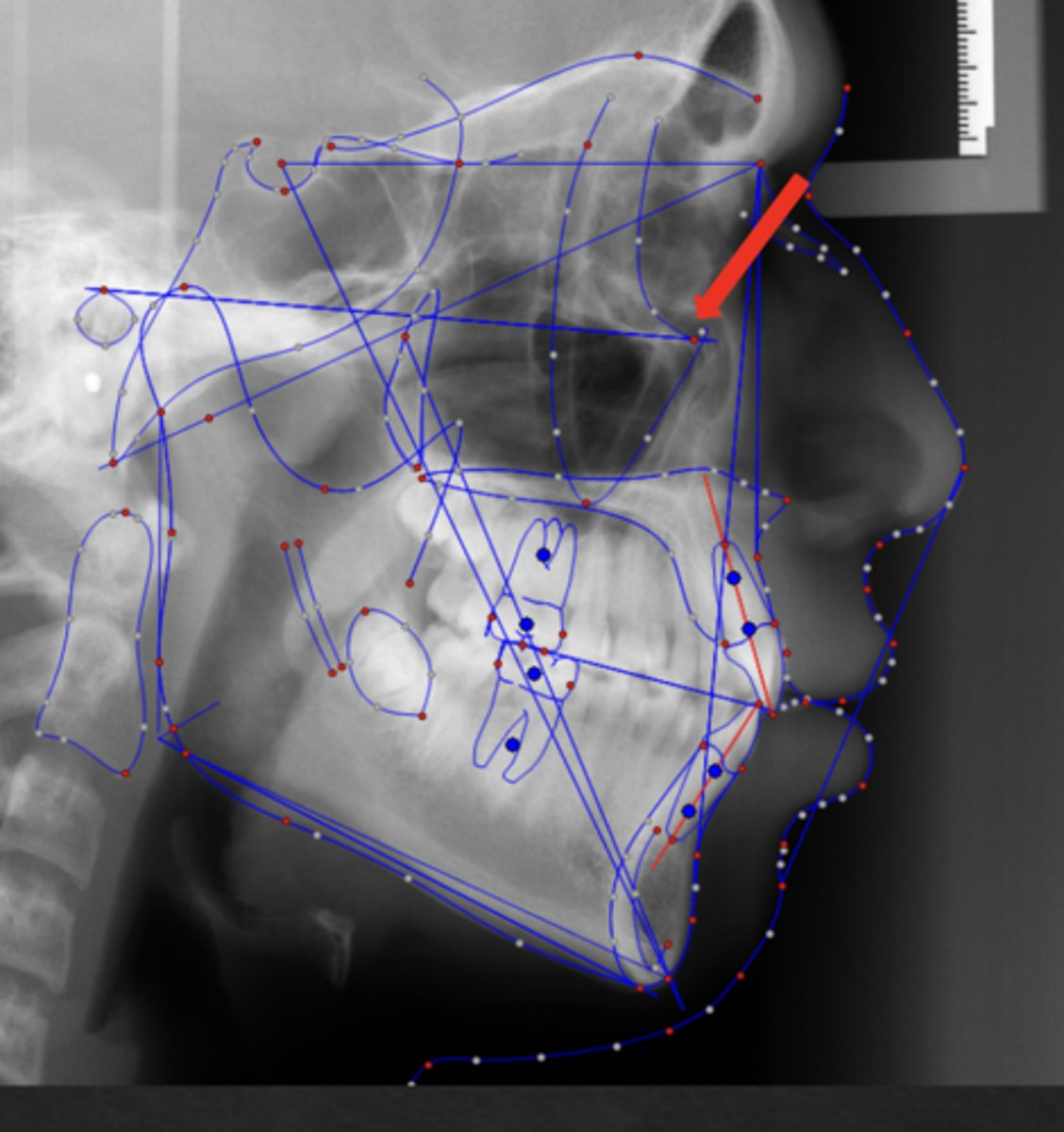
Orbitale (Or)
Lowest point of the floor of the orbit
Most inferior point of the external border of the orbital cavity
What landmark is this?
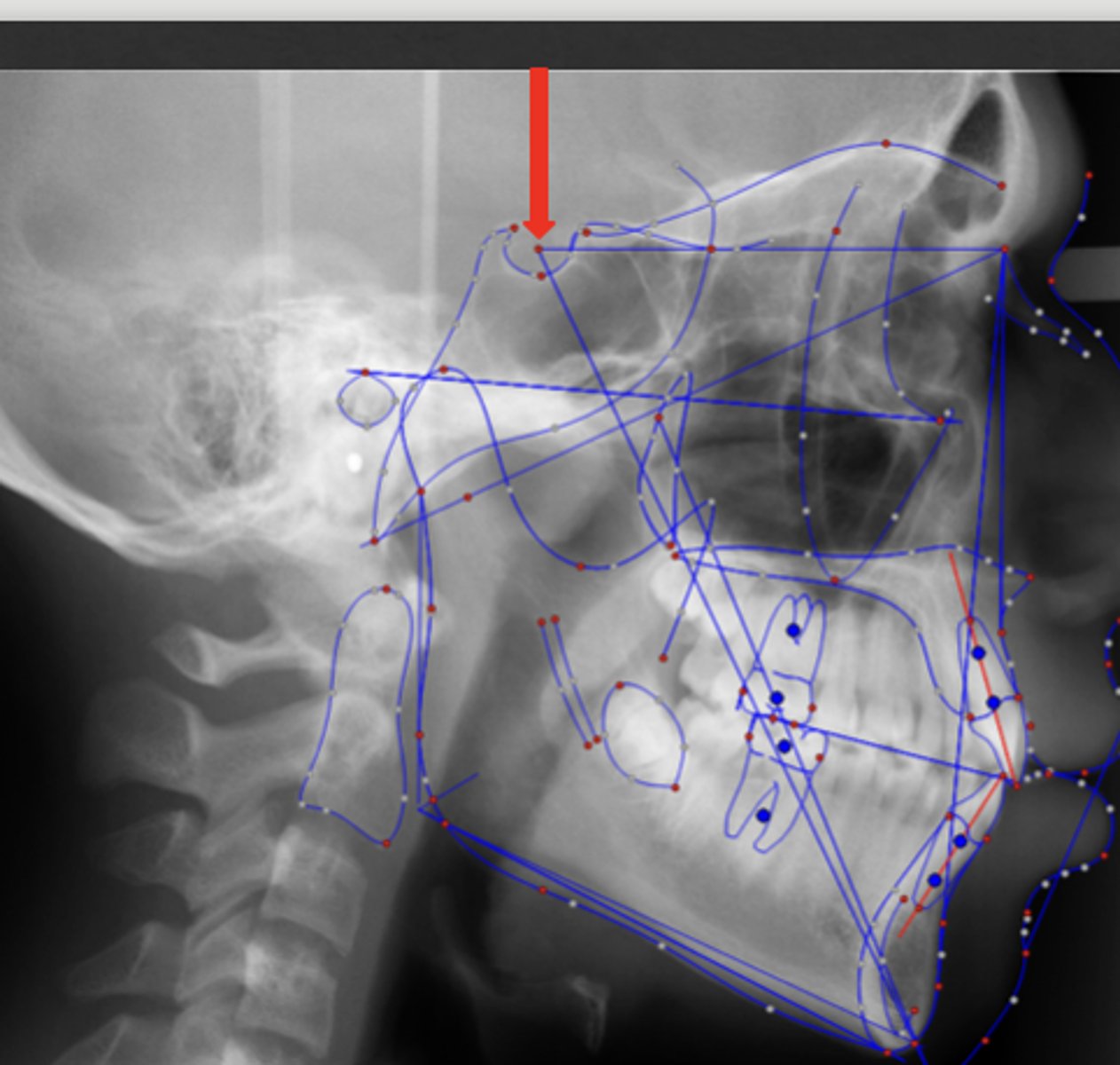
Sella (S)
Center of the pituitary fossa (sella turica) of the sphenoid bone
What landmark is this?
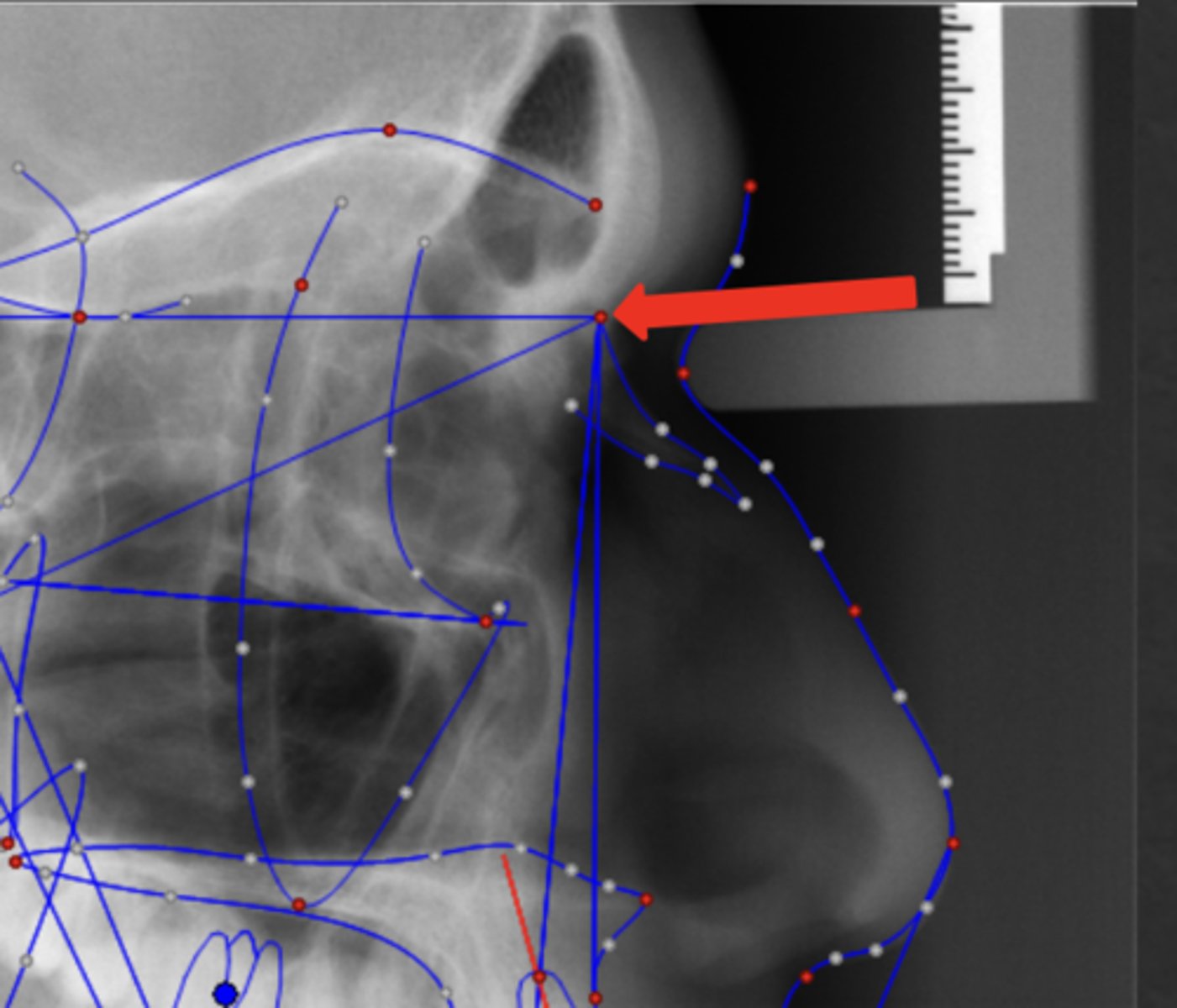
Nasion (Na, N)
Most anterior point of the intersection between the nasal bone and the frontal bone
What landmark is this?
Basion (Ba)
Most inferior posterior point of the occipital bone
Also the anterior margin of the foramen magnum
What landmark is this?
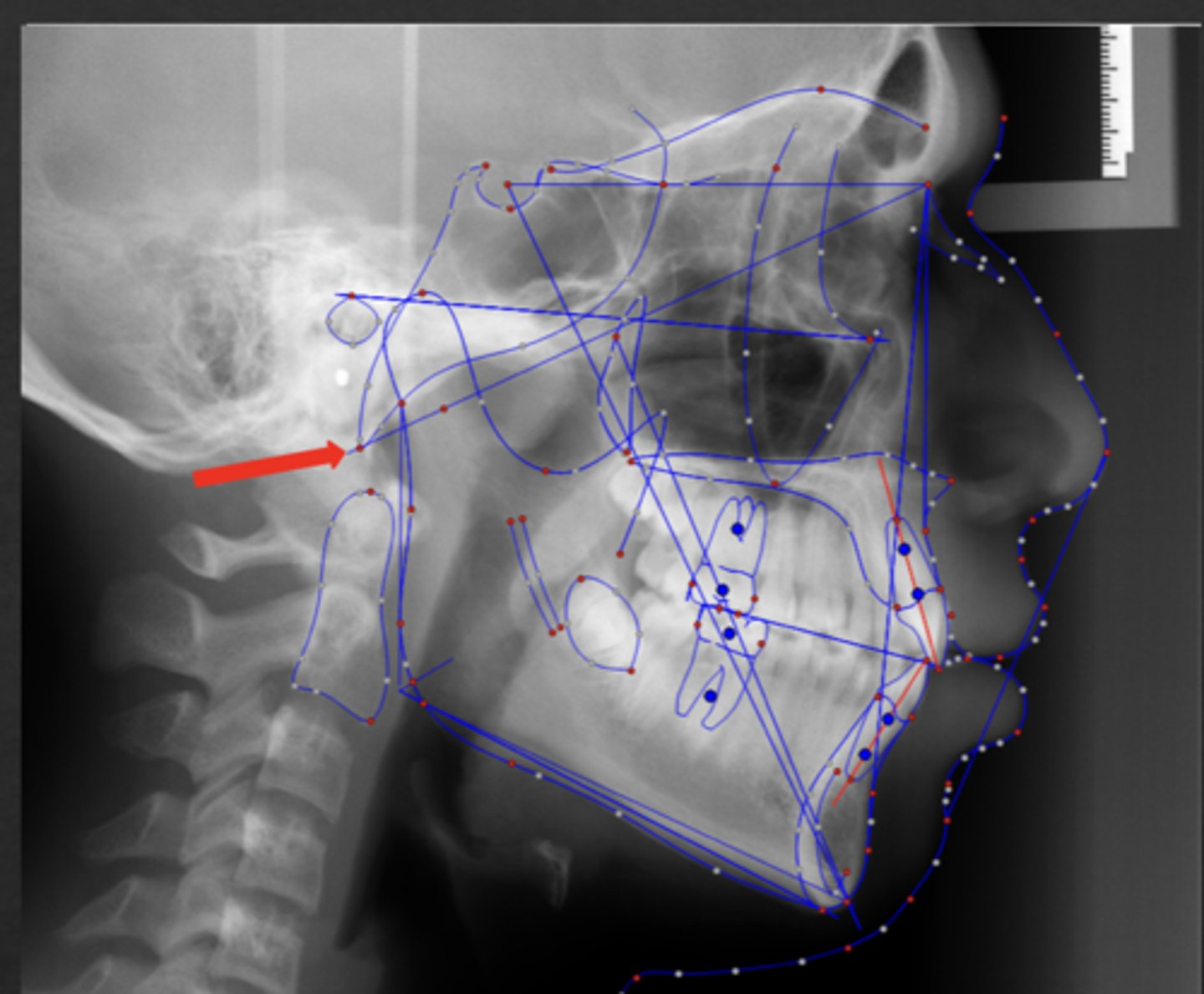
Anterior Nasal Spine (ANS)
The tip of the anterior nasal spine
What landmark is this?
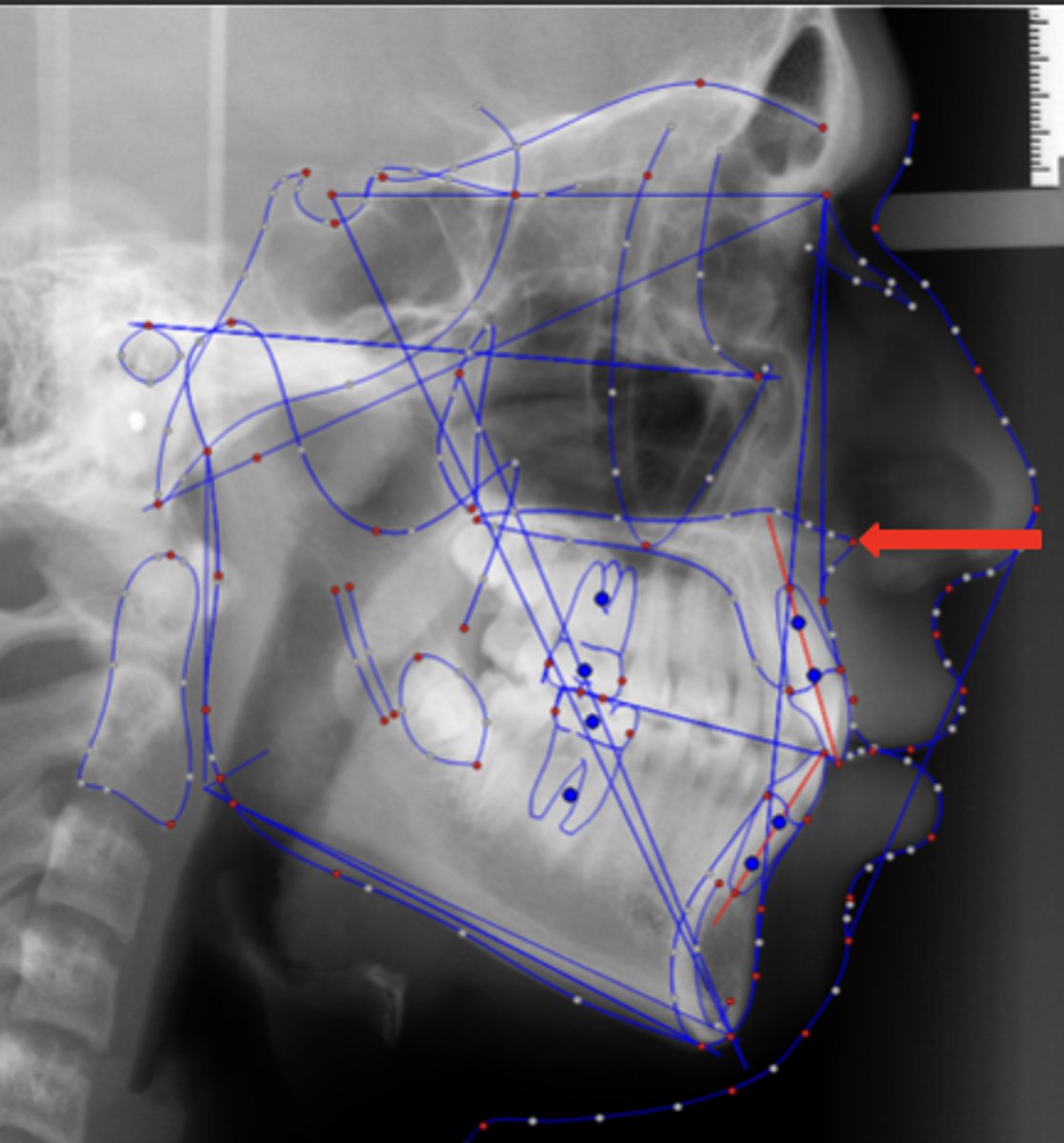
Posterior Nasal Spine (PNS)
The tip of the posterior nasal spine
The most posterior point of the hard palate
What landmark is this?
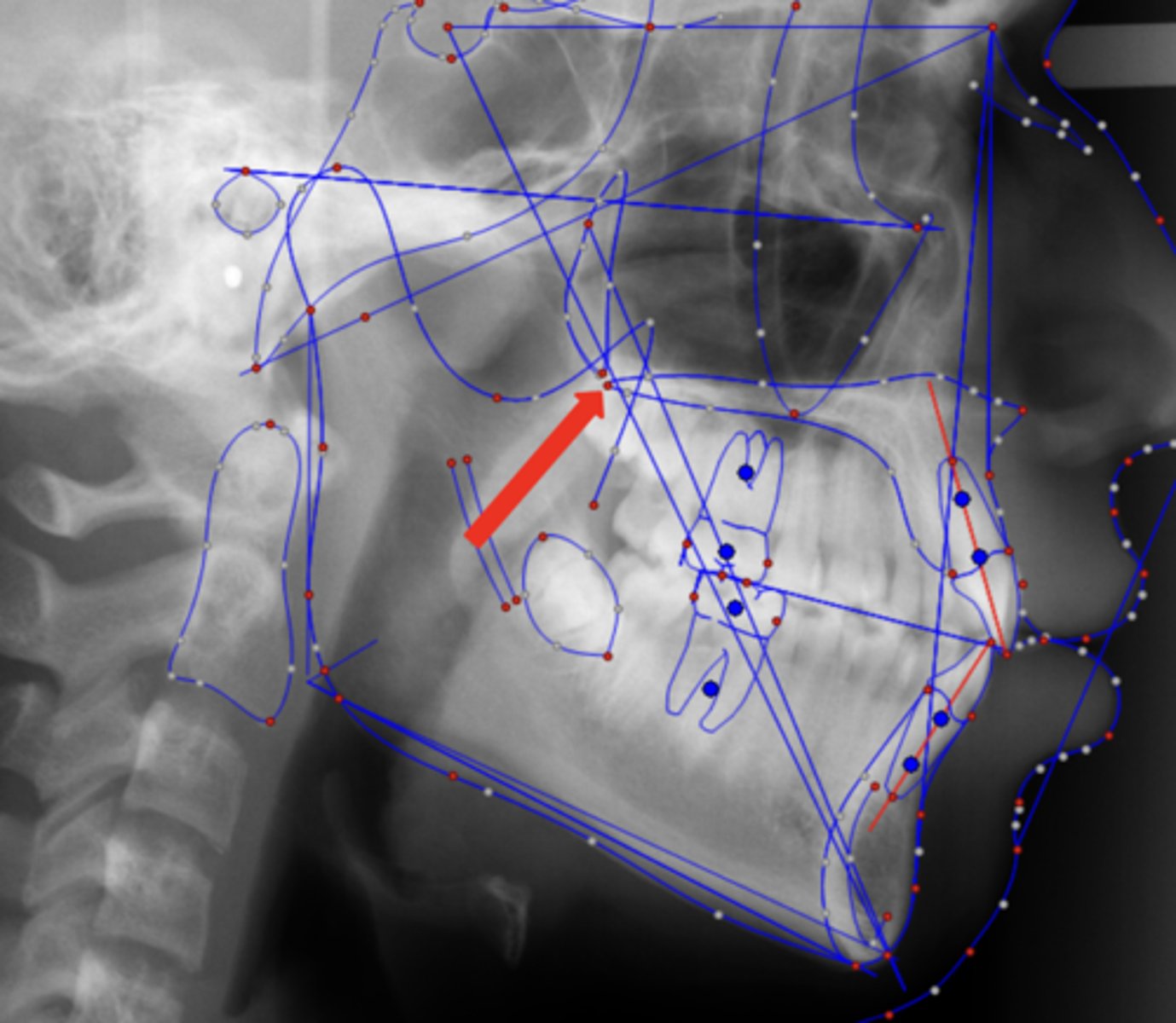
A point
The deepest point of the curve of the maxilla, between the anterior nasal spine (ANS) and the dental alveolus
What landmark is this?
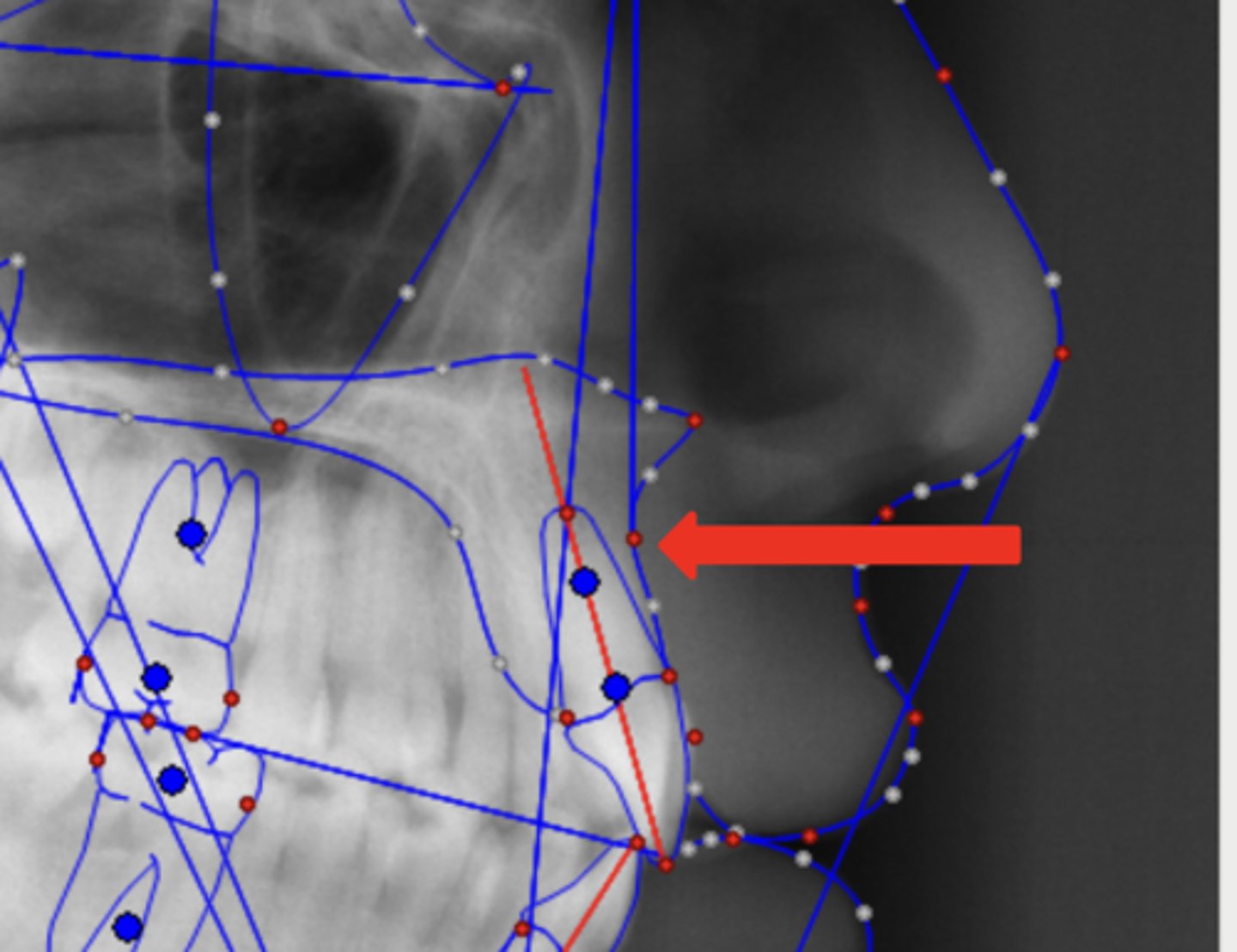
B Point
The most posterior point in the concavity along the anterior border of the symphysis
What landmark is this?
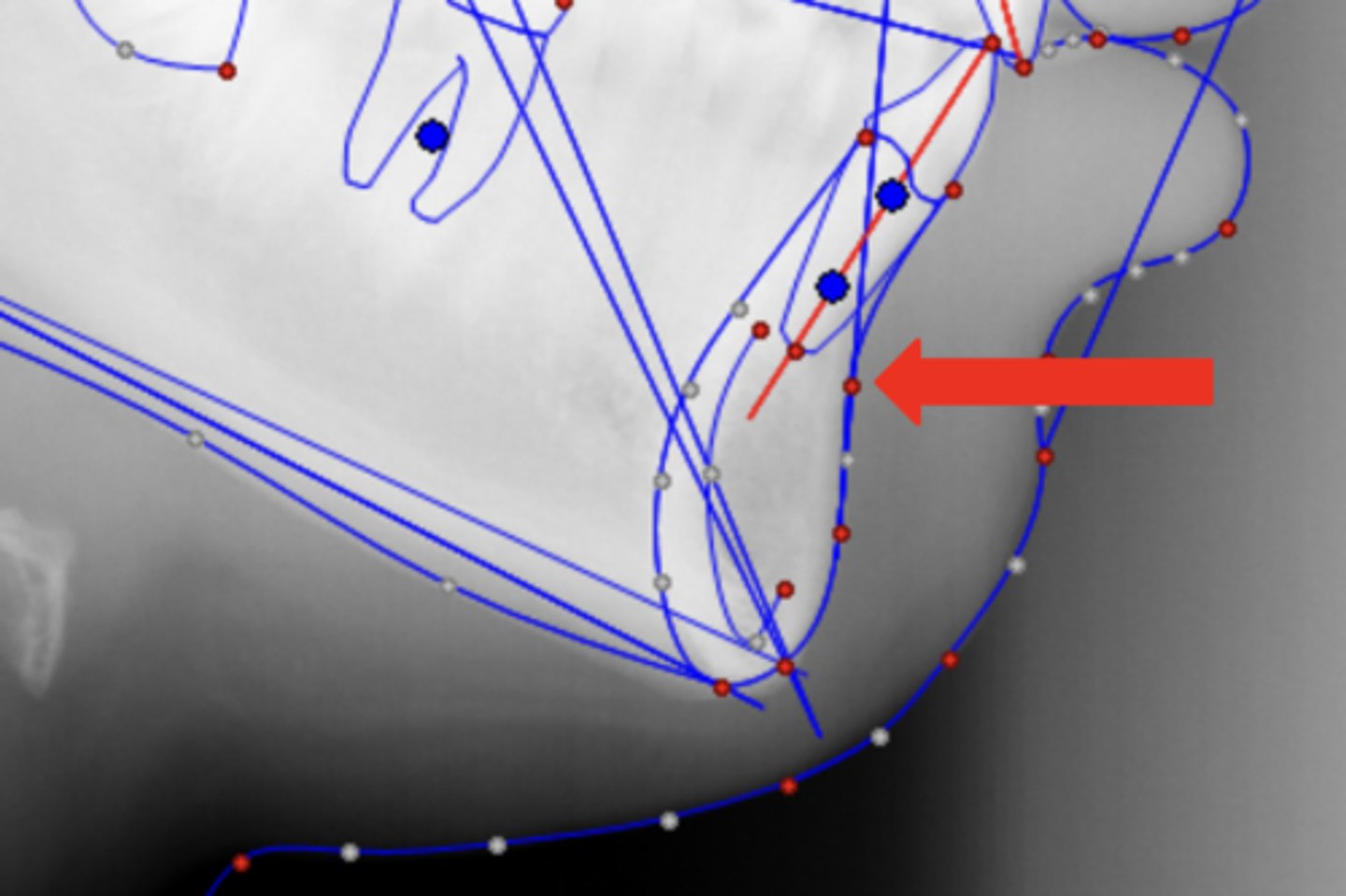
Pogonion (Pog)
The most anterior point on the mid-sagittal symphysis
What landmark is this
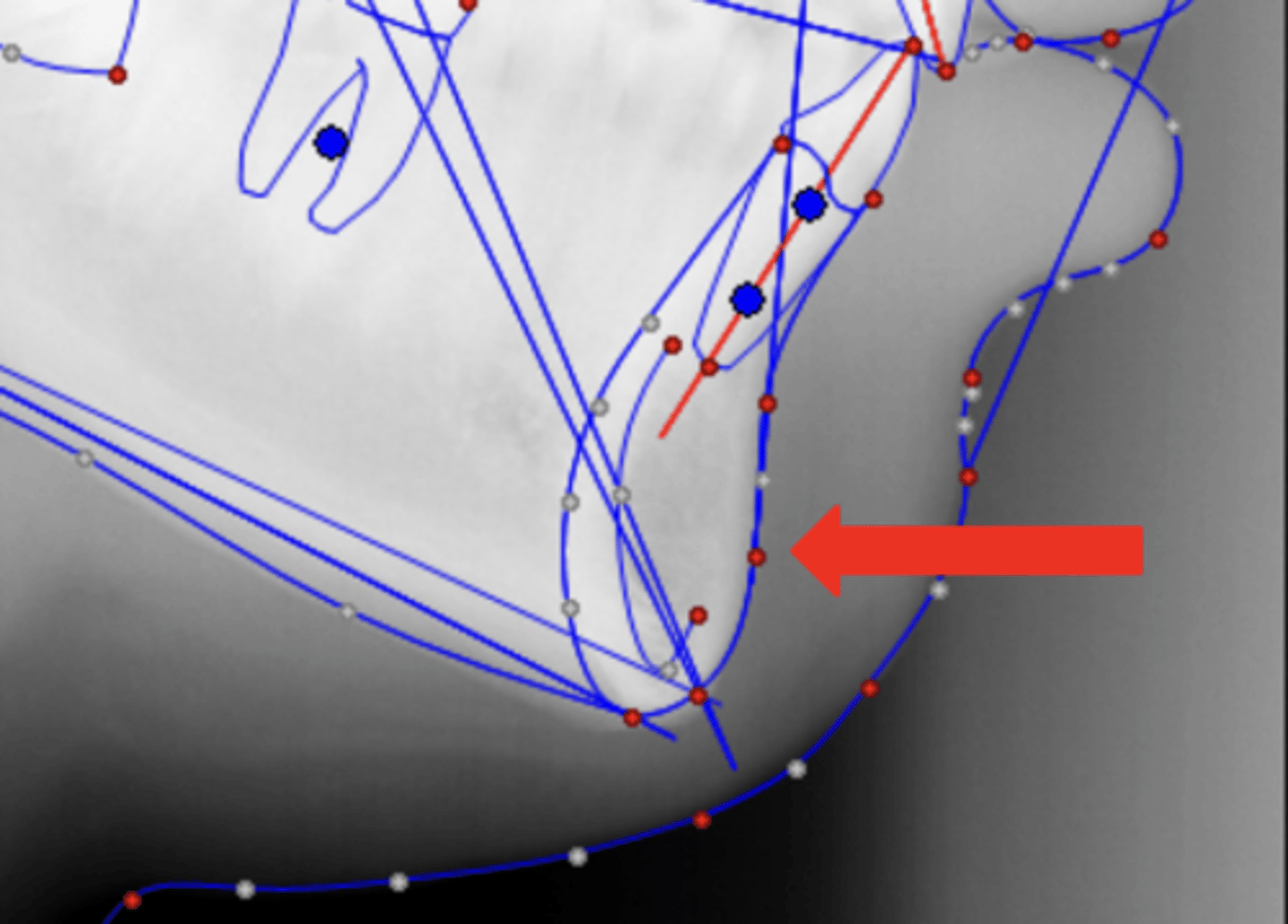
Gnathion (Gn)
The midpoint between the most anterior and inferior point of the bony chin
What landmark is this?
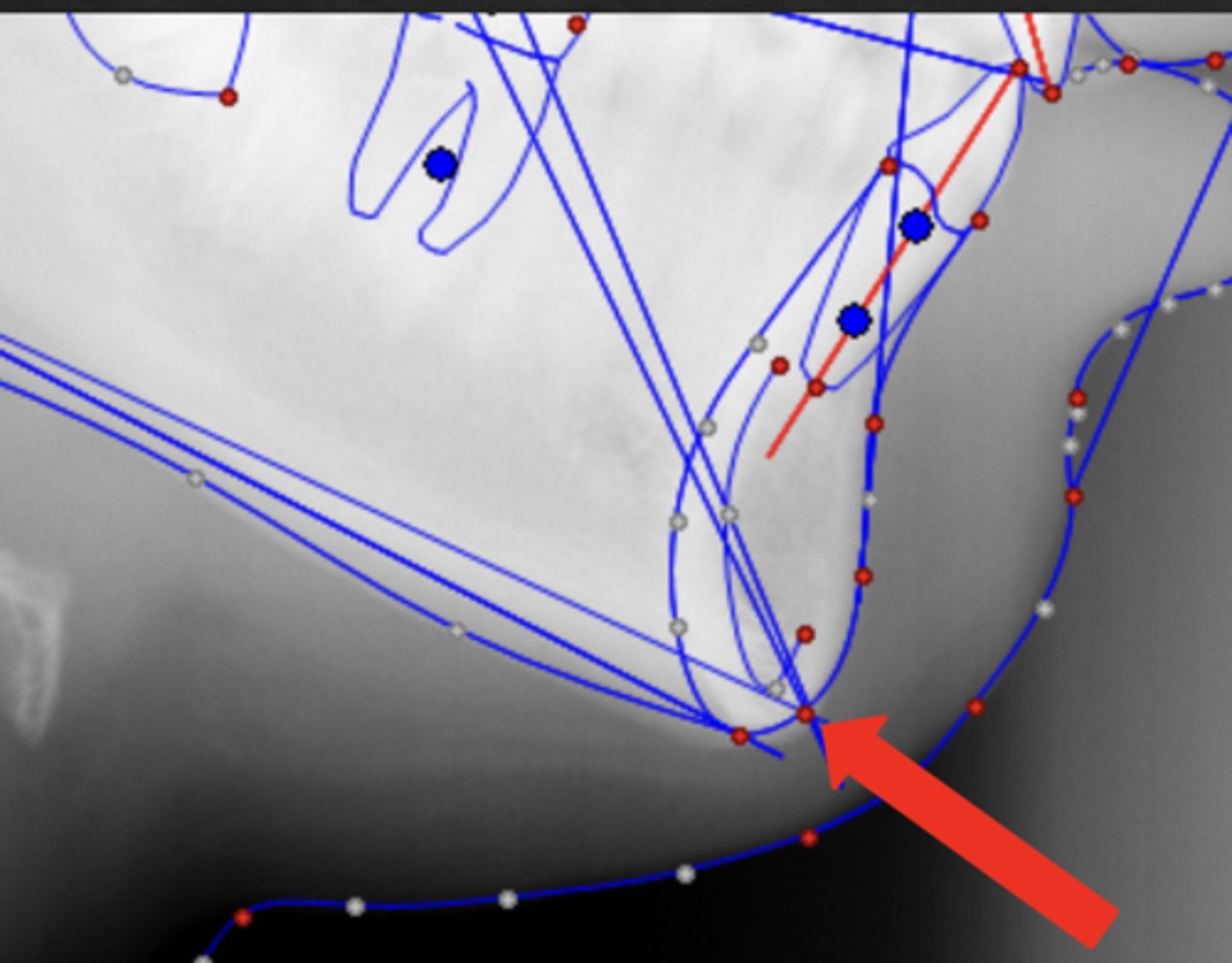
Menton (Me)
The most inferior point of the symphysis
What landmark is this?
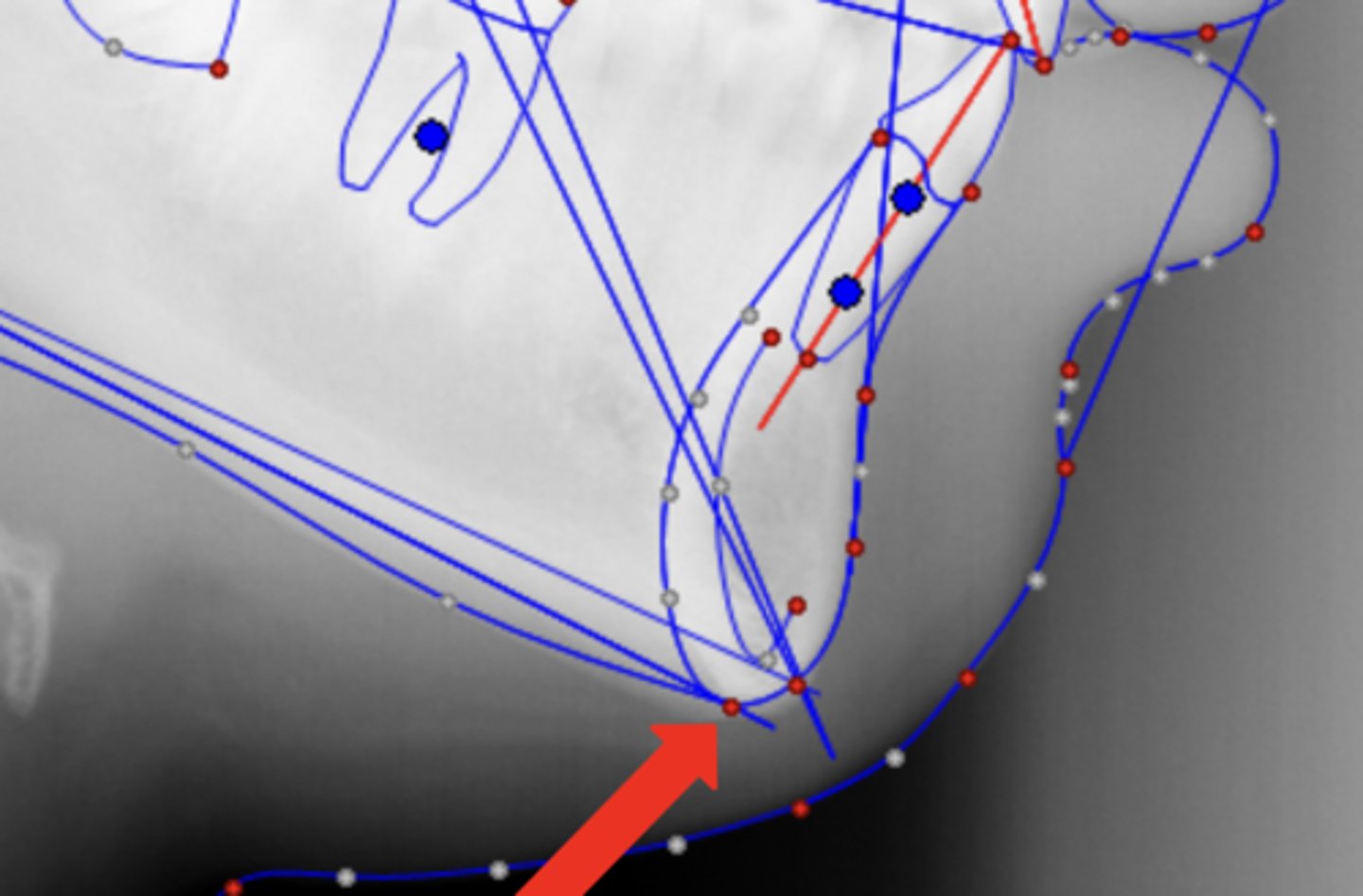
Gonion (Go)
The most convex point along the inferior border of the body of the mandible
What landmark is this?
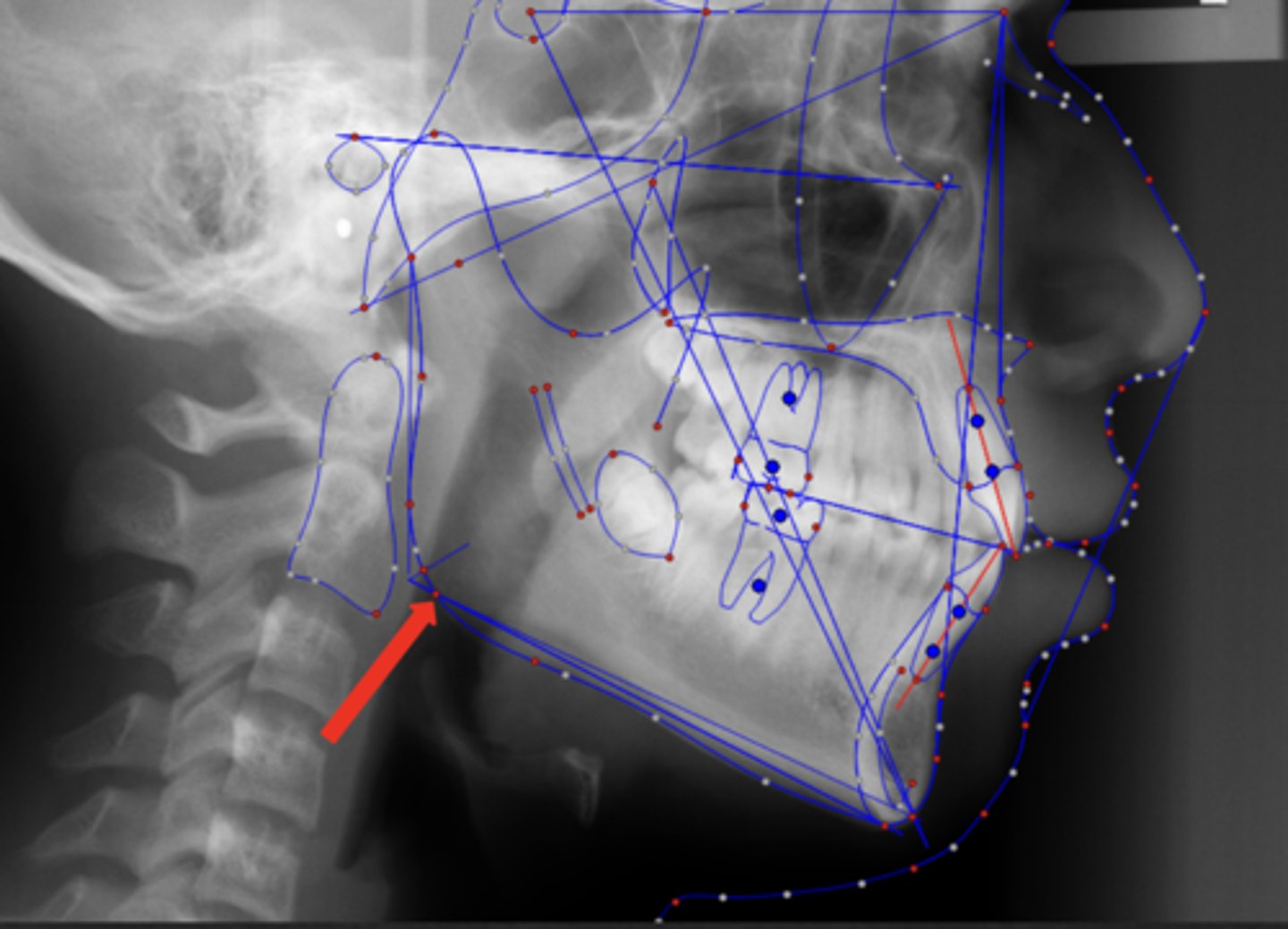
Ramus Point
The most posterior point of the border of the ramus
What landmark is this?
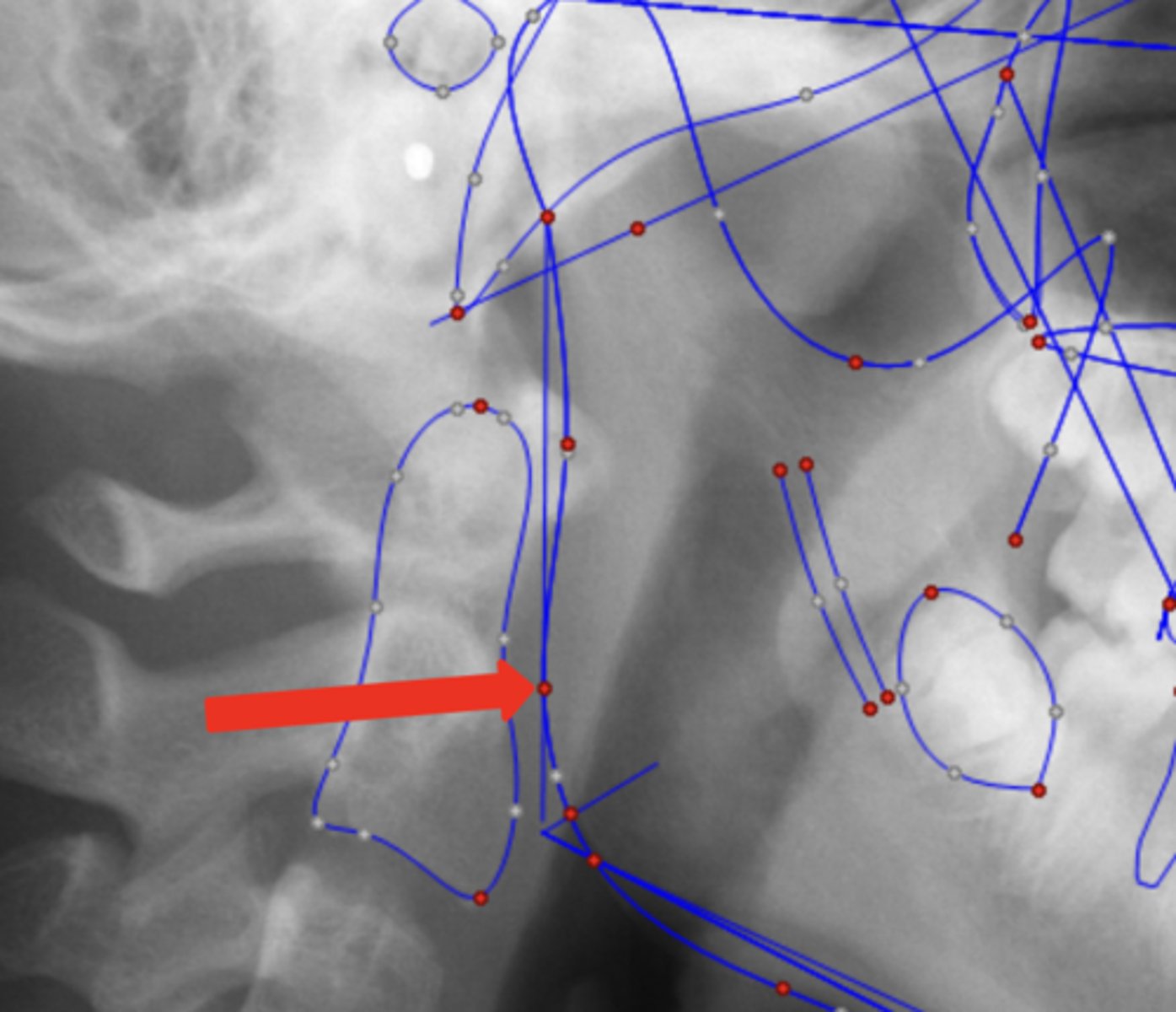
Articulare (Ar)
The intersection of the mandible with the temporal bone
Not an anatomic structure
What landmark is this?
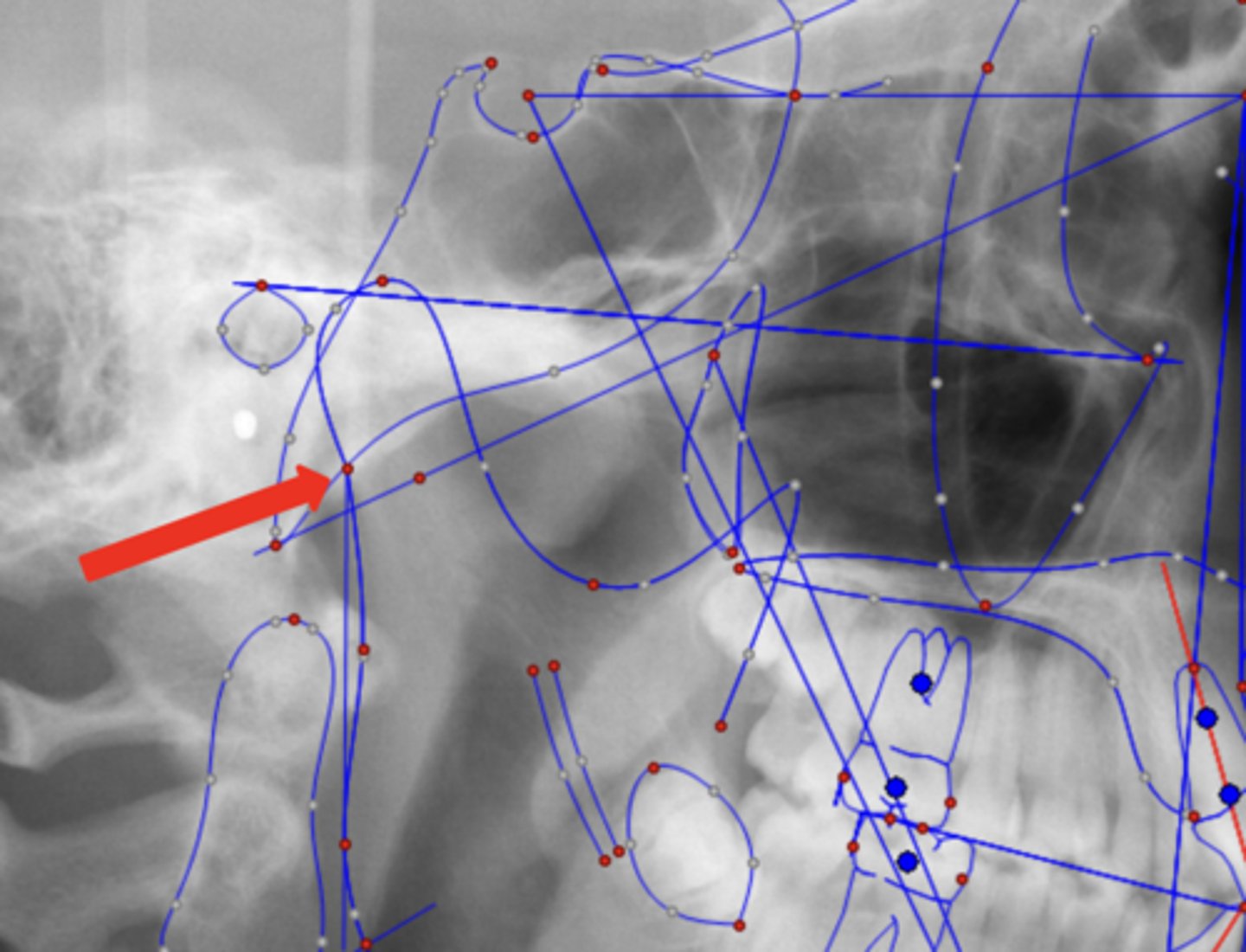
Condylion (Co)
The most superior point of the condyle
Should be immediately anterior to Porion
What landmark is this?
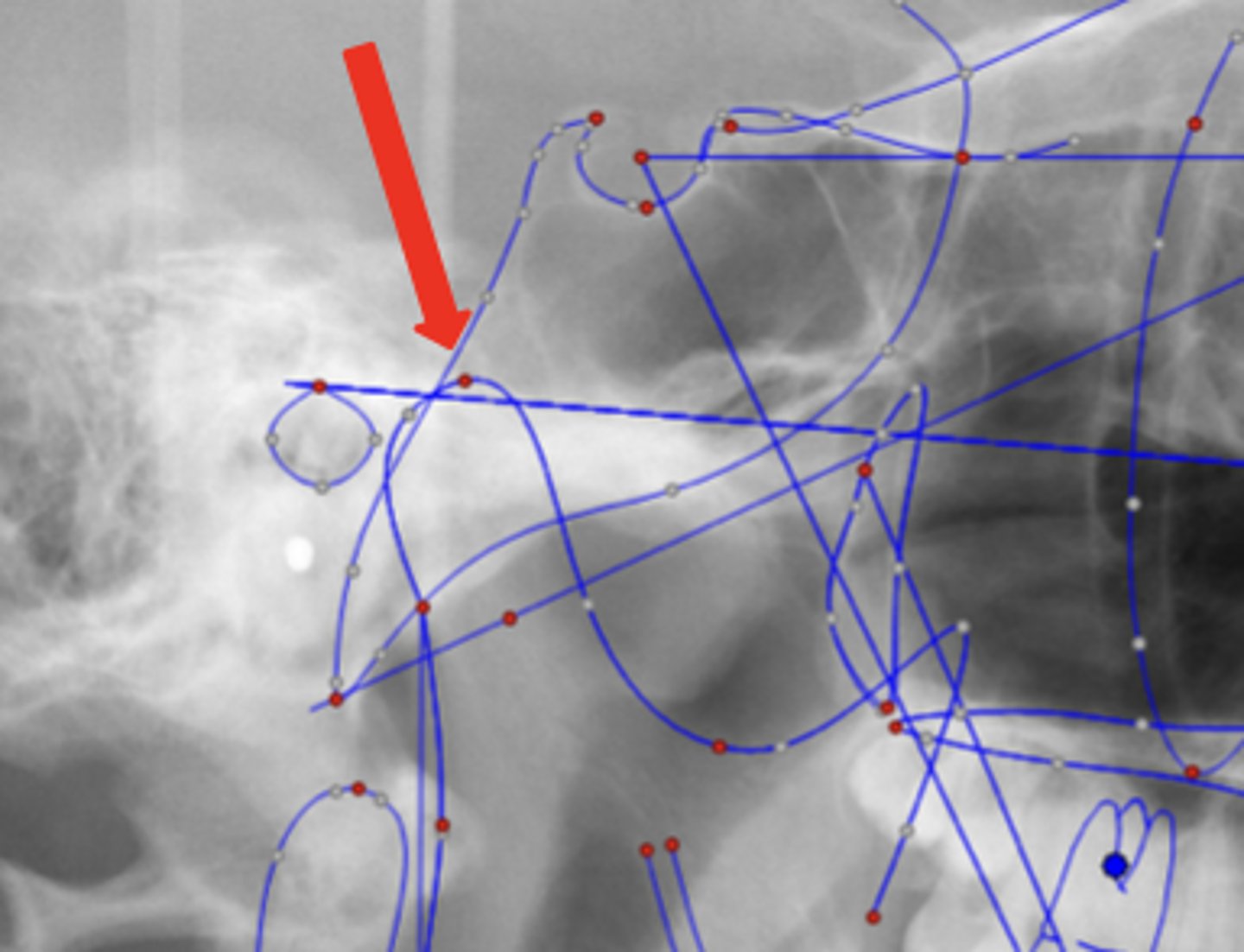
Constructed Gonion
The intersection of the mandible and the line that bisects the angle formed by Menton-Gonion and Articulare-Ramus Point
What landmark is this?
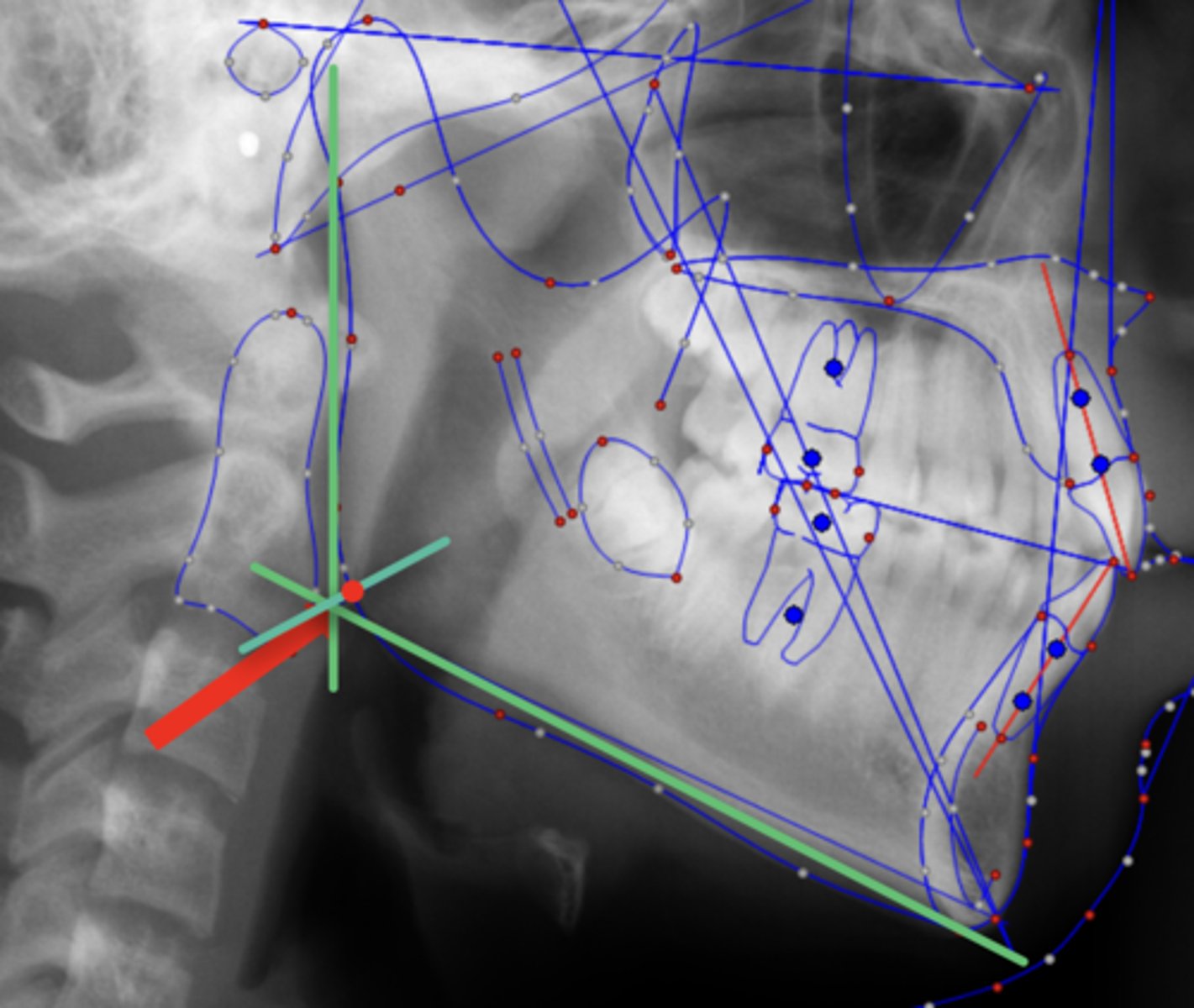
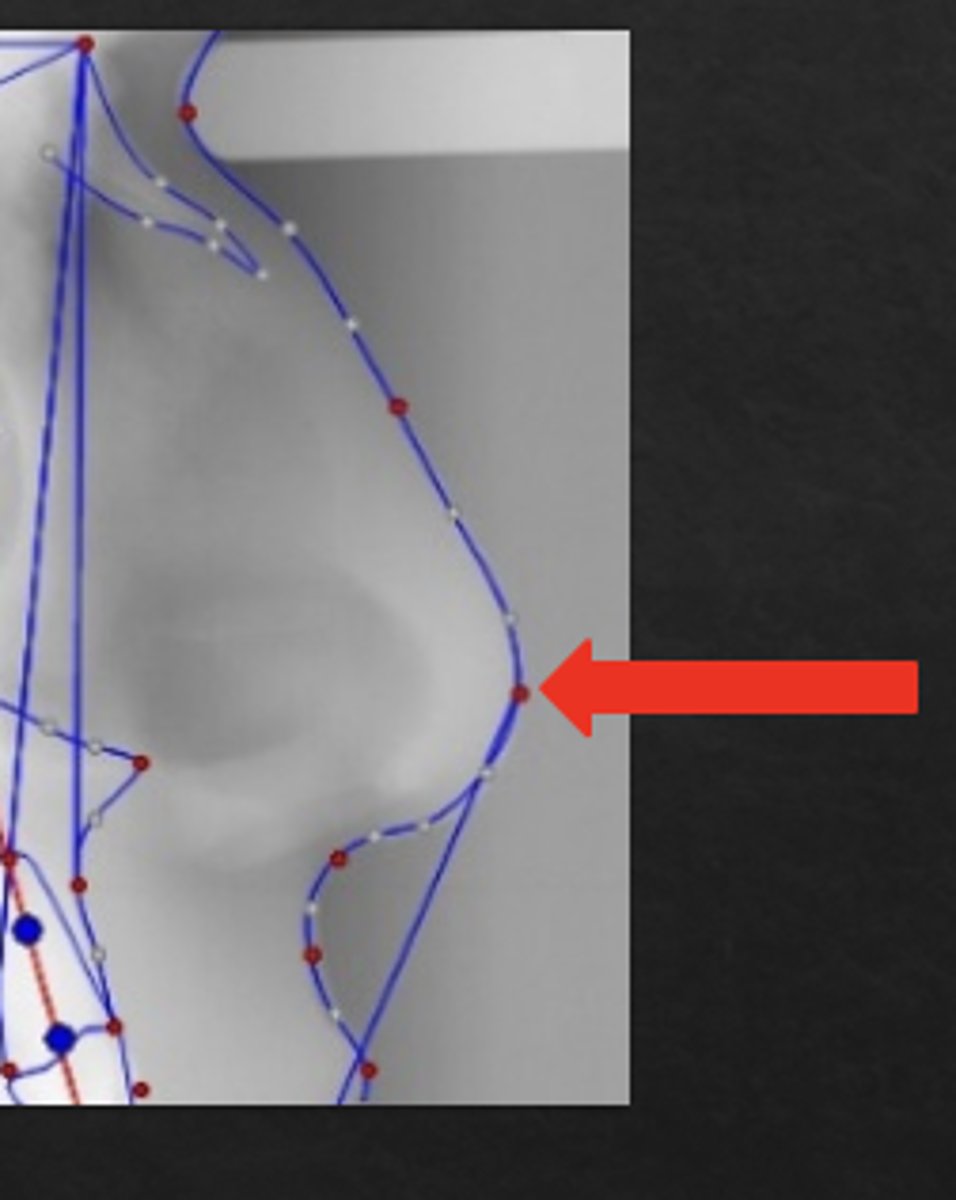
Tip of the nose
The most anterior point of the nurse of the nose
Pronasale
What landmark is this?
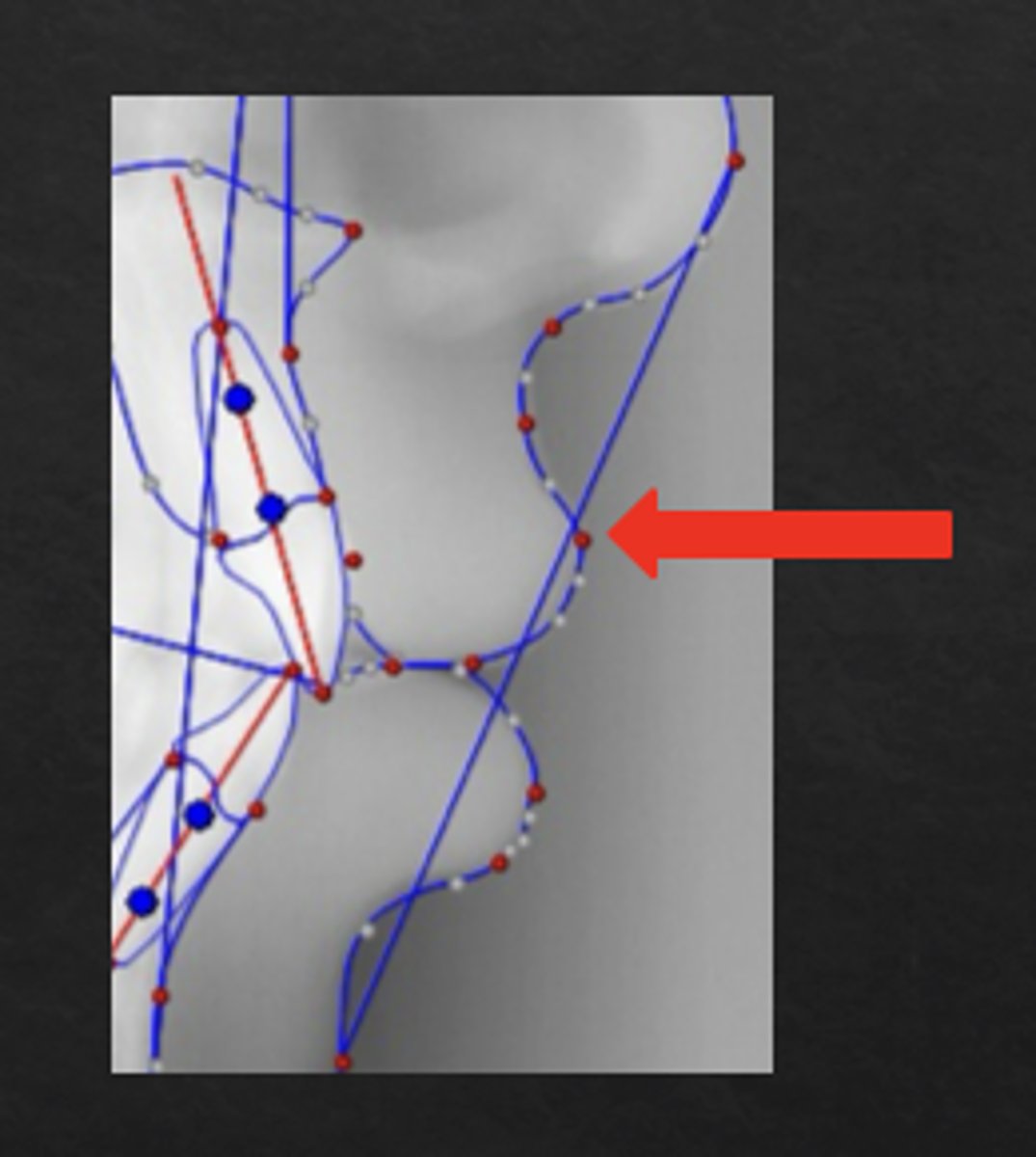
Upper lip
The most anterior point on the curve of the upper lip
What landmark is this?
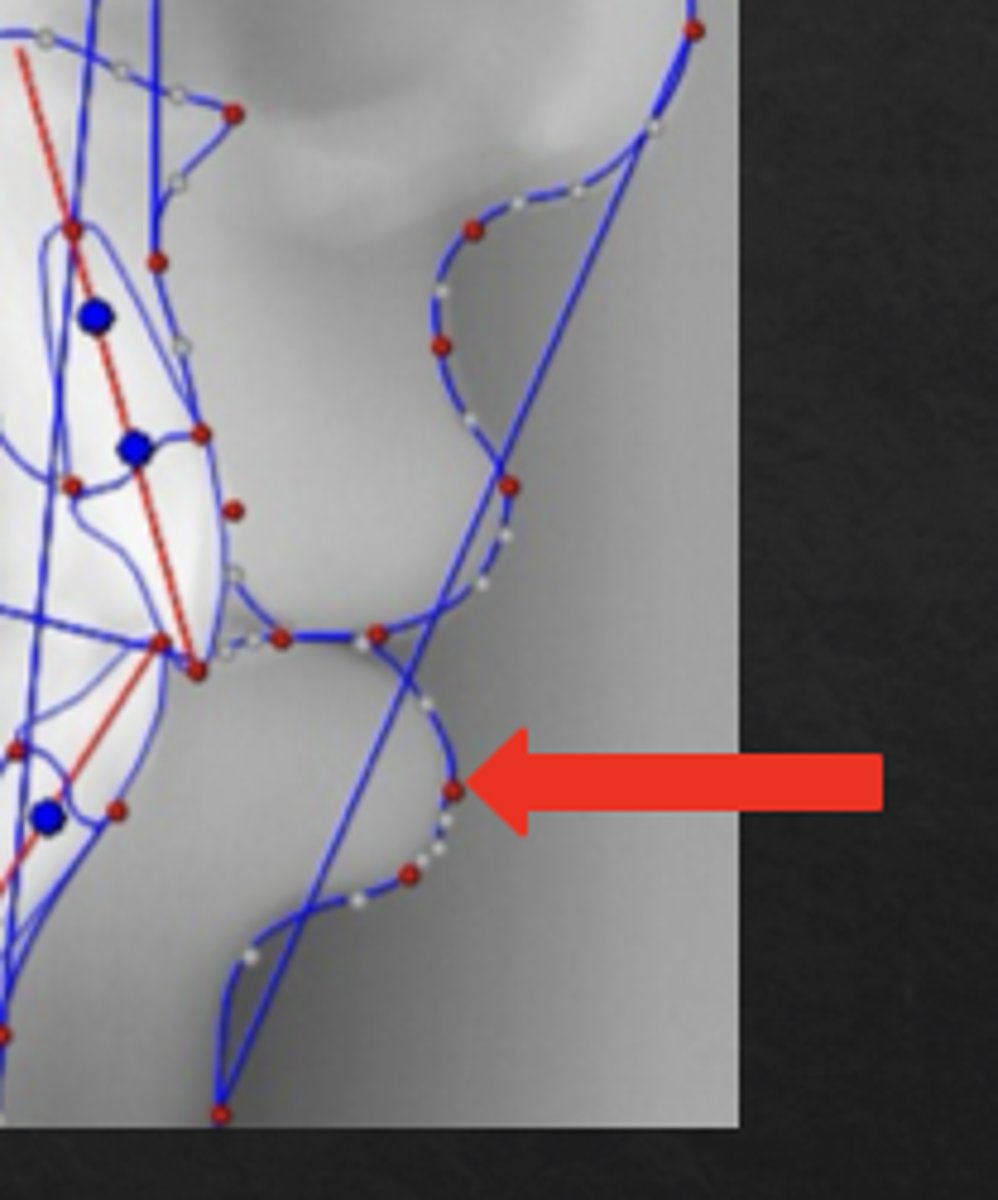
Lower lip
The most anterior point on the curve of the lower lip
What landmark is this?
Soft tissue Pogonion
The most anterior point on the curve of the soft tissue chin
What landmark is this?
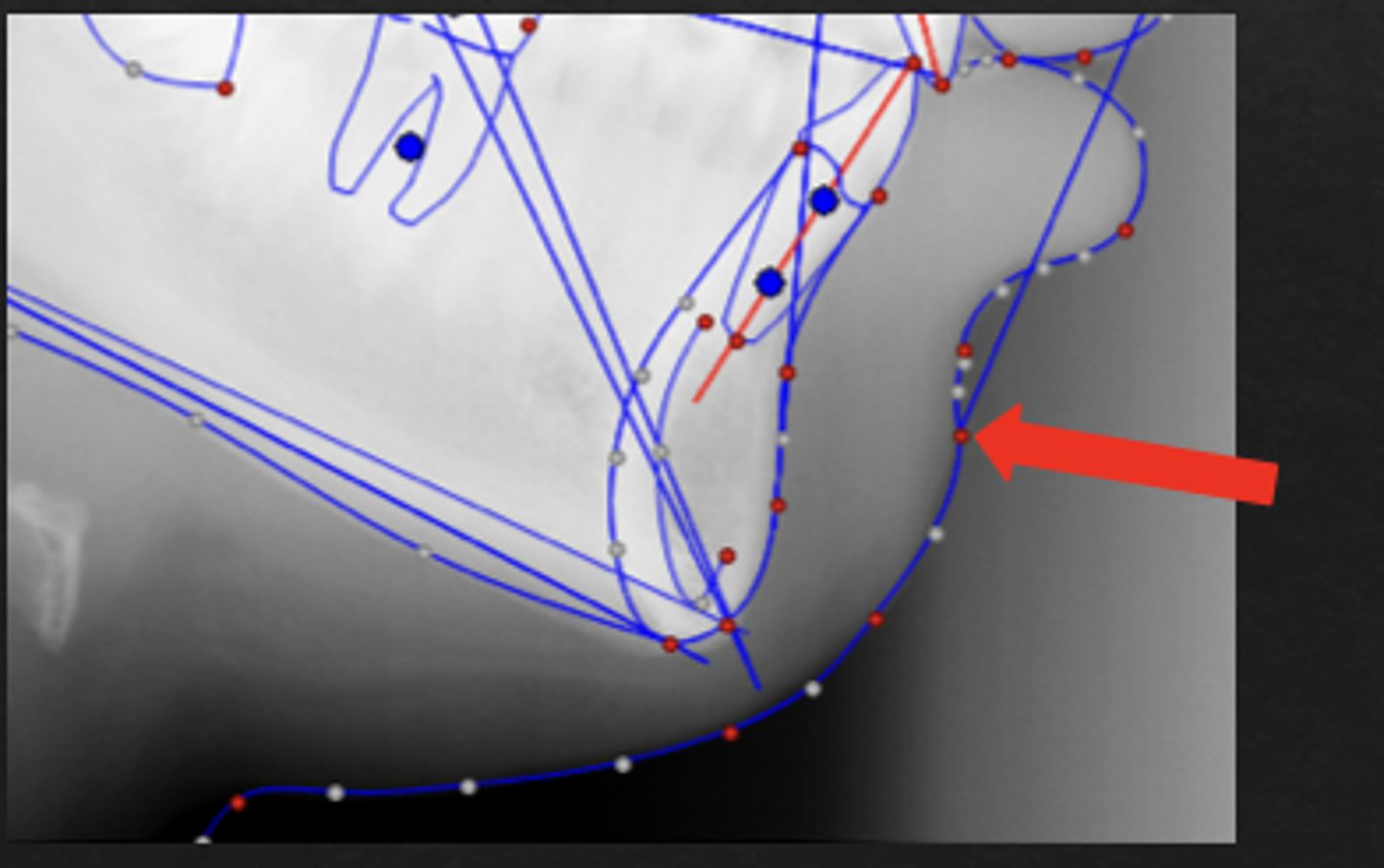
Symphysis
The internal and external aspects of the symphysial border
Used to superimpose the mandible
What landmark is this?
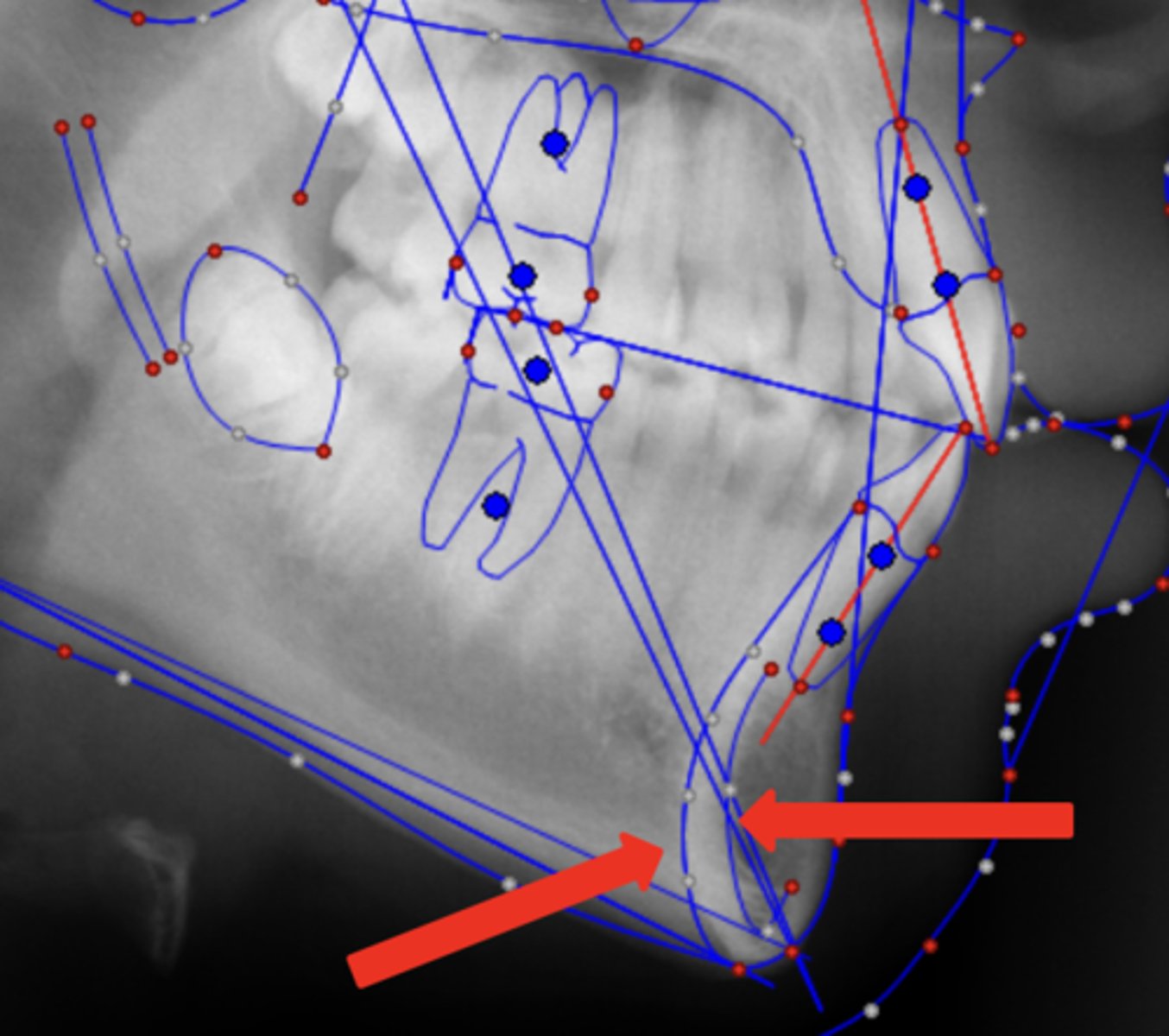
Inferior alveolar nerve IAN)
The inferior alveolar nerve canal
Used to superimpose the mandle
What landmark is this?
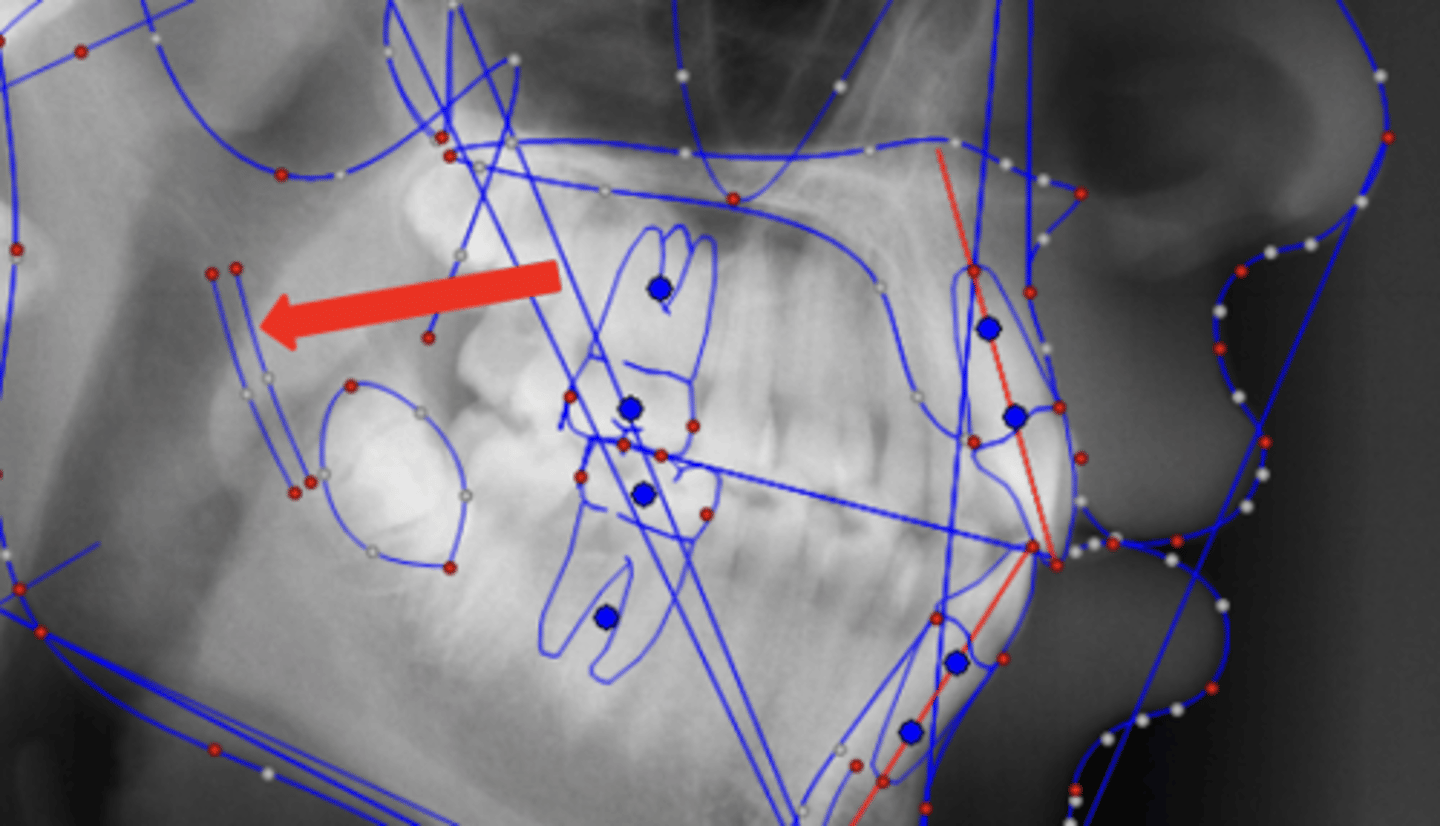
Lower Third Molar Bud (L8)
The developing lower third molar crown
Used to superimpose the mandible
What landmark is this?
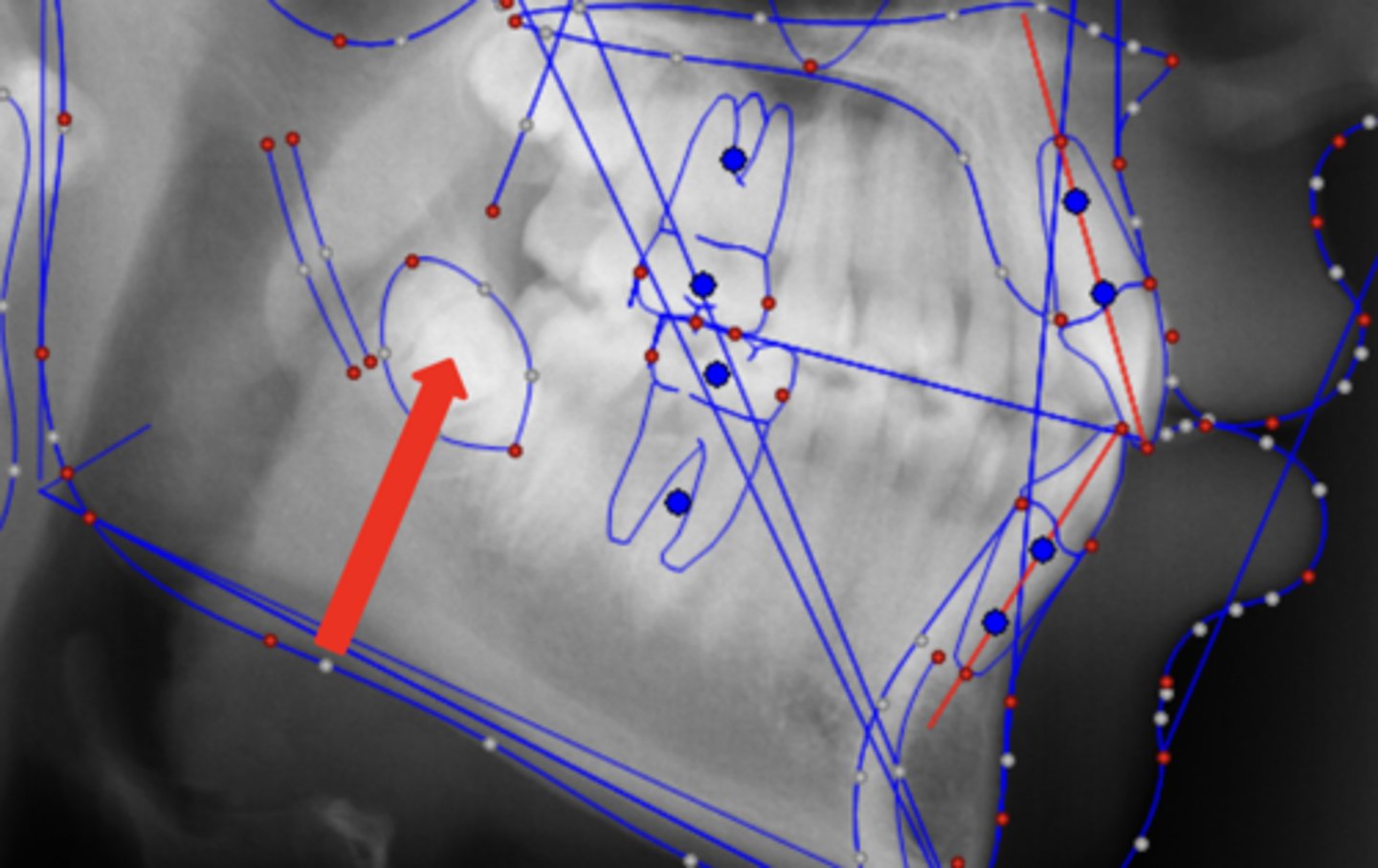
U6
The upper first molar
What landmark is this?
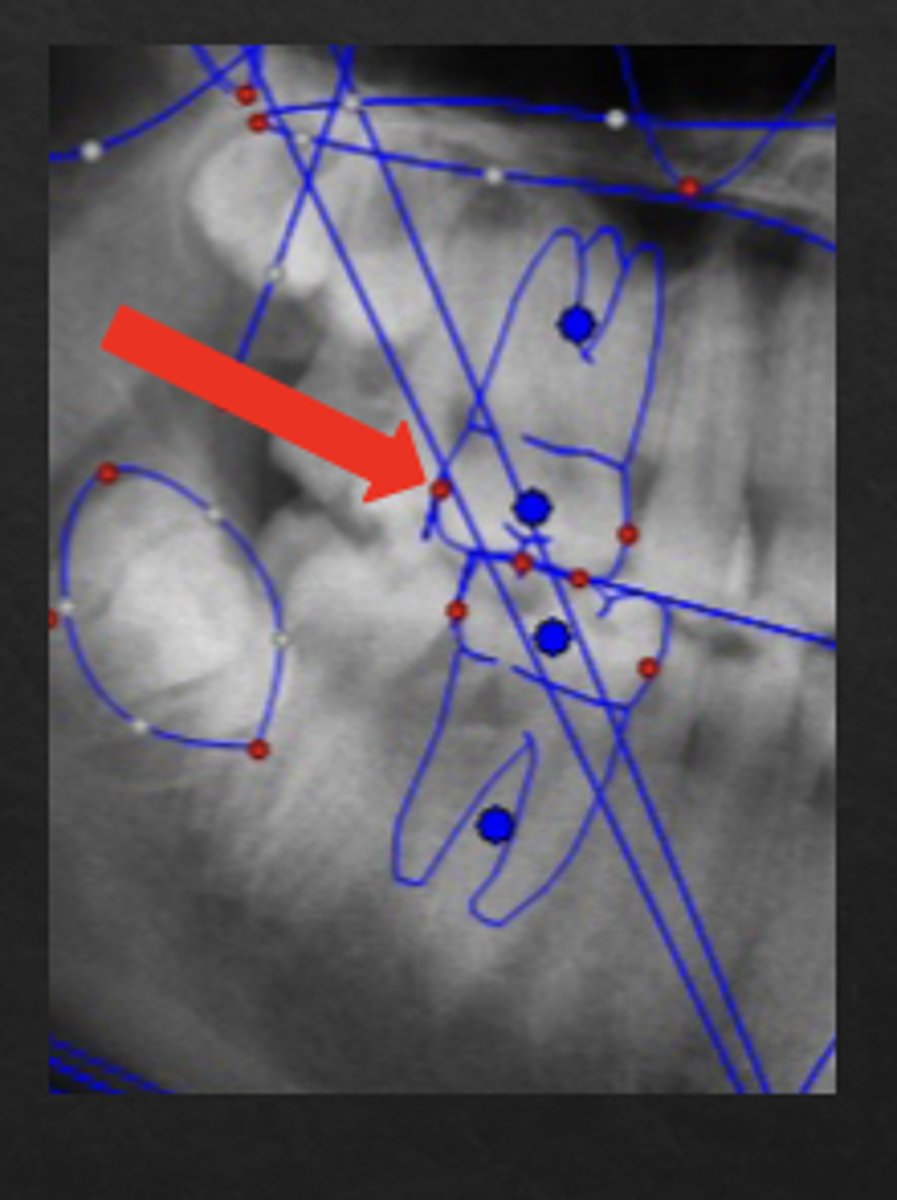
L6
The lower first molar
What landmark is this?
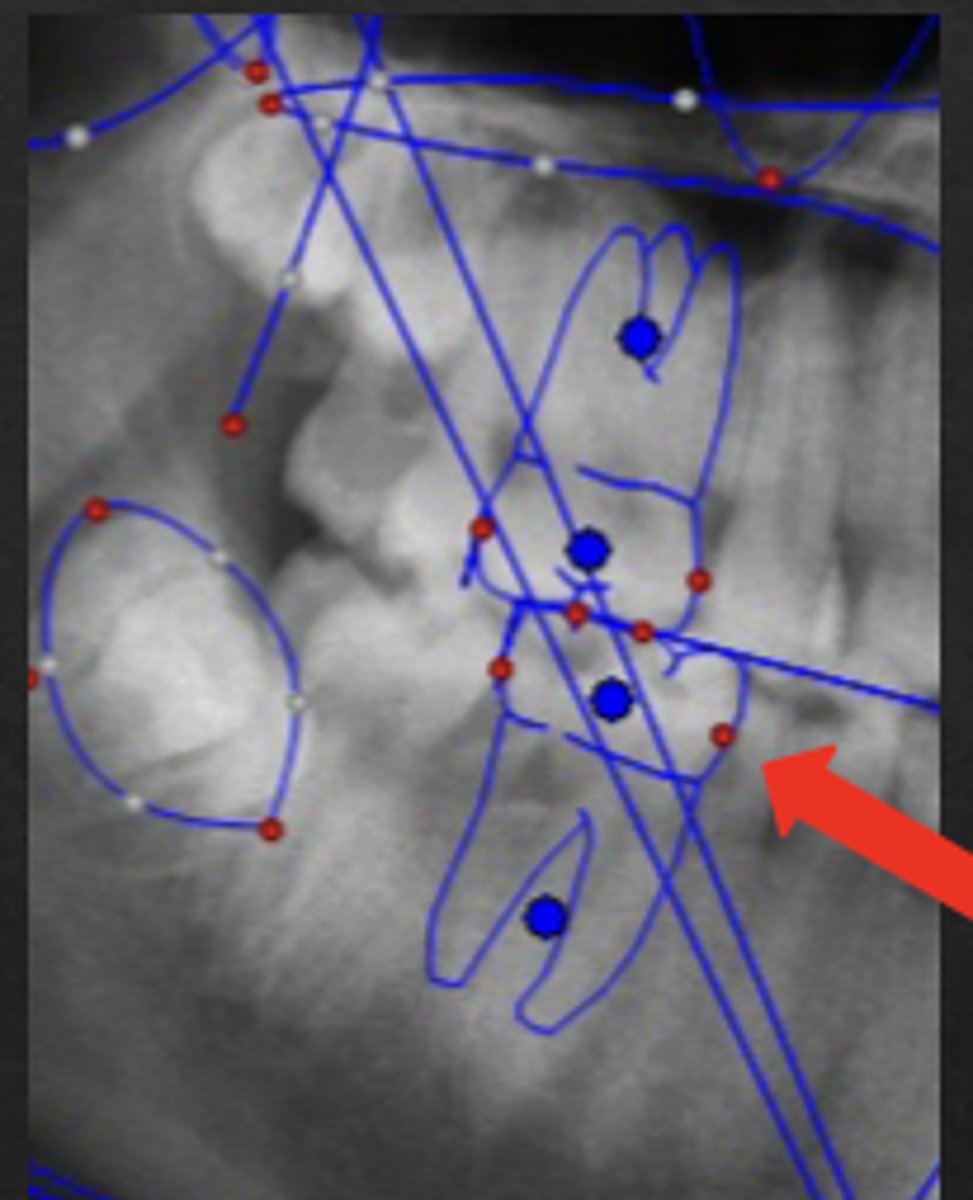
U1
The upper central incisor
What landmark is this?
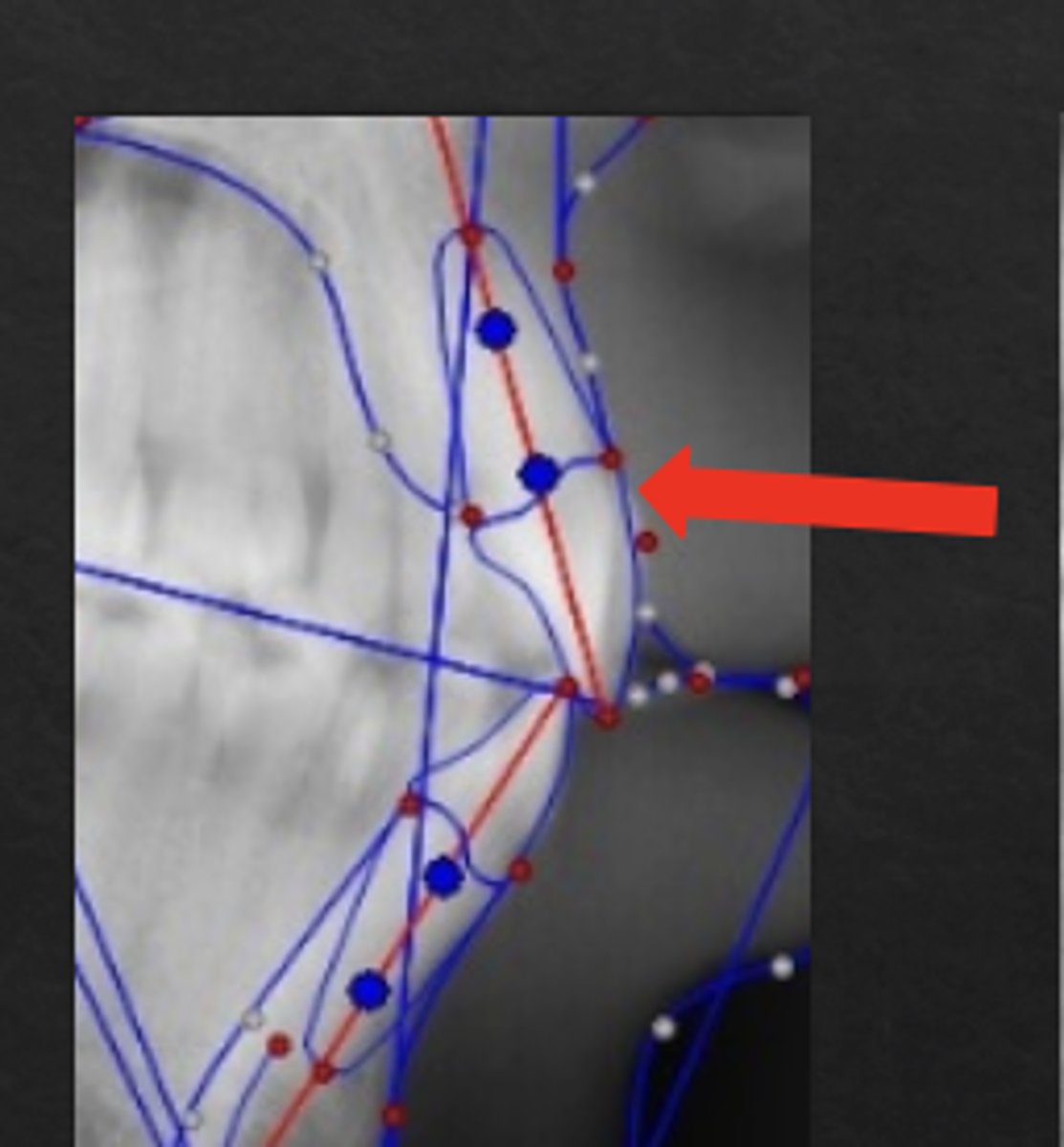
L1
The lower central incisor
What landmark is this?
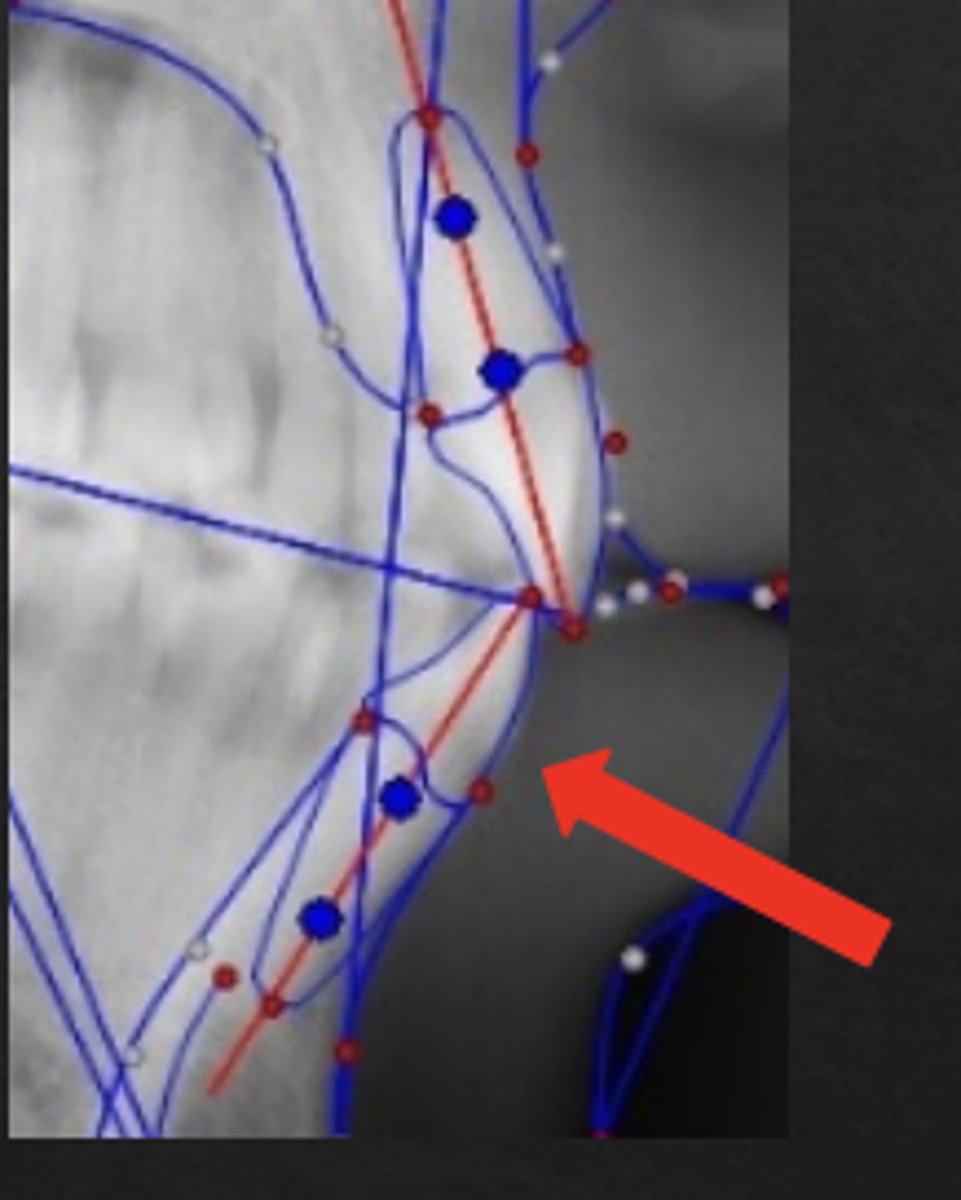
They provide a quantitative guide for understanding the patients malocclusion
They help guide your diagnosis and treatment plan
What is the purpose of cephalometric measurements?
Angle: measured in degrees
Distance: measured in mm
What are the two types of measurements that you can obtain from a cephalometric radiograph?
This means we have to calibrate our measurements so that we can compare them to the actual patient
This is what the ruler is for
A cephalometric radiograph is rarely the same size as the patients head, and is often magnified.
What does this mean?
True
T/F: On a cephalometric radiograph, angle measurements are the same regardless of the magnification or the size of the object being measured
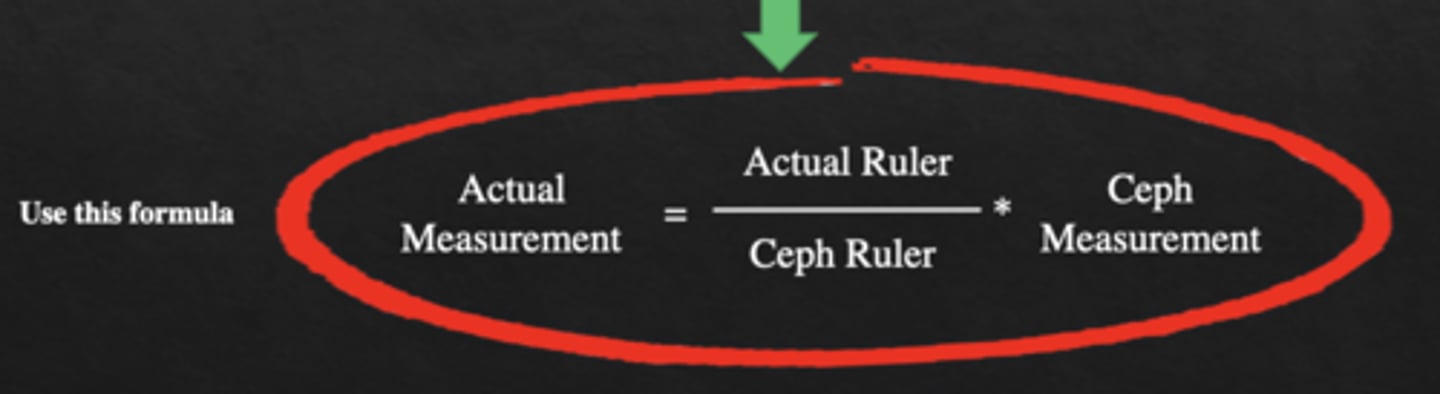
Actual measurement=
(actual ruler/ceph ruler) X ceph measurement
What is the distance-measurements formula we use when measuring distance on a cephalometric radiograph?
True
T/F: When analyzing the measurements from the ceph, your well-trained eye and clinical judgement should always trump the "Norms"
Cranial base to maxilla
Cranial base to mandible
Maxilla to mandible
The skeletal cephalometric analysis often compares 3 relationships.
What are they?
The cranial base stops growing early to mirror early cessation of brain growth
Excellent reference plane for the growth of the rest of the face
Why do we use the cranial base as a reference plane for cephalometric radiographs?
Frankfort Horizontal (FH)
Porion to Orbitale
What reference line is this?
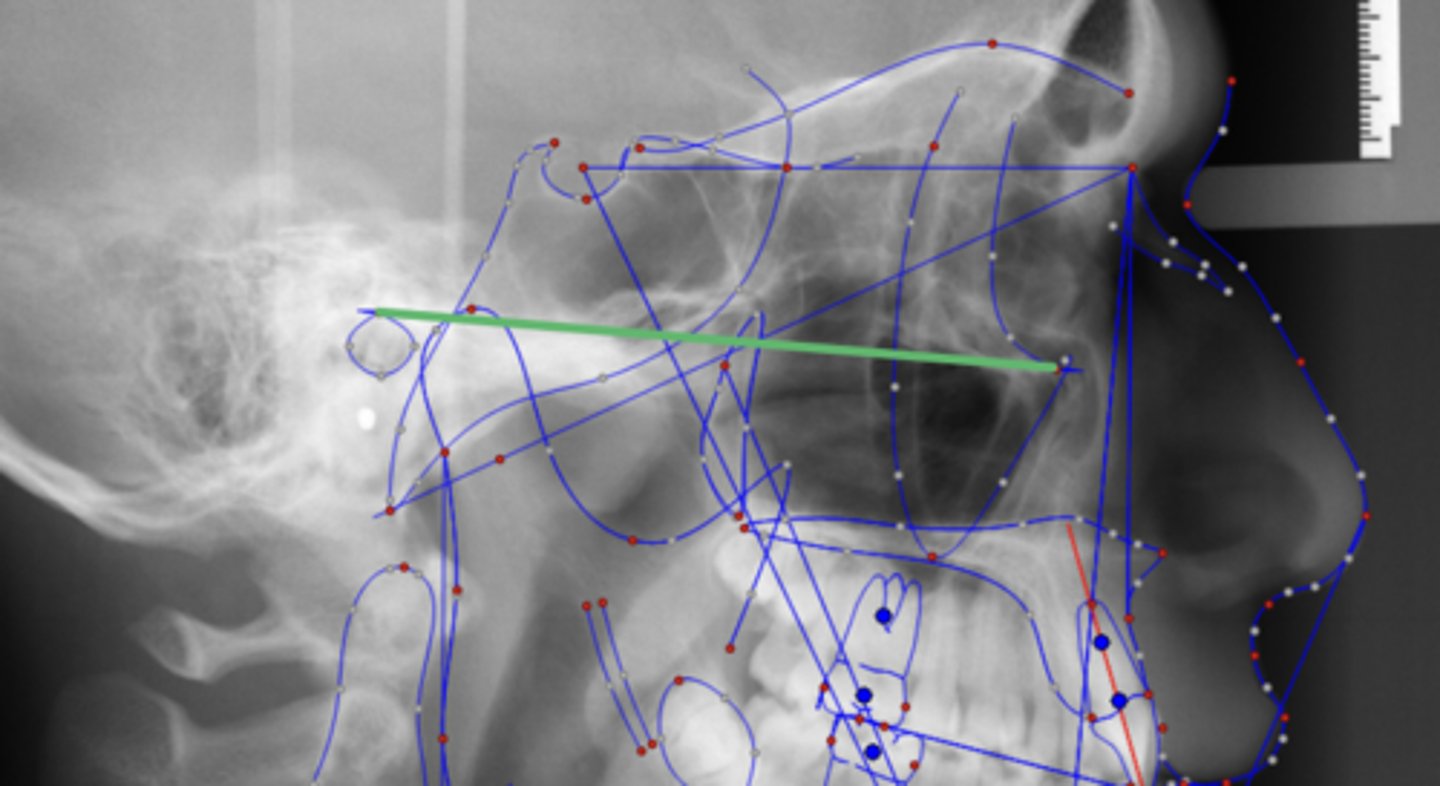
Cranial base reference line
"Natural head position"
Should be parallel to the floor when the patient "looks off into the horizon"
What is the purpose of measuring the Frankfort Horizontal (FH)?
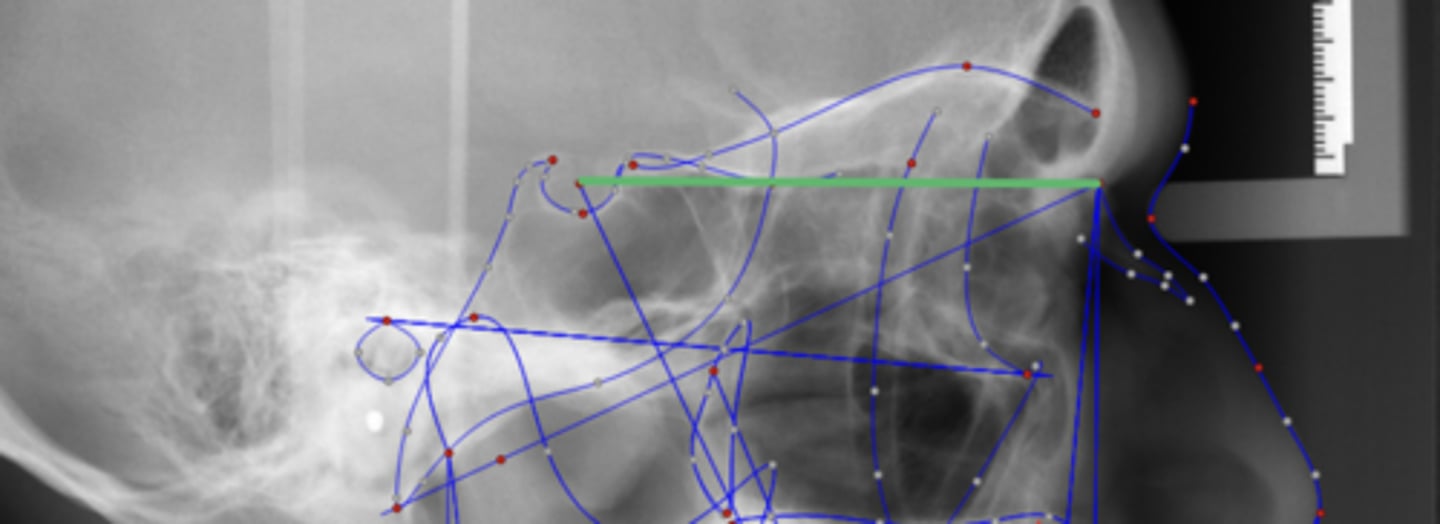
Sella Nasion (SN)
Sella to Nasion
Cranial base reference line
According to Bjork, the cranial base grows along the Sella Nasion line
What reference line is this?
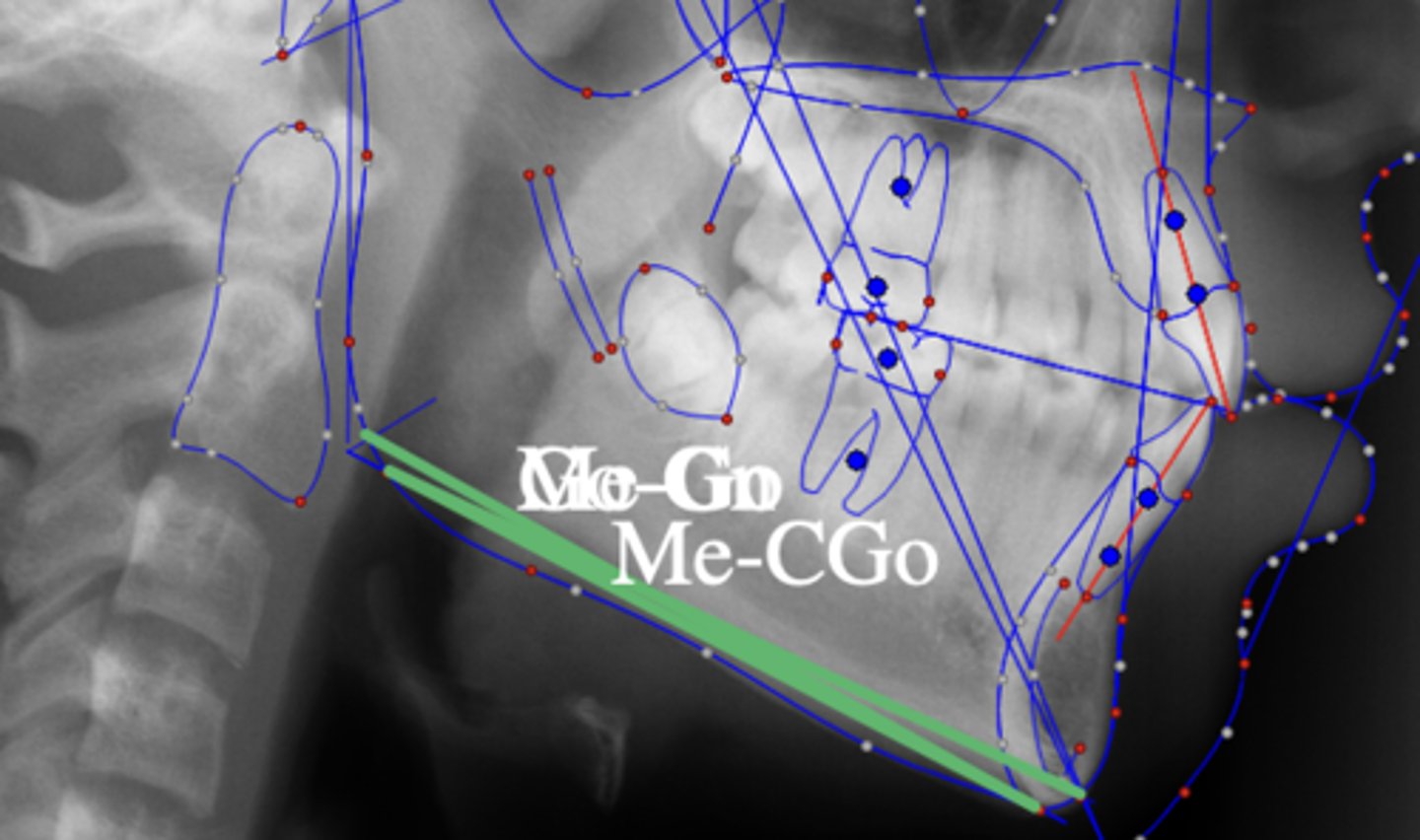
Mandibular Plane (MP)
Tangent line to lower border of the mandible
Three definitions
1. Me-Go
2. Me-Constructed Go
--> This is what the American Board of Orthodontics uses
3. Go-Gn
What reference line is this?
Downs Occlusal Plane
Downs Vs. Ricketts Occlusal Plane landmark
Which one is this?
Point 1: Molar occlusal contact
Point 2: Bisection of the overbite
Ricketts's Occlusal Plane
Downs Vs. Ricketts Occlusal Plane landmark
Which one is this?
Point 1: Molar occlusal contact
Point 2: 1st premolar occlusal contact
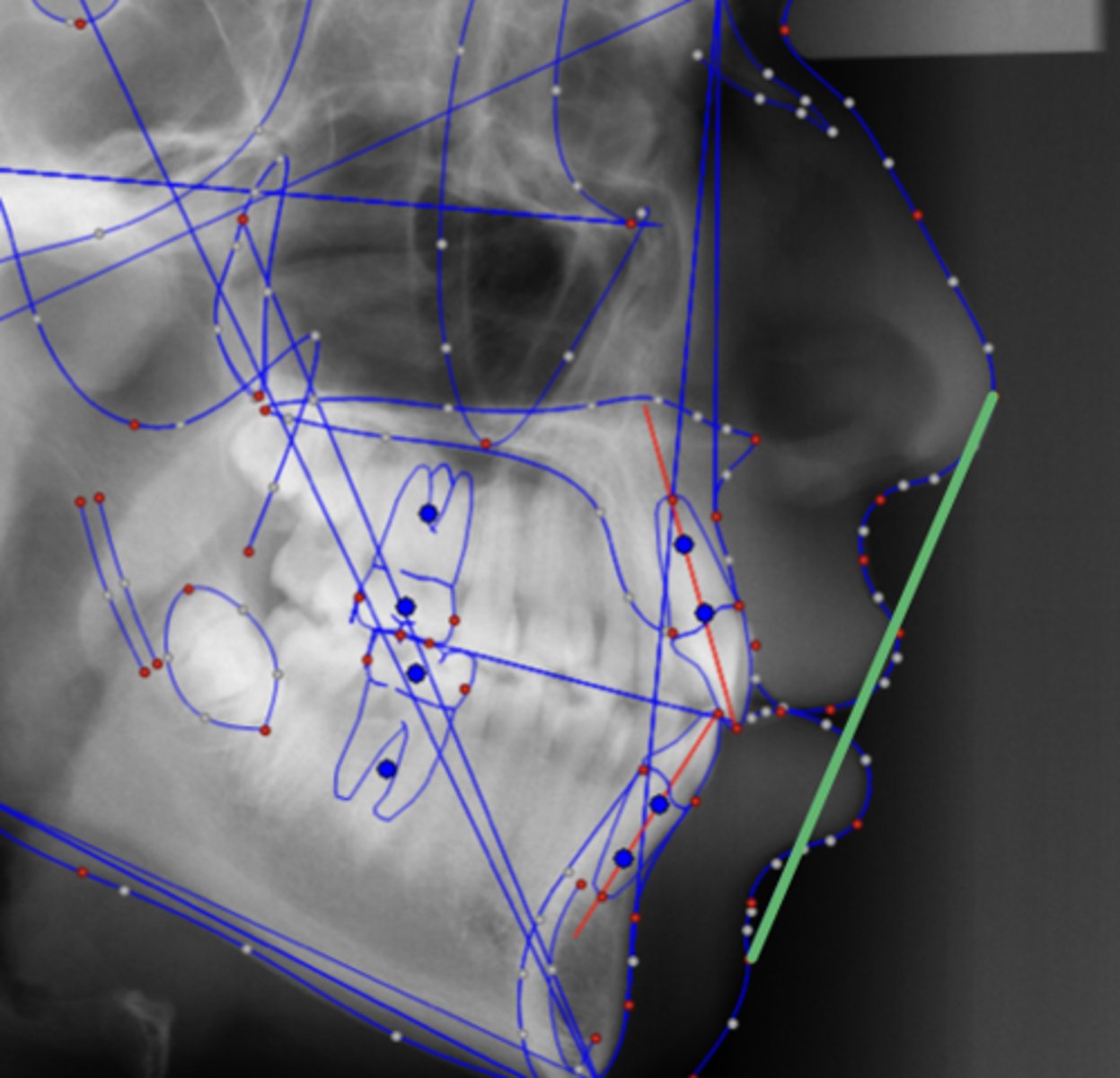
E-Plane
Tip of Nose to Soft Tissue Pogonion
Lip protrusion reference plane
Heavily affected by nose and chin size
What reference line is this?
SNA- Sella-Nasion vs Nasion-A Point
What landmark is this?
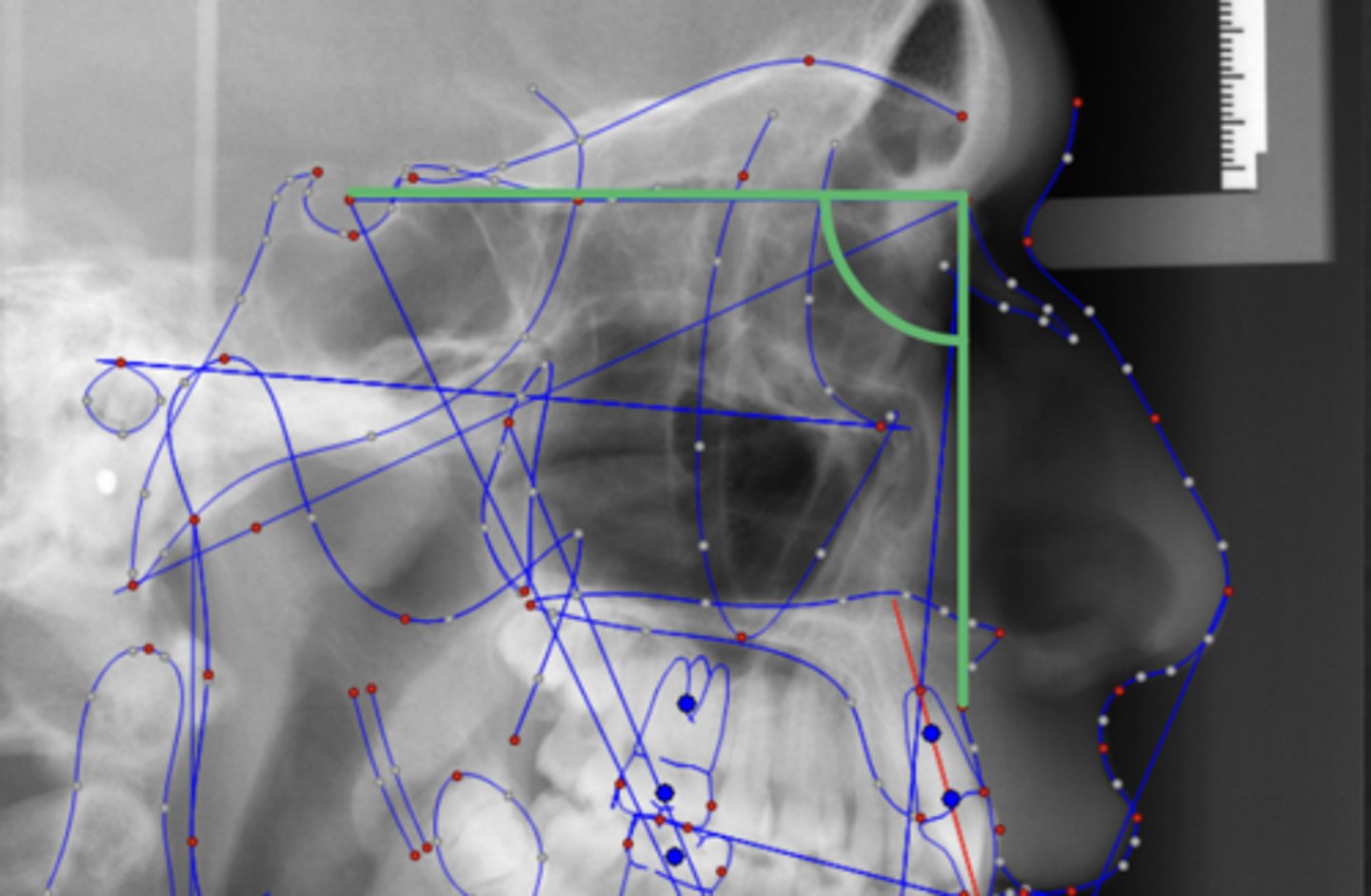
Porion to Orbitale
What two landmarks create the Frankfort Horizontal reference line?
Sella to Nasion
What two landmarks create the Sella-Nasion (SN)
1. Me-Go
2. Me-Constructed Go
3. Go-Gn
What are the 3 definitions of the mandibular plane (MP) reference line?
Tells you about the AP position of the maxilla
What does the Sella-Nasion vs Nasion A-Point (SNA) reference line tell you?
Protrusive maxilla (too big)
The normal SNA angle measurement is 82.0 ±3.5.
If the SNA angle measurement is GREATER than the normal value, what does this tell you about the maxilla?
Well positioned Maxilla
The normal SNA angle measurement is 82.0 ±3.5.
If the SNA angle measurement is within the range of the normal value, what does this tell you about the maxilla?
Retrusive Maxilla (too small)
The normal SNA angle measurement is 82.0 ±3.5
If the SNA angle measurement is LESS than the normal value, what does this tell you about the maxilla?
Tells you about the AP position of the mandible
What does the Sella-Nasion vs Nasion B-Point (SNB) reference line tell you?
Retrusive Mandible
The normal SNB angle measurement is 80.9±3.4
If the SNB angle measurement is LESS than the normal value, what does this tell you about the mandible?
Well positioned Mandible
The normal SNB angle measurement is 80.9±3.4
If the SNB angle measurement is within the range of the normal value, what does this tell you about the mandible?
Protrusive Mandible
The normal SNB angle measurement is 80.9±3.4
If the SNB angle measurement is GREATER than the normal value, what does this tell you about the mandible?
Tells you about the AP skeletal classification
Nasion-A Point vs Nasion-B Point (ANB) is the difference between SNA-SNB
What does this tell you?
Class II
The normal value of ANB is 1.6±1.5
If SNA-SNB value is GREATER than the normal value, what angle classification is this?
Class III
The normal value of ANB is 1.6±1.5
If SNA-SNB value is LESS than the normal value, what angle classification is this?
Class I
The normal value of ANB is 1.6±1.5
If SNA-SNB value is within the limits of the normal value, what angle classification is this?
FMA
Frankfort Horizontal vs. Mandibular Plane
What reference line is this?
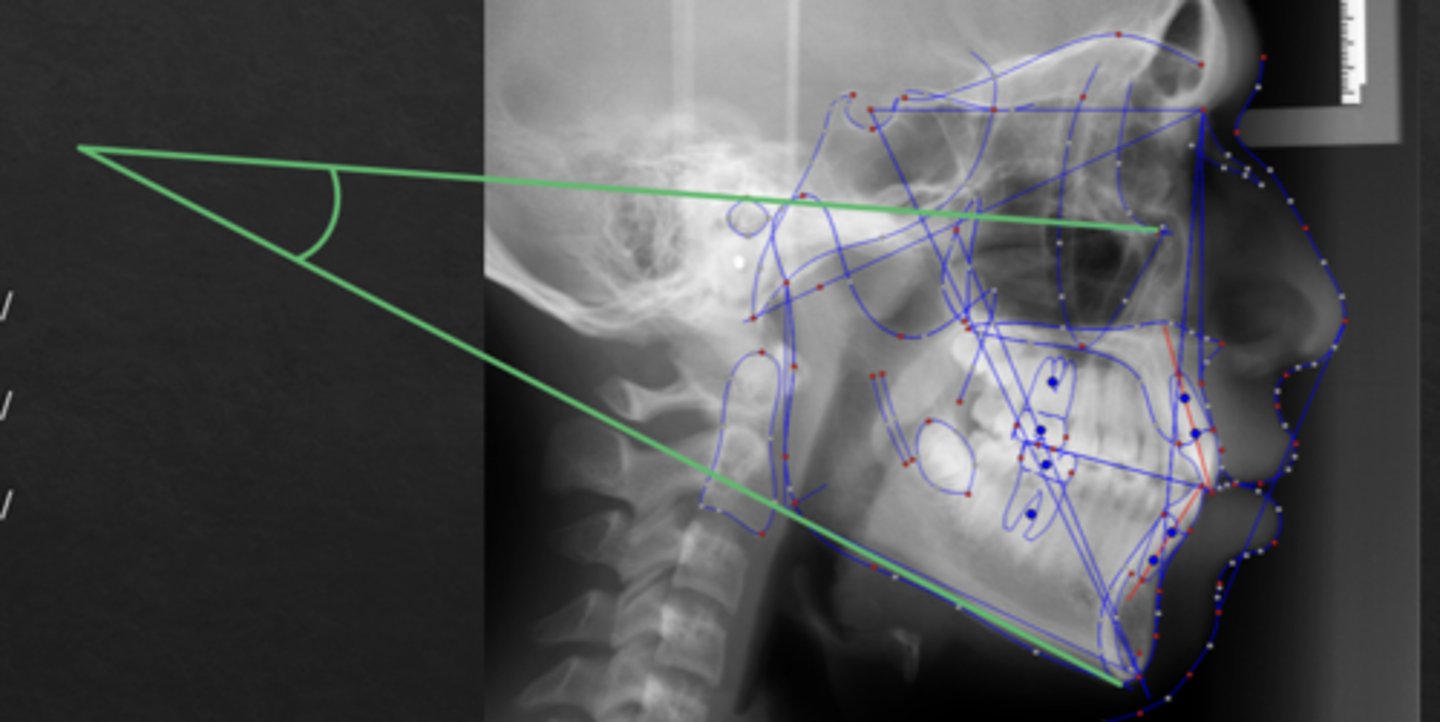
Tells you about the vertical angulation of the mandible
What does the FMA (Frankfort Horizontal vs. Mandibular Plane) reference line tell you?
High Angle/Dolicofacial/ Hyperdivergent
The normal FMA value is 23.9±4.5.
If the FMA value is GREATER than the normal value, what does this tell you about the mandible?
Low Angle/Brachyfacial/ Hypodivergent
The normal FMA value is 23.9±4.5.
If the FMA value is LESS than the normal value, what does this tell you about the mandible?
Normal Angle/Mesofacial/ Normodivergent
The normal FMA value is 23.9±4.5.
If the FMA value is within the limits of the normal value, what does this tell you about the mandible?
SN-MP
Sella-Nasion vs. Mandibular Plane
What reference line is this?
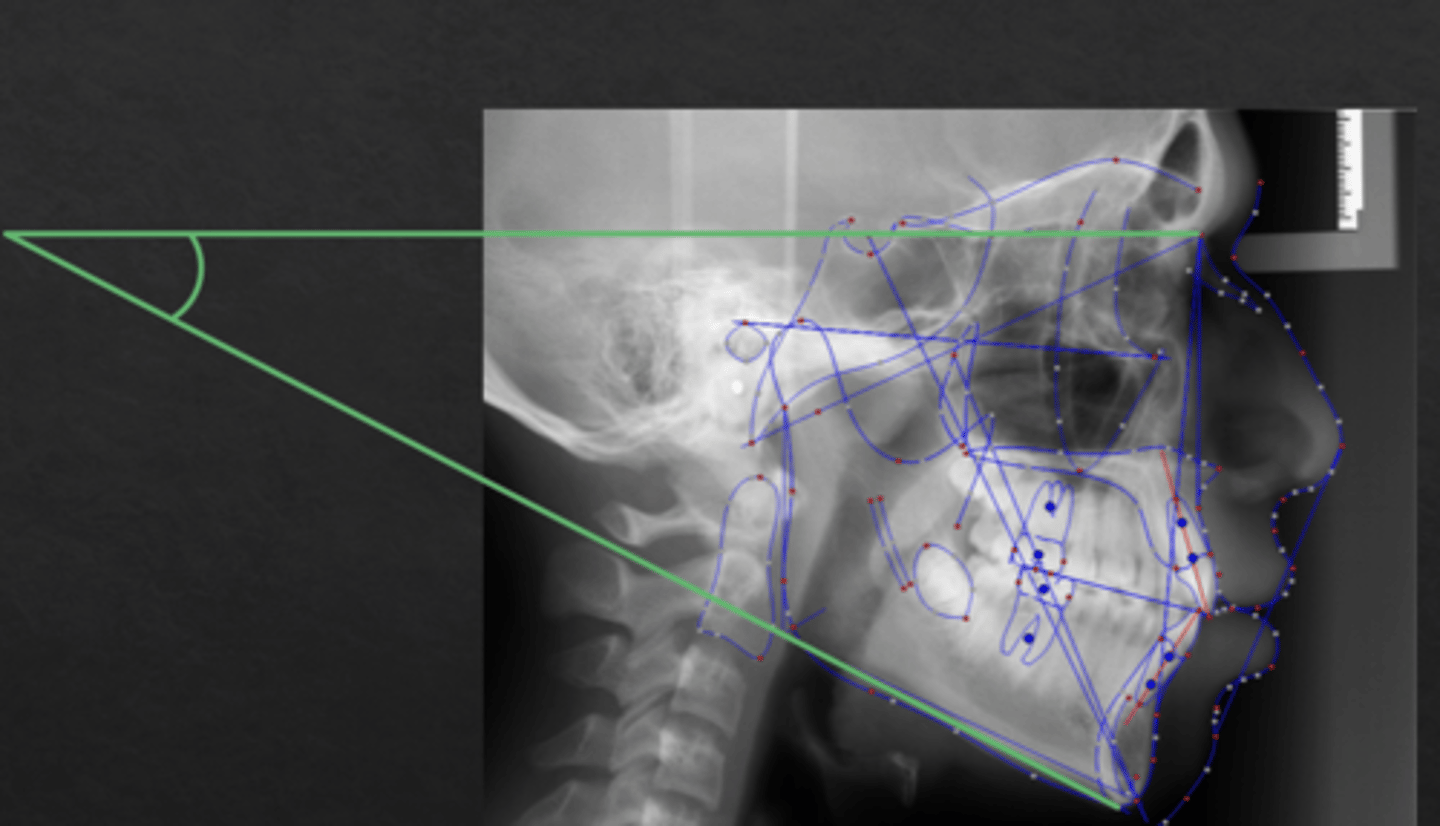
Tells you about the vertical angulation of the mandible
What does the SN-MP (Sella-Nasion vs. Mandibular Plane) reference line tell you?
High Angle/Dolicofacial/ Hyperdivergent
The normal SN-MP value is 32.9±5.2.
If the SN-MP value is GREATER than the normal value, what does this tell you about the mandible?
Low Angle/Brachyfacial/ Hypodivergent
The normal SN-MP value is 32.9±5.2.
If the SN-MP value is LESS than the normal value, what does this tell you about the mandible?
Normal Angle/Mesofacial/ Normodivergent
The normal SN-MP value is 32.9±5.2.
If the SN-MP value is within the limits of the normal value, what does this tell you about the mandible?
Y-Axis
Frankfort Horizontal vs. Sella-Gnathion
What reference line is this?
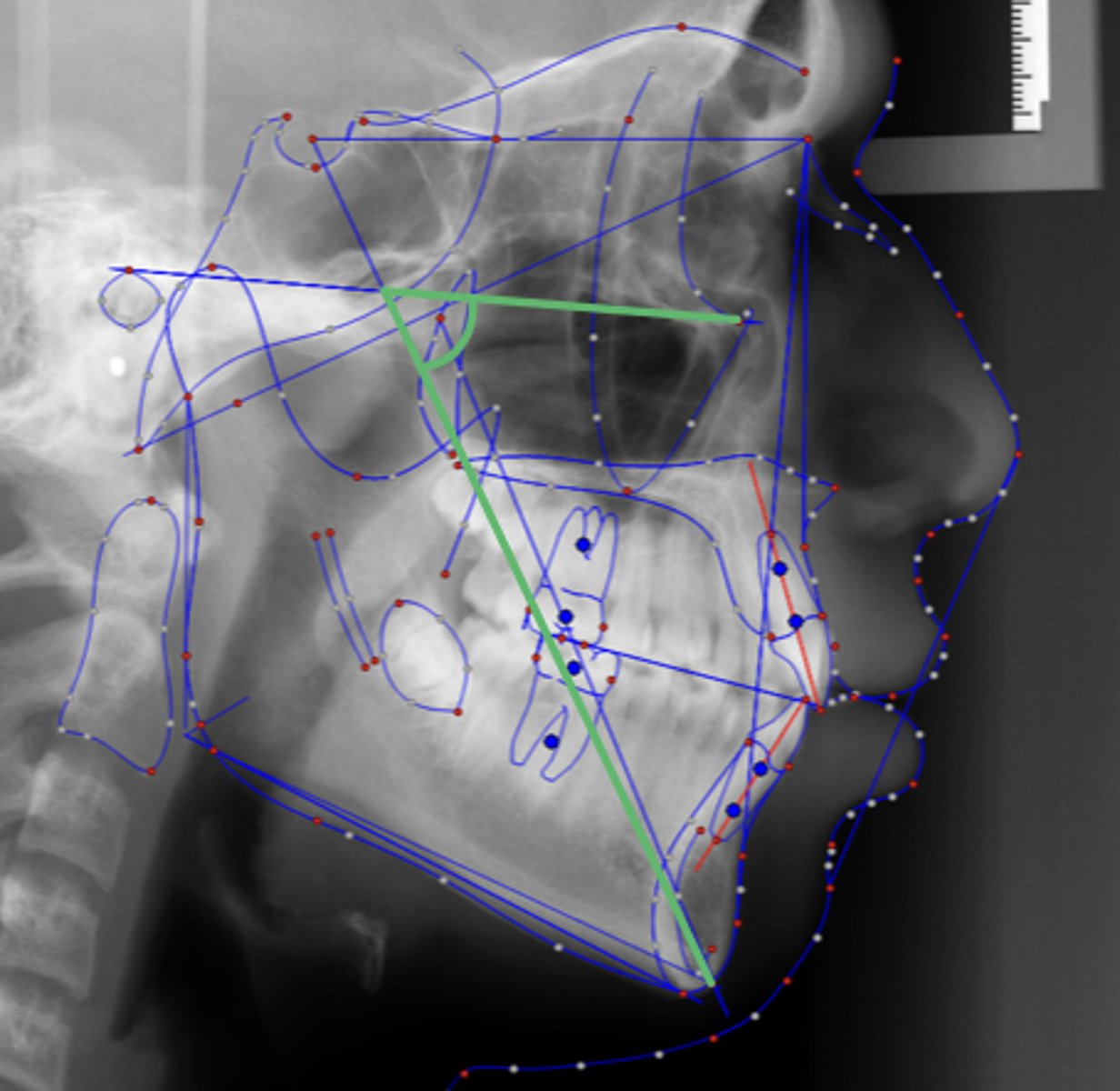
Tells you about the vertical angulation of the mandible
What does the Y-Axis (Frankfort Horizontal vs. Sella-Gnathion) reference line tell you?
High Angle/Dolicofacial/ Hyperdivergent
The normal Y-Axis value is 59.2±7.8
If the Y-Axis value is GREATER than the normal value. What does this tell you about the mandible?
Low Angle/Brachyfacial/ Hypodivergent
The normal Y-Axis value is 59.2±7.8
If the Y-Axis value is LESS than the normal value. What does this tell you about the mandible?
Normal Angle/Mesofacial/ Normodivergent
The normal Y-Axis value is 59.2±7.8
If the Y-Axis value is within the limits of the normal value. What does this tell you about the mandible?
U1-SN
Sella-Nasion vs Long axis of U1
What reference line is this?
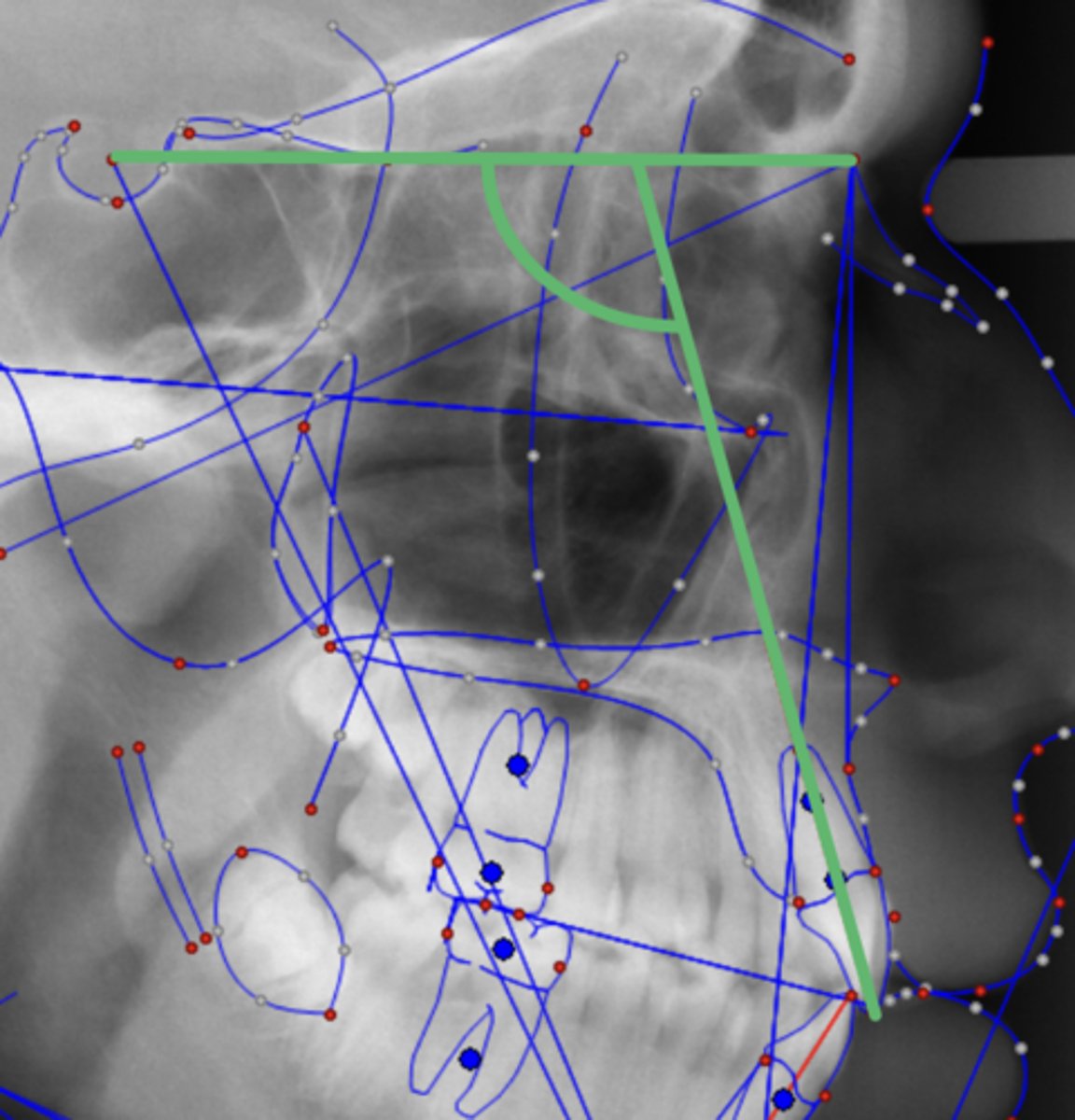
Tells you about the angulation of the upper incisors
What does the U1-SN (Sella-Nasion vs Long axis of U1) reference line tell you?
Proclined Upper Incisors
The normal value of U1-SN is 103.8±5.5
If the value of U1-SN is GREATER than the normal value, what does this tell you?
Retroclined Upper incisors
The normal value of U1-SN is 103.8±5.5
If the value of U1-SN is LESS than the normal value, what does this tell you?
Well angulated upper incisors
The normal value of U1-SN is 103.8±5.5
If the value of U1-SN is within the limits of the normal value, what does this tell you?
L1-MP (IMPA)
Mandibular Plane vs Long Axis of L1
What reference line is this?
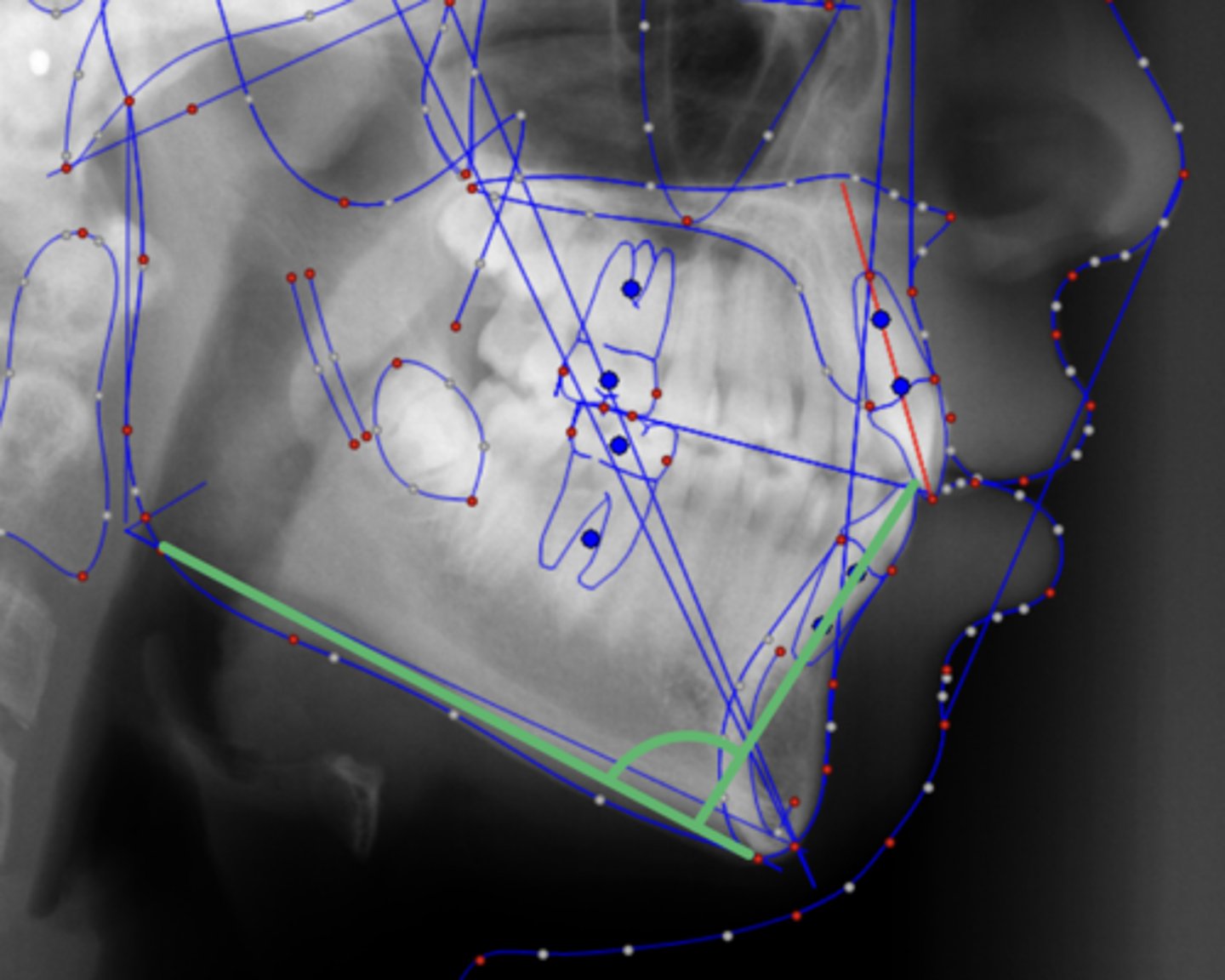
Tells you about the angulation of the lower incisors
What does the L1-MP (Mandibular Plane vs Long Axis of L1) reference line tell you?
Proclined lower incisors
The normal value of of L1-MP 95.0±7.0
If the L1-MP value is GREATER than the normal value, what does this tell you about the lower incisors?
Retroclined lower incisors
The normal value of of L1-MP 95.0±7.0
If the L1-MP value is LESS than the normal value, what does this tell you about the lower incisors?
Well angulated lower incisors
The normal value of of L1-MP 95.0±7.0
If the L1-MP value is within the normal limits of the normal value, what does this tell you about the lower incisors?
U1-NA
Nasion-A Point to the upper incisors
What landmark is this?
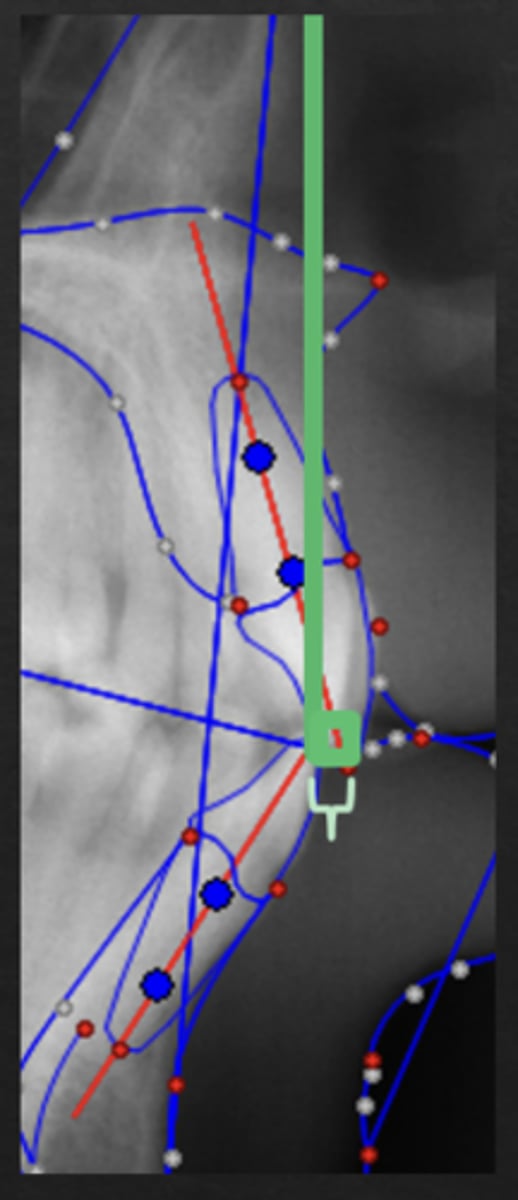
Tells you about the horizontal position of the upper incisors
What does the U1-NA (Nasion-A Point to the upper incisors) reference line tell you?
Protruded upper incisors
The normal value of the U1-NA is 4.3±2.7.
If the U1-NA value is GREATER than the normal value, what does this tell you about the upper incisors?
Retruded upper incisors
The normal value of the U1-NA is 4.3±2.7.
If the U1-NA value is LESS than the normal value, what does this tell you about the upper incisors?
Well positioned upper incisors
The normal value of the U1-NA is 4.3±2.7.
If the U1-NA value is within the limits of the normal value, what does this tell you about the upper incisors?
L1-NB
Nasion-B Point to the lower incisors
What landmark is this?
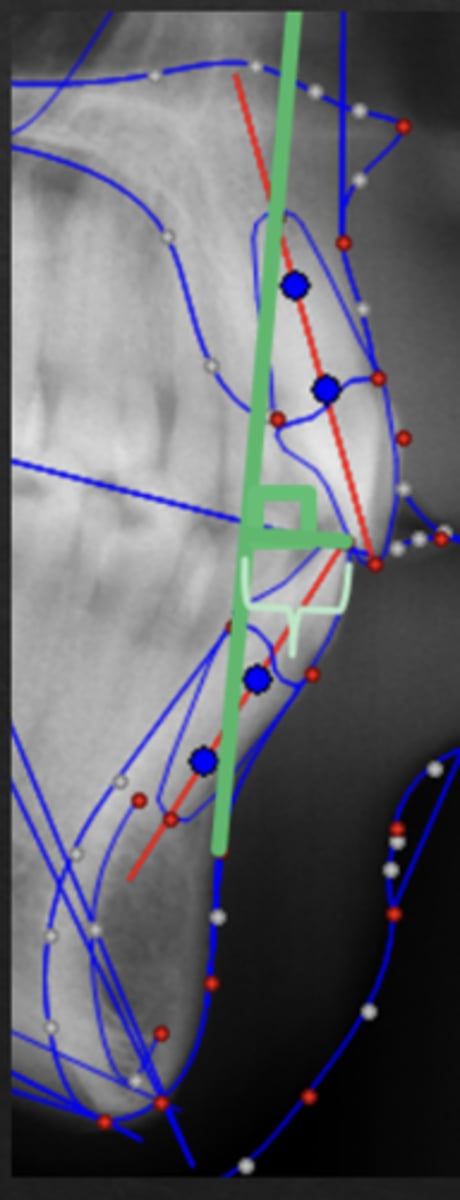
Tells you about the horizontal position of the lower incisors
L1-NB (Nasion-B Point to the lower incisors) what does this reference line tell you?
positive
U1-NA-->
If U1 is anterior to NA, the measurement is _____
negative
U1-NA-->
If U1 is posterior to NA, the measurement is _____
postive
L1-NB
If the L1 is anterior to NB, the measurement is _______
negative
L1-NB
If the L1 is posterior to NB. the measurement is _______