MICROM 402 Final
 Call Kai
 Learn
Learn Practice Test
 Spaced Repetition
 Match
Match Flashcards
 Knowt Play
1/72

There's no tags or description
Looks like no tags are added yet.
Name | Mastery | Learn | Test | Matching | Spaced | Call with Kai |
|---|
No analytics yet
Send a link to your students to track their progress
73 Terms
purple nonsulfur bacteria
gram -, store sulfur outside of the cell(no granules), fix nitrogen from air to urea/ammonia
anaerobic phototroph
use light as energy source in the absence of oxygen
enrichment culture
a culture medium used for preliminary isolation that favors the growth of a particular microorganism
goal of aseptic technique
prevent microbial contamination
pure culture
contains only one species or strain
single colony isolation
technique to get a pure inoculum or culture
empty magnification
Magnification without an increase in resolution.
refraction
The bending of a wave as it passes at an angle from one medium to another
simple stain
a method of staining microorganisms with a single basic dye
differential stain
a procedure that stains specific morphological structures - usually a multiple stain
specialized stains
detect specific structures or specific cell types such as flagella or endospores. Detection of PHB bodies
what does iodine do in gram stain
binds to the primary stain and prevents the stain from leaving the cells with a thick peptidoglycan cell wall
Decolorization
Is the step that occurs between the application of the 2 basic stains. crystal violet and safranin. washes out crystal violet color of gram negative cells
methylene blue stain
Stains organic tissue. Needed to see animal cells underneath microscope.
endospore stain
This is a differential stain used to detect the presence and location of spores in bacterial cells.
Endospore stain procedure
1) Prepare smear with Bacillus Culture, same technique as simple stain procedure.
2) Air dry and heat fix smear and place on staining bars
3) Cover smear with Malachite Green
4) Gently heat the slide with stain with steam over boiling water
5) Steam slide for 5 minutes, replenish malachite green as it begins to evaporate. cover ith paper towel and saturate with more malachite green
6) Pour excess malachite green from slide and allow to cool, once slide is cool rinse with water and get all green off slide
7) Cover smear with Safranin for 1 minute
8) Pour off excess Safranin and use water bottle to rinse any left over safranin from slide
9) Gently blot slide using bibulous paper, then observe slide with immersion oil
Azotobacteria
- Gram-negative to Gram-variable
- nitrogen fixers!
- much larger than most bacteria
- commonly contain poly-(beta)-hydroxybutyrate (PHB)
- obligately aerobic chemoheterotrophs
- makes a slime layer to help create anaerobic respiration happen (makes a barrier to oxygen)
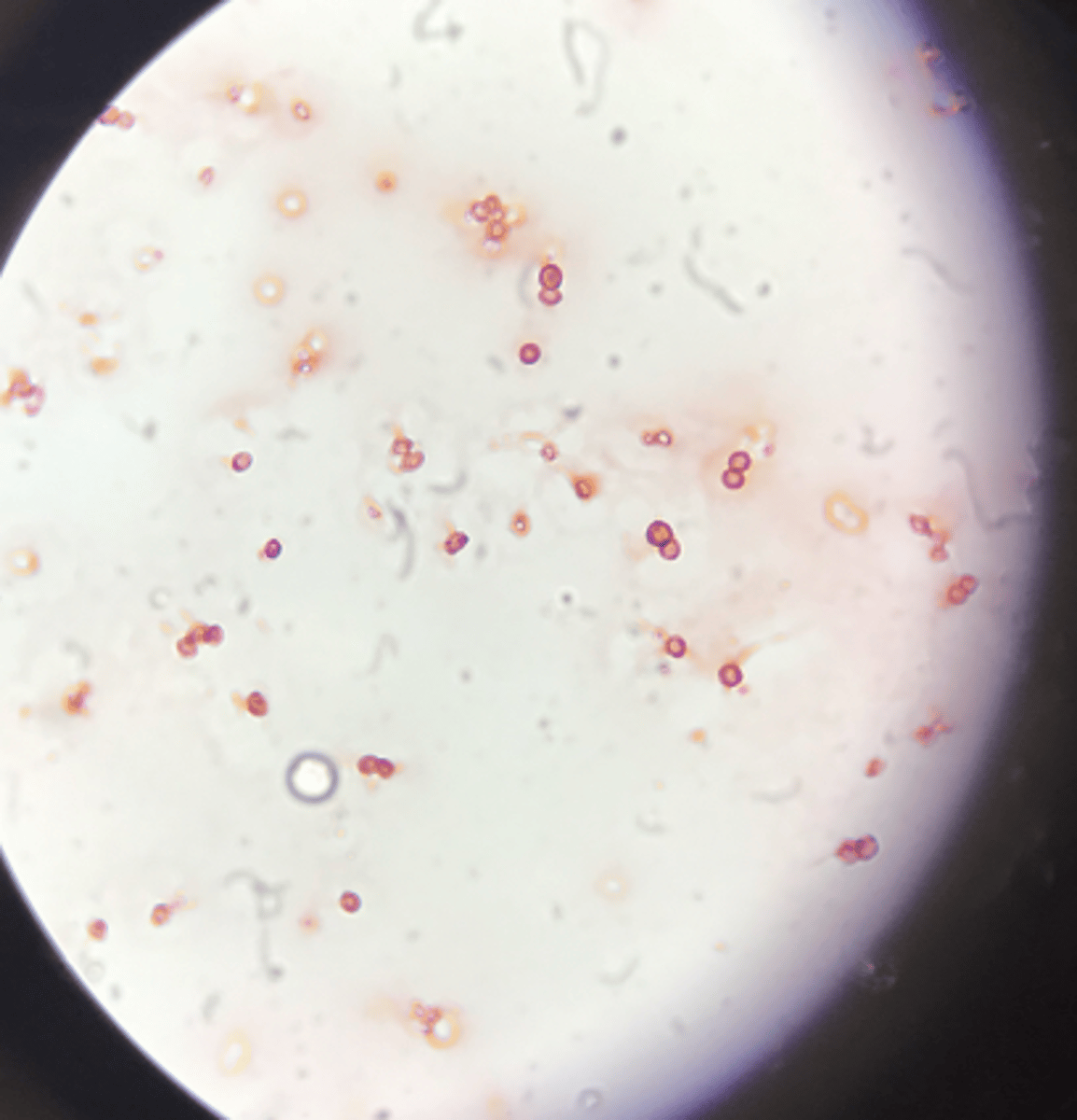
Azomonas
- do not form cysts
- isolated from freshwater habitats
- urease-negative, making them capable of utilizing ammonia but not urea as a nitrogen source
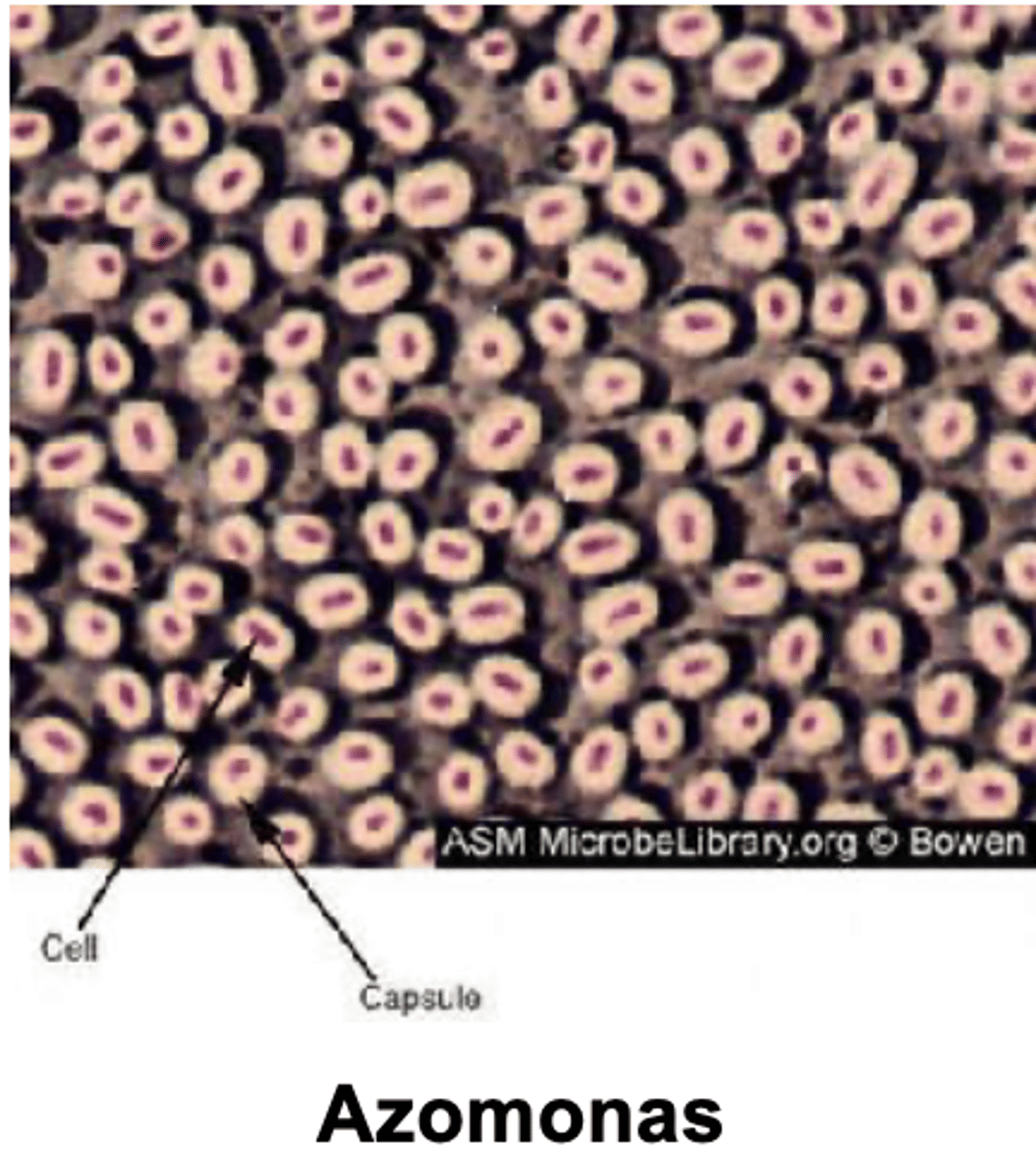
Azotobacter
free living nitrogen fixing bacteria found in soil. urease positive
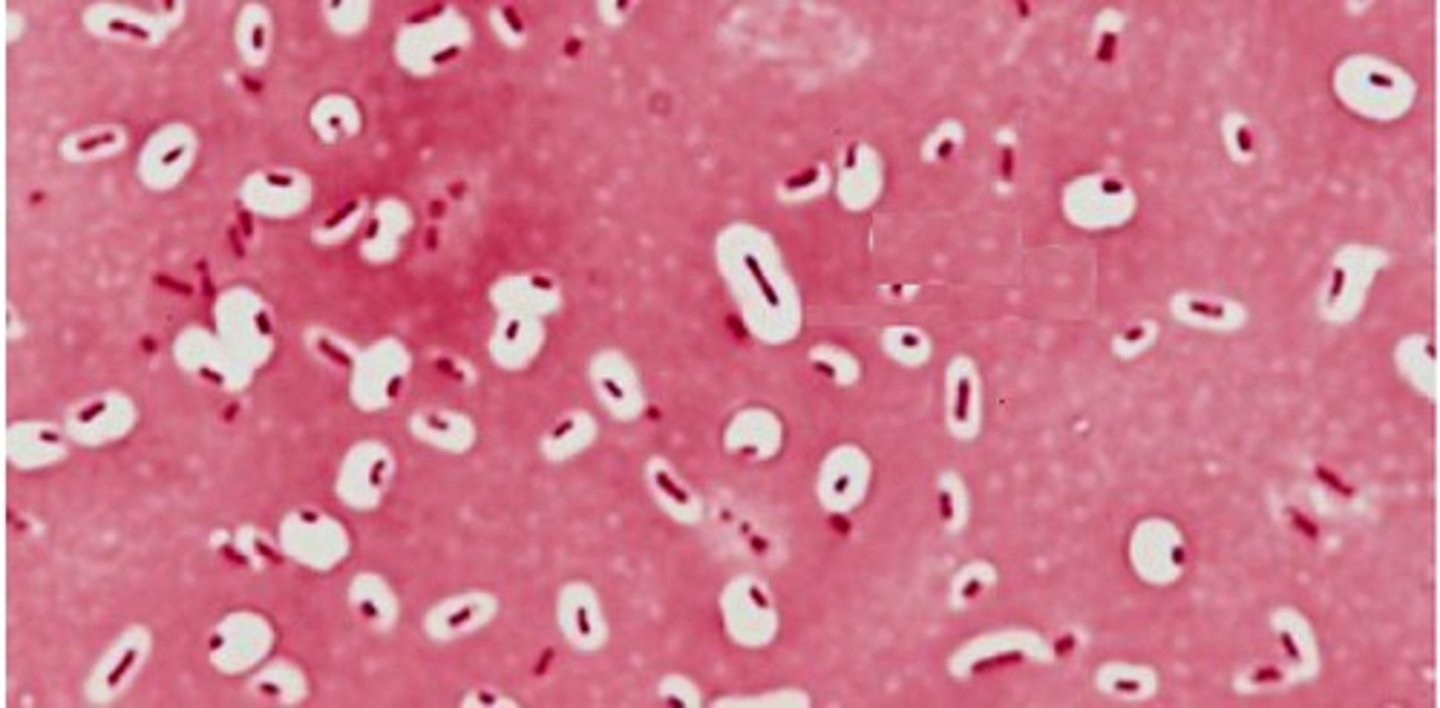
enrichment for nitrogen fixing bacteria
inoculating soil or water samples into nitrogen free broth and shaking the culture to aerate it fully
- ashbys glucose broth, agar and ashbys butanol agar
- urea agar
Urease Test
Urease positive = PINK
Only E. colis and E. aerogenes are NEGATIVE (no color change, yellow)
Tests for urease activity as a source of reduced nitrogen
anoxygenic phototrophs
use hydrogen sulfide or organic compounds as a source of electrons.
purple nonsulfur bacteria enrichment
ATY broth incubated at room temperature with constant illumination by placing it by 40W lamp. ATY agar in anaerobic chambers
Gram positive cocci
Staphylococcus
Streptococcus
Enterococcus
micrococcus
type genus of the family Micrococcaceae, obligate aerobes, catalase positive, gram + cocci found in pairs of clusters, nonpathogenic, grows well at 25*C, cant tolerate high salt
Staphlococcus
cluster of cocci, falcultative anaerobes, catalase positive
obligate aerobic bacteria
gather at the top of the test tube in order to absorb maximal amount of oxygen
facultative anaerobes
can survive with or without oxygen
What happens when staph is grown on glycerol
they produce acids
where does micrococcus grow
drier regions
where does staphylococcus grow
moister, oilier regions
selective media
suppress unwanted microbes and encourage desired microbes
Mannitol Salt Agar
selective and differential, selective for salt tolerance, staph
Isolation of Micrococcus
TSY agar
Glucose ferment tube staph
ability to ferment glucose: staph should ferment glucose without gas production. Pink with no air bubble in durham vial
Mannitol fermentation test
pink is positive result, yellow means doesnt ferment mannitol
Agar Shake Tube
colonies form embedded in agar (works well for anaerobes)
shake tube: growth on top part
Aerobic: maximum O2 concentration - use for O2 for energy harvesting purpose
oxidase positive
aerobe
shake tube growth: growth throughout with more at surface
facultative anaerobe
catalase negative
anaerobe
shake tube growth: only at the bottom of tube
obligate anaerobe
acinetobacter vs psuedomonads
use oxidase test
yeast-glycerol + bromserol purple plate
solid line of growth with yellow halo as a result of acid prodictuction. aerobic production of acid from glycerol
Voges-Proskauer Test
Postive VP Test:
-color change to red, 2.3-butanediol fermentation (acetoin produced).
Negative VP Test:
-No color change, no 2,3 butanediol fermentation (acetoin is not produced).
Nitrate Reduction Test
determine whether an organism reduces nitrate to nitrite.
Endospore formers
Bacillus and Clostridium
Aeroduric anaerobes
resistance to oxygen even as they require anoxic conditions for growth
how to isolate endospore formers
add a gram of soil to TSY+glucose broth then heat in water bath to kill all the vegitative bacterial cells in the sample
how to create anoxic enviornment
Hydrogen gas reduces all of the oxygen inside of the jar to water resulting anaerobic atmosphere
Colostridium
gram positive Anaerobic GPROD, spore formers, exotoxin producers, catalase negative
Baccillus
large gram positive chain like rods, catalase positive
bergey's bacillus #1
contains pH indicators to indicate change in acidity. Purple to yellow to indicate glucose fermentation
Methyl Red Test
Measures the production of mixed acids by fermentation of glucose
Milk agar
Tests for the presence of the enzyme Caseinase, which hydrolyzes casein (a predominant protein in milk) into amino acid products. Casein gives milk its white color so a breakdown in casein causes the milk plate to lose its white color and become clear around the Caseinase positive colonies.
Starch Agar
Tests for the presence of Amylase, which hydrolyses starch to simple sugars. Iodine is added to starch plate and appears blue/black when interacting with starch. If amylase is present starch will be hydrolyzed and the blue/black color will not be observed around the amylase positive colonies.
Psuedomonads
gram negative, rod shaped protobacteria from soil, water, and plants. Oxidase positive
Oxidase test
identifies bacteria that have cytochrome oxidase
psuedomonads medium
minimal acetate or minimal asparagine broth
King's B agar
nutrient limited medium used to induce diffusable pigment production
gelatin deep
Hydrolysis of protein gelatin by gelatinase.
Once cooled to 4°C after incubation, liquefied medium indicates a positive result. Cooled solidified medium indicates a negative result.
Test may require up to 5 day incubation, or false negative results may occur.
Agar degrading bacteria
abundant in sea water and degrade agar for its carbon rich polysaccharides
ASN-III agar
used to enrich for agar degrading bacteria. contains only agar polymers
generation time (doubling time)
the time required for a complete fission cycle, from parent cell to two daughter cells
generation time equation
determine the amount of time taken to double the population
Acinetobacter
A gram-negative pathogen. naturally compitent and enriched using acetate. Prefer more acidic conditions.
Gram negative
oxidase negative
Enterobacteria
Gram negative rods that are frequently found in the intestinal tract
Catalase Test
Test that determines whether or not bacteria has "catalase" enzyme.
catalase enzyme
breaks down hydrogen peroxide into water and oxygen
shake tube: growth all across, uniform growth
aerotolerant
Colicins
proteins in Col plasmids that can kill neighboring bacteria
Nitrogen Reduction Test
used to identify organisms containing the enzyme nitrate reductase
Nitrogen reduction test positive