Bio - 3.a reproduction in plants
 Call Kai
 Learn
Learn Practice Test
 Spaced Repetition
 Match
Match Flashcards
 Knowt Play
1/38

There's no tags or description
Looks like no tags are added yet.
Name | Mastery | Learn | Test | Matching | Spaced | Call with Kai |
|---|
No analytics yet
Send a link to your students to track their progress
39 Terms
how do fungi reproduce
budding - asexual
how do bacteria reproduce
binary fission - asexual
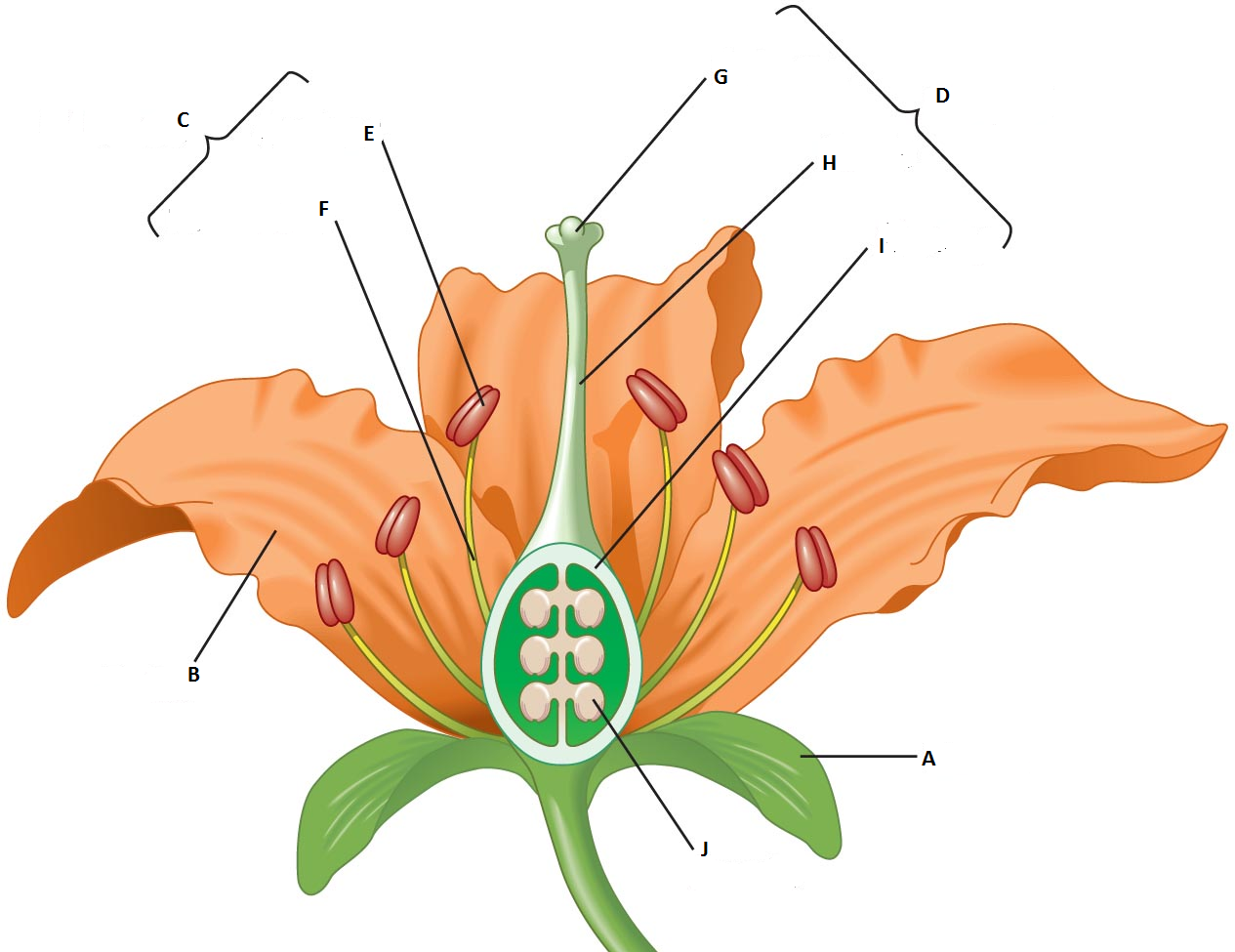
label the diagram
a - sepal
b - petal
c - stamen
d - carpel
e - anther
f - filament
g - stigma
h - style
i - ovary
j - ovule
write 3 points about asexual reproduction
only 1 parent cell is required and it divides via mitosis
offspring will be genetically identical
has a higher survival value in a stable environment
write 3 points about sexual reproduction
2 parents are needed as you need 2 gametes (F + M), each passes down half their genetic info in their haploids which are formed by meiosis
offspring have genetic variation
have a higher survival value in a changing environment
what are runners and an e.g.
natural method - asexual
in a plant part of the parent plant forms a new plant, e.g. runners, that spread over the ground and sprout roots at intervals
e.g. strawberries
what are cuttings
an artificial method of runners
what is pollination
the transfer of pollen from the anther of one flower to the stigma of another, to allow for fertilisation
what is fertilisation
the fusion of the nuclei of the male and female gamete that occurs in the ovule after a pollen tube forms
what is seed dispersal
dispersing of seeds far away from parent plant to limit competition
how is the stigma adapted for wind pollination
it is found outside the flower and is feathery and flexible to catch drifitng pollen in the wind
how is the filament adapted for wind pollination
it hangs outside the flower and is loose and long
how is the anther adapted for wind pollination
hangs on the outside and produces lots of lightweight pollen
how is the stigma adapted for insect pollination
it is found inside the flower and is sticky so pollen grains attach to it
how is pollen adapted for insect pollination
it is large and sticky/ spiky to attach to insects to be carried away
give 3 differences between wind and insect pollinated flowers
insect pollinated flowers are large and brightly coloured to attract insects while wind are small and dull
insect pollinated flowers produce nectar while wind dont (NOT FOR STRUCTURE)
insect pollinated produce sticky pollen while wind produces lots of lightweight pollen (NOT FOR STRUCTURE)
Insect pollinated flowers have their stigma enclosed while wind dont
insect pollinated flowers have their anther enclosed while dont
how are gametes made
meiosis
how is a zygote developed into an embryo
mitosis
when the flower develops into fruit what does the ovule become
seed
when the flower develops into fruit what does the ovule wall become
seed coat
when the flower develops into fruit what does the zygote (fertilised ovum) become
embryonic plant ( with a radical and plumule)
when the flower develops into fruit what does the ovary become
the fruit
when the flower develops into fruit what does the rest of the ovule become
the food store
when the flower develops into fruit what does the ovary wall become
fruit coat
what are the methods of seed dispersal
wind
animal, internal/ external
water
self-propelled, explosion
what is the embryo
the young shoot and root (plumule and radical) that will become the adult plant
what is the food store in the seed
also called cotyledon
contains starch for the germinating plant, until it can photosynthesise
what is the seed coat in a seed
a tough protective outer covering
what acronym should you use for germination
WOW
water
oxygen
warmth
how will a dormant v germinating seed test for starch
both will test positive, although a germinating seed will only have small amounts
how will a dormant v germinating seed test for reducing sugars
a dormant seed will test negative, only contains starch
a germinating seed will test positive as the starch has been broken down
describe the events that lead to seed formation
first pollination occurs on the stigma of the flower
a pollen tube then forms down the style into the ovary
the pollen nucleus passes through the tube into the ovule
the nucleus of the male and female gamete then fuse
the ovule then become the seed
the ovule wall becomes the seed coat
the ovary becomes the fruit
how can you see if germination has occured
shoot and root are visible
why is it important for seeds to have a food store
seeds don’t have leaves and are usually found underground
therefore they can’t photosynthesise to release energy
this food store gives them the energy they require for respiration
advantages of seeds germinating away from the parent plant
there is less competition for water, minerals and light
advantage of seeds germinating close to the parent plant
there is a guarantee that the environment is stable and suitable
explain the conditions needed for seed germination
water - softens the seed coat and allows enzymes to breakdown the food store as they require solution
oxygen - required for respiration
warmth - allows enzymes to reach their optimum temp.
why are some fruits surrounded by brightly coloured sweet tasting fruit
to attract animals
to consume fruit
as they contain glucose
for seed dispersal
why could seeds of edible plants and fruit be found at sewers and drains
after human ingestion and egestion they travel through pipes to the drains/ sewers