monopolies
0.0(0)
Studied by 6 people Call Kai
 Learn
Learn Practice Test
 Spaced Repetition
 Match
Match Flashcards
 Knowt Play
Card Sorting
1/9

Earn XP
Description and Tags
Last updated 8:48 AM on 12/7/22
Name | Mastery | Learn | Test | Matching | Spaced | Call with Kai |
|---|
No analytics yet
Send a link to your students to track their progress
10 Terms
1
New cards
characteristics of a monopoly
- one seller
- infinite number of buyers
no close substitutes
- impassable barriers to entry
- short run profit maximiser
- infinite number of buyers
no close substitutes
- impassable barriers to entry
- short run profit maximiser
2
New cards
monopoly vs competition
in a monopoly, prices are higher, output is lower, profits are larger, consumer surplus is smaller and social welfare is lower than in a competitive market
3
New cards
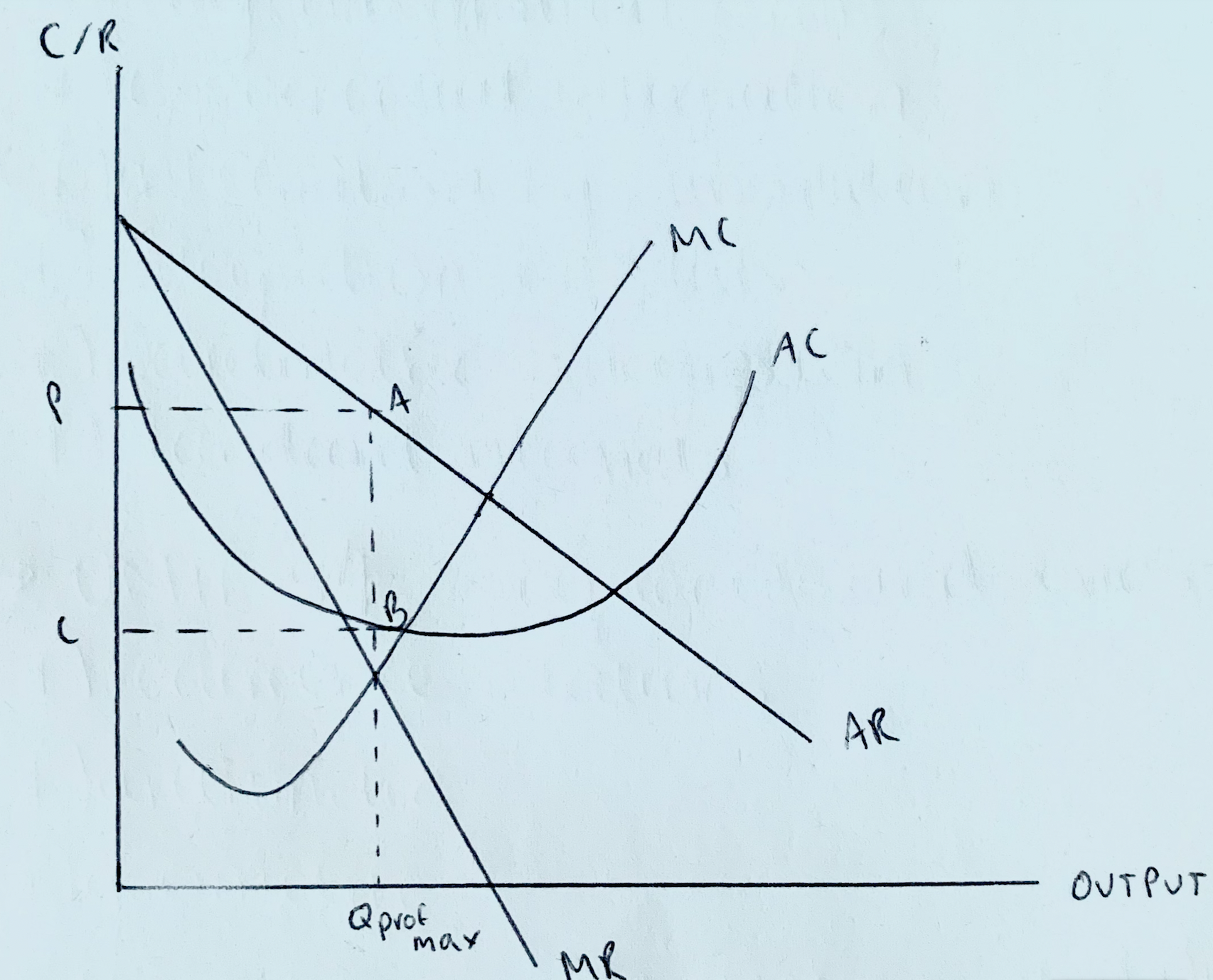
monopoly diagram
prof maximisers so supply where MC = MR
PABC = supernormal profits
SR and LR diagrams are the same as barriers to entry are impassable
PABC = supernormal profits
SR and LR diagrams are the same as barriers to entry are impassable
4
New cards
why are monopolies x-inefficient?
absence of competitive pressure gives little incentive to cut costs so the average and total costs are higher than they would be with perfect competition
5
New cards
why are monopolies allocatively inefficient?
they set a price greater than MC
6
New cards
why are firms productively inefficient?
produce where MR=MC rather than where MC=AC
7
New cards
why is there a deadweight welfare loss to society where there is a monopoly?
output in a monopoly is at MC=MR rather than MC=AR in a perfectly competitive market → fall in consumer surplus and thus a DWL
8
New cards
advantages of monopolies
- supernormal profits: reinvested for innovation and R&D
- can match power of global companies
- price discrimination: raises TR
- EoS: large firm → AC lower than small competitive firms
- cross subsidisation may lead to an increased range of goods and services for consumers
- can match power of global companies
- price discrimination: raises TR
- EoS: large firm → AC lower than small competitive firms
- cross subsidisation may lead to an increased range of goods and services for consumers
9
New cards
disadvantages of monopolies
- less incentive to be efficient and innovate due to absence of competitive pressure
- higher prices and less choice for consumer
- inefficient → higher cost curves
- misallocation of resources as prices are set above marginal cost
- may waste resources due to cross-subsidisation
- higher prices and less choice for consumer
- inefficient → higher cost curves
- misallocation of resources as prices are set above marginal cost
- may waste resources due to cross-subsidisation
10
New cards
cross subsidisation
using profits from one sector to finance losses in another sector