Exam 1 - Lecture 3: Cetaceans
 Call Kai
 Learn
Learn Practice Test
 Spaced Repetition
 Match
Match Flashcards
 Knowt Play
1/27

There's no tags or description
Looks like no tags are added yet.
Name | Mastery | Learn | Test | Matching | Spaced | Call with Kai |
|---|
No analytics yet
Send a link to your students to track their progress
28 Terms
what 3 traits did early whales have?
teeth, non-existent rear appendages, modified flipper and tail
Order Cetacea
what organisms does it contain and how many in total
what general location does it live
describe its body shape
describe ear
what is unique about its bones?
describe hair
define blowhole
how does it thermoregulate
describe tail, what does it end in
whales, dolphins, porpoises (~90 spp) all marine except for 5 FW dolphins
completely aquatic bc highly modified to do so
body is fusiform/torpedo shapes => ocean has caused convergent evolution bc this is also seen in seals and sea lions
ear is internal bc the skin has sealed it off to limit any water that can enter decreasing infection risks, there is no external hole or pinnae
has oil-filled bones to increase buoyancy (also reason it was hunted)
little to no hair (so this is a mammal characterisitic that has been lost over time to increase streamline)
blowholes are used to release ONLY air
dorsal fin is used for thermoregulation by shunting the blood to the fin so that heat can be lost
muscular tail ends in fin-like horizontal flukes that stay flat and moves up and down to swim
what are the 2 suborders?
Mysticeti and Odontoceti
Order Cetacea
Suborder Mysticeti
what general types of animals does it contain?
describe mouth
describe blow hole
describe sexual dimorphism
baleen whales
baleen plates filter organisms from the water w/ brush-like plate of keratin
double blow hole = 2 openings/nares under muscular control that closes in the water (looks like horse nostrils migrated on top of head)
reverse sexual dimorphism: female > male
Order Cetacea
Suborder Odontoceti
what general types of animals does it contain?
describe mouth
describe blow hole
describe sexual dimorphism
toothed whales
teeth on one or both jaws
single blow whole
males > females
describe the baleen feeding of Blue Whales and Right whales
Blue whales have accordion folds that can expand to gulp LOTS of water
Right whales have bigger baleen but no accordion folds so just holds the amount of water it can with its mouth
Both animals move tongue to top of mouth => water is strained/pushed out on sides of mouth
Order Cetacea
Suborder Mysticeti
what are the 3 families
Balaenidae, Neobalenidae, and Balaenopteridae
Order Cetacea
Suborder Mysticeti
Family Balaenidae
what general organism does this consist of
what structure is it lacking
what is general body shape
Right whales and bowhead whales
lacking accordion folds/mouth grooves
body
huge bulky whales
no dorsal fin or ridge
distinclty arched mouths w/ baleen plates up to 5m
why are they called Right whales?
“right whales to hunt bc…
swims close to shore (no large steam vessels needed)
slow swimmer = Leviathans
produce lots of oil
float when dead so easier to collect and tow to shore
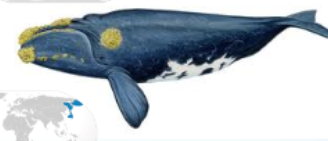
Order Cetacea
Suborder Mysticeti
Family Balaenidae
Eubalaena glacialis
aka
IUCN
North Atlantic right whale (“eu” = true)
endangered (still bc constantly hit by ships)
Order Cetacea
Suborder Mysticeti
Family Balaenidae
Eubalaena japonica
aka
IUCN
North Pacific right whale
Endangered
Order Cetacea
Suborder Mysticeti
Family Balaenidae
Eubalaena australis
aka
IUCN
South Pacific right whale
lower risk, conservation department
Order Cetacea
Suborder Mysticeti
Family Balaenidae
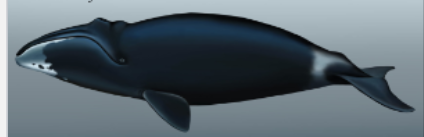
Balaena mysticetus
aka
what what whale does it resemble, how does it differ (i.e., what’s lacking and what is present)
IUCN
Bowhead
resembles Right Whales but is missing callosities (callus-like facial structures seen in right whales, can have lice) and has a distinct neck region signified by notch behind head
critically endangered
Order Cetacea
Suborder Mysticeti
Family Neobalaenidae
what general organism does this consist of
what was it confused w/ and why
what structures does it contain
describe body and mouth
IUCN
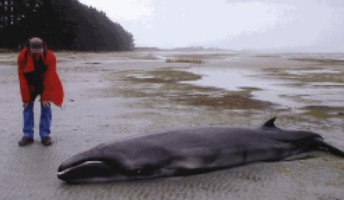
pygmy right whale
was thought to be a right whale, but this is not the case it just overlaps in geographic location as Southern right whale
2 throat grooves, dorsal fin
slender body, arched jaw line, SMALLEST baleen whale
IUCN = unknown bc they do not breech the water often
Order Cetacea
Suborder Mysticeti
Family Balaenopteridae
what organism does it contain
how do they feed
describe body shape
describe baleen
where does it live
Rorquals
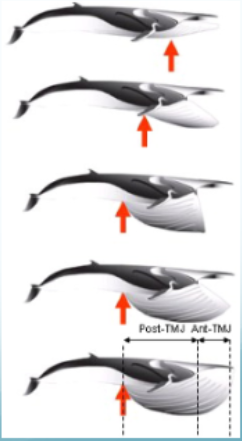
feed by gulping up schools of fish and krill with throat grooves
long and slender whales
baleen is short w/ no jaw line arch
cosmopolitan distribution = makes great migration in ocean, no distinct region
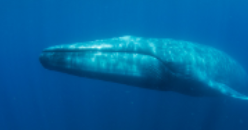
Order Cetacea
Suborder Mysticeti
Family Balaenopteridae
Balaenoptera musculus
aka
describe body shape and color
how many subspecies
where does it live
IUCN
Blue whale (“musculus” = little mouth)
slender and streamlined body, bluish gray in color
3 subspecies: North Atlantic, North Pacific, and Southern Ocean (some interbreeding occurs w/ subspecies)
lives across globe in every ocean basin
endangered
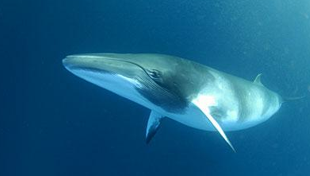
Order Cetacea
Suborder Mysticeti
Family Balaenopteridae
Balaenoptera physalus
aka
describe body shape and color
where does it live
IUCN
fin whale
pointed head, sleek and streamlined; countershading
equally as cosmopolitan as blue whale
endangered
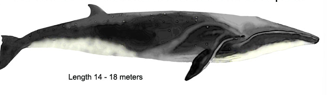
Order Cetacea
Suborder Mysticeti
Family Balaenopteridae
Balaenoptera borealis
aka
describe body shape and size
where does it live
IUCN
Sei whale
sleek and streamlined, 3rd largest whale at 14-18m
avoids polar and tropical waters, but still has large cosmopolitan distribution and some areas may be data deficient
endangered
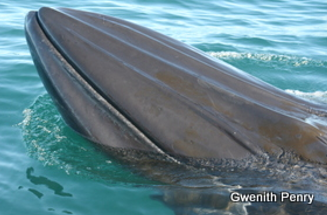
Order Cetacea
Suborder Mysticeti
Family Balaenopteridae
Balaenoptera brydei
aka
describe unique morphological feature
Bryde’s whale
contains 3 prominent ridges on rostrum
Order Cetacea
Suborder Mysticeti
Family Balaenopteridae
Balaenoptera omurai
aka
where does it live
Omura’s whale
distributed more in Pacific waters
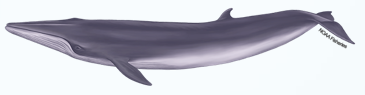
Order Cetacea
Suborder Mysticeti
Family Balaenopteridae
Balaenoptera ricei
aka
where does it live
Rice’s whale
Gulf of Mexico resident
described in 2021 as a unique population of Bryde’s whale bc had 3 ridged on head BUT is a genetically distinct sp.
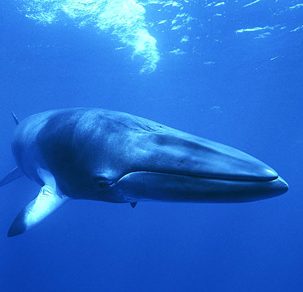
Order Cetacea
Suborder Mysticeti
Family Balaenopteridae
Balaenoptera acutorostrata
aka
describe body shape and color
how many subspecies
where does it live
IUCN
Common minke whale
distinctive coloration
3 subspecies: Standard minke whale, dwarf minke whale, and used to include Antarctic minke whale (but now is separate sp.)
some sp. live in northern parts of ocean while others live in southern parts and can overlap each other
near threatened
Order Cetacea
Suborder Mysticeti
Family Balaenopteridae
Balaenoptera bonaerensis
aka
Antarctic minke whale
this is a renamed sp.
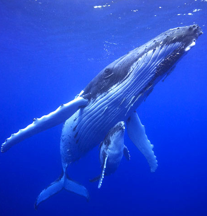
Order Cetacea
Suborder Mysticeti
Family Balaenopteridae
Megaptera novaeangliae
aka
describe body shape (body, flippers, tail)
notable behavior
describe feeding mechanism and location
where does it give birth
IUCN
Humpback whale
robust body, long flippers w/ tubercles, tail fluke w/ serrated edge
known for breaching and slapping water (thought to dislodge parasites and communicate)
LOTS of accordion folds, feeds in summer in polar waters
migrates from poles to tropical/subtropical waters to give birth; will have 1 calf
vulnerable
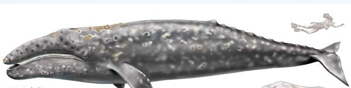
Order Cetacea
Suborder Mysticeti
Family Eschrichtiidae
Eschrichtius robustus
aka
what is significant about its evolutionary history
# of throat grooves
presence/absence dorsal fin
define crenellations
where can it be found, and how does it affect the sp?
what is a natural predator of this sp?
IUCN
Gray whale
most primitive of baleen whales
2-5 throat grooves
no dorsal fin
crenellations = series of low humps on back that aid in stability and swimming; also thought to be a precursor to dorsal fins
stays near the coast (so does not live in pelagic zone) making it vulnerable
orca whale is a natural predator of calves
critically endangered
Order Cetacea
Suborder Odontoceti
aka
size and shape of the whales
define echolocation
hunting ability
define melon
toothed whales
small-medium sized whales, streamlined bodies
echolocation = ability to use sonar
can stun prey w/ sonic bursts; does not eat schools of organisms only 1 individual at a time
melon = fatty organ in forehead area made of lipids used for echolocation
describe the process of echolocation
1) emits sound from larynx (the voice box in the throat) through ring of muscle => 2) focused and directed by the melon as the sound goes through the melon => 3) sound hits an object and is reflected back => 4) heard through the acoustic window (which is a transparent, oil-filled bone) => 5) goes to the inner ear => 6) signal moved to brain to determine information, so that the time it takes the echo to return indicated how far away the object is, size of prey, and direction or prey
Order Cetacea
Suborder Odontoceti
Family Physeteridae
Physeter macrocephalus
aka, what does sp. name mean
describe size, flippers
what is a unique morphological trait
describe its teeth
how deep does it dive
describe the size difference between males and females
describe distribution
how does it sleep
Sperm whale (Physeter macrocephalus)
largest toothed whale, short and wide flippers