Bio 2 lab 5 transpiration
 Studied by 0 people
 Call Kai
 Learn
Learn Practice Test
 Spaced Repetition
 Match
Match Flashcards
 Knowt Play
1/12

There's no tags or description
Looks like no tags are added yet.
Name | Mastery | Learn | Test | Matching | Spaced |
|---|
No study sessions yet.
13 Terms
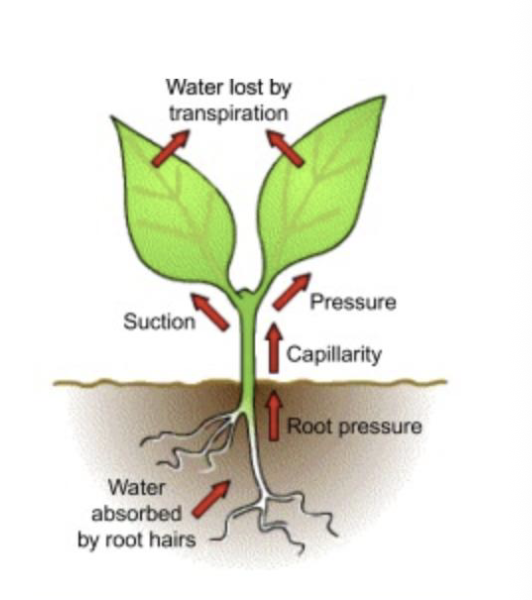
transpiration
the loss of water vapor by plant parts(usually the leaves)
stomata
epidermal openings on the undersides of the leaves
-water vapor primarily exits through these openings
reasons for transpiration
-cools the plant
-water from roots and stems is “pulled” into the leaves
the problem with transpiration
plants are not well adapted to retain water, so they lose a significant amount of water daily
adaptations for transpiration
guard cells (2 per stomatal opening) open and close the stomata to regulate water loss
thickened cuticle (waxy covering on the leaves)
reduced leaves
modified photosynthetic pathway (C4 and CAM photosynthesis allow to keep stomata closed during the day
guard cells
-2 per stomatal opening
-open and close the stomata to regulate water loss
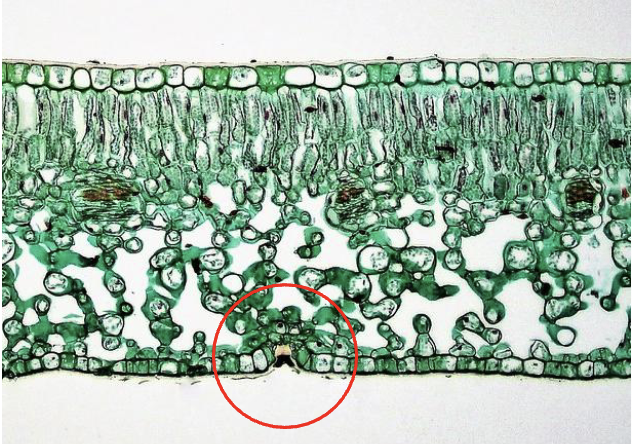
prepared slide of privet (Lingstrum)
observe the stomata on the lower epidermis of the leaves
potometer
can be used to measure rate of transpiration
calculated by measuring the distance traveled by water over time
the greater the rater of water uptake, the greater the transpiration rate
temperature effect on transpiration
increased-evaporation and diffusion are faster
humidity effect on transpiration
decreased
wind speed effect on transpiration
increased-moving air removes water vapor, increasing rate of diffusion of water vapor from the leaf
light intensity effect on transpiration
increased- stomata open wider to allow more CO2 into the leaf for photosynthesis
look over