Connective Tissue
 Call Kai
 Learn
Learn Practice Test
 Spaced Repetition
 Match
Match Flashcards
 Knowt Play
1/21

There's no tags or description
Looks like no tags are added yet.
Name | Mastery | Learn | Test | Matching | Spaced | Call with Kai |
|---|
No analytics yet
Send a link to your students to track their progress
22 Terms
Connective tissue
Broad group of tissues that form structure of the body (with a few oddballs)
Fibroblasts
Make protein fibers that make up the extracellular matrix and binds cells together. 99% of what is seen in connective tissues
Macrophages
Derived from white blood cells; look for infections and foreign particles. The cleaning crew.
Mast cells
Regulate inflammation and blood clotting by secreting chemicals that inform the body that healing must occur.
Collagenous fibers
Thick fibers made of collagen that provide tensile strength. They are strong and dense like a rope, and found in tendons and ligaments. Tissues with a large amount of collagenous fibers are called dense connective tissues.
Elastic fibers
Made of elastin, a spring like and flexible protein. These fibers are coiled and snap back when stretched like a rubber band. They provide less tensile strength than collagen but allow for expansion and contraction in places such as respiratory passages.
Reticular fibers
Thinner collagen fibers for tissues that require less tensile strength, like internal organs and their exteriors.
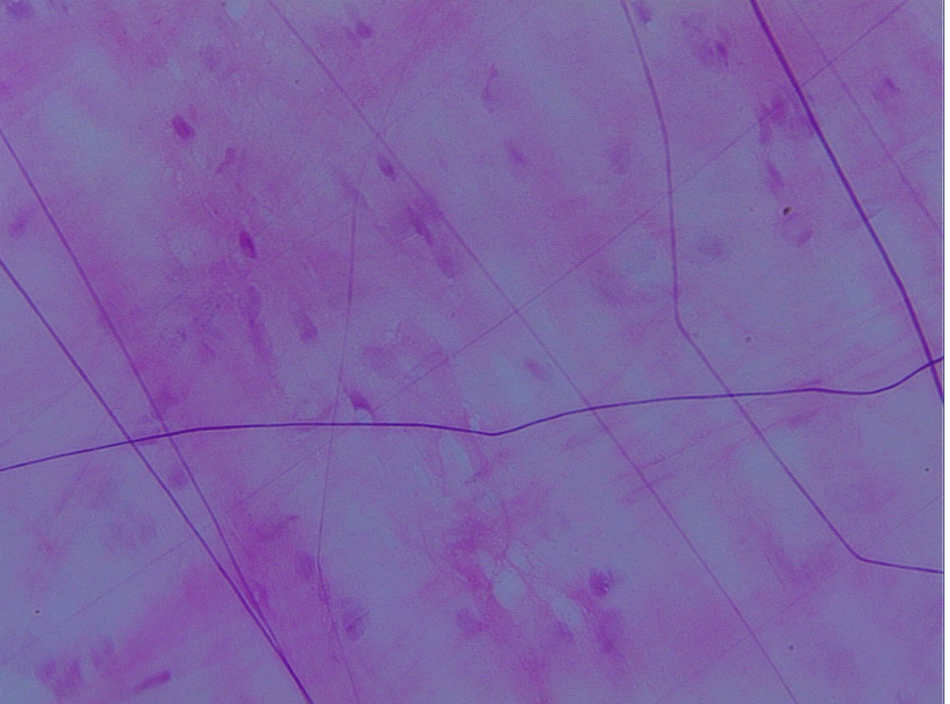
Loose areolar. Collagen fibers are not packed tightly, instead a gel-like matrix that contains fibroblasts, macrophages, mast cells, and even some white blood cells. Found widely under epithelia of the body and around internal organs that don’t respond to a great deal of stress. Wraps around organs like tissue paper. Provides cushion to organs and its macrophages ingest bacteria.
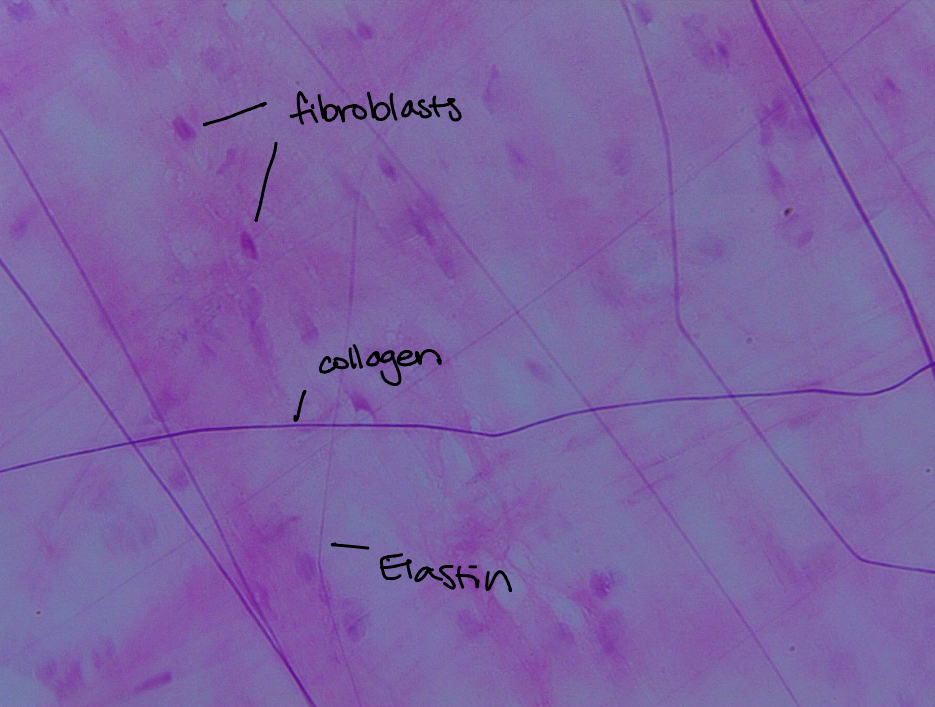
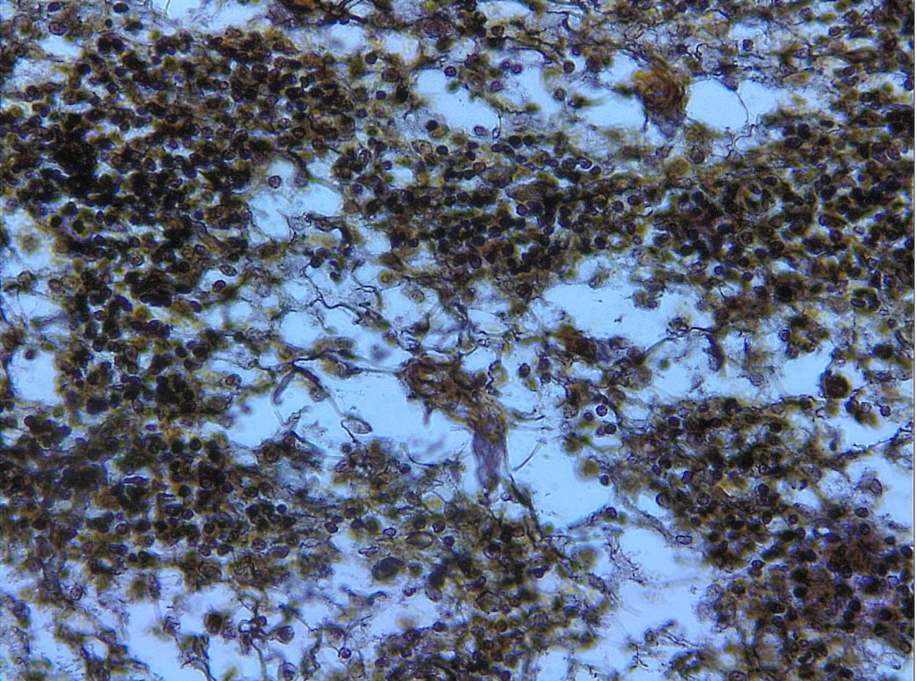
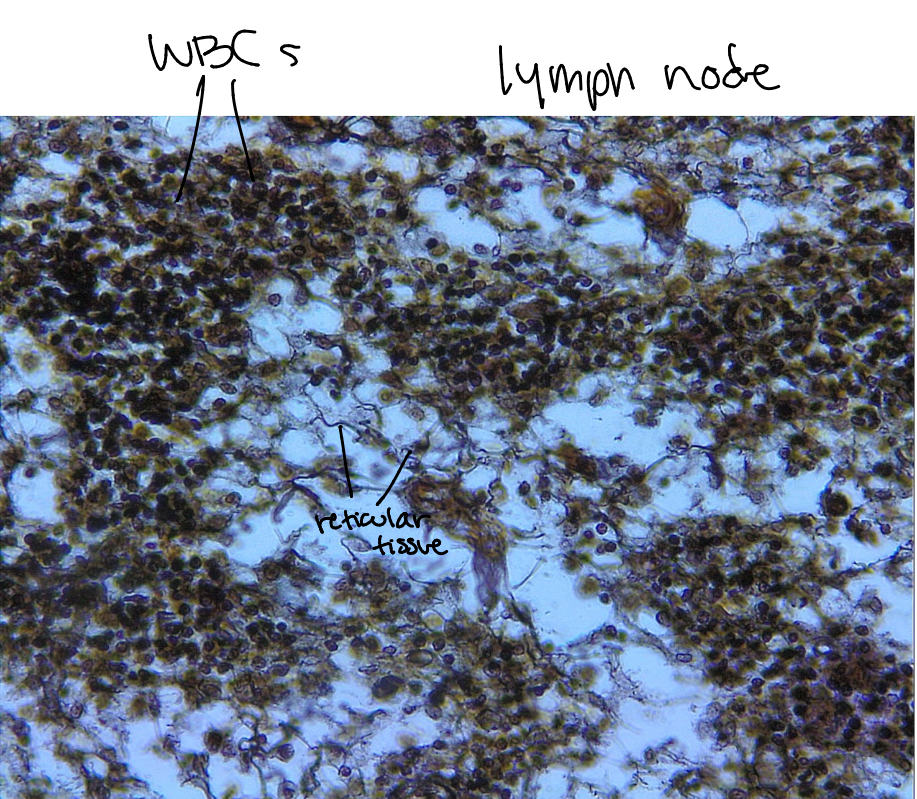
Loose reticular. Network of reticular (still collagenous) fibers that form a soft internal skeleton that supports other cell types, such as white blood cells, macrophages, and mast cells. Building like framework allows wbcs to move around and leave when needed. Found in lymphoid organs such as lymph nodes, bone marrow, and the spleen.
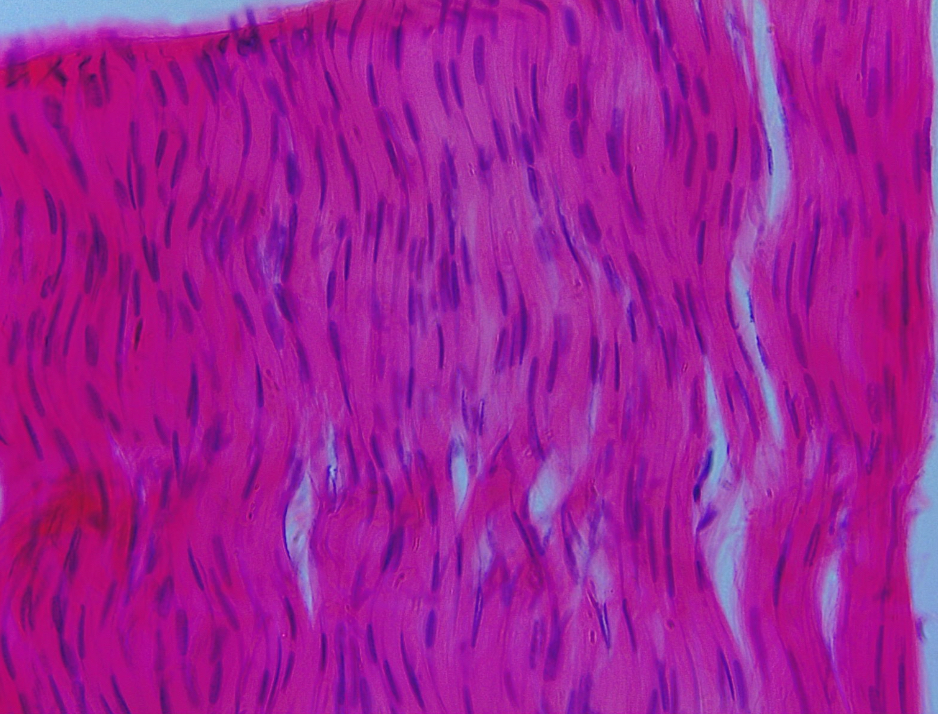
Dense regular. Parallel collagen fibers with a few elastic fibers, Attaches muscle to bone (tendons) or bone to bone (ligaments) and withstands great tensile strength when pulling force is applied in one direction. Found in tendons and ligaments.
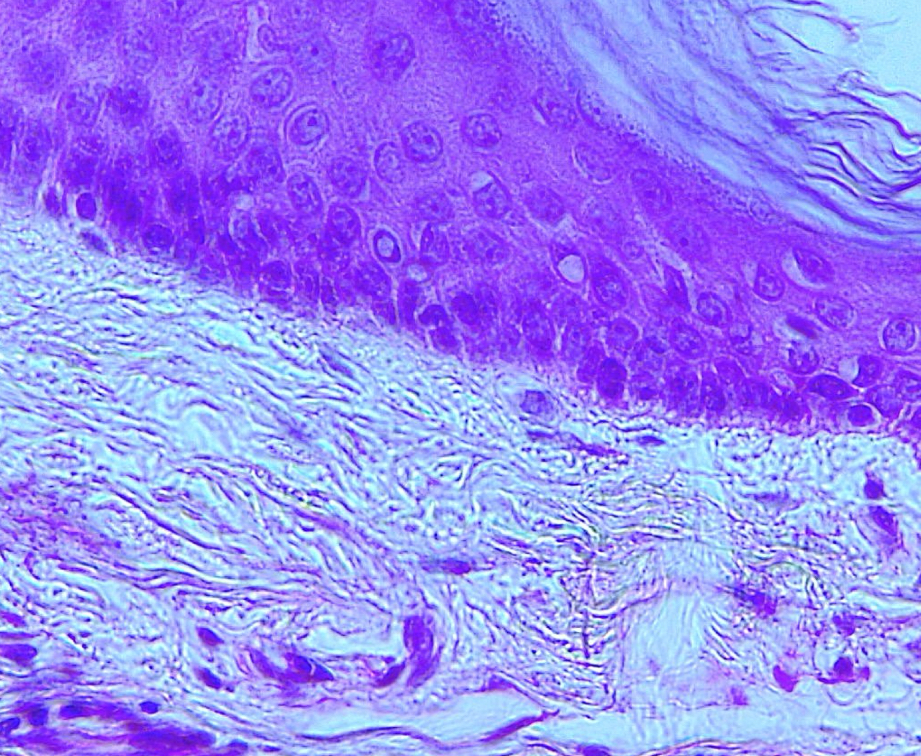
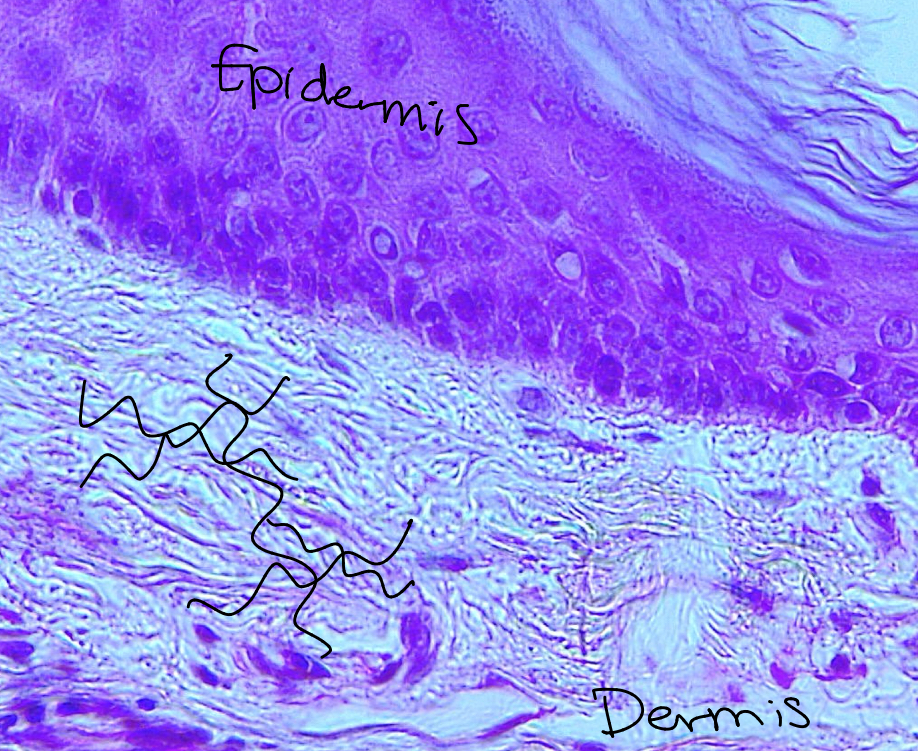
Dense irregular. Non parallel collagen fibers with a few elastic fibers. Can resist stress or tension from multiple directions, hence their woven structure. Found in the dermis of the skin and joint capsules.
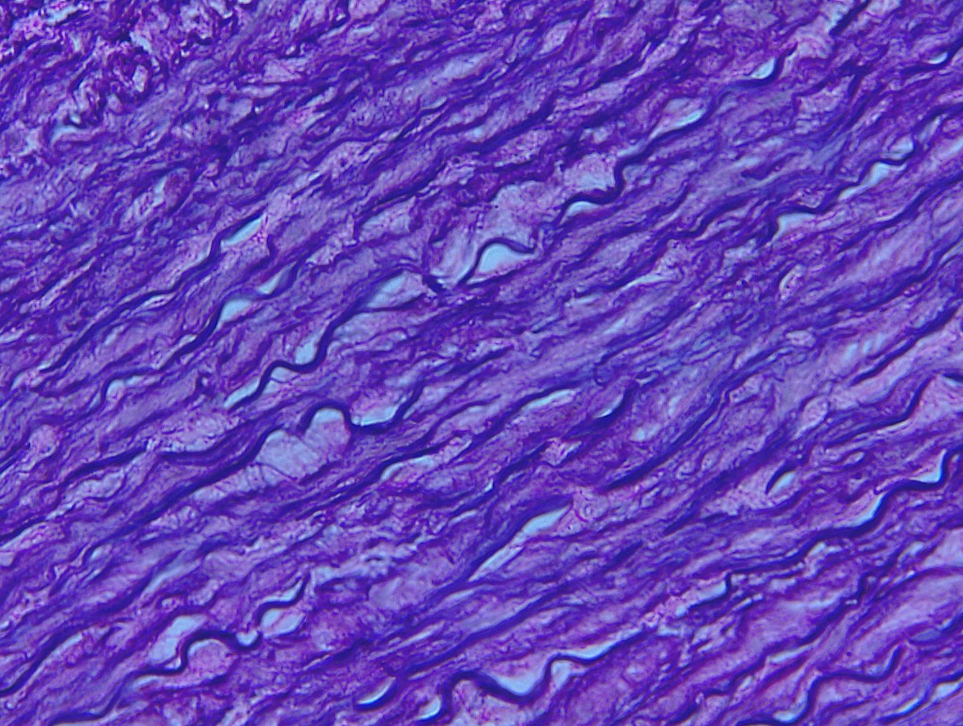
Dense elastic. Dense regular tissue but with primarily elastin rather than collagen. Found in large arteries, like the aorta, where elasticity gives stretch and recoil when blood pressure rises and falls. They are visually coiled in slides and flatten when pulled.
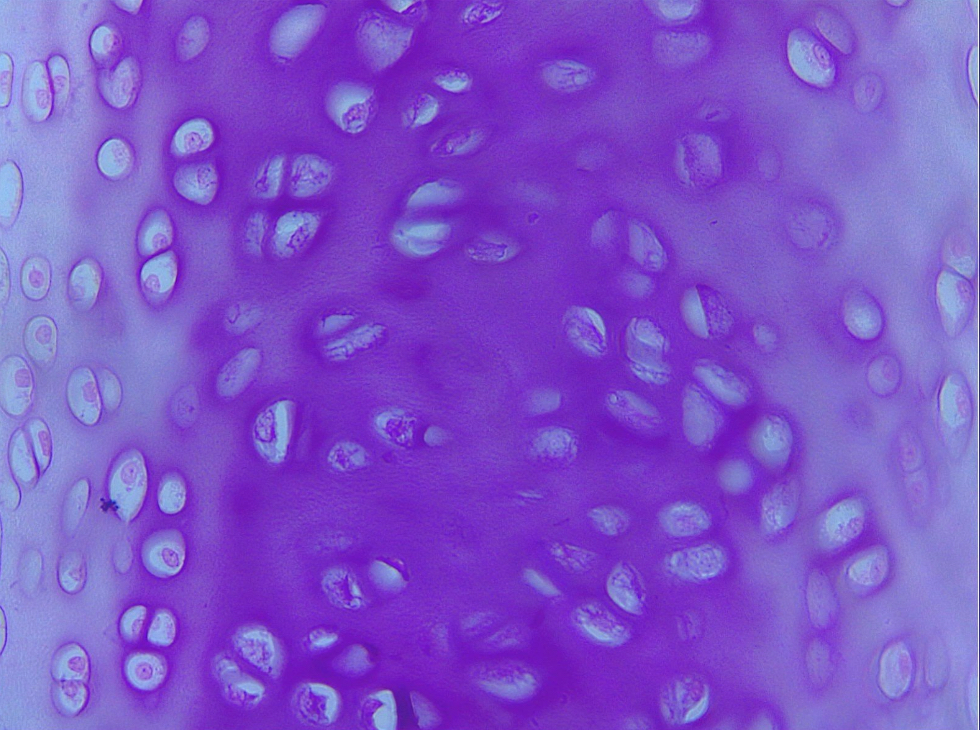
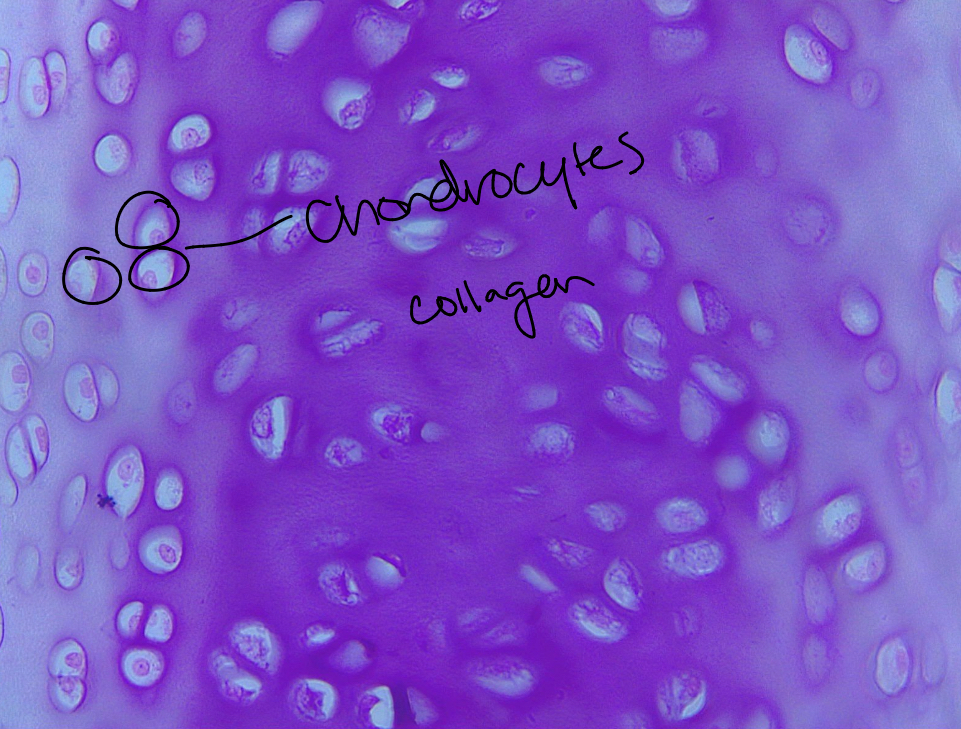
Hyaline cartilage. Collagen fibers form a smooth network, chondroblasts produce the cartilage and mature into chondrocytes. Supports and reinforces; serves as a resilient cushion and resists compression. Found in the front ribs, trachea, nasal septum, and caps of joints.
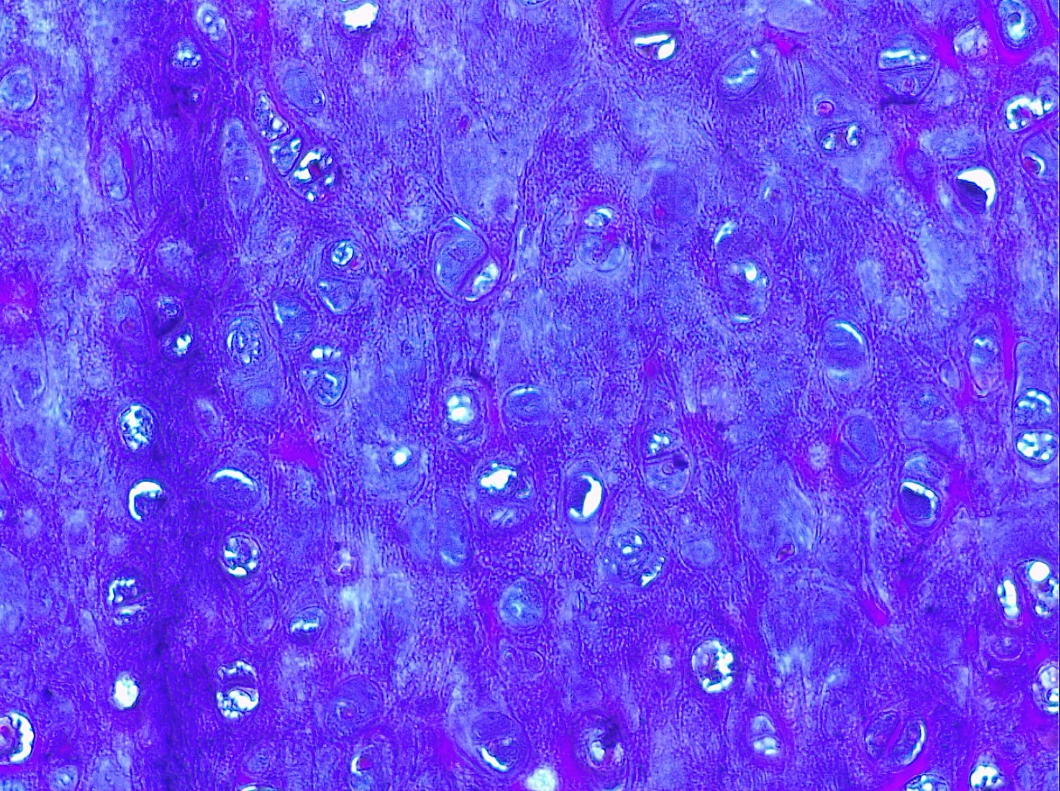
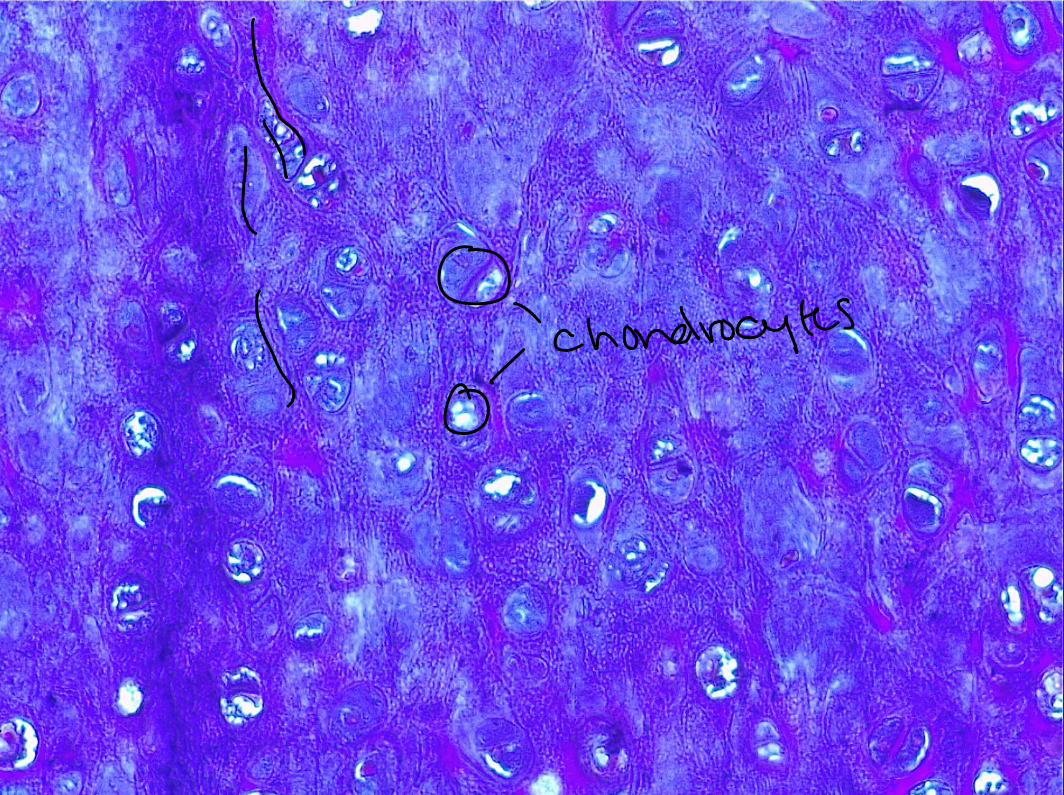
Elastic cartilage. More elastic fibers than hyaline cartilage, giving it a stringy appearance. Gives structure with added flexibility for stretch and recoil, like in the pinna of the ear.
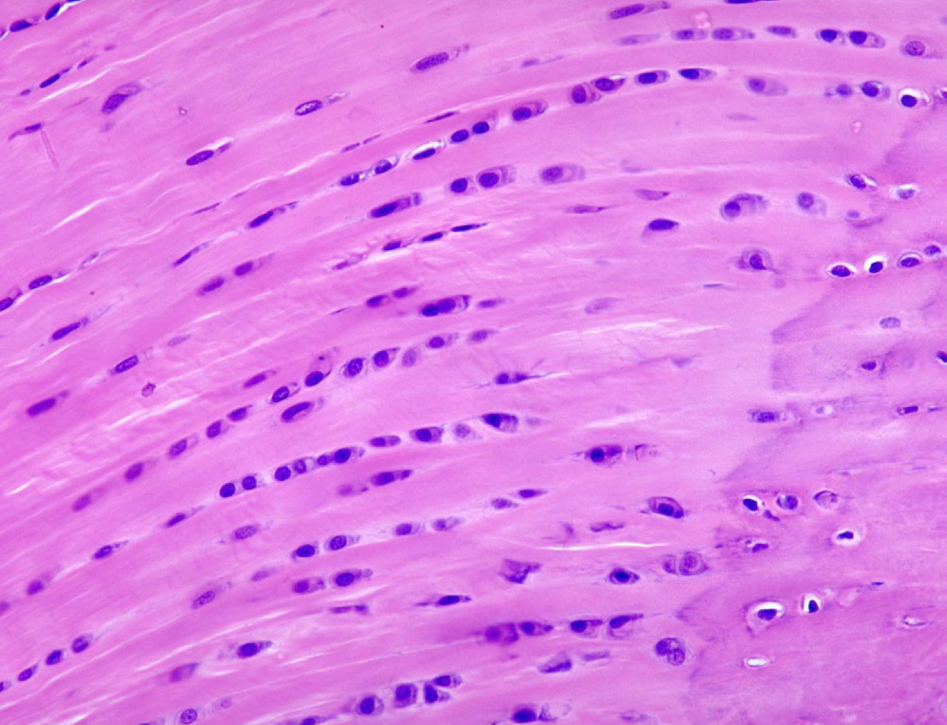
Fibrocartilage. Similar to but less firm than hyaline cartilage; thick collagen fibers make up majority. Resists compressive force in places like the intervertebral disks. Its relatively soft form makes for good cushioning to prevent bones from rubbing together.
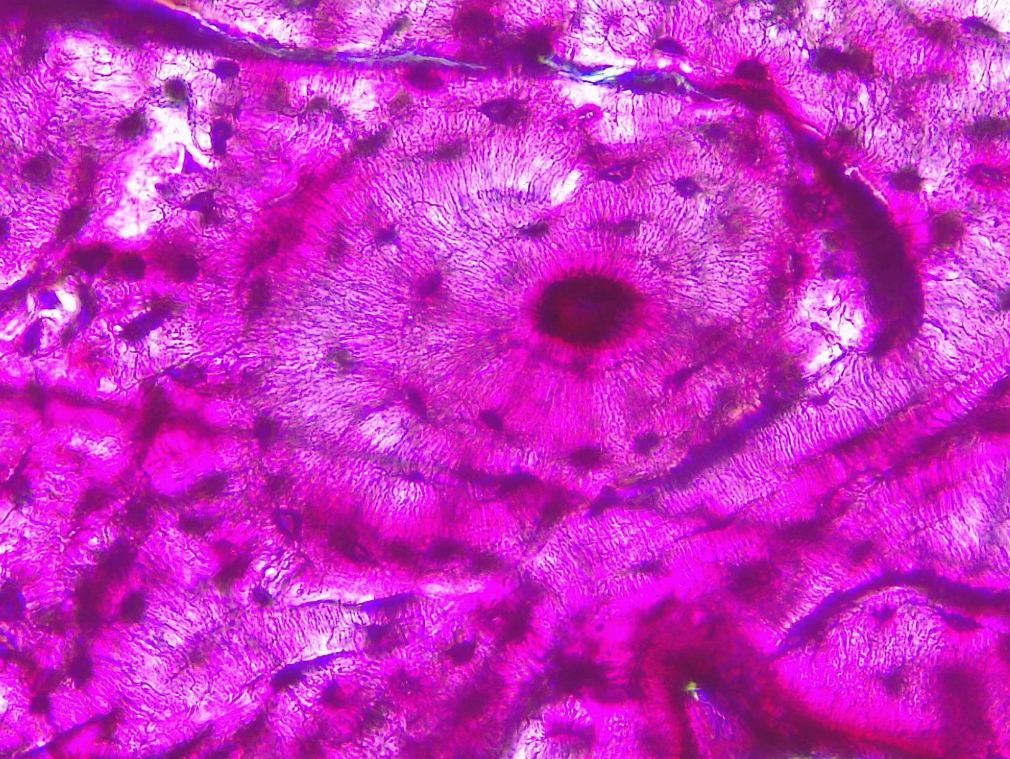
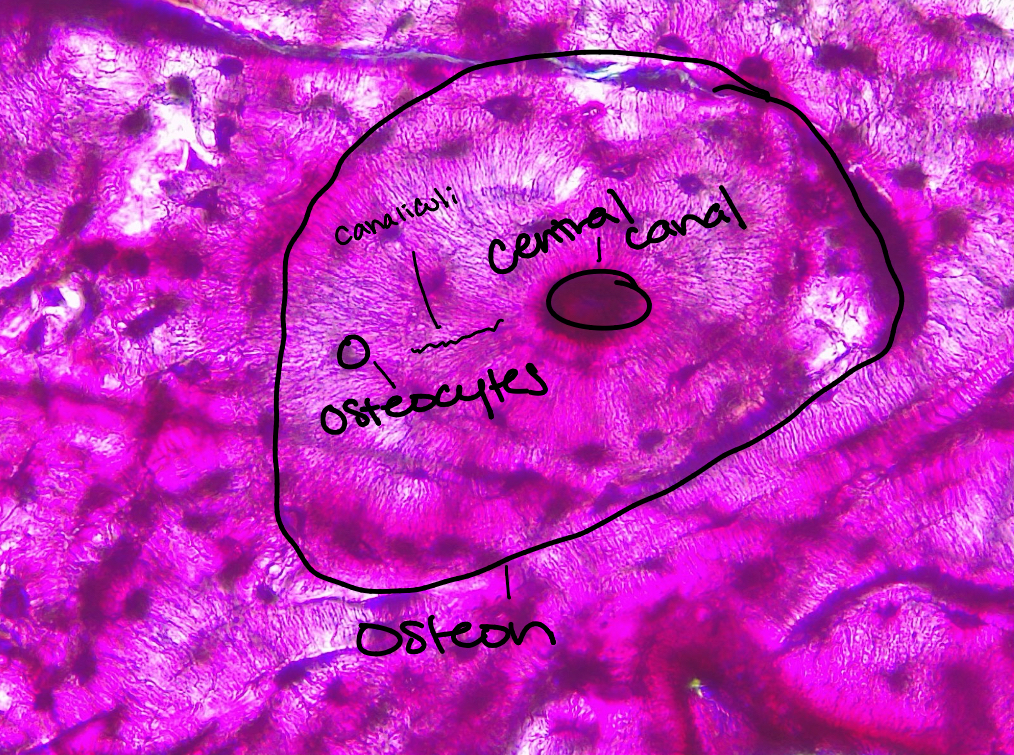
Compact bone. Calcium phosphate creates a hard matrix containing many collagen fibers. Very well vascularized. Collagen gives tensile strength to resist bone snaps, and calcium phosphate provides compression strength. Central canal contains blood vessels and nerves, and transports nutrients to osteocytes via canaliculi.
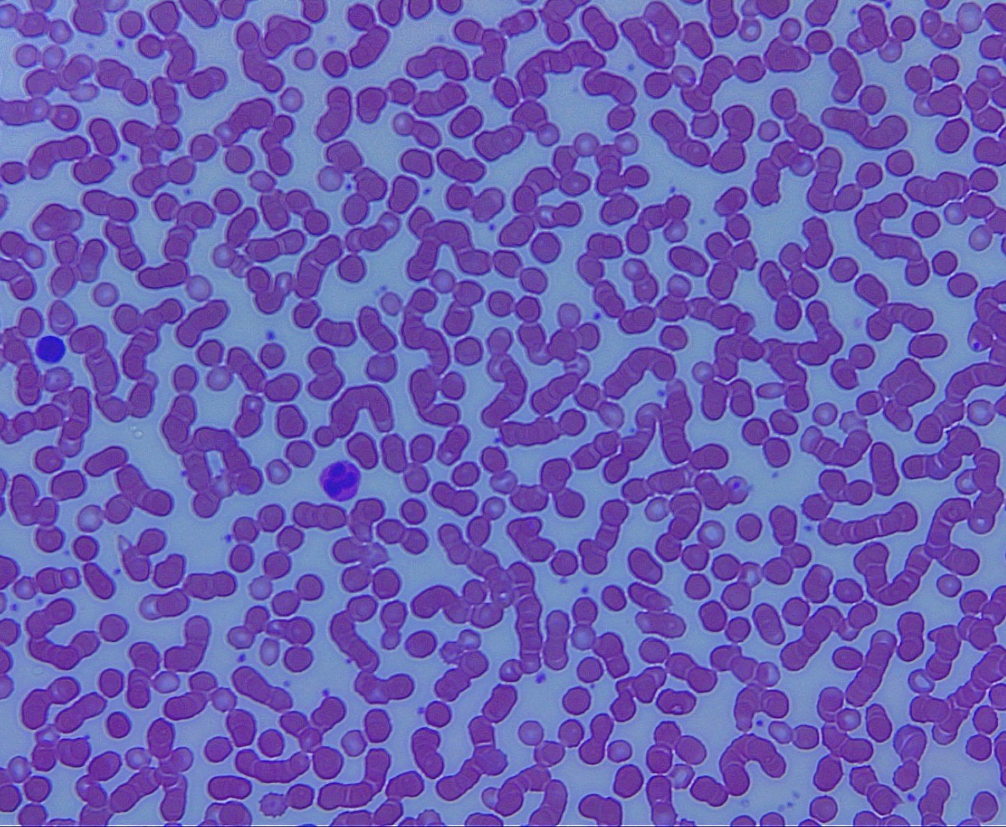
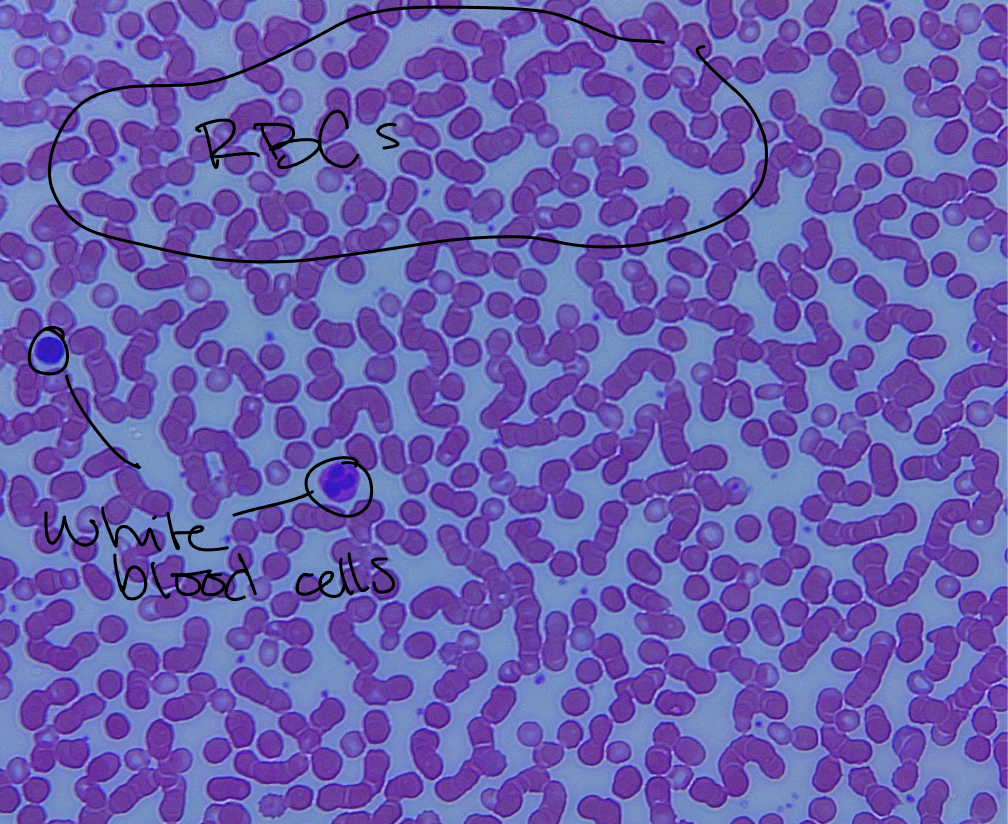
Blood. Lots of red blood cells and some white in liquid plasma. RBCs transport gases, nutrients, wastes, and other substances throughout the body. Found in all blood vessels. White blood cells have a nucleus, but RBCs don’t. With the sole purpose of transporting oxygen, they don’t need a nucleus, and having them would make them much bigger and more difficult to flow through the body and pump through the heart. This is at the cost of them having very short half lives and no way to repair themselves if damage occurs. RBC production in bone marrow is constant.
Muscle tissue
Contractile tissue that may or may not be striated (look like salmon). Produces contractile force and found all over the body.
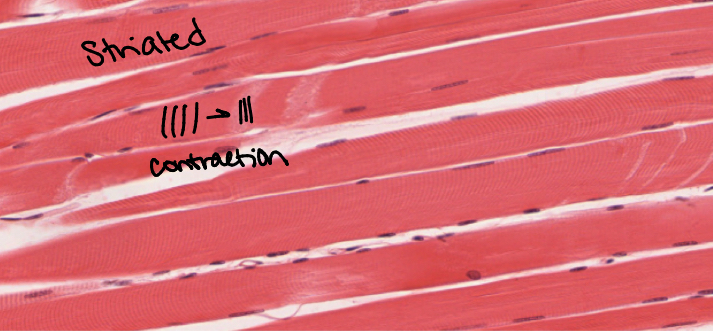
Striation
Thin banding of muscle that become narrow or wide, like an accordion, as muscles extend and contract.
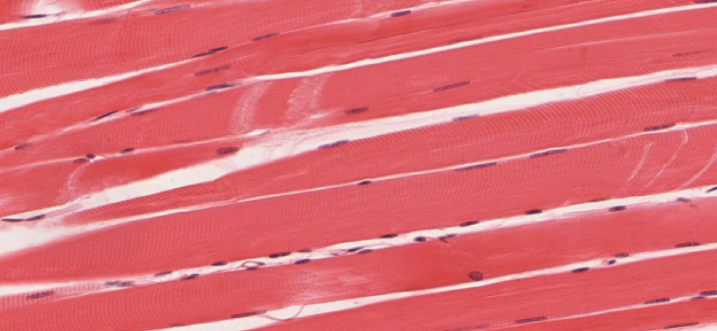
Skeletal muscle. Muscles that move the skeleton, connected to bones and joints. Skeletal muscle is voluntary. Muscle fiber is so large it is multinucleiated.
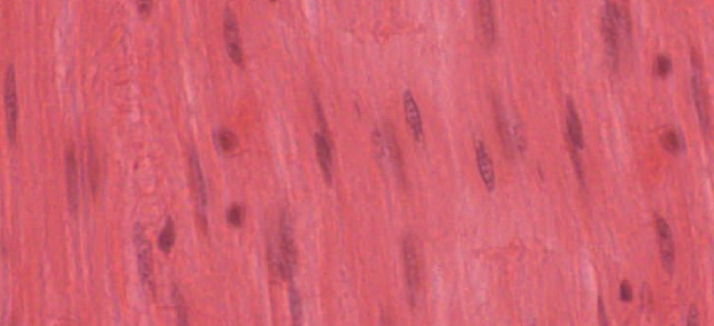
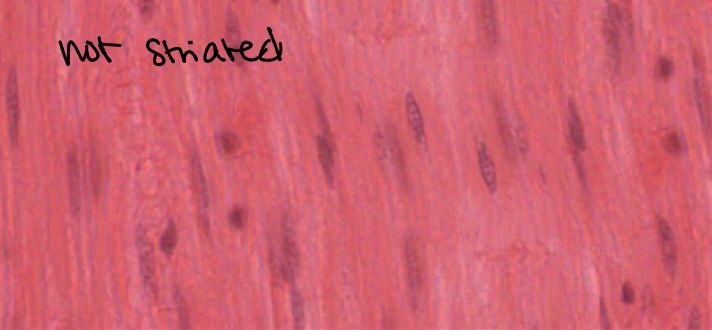
Smooth muscle. Muscle that lines hollow internal organs. Controlled involuntarily by the brain and endocrine system. Not striated.
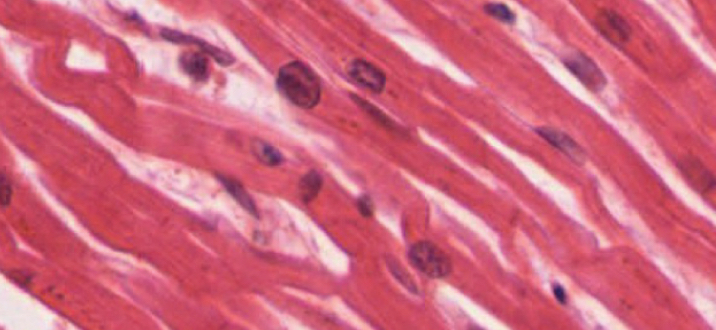
Cardiac muscle, only found in the heart. Movement is involuntary. Striated like skeletal muscle, but only one nucleus per fiber.