Art history
 View linked note
 Call Kai
 Learn
Learn Practice Test
 Spaced Repetition
 Match
Match Flashcards
 Knowt Play
1/98

There's no tags or description
Looks like no tags are added yet.
Name | Mastery | Learn | Test | Matching | Spaced | Call with Kai |
|---|
No analytics yet
Send a link to your students to track their progress
99 Terms
Aesthetics
The study of beauty and artistic principles.
Photography
The process of capturing images using a camera.
Abstraction
A visual cue that encourages viewers to see art or objects differently.
Linear perspective
A technique in painting that creates the illusion of depth and space.
Zeitgeist
The defining mood or spirit of a particular period of time.
Modernity
The era characterized by industrialization, technology, and a new leisure class.
Realism
An artistic movement that focuses on depicting everyday life and rejecting idealized representations.
Impressionism
An art movement that emphasizes capturing the fleeting effects of light and color.
Pointillism
A painting technique that uses small, distinct dots of color to create an image.
Post-impressionism
A movement that developed after impressionism and explored new techniques and ideas.
Pop art
An art movement that incorporates popular culture and commercial design into artwork.
Symbolism
An artistic movement that uses symbols and metaphors to convey deeper meanings.
Primitivism
The fascination with and incorporation of elements from non-Western or "primitive" cultures in art.
Theosophy
A spiritual belief system that seeks to understand the nature of divinity and the universe.
Anthroposophy
A philosophy that combines spiritual knowledge with a scientific understanding of the world.
12-tone composition
A musical technique that uses all twelve pitches of the chromatic scale equally.
Avant-garde
A term used to describe innovative or experimental art, often challenging traditional norms.
Synthetism
An art movement that combines observation of nature with the artist's subjective feelings and emotions.
Blue Rider Group
An artistic collective that sought to express spiritual and emotional truths through art.
De Stijl
An art movement characterized by geometric forms and primary colors, emphasizing simplicity and abstraction.
Blue Rider Group
German Expressionist movement inspired by Theosophy and spiritual truths, known for bold colors and exploration of humanity's connection to nature.
Kasimir Malevich and Suprematism
Malevich introduced Suprematism, which focused on pure feeling and abstract art, aiming to transcend the material world.
De Stijl (Theo van Doesburg and Piet Mondrian)
Embraced geometric elements and primary colors, representing eternal laws of the universe and aiming for greater harmony in society through art.
Henri Bergson
Supports the desire to progress and physical matter, allowing people to be free thinkers and imaginative force.
Sigmund Freud
Argues that women are there to fulfill sexual triggers for men, approves the theory of human behavior and responses being understood by emotion and sensation.
Friedrich Nietzsche
Influential thinker who discussed the Apollonian and Dionysian dichotomy, emphasizing the need for balance between reason and emotion.
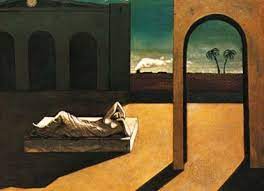
Giorgio De Chirico
Artist who created metaphysical paintings exploring deeper truth and alternate planes of existence.
Surrealism
Art movement focused on pure psychic automatism, allowing thoughts to be expressed without control by reason, aesthetic, or moral preoccupations.
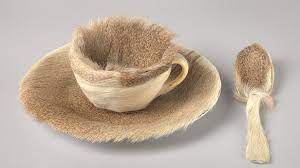
Meret Oppenheim
Artist who explored the objectification of women and used unconventional materials in her artwork.
Les Automatistes
Canadian art movement in the 1950s-60s, known for their abstract compositions and emphasis on individual expression.
Die Brucke
German art movement that called to youth for freedom of life and movement against established older forces.
Iconoclasm
Periods in which religious images are destroyed, often associated with societal changes and rejection of established norms.
Woodblock art
Technique used for communication in the Middle Ages, involved carving detailed images onto a block and stamping it onto paper.
Futurism
Art movement that celebrated dynamism and the future, made significant contributions in typography and graphic design.
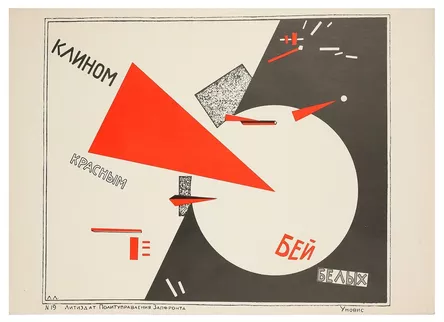
Constructivism
Art movement that aimed to transcend materialism and find emotional responses, often associated with the Russian Revolution and the challenge of justifying artists' roles in a changing landscape.
Socialist Realism
Aesthetics used to transcend materialism and evoke emotional responses, emphasizing the importance of educating artists in contributing effectively to industry.
Constructivism
A movement that emerged as a response to Vladimir Tatlin's model for the Monument to the Third International, advocating for a scientific organization of construction and rejecting arbitrary composition.
Productivism
A transition within the Constructivist movement that advocated for active involvement in industrial production.
Propaganda
The use of poster designs, theater sets, agitational stands, exhibitions, and book designs by Constructivists to shape the ideological realm of Production.
Key Figures in Constructivism
Varvara Stepanova, Wassily Kandinsky, Aleksandr Rodchenko, Vladimir Tatlin, and Boris Arvatov were influential figures in the Constructivist movement.
Bauhaus
A school founded in 1919 that aimed to unite creative arts and the industrial world, emphasizing the study of materials, tools, construction, and representation.
Laszlo Moholy-Nagy
A key figure at the Bauhaus who solidified the shift towards industrial design and structural analysis.
Degenerate 'Art' Exhibition
An exhibition opened by the Nazis in 1937 to condemn modernist art as intrinsically Jewish and Bolshevik, contrasting with the Nazi-approved "Great German Art" exhibition.
Nazi Aesthetics
Nazi art presented as arch-nationalist and arch-traditionalist, exalting the Aryan ideal and military symbolism.
Totalitarian Art Policies
Art policies of totalitarian regimes, such as Nazi Germany, Stalinist Soviet Union, and Fascist Italy, treated art as an ideological weapon and endorsed conservative art movements while suppressing others.
National Pavilions at the International Exhibition in Paris
The International Exhibition in Paris featured national pavilions representing different countries, showcasing art and trade.
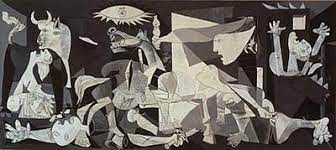
Guernica by Pablo Picasso
Picasso's painting created in response to the bombing of Guernica during the Spanish Civil War, depicting the brutality and horror through modernist techniques.
Modernism and Public Art
The reconciliation of modernist art with political actuality, as seen in Picasso's "Guernica," which can be used for public and political purposes.
Pure Psychic Automatism
Diction of thought, in the absence of any control exercised by reason, and beyond any aesthetic or moral preoccupation
Liminal
In-between/Transition
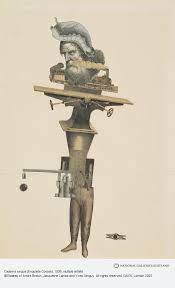
“Exquisite Corpse”
The process of creating art with ones initial thought, usually done in groups
Anna Ladd
Sculptor that helped create prosthetics for veterans
Conscious self
you have control and are your regular awake self (know right from wrong)
Sub Conscious self
a place were info and memories are stored
Unconscious
here secrets are stored (things you don’t acknowledge or remember)
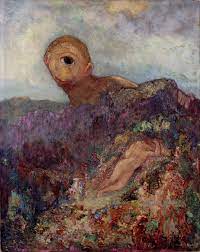
Redon, Cyclops. 1898 Oil painting
Themes of mystery, the unknown world and uncontrollable emotion. “In Redon's work, the eye is often an all controlling, independent creature, a symbol of the human soul and of the mysterious, unknown inner world. The menace of the giant, or rather of the eye, that spies the naked woman, is reinforced by the unusual bright colours.”
Neoplatonism
Draws the idea from Plato where they are trying to represent a bigger meaning far from this world physically
Langauge
Is outdated and restricts people from truly expressing themselves. Artists are always looking for a new universal language that does not restrict their freedom
“God is dead”
The more we trust in science the more we loose touch of our human selves (Nietzsche)
X-ray
Influenced Cubism (proves that the physical world is not all there is)
A painting is a reflection of what?
the inner vision of the artist
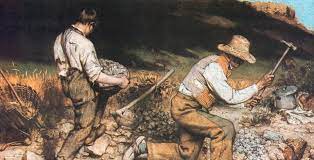
Courbet
An artist who’s work was to bring about social awareness and change by using rough, unfiltered, and chaotic imagery. He created the manifesto of realism.
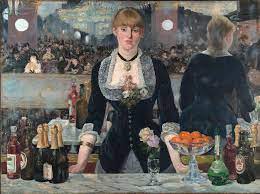
Manet
An artist who was part of the upper ranks and changed the history of art. He followed Courbet But his subject matter was on the reality in the cities.
Classism
Is art that is idealistic and centers around a hero. Uses blended brushwork to create harmony. Distances itself from the viewer.
genera scenes
Scenes of everyday life
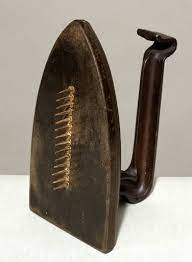
Man Ray, The Gift, 1921
Uses a familiar everyday object (iron) and makes it useless. Themes of domestic life and the role of women. “What is a women’s purpose if her sense of being is rendered useless?”
Fortagge
Texture rubbing
Grattage
wet canvas laid over a textured surface and scarped to create texture
Decalcomania
paint applied to the support, paper laid overtop then removed to reveal texture
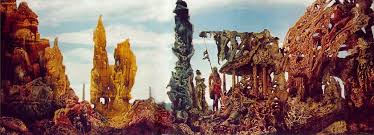
Max Ernst
Uses painting techniques like fortagge and grattagge to create a painting, Often has no subject matter not until he had finished. (has no care for colour or placement just goes with the flow)
Pathos
3 paths of persuasion used to evoke emotion in the viewer/reader/listener
Elan Vitale
The vital life drive was at the root of progress
Konrad Fiedler
Knowledge is a refection of our experience
Absolute vision
Overcome chaos and recognize and understand pure form of the material world
Apollo and Dionysis
reason and emotion (the 2 need to be experienced in balance)
The Overgoers
They are the artist that creates art to help others “cross the bridge”
The Dispisers
They are the bridge not the goal (they are the path towards the goal)
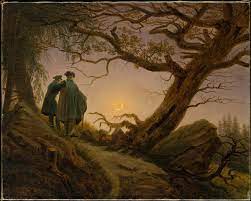
Casper David
Made art of faith and religion without the religious imagery. Ex: painted landscaped to illustrate that God can be found everywhere even in nature.
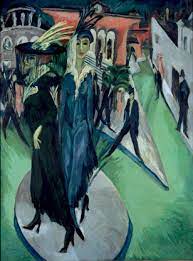
Kirchner
An artist who painted modern life using bright odd colours, sharp brushstrokes and skewed perspectives. Ex: painting of female prostitutes not to judge but to showcase modern consumerism (looking for material gain)
Filipoo Tommaso Marinetti
Created futurism and believes the French have taken over the art world and that Italy must take it back.
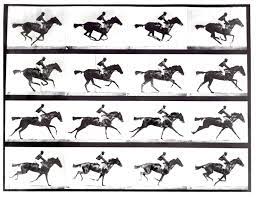
Eadweard Muybridge
A very important person in the world of photograph. Showcased the different phases of a body in motion. (when a horse gallops is there a point in which all hooves are in the air?)
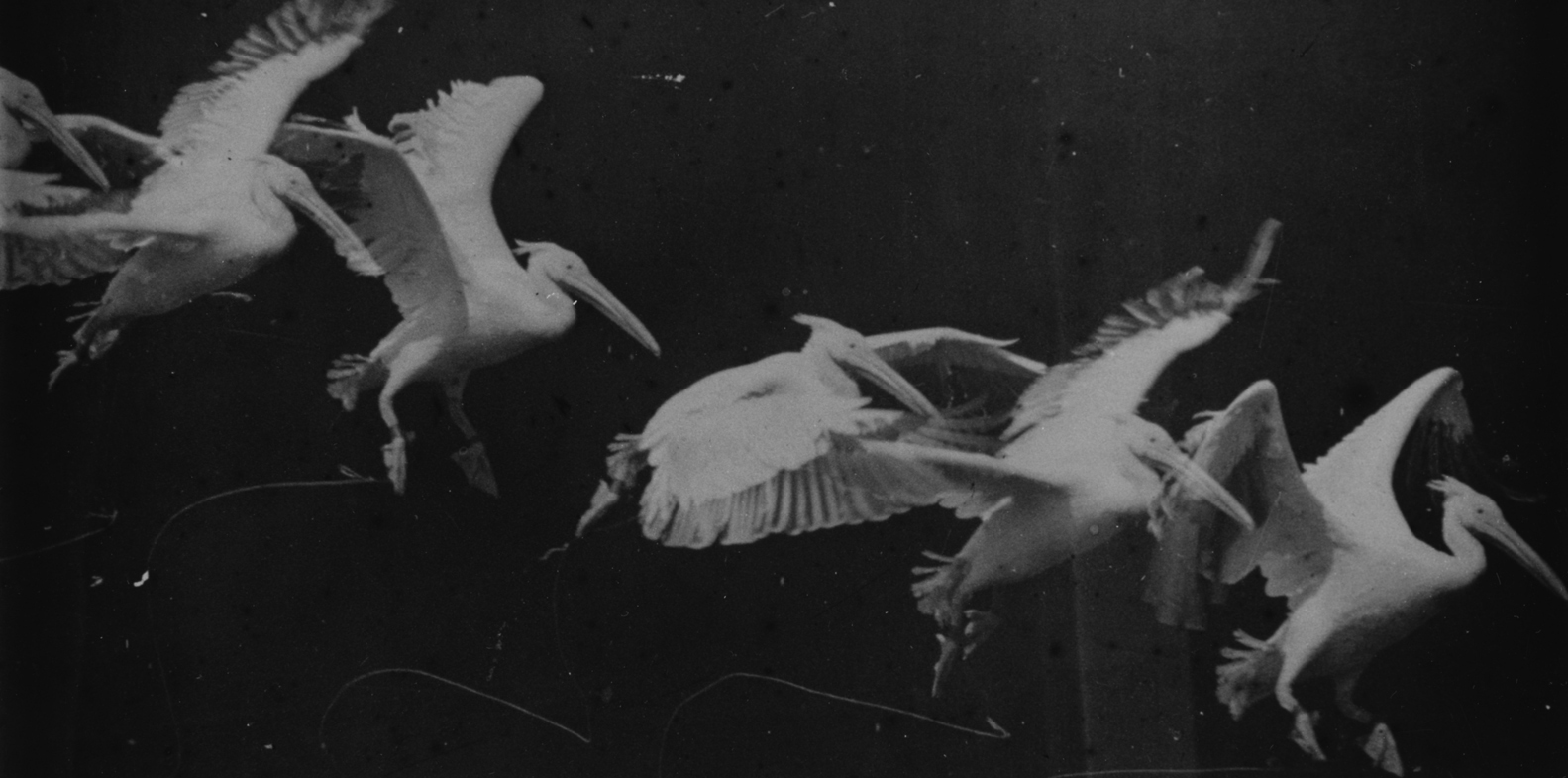
Etienne - Jules Marey
Used a technique where they put multiple photos onto each other instead of side by side photos to really showcase motion (similar to stop motion animation or flipbooks)
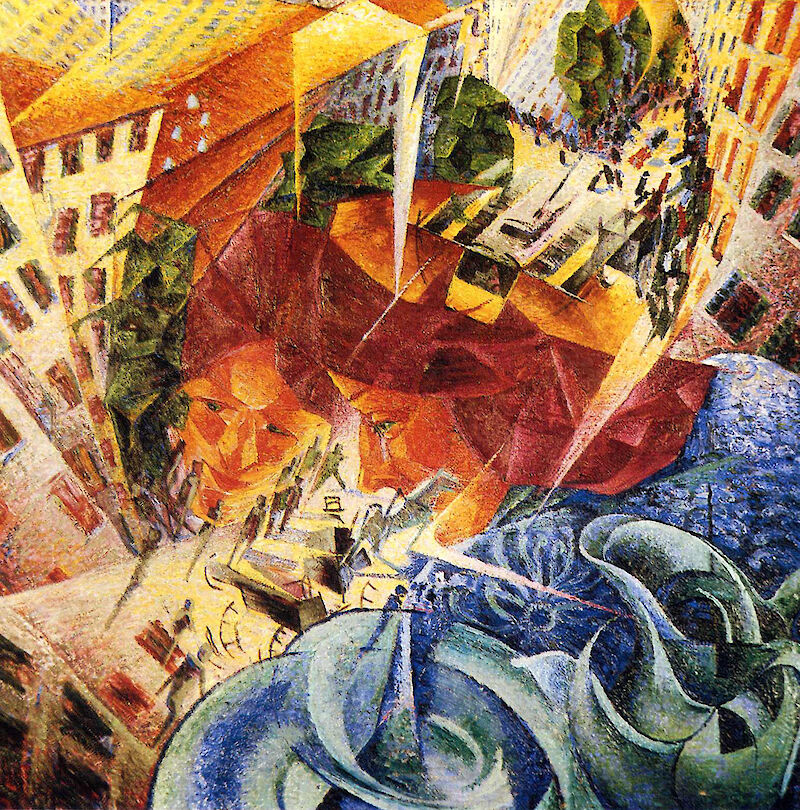
Umberto Boccioni
Painted different perspectives in one piece (as if you are walking around it) often of his mother. Used bright colours and immersions of scenes.
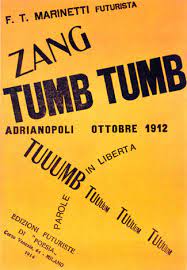
Marinetti, Zang, Tumb Tumb, 1914
Reinvented the idea of the way we communicate, bringing noise to life. Uses onomatopoeia but instead of natural sounds like “chirp” he uses sounds of machines.
Malevich
Believed art no longer served the government. Reduced shapes even further to their essential form.
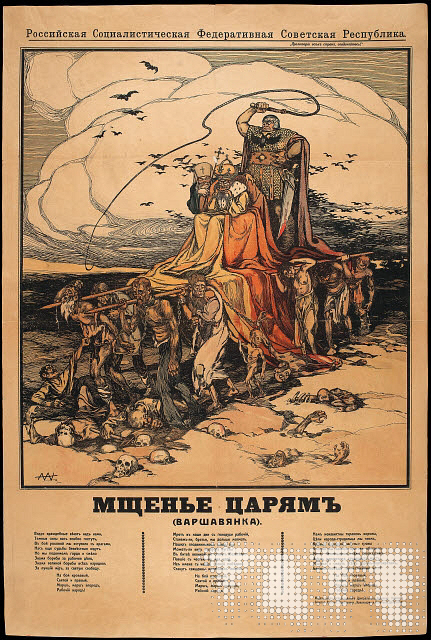
Alexander Apsit
After people realized art has been so far reduced to a single from no one could understand it anymore (common folk). Apsit made art which reverted slowly back to classical theory’s. Creating art with familiarity and nostalgia as well as simple meaning for simple folk
Vincent Van Gogh
A symbolist artist who’s paintings were more expressive and emotional by using colour.
Arthur Schopenhauer
Says human nature is that we can never be satisfied and will keep seeking satisfaction
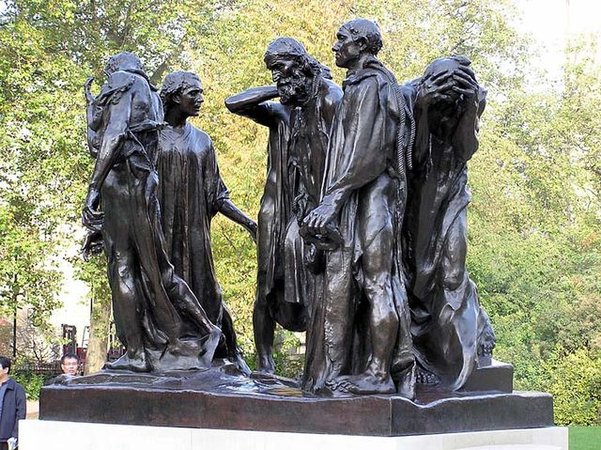
Auguste Rodin, Burghers of Calais. Commissioned in 1886
Symbolist sculpture of the Burghers that sacrificed themselves for their people. The sculpture is the size of a regular person making the viewer come face to to face with the piece (same field)
Roy Lichtenstein and Andy Warhol
Known pop art artists in 1960s
Mechanical Production
Technique by Lichtenstein where he would trace by grabbing a comic strip, sketch one or more motifs and then projected his drawing. Putting hand drawings and tracings together.
Jasper johns
An artist that challenged the dominate abstract expressionist style with his banal references and impersonal brushstrokes (used wax base to preserve art)
Stella
An artist that aimed to show what painting is through a demonstration of its making using logic and precision
Gustav Klimit
Commissioned works that challenged traditional themes and reflected the disruption of the era
Kokoschka
Depicted repressed instinctual impulses and Freudian concepts through their art, portraying figures stripped of historical and societal norms
Japanese Block Prints
A new art for the western people that had no defined perspective, was cropped, asymmetrical, had no focal point, and no subject matter
Michel Eugene Chevreul
Realized that juxtaposed colours can affect the way it’s seen (fringe effect). Adjacent colours are complementary (colour theory)
Herman Von Helmholtz
The eye can perceive within itself
Cezanne
Looked at the natural world to understand and reveal the underlying harmonies and order (the building block of nature equal natural order)