4610 - LAB 10 - leukocytes and immunology
 Call Kai
 Learn
Learn Practice Test
 Spaced Repetition
 Match
Match Flashcards
 Knowt Play
1/18

Earn XP
Description and Tags
p. 136 - 144
Name | Mastery | Learn | Test | Matching | Spaced | Call with Kai |
|---|
No analytics yet
Send a link to your students to track their progress
19 Terms
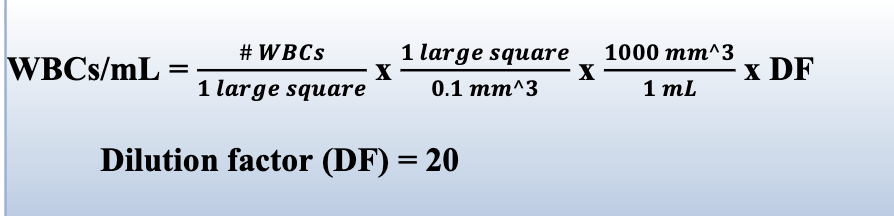
calculate the amount of white blood cells in a diluted blood sample
normal WBC count for males and females
adults in general = 4 to 11,000 cells / microliter
males = 5 to 10k
females = 4.5 to 11k
What is leukopenia, and what conditions might it cause?
leukopenia = condition characterized by lower than normal number of white blood cells (leukocytes) in the blood, under 4k cells per microliter.
causes
weakened immune system leading to frequent severe long lasting infections. increased susceptibility to illnesses like pneumonia, sepsis, abscesses, mouth sores
Does emotional or physical stress affect white blood cell counts?
both affect WBC count.
impact:
increased WBC count - stress triggers release of cortisol and adrenaline prompting increase in inflammatory leukocytes specifically neutrophils
reduced lymphocytes - chronic stress leads to decrease in lymphocytes (WBC that fights infection), because long term stress can make immune cells less sensitive to cortisol
What happens to WBC count when a person develops leukemia? why
WBC count becomes extremely high 100k to 400k per microliter, because the bone marrow produces large amounts of abnormal, immature, dysfunctional WBC called blast cells.
some leukemia types have very low WBC count because dysfunctional cells crowd out the bone marrow preventing healthy cells from entering blood and being counted
treatment for leukemia
chemotherapy, targeted therapies, stem cell transplants
normal levels of each leukocyte type in whole blood
Neutrophils: 55% to 70% (1,500–8,000 cells)
Lymphocytes: 20% to 40% (1,000–4,800 cells)
Monocytes: 2% to 8% (200–800 cells)
Eosinophils: 1% to 4% (0–500 cells)
Basophils: 0.5% to 1% (0–100 cells)
everything above is WBC count per microliter
differential blood cell count of a patient reveals that the eosinophil count is abnormally high. why?
indicates the immune system is reacting to a specific threat, usually parasitic infections, allergy, or drug reactions.
how does HIV affect WBC count? which specific leukocytes are targeted?
HIV destroys immune system by targeting, kiling helper T cells aka CD4+ T lymphocytes (who coordinate immune response)
HIV usually leads to
less, destroyed CD4 cells
leukopenia (low total WBC count)
neutropenia (decrease in neutrophils)
lymphopenia (decrease in lymphocytes)
treatments available for HIV
daily pills, long acting injections
WBC
WBC aka leukocytes are immune system’s primary defense, produced in bone marrow found in blood/lymph tissue. 5 types categorized as granulocytes (containing granules) or agranulocytes (lacking granules)
neutrophils, lymphocytes, monocytes, eosinophils, basophils
neutrophils
Definition: The most common type of WBC and the first to respond to infection, often forming the main component of pus.
Function: Act as fast-acting phagocytes, engulfing and destroying bacteria and fungi.
lymphocytes
Definition: Key cells in the adaptive immune system, comprising T cells, B cells, and Natural Killer (NK) cells.
Function: Responsible for producing antibodies (B cells), destroying infected or cancerous cells (T cells/NK cells), and creating immune memory.
monocytes
Definition: The largest type of WBC, which migrate from the bloodstream into tissues to become macrophages.
Function: Defend against infection by clearing up dead cells, debris, and bacteria
eosinophils
Definition: Granulocytes that target parasites and play a major role in allergic responses.
Function: Destroy parasites and cancer cells, and help modulate inflammation
basophils
Definition: The least common WBC, which releases chemical signals during allergic reactions.
Function: Produce histamine (initiating inflammation) and heparin (preventing blood clotting)
granulocytes
fight pathogens through innate immunity (rapid, non specific)
Neutrophils, Eosinophils, Basophils
agranulocytes
for adaptive immunity (slow, specific)
Lymphocytes, Monocytes
how to identify each of the leukocytes on the microscope
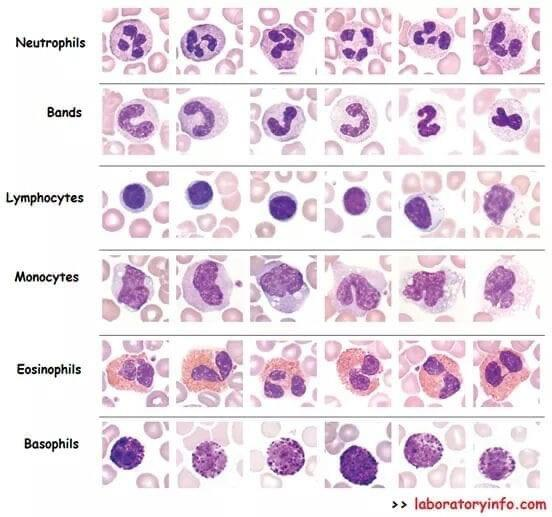
Neutrophil: 3–5 nuclear lobes | Pale pink cytoplasm | Fine granules.
-
Lymphocyte: Huge round nucleus | Thin blue halo of cytoplasm | Smallest size.
-
Monocyte: Kidney/U-shaped nucleus | Gray-blue cytoplasm | Largest size.
-
Eosinophil: 2 nuclear lobes | Bright red/orange granules | Medium size.
-
Basophils: Obscured nucleus | Dark purple/black granules | Medium size.