advanced latin 3 - unit 3 test review
 Studied by 0 people
 Call Kai
 Learn
Learn Practice Test
 Spaced Repetition
 Match
Match Flashcards
 Knowt Play
1/53

There's no tags or description
Looks like no tags are added yet.
Name | Mastery | Learn | Test | Matching | Spaced |
|---|
No study sessions yet.
54 Terms
topic 1: sequence of tenses
sequence of tenses
temporal relationship between the main verb and the subjunctive verb
two types: primary and secondary
primary sequence of tense
main verbs: present, future, future perfect
subjunctive verb: present or perfect
ex: Minerva sagittās arcumque Dīanae rapit ut inimīcum venētur.
translation: Minerva takes Diana’s bows and arrows so that she may hunt her enermy
secondary sequence of tense
main verb: imperfect, perfect, and pluperfect
subjunctive verb: imperfect or pluperfect
ex: Minerva cognōscere voluit quis amantem interfēcisset
translation: Minerva wanted to discover who had killed her lover. (secondary sequence because “voluit” is a perfect indicative verb)
tenses of subjunctives
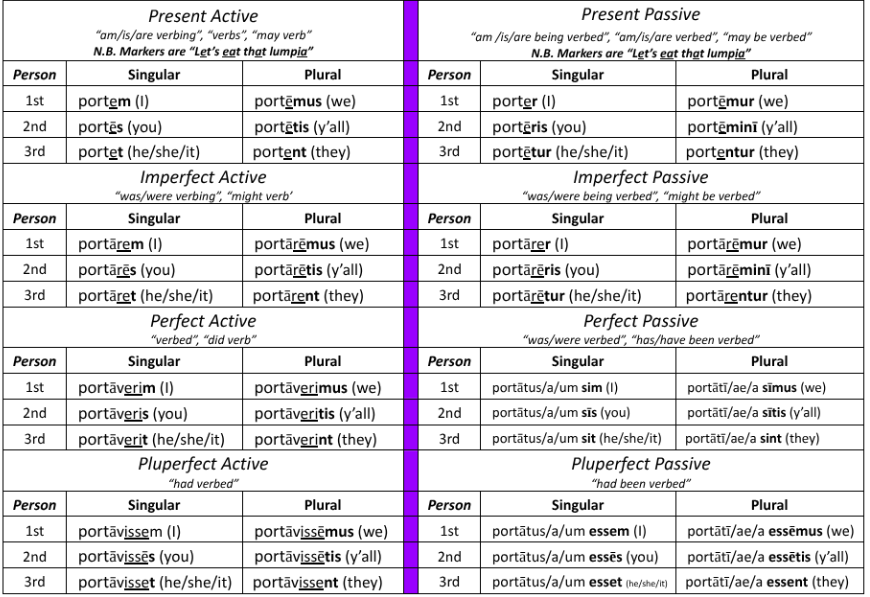
topic 2: independent uses of subjunctive verbs
jussive/hortatory
used to express a command or an exhortation
ex: incendāmus urbem
translation: let us burn the city.
optative
used to express wishes, uses the particle utinam
ex: utinam nē cīvem malum interfēcissēs
translation: if only you had not killed the bad citizen
potential
used to express an action that might possibly occur/something that the speaker may believe
ex: Dicas eum hominem bonum esse.
translation: You might say he is a good man.
deliberative
used to deliberate about something, often in a rhetorical question
ex: quomodō Pōlla matrimōniō malō fugiat?
translation: How shall Polla escape this wicked marriage?
topic 3: ancient roman marriage
pater familias
father of the family (of the bride and groom)
patria potestas
power of the father hled over his family
sponsus/sponsa
sponsus: fiance, betrothed man
sponsa: fiancee, betrothed woman
“cum manu” marriage
the control of the woman passes to her husband
“sine manu” marriage
the control of the woman is retained by her father
anulus
wedding ring
confarreatio
most formal, religious marriage; 10 witnesses
coemptio
mock sale marriage (“purchase” of the bride), 5 witnesses
usus
plebeian marriage (not considered legal marriage)
feliciter!
congratulations!
“ubi tu Gaius, ego Gaia”
translated as “where are you, gaius, i am gaia”
signified the bride's commitment to follow her husband
sponsalia
engagement or betrothal
hymenaeus
marriage hymn
nubere
term for women used to mean to marry - to veil oneself
in matronium ducere
term for men to mean to marry - lead into matrimony
tunica recta
bridal tunic - woven on upright loom
flammeum
saffron veil worn by bride
deductio
procession where husband takes the wife from the father’s house into his house
versus Fescennini
lewd verses sung/spoken to talassius (sabine god of marriage)
cena nuptialis
wedding feast
nodus Herculaneus
hercules knot; knot on bride’s dress only to be united by the husband
topic 4: vocabulary
certus, certa, certum
certain, infallible
prō certō habēre
know for certain
clam
secretly, in private
cōpiae, cōpiārum
forces
dextra, dextrae
right hand
ēripiō, ēripere, ēripuī, ēreptus
rescue, snatch away
familia, familiae
household
grātus, grāta, grātum
acceptable, pleasing
ignōrō, ignōrāre, ignōrāvī
not know about
iungō, iungere, iūnxī, iūnctus
join
lēx, lēgis
law
līmen, līminis
threshold, doorway
nūbō, nūbere, nūpsī
marry
orior, orīrī, ortus sum
rise, arise
polliceor, pollicērī, pollicitus sum
promise
prohibeō, prohibēre, prohibuī, prohibitus
prevent
queror, querī, questus sum
lament, complain about
regō, regere, rēxī, rēctus
rule
vereor, verērī, veritus sum
be afraid, fear
vērō
indeed
virgō, virginis
virgin